


Product Monograph - Cequa
RECENT MAJOR LABEL CHANGES
| 7 WARNINGS AND PRECAUTIONS, Immune | 04/2025 |
|---|
TABLE OF CONTENTS
Sections or subsections that are not applicable at the time of authorization are not listed.
RECENT MAJOR LABEL CHANGES............................................................................................ 2
TABLE OF CONTENTS .............................................................................................................. 2
PART I: HEALTH PROFESSIONAL INFORMATION ..................................................................... 4
1 INDICATIONS .............................................................................................................. 4
1.1 Pediatrics .......................................................................................................... 4
1.2 Geriatrics........................................................................................................... 4
2 CONTRAINDICATIONS ................................................................................................. 4
4 DOSAGE AND ADMINISTRATION................................................................................. 4
4.1 Dosing Considerations ....................................................................................... 4
4.2 Recommended Dose and Dosage Adjustment..................................................... 4
4.4 Administration................................................................................................... 5
4.5 Missed Dose ...................................................................................................... 5
5 OVERDOSAGE ............................................................................................................. 5
6 DOSAGE FORMS, STRENGTHS, COMPOSITION AND PACKAGING ................................. 5
7 WARNINGS AND PRECAUTIONS .................................................................................. 6
7.1 Special Populations ............................................................................................ 7
7.1.1 Pregnant Women ......................................................................................... 7
7.1.2 Breast-feeding.............................................................................................. 7
7.1.3 Pediatrics ..................................................................................................... 8
7.1.4 Geriatrics ..................................................................................................... 8
8 ADVERSE REACTIONS .................................................................................................. 8
8.1 Adverse Reaction Overview................................................................................ 8
8.2 Clinical Trial Adverse Reactions .......................................................................... 8
8.3 Less Common Clinical Trial Adverse Reactions .................................................. 11
8.5 Post-Market Adverse Reactions........................................................................ 11
9 DRUG INTERACTIONS................................................................................................ 12
9.2 Drug Interactions Overview.............................................................................. 12
9.4 Drug-Drug Interactions .................................................................................... 12
9.5 Drug-Food Interactions .................................................................................... 12
9.6 Drug-Herb Interactions .................................................................................... 12
9.7 Drug-Laboratory Test Interactions .................................................................... 12
10 CLINICAL PHARMACOLOGY ....................................................................................... 12
10.1 Mechanism of Action.................................................................................. 12
10.2 Pharmacodynamics .................................................................................... 12
10.3 Pharmacokinetics ....................................................................................... 13
11 STORAGE, STABILITY AND DISPOSAL ......................................................................... 13
12 SPECIAL HANDLING INSTRUCTIONS........................................................................... 13
PART II: SCIENTIFIC INFORMATION ...................................................................................... 15
13 PHARMACEUTICAL INFORMATION............................................................................ 15
14 CLINICAL TRIALS........................................................................................................ 16
14.1 Clinical Trials by Indication.......................................................................... 16
Keratoconjunctivitis sicca (KCS).................................................................................. 16
16 NON-CLINICAL TOXICOLOGY ..................................................................................... 18
PATIENT MEDICATION INFORMATION ................................................................................. 21
PART I: HEALTH PROFESSIONAL INFORMATION
1 INDICATIONS
CEQUA (cyclosporine ophthalmic solution 0.09% w/v) is indicated to increase tear production in patients with moderate to severe keratoconjunctivitis sicca (dry eye).
1.1 Pediatrics
Pediatrics (<18 years of age): The safety and efficacy of CEQUA has not been established in pediatric patients; therefore, Health Canada has not authorized an indication for pediatric use.
1.2 Geriatrics
Geriatrics (>65 years of age): No overall differences in safety or effectiveness have been observed between elderly and younger adult patients.
2 CONTRAINDICATIONS
CEQUA is contraindicated in:
- Patients who are hypersensitive to this drug or to any ingredient in the formulation, including any non-medicinal ingredient, or component of the container. For a complete listing, see 6 DOSAGE FORMS, STRENGTHS, COMPOSITION AND PACKAGING.
- Patients with active or suspected ocular or peri-ocular infections.
- Patients with ocular or peri-ocular malignancies or premalignant conditions.
4 DOSAGE AND ADMINISTRATION
4.1 Dosing Considerations
For topical ophthalmic use.
Each CEQUA vial is for single use in one patient only.
There are no special dosing considerations which need to be taken into account prior to initiating therapy with CEQUA.
4.2 Recommended Dose and Dosage Adjustment
Instill one drop of CEQUA twice daily (approximately 12 hours apart) into each eye.
The dose should not exceed two drops (administered 12 hours apart) in the affected eye(s) daily.
Limited data from clinical studies exists for long-term administration of CEQUA (up to 12 months). It is expected that use of the product will continue long-term.
Health Canada has not authorized an indication for pediatric use (see 1.1 Pediatrics and 7.1.3 Pediatrics).
4.4 Administration
The solution from one individual single-use vial is to be used immediately after opening for administration to one or both eyes, and the remaining contents should be discarded immediately after administration.
Advise patients to wash their hands before each use and not to touch the tip of the vial to their eye or any other surface, in order to avoid eye injury or contamination of the solution (see 7 WARNINGS AND PRECAUTIONS, Potential for Eye Injury and Contamination).
CEQUA should not be administered while wearing contact lenses. Patients with decreased tear production typically should not wear contact lenses. Advise patients that if contact lenses are worn, they should be removed prior to the administration of the solution. Lenses may be reinserted 15 minutes following administration of CEQUA.
CEQUA can be used concomitantly with artificial tears, allowing a 15-minute interval between products.
4.5 Missed Dose
If a dose of this medication is missed, treatment should be continued on the next instillation as normal. Doses should not be doubled. Patients should be advised not to instill more than two drops in the affected eye(s) daily.
5 OVERDOSAGE
There is no information regarding topical overdose in patients taking CEQUA.
Excessive topical ocular use of cyclosporine would not be expected to contribute to ocular toxicity and due to low systemic concentrations of cyclosporine after topical ocular treatment, the likelihood of systemic intoxication from topical ocular overdose is remote.
| For management of a suspected drug overdose, contact your regional poison control centre. |
|---|
6 DOSAGE FORMS, STRENGTHS, COMPOSITION AND PACKAGING
Table 1: Dosage Forms, Strengths, Composition and Packaging
| Route of Administration | Dosage Form / Strength/Composition | Non-medicinal Ingredients |
| Ophthalmic | Solution containing cyclosporine 0.09% w/v (0.9 mg/mL) | Octoxynol-40, polyoxyl 40 hydrogenated castor oil, polyvinylpyrrolidone, sodium chloride, sodium hydroxide or hydrochloric acid (to adjust pH), sodium phosphate dibasic anhydrous, sodium phosphate monobasic dihydrate, and water for injection. |
CEQUA is supplied as a sterile, clear, colorless ophthalmic solution for topical ophthalmic use. It has an osmolality of 160 to 190 mOsmol/kg and a pH of 6.5-7.2.
CEQUA is packaged in sterile, preservative-free, single-use vials. Each vial contains 0.25 mL fill in a 0.9 mL LDPE vial; 10 vials (2 cards of 5 vials) are packaged in a polyfoil aluminum pouch; 6 pouches are packaged in a box. The entire contents of each box of 60 vials must be dispensed intact.
7 WARNINGS AND PRECAUTIONS
General
CEQUA is for topical ophthalmic use only.
Resolve existing or suspected ocular or peri-ocular infections before initiating CEQUA treatment. If an infection occurs during treatment, CEQUA should be temporarily withheld until the infection has been resolved.
Carcinogenesis and Mutagenesis
See 16 NON-CLINICAL TOXICOLOGY.
Driving and Operating Machinery
The effects of CEQUA on a person’s ability to drive and use of machines were not assessed. However, the ability of CEQUA to induce temporary blurred vision or other visual disturbances cannot be ruled out. Therefore, patients should be advised not to drive or use machinery until their vision has cleared after the administration of CEQUA.
Hepatic
The effect of CEQUA has not been studied in patients with hepatic impairment. However, no special dose adjustment is needed in this population as systemic exposure to cyclosporine is low (see 10.3 Pharmacokinetics, Hepatic Insufficiency ).
Immune
Ophthalmic medicinal products, which affect the immune system, including cyclosporine, may affect host defences against local infections and malignancies. Therefore, regular monitoring of the eye(s) is recommended when CEQUA is used long-term. Additionally, there is the potential to experience hypersensitivity to CEQUA. Reactions of face swelling, pharyngeal oedema, dyspnoea and urticaria have been reported with the use of CEQUA (see 8.5 Post-market Adverse Reactions). If an allergic reaction occurs, patients should be advised to discontinue the drug.
Ophthalmologic
CEQUA has not been studied in patients with a history of herpes keratitis, end stage lacrimal gland disease, keratoconjunctivitis sicca (KCS) secondary to the destruction of conjunctival goblet cells such as occurs with Vitamin A deficiency, or scarring, such as occurs with cicatricial pemphigoid, alkali burns, Stevens Johnson syndrome, trachoma, or irradiation.
Patients with severe keratitis should be carefully monitored.
Potential for Eye Injury and Contamination
Advise patients not to touch the tip of the vial to their eye or any other surface, in order to avoid eye injury or contamination of the solution.
Use with Contact Lenses
CEQUA should not be administered while wearing contact lenses. If contact lenses are worn, they should be removed prior to administration of the solution. Lenses may be reinserted 15 minutes following administration of CEQUA ophthalmic solution.
Patients wearing contact lenses have not been studied.
Renal
The effect of CEQUA has not been studied in patients with renal impairment. However, no special dose adjustment is needed in this population as systemic exposure to cyclosporine is low (see 10.3 Pharmacokinetics, Renal Insufficiency).
7.1 Special Populations
7.1.1 Pregnant Women
- administration of cyclosporine at exposures sufficiently in excess of the maximum human exposure from ophthalmic use, indicating little relevance to the clinical use of CEQUA (see 16 NON-CLINICAL TOXICOLOGY).
CEQUA is not recommended during pregnancy unless the benefits outweigh the risks.
7.1.2 Breast-feeding
- however, excretion in human breast milk following topical administration of CEQUA has not been investigated. Cyclosporine blood concentrations are low following topical ocular administration of CEQUA (see 10.3 Pharmacokinetics, Pregnancy and Breast-feeding).
- offspring at clinically relevant doses (see 16 NON-CLINICAL TOXICOLOGY). There is no information on the effects of CEQUA on breast-fed infants and milk production. The developmental and health benefits of breast-feeding should be considered along with the mother’s clinical need for CEQUA and any potential adverse effects on the breast-fed infants from cyclosporine.
- Because many drugs are excreted in human breast milk, caution should be exercised when CEQUA is administered to a nursing woman.
7.1.3 Pediatrics
- The safety and efficacy of CEQUA has not been established in pediatric patients; therefore, Health Canada has not authorized an indication for pediatric use.
7.1.4 Geriatrics
Geriatrics (>65 years of age): No overall differences in safety or effectiveness have been observed between elderly and younger adult patients.
8 ADVERSE REACTIONS
8.1 Adverse Reaction Overview
The most common adverse reaction reported in subjects following the use of CEQUA was pain on instillation of drops (22%).
8.2 Clinical Trial Adverse Reactions
Clinical trials are conducted under very specific conditions. The adverse reaction rates observed in the clinical trials; therefore, may not reflect the rates observed in practice and should not be compared to the rates in the clinical trials of another drug. Adverse reaction information from clinical trials may be useful in identifying and approximating rates of adverse drug reactions in real-world use.
OTX-101-2014-001 and OTX 101-2016-001 Pooled Safety Data
The primary assessment of safety is derived from two multicenter, randomized, double-masked, 12-week, vehicle-controlled trials of similar design in subjects with keratoconjunctivitis sicca. Study OTX-101-2016-001 was a pivotal Phase 3 study and study OTX-101-2014-001 was a supportive Phase 2b/3 study.
In the two clinical trials, 524 subjects (Safety Population) received at least 1 dose of CEQUA (i.e. cyclosporine ophthalmic solution 0.09% w/v). The majority of the treated subjects were female (83%) and the mean age was 59 years. Subjects in the CEQUA group had a higher incidence of adverse events (38.7% vs. 27.1%) and treatment-related adverse events (25.2% vs. 8.6%) compared with the Vehicle group. However, CEQUA was generally well tolerated with most adverse events considered mild and did not require treatment.
The most common adverse events (AEs) reported in greater than 1% of subjects (Table 2) were instillation site pain (22%) and conjunctival hyperemia (6%). The most common non-ocular AEs (≥ 1% of subjects in either group) were headache and urinary tract infection.
Table 2: Treatment-Emergent Adverse Events Reported in ≥ 1% of Subjects in Either Treatment Group - Pooled Data Set of Controlled Phase 3 and Phase 2b/3 Studies (Safety Population)
| Preferred Term | Pooled Data | ||||||
CEQUA (N=524) n (%) | Vehicle (N=524) n (%) | ||||||
| Ocular AEs | |||||||
| Instillation site pain | 114 (21.8) | 21 (4.0) | |||||
| Conjunctival hyperemia | 30 (5.7) | 19 (3.6) | |||||
| Eye irritation | 6 (1.1) | 6 (1.1) | |||||
| Blepharitis | 5 (1.0) | 0 | |||||
| Eye pruritus | 2 (0.4) | 8 (1.5) | |||||
| Foreign body sensation in eyes | 2 (0.4) | 5 (1.0) | |||||
| Vitreous floaters | 2 (0.4) | 5 (1.0) | |||||
| Non-ocular AEs | |||||||
| Headache | 8 (1.5) | 2 (0.4) | |||||
| Urinary tract infection | 6 (1.1) | 4 (0.8) | |||||
| Bronchitis | 5 (1.0) | 3 (0.6) | |||||
| Sinusitis | 4 (0.8) | 5 (1.0) | |||||
| Upper respiratory tract infection | 4 (0.8) | 5 (1.0) | |||||
| Nasopharyngitis | 1 (0.2) | 5 (1.0) | |||||
Adverse events of severe intensity (1.7% vs. 0.8%), and events that led to interruption (0.8% vs. 0.4%) or discontinuation (4.2% vs. 1.7%) of study drug were low. Serious adverse events were uncommon (1.1% in both treatment groups). One subject randomized to CEQUA in study OTX-101-2016-001 died from an unknown cause, but not considered to be related to study drug.
OTX-101-2016-002 Safety Extension Study
Long-term safety data are provided by a 12-month safety extension study i.e. OTX-101-2016-002. All 258 subjects from the Phase 3 study OTX-101-2016-001 who subsequently participated in the open-label 40-week OTX-101-2016-002 extension study were treated with CEQUA. Of these, 129 subjects had previously received CEQUA (Group 1) and another 129 subjects had received Vehicle (Group 2) during the 12-week OTX-101-2016-001 study period. At completion of the extension study, a total of 225 subjects had more than 6 months exposure to CEQUA including 138 subjects who had ≥12 months of total exposure. The overall mean duration of exposure was 10.42 months.
An analysis of adverse events in the full safety population for study OTX-101-2016-002 did not reveal any new findings. There were no changes to the serious adverse event profile. Instillation site pain remained the most commonly reported adverse event. It was reported at a higher incidence, as expected, in subjects who had received Vehicle prior to being switched to CEQUA.
Besides instillation site pain (22.9%), conjunctival hyperemia (10.1%), and punctate keratitis (6.2%) were the most commonly reported treatment-emergent adverse events (Table 3). Punctate keratitis was reported by more subjects in Group 1, but it was considered unrelated to treatment in all cases but one, and the difference is attributed to the natural variability of the presentation of KCS. These events were predominantly of mild intensity, with only 1 subject (0.4%) reporting severe intensity.
Table 3: Treatment-Emergent Adverse Events Reported in ≥ 1% of Subjects in Safety Extension Study
| Preferred Term | Group 1 (N=129) n (%) | Group 2 (N=129) n (%) | Overall (N=258) n (%) | ||||
|---|---|---|---|---|---|---|---|
| Ocular AEs | |||||||
| Instillation site pain | 17 (13.2) | 42 (32.6) | 59 (22.9) | ||||
| Conjunctival hyperemia | 12 (9.3) | 14 (10.9) | 26 (10.1) | ||||
| Punctate keratitis | 12 (9.3) | 4 (3.1) | 16 (6.2) | ||||
| Blepharitis | 3 (2.3) | 4 (3.1) | 7 (2.7) | ||||
| Vitreous Detachment | 5 (3.9) | 2 (1.6) | 7 (2.7) | ||||
| Posterior capsule opacification | 5 (3.9) | 1 (0.8) | 6 (2.3) | ||||
| Eye irritation | 2 (1.6) | 2 (1.6) | 4 (1.6) | ||||
| Conjunctival hemorrhage | 2 (1.6) | 2 (1.6) | 4 (1.6) | ||||
| Instillation site lacrimation | 1 (0.8) | 3 (2.3) | 4 (1.6) | ||||
| Instillation site reaction | 1 (0.8) | 3 (2.3) | 4 (1.6) | ||||
| Intraocular pressure increased | 2 (1.6) | 1 (0.8) | 3 (1.2) | ||||
| Preferred Term | Group 1 (N=129) n (%) | Group 2 (N=129) n (%) | Overall (N=258) n (%) | ||||
|---|---|---|---|---|---|---|---|
| Non-ocular AEs | |||||||
| Bronchitis | 2 (1.6) | 4 (3.1) | 6 (2.3) | ||||
| Sinusitis | 0 | 4 (3.1) | 4 (1.6) | ||||
| Osteoarthritis | 3 (2.3) | 1 (0.8) | 4 (1.6) | ||||
| Gastroenteritis viral | 2 (1.6) | 1 (0.8) | 3 (1.2) | ||||
| Urinary tract infection | 2 (1.6) | 1 (0.8) | 3 (1.2) | ||||
| Migraine with aura | 1 (0.8) | 2 (1.6) | 3 (1.2) | ||||
Group 1 subjects continued with CEQUA in the Safety Extension Study.
Group 2 subjects began CEQUA treatment in the Safety Extension Study.
8.3 Less Common Clinical Trial Adverse Reactions
Eye disorders: Conjunctival edema, eye pain, lacrimation increased, vision blurred
General disorders and administrative site conditions: Instillation site lacrimation, instillation site pruritus, instillation site reaction
Respiratory, thoracic and mediastinal disorders: Throat irritation
8.5 Post-Market Adverse Reactions
These adverse events have been identified during post-approval use of CEQUA. These events are reported voluntarily from a population of uncertain size, and it is generally not possible to reliably estimate their frequency or establish a causal relationship to drug exposure.
Ear and Labyrinth Disorders: ear pain
Eye disorders: asthenopia, discharge eye, dry eye, eye swelling, ocular discomfort, oedema eyelid, photophobia
Gastrointestinal disorders: nausea
Immune system disorders: dyspnoea, face swelling, pharyngeal oedema
Infections and infestations: conjunctivitis
Nervous System Disorders: burning sensation, dizziness
Respiratory, thoracic and mediastinal disorders: cough, oropharyngeal pain
Skin and subcutaneous tissue disorders: pruritus, urticaria
9 DRUG INTERACTIONS
9.2 Drug Interactions Overview
No drug interaction studies have been performed with CEQUA.
Drugs that affect cytochrome P-450 may alter cyclosporine metabolism. There is little to no detectable systemic absorption of cyclosporine following ocular administration (see 10.3 Pharmacokinetics). Therefore, no interaction of topically applied cyclosporine with systemic drugs is expected to occur.
9.4 Drug-Drug Interactions
Interactions with other drugs have not been established with CEQUA.
Although many drugs are known to interact with orally administered cyclosporine, no systemic drug-drug interactions are likely to occur following topical ocular administration of CEQUA because of the very low cyclosporine dose (88 mcg/day) and low systemic levels seen in the ocular toxicology studies and in the clinical program conducted.
9.5 Drug-Food Interactions
Interactions with food have not been established with CEQUA.
9.6 Drug-Herb Interactions
Interactions with herbal products have not been established with CEQUA.
9.7 Drug-Laboratory Test Interactions
Interactions with laboratory tests have not been established with CEQUA.
10 CLINICAL PHARMACOLOGY
10.1 Mechanism of Action
Cyclosporine is a calcineurin inhibitor immunosuppressant agent when administered systemically. It is able to inhibit the activation of transcription factors required for T-cell activation and inflammatory cytokine production. In patients whose tear production is presumed to be suppressed due to ocular inflammation associated with keratoconjunctivitis sicca, topical administration of cyclosporine is thought to act as a partial immunomodulator. By suppressing the immune-based inflammation of the ocular surface, treatment with cyclosporine increases the ability of the lacrimal glands to produce tears, potentiating the return of a more stable tear film and normal ocular surface. However, the exact mechanism of action in treating keratoconjunctivitis sicca (dry eye) is not known.
10.2 Pharmacodynamics
No studies of pharmacodynamic effects have been performed with CEQUA.
10.3 Pharmacokinetics
Blood concentrations of cyclosporine after twice daily topical ocular administration of CEQUA into each eye of healthy subjects for up to 7 days, and once on Day 8, were either not detectable or were marginally above the lower limit of assay quantitation of 0.100 ng/mL (range 0.101 to 0.195 ng/mL) for up to 2 hours after a single dose, and up to 4 hours after multiple doses. While numerically greater values were observed after multiple doses compared to a single dose, the maximum blood level observed was no greater than 0.200 ng/mL. This value is less than 0.1% of that at which systemic toxicity might be observed.
The mean ± SD for Cmax was 0.173 ± 0.020 ng/mL and for AUC(0-t) was 0.526 ± 0.059 h*ng/mL in human volunteers on Day 8 of the study, where only 4 of 16 subjects had ≥ 3 consecutive whole blood CsA concentrations ≥ lower limit of quantitation.
Special Populations and Conditions
- Pediatrics (<18 years of age): The safety and efficacy of CEQUA has not been established in pediatric patients; therefore, Health Canada has not authorized an indication for pediatric use.
- Geriatrics (>65 years of age): No overall differences in safety or effectiveness have been observed between elderly and younger adult patients.
- Pregnancy and Breast-feeding: There is no information regarding the presence of cyclosporine in human milk following topical administration or on the effects of CEQUA on the breastfed infants and milk production (see 7.1.1 Pregnant Women and 7.1.2 Breast-feeding).
- Hepatic Insufficiency: Based on the low systemic availability of cyclosporine, no increased risk in patients with impaired hepatic function would be expected to occur following the use of CEQUA.
- Renal Insufficiency: Based on the low systemic availability of cyclosporine, no increased risk in patients with impaired renal function would be expected to occur following the use of CEQUA.
11 STORAGE, STABILITY AND DISPOSAL
CEQUA should be stored at room temperature (15°C to 25°C). Do not freeze. Keep out of the sight and reach of children. Store single-use vials in the original foil pouch. The ophthalmic solution from one individual single-use vial is to be used immediately after opening for administration to one or both eyes, and the remaining contents should be discarded after administration.
12 SPECIAL HANDLING INSTRUCTIONS
Advise patients not to touch the tip of the vial to their eye or any other surface, in order to avoid eye injury or contamination of the solution (see 7 WARNINGS AND PRECAUTIONS, Potential for Eye Injury and Contamination).
If there is any presence of leakage, visible particulate matter, or damage to the vial, the vial should not be used and is to be discarded.
PART II: SCIENTIFIC INFORMATION
13 PHARMACEUTICAL INFORMATION
Drug Substance
Proper name: Cyclosporine (USP); Ciclosporin and Ciclosporin A (Ph.Eur.)
Chemical name: Cyclosporine A
Cyclo[[(E)-(2S,3R,4R)-3-hydroxy-4-methyl-2-(methylamino)-6-octenoyl]-L-2-aminobutyryl-N-methylglycyl-N-methyl-L-leucyl-L-valyl-N-methyl-L-leucyl-L-alanyl-D-alanyl-N-methyl-L-leucyl-N-methyl-L-leucyl-N-methyl-L-valyl]
Molecular formula and molecular mass: C62H111N11O12; 1202.6
Structural formula:
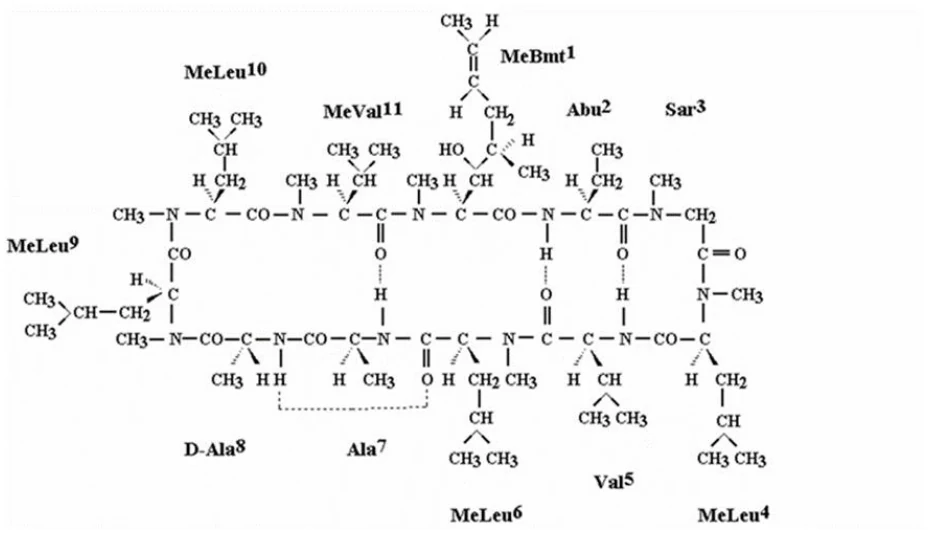
Physicochemical properties: Cyclosporine A is white or almost white odorless powder. It is insoluble in water, soluble in most organic solvents (methanol, ethanol, acetone, chloroform and diethylether) with the exception of aliphatic hydrocarbons (n-hexane). The anhydrous product is hygroscopic.
14 CLINICAL TRIALS
14.1 Clinical Trials by Indication
Keratoconjunctivitis sicca (KCS)
Two multicenter, randomized, double-masked, vehicle-controlled trials (i.e. OTX-101-2014-001 and OTX-101-2016-001) of similar design were conducted to evaluate the safety and efficacy of CEQUA (cyclosporine ophthalmic solution 0.09% w/v) in the treatment of patients with keratoconjunctivitis sicca (KCS). Both studies were identical with respect to duration (12 weeks), dosing regimen (1 drop in each eye, twice daily), and inclusion/exclusion criteria.
Patients enrolled in both studies had a subject-reported history of ≥ 6 months of KCS. All patients had a clinical diagnosis of bilateral KCS, based on a lissamine green conjunctival staining score of ≥ 3 to ≤ 9 out of a total possible score of 12 (scoring excluded superior zones 2 and 4) in the same eye at Screening and Baseline. Patients had self-rated global symptom scores of ≥ 40 on a scale of 100 for dryness and/or irritation.
Study OTX-101-2016-001 was a pivotal Phase 3 study that compared cyclosporine ophthalmic solution 0.09% w/v against vehicle in 744 subjects. A single primary efficacy endpoint was designated i.e. increased tear production as measured by proportion of subjects with ≥ 10-mm increases in Schirmer’s test score at Day 84 from baseline based on data for both eyes.
Study OTX-101-2014-001 was a supportive Phase 2b/3 study that compared two concentrations of cyclosporine ophthalmic solution, 0.05% w/v and 0.09% w/v, against vehicle in 455 subjects. Two co-primary efficacy endpoints measured the mean change from baseline at Day 84 for total conjunctival staining score in the designated study eye and Symptom Assessment iN Dry Eye (SANDE) global symptom score. Based on the results of study OTX-101-2014-001, cyclosporine ophthalmic solution 0.09% w/v was selected for further development.
Key secondary and additional efficacy variables compared between cyclosporine ophthalmic solution and vehicle in the two clinical studies included: mean change from baseline in Schirmer’s test score, mean change from baseline in total and temporal lissamine green conjunctival staining score, clearing of temporal lissamine green staining, mean change from baseline in total and central corneal fluorescein staining score, and clearing of central corneal staining.
Patient demographics for the pivotal and supportive vehicle-controlled studies conducted in patients with keratoconjunctivitis sicca are provided in Table 4. All studies were conducted with cyclosporine solution administered via the ophthalmic route on a twice daily schedule. In these studies, 1199 patients with keratoconjunctivitis sicca were included in the ITT Population (cyclosporine ophthalmic solution or vehicle).
Table 4: Summary of Patient Demographics for Clinical Trials in Patients with Keratoconjunctivitis Sicca (ITT Population)
| Study # | Study design | Dosage, route of administration and duration | Study subjects (n) | Mean age (Range) | Sex |
| OTX-101-2016-001 | Phase 3, multicenter, randomized, double-masked, vehicle-controlled | 0.09% cyclosporine, or vehicle twice daily in each eye as ophthalmic solution for 12 weeks (84 days) | Cyclosporine 0.09%: n=371 Vehicle n=373 Total: n=744 | 59.0 (18 – 90) | M=118 (15.9%) F=626 (84.1%) |
| OTX-101-2014-001 | Phase 2/3, multicenter, randomized, double-masked, vehicle-controlled, dose-ranging | 0.05%, 0.09% cyclosporine, or vehicle twice daily in each eye as ophthalmic solution for 12 weeks (84 days) | Cyclosporine 0.05%: n=151 0.09%: n=152 Vehicle n=152 Total: n=455 | 60.1 (22 – 91) | M=94 (20.7%) F=361 (79.3%) |
The supportive OTX-101-2014-001 study failed to meet the co-primary efficacy endpoint of mean change from baseline in the global symptom score at Day 84. Therefore, the responder analysis performed for the primary efficacy endpoint in pivotal study OTX-101-2016-001 i.e. an increase of ≥ 10 mm from baseline in Schirmer’s test, was performed as a post hoc analysis utilizing the average of eyes in study OTX-101-2014-001. These data were subsequently reanalyzed using the statistical methods of OTX-101-2016-001 (i.e. analysis of the data for both eyes of each subject using methods that account for within subject correlation) to support the primary efficacy results of pivotal Phase 3 study OTX-101-2016-001.
In both studies, compared to vehicle at Day 84, CEQUA-treated patients showed a statistically significant (p ≤0.01) higher percentage of eyes with increases of ≥ 10 mm from baseline in Schirmer wetting. This effect was seen in approximately 17% of CEQUA-treated patients versus approximately 9% of vehicle-treated patients (Table 5).
Table 5: Results of Studies OTX-101-2014-001 and OTX-101-2016-001 in Patients with Keratoconjunctivitis Sicca: Schirmer’s Test at Day 84 (ITT Population)
| Tear Production | ||||
|---|---|---|---|---|
| OTX-101-2014-001 | OTX-101-2016-001 | |||
CEQUA N = 152 | Vehicle N = 152 | CEQUA N = 371 | Vehicle N = 373 | |
| Number of eyes | 304 | 304 | 742 | 746 |
| Eyes with ≥ 10 mm increase in tear production, n (% of eyes) | 51 (16.8%) | 26 (8.6%) | 123 (16.6%) | 69 (9.2%) |
| Difference (95% CI) | 8.2% (1.9%, 14.6%) | 7.3% (3.3%, 11.3%) | ||
| p-value versus vehicle | 0.0113 | 0.0003 | ||
15 MICROBIOLOGY
No microbiological information is required for this drug product.
16 NON-CLINICAL TOXICOLOGY
General Toxicology
Repeat-Dose Toxicity
The systemic toxicologic profile of cyclosporine (CsA) is well established and the cyclosporine drug product formulation contains no novel excipients.
The nonclinical toxicity studies performed to support the ocular safety of cyclosporine ophthalmic solution included ocular tolerability studies of up to 6 days duration and repeat-dose ocular toxicity and toxicokinetic studies of 28 days, 13 weeks and 26 weeks in which up to 0.1% concentrations of cyclosporine ophthalmic solution were administered up to four times daily (QID).
Ocular administration of cyclosporine ophthalmic solution at CsA concentrations up to 0.1% QID to New Zealand White (NZW) rabbits for periods of up to 13 weeks, and at CsA concentrations up to 0.09% QID for 26 weeks, resulted in transient minimal to mild irritation of periocular membranous tissues. No effects were observed in intraocular pressure or electroretinography measurements in any study. There were no histologic changes except as related to the observed transient mild irritation in ocular or periocular tissues. The margin of exposure for ocular effects in NZW rabbits administered cyclosporine ophthalmic solution 0.09% QID for 26 weeks (total daily dose of 83 mcg/eye/day, administered at a dose volume of 35 µL/eye/dose) was ~1.9-fold compared to the maximum recommended human ophthalmic dose (MRHOD) (total daily dose of 44 mcg/eye/day; 22 mcg/eye/dose given BID at a dose volume of 24.4 µL).
Ocular administration of cyclosporine ophthalmic solution 0.09% QID for 26 weeks to NZW rabbits resulted in low CsA blood concentrations (AUC(0-4) of 5.20 ±1.43 and 8.52 ± 2.77 h*ng/mL and Cmax values of 2.06 ± 0.67 and 3.30 ± 0.98 ng/mL, for females and males, respectively); safety margins of systemic exposure based on whole blood AUC(0-4) concentrations of CsA vs. human systemic exposure at the MRHOD were 16.2- and 9.9-fold for male and female rabbits, respectively. No systemic effects related to CsA administration were noted after ocular administration of cyclosporine ophthalmic solution to animals.
The ocular tissue distribution and systemic absorption of CsA was assessed following single topical ocular administration (35 µL) of cyclosporine ophthalmic solution 0.05% (17.5 mcg CsA/eye/day) and repeat QID topical ocular administration of cyclosporine ophthalmic solution 0.01%, 0.05%, and 0.1% (daily doses of 14, 70, and 140 mcg CsA/eye/day) for 7 days to NZW rabbits. Following completion of the dosing phase, blood, tears and ocular tissues were collected for analysis of CsA levels. CsA was extensively distributed in ocular tissues but exhibited minimal systemic exposure (mean Cmax ≤ 6.2 ng/mL). Ocular and periocular CsA tissue levels increased in a dose-responsive manner. There was an increase in AUC(0-t) with repeat dosing of cyclosporine ophthalmic solution 0.05% indicating accumulation in all ocular tissues with repeat daily dosing compared to a single dose.
Systemic exposure to CsA also increased upon repeat QID dosing of cyclosporine ophthalmic solution 0.05% compared to a single dose. However, the CsA mean Cmax value (2.01 ng/mL) in blood following repeat dosing of cyclosporine ophthalmic solution 0.05% in the 7-day tissue distribution study was comparable to the mean Cmax values observed at the same dose level in the 28-day, 13-week and 26-week toxicity studies (1.35, 1.76, 1.51 ng/mL, respectively). In addition, there was no apparent systemic CsA accumulation over the 28-day, 13-week and 26-week dosing period. Overall, these data indicated that there was no systemic CsA accumulation following repeat-dose ocular administration of CsA up to 26 weeks.
Carcinogenicity
Systemic carcinogenicity studies were carried out in male and female mice and rats. In the 78-week oral (diet) mouse study, at doses of 1, 4, and 16 mg/kg/day, evidence of a statistically significant trend was found for lymphocytic lymphomas in females, and the incidence of hepatocellular carcinomas in mid-dose males significantly exceeded the control value.
In the 24-month oral (diet) rat study, conducted at 0.5, 2, and 8 mg/kg/day, pancreatic islet cell adenomas significantly exceeded the control rate in the low dose level. The hepatocellular carcinomas and pancreatic islet cell adenomas were not dose related. The low doses in mice and rats are approximately 55 times higher than the maximum recommended human ophthalmic dose (MRHOD) of 1.5 mcg/kg/day, normalized to body surface area.
Genotoxicity
In genetic toxicity tests, cyclosporine has not been found to be mutagenic/genotoxic in the Ames Test, the V79-HGPRT Test, the micronucleus test in mice and Chinese hamsters, the chromosome-aberration tests in Chinese hamster bone-marrow, the mouse dominant lethal assay, and the DNA-repair test in sperm from treated mice. Cyclosporine was positive in an in vitro sister chromatid exchange assay using human lymphocytes.
Reproductive and Developmental Toxicology
Oral administration of cyclosporine oral solution (USP) to pregnant rats or rabbits was teratogenic at maternally toxic doses of 30 mg/kg/day in rats and 100 mg/kg/day in rabbits, as indicated by increased pre- and postnatal mortality, reduced fetal weight and skeletal retardations. These doses (normalized to body surface area) were approximately 3200 and 21000 times higher than the MRHOD of 1.5 mcg/kg/day, respectively. No adverse embryo-fetal effects were observed in rats or rabbits receiving cyclosporine during organogenesis at oral doses up to 17 mg/kg/day or 30 mg/kg/day, respectively (approximately 1800 and 6400 times higher than the MRHOD, respectively).
An oral dose of 45 mg/kg/day cyclosporine (approximately 4800 times higher than MRHOD) administered to rats from Day 15 of pregnancy until Day 21 postpartum produced maternal toxicity and an increase in postnatal mortality in offspring. No adverse effects in dams or offspring were observed at oral doses up to 15 mg/kg/day (approximately 1620 times greater than the MRHOD).
Impairment of Fertility
Oral administration of cyclosporine to rats for 12 weeks (male) and 2 weeks (female) prior to mating produced no adverse effects on fertility at doses up to 15 mg/kg/day (approximately 1620 times higher than the MRHOD, normalized to body surface area).