


Product Monograph - Ultomiris (Alexion Pharma, 10 mg)
RECENT MAJOR LABEL CHANGES
| 2 CONTRAINDICATIONS | 2025-12 |
|---|---|
| 4.4 Administration, Home Infusion | 2025-12 |
| 7 WARNINGS AND PRECAUTIONS, Other Systemic and Serious Infections | 2025-12 |
TABLE OF CONTENTS
Sections or subsections that are not applicable at the time of authorization are not listed.
RECENT MAJOR LABEL CHANGES ............................................................................................ 2
TABLE OF CONTENTS .............................................................................................................. 2
PART I: HEALTH PROFESSIONAL INFORMATION ...................................................................... 4
1 INDICATIONS ............................................................................................................... 4
1.1 Pediatrics ................................................................................................................ 4
1.2 Geriatrics ................................................................................................................ 4
2 CONTRAINDICATIONS ................................................................................................. 4
3 SERIOUS WARNINGS AND PRECAUTIONS BOX ............................................................ 5
4 DOSAGE AND ADMINISTRATION ................................................................................. 5
4.1 Dosing Considerations ............................................................................................ 5
4.2 Recommended Dose and Dosage Adjustment ....................................................... 5
4.3 Reconstitution ........................................................................................................ 7
4.4 Administration ...................................................................................................... 10
4.5 Missed Dose ......................................................................................................... 11
5 OVERDOSAGE ............................................................................................................ 11
6 DOSAGE FORMS, STRENGTHS, COMPOSITION AND PACKAGING ............................... 11
7 WARNINGS AND PRECAUTIONS ................................................................................ 12
7.1 Special Populations............................................................................................... 15
7.1.1 Pregnant Women ........................................................................................... 15
7.1.2 Breast-feeding ................................................................................................ 15
7.1.3 Pediatrics ........................................................................................................ 15
7.1.4 Geriatrics ........................................................................................................ 16
8 ADVERSE REACTIONS ................................................................................................ 16
8.1 Adverse Reaction Overview .................................................................................. 16
8.2 Clinical Trial Adverse Reactions ............................................................................ 16
8.5 Post-Market Adverse Reactions ........................................................................... 24
9 DRUG INTERACTIONS ................................................................................................ 25
9.3 Drug-Behavioural Interactions .............................................................................. 25
9.4 Drug-Drug Interactions ......................................................................................... 25
9.5 Drug-Food Interactions ......................................................................................... 25
9.6 Drug-Herb Interactions ......................................................................................... 25
9.7 Drug-Laboratory Test Interactions ........................................................................ 25
10 CLINICAL PHARMACOLOGY ....................................................................................... 25
10.1 Mechanism of Action ...................................................................................... 25
10.2 Pharmacodynamics ........................................................................................ 26
10.3 Pharmacokinetics ........................................................................................... 26
11 STORAGE, STABILITY AND DISPOSAL ......................................................................... 29
12 SPECIAL HANDLING INSTRUCTIONS ........................................................................... 29
PART II: SCIENTIFIC INFORMATION ....................................................................................... 30
13 PHARMACEUTICAL INFORMATION ............................................................................ 30
14 CLINICAL TRIALS ........................................................................................................ 31
14.1 Clinical Trials by Indication ............................................................................. 31
16 NON-CLINICAL TOXICOLOGY ..................................................................................... 51
PATIENT MEDICATION INFORMATION .................................................................................. 53
PART I: HEALTH PROFESSIONAL INFORMATION
1 INDICATIONS
Paroxysmal Nocturnal Hemoglobinuria (PNH)
ULTOMIRIS® (ravulizumab for injection) is indicated for the treatment of adult and pediatric patients one month of age and older with paroxysmal nocturnal hemoglobinuria (PNH).
Atypical Hemolytic Uremic Syndrome (aHUS)
ULTOMIRIS® (ravulizumab for injection) is indicated for the treatment of adult and pediatric patients one month of age and older with atypical hemolytic uremic syndrome (aHUS) to inhibit complement-mediated thrombotic microangiopathy (TMA).
Limitations of Use: ULTOMIRIS is not indicated for the treatment of patients with Shiga toxin E. coli related hemolytic uremic syndrome (STEC-HUS).
Generalized Myasthenia Gravis (gMG) ULTOMIRIS (ravulizumab for injection) is indicated for the treatment of adult patients with anti-acetylcholine receptor (AChR) antibody-positive generalized Myasthenia Gravis (gMG). ULTOMIRIS was studied in adult gMG patients with a Myasthenia Gravis Foundation of America (MGFA) clinical classification Class II to IV and a Myasthenia Gravis Activities of Daily Living (MG-ADL) total score ≥ 6.
Neuromyelitis Optica Spectrum Disorder (NMOSD)
ULTOMIRIS® (ravulizumab for injection) is indicated for the treatment of adult patients with anti-aquaporin 4 (AQP4) antibody-positive neuromyelitis optica spectrum disorder (NMOSD).
1.1 Pediatrics
Pediatrics (1 month-18 years): Based on the data submitted and reviewed by Health Canada, the safety and efficacy of ULTOMIRIS in only pediatric patients with PNH and aHUS has been established. Therefore, Health Canada has authorized an indication for pediatric use. (see 7.1.3 Pediatrics)
The safety and effectiveness of Ultomiris for the treatment of gMG or NMOSD in pediatric patients below the age of 18 years has not been established.
1.2 Geriatrics
Ultomiris may be administered to patients with PNH, aHUS, gMG or NMOSD aged 65 years and over. There is no evidence indicating any special precautions are required for treating a geriatric population.
2 CONTRAINDICATIONS
Ultomiris is contraindicated in patients who are hypersensitive to this drug or to any ingredient in the formulation, including any non-medicinal ingredient, or component of the container. For a complete listing, see 6 DOSAGE FORMS, STRENGTHS, COMPOSITION AND PACKAGING.
Do not initiate Ultomiris therapy in patients:
- with unresolved Neisseria meningitidis infection.
- who are not currently vaccinated against Neisseria meningitidis.
- who have been vaccinated against Neisseria meningitidis for less than 2 weeks and are not on prophylactic treatment with appropriate antibiotics.
3 SERIOUS WARNINGS AND PRECAUTIONS BOX
WARNING: SERIOUS MENINGOCOCCAL INFECTIONS
Life-threatening meningococcal infections/sepsis have occurred in patients treated with Ultomiris. Meningococcal infection may become rapidly life-threatening or fatal if not recognized and treated early (See Section 7, Warnings and Precautions).
- Comply with the most current National Advisory Committee on Immunization (NACI) recommendations for meningococcal vaccination in patients with complement deficiencies.
- Patients must be vaccinated against meningococcal infections prior to, or at the time of, initiating Ultomiris, unless the risks of delaying Ultomiris therapy outweigh the risks of developing a meningococcal infection (see also Serious Meningococcal infections in Section 7 for additional guidance on the management of the risk of meningococcal infections).
- Monitor patients for early signs of meningococcal infections and treat immediately if infection is suspected.
Ultomiris in Canada is available under a controlled distribution program. Patients are enrolled in a dedicated Patient Support Program (PSP).
4 DOSAGE AND ADMINISTRATION
4.1 Dosing Considerations
Ultomiris should be administered by a qualified healthcare professional.
Vaccinate patients according to current NACI guidelines to reduce the risk of serious infection (see 3 SERIOUS WARNINGS AND PRECAUTIONS BOX and 7 WARNINGS AND PRECAUTIONS, Other Systemic and Serious Infections).
Provide two weeks of antibacterial drug prophylaxis to patients if Ultomiris must be initiated immediately and vaccines are administered less than 2 weeks before starting Ultomiris therapy.
4.2 Recommended Dose and Dosage Adjustment
The recommended Ultomiris intravenous (IV) maintenance dosing in adult and pediatric patients with PNH or aHUS with a body weight greater than or equal to 5 kg or adult patients (≥ 18 years of age) with gMG or NMOSD with a body weight greater than or equal to 40 kg, is based on the patient’s body weight, as shown in Table 1, with maintenance doses administered every 4 or 8 weeks, starting 2 weeks after loading dose. Dosing schedule is allowed to occasionally vary by ± 7 days of the scheduled infusion day (except for the first maintenance dose of Ultomiris) but the subsequent dose should be administered according to the original schedule. For patients switching from Soliris to Ultomiris, the loading dose of Ultomiris should be administered at the time of the next scheduled Soliris infusion, and then Ultomiris maintenance doses are administered once every 4 to 8 weeks (depending on body weight), starting 2 weeks after loading dose administration as shown in . Table 1 : Ultomiris Weight-Based Dosing Regimen
Indications
| Body weight range (kg) | Loading dose (mg) | Maintenance dose (mg) | Dosing interval | ||||
| PNH or aHUS | ≥ 5 to < 10 | 600 | 300 | Every 4 weeks | |||
| ≥ 10 to < 20 | 600 | 600 | Every 4 weeks | ||||
| ≥ 20 to < 30 | 900 | 2,100 | Every 8 weeks | ||||
| ≥ 30 to < 40 | 1,200 | 2,700 | Every 8 weeks | ||||
| PNH, aHUS, gMG or NMOSD | ≥ 40 to < 60 | 2,400 | 3,000 | Every 8 weeks | |||
| ≥ 60 to < 100 | 2,700 | 3,300 | Every 8 weeks | ||||
| ≥ 100 | 3,000 | 3,600 | Every 8 weeks | ||||
Supplemental dosing following treatment with plasma exchange (PE), plasmapheresis (PP), or intravenous immunoglobulin (IVIg)
Plasma exchange (PE), plasmapheresis (PP) and intravenous immunoglobulin (IVIg) have been shown to reduce Ultomiris serum levels. A supplemental dose of Ultomiris is required in the setting of PE, PP or IVIg (Table 2).
Table 2 : Supplemental Dose of Ultomiris IV Dose after PE, PP, or IVIg
| Body Weight Group (kg) | Most Recent Ultomiris Dose (mg) | Supplemental Dose (mg) Following Each PP or PE Session | Supplemental Dose (mg) following Completion of IVIg Cycle |
|---|---|---|---|
| ≥ 40 to ≤ 60 | 2,400 | 1,200 | 600 |
| 3,000 | 1,500 | ||
| ≥ 60 to < 100 | 2,700 | 1,500 | 600 |
| 3,300 | 1,800 | ||
| ≥ 100 | 3,000 | 1,500 | 600 |
| 3,600 | 1,800 | ||
| Timing of Ultomiris Supplemental Dose | Within 4 hours following each PE or PP intervention | Within 4 hours following completion of an IVIg cycle | |
Abbreviations: IVIg = intravenous immunoglobulin; PE = plasma exchange; PP = plasmapheresis
Renal and Hepatic Impairment
Studies have not been conducted to examine the effects of hepatic impairment; however, pharmacokinetic data suggest that no dose adjustment is required in patients with hepatic impairment.
No dose adjustment is required in patients with renal impairment. (see 10.2 Pharmacodynamics)
The clinical trials of Ultomiris in patients with aHUS included patients with other complement-mediated TMA conditions (patients with renal impairment, some of whom were receiving dialysis). No dose adjustment is required in this population. (see 10.3 Pharmacokinetics, Special Populations)
4.2.1 Treatment Discontinuation
Please refer to Section 7 WARNINGS AND PRECAUTIONS, Treatment Discontinuation for information regarding treatment discontinuation
4.3 Reconstitution
Parenteral Products: Each vial of Ultomiris is intended for single use only.
Ultomiris 100 mg/mL must be diluted to a final concentration of 50 mg/mL.
Ultomiris 10 mg/mL must be diluted to a final concentration of 5 mg/mL.
Aseptic technique must be used.
Prepare Ultomiris as follows:
- 1. The number of vials to be diluted is determined based on the individual patient’s weight and the prescribed dose; see 4.2 Recommended Dose and Dosage Adjustment.
- 2. Prior to dilution, the solution in the vials should be visually inspected; the solution should be free of any particulate matter or precipitation. Do not use if there is evidence of particulate matter or precipitation.
- 3. The calculated volume of medicinal product is withdrawn from the appropriate number of vials and diluted in an infusion bag using sodium chloride 9 mg/mL (0.9%) solution for injection as diluent. Refer to the administration reference tables below. The product should be mixed gently. It should not be shaken.
- 4. After dilution, the final concentration of the solution to be infused is 50 mg/mL for Ultomiris 100 mg/mL and 5 mg/mL for Ultomiris 10 mg/mL.
- 5. The prepared solution should be administered immediately following preparation. Do not administer as an intravenous push or bolus injection. Refer to the administration reference tables below for minimum infusion duration. Infusion must be administered through a 0.2 micron filter.
- 6. If the medicinal product is not used immediately after reconstitution, storage times at 2°C to 8°C must not exceed 24 hours taking into account the expected infusion time.
The loading, maintenance and supplemental dose administration reference tables for Ultomiris 100 mg/mL and 10 mg/mL are provided in Table 3 to Table 8.
Table 3: Loading Dose Administration Reference Table for Ultomiris 100 mg/mL
| Body Weight Range (kg)a | Loading Dose (mg) | Ultomiris Volume (mL) | Volume of NaCl Diluentb (mL) | Total Volume (mL) | Minimum Infusion Time (hr) | Maximum Infusion Rate (mL/hr) |
| ≥ 5 to < 10* | 600 | 6 | 6 | 12 | 1.4 | 9 |
| ≥ 10 to < 20* | 600 | 6 | 6 | 12 | 0.8 | 15 |
| ≥ 20 to < 30* | 900 | 9 | 9 | 18 | 0.6 | 39 |
| ≥30 to < 40* | 1,200 | 12 | 12 | 24 | 0.5 | 48 |
| ≥ 40 to < 60 | 2,400 | 24 | 24 | 48 | 0.8 | 60 |
| ≥ 60 to < 100 | 2,700 | 27 | 27 | 54 | 0.6 | 90 |
| ≥ 100 | 3,000 | 30 | 30 | 60 | 0.4 | 150 |
aBody weight at time of treatment.
bUltomiris should only be diluted using sodium chloride 9 mg/mL (0.9%) solution.
*For PNH and aHUS indications only.
Table 4 : Loading Dose administration Reference Table for Ultomiris 10 mg/mL
| Body weight range (kg)a | Loading dose (mg) | Ultomiris volume (mL) | Volume of NaCl diluentb (mL) | Total volume (mL) | Minimum Infusion Time (hr) | Maximum Infusion Rate (mL/hr) |
| ≥ 5 to < 10* | 600 | 60 | 60 | 120 | 3.8 | 32 |
| ≥ 10 to < 20* | 600 | 60 | 60 | 120 | 1.9 | 63 |
| ≥ 20 to < 30* | 900 | 90 | 90 | 180 | 1.5 | 120 |
| ≥ 30 to < 40* | 1,200 | 120 | 120 | 240 | 1.3 | 184 |
| ≥ 40 to < 60 | 2,400 | 240 | 240 | 480 | 1.9 | 252 |
| ≥ 60 to < 100 | 2,700 | 270 | 270 | 540 | 1.7 | 317 |
| ≥ 100 | 3,000 | 300 | 300 | 600 | 1.8 | 333 |
aBody weight at time of treatment
bUltomiris should only be diluted using sodium chloride 9 mg/mL (0.9%) solution
*For PNH and aHUS indications only
Table 5 : Maintenance Dose Administration Reference Table for Ultomiris 100 mg/mL
| Body Weight Range (kg)a | Maintenance Dose (mg) | Ultomiris Volume (mL) | Volume of NaCl Diluentb (mL) | Total Volume (mL) | Minimum Infusion Time (hr) | Maximum Infusion Rate (mL/hr) |
| ≥ 5 to < 10* | 300 | 3 | 3 | 6 | 0.8 | 8 |
| ≥ 10 to < 20* | 600 | 6 | 6 | 12 | 0.8 | 15 |
| ≥ 20 to < 30* | 2,100 | 21 | 21 | 42 | 1.3 | 32 |
| ≥30 to < 40* | 2,700 | 27 | 27 | 54 | 1.1 | 49 |
| ≥ 40 to < 60 | 3,000 | 30 | 30 | 60 | 0.9 | 67 |
| ≥ 60 to < 100 | 3,300 | 33 | 33 | 66 | 0.7 | 94 |
| ≥ 100 | 3,600 | 36 | 36 | 72 | 0.5 | 144 |
aBody weight at time of treatment.
bUltomiris should only be diluted using sodium chloride 9 mg/mL (0.9%) solution.
*For PNH and aHUS indications only.
Table 6 : Maintenance Dose Administration Reference Table for Ultomiris 10 mg/mL
| Body Weight Range (kg)a | Maintenance Dose (mg) | Ultomiris Volume (mL) | Volume of NaCl Diluentb (mL) | Total Volume (mL) | Minimum Infusion Time (hr) | Maximum Infusion Rate (mL/hr) |
| ≥ 5 to < 10* | 300 | 30 | 30 | 60 | 1.9 | 31 |
| ≥ 10 to < 20* | 600 | 60 | 60 | 120 | 1.9 | 63 |
| ≥ 20 to < 30* | 2,100 | 210 | 210 | 420 | 3.3 | 127 |
| ≥30 to < 40* | 2,700 | 270 | 270 | 540 | 2.8 | 192 |
| ≥ 40 to < 60 | 3,000 | 300 | 300 | 600 | 2.3 | 257 |
| ≥ 60 to < 100 | 3,300 | 330 | 330 | 660 | 2 | 330 |
| ≥ 100 | 3,600 | 360 | 360 | 720 | 2.2 | 327 |
aBody weight at time of treatment.
bUltomiris should only be diluted using sodium chloride 9 mg/mL (0.9%) solution.
*For PNH and aHUS indications only.
Table 7: Supplemental Dose Reference Table for Ultomiris 100 mg/mL
| Body Weight Range (kg)a | Supplemental Dose (mg) | Ultomiris Volume (mL) | Volume of NaCl Diluentb (mL) | Total Volume (mL) | Minimum Infusion Time (hr) | Maximum Infusion Rate (mL/hr) | ||||||||
|---|---|---|---|---|---|---|---|---|---|---|---|---|---|---|
| ≥ 40 to < 60 | 600 | 6 | 6 | 12 | 0.25 | 48 | ||||||||
| 1,200 | 12 | 12 | 24 | 0.42 | 57 | |||||||||
| 1,500 | 15 | 15 | 30 | 0.5 | 60 | |||||||||
| ≥ 60 to < 100 | 600 | 6 | 6 | 12 | 0.2 | 60 | ||||||||
| 1,500 | 15 | 15 | 30 | 0.36 | 83 | |||||||||
| 1,800 | 18 | 18 | 36 | 0.42 | 86 | |||||||||
| ≥ 100 | 600 | 6 | 6 | 12 | 0.17 | 71 | ||||||||
| 1,500 | 15 | 15 | 30 | 0.25 | 120 | |||||||||
| 1,800 | 18 | 18 | 36 | 0.28 | 129 | |||||||||
Note: Refer to Table 2 for selection of ravulizumab supplemental dose aBody weight at time of treatment.
bDilute Ultomiris only using 0.9% Sodium Chloride Injection, USP.
Table 8: Supplemental Dose Reference Table for Ultomiris 10 mg/mL
| Body Weight Range (kg)a | Supplemental Dose (mg) | Ultomiris Volume (mL) | Volume of NaCl Diluentb (mL) | Total Volume (mL) | Minimum Infusion Time (hr) | Maximum Infusion Rate (mL/hr) | ||||||||
|---|---|---|---|---|---|---|---|---|---|---|---|---|---|---|
| ≥ 40 to < 60 | 600 | 60 | 60 | 120 | 0.5 | 240 | ||||||||
| 1,200 | 120 | 120 | 240 | 1.0 | 240 | |||||||||
| 1,500 | 150 | 150 | 300 | 1.2 | 250 | |||||||||
| ≥ 60 to < 100 | 600 | 60 | 60 | 120 | 0.4 | 300 | ||||||||
| 1,500 | 150 | 150 | 300 | 1.0 | 300 | |||||||||
| 1,800 | 180 | 180 | 360 | 1.1 | 328 | |||||||||
| ≥ 100 | 600 | 60 | 60 | 120 | 0.4 | 300 | ||||||||
| 1,500 | 150 | 150 | 300 | 1.0 | 300 | |||||||||
| 1,800 | 180 | 180 | 360 | 1.1 | 328 | |||||||||
Note: Refer to Table 2 for selection of ravulizumab supplemental dose
aBody weight at time of treatment.
bDilute Ultomiris only using 0.9% Sodium Chloride Injection, USP.
Ultomiris 10 mg/mL and 100 mg/mL should not be mixed together.
Any unused medicinal product should be disposed of in accordance with local requirements.
In the absence of compatibility studies, this medicinal product must not be mixed with other medicinal products. Reconstitution and dilution should only use sodium chloride 9 mg/mL (0.9%) solution for injection as diluent.
4.4 Administration
Only administer as an intravenous infusion.
Do not administer as an Intravenous Push or Bolus Injection.
- Ultomiris 100 mg/mL must be diluted to a final concentration of 50 mg/mL.
- Ultomiris 10 mg/mL must be diluted to a final concentration of 5 mg/mL.
- For intravenous infusion only.
- Must be administered through a 0.2 micron filter.
Prior to administration, the admixture should be allowed to adjust to room temperature (18°-25° C, 64°-77° F). The admixture must not be heated in a microwave or with any heat source other than ambient air temperature.
Parenteral drug products should be inspected visually for particulate matter and discoloration prior to administration, whenever solution and container permit.
Home Infusion
Home infusion under the supervision of a healthcare professional may be considered for patients who are not known to be hypersensitive/allergic to ravulizumab, murine proteins, or to any ingredient in the formulation including any non-medicinal ingredient, or component of the container.
Home infusions should be performed by a qualified healthcare professional. Appropriate medical infrastructure, resources and procedures must be established and available to the healthcare professional administering home infusions.
If a patient experiences an anaphylactic reaction or another acute reaction, immediately discontinue Ultomiris infusions, initiate appropriate medical treatment and seek the attention of a physician (see 7 Warnings and Precautions).
4.5 Missed Dose
In case of a missed dose, resume the regular schedule as soon as possible. Dosing schedule is allowed to occasionally vary by ± 7 days of the scheduled infusion day (except for the first maintenance dose of Ultomiris) but the subsequent dose should be administered according to the original schedule.
5 OVERDOSAGE
Ultomiris is to be administered by a healthcare professional, which minimizes the potential of a significant overdose. No cases of overdose have been reported during clinical studies.
For management of a suspected drug overdose, contact your regional poison control centre.
6 DOSAGE FORMS, STRENGTHS, COMPOSITION AND PACKAGING
Table 9 : Dosage Forms, Strengths, Composition and Packaging
Description:
| Route of Administration | Dosage Form / Strength/ Composition | Non-medicinal Ingredients |
| Intravenous infusion | 300 mg/ 3 mL (100 mg/mL), single dose vial 1,100 mg/11 mL (100 mg/mL), single dose vial | Polysorbate 80, Sodium phosphate dibasic, Sodium phosphate monobasic, L-arginine, Sucrose, Water for injection |
| Intravenous infusion | 300 mg/ 30 mL (10 mg/mL), single dose vial | Polysorbate 80, Sodium chloride, Sodium phosphate dibasic, Sodium phosphate monobasic, Water for injection |
Ultomiris is a formulation of ravulizumab which is a long-acting humanized monoclonal IgG2/4K antibody produced in Chinese hamster ovary (CHO) cell culture by recombinant DNA technology.
Ultomiris 100 mg/mL
Each vial of 3 mL contains 300 mg of ravulizumab (100 mg/mL).
Each vial of 11 mL contains 1,100 mg of ravulizumab (100 mg/mL).
Translucent, clear to yellowish color, pH 7.4 solution.
Ultomiris 10 mg/mL
Each vial of 30 mL contains 300 mg of ravulizumab (10 mg/mL).
Clear to translucent, slight whitish color, pH 7.0 solution.
7 WARNINGS AND PRECAUTIONS
For serious meningococcal infections, please see 3 SERIOUS WARNINGS AND PRECAUTIONS BOX.
Serious Meningococcal Infections
Due to its mechanism of action, the use of Ultomiris increases the patient’s susceptibility to meningococcal infection/sepsis (Neisseria meningitidis). Meningococcal disease due to any serogroup may occur. To reduce this risk of infection, all patients must be vaccinated against meningococcal infections at least 2 weeks prior to initiating Ultomiris treatment unless the risk of delaying Ultomiris treatment outweighs the risk of developing a meningococcal infection. Patients who initiate Ultomiris treatment less than 2 weeks after receiving a meningococcal vaccine must receive treatment with appropriate prophylactic antibiotics until 2 weeks after vaccination. Vaccines against serogroups A, C, Y, W135, and B, are recommended in preventing the commonly pathogenic meningococcal serogroups. Patients must be vaccinated or revaccinated according to current national guidelines for vaccination use.
Vaccination may not be sufficient to prevent meningococcal infection. Consideration should be given to official guidance on the appropriate use of antibacterial agents. Cases of serious or fatal meningococcal infections/sepsis have been reported in patients treated with Ultomiris and with other terminal complement inhibitors.
All patients should be monitored for early signs of meningococcal infection and sepsis, evaluated immediately if infection is suspected and treated with appropriate antibiotics. Patients should be informed of the early signs and symptoms and advised to seek medical care immediately. Patients should be provided with information from the patient information leaflet and a patient safety card.
Other Systemic and Serious Infections
Ultomiris blocks terminal complement activation; therefore, patients may have increased susceptibility to infections, especially infections caused by Neisseria species. Serious infections with Neisseria species (other than Neisseria meningitidis), including disseminated gonococcal infections, have been reported in patients treated with Ultomiris and other terminal complement inhibitors.
In the two pivotal studies in adults patients with PNH, serious infections were reported in 17% patients including 7 fatal cases treated with Ultomiris for up to 5 years (see 8.2 Clinical Trial Adverse Reactions for PNH).
Patients should be informed of the early signs and symptoms of potential serious infections. In patients who developed an infection, the decision to continue Ultomiris treatment should be made based on the potential therapeutic benefit versus the risk of worsening infection. Physicians should advise patients about prevention of common infections and to adhere strictly to the National Advisory Committee on Immunization (NACI) vaccination recommendations.
Immunization
Vaccination may further activate complement. As a result, patients with complement-mediated diseases may experience increased signs and symptoms of their underlying disease, such as hemolysis (PNH), TMA complications (aHUS), MG exacerbation (gMG) or relapse (NMOSD). Therefore, patients should be closely monitored for disease symptoms after recommended vaccination.
General
Sodium content
Ultomiris 10 mg/mL when diluted with 0.9% sodium chloride for IV administration contains 2.65 g sodium per 720 mL at the maximum dose, which is above Health Canada’s maximum daily intake recommendation of 2.3 g sodium. This should be taken into consideration by patients on a controlled sodium diet.
Ultomiris 100 mg/mL when diluted with 0.9% sodium chloride for IV administration contains 0.18 g sodium per 72 mL at the maximum dose, which is below Health Canada’s maximum daily intake recommendation of 2.3 g sodium.
Infusion Reactions
Administration of Ultomiris may result in infusion reactions and allergic or hypersensitivity reactions including anaphylaxis.
In clinical trials, infusion reactions were common (1.6%). They were mild to moderate in severity and transient (e.g., skin reactions, back pain, drop in blood pressure, elevation in blood pressure, limb discomfort, drug hypersensitivity [allergic reaction], muscle spasms, dysgeusia, and drowsiness).
In case of infusion reactions, if signs of cardiovascular instability or respiratory compromise occur, administration of Ultomiris should be interrupted and appropriate supportive measures should be instituted.
Hematologic Aplastic Anemia
In phase 3 PNH clinical studies, Ultomiris was administered to 75/222 (33.8%) patients with aplastic anemia and PNH, some of which were treated with concomitant medications for aplastic anemia (including immunosuppressive therapies). There is no evidence indicating any special precautions are required for treating patients with aplastic anemia.
Treatment Discontinuation
PNH
PNH is a chronic disease and treatment with Ultomiris is recommended to continue for the patient’s lifetime.
If patients with PNH discontinue treatment with Ultomiris, they should be closely monitored for signs and symptoms of hemolysis, identified by elevated lactate dehydrogenase (LDH) along with sudden decrease in – Glycophosphatidylinositol (GPI)-deficient red blood cell (RBC) clone size or hemoglobin, or re-appearance of symptoms such as fatigue, hemoglobinuria, abdominal pain, shortness of breath (dyspnea), major adverse vascular event (including thrombosis), dysphagia, or erectile dysfunction. Monitor any patient who discontinues Ultomiris for at least 16 weeks to detect hemolysis and other reactions. If signs and symptoms of hemolysis occur after discontinuation, including elevated LDH, consider restarting treatment with Ultomiris.
aHUS
Ultomiris treatment to resolve aHUS should be a minimum duration of 6 months, beyond which length of treatment needs to be considered for each patient individually.
There are no specific data on Ultomiris discontinuation.
If patients must discontinue treatment with Ultomiris, they should be monitored closely for signs and symptoms of TMA for at least 12 months. However, monitoring may be insufficient to predict or prevent severe TMA complications.
TMA complications post-discontinuation can be identified if any of the following is observed:
(i) At least two of the following laboratory results observed concurrently: a decrease in platelet count of 25% or more as compared to either baseline or to peak platelet count during Ultomiris treatment; an increase in serum creatinine of 25% or more as compared to baseline or to nadir during Ultomiris treatment; or, an increase in serum LDH of 25% or more as compared to baseline or to nadir during Ultomiris treatment; (results should be confirmed by a second measurement 28 days apart).
Or
(ii) any one of the following symptoms of TMA: changes in mental status, seizures, angina, dyspnea, thrombosis or increasing blood pressure.
If TMA complications occur after Ultomiris discontinuation, consider reinitiation of Ultomiris treatment beginning with the loading dose and maintenance dose described in Section 4.2 Recommended Dose and Dosage Adjustment.
gMG
Considering that gMG is a chronic disease, patients who are required to discontinue Ultomiris treatment should be monitored for symptoms of the underlying disease. If symptoms of gMG reoccur after discontinuation, consider restarting treatment with Ultomiris.
NMOSD
Use of Ultomiris in NMOSD treatment has been studied only in the setting of chronic administration and the effect of Ultomiris discontinuation has not been characterized. Patients who discontinue Ultomiris treatment should be carefully monitored for signs and symptoms of potential NMOSD relapse.
Reproductive Health: Female and Male Potential
- Women of childbearing potential
Women of childbearing potential should use effective contraception methods during treatment and for up to 8 months after treatment.
- Fertility
No specific non-clinical animal study on fertility has been conducted with ravulizumab (see 16NON-CLINICAL TOXICOLOGY, Reproductive and Developmental Toxicology).
7.1 Special Populations
7.1.1 Pregnant Women
No clinical data on exposed pregnancies are available.
Non-clinical animal reproductive and developmental toxicology studies were not conducted with ravulizumab due to lack of pharmacologic activity in non-human species (see 16 NON-CLINICAL TOXICOLOGY, Reproductive and Developmental Toxicology).
It is unknown whether Ultomiris can cause fetal harm when administered to a pregnant woman. Human IgG are known to cross the human placental barrier, and thus ravulizumab may potentially cause terminal complement inhibition in the fetal circulation.
Ultomiris should not be used during pregnancy unless the potential benefit justifies the potential risk to the mother and the fetus.
7.1.2 Breast-feeding
It is unknown whether Ultomiris is excreted into human milk. Since many medicinal products and immunoglobulins are secreted into human milk, and because of the potential for serious adverse reactions in nursing infants, breastfeeding should be discontinued during treatment and up to 8 months after treatment.
7.1.3 Pediatrics
Pediatrics (1 month to <18 years of age): Use of Ultomiris in pediatric patients for treatment of PNH is supported by evidence from a pediatric clinical study (13 patients aged 9 to 17 years). The safety of Ultomiris for the treatment of PNH appears similar in pediatric and adult patients.
Ultomiris has not been studied in patients with PNH below 9 years of age. The dosage to be used in pediatric patients with PNH is identical to the weight-based dosing recommendations provided for pediatric patients with aHUS. Based on the PK/PD data available in aHUS and PNH patients treated with Ultomiris, this dosing regimen is expected to result in an efficacy and safety profile similar to that in adults, for all pediatric patients starting at 5 kg.
Use of Ultomiris in pediatric patients for treatment of aHUS is supported by evidence from a pediatric clinical study (18 patients aged 10 months to 17 years). The safety of Ultomiris for the treatment of aHUS appears to be similar in pediatric and adult patients.
The safety and effectiveness of Ultomiris for the treatment of gMG or NMOSD in pediatric patients below the age of 18 years has not been established.
7.1.4 Geriatrics
Geriatrics (>65 years of age): Ultomiris may be administered to patients with PNH, aHUS, gMG or NMOSD aged 65 years and over. There is no evidence indicating any special precautions are required for treating a geriatric population.
8 ADVERSE REACTIONS
8.1 Adverse Reaction Overview
The most common adverse drug reactions reported in patients receiving ravulizumab were abdominal pain, arthralgia, back pain, diarrhea, dizziness, fatigue, nausea, pyrexia, nasopharyngitis, headache, upper respiratory tract infection and urinary tract infection. Clinically significant serious adverse reactions reported in patients in clinical trials included meningococcal infection and meningococcal sepsis.
Meningococcal infections were reported in the ravulizumab clinical development program. These patients were treated with antibiotics and recovered while remaining on ravulizumab without treatment interruption.
Patients should be informed of the signs and symptoms of meningococcal septicemia and advised to seek medical care immediately.
8.2 Clinical Trial Adverse Reactions
Clinical trials are conducted under very specific conditions. The adverse reaction rates observed in the clinical trials; therefore, may not reflect the rates observed in practice and should not be compared to the rates in the clinical trials of another drug. Adverse reaction information from clinical trials may be useful in identifying and approximating rates of adverse drug reactions in real-world use.
PNH
Adult patients with PNH (Primary Evaluation Period) The data described below reflect exposure of 441 adult patients with PNH in Phase 3 studies who received Ultomiris (n = 222) or eculizumab (n = 219) at the recommended dosing regimens with median treatment duration of 6 months for Ultomiris and 6 months for eculizumab. The most frequent adverse drug reactions (>10%) with Ultomiris were upper respiratory tract infection and headache. Table 10a describes adverse reactions that occurred at a rate of 5% or more among patients treated with Ultomiris.
Serious adverse reactions were reported in 15 (6.8%) patients receiving Ultomiris. The serious adverse reactions in patients treated with Ultomiris included hyperthermia and pyrexia. No serious adverse reaction was reported in more than 1 patient treated with Ultomiris.
Table 10a: Treatment-Emergent Adverse Events Reported by ≥5% of Patients by Pooled Treatment Groups (Phase 3 Adult PNH Population) During Primary Evaluation Period
| System Organ Class Preferred Term | All ravulizumab All eculizumab (N=222) (N=219) | |||||||
| n (%) | n (%) | |||||||
| Gastrointestinal disorders | 19 (8.6) | 12 (5.5) | ||||||
| Diarrhoea | ||||||||
| Nausea | 19 (8.6) | 19 (8.7) | ||||||
| Abdominal pain | 13 (5.9) | 16 (7.3) | ||||||
| General disorders and administration site conditions | 15 (6.8) | 18 (8.2) | ||||||
| Pyrexia | ||||||||
| Chest pain | 5 (2.3) | 14 (6.4) | ||||||
| Infections and infestations | 32 (14.4) | 38 (17.4) | ||||||
| Nasopharyngitis | ||||||||
| Upper respiratory tract infection | 31 (14.0) | 17 (7.8) | ||||||
| Musculoskeletal and connective tissue disorders | 14 (6.3) | 11 (5.0) | ||||||
| Pain in extremity | ||||||||
| Arthralgia | 11 (5.0) | 12 (5.5) | ||||||
| Myalgia | 9 (4.1) | 13 (5.9) | ||||||
| Nervous system disorders | 71 (32.0) | 57 (26.0) | ||||||
| Headache | ||||||||
| Dizziness | 12 (5.4) | 14 (6.4) | ||||||
| Respiratory, thoracic and mediastinal disorders | 12 (5.4) | 15 (6.8) | ||||||
| Oropharyngeal pain | ||||||||
| Cough | 9 (4.1) | 18 (8.2) | ||||||
Notes: Phase 3 PNH Population = ALXN1210-PNH-301 and ALXN1210-PNH-302.
The data cut-off dates were the end of randomized treatment period for Study ALXN1210-PNH-301 and Study ALXN1210-PNH-302.
Adverse Events are coded using MedDRA 20.1.
Adult Patients with PNH following the Extension Period
Following the extension period of the two Phase 3 studies 436 adult patients with PNH were treated with Ultomiris for a median treatment duration of 3.10 (range: 0.003 - 5.61) years.
During the treatment period with ravulizumab, 96.8% of patients experienced at least 1 treatment-emergent adverse event. Serious adverse events were reported in 36% of patients and a total of 11 (2.5%) subjects died. The most frequently (≥5%) reported serious infections were upper respiratory tract infection, nasopharyngitis, COVID-19, influenza, urinary tract infection, gastroenteritis, and pneumonia. Serious infections and sepsis were reported in 17% patients including 7 fatal cases. The fatal events included one case each of sepsis, pulmonary sepsis, septic shock, Escherichia sepsis, meningococcal sepsis, COVID-19, and intracranial infection. Table 10b describes adverse reactions that occurred at a rate of 10% or more among patients treated with Ultomiris, throughout the treatment period of Ultomiris.
Table 10b: Treatment-Emergent Adverse Events Reported by ≥10% of Patients Through the Treatment Period (Phase 3 Adult PNH Population)
| System Organ Class Preferred Term | Total ravulizumab (N = 436) | ||||
| n (%) | |||||
| Gastrointestinal disorders | |||||
| Diarrhoea | 73 (16.7) | ||||
| Nausea | 64 (14.7) | ||||
| Abdominal pain | 57 (13.1) | ||||
| General disorders and administration site conditions | |||||
| Pyrexia | 90 (20.6) | ||||
| Fatigue | 62 (14.2) | ||||
| Infections and infestations | |||||
| Upper respiratory tract infection | 113 (25.9) | ||||
| Nasopharyngitis | 104 (23.9) | ||||
| COVID-19 | 58 (13.3) | ||||
| Musculoskeletal and connective tissue disorders | |||||
| Arthralgia | 61 (14.4) | ||||
| Back pain | 57 (13.1) | ||||
| Nervous system disorders | |||||
| Headache | 131 (30) | ||||
| Dizziness | 47 (10.8) | ||||
| Respiratory, thoracic and mediastinal disorders | |||||
| Cough | 67 (15.4) | ||||
Notes: Phase 3 PNH Population in ALXN1210-PNH-301 and ALXN1210-PNH-302.
Percentages are based on the number of Ravulizumab treated participants in the Phase 3 PNH Patient population
Adverse Events are coded using MedDRA 26.0.
Pediatric patients with PNH
In a study including 13 pediatric patients with PNH (aged 9 to 17 years), the safety profile appeared similar to that observed in adult PNH patients and in pediatric and adult aHUS patients. The most common adverse events (>20%) were upper respiratory tract infection, abdominal pain, abdominal pain upper, nasopharyngitis, COVID-19, nausea and headache (see Table 11 below).
Table 11: Adverse Reactions Reported in 10% or More of ULTOMIRIS-Treated Pediatric Patients with PNH in Study ALXN1210 PNH 304
System Organ Class Preferred Term | Treatment Naïve (N=5) | Eculizumab Experienced (N=8) | Total (N=13) | |||
|---|---|---|---|---|---|---|
| n (%) | n (%) | n (%) | ||||
| Blood and lymphatic system disorders | ||||||
| Anemiaa | 1 (20) | 2 (25) | 3 (23) | |||
| Gastrointestinal disorders | ||||||
| Abdominal pain | 0 (0) | 3 (38) | 3 (23) | |||
| Abdominal pain upper | 0 (0) | 3 (38) | 3 (23) | |||
| Nausea | 0 (0) | 3 (38) | 3 (23) | |||
| Constipation | 0 (0) | 2 (25) | 2 (15) | |||
| Diarrhea | 0 (0) | 2 (25) | 2 (15) | |||
| General disorders and administration site conditions | ||||||
| Fatigue | 0 (0) | 2 (25) | 2 (15) | |||
| Pyrexia | 1 (20) | 1 (13) | 2 (15) | |||
| Infections and infestations | ||||||
| Upper Respiratory tract infectionb | 1 (20) | 6 (75) | 7 (54) | |||
| COVID-19 | 2 (40) | 1 (13) | 3 (23) | |||
| Urinary tract infection | 0 (0) | 2 (25) | 2 (15) | |||
| Musculoskeletal and connective tissue disorders | ||||||
| Pain in extremity | 0 (0) | 2 (25) | 2 (15) | |||
| Nervous system disorders | ||||||
| Headache | 1 (20) | 2 (25) | 3 (23) | |||
a Grouped term includes: anemia and iron deficiency anemia
b Grouped term includes: nasopharyngitis, upper respiratory tract infection, oropharyngeal pain, viral upper respiratory tract infection, pharyngitis and rhinitis.
The data is based on final study data for ALXN1210-PNH-304 (CSR dated 2023-02-02)
aHUS
The data described below reflect exposure of 58 adult and 31 pediatric patients with aHUS in single-arm trials who received Ultomiris at the recommended dose and schedule. Table 11, Table 12 and Table 13 describe the adverse events that occurred at a rate of 10% or more among patients treated with Ultomiris in the aHUS studies. The most frequent adverse reactions reported in ≥20% of adult and pediatric patients with aHUS treated with Ultomiris were upper respiratory tract infection, diarrhea, nausea, vomiting, headache, hypertension and pyrexia.
Adult patients with aHUS
Serious adverse events were reported in 48 (54%) patients with aHUS receiving Ultomiris. The most frequent serious adverse events reported in more than 2 patients (2.2%) treated with Ultomiris were hypertension, pneumonia and abdominal pain. Four patients died during the ALXN1210-aHUS-311 study. The cause of death was sepsis in 2 patients and intracranial hemorrhage in 1 patient. The fourth patient, who was excluded from the trial after a diagnosis of STEC-HUS, died due to pre-treatment cerebral arterial thrombosis.
Table 12: Adverse Events Reported in 10% or More of Ultomiris-Treated Adult Patients with aHUS in Study ALXN1210-aHUS-311
| N=58 | ||
System Organ Class Preferred Term |
All Grades*** (n=53) n (%) |
≥ Grade 3 (n=14) n (%) | |||
| Blood and lymphatic system disorders | |||
| Anemia | 8 (14) | 0 (0) | |
| Gastrointestinal disorders | |||
| Diarrhea | 19 (33) | 2 (3) | |
| Vomiting | 18 (31) | 2 (3) | |
| Nausea | 15 (26) | 1 (2) | |
| Constipation | 9 (16) | 1 (2) | |
| Abdominal pain | 8 (14) | 1 (2) | |
| General disorders and administration site conditions | |||
| Pyrexia | 12 (21) | 1 (2) | |
| edema peripheral | 10 (17) | 0 (0) | |
| Fatigue | 9 (16) | 0 (0) | |
| Infections and infestations | |||
| Upper respiratory tract infection* | 16 (28) | 0 (0) | |
| Urinary tract infection | 11 (19) | 5 (9) | |
| Gastrointestinal infection** | 8 (14) | 2 (3) | |
| Metabolism and nutrition disorders | |||
| Hypokalemia | 6 (10) | 1 (2) | |
| Musculoskeletal and connective tissue disorders | |||
| Arthralgia | 15 (26) | 0 (0) | |
| Back pain | 7 (12) | 1 (2) | |
| Muscle spasms | 6 (10) | 0 (0) | |
| Pain in extremity | 6 (10) | 0 (0) | |
| Nervous system disorders | |||
| Headache | 22 (38) | 1 (2) | |
| Dizziness | 6 (10) | 0 (0) | |
| Psychiatric disorders | |||
| Anxiety | 8 (14) | 1 (2) | |
| Respiratory, thoracic and mediastinal disorders | |||
| Cough | 10 (17) | 0 (0) | |
| Dyspnea | 11 (19) | 1 (2) | |
| Skin and subcutaneous tissue disorders | |||
| Alopecia | 6 (10) | 0 (0) | |
| Dry skin | 6 (10) | 0 (0) | |
| Vascular disorders | |||
| Hypertension | 14 (24) | 7 (12) | |
*: Grouped term includes Nasopharyngitis, Pharyngitis, Upper respiratory tract infection, Rhinitis, Viral upper respiratory tract infection, Rhinovirus infection, Viral pharyngitis, Rhinorrhea, and Oropharyngeal pain. **: Grouped term includes Gastroenteritis, Gastrointestinal infection, Enterocolitis infectious, Infectious colitis, and Enterocolitis. ***: Graded per CTCAE v5.0.
Clinically relevant adverse reactions in <10% of patients include viral tonsillitis.
Pediatric patients with aHUS
Table 13: Adverse Events Reported in 10% or More of Ultomiris-Treated Pediatric Patients with aHUS in Study ALXN1210-aHUS-312
System Organ Class Preferred Term | N=31 | ||||
All Grades** (n=28) n (%) | ≥ Grade 3 (n=6) n (%) | ||||
| Gastrointestinal disorders | |||||
| Vomiting | 8 (26) | 1 (3) | |||
| Diarrhea | 8 (26) | 0 (0) | |||
| Abdominal pain | 7 (23) | 0 (0) | |||
| Constipation | 4 (13) | 0 (0) | |||
| Nausea | 4 (13) | 0 (0) | |||
| General disorders and administration site conditions | |||||
| Pyrexia | 10 (32) | 0 (0) | |||
| Infections and infestations | |||||
| Upper respiratory tract infection* | 17 (55) | 2 (6) | |||
| Pneumonia | 4 (13) | 2 (6) | |||
| Injury, poisoning and procedural complications | |||||
| Contusion | 4 (13) | 0 (0) | |||
| Musculoskeletal and connective tissue disorders | |||||
| Myalgia | 4 (13) | 0 (0) | |||
| Nervous system disorders | |||||
| Headache | 8 (26) | 1 (3) | |||
| Respiratory, thoracic and mediastinal disorders | |||||
| Cough | 6 (19) | 0 (0) | |||
| Skin and subcutaneous tissue disorders | |||||
| Rash | 4 (13) | 0 (0) | |||
| Vascular disorders | |||||
| Hypertension | 7 (23) | 2 (6) | |||
*: Grouped term includes Nasopharyngitis, Pharyngitis, Upper respiratory tract infection, Rhinitis, Viral upper respiratory tract infection, Rhinovirus infection, Viral pharyngitis, Rhinorrhea, and Oropharyngeal pain. **: Graded per CTCAE v5.0.
Clinically relevant adverse reactions in <10% of patients include viral infection.
Table 14: Adverse Events Reported in 10% or More of Ultomiris-Treated Patients with aHUS in Study ALXN1210-aHUS-312 by Baseline Age Group
System Organ Class Preferred Term | Age 0 to <2 (N=4) | Age 2 to <12 (N=17) | Age 12 to <16 (N=9) | Total (n=30) | |||||
n=4 n (%) | n=17 n (%) | n=8 n (%) | n=29 n (%) | ||||||
| Blood and lymphatic system disorders | |||||||||
| Lymphadenopathy | 0 (0) | 2 (12) | 1 (11) | 3 (10) | |||||
| Gastrointestinal disorders | |||||||||
| Diarrhea | 1 (25) | 4 (24) | 2 (22) | 7 (23) | |||||
| Constipation | 0 (0) | 4 (24) | 0 (0) | 4 (13) | |||||
| Vomiting | 1 (25) | 6 (35) | 0 (0) | 7 (23) | |||||
| Abdominal pain | 0 (0) | 5 (29) | 1 (11) | 6 (20) | |||||
| Nausea | 0 (0) | 3 (18) | 0 (0) | 3 (10) | |||||
| General disorders and administration site conditions | |||||||||
| Pyrexia | 1 (25) | 7 (41) | 1 (11) | 9 (30) | |||||
| Fatigue | 1 (25) | 1 (6) | 1 (11) | 3 (10) | |||||
| Infections and infestations | |||||||||
| Upper respiratory tract infection* | 2 (50) | 11 (65) | 4 (44) | 17 (57) | |||||
| Otitis media | 1 (25) | 2 (12) | 0 (0) | 3 (10) | |||||
| Pneumonia | 1 (25) | 2 (12) | 0 (0) | 3 (10) | |||||
| Gastroenteritis viral | 0 (0) | 2 (12) | 0 (0) | 2 (7) | |||||
| Tonsillitis | 1 (25) | 2 (12) | 0 (0) | 3 (10) | |||||
| Injury, poisoning and procedural complications | |||||||||
| Contusion | 0 (0) | 3 (18) | 0 (0) | 3 (10) | |||||
| Investigations | |||||||||
| Vitamin D decreased | 0 (0) | 2 (12) | 1 (11) | 3 (10) | |||||
| Metabolism and nutrition disorders | |||||||||
| Iron deficiency | 0 (0) | 3 (18) | 0 (0) | 3 (10) | |||||
| Musculoskeletal and connective tissue disorders | |||||||||
| Back pain | 0 (0) | 2 (12) | 1 (11) | 3 (10) | |||||
| Myalgia | 1 (25) | 2 (12) | 0 (0) | 3 (10) | |||||
| Pain in extremity | 0 (0) | 2 (12) | 1 (11) | 3 (10) | |||||
| Nervous system disorders | |||||||||
| Headache | 0 (0) | 5 (29) | 2 (22) | 7 (23) | |||||
| Respiratory, thoracic and mediastinal disorders | |||||||||
| Cough | 0 (0) | 5 (29) | 1 (11) | 6 (20) | |||||
| Nasal congestion | 1 (25) | 2 (12) | 0 (0) | 3 (10) | |||||
| Skin and subcutaneous tissue disorders | |||||||||
| Rash | 1 (25) | 3 (18) | 0 (0) | 4 (13) | |||||
| Vascular disorders | |||||||||
| Hypertension | 2 (50) | 3 (18) | 2 (22) | 7 (23) | |||||
*: Grouped term includes Nasopharyngitis, Pharyngitis, Upper respiratory tract infection, Rhinitis, Viral upper respiratory tract infection, Rhinovirus infection, Viral pharyngitis, Rhinorrhea, and Oropharyngeal pain
Clinically relevant adverse reactions in <10% of patients include viral infection.
gMG
Adult Patients with gMG
The data described below reflect exposure of 175 adult patients with gMG who received Ultomiris (n = 86) or placebo (n = 89) during the 26-week Randomized Controlled Period of Study ALXN1210-MG-306. The most frequent adverse reactions with Ultomiris were diarrhea (15%) and upper respiratory tract infection (12%). Table 14 describes adverse reactions that occurred at a frequency of 5% or more and at greater frequency than placebo among adult patients with gMG treated with Ultomiris. Serious adverse reactions were reported in 20 (23.3%) patients with gMG receiving Ultomiris. The most frequent serious adverse reaction reported in at least 2 (2.3%) patients treated with Ultomiris was transient ischemic attack.
Table 15: Adverse Reactions Reported in ≥ 5% and at Greater Frequency than Placebo in Ultomiris-Treated Adult Patients with gMG in Study ALXN1210-MG-306
Body System Adverse Reaction | Number of Patients | ||||||
|---|---|---|---|---|---|---|---|
Placebo (N=89) n (%) | Ultomiris (N=86) n (%) | ||||||
| Gastrointestinal Disorders | |||||||
| Diarrhea | 11 (12) | 13 (15) | |||||
| Abdominal pain | 0 | 5 (6) | |||||
| Infections and Infestations | |||||||
| Upper respiratory tract infection* | 7 (8) | 10 (12) | |||||
| Urinary tract infection | 4 (4) | 5 (6) | |||||
| Musculoskeletal and Connective Tissue Disorders | |||||||
| Back Pain | 5 (6) | 7 (8) | |||||
| Nervous System Disorders | |||||||
| Dizziness | 3 (3) | 8 (9) | |||||
*: Grouped term includes Nasopharyngitis, Oropharyngeal pain, Pharyngitis, and Upper respiratory tract infection.
NMOSD
Adult patients with NMOSD
The safety of Ultomiris has been evaluated in 58 adult patients with NMOSD who received at least one dose of Ultomiris administered intravenously, including 55 patients who were exposed for at least 12 months, and 21 who were exposed for at least 18 months [see Clinical Trials section)]. In Study ALXN1210-NMO-307, an open-label, single-arm, multicenter trial, the most frequent adverse reactions (≥10%) with Ultomiris were headache, back pain, urinary tract infection and arthralgia. Table 15 describes adverse reactions that occurred at a rate of 5% or more in intravenous Ultomiris-treated 23 patients. Serious adverse reactions were reported in 8 (13.8%) patients with NMOSD receiving Ultomiris.
Table 16: Adverse Reactions Reported in ≥ 5% in Intravenous Ultomiris-Treated Adult Patients with NMOSD in Study ALXN1210-NMO-307
Body System Adverse Reaction | Ultomiris (N=58) n (%) |
|---|---|
| Blood and Lymphatic System Disorder | |
| Lymphadenopathy | 3 (5.2) |
| Gastrointestinal Disorders | |
| Constipation | 4 (6.9) |
| Vomiting | 4 (6.9) |
| Diarrhea | 3 (5.2) |
| Gastroesophageal reflux disease | 3 (5.2) |
| General Disorders and Administration Site Reactions | |
| Pyrexia | 5 (8.6) |
| Chills | 3 (5.2) |
| Fatigue | 3 (5.2) |
| Malaise | 3 (5.2) |
| Non-cardiac chest pains | 3 (5.2) |
| Vaccination site pains | 3 (5.2) |
| Infections and Infestations | |
| Urinary tract infection | 6 (10.3) |
| Cystitis | 5 (8.6) |
| Upper respiratory tract infection | 5 (8.6) |
| Nasopharyngitis | 3 (5.2) |
| Sinusitis | 3 (5.2) |
| Injury, Poisoning and Procedural Complications | |
| Infusion related reaction | 4 (6.9) |
| Musculoskeletal and Connective Tissue Disorders | |
| Back pain | 7 (12.1) |
| Arthralgia | 6 (10.3) |
| Myalgia | 3 (5.2) |
| Nervous System Disorders | |
| Headache | 14 (24.1) |
| Dizziness | 4 (6.9) |
| Migraine | 3 (5.2) |
| Respiratory, thoracic and mediastinal disorders | |
| Cough | 3 (5.2) |
8.5 Post-Market Adverse Reactions
Infusion reactions
Administration of Ultomiris may result in infusion reactions and allergic or hypersensitivity reactions (including anaphylaxis). In case of infusion reaction, infusion of Ultomiris should be interrupted and appropriate supportive measures should be instituted if signs of cardiovascular instability or respiratory compromise occur.
9 DRUG INTERACTIONS
9.3 Drug-Behavioural Interactions
There are no drug-behavioural interactions known at this time.
9.4 Drug-Drug Interactions
Interactions with other drugs have not been established.
See 4.2 Recommended Dose and Dosage Adjustment for guidance in case of concomitant PE, PP, or IVIg treatment.
Ultomiris was administered to 75/222 (33.8%) patients with a history of Aplastic Anemia and PNH some of which were treated with concomitant medications for Aplastic Anemia, including immunosuppressive therapies. No evidence of drug interactions was observed in these patients.
9.5 Drug-Food Interactions
Interactions with food have not been established.
9.6 Drug-Herb Interactions
Interactions with herbal products have not been established.
9.7 Drug-Laboratory Test Interactions
Interactions with laboratory tests have not been established.
10 CLINICAL PHARMACOLOGY
10.1 Mechanism of Action
Ravulizumab is a terminal complement inhibitor that specifically binds to the complement protein C5 with high affinity, thereby inhibiting its cleavage to C5a (the proinflammatory anaphylatoxin) and C5b (the initiating subunit of the membrane attack complex [MAC or C5b-9]) and thus preventing the generation of MAC.
In patients with PNH, complement-mediated intravascular hemolysis is blocked with ravulizumab treatment. Ravulizumab resolves complement mediated TMA in patients with aHUS.
The precise mechanism by which ravulizumab exerts its therapeutic effect in gMG patients is unknown, but is presumed to involve reduction of terminal complement complex C5b-9 deposition at the neuromuscular junction.
In patients with NMOSD, the exact mechanism by which ravulizumab exerts its therapeutic effect is unknown, but is presumed to involve inhibition of aquaporin-4 (AQP4) antibody induced terminal complement C5b-9 deposition and C5a-dependent inflammation.
10.2 Pharmacodynamics
Following ravulizumab treatment in both adult and pediatric complement-inhibitor naïve patients and eculizumab-experienced adult and pediatric patients with PNH, complete inhibition of serum free C5 (concentration of < 0.5 mcg/mL) was observed by the end of the first infusion and sustained throughout the entire 26-week treatment period.
Complete inhibition of serum free C5 was also observed in nearly all adult (95%) and pediatric (100%) patients with aHUS by the end of the first infusion and sustained throughout the 26-week treatment period. Complete inhibition of serum free C5 was also observed in adult patients with gMG or NMOSD by the end of the first infusion and throughout the treatment period.
The extent and duration of the pharmacodynamic response in patients with PNH and aHUS were exposure dependent for ravulizumab. Free C5 levels of <0.5 mcg/mL were correlated with maximal intravascular hemolysis control and complete terminal complement inhibition in patients with PNH. This complete terminal complement inhibition following ravulizumab treatment led to normalization (or near normalization) of serum lactate dehydrogenase (LDH) in complement inhibitor-naïve adult PNH patients and maintenance of LDH normalization in adult PNH patients previously treated with eculizumab.
10.3 Pharmacokinetics
Ravulizumab exposure following intravenous (IV) administration increases proportionally over a dose range of 200 to 5400 mg.
Tables 17 and 18 present observed ravulizumab serum maximum concentration (Cmax) and the concentration at the end of the dosing interval (Ctrough) in PNH and aHUS patients, respectively.
Table 17: Observed PK Parameters of ravulizumab after the loading dose and the last maintenance dose in complement inhibitor-naïve patients or prior eculizumab–treated patients with PNH
| Pediatric Patients | Adult Patients | ||||||||||||||||||
| ALXN1210-PNH-304 | ALXN1210-PNH-301 | ALXN1210-PNH-302 | |||||||||||||||||
PK Parameter | Dosing Period | Complement Inhibitor-Naïve | Prior eculizumab-treated | Complement Inhibitor-Naïve | Prior eculizumab-treated | ||||||||||||||
| n | Mean ± SD (%CV) | n | Mean ± SD (%CV) | n | Mean ± SD (%CV) | n | Mean ± SD (%CV) | ||||||||||||
| Cmax (mcg/mL) | LD | 4 | 733 ± 106.3 (14.5) | 8 | 885 ± 170.8 (19.3) | 125 | 771.4 ± 165.9 (21.5) | 95 | 842.9 ± 203.5 (24.1) | ||||||||||
| Last MD | 4 | 1490 ± 397.8 (26.7) | 8 | 1705 ± 165.4 (9.7) | 124 | 1378.5 ± 275.9 (20.0) | 95 | 1386.3 ± 268.4 (19.4) | |||||||||||
| Ctrough (mcg/mL) | LD | 4 | 368 ± 54.1 (14.7) | 8 | 452 ± 68.3 (15.1) | 125 | 391.2 ± 136.8 (35.0) | 96 | 405.4 ± 121.2 (29.9) | ||||||||||
| Last MD | 4 | 495 ± 105.4 (21.3) | 8 | 566 ± 69.1 (12.2) | 124 | 472.7 ± 157.9 (33.4) | 95 | 500.8 ± 143.2 (28.6) | |||||||||||
LD = loading dose; MD = maintenance dose
Table 18: Observed PK Parameters of ravulizumab after the loading dose and the last maintenance dose in patients with aHUS
Pediatric Patients (ALXN1210-aHUS-312) | Adult Patients (ALXN1210-aHUS-311) | |||||||||||||
|---|---|---|---|---|---|---|---|---|---|---|---|---|---|---|
| < 20 kg MD Q4W | > 20 to < 40 kg MD Q8W | > 40 kg MD Q8W | ||||||||||||
| n | Mean ± SD (%CV) | n | Mean ± SD (%CV) | n | Mean ± SD (%CV) | |||||||||
| Cmax (mcg/mL) | LD | 8 | 656 ± 249.9 (38.1) | 4 | 600 ± 103.8 (17.3) | 52 | 754.3 ± 265.3 (35.2) | |||||||
| MD | 7 | 1,467 ± 554.5 (37.8) | 6 | 1,863 ± 285.0 (15.3) | 46 | 1,458.4 ± 256.2 (17.6) | ||||||||
| Ctrough (mcg/mL) | LD | 9 | 241 ± 125.6 (52.1) | 5 | 186 ± 30.7 (16.5) | 55 | 313.2 ± 106.2 (33.9) | |||||||
| MD | 7 | 683 ± 314.9 (46.1) | 6 | 549 ± 187.2 (34.1) | 46 | 506.9 ± 215.5 (42.5) | ||||||||
LD = Loading Dose; MD = Maintenance Dose; Q4W = Every 4 Weeks; Q8W = Every 8 Weeks
Tables 18 and 19 present observed mean pharmacokinetic parameters of ravulizumab in adult patients with gMG and NMOSD, respectively.
Table 19: Observed PK Parameters of ravulizumab after the loading dose and the last maintenance dose in patients with gMG
| N | Adult Patients (ALXN1210-MG-306) Mean (%CV) | |||
|---|---|---|---|---|
| Cmax (mcg /mL) | LD | 86 | 874 (184.2) | |
| MD | 76 | 1548 (359.4) | ||
Ctrough (mcg /mL) | LD | 85 | 418 (115.5) | |
| MD | 70 | 587 (173.9) | ||
LD = Loading Dose; MD=Maintenance Dose
Table 20: Observed PK Parameters of ravulizumab after the loading dose and the last maintenance dose in patients with NMOSD
| N | Adult Patients (ALXN1210-NMO-307) Mean ± SD (%CV) | ||||
|---|---|---|---|---|---|
| Cmax (mcg/mL) | LD | 58 | 935.3 ± 162.25 (17.3) | ||
| MD | 56 | 1836.4 ± 355.39 (19.4) | |||
| Ctrough | LD | 58 | 459.1 ± 90.34 (19.7) | ||
| (mcg/mL) | MD | 54 | 796.9 ± 216.04 (27.1) | ||
LD = loading dose; MD = maintenance dose
Based on population PK modeling, the mean (%CV) AUC at steady state (AUCss) during maintenance dosing was 1,010,000 (27.2%) mcg*h/mL and 1,040,000 (24.7%) mcg*h/mL in pediatric and adult PNH patients, respectively. The mean (%CV) AUCss during maintenance dosing was 617,000 (47.4%) mcg*h/mL for pediatric aHUS patients < 20 kg dosed q4w, 1,260,000 (26.8%) mcg*h/mL for pediatric aHUS patients ≥ 20 to < 40 kg dosed q8w, and 995,000 (31.7%) mcg*h/mL for adult aHUS patients, based on population PK modeling. The mean (%CV) AUCss during maintenance dosing was 1,180,000 (28.5%) mcg*h/mL and 1,500,000 (22.9%) mcg*h/mL in adult patients with gMG and NMOSD, respectively.
Distribution: The mean (standard deviation [SD]) volume of distribution at steady state in patients with PNH, aHUS, gMG or NMOSD are shown in Table 19.
Metabolism: As an immunoglobulin gamma (IgG) monoclonal antibody, ravulizumab is expected to be metabolized in the same manner as any endogenous IgG (degraded into small peptides and amino acids via catabolic pathways), and is subject to similar elimination. Ravulizumab contains only natural occurring amino acids and has no known active metabolites.
Elimination: The mean (standard deviation [SD]) terminal elimination half-life and clearance of ravulizumab are shown in Table 21.
Table 21: Distribution, Biotransformation, and Elimination Parameters Following Intravenous Ravulizumab Treatment based on population-PK modeling
| Adult and Pediatric Patients with PNH | Adult and Pediatric Patients with aHUS | Adult Patients with gMG | Adult Patients with NMOSD | |||||
|---|---|---|---|---|---|---|---|---|
| Distribution | ||||||||
| Volume of distribution at steady state (liters) Mean (SD) | 5.30 (0.95) | 5.22 (1.85) | 5.74 (1.2) | 4.77 (0.819) | ||||
| Biotransformation and Elimination | ||||||||
| Terminal elimination half-life (days) Mean (SD) | 49.6 (9.08) | 51.8 (16.2) | 56.6 (8.4) | 64.3 (11.0) | ||||
| Clearance (liters/day) Mean (SD) | 0.08 (0.02) | 0.08 (0.04) | 0.08 (0.02) | 0.05 (0.016) | ||||
Special Populations and Conditions
No formal clinical studies of the effect of sex, race, age, hepatic or renal impairment on the pharmacokinetics of ravulizumab were conducted. Based on population PK assessment, body weight was identified as a significant covariate on the pharmacokinetics of ravulizumab. No clinically meaningful differences in pharmacokinetics of ravulizumab were observed in PNH, aHUS, gMG or NMOSD patients based on gender, age (10 months to 83 years), race, hepatic impairment, or mild to moderate renal impairment including aHUS patients with proteinuria or receiving dialysis.
No patients with severe renal impairment were enrolled in ravulizumab PNH, aHUS, gMG or NMOSD studies.
10.4 Immunogenicity
As with all therapeutic proteins, there is the potential for immunogenicity with Ultomiris. Immunogenicity tests are generally product-specific and are highly dependent on the sensitivity and specificity of the assay. Comparison of incidence of antibodies between products by different tests may be misleading.
In Ultomiris studies in PNH (N = 488), aHUS (N=89), gMG (N=86) and NMOSD (N=58), treatment-emergent anti-drug antibodies were reported in 2 patients (0.28%) (one adult with PNH and one adult with aHUS). These anti-drug antibodies were transient in nature with low titer and did not correlate with clinical response or adverse events.
11 STORAGE, STABILITY AND DISPOSAL
Ultomiris vials must be stored under refrigerated conditions at 2 to 8°C.
Keep the vial in the outer carton to protect from light.
Do not use beyond the expiration date stamped on the carton.
12 SPECIAL HANDLING INSTRUCTIONS
Vials must not be frozen or shaken.
Ultomiris 100 mg/mL
After dilution, the medicinal product should be used immediately. However, chemical and physical stability of the diluted product have been demonstrated for up to 24 hours at 2 to 8°C Cand up to 4 hours at room temperature.
Ultomiris 10 mg/mL
After dilution, the medicinal product should be used immediately. However, chemical and physical stability of the diluted product have been demonstrated for up to 24 hours at 2 to 8°C and up to 6 hours at room temperature.
Refer to 4.3 Reconstitution for information on the stability and storage of diluted solutions of Ultomiris.
PART II: SCIENTIFIC INFORMATION
13 PHARMACEUTICAL INFORMATION
Drug Substance
Proper name: ravulizumab
Chemical name: Immunoglobulin G2/G4, anti-(human complement C5) (human-Mus musculus ALXN1210 heavy chain), disulfide with human-Mus musculus ALXN1210 kappa-chain, dimer
Molecular formula: C6542H10,072N1704O2106S48
Structural formula:
Physicochemical properties:
Ravulizumab drug substance is a humanized IgG2/4 kappa antibody. Table 22 lists the general physicochemical properties of ravulizumab drug substance.
Table 22: Ravulizumab Physicochemical Properties
| Property | Result |
|---|---|
| Number of Amino Acids Heavy Chaina | 448 |
| Number of Amino Acids Light Chaina | 226 |
| Theoretical Molecular Weightb | 147,827.62 Da |
| Isoelectric (pI) range | Multiple bands between pI 5.5 and 6.8 |
| Extinction Coefficient at 290 nmc | 1.479 AU(mg/mL)-1(cm)-1 |
aAntibody is comprised of duplicate identical heavy and light chains
bAssumes antibody contains eighteen disulfide bonds, two heavy chain N-terminal pyroglutamations, the clipping of two heavy chain C terminal lysines, and the addition of two G0F glycan residues
cExtinction coefficient was theoretically-determined and experimentally-confirmed
Product Characteristics:
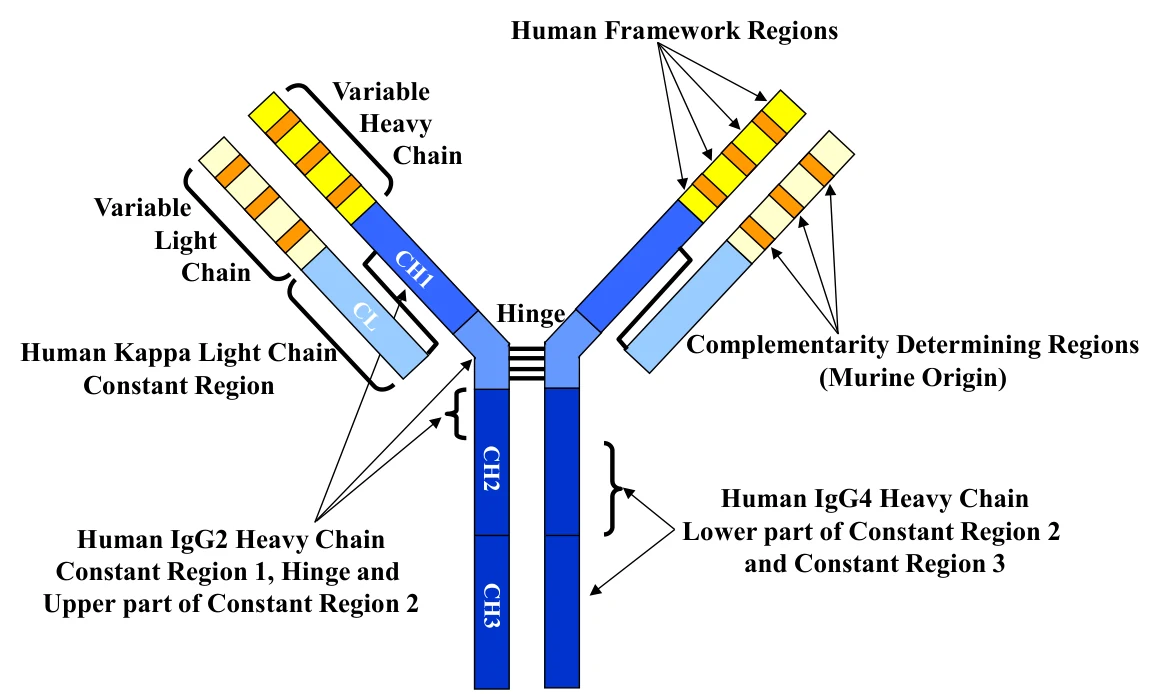
Ravulizumab is a humanized monoclonal antibody (mAb) consisting of 2 identical 448 amino acid heavy chains and 2 identical 214 amino acid light chains and has a molecular weight of approximately 148kDa. The constant regions of ravulizumab include the human kappa light chain constant region, and the protein engineered "IgG2/4" heavy chain constant region.
The heavy chain CH1 domain, hinge region, and the first 5 amino acids of the CH2 domain match the human IgG2 amino acid sequence, residues 6 to 36 in the CH2 region (common to both human IgG2 and IgG4 amino acid sequences), while the remainder of the CH2 domain and the CH3 domain match the human IgG4 amino acid sequence. The heavy and light chain variable regions that form the human C5 binding site consist of human framework regions grafted to murine complementarity-determining regions.
Description:
Ultomiris is a formulation of ravulizumab which is a long-acting humanized monoclonal IgG2/4K antibody produced in Chinese hamster ovary (CHO) cell culture by recombinant DNA technology.
14 CLINICAL TRIALS
14.1 Clinical Trials by Indication
Paroxysmal Nocturnal Hemoglobinuria (PNH)
Trial Design and Study Demographics
The safety and efficacy of Ultomiris in patients with PNH was assessed in two open-label, randomized, active-controlled, non-inferiority Phase 3 studies: Study ALXN1210-PNH-301 and Study ALXN1210-PNH-302. Study ALXN1210-PNH-301 enrolled patients with PNH who were complement inhibitor naïve and had active hemolysis. Study PNH-302 enrolled patients with PNH who were clinically stable after having been treated with eculizumab for at least the past 6 months.
Ultomiris was dosed in accordance with the recommended dosing described in Section 4.2, Recommended Dose and Dosage Adjustment (4 infusions of Ultomiris over 26 weeks) while Soliris was administered according to the approved dosing regimen of Soliris (15 infusions over 26 weeks) which was the standard-of-care for PNH at the time of studies.
To reduce the risk of meningococcal infection (Neisseria meningitidis), all patients were required to have been vaccinated against meningococcal infections within 3 years prior to, or at the time of, initiating study drug. Patients who initiated study drug treatment less than 2 weeks after receiving a meningococcal vaccine were required to have received treatment with appropriate prophylactic antibiotics until 2 weeks after vaccination.
A summary of key study design features and patient demographics for each study is given in Table 23 below.
Table 23: Summary of patient demographics for clinical trials in adult and pediatric patients with PNH
| Study | Trial design | Dosage, route of administration and duration | Study subjects (n) | Mean ageb (Range) | Sex n (%) |
| ALXN1210 -PNH-301 | Phase III, Multicentre, Open-label, randomized, active controlled in patients naïve to complement inhibitor treatment | Ultomiris Weight baseda; Loading dose on day 1 followed by maintenance dose on Day 15 and every 8 weeks after; Soliris Induction Dose of 600 mg on Days 1, 8, 15, and 22, followed by maintenance dose of 900 mg on Day 29, and every 2 weeks after; Intravenous Infusion; 26 Weeks | Ultomiris n=125 Soliris n=121 Total n=246 | Ultomiris 44.8 (18 – 83) Soliris 45 (18-86) | Ultomiris Male 65 (52) Female 60 (48) Soliris Male 69 (57) Female 52 (43) |
| ALXN1210 -PNH-302 | Phase 3, Multicentre, Open-label, randomized, active controlled in clinically stable patients treated with Soliris for at least 6 months | Ultomiris Weight baseda; Loading dose on day 1 followed by maintenance dose on Day 15 and every 8 weeks after; Soliris 900 mg every 2 weeks Intravenous Infusion; Duration: 26 Weeks followed by an extension period in which all patients receive Ultomiris maintenance dose q8w (patients switching from eculizumab received a weight-based loading dose followed 2 weeks later by a weight-based maintenance dose q8w) | Ultomiris n=97 Soliris n=98 Total n=195 | Ultomiris 46.6 (18-79) Soliris 48.8 (23-77) | Ultomiris Male 50 (51.5) Female 47 (48.5) Soliris Male 48 (49) Female 50 (51) |
| ALXN1210 -PNH-304 | Phase 3, open-label, uncontrolled, multicentre, single treatment arm study in pediatric patients with PNH who are complement inhibitor treatment-naïve or eculizumab-experienced | Ultomiris IV infusion Weight-based loadinga dose on Day 1 and maintenancea dose on Day 15 and q8w (q4w for patients < 20 kg Duration 26 weeks Primary Evaluation Period Extension period up to 4 years | n=12 complem ent inhibitor treatment -naïve n=4 Soliris (eculizum ab)-experienc ed n=8 | 14.4 (9-17) | Male 4 (33.3) Female 8 (66.7) |
aSee Section 4.2 Recommended Dose and Dosage Adjustment
bAge (years) at first infusion in study
q4w = once every 4 weeks; q8w = once every 8 weeks
ALXN1210-PNH-301 Study in complement-inhibitor naïve patients with PNH
Study ALXN1210-PNH-301 was a 26-week, multicenter, open-label, randomized, active-controlled, non-inferiority Phase 3 study conducted in 246 patients who were naïve to complement inhibitor treatment prior to study entry. The 26-week primary evaluation period was followed by a long-term extension period where all patients received Ultomiris. Eligible patients to enter this trial had to have a documented diagnosis of PNH with granulocyte or monocyte clone size of ≥ 5%. Ninety-eight percent of patients had a documented PNH-associated condition diagnosed prior to enrollment on the trial: anemia (85%), hemoglobinuria (63%), history of aplastic anemia (32%), history of renal failure (12%), myelodysplastic syndrome (5%), pregnancy complication (3%), and other (16%).
In addition, eligible patients had to demonstrate high disease activity, defined as LDH level ≥ 1.5 × ULN at screening along with the presence of 1 or more of the following PNH-related signs or symptoms within 3 months of screening: fatigue, hemoglobinuria, abdominal pain, shortness of breath (dyspnea), anemia (hemoglobin <10 g/dL), history of a major adverse vascular event (including thrombosis), dysphagia, or erectile dysfunction; or history of pRBC transfusion due to PNH.
Patients were stratified into 6 groups based on their transfusion history in the 1 year prior to the first dose of study drug, and screening LDH levels. The patients within each of the 6 groups were then randomly assigned in a 1:1 ratio to receive either Ultomiris or Soliris. Enrollment of patients without a history of transfusion in the previous year was capped at 20%.
Table 24 presents the baseline characteristics of the PNH patients enrolled in the Complement-Inhibitor Naïve Study.
Table 24: Baseline characteristics in the Complement-Inhibitor Naïve Study
| Parameter | Statistics | Ultomiris (N = 125) | Soliris (N = 121) |
|---|---|---|---|
Race Asian White Black or African American American Indian or Alaska Native Other Not reported | n (%) | 72 (57.6) 43 (34.4) 2 (1.6) 1 (0.8) 4 (3.2) 3 (2.4) | 57 (47.1) 51 (42.1) 4 (3.3) 1 (0.8) 4 (3.3) 4 (3.3) |
| Pre-treatment LDH levels (U/L) | Median Min, max | 1513.5 (378.0, 3759.5) | 1445.0 (423.5, 3139.5) |
| Units of pRBC/whole blood transfused within 12 months prior to first dose | Median Min, max | 6.0 (1, 44) | 6.0 (1, 32) |
| Antithrombotic agents used within 28 days prior to first dose | n (%) | 22 (17.6) | 22 (18.2) |
| Patients with a history of MAVEb | n (%) | 17 (13.6) | 25 (20.7) |
| Patients with a history of thrombosis | n (%) | 17 (13.6) | 20 (16.5) |
| Patients with concomitant anticoagulant treatment | n (%) | 23 (18.4) | 28 (23.1) |
a “Other” as specified on case report form included thrombocytopenia, chronic kidney disease, and pancytopenia, as well as a number of other conditions.
b MAVE = major adverse vascular event
Efficacy Results for ALXN1210-PNH-301 Study
The coprimary endpoints were transfusion avoidance, and reduction of hemolysis as directly measured by normalization of LDH levels. Transfusion avoidance was considered as achieved only by the patients who did not receive a transfusion and did not meet the protocol specified guidelines for transfusion from baseline to Day 183. Key secondary endpoints included the percent change from baseline in LDH levels; change in quality of life (FACIT-Fatigue); the proportion of patients with breakthrough hemolysis, defined as at least one new or worsening symptom or sign of intravascular hemolysis in the presence of elevated LDH ≥ 2 × ULN, after prior LDH reduction to < 1.5 × ULN on therapy; and proportion of patients with stabilized hemoglobin.
Non-inferiority of Ultomiris to eculizumab was demonstrated across endpoints in the complement inhibitor naïve treatment population described in the table below.
Table 25: Efficacy Results in the Complement-Inhibitor Naïve Study
Ultomiris (N=125) | Eculizumab (N=121) | Statistic for Comparison | Treatment Effect (95% CI) | |
|---|---|---|---|---|
| Transfusion avoidance rate | 73.6% | 66.1% | Difference in rate | 6.8 (-4.66, 18.14) |
| LDH normalization | 53.6% | 49.4% | Odds ratio | 1.19 (0.80, 1.77) |
| LDH percent change | -76.84% | -76.02% | Difference in % change from baseline | -0.83 (-5.21, 3.56) |
| Breakthrough hemolysis | 4.0% | 10.7% | Difference in rate | -6.7 (-14.21, 0.18) |
| Hemoglobin stabilization | 68.0% | 64.5% | Difference in rate | 2.9 (-8.80, 14.64) |
Note: LDH = lactate dehydrogenase; CI = confidence interval For the transfusion avoidance endpoint, treatment differences (95% CIs) are based on estimated differences in percent with 95% CI. For the lactate dehydrogenase normalization endpoint, the adjusted prevalence within each treatment is displayed.
A type I error of 1-sided 2.5% was used for the coprimary endpoints. Once noninferiority was declared for the coprimary endpoints, the key secondary endpoints were tested in a prespecified hierarchical testing procedure to control the Type-I error rate.
There was no observable difference in fatigue between Ultomiris and eculizumab after 26 weeks of treatment compared to baseline as measured by the FACIT-fatigue instrument. Patient-reported fatigue may be an under-or over-estimation, because patients were not blinded to treatment assignment.
The efficacy results for the extension period included all patients treated with Ultomiris (n = 244) and had a median treatment duration of 1423 days. Only descriptive efficacy results were available, which showed that most patients appeared to maintain Ultomiris treatment responses observed during the Primary Evaluation Period (through Day 183).
ALXN1210-PNH-302 Study in PNH patients previously treated with Soliris
Study PNH-302 was a 26-week, multicenter, open-label, randomized, active-controlled, non-inferiority Phase 3 study conducted in 195 patients with PNH who were clinically stable after having been treated with Soliris for at least the past 6 months. The 26-week primary evaluation period was followed by a long term extension period where all patients received Ultomiris.
Patients with PNH who were clinically stable (LDH level ≤1.5X ULN at screening) after having been treated with Soliris for at least 6 months were eligible for enrollment in the study. Ninety five percent of patients had a documented PNH-associated condition diagnosed prior to enrollment on the trial: anemia (67%), hematuria or hemoglobinuria (49%), history of aplastic anemia (37%), history of renal failure (9%), myelodysplastic syndrome (5%), pregnancy complication (7%), and other (14%).
Patients were stratified into 1 of 2 groups based on their transfusion history within the previous 12 months. Patients within each of the 2 groups were then randomly assigned in a 1:1 ratio to either continue treatment with Soliris or switch to Ultomiris.
Table 26 presents the baseline characteristics of the adult PNH patients enrolled in the Soliris-Experienced Study.
Table 26: Baseline characteristics in the Soliris-Experienced Study
| Parameter | Statistics | Ultomiris (N = 97) | Soliris (N = 98) |
|---|---|---|---|
Race White Asian Black or African American Other Not reported Unknown Multiple | n (%) | 50 (51.5) 23 (23.7) 5 (5.2) 2 (2.1) 13 (13.4) 3 (3.1) 1 (1.0) | 61 (62.2) 19 (19.4) 3 (3.1) 1 (1.0) 13 (13.3) 1 (1.0) 0 |
| Pre-treatment LDH levels (U/L) | Median Min, max | 224.0 135.0, 383.5 | 234.0 100.0, 365.5 |
| Units of pRBC/whole blood transfused within 12 months prior to first dose | Median Min, max | 4.0 (1, 32) | 2.5 (2, 15) |
| Antithrombotic agents used within 28 days prior to first dose | n (%) | 20 (20.6) | 13 (13.3) |
| Patients with a history of MAVEa | n (%) | 28 (28.9) | 22 (22.4) |
| Patients with a history of thrombosis | n (%) | 27 (27.8) | 21 (21.4) |
| Patients with concomitant anticoagulant treatment | n (%) | 22 (22.7) | 16 (16.3) |
a MAVE = major adverse vascular event
Efficacy Results for ALXN1210-PNH-302 Study
The primary endpoint was hemolysis as measured by LDH percent change from baseline. Secondary endpoints included the proportion of patients that experienced breakthrough hemolysis, quality-of-life (FACIT-Fatigue), transfusion avoidance (TA), and proportion of patients with stabilized hemoglobin.
Non-inferiority of Ultomiris to eculizumab was demonstrated across endpoints in the patients with PNH previously treated with eculizumab described in the table below.
Table 27: Efficacy Results in the Eculizumab-Experienced Patients with PNH Eculizumab- Experienced Study
Ultomiris n = 97 | Eculizumab n = 98 | Statistic for Comparison | Treatment Effect (95% CI) | |
|---|---|---|---|---|
| LDH Percent change | -0.82% | 8.4% | Difference in % change from baseline | 9.2 (-0.42, 18.8) |
| Breakthrough hemolysis | 0% | 5.1% | Difference in rate | 5.1 (-8.9, 19.0) |
| Transfusion avoidance | 87.6 % | 82.7% | Difference in rate | 5.5 (-4.3, 15.7) |
| Hemoglobin Stabilization | 76.3% | 75.5% | Difference in rate | 1.4 (-10.4, 13.3) |
Note: CI = confidence interval. A type I error of 1-sided 2.5% was used for the primary endpoint. Once noninferiority was declared for the primary endpoint, the key secondary endpoints were tested in a prespecified sequential testing procedure to control the Type-I error rate.
There was no observable difference in fatigue between Ultomiris and eculizumab after 26 weeks of treatment compared to baseline as measured by the FACIT-fatigue instrument. Patient-reported fatigue may be an under-or over-estimation, because patients were not blinded to treatment assignment.
The efficacy results for the extension period included all patients treated with Ultomiris (n = 192) and had a median treatment duration of 968 days. Only descriptive efficacy results were available, which showed that most patients appeared to maintain Ultomiris treatment responses observed during the Primary Evaluation Period (through Day 183).
ALXN1210-PNH-304 Study in Pediatric patients with PNH
The pediatric study (ALXN1210-PNH-304) was an open-label, single-arm study conducted in eculizumab-experienced and complement inhibitor treatment naïve pediatric patients with PNH. Patients who completed the 26-week primary evaluation period were followed for up to 4 years in the long-term Extension Period.
In an interim analysis a total of 12 PNH pediatric patients completed Ultomiris treatment during the Primary Evaluation Period (26 weeks). Most of the patients were between 12 and 17 years of age at first infusion, with 2 patients under 12 years old (11 and 9 years old). Based on body weight, patients received a loading dose of Ultomiris on Day 1, followed by maintenance treatment on Day 15 and once every 8 weeks (q8w) thereafter for patients weighing ≥ 20 kg, or once every 4 weeks (q4w) for patients weighing < 20 kg. For patients who entered the study on Soliris therapy, Day 1 of study treatment was planned to occur 2 weeks from the patient’s last dose of Soliris.
Table 28 presents the baseline characteristics of the pediatric patients with PNH enrolled in the clinical study.
Table 28: Baseline Characteristics of Pediatric Patients with PNH
| Parameter | Complement Inhibitor Treatment-naïve Patients (N= 4) | Eculizumab-Experienced Patients(N=8) | All Patients N=12 |
|---|---|---|---|
Sex, n (%) Male Female | 3 (75.0) 1 (25.0) | 1 (12.5) 7 (87.5) | 4 (33.3) 8 (66.7) |
Age at first infusion (years) category, n(%) Mean (SD) Median (min, max) | 14.5 (2.52) 15.0 (11, 17) | 14.4 (3.07) 15.0 (9, 17) | 14.4 (2.78) 15.0 (9, 17) |
| Age at first infusion (years) category, n(%) |
| < 12 years |
| ≥ 12 years |
1 (25.0) 3 (75.0) | 1 (25.0) 7 (87.5) | 2 (16.7) 10 (83.3) | |
Baseline weight (kg) category, n (%) ≥ 30 to < 40 kg ≥ 40 to < 60 kg ≥60 to < 100 kg | 1 (25.0) 2 (50.0) 1 (25.0) | 1 (12.5) 4 (50.0) 3 (37.5) | 2 (16.7) 6 (50.0) 4 (33.3) |
LDH (U/L) Mean (SD) Median (min, max) | 961.38 (874.302) 565.90 (444, 2269.7) | 262.75 (106.016) 251.50 (140.5, 487) | NA |
| Number of patients with pRBC/whole blood transfusions within 12 months prior to first dose, n (%) | 2 (50.0) | 2 (25.0) | 4 (25.0) |
Note: Percentages were based on the total number of patients in each cohort, or overall.
LDH = lactate dehydrogenase; max = maximum; min = minimum; NA = not available; PNH = paroxysmal nocturnal hemoglobinuria; SD = standard deviation
Efficacy Results for ALXN1210-PNH-304 Study
The weight-based dose regimen of Ultomiris provided immediate, complete, and sustained inhibition of terminal complement throughout the entire 26-week treatment period regardless of prior experience with Soliris. Following initiation of Ultomiris treatment, steady-state therapeutic serum concentrations of Ultomiris were achieved after the first dose and maintained throughout the Primary Evaluation Period in both cohorts.
Three of the 5 complement inhibitor treatment-naïve patients and 6 of the 8 Soliris-experienced patients achieved hemoglobin stabilization by Week 26, respectively. Transfusion-avoidance was reached for 10 of 12 patients during the 26-week Primary Evaluation Period. There were no breakthrough hemolysis events during the 26-week Primary Evaluation Period and no patients had post-baseline free C5 levels above 0.5 μg/mL.
A clinically relevant improvement from baseline in fatigue as assessed by Pediatric FACIT-Fatigue (i.e., mean improvement of > 3 units for Pediatric FACIT-Fatigue scores) was sustained throughout the Primary Evaluation Period in the 5 complement inhibitor treatment-naïve patients. A slight improvement was also observed in Soliris-experienced patients; however, patients were not blinded to treatment assignment. Table 29 presents efficacy outcomes for the Primary Evaluation Period.
Table 29: Efficacy Outcomes for the 26-Week Primary Evaluation Period of the Pediatric Study in Patients with PNH (ALXN1210-PNH-304)
| Endpoint | Treatment Naïve (N = 5) | Eculizumab Experienced (N = 8) |
|---|---|---|
| LDH- % Change from Baseline Mean (SD) | -47.91 (52.716) | 4.65 (44.702) |
| % of Patients achieving Transfusion Avoidance (95%CI) | 60.0 (14.66, 94.73) | 100.0 (63.06, 100.00) |
Change in FACIT-Fatigue Mean (SD) | 3.40 (6.107) | 1.28 (5.235) |
| % of patients with Hemoglobin Stabilization (95%CI) | 60.0 (14.66, 94.73) | 75 (34.91, 96.81) |
| Breakthrough Hemolysis (%) | 0 | 0a |
a No patients experienced breakthrough hemolysis during the Primary Evaluation Period. One patient experienced breakthrough hemolysis after 1.8 years of treatment during the Extension Period; however, at the time of the breakthrough hemolysis event the patient had adequate C5 inhibition (free C5 < 0.5 µg/mL).
Abbreviations: CI = confidence interval; FACIT = Functional Assessment of Chronic Illness Therapy; SD = standard deviation
The efficacy results for the extension period with a median treatment duration of 915 days appeared to show a sustained treatment response in most pediatric patients with PNH.
Based on these data, pediatric patients with PNH can be initiated on Ultomiris or switched from Soliris to Ultomiris. The efficacy of Ultomiris in pediatric PNH patients appears to be similar to that observed in adult PNH patients enrolled in pivotal studies.
Atypical Hemolytic Uremic Syndrome (aHUS)
Trial Design and Study Demographics
The safety and efficacy of Ultomiris in patients with aHUS was assessed in 2 open label, single arm, Phase 3 studies. Study ALXN1210-aHUS-311 enrolled adult patients and Study ALXN1210-aHUS-312 enrolled pediatric patients. In order to qualify for enrollment, patients were required to have a platelet count ≤150 x 109/L, evidence of hemolysis such as an elevation in serum LDH, and serum creatinine above the upper limits of normal or required dialysis.
A summary of key study design features and patient demographics for each study is given in Table 30 below.
Table 30: Summary of Patient Demographics for Clinical Trials in Adult and Pediatric Patients with aHUS
| Study | Trial design | Dosage, route of administration and duration | Study subjects (n) | Mean ageb (Range) | Sex n (%) |
|---|---|---|---|---|---|
| ALXN1210- | Phase 3, open-label, | Ravulizumab IV | 58 | 42.2 | Male |
| aHUS-311 | uncontrolled, multicentre, single treatment arm study in adult patients with evidence of TMA who are naïve to complement inhibitor treatment | Weight-based loading dose on Day 1 and maintenance dose on Day 15 and q8w Duration: 26 -week initial evaluation period, up to 2-year extension period | (19.5-76.6) | 19 (33.9) | |
| ALXN1210-aHUS-312 | Phase 3, open-label, uncontrolled, multicentre, single treatment arm study in pediatric patients with evidence of TMA who are naïve to complement inhibitor treatment (Cohort 1) or were clinically stable after having been treated with eculizumab according to the labeled dosing recommendation for aHUS for at least 90 days (Cohort 2) | Ravulizumab IV Weight-based loading dose on Day 1 and maintenance dose on Day 15 and q8w (q4w for patients < 20 kg) Duration: 26 -week initial evaluation period up to 2-year extension period | 31a Cohort 1: 21 a Cohort 2: 10 | Ravulizumab Naïve (N=18) Birth to < 2 years =2, 2 to < 6 years =9, 6 to < 12 years =5, 12 to < 18 years =2 Ravulizumab switch (N=10) Birth to < 2 years = 1, 2 to < 6 years =1, 6 to < 12 years =1, 12 to < 18 years =7 | Ravulizumab- Naïve Male 8 (44.4) Ravulizumab switch Male 9 (90.0) |
Loading and maintenance doses were per DOSAGE AND ADMINISTRATION, Table 1. a The final study population that has received at least 1 dose of ravulizumab in Study ALXN1210-aHUS-312 is 34 patients (24 in Cohort1 and 10 in Cohort 2). The interim CSR for this study includes results through at least Week 52 (or early withdrawal) from the first 21 patients in Cohort 1 and all 10 patients in Cohort 2. q4w = once every 4 weeks; q8w = once every 8 weeks
ALXN1210-aHUS-311 Study in Adult Patients with aHUS
The adult study was conducted in patients who were naïve to complement inhibitor treatment prior to study entry. The study consisted of a 26-week Initial Evaluation Period and patients were allowed to enter an extension period for up to 4.5 years.
A total of 58 patients with documented TMA were enrolled. Enrolment criteria excluded patient presenting with TMA due to a disintegrin and metalloproteinase with a thrombospondin type 1 motif, member 13 (ADAMTS13) deficiency, Shiga toxin Escherichia coli related hemolytic uremic syndrome (STEC-HUS) and genetic defect in cobalamin C metabolism. Two patients were excluded from the Full Analysis Set due to a confirmed diagnosis of Shiga toxin Escherichia coli-related hemolytic uremic syndrome (STEC-HUS).
The majority of patients had extra renal signs or symptoms of aHUS at baseline. At baseline, 71.4% (n = 41) of patients had Stage 5 chronic kidney disease (CKD).
Table 31 presents the demographics and baseline characteristics of the 56 adult patients enrolled in Study ALXN1210-aHUS-311 that constituted the Full Analysis Set.
Table 31: Baseline Characteristics in Adult Patients with aHUS
| Parameter | Statistics | Ravulizumab (N = 56) |
| Age at time of first infusion (years) | Mean (SD) Min, max | 42.2 (14.98) 19.5, 76.6 |
Sex Male | n (%) | 19 (33.9) |
Race a Asian White Unknown Other | n (%) | 15 (26.8) 29 (51.8) 8 (14.3) 14 (7.2) |
Any pretreatment extra-renal signs or symptoms of aHUS Cardiovascular Pulmonary Central nervous system Gastrointestinal Skin Skeletal muscle | n (%) | 52 (92.9) 39 (69.6) 25 (44.6) 29 (51.8) 35 (62.5) 17 (30.4) 13 (23.2) |
| History of transplant | n (%) | 8 (14.3) |
| Patients postpartum | N (%) | 8 (14.3) |
Platelets (109/L) blood [normal range 130 to 400 × 109/L] | n Mean (SD) Median (min, max) | 56 118.52 (86.440) 95.25 (18, 473) |
Hemoglobin (g/L) blood [normal range 115 to 160 g/L (female), 130 to 175 g/L (male)] | n Mean (SD) Median (min, max) | 56 86.26 (14.866) 85.00 (60.5, 140) |
LDH (U/L) serum [normal range 120 to 246 U/L] | n Mean (SD) Median (min, max) | 56 702.38 (557.959) 508.00 (229.5, 3249) |
| eGFR (mL/min/1.73 m2) | n (%) | 55 |
| [normal range ≥ 60 mL/min/1.73 m2] | Mean (SD) Median (min, max) | 15.86 (14.815) 10.00 (4, 80) |
| Patients on dialysis | N (%) | 29 (51.8) |
Note: Percentages are based on the total number of patients. eGFR = estimated glomerular filtration rate; LDH = lactate dehydrogenase; max = maximum; min = minimum; TMA = thrombotic microangiopathy
Efficacy results for ALXN1210-aHUS-311 Study
The primary endpoint was Complete TMA Response during the 26-week Initial Evaluation Period, as evidenced by normalization of hematological parameters (platelet count and LDH) and ≥ 25% improvement in serum creatinine from baseline. Patients had to meet each Complete TMA Response criteria at 2 separate assessments obtained at least 4 weeks (28 days) apart, and any measurement in between.
Other endpoints included time to Complete TMA Response, Complete TMA Response status over time, platelet count change from baseline, dialysis requirement, and renal function,
Complete TMA Response was observed in 30 of the 56 patients (53.6%) during the 26-week Initial Evaluation Period as shown in Table 32.
Table 32 : Complete TMA Response and Complete TMA Response Components Analysis during the 26-Week Initial Evaluation Period (ALXN1210- aHUS-311)
| Total | Responder | ||||
|---|---|---|---|---|---|
| n | Proportion (95% CI)a | ||||
| Complete TMA response | 56 | 30 | 0.536 (0.396, 0.675) | ||
Components of Complete TMA Response Platelet count normalization LDH normalization ≥25% improvement in serum creatinine from baseline | 56 56 56 | 47 43 33 | 0.839 (0.734, 0.944) 0.768 (0.648, 0.887) 0.589 (0.452, 0.727) | ||
| Hematologic normalization | 56 | 41 | 0.732 (0.607, 0.857) | ||
a 95% CIs for the proportion were based on the asymptotic Gaussian approximation method with a continuity correction.
CI = confidence interval; LDH = lactate dehydrogenase; TMA = thrombotic microangiopathy.
Four additional patients had a Complete TMA Response that was confirmed after the 26-week Initial Evaluation Period.
Complete TMA Response was achieved at a median time of 86 days (7 to 169 days). The median duration of Complete TMA Response was 7.97 months (range: 2.52 to 16.69 months). An increase in mean platelet count was observed after commencement of ravulizumab, increasing from 118.52 × 10⁹/L at baseline to 240.34 ×10⁹/L at Day 8 and remaining above 227 × 109/L at all subsequent visits in the Initial Evaluation Period (26 weeks).
Renal function, as estimated glomerular filtration rate (eGFR), was improved or maintained during ravulizumab treatment. The mean eGFR (SD) increased from 15.86 (14.82) at baseline to 51.83 (39.16) by 26 weeks. In patients with Complete TMA Response, renal function continued to improve after the Complete TMA Response was achieved. Two thirds of the patient population (32/47), who were mostly CKD Stage 4 or 5 at baseline, improved by 1 or more CKD stages. Chronic kidney disease stage continued to improve for many patients (19/30) after achieving Complete TMA Response during the 26-week Initial Evaluation Period. Seventeen of the 29 patients who required dialysis at study entry were able to discontinue dialysis by the end of the available follow-up and 6 of 27 patients who were off dialysis at baseline were on dialysis at last available follow-up.
ALXN1210-aHUS-312 Study in Pediatric Patients with aHUS
This is a 26-week, ongoing pediatric study. A total of 18 Soliris-naïve patients with documented diagnosis of complement-mediated TMA were enrolled and included in the full analysis set. Enrolment criteria excluded patient presenting with TMA due to ADAMTS13 deficiency, STEC-HUS and genetic defect in cobalamin C metabolism. The mean age at the time of first infusion was 6.4 years. The overall mean weight at Baseline was 22.2 kg; majority of the patients were in the baseline weight category ≥ 10 to < 20 kg. The majority of patients (72.2%) had pretreatment extra renal signs (cardiovascular, pulmonary, central nervous system, gastrointestinal, skin, skeletal muscle) or symptoms of aHUS at baseline. At baseline, 33.3% (n = 6) of patients had CKD Stage 5. A total of 10 patients who switched from Soliris to Ultomiris with documented diagnosis of complement-mediated TMA were enrolled. Patients had to have clinical response to Soliris prior to enrollment.
Table 33 presents the baseline characteristics of the pediatric patients enrolled in Study ALXN1210-aHUS-312.
Table 33: Demographics and Baseline Characteristics in Pediatric Patients with aHUS
| Parameter | Statistics | Ravulizumab (Naïve, N = 18) | Ravulizumab (Switch, N = 10) |
Age at time of first infusion (years) category Birth to < 2 years 2 to < 6 years 6 to < 12 years 12 to < 18 years | n (%) | 2 (11.1) 9 (50.0) 5 (27.8) 2 (11.1) | 1 (10.0) 1 (10.0) 1 (10.0) 7 (70.0) |
Sex Male | n (%) | 8 (44.4) | 9 (90.0) |
Racea American Indian or Alaskan Native Asian Black or African American White Unknown | n (%) | 1 (5.6) 5 (27.8) 3 (16.7) 9 (50.0) 1 (5.6) | 0 (0.0) 4 (40.0) 1 (10.0) 5 (50.0) 0 (0.0) |
Any pretreatment extra-renal signs or symptoms of aHUS Cardiovascular Pulmonary Central Nervous System Gastrointestinal Skin Skeletal muscle | n (%) | 13 (72.2) 9 (50.0) 1 (5.6) 7 (38.9) 11 (61.1) 9 (50.0) 1 (5.6) | 1 (10.0) 1 (10.0) 0 (0) 0 (0) 0 (0) 0 (0) 0 (0) |
| History of transplant | n (%) | 1 (5.6) | 1 (10.0) |
| Platelets (109/L) blood [normal range 229 to 533 × 109/L] | Mean (SD) Median (min, max) | 60.39 (32.613) 51.25 (14, 125) | 287.90 (74.596) 281.75 (207, 415.5) |
| Hemoglobin (g/L) blood [normal range 107 to 131 g/L] | Mean (SD) Median (min, max) | 74.42 (17.387) 74.25 (32, 106) | 131.50 (11.311) 132.0 (114.5, 148) |
| LDH (U/L) serum [normal range 165 to 395 U/L] | Mean (SD) Median (min, max) | 2223.47 (1321.118) 1963.00 (772, 4985) | 219.40 (56.850) 206.5 (138.5, 356) |
| eGFR (mL/min/1.73 m2) [normal range ≥ 60 mL/min/1.73 m2] | Mean (SD) Median (min, max) | 26.4 (21.17) 22.0 (10, 84) | 104.90 (29.545) 99.75 (54, 136.5) |
| Required dialysis at baseline | n (%) | 6 (33.3) | 0 (0.0) |
Note: Percentages are based on the total number of patients.
a Patients can have multiple races selected.
aHUS = atypical hemolytic uremic syndrome; eGFR = estimated glomerular filtration rate; LDH = lactate dehydrogenase; max = maximum; min = minimum
Efficacy Results ALXN1210-aHUS-312 Study in Pediatric Patients with aHUS
The primary endpoint was Complete TMA Response during the 26-week Initial Evaluation Period, as evidenced by normalization of hematological parameters (platelet count and LDH) and ≥ 25% improvement in serum creatinine from baseline. Patients had to meet all Complete TMA Response criteria at 2 separate assessments obtained at least 4 weeks (28 days) apart, and any measurement in between.
Secondary endpoints included time to Complete TMA Response, TMA response status over time, dialysis requirement, and platelet count change from baseline, dialysis requirement, and renal function.
Complete TMA Response was observed in 14 of the 18 naïve patients (77.8%) during the 26-week Initial Evaluation Period as shown in Table 34.
Table 34: Complete TMA Response and Complete TMA Response Components Analysis during the 26-Week Initial Evaluation Period (ALXN1210-aHUS-312)
| Total | Responder | ||||
| n | Proportion (95% CI)a | ||||
| Complete TMA Response | 18 | 14 | 0.778 (0.524, 0.936) | ||
Components of Complete TMA Response Platelet count normalization LDH normalization ≥ 25% improvement in serum creatinine from baseline | 18 18 18 | 17 16 15 | 0.944 (0.727, 0.999) 0.889 (0.653, 0.986) 0.833 (0.586, 0.964) | ||
| Hematologic normalization | 18 | 16 | 0.889 (0.653, 0.986) | ||
Note: 1 patient withdrew from study after receiving 2 doses of ravulizumab.
a 95% CIs for the proportion were based on the asymptotic Gaussian approximation method with a continuity correction.
CI = confidence interval; LDH = lactate dehydrogenase; TMA = thrombotic microangiopathy
Three additional patients had a Complete TMA Response that was confirmed after the 26-week Initial Evaluation Period.
Complete TMA Response during the Initial Evaluation Period was achieved at a median time of 30 days (15 to 97 days). The median duration of Complete TMA Response was 5.08 months (range: 3.08 to 5.54 months). An increase in mean platelet count was observed after commencement of ravulizumab, increasing from 60.50 × 10⁹/L at baseline to 296.67 × 10⁹/L at Day 8 and remained above 296 × 109/L at all subsequent visits in the Initial Evaluation Period (26 weeks).
All 6 patients who required dialysis at study entry were able to discontinue dialysis; 5 of which had already done so by Day 43. The mean eGFR (+/- SD) increased from 28.4 (23.11) at baseline to 108.0 (63.21) by 26 weeks.
Generalized Myasthenia Gravis (gMG)
Trial Design and Study Demographics
Table 35: Summary of Patient Demographics for Clinical Trial in patients with gMG
| Study | Trial design | Dosage, route of administration and duration | Study subjects (n) | Mean ageC (Range) | Sex n (%) |
| ALXN1210 -MG-306 | Phase 3, randomized, double-blind, parallel-group, placebo-controlled, multicentre study with an ongoing open-label extension Period in adult patients with gMG who were naïve to complement inhibitor treatment | Primary Evaluation Period (Day 1): Ultomiris Ravulizumab IV weight-based loadinga dose on Day 1 and weight-based maintenanceb dose starting on Day 15 and q8w thereafter Placebo Matched dosing to ravulizumab IV Blinded loading dose (900 mg) for all patients at Week 26 Extension Period (Week 28): Ravulizumab IV weight-based maintenance doseb q8w | Ultomiris n=86 Placebo n=89 Total n=175 | Ultomiris 58.0 (19 to 79) Placebo 53.3 (20 to 82) | Ultomiris Male 42 (49) Female 44 (51) Placebo Male 44 (49) Female 45 (51) |
a Ravulizumab loading dose: 2400 mg for patients weighing ≥ 40 to < 60 kg, 2700 mg for patients weighing ≥ 60 to < 100 kg, 3000 mg for patients weighing ≥ 100 kg.
b Ravulizumab maintenance dose: 3000 mg for patients weighing ≥ 40 to < 60 kg, 3300 mg for patients weighing ≥ 60 to < 100 kg, 3600 mg for patients weighing ≥ 100 kg.
c Age at first dose of study drug (years)
The efficacy and safety of Ultomiris in adult patients with gMG was assessed in a Phase 3, randomized, double-blind, placebo-controlled, multicentre study (ALXN1210-MG-306). Patients participating in this study were randomized 1:1 to either receive Ultomiris (N=86) or placebo (N=89) for the 26-week Randomized-Controlled Period (RCP), and were subsequently allowed to enter an Open-Label Extension (OLE) Period during which all patients received Ultomiris.
Patients with gMG (diagnosed for at least 6 months) with a positive serologic test for antiacetylcholine receptor (AChR) antibodies, MGFA (Myasthenia Gravis Foundation of America) clinical classification Class II to IV and remaining symptomatology as evidenced by a Myasthenia Gravis Activities of Daily Living (MG-ADL) total score ≥ 6 were enrolled. Patients were not on chronic IVIg or PE/PP treatment within 4 weeks prior to study entry. Prior treatment with immunosuppressant therapies (ISTs) (corticosteroids, azathioprine, cyclophosphamide, cyclosporine, methotrexate, mycophenolate mofetil, or tacrolimus) was not required for enrollment. However, patients on ISTs were permitted to continue on therapy throughout the course of the study. In addition, rescue therapy (including high-dose corticosteroid, PE/PP, or IVIg) was allowed if a patient experienced clinical deterioration, as defined by the study protocol.
A total of 162 (92.6%) patients completed the 26-week RCP. The baseline characteristics of patients were balanced across the two treatment groups (Table 36).
Table 36: Baseline Disease Characteristics in Study ALXN1210-MG-306
| Parameter | Statistics | Placebo (N = 89) | Ultomiris (N = 86) |
|---|---|---|---|
| Sex Male Female | n (%) | 44 (49.4) 45 (50.6) | 42 (48.8) 44 (51.2) |
| Age at first dose of study drug (years) | Mean (SD) (min, max) | 53.3 (16.05) (20, 82) | 58.0 (13.82) (19, 79) |
| Duration of MG since diagnosis (years) | Mean (SD) (min, max) Median | 10.0 (8.90) (0.5, 36.1) 7.6 | 9.8 (9.68) (0.5, 39.5) 5.7 |
| Baseline MG-ADL Score | Mean (SD) (min, max) Median | 8.9 (2.30) (6.0, 15.0) 9.0 | 9.1 (2.62) (6.0, 24.0) 9.0 |
| Baseline QMG Score | Mean (SD) (min, max) Median | 14.5 (5.26) (2.0, 27.0) 14.0 | 14.8 (5.21) (6.0, 39.0) 15.0 |
| Baseline MGFA classification Class II (mild weakness) Class III (moderate weakness) Class IV (severe weakness) | n (%) | 39 (44) 45 (51) 5 (6) | 39 (45) 41 (48) 6 (7) |
| Any prior intubation since diagnosis (MGFA Class V) | n (%) | 9 (10.1) | 8 (9.3) |
| Number of patients receiving stable corticosteroids at study entry | n (%) | 65 (73.0) | 56 (65.1) |
| Number of patients receiving other stable immunosuppressant agents* at study entry | n (%) | 63 (70.8) | 56 (65.1) |
* Other immunosuppressant agents include azathioprine, cyclophosphamide, cyclosporine, methotrexate, mycophenolate mofetil, or tacrolimus.
Abbreviations: Max = maximum; min = minimum; MG = myasthenia gravis; MG-ADL = Myasthenia Gravis Activities of Daily Living; MGFA = Myasthenia Gravis Foundation of America; QMG = Quantitative Myasthenia Gravis; SD = standard deviation
The primary endpoint was the change from baseline in the MG-ADL total score at Week 26. The MG-ADL is a patient reported 8-item categorical scale that assesses the impact on daily function of 8 signs or symptoms that are typically affected in gMG. The MG-ADL score is composed of the following items: Assessment of the ability to speak, chew, swallow, breathe, perform self-care activities, perform physical activities, and vision-related parameters (2 items). Each item is assessed on a 4-point scale where a score of 0 represents normal function and a score of 3 represents loss of ability to perform that function. The total score ranges from 0 to 24, with a higher score indicating more impairment.
The key secondary endpoint was the change from baseline in the Quantitative Myasthenia Gravis (QMG) total score at Week 26. The QMG is a physician-reported 13-item categorical scale that assesses the impact of muscle weakness on disease severity, based on impairments of body functions and structures. The QMG score is composed of the following items: ocular (2 items), facial (1 item), bulbar (2 items), gross motor (6 items), axial (1 item), and respiratory (1 item). Each item is assessed on a 4-point scale where a score of 0 represents ‘no weakness’ and a score of 3 represents ‘severe weakness’ (total score 0-39).
Additionally secondary endpoints assessed at Week 26 included the proportion of patients with improvements of at least 5-points in QMG, and at least 3-points in the MG-ADL total scores, respectively, as well as changes in quality of life assessments.
Efficacy Results for ALXN1210-MG-306 Study
Ultomiris demonstrated a statistically significant change from baseline in MG-ADL total score at Week 26, as compared to placebo. The results are presented in Table 37.
Table 37: Results of Primary and Key Secondary Efficacy Endpoint
| Change from baseline to Week 26 | Placebo (N = 89) LS Mean (SEM) | Ultomiris (N = 86) LS Mean (SEM) | Treatment Effect (95% CI)a |
|---|---|---|---|
| MG-ADL | -1.4 (0.37) | -3.1 (0.38) | -1.6 (-2.6, -0.7)b |
| QMG | -0.8 (0.45) | -2.8 (0.46) | -2.0 (-3.2, -0.8)b |
a Based on a mixed effect repeated measures analysis b Statistically significant under multiplicity control for Ultomiris vs placebo comparison (p < 0.05).
Abbreviations: CI = confidence interval; LS = least squares; MG-ADL = Myasthenia Gravis Activities of Daily Living; QMG = Quantitative Myasthenia Gravis; SEM = standard error of mean
The proportion of clinical responders was consistently greater for Ultomiris compared to placebo for QMG ≥ 5-point improvement [30.0% vs. 11.3%; risk ratio (95% confidence interval [CI]): 2.7 (1.4, 5.3)] and MG-ADL ≥ 3-point improvement [56.7% vs. 34.1%; risk ratio (95% CI): 1.6 (1.2, 2.3)] endpoints.
In patients treated with Ultomiris, favourable changes were observed in all domain scores of the MG-ADL and in the ocular, bulbar, and limb domain scores of the QMG.
Figure 1: Change from Baseline in MG-ADL Total Score (A) and QMG Total Score (B) Through Week 26 of the Randomized Controlled Period of ALXN1210-MG-306 (Mean and 95% CI)a
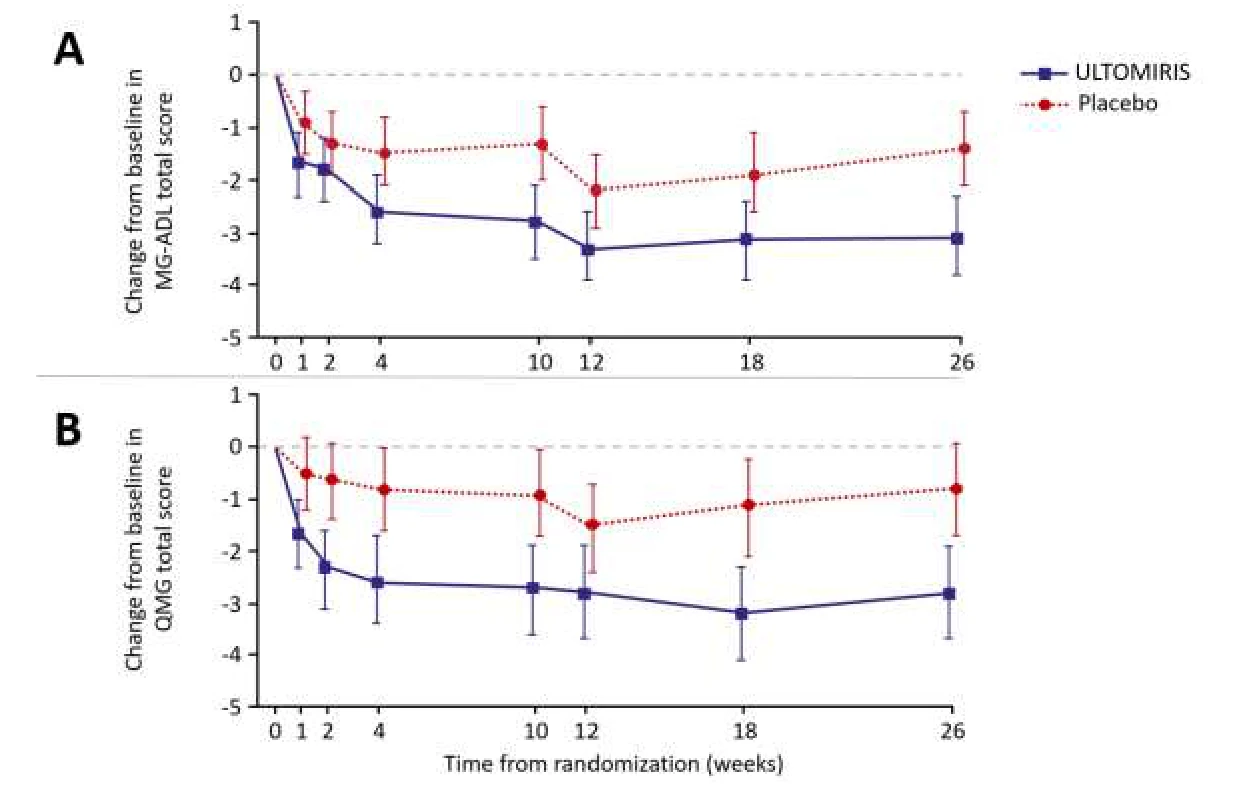
Note: Loading dose at Week 0 followed by maintenance doses at Week 2 and then Q8W thereafter. aBased on a mixed effect repeated measures analysis
In the ongoing uncontrolled Open-Label Extension of ALXN1210-MG-306, among the subset of subjects randomized to ravulizumab, the mean changes in MG-ADL and QMG observed at Week 52 were -4.2 (n=35) and -4.7 (n=34).
Neuromyelitis Spectrum Disorder (NMOSD)
Trial Design and Study Demographics
ALXN1210-NMO-307 Study in Adult Patients with NMOSD
The efficacy and safety of Ultomiris in adult patients with anti-AQP4 antibody-positive NMOSD was assessed in Study ALXN1210-NMO-307, which was designed as an open-label, multicenter study using the placebo arm of the Study ECU-NMO-301 (eculizumab versus placebo in patients with NMOSD) to demonstrate Ultomiris superiority over placebo. Patients participating in Study ALXN1210-NMO-307 received Ultomiris intravenously in the Primary Treatment Period that ended when the last enrolled patient completed (or discontinued prior to) 52 weeks on study, representing a median study duration of 73.5 weeks (minimum 13.7, maximum 117.7 weeks). Patients were subsequently allowed to enter a Long-Term Extension Period during which all patients continued to receive Ultomiris for up to 2 years.
A summary of key study design features and patient demographics for each study is given in Table 38 below.
Table 38 : Summary of Patient Demographics for Clinical Trials in Adult Patients with NMOSD
| Study | Trial Design | Dosage, route of administration and duration | Study subjects (n) | Mean agec (Range) | Sex n (%) |
|---|---|---|---|---|---|
| ALXN1210-NMO-307 | Phase III, External Placebo-Controlled, Open-Label, Multicentre Study to evaluate the efficacy and safety of Ravulizumab in adult patients with NMOSD | Ravulizumab IV weight-based loadinga dose on Day 1 and weight-based maintenanceb dose starting on Day 15 and q8w thereafter Duration: Median study duration of 73.5 weeks (minimum 13.7, maximum 117.7 weeks) | Ultomiris n=58 Placebo n=47 | Ultomiris 46.0 (18, 74) Placebo 44.0 (21, 75) | Ultomiris Female 52 (89.7 %) Placebo 42 (89.4 %) |
a Ravulizumab loading dose: 2400 mg for patients weighing ≥ 40 to < 60 kg, 2700 mg for patients weighing ≥ 60 to < 100 kg, 3000 mg for patients weighing ≥ 100 kg.
b Ravulizumab maintenance dose: 3000 mg for patients weighing ≥ 40 to < 60 kg, 3300 mg for patients weighing ≥ 60 to < 100 kg, 3600 mg for patients weighing ≥ 100 kg.
c Age at first dose of study drug (years)
Study ALXN1210-NMO-307 enrolled 58 patients with NMOSD who had a positive serologic test for anti-AQP4 antibodies, at least 1 relapse in the last 12 months prior to the Screening Period, and an Expanded Disability Status Scale (EDSS) score ≤ 7. Prior treatment with immunosuppressant therapies (ISTs) was not required for enrollment. However, patients on selected ISTs (ie, corticosteroids, azathioprine, mycophenolate mofetil, tacrolimus) were permitted to continue on therapy, with a requirement for stable dosing until they reached Week 106 in the study. At that point, changes could be made at the discretion of the Investigator. In addition, acute therapy for relapse treatment (including high-dose corticosteroids, PE/PP, and IVIg) was allowed if a patient experienced a relapse during the study.
A total of 56 (96.6%) patients completed the Primary Treatment Period of Study ALXN1210-NMO-307. Patients included in the study had a mean age of 47.4 years (ranging from 18 to 74 years) and most of them were female (90%). Median age at NMOSD initial clinical presentation was 42.5 years, ranging from 16 to 73 years. Baseline characteristics for Study ALXN1210-NMO-307 and for the comparative external placebo arm of study ECU-NMO-301 are shown in Table 39 below.
Table 39: Baseline characteristics of the adult patients enrolled in Study ALXN1210-NMO-307 and comparative external placebo arm of study ECU-NMO-301.
| Variable | Statistic | ECU-NMO-301 Placebo (N=47) | ALXN1210-NMO-307 Ultomiris (N=58) | ||||||||
|---|---|---|---|---|---|---|---|---|---|---|---|
| Time from NMOSD initial clinical presentation to first dose of study drug (years) | Mean (SD) | 6.60 (6.59) | 5.19 (6.38) | ||||||||
| Median | 3.76 | 1.96 | |||||||||
| Min, max | 0.51, 29.10 | 0.19, 24.49 | |||||||||
| Historical ARR within 24 months prior to Screening | Mean (SD) | 2.07 (1.04) | 1.87 (1.59) | ||||||||
| Median | 1.92 | 1.44 | |||||||||
| Min, max | 1.0, 6.4 | 0.5, 6.9 | |||||||||
| Baseline HAI score | Mean (SD) | 2.1 (1.40) | 1.2 (1.42) | ||||||||
| Median | 2.0 | 1.0 | |||||||||
| Min, max | 0, 6 | 0, 7 | |||||||||
| Baseline EDSS score | Mean (SD) | 4.26 (1.51) | 3.30 (1.58) | ||||||||
| Median | 4.00 | 3.25 | |||||||||
| Min, max | 1.0, 6.5 | 0.0, 7.0 | |||||||||
| Historical rituximab use | n (%) | 20 (42.6) | 21 (36.2) | ||||||||
| Number of patients receiving stable corticosteroids only at study entry | n (%) | 11 (23.4) | 12 (20.7) | ||||||||
| Number of patients not receiving any IST at study entry | n (%) | 13 (27.7) | 30 (51.7) | ||||||||
Abbreviations: ARR=annualized relapse rate; EDSS = Expanded Disability Status Scale; HAI = Hauser Ambulatory Index; IST = immunosuppressant therapy; max = maximum; min = minimum; NMOSD = neuromyelitis optica spectrum disorder; SD = standard deviation
Efficacy Results for ALXN1210-NMO-307 study
The primary endpoint of Study ALXN1210-NMO-307 was the time to first adjudicated on-trial relapse as determined by an independent adjudication committee. No adjudicated on-trial relapse was observed in Ultomiris-treated patients during the median Primary Treatment Period of 73.5 weeks. The observed proportion of adjudicated on-trial relapse was 42.6 in the external placebo arm. The proportion of relapse-free patients at Week 48 was 100 % on Ultomiris versus 63.2% in the external historical placebo arm. All Ultomiris-treated patients remained relapse free at Week 72, including patients not on concomitant treatment.
Figure 2: Kaplan-Meier Survival Estimates for Time to First Adjudicated On-Trial Relapse in Study ALXN1210-NMO-307 and Comparative Placebo Arm of STUDY ECU-NMO-301.
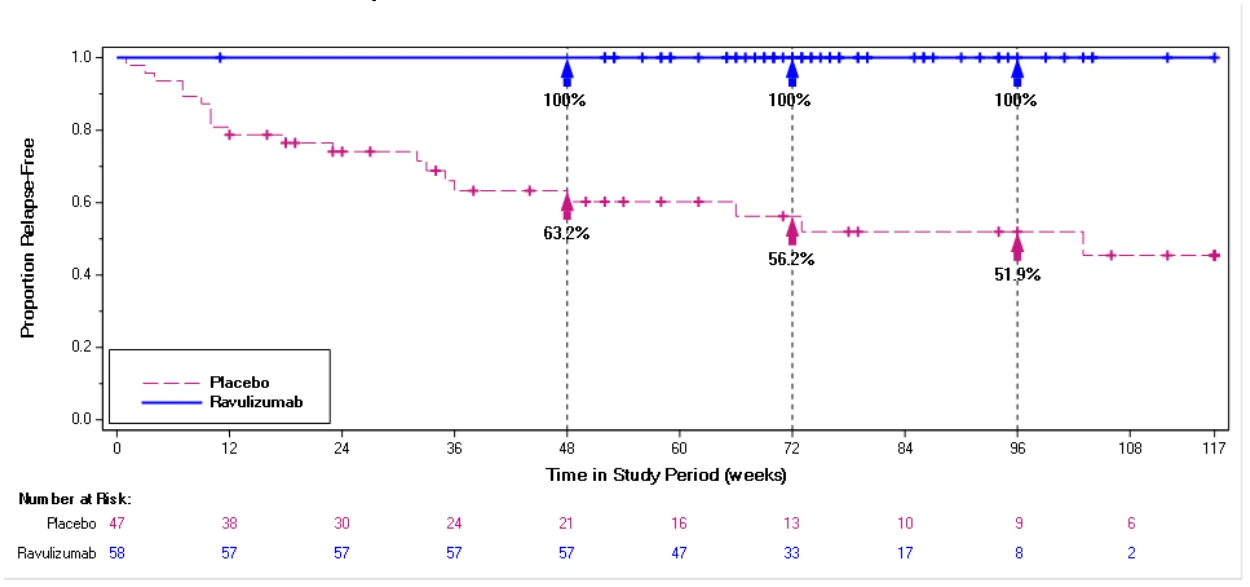
Ultomiris-treated patients had an adjudicated on-trial annualized relapse rate (ARR) of zero as compared to 0.25, which was chosen to represent a conservative ARR that may be experienced in the NMOSD patient population. This corresponds to comparing zero case of relapse on Ultomiris-treated patients with 21 expected relapses on untreated patients over the same study period.
Ravuliumab has not been studied for the acute treatment of relapses in NMOSD patients.
16 NON-CLINICAL TOXICOLOGY
Animal toxicology studies have not been conducted with ravulizumab due to a lack of pharmacologic activity in non-human species, but were conducted in mice with a surrogate murine anti-mouse C5 antibody, BB5.1.
General Toxicology:
A 26-week repeat-dose toxicity study in mice was performed with the surrogate antibody BB5.1. Animals were intravenously administered vehicle control or BB5.1 at a dose of 30 mg/kg body weight once or twice weekly. C5-induced hemolytic activity in an ex vivo assay was effectively blocked throughout the course of the study in both female and male mice. Administration with BB5.1 did not affect any of the toxicity parameters examined. The no-observed-adverse-effect level (NOAEL) in this study was 30 mg/kg body weight administered twice weekly.
Carcinogenicity:
No studies have been performed to evaluate the carcinogenic potential of ravulizumab.
Genotoxicity:
No studies have been performed to evaluate the genotoxic potential of ravulizumab.
Reproductive and Developmental Toxicology:
Three reproductive and developmental studies were conducted with the murine surrogate molecule, BB5.1.
In a fertility and early embryonic development study, BB5.1 was administered by intravenous injection to male and female mice from prior to mating, throughout mating, and post-mating until termination (males) or through early gestation until gestation day (GD) 7 (females) at a dose of 30 mg/kg body weight once or twice weekly. This study included assessment of potential effects on general toxicity, estrous cycling, sperm parameters, mating behavior, implantation, general fertility, and litter parameters. There were no test article-related adverse findings in this study. Thus, the NOAEL for effects on fertility and early embryonic development was 30 mg/kg body weight administered twice weekly.
In an embryo-fetal development study, the maternal and embryo/fetal toxicity and teratogenic potential of BB5.1 were evaluated following administration to pregnant mice during the period of organogenesis (GD 6 to 15). BB5.1 was administered by intravenous injection at a dose of 30 mg/kg body weight once or twice weekly. Fetal malformations consisted of two cases of retinal dysplasia and one case of umbilical hernia observed among 230 fetuses from dams administered BB5.1 twice weekly. Similar findings were not observed following administration of BB5.1 once weekly. No other adverse findings were observed following administration of BB5.1, including no increase in fetal loss or neonatal death. Based on the fetal soft tissue malformations observed following twice weekly dosing, the NOAEL for developmental toxicity was 30 mg/kg body weight administered once weekly.
A pre- and postnatal development study was conducted to evaluate the effects of BB5.1 on pregnant and lactating female mice and the development of the offspring. BB5.1 was administered to female mice by intravenous injection at a dose of 30 mg/kg body weight once or twice weekly from implantation through weaning (GD 6 to lactation day 18). No adverse effects on pregnancy or delivery were observed following administration of BB5.1. However, a higher number of male offspring from dams administered BB5.1 became moribund or died (1/25 in the control group, 2/25 in the 30 mg/kg body weight once weekly group, and 5/25 in the 30 mg/kg body weight twice weekly group). There was also an increased incidence of dilated renal pelves in male offspring of both BB5.1 dose groups. No other adverse developmental findings were observed in surviving offspring, including in reproductive performance.