


Product Monograph - Soliris
RECENT MAJOR LABEL CHANGES
| 1 INDICATIONS, 1.1 Pediatrics (Paroxysmal Nocturnal Hemoglobinuria) | 07/2025 |
|---|---|
| 4 DOSAGE AND ADMINISTRATION, 4.2 Recommended Dose and Dose Adjustment and 4.4 Administration | 07/2025 |
TABLE OF CONTENTS
Sections or subsections that are not applicable at the time of authorization are not listed.
RECENT MAJOR LABEL CHANGES ........................................................................................... 2
TABLE OF CONTENTS ............................................................................................................. 2
PART I: HEALTH PROFESSIONAL INFORMATION ..................................................................... 4
1 INDICATIONS .............................................................................................................. 4
1.1 Pediatrics ....................................................................................................................... 4
1.2 Geriatrics ....................................................................................................................... 5
2 CONTRAINDICATIONS ................................................................................................. 5
3 SERIOUS WARNINGS AND PRECAUTIONS BOX ............................................................ 5
4 DOSAGE AND ADMINISTRATION ................................................................................. 7
4.1 Dosing Considerations .................................................................................................. 7
4.2 Recommended Dose and Dosage Adjustment ............................................................. 7
4.3 Reconstitution ............................................................................................................... 9
4.4 Administration ............................................................................................................ 10
4.5 Missed Dose ................................................................................................................ 10
5 OVERDOSAGE ........................................................................................................... 10
6 DOSAGE FORMS, STRENGTHS, COMPOSITION AND PACKAGING ............................... 10
7 WARNINGS AND PRECAUTIONS ................................................................................ 11
7.1 Special Populations ..................................................................................................... 15
7.1.1 Pregnant Women .............................................................................................. 15
7.1.2 Breast-feeding ................................................................................................... 15
7.1.3 Pediatrics ........................................................................................................... 16
7.1.4 Geriatrics ........................................................................................................... 16
8 ADVERSE REACTIONS................................................................................................ 16
8.1 Adverse Reaction Overview ........................................................................................ 16
8.2 Clinical Trial Adverse Reactions .................................................................................. 16
8.2.1 Clinical Trial Adverse Reactions – Pediatrics..................................................... 22
8.3 Less Common Clinical Trial Adverse Reactions ............... Error! Bookmark not defined.
8.4 Abnormal Laboratory Findings: Hematologic, Clinical Chemistry and Other Quantitative Data .............................................................................................................. 24
8.5 Post-Market Adverse Reactions .................................................................................. 25
9 DRUG INTERACTIONS ............................................................................................... 26
9.2 Drug Interactions Overview ........................................................................................ 26
9.3 Drug-Behavioural Interactions .................................................................................... 26
9.4 Drug-Drug Interactions ............................................................................................... 26
9.5 Drug-Food Interactions ............................................................................................... 26
9.6 Drug-Herb Interactions ............................................................................................... 26
9.7 Drug-Laboratory Test Interactions .............................................................................. 26
10 CLINICAL PHARMACOLOGY ....................................................................................... 26
10.1 Mechanism of Action ................................................................................................ 26
10.2 Pharmacodynamics ................................................................................................... 26
10.3 Pharmacokinetics ...................................................................................................... 27
11 STORAGE, STABILITY AND DISPOSAL ......................................................................... 27
12 SPECIAL HANDLING INSTRUCTIONS ........................................................................... 28
PART II: SCIENTIFIC INFORMATION ...................................................................................... 29
13 PHARMACEUTICAL INFORMATION ........................................................................... 29
14 CLINICAL TRIALS ....................................................................................................... 30
14.1 Clinical Trials by Indication........................................................................................ 30
15 MICROBIOLOGY ....................................................................................................... 49
16 NON-CLINICAL TOXICOLOGY ..................................................................................... 49
PATIENT MEDICATION INFORMATION ................................................................................. 50
PART I: HEALTH PROFESSIONAL INFORMATION
1 INDICATIONS
SOLIRIS (eculizumab for injection) is indicated for:
Paroxysmal Nocturnal Hemoglobinuria (PNH)
Soliris (eculizumab for injection) is indicated for the treatment of patients with paroxysmal nocturnal hemoglobinuria (PNH) to reduce hemolysis. SOLIRIS was studied in clinical trials in patients with a history of at least one transfusion during the past two years (see 14 CLINICAL TRIALS).
Atypical Hemolytic Uremic Syndrome (atypical HUS)
Soliris (eculizumab for injection) is indicated for the treatment of patients with atypical hemolytic uremic syndrome (atypical HUS) to reduce complement-mediated thrombotic microangiopathy.
Soliris is not indicated for the treatment of patients with Shiga toxin-producing E. coli related hemolytic uremic syndrome (STEC-HUS).
Generalized Myasthenia Gravis (gMG)
Soliris (eculizumab for injection) is indicated in adult patients with generalized Myasthenia Gravis (gMG).
SOLIRIS was studied in clinical trials in patients who were anti-acetylcholine receptor (AChR) antibody positive and refractory, defined as failure of treatment with two or more immunosuppressive therapies (ISTs) either in combination or as monotherapy, or failed at least one IST and required chronic plasmapheresis, plasma exchange (PE), or intravenous immunoglobulin (IVIg) to control symptoms. Patients continued to receive standard therapy throughout the pivotal clinical trial.
Neuromyelitis Optica Spectrum Disorder (NMOSD)
Soliris (eculizumab for injection) is indicated for the treatment of neuromyelitis optica spectrum disorder (NMOSD) in adult patients who are anti-aquaporin-4 (AQP4) antibody positive.
SOLIRIS is not intended for acute treatment of an NMOSD relapse.
1.1 Pediatrics
Pediatrics (<18 years of age):
PNH
Based on the data submitted and reviewed by Health Canada, the safety and efficacy of Soliris in pediatric patients has been established. Therefore, Health Canada has authorized an indication for pediatric use (see 14 Error! Reference source not found.)
Atypical HUS
Based on the data submitted and reviewed by Health Canada, the safety and efficacy of Soliris in 28 pediatric patients with atypical HUS has been established; therefore, Health Canada has authorized an indication for pediatric use (see 14 CLINICAL TRIALS)
gMG
The safety and effectiveness of Soliris for the treatment of gMG in pediatric patients below the age of 18 years have not been established.
NMOSD
The safety and effectiveness of Soliris for the treatment of NMOSD in pediatric patients below the age of 18 years have not been established.
1.2 Geriatrics
Geriatrics (≥65 years of age):
Soliris may be administered to patients aged 65 years and over. Fifty-two patients 65 years of age or older (15 with PNH, 4 with atypical HUS, 26 with gMG and 7 with NMOSD) were treated with Soliris in clinical studies. Although there were no apparent age-related differences observed in these studies, the number of patients aged 65 and over is not sufficient to determine whether they respond similarly to younger patients.
2 CONTRAINDICATIONS
Soliris is contraindicated in patients who are hypersensitive to this drug, murine proteins, or to any ingredient in the formulation, including any non-medicinal ingredient, or component of the container. For a complete listing, see 6 DOSAGE FORMS, STRENGTHS, COMPOSITION AND PACKAGING.
Do not initiate Soliris therapy in patients:
- with unresolved Neisseria meningitidis infection
- who are not currently vaccinated against Neisseria meningitidis (unless they receive prophylactic treatment with appropriate antibiotics until 2 weeks after vaccination)
Please refer to section 7 WARNINGS AND PRECAUTIONS , Serious Meningococcal Infections.
3 SERIOUS WARNINGS AND PRECAUTIONS BOX
Serious Warnings and Precautions
Meningococcal infections
Cases of serious or fatal meningococcal infections have been reported in patients treated with Soliris. Meningococcal infections may become rapidly life-threatening or fatal if not recognized and treated early.
Comply with the most current National Advisory Committee on Immunization (NACI)
recommendations for meningococcal vaccination in patients with complement deficiencies.
All patients must be vaccinated with meningococcal vaccines prior to, or at the time of, initiating Soliris, unless the risks of delaying Soliris therapy outweigh the risks of developing
- a meningococcal infection; revaccinate according to current medical guidelines for vaccine use.
- All patients must be monitored for early signs of meningococcal infections, evaluated immediately if infection is suspected, and treated with antibiotics, if necessary.
Vaccination may not prevent all meningococcal infections.
Serious Meningococcal Infections:
Due to its mechanism of action, the use of Soliris increases the patient's susceptibility to meningococcal infection (Neisseria meningitidis). Meningococcal disease due to any serogroup may occur. To reduce the risk of infection, all patients must be vaccinated against meningococcal infections prior to, or at the time of, initiating Soliris. Patients who initiate Soliris treatment less than 2 weeks after receiving a meningococcal vaccine must receive treatment with appropriate prophylactic antibiotics until 2 weeks after vaccination. Vaccines against serogroups A, C, Y, W 135 and B where available, are recommended in preventing the commonly pathogenic meningococcal serogroups. Patients must be vaccinated or revaccinated according to current national vaccination guidelines for vaccination use. Vaccination may not be sufficient to prevent meningococcal infection. Consideration should be given to official guidance on the appropriate use of antibacterial agents.
Vaccination, particularly with a vaccine against serogroup B meningococcal infection, may further activate complement. As a result, patients with complement-mediated diseases, including PNH, atypical HUS, gMG and NMOSD, may experience increased signs and symptoms of their underlying disease, such as hemolysis (PNH), TMA complications (atypical HUS), MG exacerbation (gMG) or relapse (NMOSD). Therefore, patients should be closely monitored for disease symptoms after recommended vaccination. For patients stabilized on Soliris and receiving maintenance therapy, and for whom additional vaccination is warranted, careful consideration should be given to the timing of vaccination (or booster in patients previously vaccinated against meningococcal infections) relative to administration of Soliris. It is recommended to vaccinate only when the underlying complement mediated disease is clinically controlled with Soliris, and when systemic eculizumab concentrations are considered to be relatively high (i.e. within one week following a Soliris infusion).
Cases of serious or fatal meningococcal infections have been reported in Soliris treated patients. All patients should be monitored for early signs of meningococcal infection, evaluated immediately if infection is suspected, and treated with antibiotics, if necessary. Patients should be informed of these signs and symptoms and steps to take to seek medical care immediately (see 8 ADVERSE REACTIONS). Discontinue Soliris in patients who are undergoing treatment for serious meningococcal infections.
Other Systemic Infections:
Due to its mechanism of action, Soliris therapy should be administered with caution to patients with active systemic infections. Soliris blocks terminal complement activation; therefore patients may have increased susceptibility to infections, especially with Neisseria and encapsulated bacteria. Serious infections with Neisseria species (other than Neisseria meningitidis), including disseminated gonococcal infections, have been reported. Counsel patients about gonorrhea prevention and advise regular testing for patients at risk. Additionally, Aspergillus infections have occurred in immunocompromised and neutropenic patients. Patients should be provided with information from the Patient Information Brochure to increase their awareness of potential serious infections and their signs and symptoms.
Children treated with Soliris may be at increased risk of developing serious infections due to Streptococcus pneumoniae and Haemophilus influenzae type b (Hib). Administer vaccinations for the prevention of Streptococcus pneumoniae and Haemophilus influenzae type b (Hib) infections according to national guidelines. For patients stabilized on eculizumab and receiving maintenance therapy, and for whom additional vaccination is warranted, careful consideration should be given to the timing of vaccination relative to administration of Soliris (see 7 WARNINGS AND PRECAUTIONS, Serious Meningococcal Infections)
4 DOSAGE AND ADMINISTRATION
4.1 Dosing Considerations
- Soliris should be administered by a qualified healthcare professional.
- Administer vaccinations for the prevention of infection due to Neisseria meningitidis, Streptococcus pneumoniae and Haemophilus influenzae type b according to the NACI guidelines (see 3 Serious Warnings and Precautions Box).
- Use caution when administering Soliris to patients with any systemic infection. Serious infections, infectious agents and subsequent treatments for these infections should be documented for all patients treated with Soliris.
- Do not administer as an IV Push or Bolus Injection.
- The dose and/or infusion rate must not be changed without consulting the prescribing or treating healthcare professional.
- Personnel trained in emergency measures should be readily available during the Soliris infusion and for a specified time after infusion.
- If a patient experiences an anaphylactic or another acute reaction, immediately discontinue the Soliris infusion, initiate appropriate medical treatment and seek the attention of a healthcare professional (see 7 Warnings and Precautions).
- If severe or serious reactions occur, subsequent infusions should only occur in a setting where resuscitation measures are available.
Home infusion
Home infusion under the supervision of a healthcare professional may be considered for patients after evaluation and recommendation from the prescribing or treating physician.
Home infusions should be performed by a qualified healthcare professional. Appropriate medical infrastructure, resources and procedures must be established and available to the healthcare professional administering home infusions.
4.2 Recommended Dose and Dosage Adjustment
Recommended Dosage Regimen - PNH
For patients 18 years of age and older (≥ 40 kg bw), Soliris therapy consists of:
- 600 mg every 7 days for the first 4 weeks, followed by
- 900 mg for the fifth dose 1 week later, then
- 900 mg every 2 weeks thereafter.
Soliris should be administered at the recommended dosage regimen time points, or within two days of these time points (see 7 WARNINGS AND PRECAUTIONS).
Recommended Dosage Regimen – atypical HUS, gMG and NMOSD For patients 18 years of age and older (≥ 40 kg bw), Soliris therapy consists of:
- 900 mg weekly for the first 4 weeks, followed by
- 1200 mg for the fifth dose 1 week later, then
- 1200 mg every 2 weeks thereafter
Dosage Regimen in Pediatrics – PNH and atypical HUS
For pediatric patients with PNH and atypical HUS, and with body weights (bw) below 40 kg, administer Soliris based upon body weight, according to the following schedule (Table 1):
Table 1: Dosing recommendations in < 40 kg patients, less than 18 years of age with PNH and atypical HUS
| Patient Body Weight | Induction | Maintenance |
|---|---|---|
| 30 kg to less than 40 kg | 600 mg weekly x 2 doses | 900 mg at week 3; then 900 mg every 2 weeks |
| 20 kg to less than 30 kg | 600 mg weekly x 2 doses | 600 mg at week 3; then 600 mg every 2 weeks |
| 10 kg to less than 20 kg | 600 mg weekly x 1 dose | 300 mg at week 2; then 300 mg every 2 weeks |
| 5 kg to less than 10 kg | 300 mg weekly x 1 dose | 300 mg at week 2; then 300 mg every 3 weeks |
The dosage estimated to be used in pediatric patients with PNH or atypical HUS and weighing less than 40 kg is identical. Modeling of dosage is based on maintaining Soliris serum level at 50 µg/mL.
Supplemental dose
For adult patients with atypical HUS, gMG or NMOSD, and pediatric patients with atypical HUS, supplemental dosing of Soliris is required in the setting of concomitant support with plasmapheresis (PP) or plasma exchange (PE); or fresh frozen plasma infusion (PI) (Table 2). The goal of the additional dosing after plasma intervention is to restore and maintain the plasma concentration above targeted therapeutic concentration. The impact of IVIg on eculizumab levels in patients with gMG has not been studied.
Table 2 : Supplemental dose of Soliris after plasmapheresis/plasma exchange/plasma infusion
| Type of Intervention | Most Recent Soliris Dose | Soliris Dose with Each PP/PE/PI Intervention | Timing of Supplemental Soliris Dose |
|---|---|---|---|
| Plasmapheresis or plasma exchange | 300 mg | 300 mg per each plasmapheresis or plasma exchange session | Within 60 minutes after each plasmapheresis or plasma exchange |
| 600 mg or more | 600 mg per each plasmapheresis or plasma exchange session | ||
| Fresh frozen plasma infusion | 300 mg or more | 300 mg per infusion of fresh frozen plasma | 60 minutes prior to each infusion of fresh frozen plasma |
Based on pharmacokinetic simulation and data from PNH and atypical HUS patients who received plasma intervention while on eculizumab therapy. Plasma exchange resulted in an approximately 50% decline in eculizumab concentrations following a 1-hour intervention and the half-life of eculizumab was reduced to 1.3 hours.
The recommended doses in Table 1 and Table 2 are based entirely on estimates from a weight-based, one-compartment pharmacokinetic model in adult patients with PNH, which adequately described eculizumab pharmacokinetics and pharmacodynamics.
Soliris should be administered at the recommended dosage regimen time points, or within two days of these time points (see 7 WARNINGS AND PRECAUTIONS).
4.3 Reconstitution
Parenteral Products:
Soliris must be diluted to a final admixture concentration of 5 mg/mL using the following steps:
- Withdraw the required amount of Soliris from the vial into a sterile syringe
- Transfer the recommended dose to an infusion bag
- Dilute Soliris to a final concentration of 5 mg/mL by adding the appropriate amount (equal volume of diluent to drug volume) of 0.9% Sodium Chloride Injection, USP; 0.45% Sodium Chloride Injection, USP; 5% Dextrose in Water Injection, USP; or Ringer’s Injection, USP to the infusion bag.
- The final admixed Soliris 5 mg/mL infusion volume is 60 mL for 300 mg doses, 120 mL for 600 mg doses, 180 mL for 900 mg doses or 240 mL for 1200 mg doses (Table 3). Gently invert the infusion bag containing the diluted Soliris solution to ensure thorough mixing of the product and diluent.
- Prior to administration, the admixture should be allowed to adjust to room temperature [18°-25°C, 64°-77°F]. The admixture must not be heated in a microwave or with any heat source other than ambient air temperature. The Soliris admixture should be inspected visually for particulate matter and discolouration prior to administration.
Table 3 – Reconstitution
| Dose | Vial Size | Volume of Diluent to be Added to Vial | Approximate Available Volume | Concentration per mL |
| 300 mg | 30 mL x 1 | 30 mL | 60 mL | 5 mg/mL |
| 600 mg | 30 mL x 2 | 60 mL | 120 mL | 5 mg/mL |
| 900 mg | 30 mL x 3 | 90 mL | 180 mL | 5 mg/mL |
| 1200 mg | 30 mL x 4 | 120 mL | 240 mL | 5 mg/mL |
Discard any unused portion left in a vial, as the product contains no preservatives.
4.4 Administration
DO NOT ADMINISTER AS AN IV PUSH OR BOLUS INJECTION.
The Soliris admixture should be administered by intravenous infusion over 35 minutes in adults and 1-4 hours in pediatric patients via gravity feed, a syringe-type pump, or an infusion pump. Admixed solutions of Soliris are stable for 24 hours at 2-8°C and at room temperature. However, Soliris contains no preservative so infusion of the admixture should begin as soon as possible after mixing.
If an adverse reaction occurs during the administration of Soliris, the infusion may be slowed or stopped at the discretion of the physician. If the infusion is slowed, the total infusion time should not exceed two hours in adults and four hours in pediatric patients. Monitor the patient for at least one hour following completion of the infusion for signs or symptoms of an infusion reaction.
4.5 Missed Dose
In case of a missed dose, resume the regular schedule as soon as possible (See 7 WARNINGS AND PRECAUTIONS).
5 OVERDOSAGE
Soliris is to be administered under the supervision of a healthcare professional which minimizes the potential of a significant overdose. No cases of overdose have been reported during clinical studies.
For management of a suspected drug overdose, contact your regional poison control centre.
6 DOSAGE FORMS, STRENGTHS, COMPOSITION AND PACKAGING
To help ensure the traceability of biologic products, including biosimilars, health professionals should recognise the importance of recording both the brand name and the non-proprietary (active ingredient) name as well as other product-specific identifiers such as the Drug Identification Number (DIN) and the batch/lot number of the product supplied.
Table 4– Dosage Forms, Strengths, Composition and Packaging
Soliris is a sterile, clear, colourless, preservative-free 10 mg/mL solution for intravenous (IV) infusion and is supplied in 30-mL single-use vials. The product is formulated at pH 7.0 and each vial contains 300 mg of eculizumab, 13.8 mg sodium phosphate monobasic, 53.4 mg sodium phosphate dibasic, 263.1 mg sodium chloride, 6.6 mg polysorbate 80 (vegetable origin) and Water for Injection, USP.
Soliris is supplied as 300 mg single-use vials each containing 30 mL of 10 mg/mL sterile, preservative-free eculizumab solution. Each carton contains one vial.
7 WARNINGS AND PRECAUTIONS
Please see the 3 SERIOUS WARNINGS AND PRECAUTIONS BOX
Soliris blocks terminal complement; therefore, patients may have increased susceptibility to Neisseria meningitis
General
Monitoring Disease Manifestations after Soliris Discontinuation/Missed Dose
Treatment Discontinuation for PNH
Since Soliris therapy increases the number of PNH cells (e.g., in the double-blind, placebo-controlled PNH Study C04-001, the proportion of PNH RBCs increased among Soliris-treated patients by a median of 28% from baseline (range from -25% to 69%), patients who discontinue treatment with Soliris may be at increased risk for serious hemolysis. Serious hemolysis is identified by serum LDH levels greater than the pre-treatment level, along with any of the following: greater than 25% absolute decrease in PNH clone size (in the absence of dilution due to transfusion) in one week or less; a hemoglobin level of <5 gm/dL or a decrease of >4 gm/dL in one week or less; angina; change in mental status; a 50% increase in serum creatinine level; or thrombosis. Monitor any patient who discontinues Soliris for at least 8 weeks to detect serious hemolysis and other reactions.
If serious hemolysis occurs after Soliris discontinuation, consider the following procedures/ treatments: blood transfusion (packed RBCs), or exchange transfusion if the PNH RBCs are >50% of the total RBCs by flow cytometry, anticoagulation, corticosteroids, or reinstitution of Soliris, but this was not tested in clinical trials.
In clinical studies, 16 of 196 patients with PNH discontinued treatment with Soliris. Patients were followed for evidence of worsening hemolysis and no serious hemolysis was observed.
Monitor patients after discontinuing Soliris for at least 8 weeks to detect hemolysis.
| Route of Administration | Dosage Form / Strength/Composition | Non-medicinal Ingredients |
| Intravenous (IV) infusion | 300 mg single-use vial | Polysorbate 80 (vegetable origin) Sodium chloride Sodium phosphate dibasic Sodium phosphate monobasic Water for Injection USP |
Treatment Discontinuation for atypical HUS
Soliris treatment is recommended to continue for the patient’s lifetime, unless the discontinuation of Soliris is clinically indicated (see 7 WARNINGS AND PRECAUTIONS).
Thrombotic microangiopathy complications were observed after Soliris discontinuation in the atypical HUS clinical studies. If patients with atypical HUS discontinue treatment with Soliris they should be monitored closely for signs and symptoms of thrombotic microangiopathy complications. Monitoring may be insufficient to predict or prevent severe thrombotic microangiopathy complications in patients with atypical HUS after discontinuation of Soliris.
Thrombotic microangiopathy (TMA) complications post discontinuation can be identified by (i) Any two, or repeated measurement of any one, of the following: a decrease in platelet count of 25% or more as compared to either baseline or to peak platelet count during Soliris treatment; an increase in serum creatinine of 25% or more as compared to baseline or to nadir during Soliris treatment; or, an increase in serum LDH of 25% or more as compared to baseline or to nadir during Soliris treatment; or by (ii) any one of the following: a change in mental status or seizures; angina or dyspnoea; or thrombosis.
Monitor any patient who discontinues Soliris for at least 12 weeks to detect thrombotic microangiopathy complications.
If thrombotic microangiopathy complications occur after Soliris discontinuation, consider reinstitution of Soliris treatment, plasma therapy [plasmapheresis, plasma exchange, or fresh frozen plasma (PE/PI)], or appropriate organ-specific supportive measures including renal support with dialysis, respiratory support with mechanical ventilation or anticoagulation. In atypical HUS clinical studies, 18 patients (5 in the prospective studies) discontinued Soliris treatment. Seven (7) thrombotic microangiopathy complications were observed following the missed dose in 5 patients and Soliris was re-initiated in 4 of these 5 patients.
Treatment Discontinuation for gMG
Use of Soliris in gMG treatment has only been studied in the setting of chronic administration. Patients that discontinue Soliris treatment should be carefully monitored for signs and symptoms of disease exacerbation.
Treatment Discontinuation for NMOSD
Use of Soliris in NMOSD treatment has been studied only in the setting of chronic administration and the effect of Soliris discontinuation has not been characterized. Patients who discontinue Soliris treatment should be carefully monitored for signs and symptoms of potential NMOSD relapse.
Immunization
Prior to initiating Soliris therapy, it is recommended that patients with PNH, atypical HUS, gMG, or NMOSD receive immunizations according to current immunization guidelines. Additionally, all patients must receive meningococcal vaccines prior to, or at the time of receiving Soliris. Patients less than 2 years of age and those who are treated with Soliris less than 2 weeks after receiving a meningococcal vaccine must receive treatment with appropriate prophylactic antibiotics until 2 weeks after vaccination. Vaccines against serotypes A, C, Y, W135, and B, are recommended in preventing the commonly pathogenic meningococcal serotypes.
Children treated with Soliris may be at increased risk of developing serious infections due to Streptococcus pneumoniae and Haemophilus influenzae type b (Hib). Administer vaccinations for the prevention of Streptococcus pneumoniae and Haemophilus influenzae type b (Hib) infections according to NACI guidelines. Additionally, Aspergillus infections have occurred in immunocompromised and neutropenic patients. Use caution when administering Soliris to patients with any systemic infection.
Immunosuppressant and Anticholinesterase Therapies
gMG
Patients in gMG clinical trials continued treatment with immunosuppressant and anticholinesterase therapies while on Soliris treatment. Withdrawal of immunosuppressant and anticholinesterase therapies during Soliris treatment for gMG was not assessed in the placebo-controlled studies.
If background immunosuppressant or anticholinesterase therapies are decreased or discontinued, patients should be monitored closely for signs of disease exacerbation.
NMOSD
Patients who entered NMOSD clinical trials while receiving background immunosuppressant therapy continued treatment with immunosuppressant therapy while on Soliris treatment. Withdrawal of immunosuppressant therapy during Soliris treatment for NMOSD was not assessed in the placebo-controlled study. If background immunosuppressant therapy is decreased or discontinued, patients should be monitored closely for signs and symptoms of potential NMOSD relapse.
Carcinogenesis and Mutagenesis
Carcinogenesis and mutagenesis studies have not been performed. There is no evidence to suggest that the use of Soliris is associated with carcinogenesis (see 16 NON-CLINICAL TOXICOLOGY).
Cardiovascular
In atypical HUS clinical trials, serious cardiovascular events such as hypertension, venous thrombosis and tachycardia were observed.
In the management of thrombosis, the effect of withdrawal of anticoagulant therapy during Soliris treatment has not been established.
Gastrointestinal
Rare episodes of severe abdominal pain have been reported with Soliris treatment.
Genitourinary
Serious urinary tract infections and disseminated gonococcal infections have been reported. Counsel patients about gonorrhea prevention and advise regular testing for patients at-risk.
Immune
Infrequent antibody responses have been detected in Soliris-treated patients across all clinical studies. In PNH placebo-controlled studies, low antibody responses have been reported with a frequency (3.4%) similar to that of placebo (4.8%).
In patients with atypical HUS treated with Soliris, antibodies to Soliris were detected in 3/100 (3%) by ECL bridging format assay. 1/100 (1%) of atypical HUS patients had low positive values for neutralizing antibodies.
In a gMG placebo-controlled study, none (0/62) of the Soliris treated patients showed antidrug antibody response during the 26 week active treatment.
In an NMOSD placebo-controlled study, 2/95 (2.1%) of the Soliris treated patients showed an antidrug antibody (ADA) response. Positive ADA samples were low titer and transient. Both patients were negative for neutralizing antibodies.
There has been no observed correlation of antibody development to clinical response or adverse events.
Infections
Soliris blocks terminal complement; therefore patients are at increased risk of serious infections caused by Neisseria meningitis and encapsulated bacteria (see 3 SERIOUS WARNINGS AND PRECAUTIONS BOX). Meningococcal sepsis is the most serious adverse reaction experienced by patients receiving Soliris.
In clinical studies, 2 out of 196 patients with PNH developed serious meningococcal infections while receiving treatment with Soliris; both had been vaccinated. In clinical studies among non-PNH patients, meningococcal meningitis occurred in one unvaccinated patient. In addition, 3 out of 130 previously vaccinated patients with atypical HUS developed meningococcal infections while receiving treatment with Soliris.
No meningococcal infections were reported in completed gMG and NMOSD clinical studies.
Monitoring and Laboratory Tests
PNH
PNH patients receiving Soliris therapy should be monitored for intravascular hemolysis by measuring LDH levels and may require dose adjustment within the recommended 14 ± 2 day dosing schedule during the maintenance phase (up to every 12 days).
Atypical HUS
Patients with atypical HUS receiving Soliris therapy should be monitored for early signs of thrombotic microangiopathy (TMA) including a decrease in platelet count and increases in serum LDH and creatinine levels. Follow patients for signs of TMA by monitoring serial platelet counts, serum LDH, and creatinine during Soliris therapy and for a minimum of 12 weeks after discontinuation of Soliris (see General, Monitoring Disease Manifestations after Soliris Discontinuation/Missed Dose). Patients may require dose adjustment within the recommended 14 ± 2-day dosing schedule during the maintenance phase (up to every 12 days).
Neurologic
Transient, severe headaches have been reported with Soliris. Headache (occurred mostly in the initial phase of dosing) is most common adverse reaction in patients treated with Soliris.
Reproductive Health
Fertility
No specific study on fertility has been conducted (see 7.1.1 Pregnant Women).
Sensitivity/Resistance
As with all protein products, administration of Soliris may result in infusion reactions, including anaphylaxis or other hypersensitivity reactions. Prior to infusions, patients should be informed of these signs and symptoms and steps to take to seek medical care immediately.
In clinical trials, 1 (0.9%) patient with gMG experienced an infusion reaction which required discontinuation of Soliris. No patients with PNH, atypical HUS, or NMOSD experienced an infusion reaction which required discontinuation of Soliris. Post-marketing reports of severe and serious infusion reactions including anaphylaxis have been received.
Interrupt Soliris infusion and institute appropriate treatment and supportive measures if signs of cardiovascular instability or respiratory compromise occur.
7.1 Special Populations
7.1.1 Pregnant Women
Data in pregnant women treated with eculizumab from clinical trials and in a postmarketing setting, including PNH and atypical HUS registries, indicate that eculizumab is unlikely to increase the risk of malformative or feto-neonatal toxicity in the PNH and atypical HUS patient population. There is insufficient data to adequately characterize the safety of eculizumab in pregnant women with gMG or NMOSD.
The use of Soliris may be considered during pregnancy, if clinically needed.
In the general population, the estimated risks of major birth defects and miscarriage in clinically recognized pregnancies are 2-4% and 10-20%, respectively.
Limited data are available from reports of pregnancy-related outcomes from the safety database. Analysis of available data show no difference in the risk of overall major birth defects for eculizumab (0.94 per 100 live births) compared with the background rate for major birth defects of 2.7% in the U.S. reference population of the Metropolitan Atlanta Congenital Defects Program (MACDP) or 2-3% in the U.K. reference population. The rate of fetal death (miscarriage and stillbirth) observed in the safety database is estimated to be 16.2%. The estimated background rate of miscarriage in clinically recognized pregnancies in the U.S. general population is 15-20%.
The background risk of birth defects for the indicated population of PNH or atypical HUS is not thought to be different than that in the general population. Rates of miscarriage and still birth are reported to be as high as 26% and 10% respectively in PNH. Methodological limitations of this data analysis include the use of MACDP and published literature on PNH and atypical HUS as the external comparator group. The MACDP population is not disease-specific, evaluates women and infants from a limited geographic area, and does not include outcomes for births that occurred at <20 weeks gestation.
Animal reproduction studies have not been conducted with Soliris due to lack of pharmacologic activity in non-human species. Reproductive toxicology studies were conducted in mice using the murine surrogate molecule BB5.1, which assessed effect of C5 blockade on the reproductive system. No clear test-article related reproductive and developmental toxicities were identified in these studies (see 16 NON-CLINICAL TOXICOLOGY, Reproductive and Developmental Toxicology). Animal studies are not always predictive of human response; therefore, it is unknown whether Soliris can cause fetal harm when administered to a pregnant woman. Human IgG are known to cross the human placental barrier, and thus eculizumab may potentially cause terminal complement inhibition in the fetal circulation.
7.1.2 Breast-feeding
Limited data available suggest that eculizumab is not excreted in human milk.
The developmental and health benefits of breastfeeding should be considered along with the mother’s clinical need for eculizumab and any potential adverse effects on the breastfed child from eculizumab or from the underlying maternal condition.
Nonclinical reproductive toxicology studies conducted in mice with the murine surrogate molecule BB5.1 identified no adverse effect to pups resulting from consuming milk from treated dams; however, animal studies are not always predictive of human response (see 16 NON-CLINICAL TOXICOLOGY, Reproductive and Developmental Toxicology).
7.1.3 Pediatrics
Pediatrics (< 18 years of age):
In one clinical study in 7 adolescent patients with PNH (aged 11 years to less than 18 years), the safety profile appeared similar to that observed in adult patients with PNH (see 8 INDICATIONS).
Four clinical studies assessing the safety and effectiveness of Soliris for the treatment of atypical HUS included a total of 28 pediatric patients (ages 2 months to 17 years). The safety and effectiveness of Soliris for the treatment of atypical HUS appear similar in pediatric and adult patients
Administer vaccinations for the prevention of infection due to Neisseria meningitidis, Streptococcus pneumoniae and Haemophilus influenzae type b (Hib) according to NACI guidelines (see 7 WARNINGS AND PRECAUTIONS).
Soliris has not been studied in pediatric patients with gMG or NMOSD.
7.1.4 Geriatrics
52 patients 65 years of age or older (15 with PNH, 4 with atypical HUS, 26 with gMG and 7 with NMOSD) were treated with Soliris in clinical studies. Although there were no apparent age-related differences observed in these studies, the number of patients aged 65 and over is not sufficient to determine whether they respond differently from younger patients.
8 ADVERSE REACTIONS
8.1 Adverse Reaction Overview
The most common adverse reaction was headache, (occurred mostly in the initial phase), and, of all meningococcal infections the most frequently reported serious adverse reaction was meningococcal sepsis. Patients with PNH who discontinue treatment with Soliris may be at increased risk for serious hemolysis. Thrombotic microangiopathy complications were observed after Soliris discontinuation in the atypical HUS clinical studies. Patients who discontinue Soliris should be closely monitored.
8.2 Clinical Trial Adverse Reactions
Clinical trials are conducted under very specific conditions. The adverse reaction rates observed in the clinical trials; therefore, may not reflect the rates observed in practice and should not be compared to the rates in the clinical trials of another drug. Adverse reaction information from clinical trials may be useful in identifying and approximating rates of adverse drug reactions in real-world use.
Paroxysmal Nocturnal Hemoglobinuria (PNH)
In a Phase III (Study C01-004) multi-center, double blind, placebo-controlled trial, 87 transfusion-dependent patients (≥ 18 years of age) with PNH were randomized to receive either Soliris (43) or placebo (44). The duration of treatment was 6 months for both treatment groups.
Drug related adverse events occurring in 2 or more Soliris-treated patients are summarized in Table 5. The most frequent adverse events were headache and fatigue. Most headaches were mild and did not persist after the initial administration phase of Soliris and resolved within 24-48 hours of Soliris infusion.
Table 5: Treatment Emergent Adverse Reactions* Reported in ≥2 patients in PNH Study C04-001
Soliris (N=43) | Placebo (N=44) | |
|---|---|---|
| Gastrointestinal disorders | ||
| Nausea | 2 (5%) | 1 (2%) |
| Abdominal Pain | 2 (5%) | 1 (2%) |
| General disorders and administration site conditions | ||
| Fatigue | 3 (7%) | 0 (0%) |
| Infections And Infestations | ||
| Upper Respiratory Tract Infection | 2 (5%) | 0 (0%) |
| Oral Herpes | 2 (5%) | 0 (0%) |
| Nervous System disorders | ||
| Headache | 15 (35%) | 2 (5%) |
| Skin And Subcutaneous Tissue disorders | ||
| Dry Skin | 2 (5%) | 0 (0%) |
*Drug-related Adverse Events occurring at a higher frequency (1 or more patients) in the Soliris-treated patients relative to placebo. Eculizumab dose: 600 mg of eculizumab once a week for 4 weeks, followed by 900 mg of eculizumab 1 week later for 1 dose, then 900mg eculizumab every 2 weeks for 21 weeks for a total of 26 weeks treatment. Duration of treatment: 26 weeks
Among 193 patients with PNH treated with Soliris in the single arm, clinical study or the follow-up study (C04-002), adverse reactions were similar to those reported in the placebo-controlled clinical study. Serious adverse reactions occurred among 16% of the patients in these studies. The most common serious adverse reactions were: viral infection (2%), headache (2%), anemia (2%), and pyrexia (2%).
Atypical HUS
The safety of Soliris therapy in patients with atypical HUS was evaluated in four prospective, single-arm studies, three in adult and adolescent patients (Studies C08-002, C08-003, and C10-004), one in pediatric and adolescent patients (Study C10-003), and one retrospective study (Study C09-001r).
The data described below (Table 6) were derived from 78 adult and adolescent patients with atypical HUS enrolled in studies C08-002, C08-003, and C10-004 (see 14 CLINICAL TRIALS). All patients received the recommended dosage of Soliris, and the median exposure was 67 weeks (range: 2-145 weeks). The most commonly reported serious adverse events (SAE) were infections (24%), hypertension (5%), chronic renal failure (5%), and renal impairment (5%).
Table 6 summarizes all treatment emergent adverse drug reactions reported in at least 10% of patients in atypical HUS Studies C08-002, C08-003, and C10-004 combined.
Table 6: Per Patient Incidence of Treatment Emergent Adverse Drug Reactions (ADRs) in 10% or More in Adult and Adolescent Patients with Atypical HUS Enrolled in Study C08-002, Study C08-003, and Study C10-004 Separately and in Total
| MedDRA ver. 15.1 | Number (%) of Patients | ||||||||
|---|---|---|---|---|---|---|---|---|---|
| Study C08-002 (N=17) | Study C08-003, (N=20) | Study C10-004 (N=41) | Total (N=78) | ||||||
| Blood and Lymphatic System Disorders | |||||||||
| Leukopenia | 2 (12) | 2 (10) | 0 (0) | 4 (5) | |||||
| Lymphopenia | 0 (0) | 2 (10) | 0 (0) | 2 (3) | |||||
| Gastrointestinal Disorders | |||||||||
| Nausea | 2 (12) | 0 (0) | 0 (0) | 2 (3) | |||||
| Vomiting | 3 (18) | 0 (0) | 1 (2) | 4 (5) | |||||
| Nervous System Disorders | |||||||||
| Headache | 1 (6) | 3 (15) | 0 (0) | 4 (5) | |||||
| Respiratory, Thoracic and Mediastinal Disorders | |||||||||
| Cough a | 0 (0) | 2 (10) | 0 (0) | 2 (3) | |||||
| Vascular Disorders | |||||||||
| Hypertension b | 3 (18) | 0 (0) | 0 (0) | 3 (4) | |||||
a Includes preferred terms Cough and Productive Cough
b Includes preferred terms Hypertension and Accelerated Hypertension
In Studies C08-002A/B, C08-003A/B, and C10-004 combined, 60% (47/78) of patients experienced a serious adverse event (SAE). The most commonly reported SAEs were infections (24%), hypertension (5%), chronic renal failure (5%), and renal impairment (5%).
Generalized Myasthenia Gravis (gMG)
In a 26-week placebo-controlled trial evaluating the effect of Soliris for the treatment of gMG (gMG Study ECU-MG-301), 62 patients received Soliris at the recommended dosage regimen and 63 patients received placebo. Patients were 19 to 79 years of age, and 66% were female. Table 7 displays the most common adverse reactions from gMG Study ECU-MG-301 that occurred in ≥5% of Soliris-treated patients and at a greater frequency than placebo.
Table 7: Treatment Emergent Adverse Reactions Reported in 5% or More of Soliris-Treated Patients in ECU-MG-301 Study and at a Greater Frequency than in Placebo-Treated Patients
Soliris (N=62) n (%) | Placebo (N=63) n (%) | |
|---|---|---|
| Gastrointestinal Disorders | ||
| Abdominal Pain | 5 (8) | 3 (5) |
| General Disorders and Administration Site Conditions | ||
| Peripheral edema | 5 (8) | 3 (5) |
| Pyrexia | 4 (7) | 2 (3) |
| Infections and Infestations | ||
| Herpes simplex virus infections | 5 (8) | 1 (2) |
| Injury, Poisoning, and Procedural Complications | ||
| Contusion | 5 (8) | 2 (3) |
| Musculoskeletal and Connective Tissue Disorders | ||
| Musculoskeletal pain | 9 (15) | 5 (8) |
Duration of treatment: 26 weeks
The most common adverse reactions (≥10%) that occurred in Soliris-treated patients in the long-term extension to gMG Study ECU-MG-301, Study ECU-MG-302, that are not included in Table 7 were headache (26%), nasopharyngitis (24%), diarrhea (15%), arthralgia (12%), upper respiratory tract infection (11%), and nausea (10%).
Neuromyelitis Optica Spectrum Disorder (NMOSD)
In Study ECU-NMO-301, 96 patients received Soliris at the recommended dosage regimen and 47 patients received placebo. Patients were 19 to 75 years of age, and 91% were female. Table 8 displays the most common adverse reactions from Study ECU-NMO-301 that occurred in ≥ 5% of Soliris-treated patients and at a greater frequency than placebo.
Table 8: Treatment Emergent Adverse Reactions Reported in 5% or More of Soliris-Treated Patients in Study ECU-NMO-301 and at a Greater Frequency than in Placebo-Treated Patients
Soliris (N=96) n (%) | Placebo (N=47) n (%) | |
|---|---|---|
| Events/Patients | 1295/88 | 617/45 |
| Blood and lymphatic system disorders | ||
| Leukopenia | 5 (5) | 1 (2) |
| Lymphopenia | 5 (5) | 0 (0) |
| Eye disorders | ||
| Cataract | 6 (6) | 2 (4) |
| Gastrointestinal disorders | ||
| Diarrhoea | 15 (16) | 7 (15) |
| Constipation | 9 (9) | 3 (6) |
| General disorders and administration site conditions | ||
| Asthenia | 5 (5) | 1 (2) |
| Infections and infestations | ||
| Upper respiratory tract infection | 28 (29) | 6 (13) |
| Nasopharyngitis | 20 (21) | 9 (19) |
| Influenza | 11 (11) | 2 (4) |
| Pharyngitis | 10 (10) | 3 (6) |
| Bronchitis | 9 (9) | 3 (6) |
| Conjunctivitis | 9 (9) | 4 (9) |
| Cystitis | 8 (8) | 1 (2) |
| Hordeolum | 7 (7) | 0 (0) |
| Sinusitis | 6 (6) | 0 (0) |
| Cellulitis | 5 (5) | 1 (2) |
| Injury, poisoning and procedural complications | ||
| Contusion | 10 (10) | 2 (4) |
| Metabolism and nutrition disorders | ||
| Decreased appetite | 5 (5) | 1 (2) |
| Musculoskeletal and connective tissue disorders | ||
| Back pain | 14 (15) | 6 (13) |
| Arthralgia | 11 (11) | 5 (11) |
| Musculoskeletal pain | 6 (6) | 0 (0) |
| Muscle spasms | 5 (5) | 2 (4) |
| Nervous system disorders | ||
| Dizziness | 14 (15) | 6 (13) |
| Paraesthesia | 8 (8) | 3 (6) |
| Respiratory, thoracic and mediastinal disorders | ||
| Oropharyngeal pain | 7 (7) | 2 (4) |
| Skin and subcutaneous tissue disorders | ||
| Alopecia | 5 (5) | 2 (4) |
Duration of treatment in weeks: eculizumab: median (min, max): 89 (3, 211) weeks, placebo: median (min, max): 41 (6, 208) weeks.
Cumulative studies
Supportive safety data were obtained from 18 completed and two ongoing clinical studies that included 610 patients exposed to Soliris in PNH, aHUS, gMG and NMOSD disease populations.
Table 9 lists the adverse reactions observed in Soliris completed and ongoing clinical trials, including PNH, atypical HUS, gMG, and NMOSD studies. Adverse reactions reported at a very common (≥1/10), common (≥1/100 to <1/10), or uncommon (≥1/1,000 to <1/100) frequency with eculizumab, are listed by system organ class and preferred term. Within each frequency grouping, adverse reactions are presented in order of decreasing seriousness.
Table 9: Adverse Reactions reported in 610 patients included in overall Soliris clinical trials, including patients with PNH, atypical HUS, gMG and NMOSD
| MedDRA System Organ Class | Very Common (≥1/10) | Common (≥1/100 to <1/10) | Uncommon (≥1/1,000 to <1/100) |
|---|---|---|---|
| Infection and infestations | Nasopharyngitis, Upper respiratory tract infection, Urinary tract infection, Influenza | Bronchitis, Sinusitis, Viral infection, Oral herpes, Pneumonia, Cystitis, Lower respiratory tract infection, Cellulitis, Infection, Fungal infection, Gastrointestinal infection, Tooth infection, Sepsis | aMeningococcal infection, Gingivitis, Septic shock, Abscess, Haemophilus infection, Peritonitis, Genitourinary tract gonococcal infection, Impetigo |
| Neoplasms benign, malignant and unspecified (including cysts and polyps) | Malignant melanoma, Myelodysplastic syndrome | ||
| Blood and lymphatic system disorders | Anaemia | Leukopenia, Haemolysis, Thrombocytopenia, Lymphopenia | Coagulopathy, Abnormal clotting factor, Red blood cell agglutination |
| Immune system disorders | Hypersensitivity | ||
| Endocrine disorders | Basedow's disease | ||
| Metabolism and nutrition disorders | Decreased appetite | ||
| Psychiatric disorders | Insomnia, Depression, Anxiety | Sleep disorder, Abnormal dreams, Mood swings | |
| Nervous system disorders | Headache, Dizziness | Paraesthesia, Syncope | Tremor, Dysgeusia |
| Eye disorders | Vision blurred | Conjunctival irritation | |
| Ear and labyrinth disorders | Vertigo, Tinnitus | ||
| Cardiac disorders | Palpitations | ||
| Vascular disorders | Hypertension, Haematoma, Hypotension, Hot flush | Accelerated hypertension, Vein disorder | |
| Respiratory, thoracic and mediastinal disorders | Cough Oropharyngeal pain | Epistaxis Dyspnoea Rhinorrhoea Nasal congestion | Throat irritation |
| Gastrointestinal disorders | Diarrhoea, Nausea, Vomiting, Abdominal pain, Constipation | Dyspepsia, Abdominal distension, Gastrooesophageal reflux disease | Gingival pain |
| Hepatobiliary disorders | Jaundice | ||
| Skin and subcutaneous tissue disorders | Rash, Pruritus, Alopecia, Dry skin, Erythema, Urticaria, Dermatitis, Hyperhidrosis, Petechiae | Skin depigmentation | |
| Musculoskeletal and connective tissue disorders | Back pain, Arthralgia, Pain in extremity, Myalgia | Muscle spasms, Neck pain, Joint swelling, Bone pain | Trismus |
| Renal and urinary disorders | Renal impairment, Dysuria, | ||
| Haematuria | |||
| Reproductive system and breast disorders | Menstrual disorder, Spontaneous penile erection | ||
| General disorders and administration site conditions | Pyrexia, Fatigue | Influenza like illness, Chest pain, Asthenia, Chills, Chest discomfort, Oedema | Feeling hot, Infusion site pain, Extravasation, Injection site paraesthesia |
| Investigations | Alanine aminotransferase increased, Aspartate aminotransferase increased, Haemoglobin decreased | Gamma-glutamyltransfer-ase increased, Haematocrit decreased | |
| Injury, poisoning and procedural complication | Infusion related reaction | ||
Studies include C07-002 (asthma); C08-002, C08-003, C10-003, C10-004 (aHUS); C99-006 (dermatomyositis); C08-001, ECU- MG-301, ECU-MG-302, ECU-MG-303 interim data-cutoff date 06 Jan 2022 (gMG); ECU-NMO-301, ECU-NMO-302 (NMOSD); C99-004, E99-004 (IMG); C02-001, C04-001, C04-002, C06-002, C07-001, E02-001, E05-001, E07-001, M07-005, X03-001, X03-001A (PNH); C99-007 (psoriasis); C01-004, C97-001, C99-001, E01-004, E99-001 (RA); C11-001 (STEC-HUS); C97-002 (SLE). Adverse reactions were coded using MedDRA version 24.1.
aMeningococcal infection includes the following group of PTs: Meningococcal sepsis, Meningococcal meningitis, Neisseria infection
8.2.1 Clinical Trial Adverse Reactions – Pediatrics
PNH
In adolescent PNH patients (n = 7) aged 11 years to less than 18 years included in the pediatric PNH Study M07-005, the safety profile appeared similar to that observed in adult PNH patients. The most common adverse reaction reported in pediatric patients was headache (71%), followed by upper respiratory tract infection, abdominal pain upper, pyrexia, and cough each reported by two patients (29%).
Atypical HUS
Atypical HUS Study C10-003 included 22 pediatric and adolescent patients, of which 18 pediatric patients were less than 12 years of age. All patients received the recommended dosage of Soliris. Median exposure was 44 weeks (range: 1 dose-87 weeks). Table 10 summarizes all adverse events reported in at least 10% of patients enrolled in Study C10-003.
Table 10: Per Patient Incidence of Treatment Emergent Adverse Events in 10% or More Patients Enrolled in Study C10-003
1 month to <12 yrs (n=18) | Total (n=22) | |
|---|---|---|
| Eye Disorders | 3 (17) | 3 (14) |
| Gastrointestinal Disorders | ||
| Abdominal pain | 6 (33) | 7 (32) |
| Diarrhea | 5 (28) | 7 (32) |
| Vomiting | 4 (22) | 6 (27) |
| Dyspepsia | 0 | 3 (14) |
| General Disorders and Administration Site Conditions | ||
| Pyrexia | 9 (50) | 11 (50) |
| Infections and Infestations | ||
| Upper respiratory tract infection | 5 (28) | 7 (32) |
| Nasopharyngitis | 3 (17) | 6 (27) |
| Rhinitis | 4 (22) | 4 (18) |
| Urinary Tract infection | 3 (17) | 4 (18) |
| Catheter site infection | 3 (17) | 3 (14) |
| Musculoskeletal and Connective Tissue Disorders | ||
| Muscle spasms | 2 (11) | 3 (14) |
| Nervous System Disorders | ||
| Headache | 3 (17) | 4 (18) |
| Renal and Urinary Disorders | 3 (17) | 4 (18) |
| Respiratory, Thoracic and Mediastinal Disorders | ||
| Cough | 7 (39) | 8 (36) |
| Oropharyngeal pain | 1 (6) | 3 (14) |
| Skin and Subcutaneous Tissue Disorders | ||
| Rash | 4 (22) | 4 (18) |
| Vascular Disorders | ||
| Hypertension | 4 (22) | 4 (18) |
Final Clinical Study Report: C10-003: 20 Aug 2014
In Study C10-003, 59% (13/22) of patients experienced a serious adverse event (SAE). The most commonly reported SAEs were hypertension (9%), viral gastroenteritis (9%), pyrexia (9%), and upper respiratory infection (9%). One patient discontinued Soliris due to an adverse event (severe agitation).
Analysis of retrospectively collected adverse event data from pediatric and adult patients enrolled in atypical HUS Study C09-001r (N=30) revealed a safety profile that was similar to that which was observed in the two prospective studies. Atypical HUS Study C09-001r included 19 pediatric patients less than 18 years of age.
Overall, the safety of Soliris in pediatric patients with atypical HUS enrolled in Study C09-001r appeared similar to that observed in adult patients. The most common (≥15%) adverse drug reactions occurring in pediatric patients are presented in Table 11.
Table 11: Adverse Reactions Occurring in at Least 15% of Patients Less than 18 Years of Age Enrolled in atypical HUS Study C09-001r
| Number (%) of Patients | ||||||||
|---|---|---|---|---|---|---|---|---|
| MedDRA ver. 11.0 | < 2 yrs. (n=5) | 2 to < 12 yrs. (n=10) | 12 to <18 yrs. (n=4) | Total (n=19) | ||||
| General Disorders and Administration Site Conditions | ||||||||
| Pyrexia | 4 (80) | 4 (40) | 1 (25) | 9 (47) | ||||
| Gastrointestinal Disorders | ||||||||
| Diarrhea | 1 (20) | 4 (40) | 1 (25) | 6 (32) | ||||
| Vomiting | 2 (40) | 1 (10) | 1 (25) | 4 (21) | ||||
| Infections and Infestations | ||||||||
| Upper respiratory tract infectiona | 2 (40) | 3 (30) | 1 (25) | 6 (32) | ||||
| Respiratory, Thoracic and Mediastinal Disorders | ||||||||
| Cough | 3 (60) | 2 (20) | 0 (0) | 5 (26) | ||||
| Nasal congestion | 2 (40) | 2 (20) | 0 (0) | 4 (21) | ||||
| Cardiac Disorders | ||||||||
| Tachycardia | 2 (40) | 2 (20) | 0 (0) | 4 (21) | ||||
aincludes the preferred terms upper respiratory tract infection and nasopharyngitis
Analysis of retrospectively collected adverse event data from an observational and non-interventional trial to assess ecluzimab treatment effects in patients with aHUS. Patients who had been diagnosed with aHUS and had received at least one dose of ecluzimab between 2007 and Dec 2009
One patient discontinued treatment due to serious adverse events of persistent worsening renal function, fever, increased creatinine and pancytopenia considered unrelated to Soliris administration. One patient discontinued treatment with Soliris whose systemic lupus had been misdiagnosed as atypical HUS (see section 7 WARNINGS AND PRECAUTIONS, Monitoring After Soliris Discontinuation / Missed Dose).
gMG
Soliris has not been studied in pediatric patients with gMG.
NMOSD
Soliris has not been studied in pediatric patients with NMOSD.
Table 9 lists uncommon (≥1/1,000 to <1/100) frequency adverse reactions with eculizumab.
8.4 Abnormal Laboratory Findings: Hematologic, Clinical Chemistry and Other Quantitative Data
Clinical Trial Findings
PNH
CTC Grades 3 and 4 laboratory abnormalities were tabulated for PNH patients who had normal values at baseline (Table 12). Laboratory abnormalities were seen in 0% (creatinine) to 15.6% (direct bilirubin) of Soliris-treated patients and they occurred at similar or slightly lower frequency in placebo-treated patients.
Table 12: CTC Grade 3/4 Laboratory Abnormalities in Clinical Studies of Soliris in PNH Patients
| Percent of patients* | |||||||
|---|---|---|---|---|---|---|---|
| Soliris (N=195) | Placebo (N=44) | ||||||
| Neutropenia | 14.8 | 3.8 | |||||
| Thrombocytopenia | 0.8 | 6.4 | |||||
| Elevated ALT | 1.1 | 2.5 | |||||
| Elevated AST | 11.1 | N/A** | |||||
| Elevated Direct Bilirubin | 15.6 | 8.3 | |||||
| Elevated total Bilirubin | 3.6 | 0 | |||||
| Elevated BUN | 5.5 | 0 | |||||
| Elevated Creatinine | 0 | 0 | |||||
*Worst on-study values in patients with normal baseline
CTC grades: neutropenia (Grade 3 ≥0.5-1.0 x 10⁹/L, Grade 4 <0.5 x 10⁹/L); thrombocytopenia (Grade 3 ≥10-50 x 109/L , Grade 4 <10 x 109/L, Grade 4<10 x109/L); Elevated AST and ALT(Grade 3 >3-10 x ULN, Grade 4 >10 x ULN); Elevated Bilirubin (Grade 3 >3 -10 x ULN, Grade 4 >10 x ULN); Elevated BUN; Elevated Creatinine (Grade 3>3-6 x ULN, Grade 4>6 x ULN)
** All placebo treated patients had elevated AST at baseline
Low titer human anti-human antibodies were detected in 3/140 (2.1%) of PNH patients treated with Soliris and in 1/44 (2.3%) of placebo-treated PNH patients. These low titer antibodies occurred transiently and with no apparent correlation between antibody development and either clinical response (i.e., reduction in hemolysis) or adverse events to Soliris; these responses in the placebo group were therefore considered as false positive.
In the rheumatoid arthritis clinical trial of Soliris, one patient exhibited an increase in anti-DNA antibody titer from 1:40 to 1:80 that was deemed an adverse drug reaction. Nine Soliris- and one placebo-treated patient had anti-DNA antibody titers of >1:80 at the end of 26 weeks of treatment. The clinical significance of these observations is unknown.
Atypical HUS
Overall, laboratory events were uncommon and no clinically meaningful changes in laboratory values were reported.
gMG
Overall, there were no clinically meaningful differences between the placebo arm and the eculizumab arm in the change from Baseline in any hematology or chemistry parameters.
No difference between treatment arms was observed in ECG parameters.
NMOSD
Overall, there were no clinically meaningful differences between the placebo arm and the eculizumab arm in the change from Baseline in any hematology or chemistry parameters. No difference between treatment arms was observed in ECG parameters.
8.5 Post-Market Adverse Reactions
The following adverse reactions were observed in the post marketing setting: Aspergillus infections, Arthritis bacterial and Coombs test positive
9 DRUG INTERACTIONS
9.2 Drug Interactions Overview
Drug interaction studies have not been performed with Soliris.
9.3 Drug-Behavioural Interactions
There are no drug-behavioural interactions known at this time.
9.4 Drug-Drug Interactions
Interactions with other drugs have not been established.
Plasma exchange (PP), plasmapheresis (PE), and fresh frozen plasm infusion (PI) have been shown to reduce Soliris serum levels. A supplemental dose of Soliris is required in these settings. See Section 4.2 Recommended Dose and Dosage Adjustment for guidance in case of concomitant PP, PE or PI treatment.
9.5 Drug-Food Interactions
Interactions with food have not been established.
9.6 Drug-Herb Interactions
Interactions with herbal products have not been established.
9.7 Drug-Laboratory Test Interactions
Interactions with laboratory tests have not been established.
10 CLINICAL PHARMACOLOGY
10.1 Mechanism of Action
Eculizumab, the active ingredient in Soliris, is a monoclonal antibody that specifically binds to the complement protein C5 with high affinity, thereby inhibiting its cleavage to C5a and C5b and preventing the generation of the terminal complement complex C5b-9 and free C5a.
Soliris inhibits terminal complement-mediated intravascular hemolysis in patients with PNH and complement-mediated thrombotic microangiopathy (TMA) in patients with atypical HUS.
In patients with gMG, the mechanism of action of Soliris is unknown. It is presumed to inhibit the terminal complement mediated C5b-9 complex deposition at the Neuromuscular Junction (NMJ).
In patients with NMOSD, the exact mechanism by which eculizumab exerts its therapeutic effect is unknown but is presumed to involve inhibition of aquaporin-4 (AQP4) antibody induced terminal complement C5b-9 deposition and C5a-dependent inflammation.
10.2 Pharmacodynamics
Pharmacodynamic activity measured by free C5 concentrations of <0.5 g/mL, is correlated with essentially complete blockade of terminal complement activity in patients with PNH, atypical HUS, gMG and NMOSD.
10.3 Pharmacokinetics
Following intravenous maintenance doses of 900 mg once every 2 weeks in patients with PNH, the week 26 observed mean ± SD serum eculizumab maximum concentration (Cmax) was 194 ± 76 μg/mL and the trough concentration (Ctrough) was 97 ± 60 μg/mL. Following intravenous maintenance doses of 1200 mg once every 2 weeks in patients with aHUS, the week 26 observed mean ± SD Ctrough was 242 ± 101 μg/mL.
Following intravenous maintenance doses of 1200 mg once every 2 weeks in patients with gMG, the week 26 observed mean ± SD Cmax was 783 ± 288 μg/mL and the Ctrough was 341 ± 172 μg/mL.
Following intravenous maintenance doses of 1200 mg once every 2 weeks in patients with NMOSD at week 24, the observed mean±SD Cmax was 877±331 and the Ctrough was 429±188 mcg/mL.
Steady state was achieved 4 weeks after starting eculizumab treatment, with accumulation ratio of approximately 2-fold in all studied indications. Population pharmacokinetic analyses showed that eculizumab pharmacokinetics were dose-linear and time-independent over the 600 mg to 1200 mg dose range, with inter-individual variability of 21% to 38%.
Absorption
Soliris is administered intravenously; therefore, eculizumab bioavailability is assumed to be 100% with immediate absorption into the vascular space.
Distribution:
Soliris is a humanized antibody and is expected to have distribution similar to native human antibodies, primarily limited to the vascular space. The eculizumab volume of distribution for a typical 70 kg patient was 5 L to 8 L.
Metabolism:
Eculizumab contains only naturally- occurring amino acids and has no known active metabolites. Human antibodies are predominately catabolized by lysosomal enzymes to small peptides and amino acids.
Elimination
The half-life of eculizumab is 11.3 days to 17.3 days.
Special Populations and Conditions
- Renal Insufficiency The pharmacokinetics of Soliris have been studied in patients with atypical HUS with a range of renal impairment and age. There have been no observed differences in pharmacokinetic parameters noted in these subpopulations of patients with atypical HUS.
- Drug Interactions Intravenous human immunoglobulin (IVIg) treatment may interfere with the endosomal neonatal Fc receptor (FcRn) recycling mechanism of monoclonal antibodies such as eculizumab and thereby decrease serum eculizumab concentrations. Drug interaction studies have not been conducted with eculizumab in patients treated with IVIg.
11 STORAGE, STABILITY AND DISPOSAL
Soliris vials must be stored in the original carton until time of use under refrigerated conditions at 2 to 8ºC and protected from light. Soliris vials may be held in the original carton at room temperature (not more than 25ºC) for a single period of up to 3 days. Do not use beyond the expiration date stamped on the carton. Refer to 4 DOSAGE AND ADMINISTRATION, 4.3 Reconstitution for information on the stability and storage of diluted solutions of Soliris.
12 SPECIAL HANDLING INSTRUCTIONS
Do not Freeze. Do Not Shake.
PART II: SCIENTIFIC INFORMATION
13 PHARMACEUTICAL INFORMATION
Drug Substance
Proper name: eculizumab
Chemical name: immunoglobulin, anti-(human complement C5 α-chain) (human-mouse monoclonal 5G1.1 heavy chain), disulfide with human-mouse monoclonal 5G1.1 light chain, dimer
Molecular formula and molecular mass: Approximately 148 kDa
Structural formula:
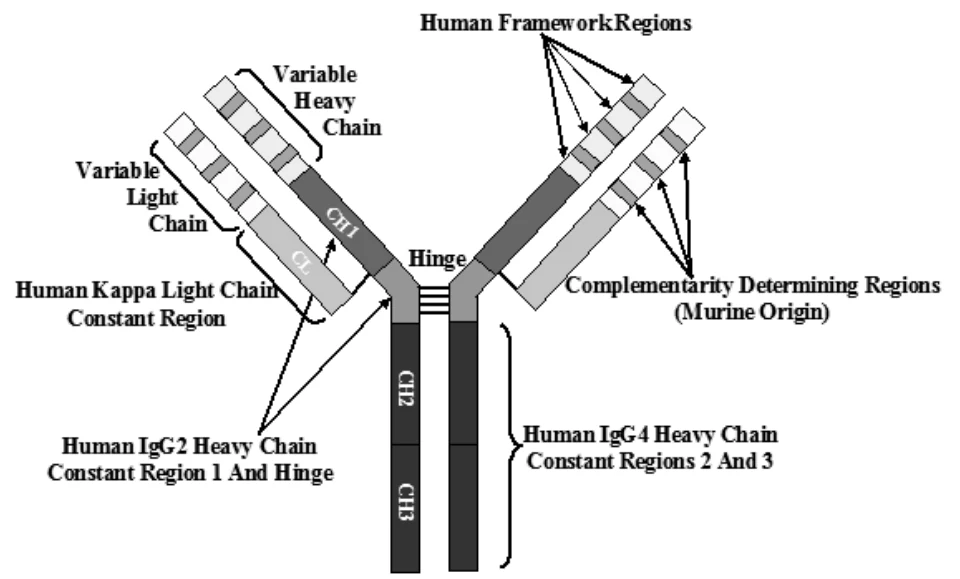
Physicochemical properties:
Product Characteristics:
Soliris is a formulation of eculizumab, which is a recombinant humanized monoclonal IgG2/4K antibody that binds to the human C5 complement protein and inhibits the activation of terminal complement. Eculizumab contains human constant regions and murine complementarity-determining regions grafted onto the human framework light-and heavy-chain variable regions. Eculizumab is composed of two 448 amino acid heavy chains and two 214 amino acid light chains and has a molecular weight of approximately 148 kDa.
Eculizumab is produced in a murine myeloma (NS0 cell line) expression system and purified by affinity and ion exchange chromatography.
Pharmaceutical standard: Professed
Viral Inactivation
The bulk drug substance manufacturing process includes specific viral inactivation and removal steps.
14 CLINICAL TRIALS
14.1 Clinical Trials by Indication
Paroxysmal Nocturnal Hemoglobinuria (PNH)
Trial Design and Study Demographics
The safety and efficacy of Soliris in adult patients with PNH with hemolysis were assessed in a randomized, double blind, placebo-controlled 26-week study (C04-001) and a single arm 52-week study (C04-002). Patients received meningococcal vaccination prior to receipt of Soliris. The safety and efficacy of Soliris were assessed in 7 pediatric patients with a median weight of 57.2 kg (range 48.6 to 69.8 kg), in an open label, 14-week study (M07-005).
Table 13: Summary of patient demographics for clinical trials in PNH
| Study # | Trial design | Dosage, route of administration and duration | Study subjects (n) | Mean age (Range) | Sex N (%) |
| C04-001 | Randomized, double blind, placebo- controlled, multicentre | Dosage: 600mg every 7 ± 2 days for 4 weeks, followed by 900 mg 7 ± 2 days, then 900 mg every 14 ± 2 days Intravenous infusion 25-45 minutes Duration: 26 weeks | Placebo 44 Soliris 43 | Placebo 38.4 (18, 78) Soliris 42.1 (20, 85) | Placebo Female 29 (65.9) Soliris Female 23 (53.5) |
| C04-002 | Single arm, non-controlled, multicentre | Dosage: 600mg every 7 ± 2 days for 4 weeks, followed by 900 mg 7 ± 2 days, then 900 mg every 14 ± 2 days Intravenous infusion for 25 to 45 minutes Duration: 52 weeks | Soliris 97 | 41.1 (18, 78) | Female 49 (50.5) |
| M07-005 | Open label, multicentre | Dosage based on body weight < 40 kg: see Table 1. Intravenous infusion : 5-10 mL/kg/hr Duration: 14 weeks | Soliris 7 | 15.6 (11, 17) | Female 4 (57.1) |
In study C04-001, patients with PNH with at least 4 transfusions in the prior 12 months, flow cytometric confirmation of at least 10% PNH cells and platelet counts of at least 100,000/μL were randomized to either Soliris (n = 43) or placebo (n = 44). Prior to randomization, all patients underwent an initial observation period to confirm the need for RBC transfusion and to identify the hemoglobin concentration (the "set-point") which would define each patient’s hemoglobin stabilization and transfusion outcomes. The hemoglobin set-point was less than or equal to 9 g/dL in patients with symptoms and was less than or equal to 7 g/dL in patients without symptoms. Primary efficacy endpoints were hemoglobin stabilization (patients who maintained a hemoglobin concentration above the hemoglobin set-point and avoid any RBC transfusion for the entire 26-week period) and blood transfusion requirement. Fatigue and health-related quality of life were relevant secondary endpoints. Hemolysis was monitored mainly by the measurement of serum LDH levels, and the proportion of PNH RBCs was monitored by flow cytometry. Patients receiving anticoagulants and systemic corticosteroids at baseline continued these medications. Major baseline characteristics were balanced (see Table 14).
In the non-controlled Study C04-002, patients with PNH with at least one transfusion in the prior 24 months and at least 30,000 platelets/μL received Soliris over a 52-week period. Concomitant medications included anti-thrombotic agents in 63% of the patients and systemic corticosteroids in 40% of the patients. Baseline characteristics are shown in Table 14.
Table 14: Patient Demographics and Characteristics in C04-001 and C04-002
| C04-001 | C04-002 | |||||||||||||||
|---|---|---|---|---|---|---|---|---|---|---|---|---|---|---|---|---|
| Parameter | Placebo N=44 | Soliris N=43 | Soliris N=97 | |||||||||||||
| History of Aplastic Anemia or MDSa (%) | 12 (27.3) | 8 (18.7) | 29 (29.9) | |||||||||||||
| Concomitant Anticoagulants (%) | 20 (45.5) | 24 (55.8) | 59 (61) | |||||||||||||
| Concomitant Steroids / Immunosuppressant Treatments (%) | 16 (36.4) | 14 (32.6) | 46 (47.4) | |||||||||||||
| Discontinued treatment | 10 | 2 | 1 | |||||||||||||
PRBC in previous 12 months, median (Q1,Q3) Range | 17.0 (13.5, 25.0) (7.0, 44.0) | 18.0 (12.0, 24.0) (7.0, 36.0) | 8.0 (4.0, 24.0) (0.0, 66.0) | |||||||||||||
Mean Hgb level (g/dL) at set point (SD) Range | 7.7 (0.75) (6.2, 9.0) | 7.8 (0.79) (6.1, 8.8) | N/A | |||||||||||||
Pre-treatment LDH levels (median, U/L) Range | 2,234.5 (636.0, 5530.0) | 2,032.0 (499.0, 5962.0) | 2,051.0 (537.0,5245.0) | |||||||||||||
| Free Hemoglobin at baseline (median, mg/dL) Range | 46.2 (11.2, 502.0) | 40.5 (7.5, 764.0) | 34.9 (2.0, 317.5) | |||||||||||||
aMDS=myeloplastic syndrome
Study Results Efficacy Results for Study C04-001 and C04-002
In Study C04-001, patients treated with Soliris had significantly reduced (p<0.001) hemolysis resulting in improvements in anemia as indicated by increased percentage of patients with hemoglobin stabilization and reduced median RBC transfusions compared to placebo treated patients (see Table 15). These effects were seen among patients within each of the three pre-study RBC transfusion strata (4 - 14 units; 15 - 25 units; >25 units), with the exception of no statistically significant hemoglobin stabilization in patients who previously required >25 units; however, this must be interpreted with caution since the numbers in each stratum are limited (see Table 16). Patients reported less fatigue and improved health-related quality of life. Because of the study sample size and duration, the effects of Soliris on thrombotic events could not be determined.
In Study C04-002, 96 of the 97 enrolled patients completed the study (one patient died following a thrombotic event). A reduction in intravascular hemolysis, as measured by median serum LDH levels, was achieved for the treatment (see Table 17).
Table 15: Efficacy Outcomes in PNH Study C04-001
Placebo N=44 | Soliris N=43 | P-Value | |
|---|---|---|---|
| Percentage of patients with stabilized Hemoglobin levels at end of study | 0 | 49 | < 0.001a |
| Median PRBC transfused during treatment (range) | 10 (2.0, 21.0) | 0 (0.0, 16.0) | < 0.001b |
Transfusion Avoidance during treatment (%) | 0 | 51 | < 0.001a |
| Median LDH levels at end of study (U/L) (Range) | 2,167 (1183, 5643) | 239 (142, 2984) | < 0.001b |
| Median LDH AUC at end of study (U/L x Day) (Range) c | 411,822 (161414, 86544) | 58,587 (32,417,792,006) | < 0.001b |
| Median Free Hemoglobin at end of study (mg/dL) (Range) | 62 (0.7, 386) | 5 (2.9, 194) | < 0.001b |
| FACIT-Fatigue (effect size) d | 1.13 | < 0.001 e |
aP value calculated using Fisher’s exact test
bP value calculated with Wilcoxon rank sum test
c LDH AUC: For PNH Study C04-001, LDH AUC was calculated using trapezoid rule for the actual LDH values dFACIT effect size: For PNH Study C04-001, effect size was based on the difference between eculizumab and placebo group eP value calculated using the 2 sided t-test
Table 16: Efficacy Outcomes in PNH Study C04-001 by Transfusion Strata
| Outcome Measure | Transfusion Strataa | Placebo (N) | Soliris (N) | P-Value | ||||||||||||
|---|---|---|---|---|---|---|---|---|---|---|---|---|---|---|---|---|
| Outcome Measure | Transfusion Strataa | Placebo (N) | Soliris (N) | P-Value | ||||||||||||
| Percentage of patients with stabilized Hemoglobin levels at end of study (%) (N) | Overall | 0 (44) | 49 (43) | < 0.001b | ||||||||||||
| 4 – 14 Units | 0 (15) | 80 (15) | < 0.001b | |||||||||||||
| 15 – 25 Units | 0 (18) | 29 (17) | 0.02 | |||||||||||||
| >25 Units | 0 (11) | 36 (11) | Ns | |||||||||||||
| Median PRBC transfused during treatment (N) (Range) | Overall | 10 (44) (2.0, 21.0) | 0 (43) (0.0, 16.0) | < 0.001c | ||||||||||||
| 4 – 14 Units | 6 (15) (2.0, 2.00) | 0 (15) (0.0, 4.0) | < 0.001c | |||||||||||||
| 15 – 25 Units | 10 (18) (2.0, 21.0) | 2 (17) (0.0, 15.0) | < 0.001c | |||||||||||||
| >25 Units | 18 (11) (10.0, 20.0) | 3 (11) (0.0, 16.0) | < 0.001c | |||||||||||||
Transfusion Avoidance during treatment (%) (N) | Overall | 0 (44) | 51 (43) | < 0.001b | ||||||||||||
| 4 – 14 Units | 0 (15) | 80 (15) | < 0.001b | |||||||||||||
| 15 – 25 Units | 0 (18) | 35 (17) | 0.008 | |||||||||||||
| >25 Units | 0 (11) | 36 (11) | Ns | |||||||||||||
| Median LDH AUC at end of study (U/L x Day) (N) (Range) | Overall | 411,822 (44) (161414, 886544) | 58,587 (43) (32417, 792006) | < 0.001c | ||||||||||||
| 4 – 14 Units | 398,573 (15) (230352, 697638) | 53,610 (15) (38341, 792006) | < 0.001c | |||||||||||||
| 15 – 25 Units | 420,338 (18) (161414, 886544) | 56,127 (17) (32417, 90115) | < 0.001c | |||||||||||||
| >25 Units | 441880 (11) (234605, 711934) | 67,181 (11) (33231, 242072) | < 0.001c | |||||||||||||
aTransfusion strata based on transfusion data 12 months prior to study screening
bP value calculated with Fisher’s exact test; ns = not significant (P>0.05)
cP value calculated with Wilcoxon rank sum test
Table 17: Efficacy Outcomes in PNH Study C04-002
| Soliris N=97 | P- Value | |
|---|---|---|
Median LDH levels at end of study (U/L) (Range) | 269 (106, 2117) | < 0.001b |
| Median LDH AUC at end of study (U/L x Day) (Range)c | -632,264 (-1788824, -74498) | < 0.001b |
| Median Free Hemoglobin at end of study (mg/dL) (Range) | 5 (1.1, 85) | < 0.001b |
| FACIT-Fatigue (effect size)d | 1.01 | < 0.001 e |
aResults from Study PNH Study C04-002 refer to pre- versus post-treatment comparisons.
bP value calculated with Wilcoxon signed rank test
cLDH AUC: For PNH Study C04-002, LDH AUC was calculated using trapezoid rule for change of LDH from baseline.
dFACIT effect size: For PNH Study C04-002, effect size was based on change from baseline.
eP value calculated using the 2 sided t-test
From the 195 patients that originated in PNH Study C04-001, PNH Study C04-002 and other initial studies, Soliris-treated PNH patients were enrolled in a long-term extension study (PNH Extension Study). All patients sustained a reduction in intravascular hemolysis over a total Soliris exposure time ranging from 10 to 54 months. There were fewer thrombotic events with Soliris treatment than during the same period of time prior to treatment (see Table 18). However, the majority of patients received concomitant anticoagulants; the effect of anticoagulant withdrawal during eculizumab therapy was not studied (see 7 WARNINGS AND PRECAUTIONS).
Table 18: Thromboembolic Events in Patients during Soliris Treatment Period Compared to Thromboembolic Events during the Same Period of Time Pre-Soliris Treatment
PNH Extension Study (All studies combined) | |||||
|---|---|---|---|---|---|
| Pre-Treatment | |||||
| Patients (n) | 195 | ||||
| Thrombolic Events (n) | 39 | ||||
| Patient Years (n) | 272.1 | ||||
| Thromboembolic Event Rate (n per 100 patient-years) | 14.33 | ||||
| Soliris Treatment | |||||
| Patients (n) | 195 | ||||
| Thromboembolic Events (n) | 3 | ||||
| Patient Years (n) | 281.0 | ||||
| Thromboembolic Event Rate (n per 100 patient-years) | 1.07 (P<0.001)a | ||||
ap value calculated with a non-parametric signed rank test
Pediatric Population
Treatment with SOLIRIS at the proposed dosage regimen in 7 adolescent patients weighting more than 30 kg was associated with a reduction of intravascular hemolysis as measured by serum LDH level. It also resulted in a marked decrease or elimination of blood transfusions. The efficacy of SOLIRIS treatment in pediatric patients with PNH (Table 19) appears to be consistent with that observed in adult patients with PNH enrolled in PNH pivotal Studies C04-001 and C04-002 (Table 15 and Table 17).
Table 19: Efficacy Outcomes in Pediatric PNH Study M07-005
| Efficacy endpoint | Baseline | 12 weeks | Wilcoxon Signed Rank Test |
|---|---|---|---|
Mean (SD) | Mean (SD) | P value | |
| Change from Baseline at 12 weeks of LDH value (U/L) | 1020 (94.9) | -771 (914) | 0.0156 |
| LDH AUC (U/L × day) | -- | -60634 (72916) | 0.0156 |
| Change from Baseline at 12 weeks in plasma free hemoglobin (mg/dL) | 17.7 (19.1) | -10.3 (21.1) | 0.2188 |
Abbreviations: AUC = area under the concentration-time curve; LDH = lactate dehydrogenase; PNH = paroxysmal nocturnal hemoglobinuria; SD = standard deviation
Atypical Hemolytic Uremic Syndrome (atypical HUS)
Trial Design and Study Demographics
Four single-arm prospective studies (atypical HUS Studies C08-002, C08-003, C10-004, and C10-003) and one single-arm retrospective study (C09-001r) evaluated the safety and efficacy of Soliris for the treatment of atypical HUS. Patients with atypical HUS received meningococcal vaccination prior to receipt of Soliris or received prophylactic treatment with antibiotics until 2 weeks after vaccination. Study C09-001r was a retrospective chart review.
Table 20: Summary of patient demographics for clinical trials in atypical HUS
| Study # | Trial design | Dosage, route of administration and duration | Study subjects (n) | Median age (Range) | Sex N (%) |
| Study # | Trial design | Dosage, route of administration and duration | Study subjects (n) | Median age (Range) | Sex N (%) |
C08-002 (Atypical HUS resistant to PE/PI*) | Phase II open-label, single arm, multi- centre | Dosage: 900 mg every 7± 2 days for 4 weeks, followed by 1200 mg 7±2 days later, then 1200 mg every 14 ± 2 days thereafter Intravenous infusion Duration: 2-145 weeks | 17 | 28 years (17-68 years) | Female 12 (71) |
C08-003 (Atypical HUS sensitive to PE/PI*) | Phase II open-label, single arm, multi-centre | Dosage: 900 mg every 7± 2 days for 4 weeks, followed by 1200 mg 7±2 days later, then 1200 mg every 14 ± 2 days thereafter Intravenous infusion Duration: 26-129 weeks | 20 | 28 years (13 to 63 years | Female 12 (60) |
C10-004 (Adult patients with atypical HUS) | Open-label, single-arm, multi-centre | Dosage: 900 mg every 7± 2 days for 4 weeks, followed by 1200 mg 7±2 days later, then 1200 mg every 14 ± 2 days thereafter Intravenous infusion Duration: 13-86 weeks | 41 | 35 years (18 to 80 years) | Female 28 (68) |
C10-003 (Pediatric & Adolescent patients with atypical HUS) | Open-label, single arm, multi-centre | Dosage per body weight: ≥40 kg: 900 mg qwk for 4 weeks, followed by 1200 mg at week 5, then 1200 mg q2wk. 30-<40 kg: 600 mg qwk for 2 weeks, followed by 900 mg at week 3, then 1200 mg q2wk. 20-<30 kg: 600 mg qwk for 2 weeks, followed by 600 mg at week 3, then 600 mg q2wk. 10-<20 kg: 600 mg for 1 week, followed by 300 mg at week 2, then 300 mg q2wk. 5-<10 kg: 300 mg for 1 week, followed by 300 mg at week 2, then 300 mg q2wk. Intravenous infusion Duration : 1 to 88 weeks | 22 | 6.5 years (5 months to 17 years) | Female 10 (46) |
| C09-001r | Retrospective chart review | Dosage:Dose levels used were 300, 600, 900, and 1200mg. Actual dose administered to patients may have been different from recommendations since treatment was outside of controlled clinical trial setting. Intravenous infusion Duration: 1 to 94 weeks | 30 Per age Infant-<2y: 5 ≥ 2-<12y: 10 ≥12-<18y: 4 ≥ 18y: 11 | 12 years (2 months to 51 years) | Female 16 (53) |
*PE/PI: Plasma Exchange/Plasma Infusion
Atypical HUS Resistant to PE/PI (Study C08-002)
Study C08-002 enrolled patients who displayed signs of thrombotic microangiopathy (TMA) despite receiving at least four PE/PI treatments the week prior to screening. One patient had no PE/PI the week prior to screening because of PE/PI intolerance. In order to qualify for enrollment, patients were required to have a platelet count ≤150 x 109/L, evidence of hemolysis such as an elevation in serum LDH, and serum creatinine above the upper limits of normal, without the need for chronic dialysis. The median patient age was 28 (range: 17 to 68 years). Patients enrolled in Study C08-002 were required to have ADAMTS-13 activity level above 5%; observed range of values in the trial were 70%-121%. Seventy-six percent (76%) of patients had an identified complement regulatory factor mutation or auto-antibody. Table 21 summarizes the key baseline clinical and disease-related characteristics of patients enrolled in Study C08-002.
Table 21: Baseline Characteristics of Patients Enrolled in Study C08-002
| Parameter | N = 17 |
| Time from atypical HUS diagnosis until screening in months, median (min, max) | 10 (0.26, 236) |
| Time from current clinical TMA manifestation until screening in months, median (min, max) | <1 (<1, 4) |
| Baseline platelet count (× 109/L), median (range) | 118 (62, 161) |
| Baseline LDH (U/L), median (range) | 269 (134, 634) |
Patients in Study C08-002 received Soliris for a minimum of 26 weeks. Study C08-002. The median duration of Soliris therapy was approximately 100 weeks (range: 2 weeks to 145 weeks), and the primary endpoint was change in platelet count from baseline through Week 26.
Atypical HUS Sensitive to PE/PI (Study C08-003)
Study C08-003 enrolled patients undergoing chronic PE/PI who generally did not display hematologic signs of ongoing thrombotic microangiopathy (TMA). All patients had received PT at least once every two weeks, but no more than three times per week, for a minimum of eight weeks prior to the first Soliris dose. Patients on chronic dialysis were permitted to enroll in Study C08-003. Patients enrolled in Study C08-003 were required to have ADAMTS13 activity level above 5%; observed range of values in the trial were 37%-118%. Seventy percent of patients had an identified complement regulatory factor mutation or auto-antibody. Table 22 summarizes the key baseline clinical and disease-related characteristics of patients enrolled in Study C08-003.
Table 22: Baseline Characteristics of Patients Enrolled in Study C08-003
| Parameter | N=20 |
| Time from atypical HUS diagnosis until screening in months, median (min, max) | 48 (0.66, 286) |
| Time from current clinical TMA manifestation until screening in months, median (min, max) | 9 (1, 45) |
| Baseline platelet count (x109/L), median (range) | 218 (105, 421) |
| Baseline LDH (U/L), median (range) | 200 (151, 391) |
Patients in Study C08-003 received Soliris for a minimum of 26 weeks. The primary endpoint was TMA Event-Free status defined as no decrease in platelet count >25% AND no PT AND no new dialysis for 12 consecutive weeks during the study period. In Study C08-003, the median duration of Soliris therapy was approximately 114 weeks (range: 26 to 129 weeks).
Adult Patients with atypical HUS (Study C10-004)
Study C10-004 enrolled patients who displayed signs of thrombotic microangiopathy (TMA). In order to qualify for enrollment, patients were required to have a platelet count < lower limit of normal range (LLN), evidence of hemolysis such as an elevation in serum LDH, and serum creatinine above the upper limits of normal, without the need for chronic dialysis. All patients enrolled in Study C10-004 were required to have ADAMTS13 activity level above 5%; observed range of values in the trial were 28-116%. Fifty-one percent of patients had an identified complement regulatory factor mutation or auto-antibody. A total of 35 patients received PE/PI prior to eculizumab. Table 23 summarizes the key baseline clinical and disease-related characteristics of patients enrolled in Study C10-004.
Table 23: Baseline Characteristics of Patients Enrolled in Study C10-004
| Parameter | N = 41 |
|---|---|
| Time from atypical HUS diagnosis until screening in months, median (range) | 0.79 (0.03 – 311) |
| Time from current clinical TMA manifestation until first study dose in months, median (range) | 0.52 (0.03-19) |
| Baseline platelet count (× 109/L), median (range) | 125 (16 – 332) |
| Baseline LDH (U/L), median (range) | 375 (131 – 3318) |
Patients in Study C10-004 received Soliris for a minimum of 26 weeks. The submission primary endpoint was the responder rate defined by the proportion of patients with complete TMA response as evidenced by normalization of hematological parameters [platelet count and lactate dehydrogenase (LDH)] and ≥
25% decrease in serum creatinine from baseline during treatment with eculizumab. Complete TMA response is defined as two consecutive measurements obtained at least 4 weeks apart. In Study C10-004, the median duration of Soliris therapy was approximately 50 weeks (range: 13 weeks to 86 weeks).
Pediatric and Adolescent Patients with atypical HUS (atypical HUS Study C10-003)
Atypical HUS Study C10-003 enrolled patients who were required to have a platelet count < lower limit of normal range (LLN), evidence of hemolysis such as an elevation in serum LDH above the upper limits of normal, serum creatinine level ≥97 percentile for age without the need for chronic dialysis. Patients enrolled in Study C10-003 were required to have ADAMTS13 activity level above 5%; observed range of values in the trial were 38%-121%. Fifty percent of patients had an identified complement regulatory factor mutation or auto-antibody. A total of 10 patients received PE/PI prior to eculizumab. Table 24 summarizes the key baseline clinical and disease-related characteristics of patients enrolled in atypical HUS Study C10-003.
Table 24: Baseline Characteristics of Patients Enrolled in atypical HUS C10-003
| Parameter | Patients 1 month to <12 years (N = 18) | All Patients (N = 22) |
|---|---|---|
| Time from atypical HUS diagnosis until screening in months, median (range) | 0.51 (0.03 – 58) | 0.56 (0.03-191) |
| Time from current clinical TMA manifestation until first study dose in months, median (range) | 0.23 (0.03-4) | 0.2 (0.03-4) |
| Baseline platelet count (x109/L), median (range) | 110 (19-146) | 91 (19-146) |
| Baseline LDH (U/L) median (range) | 1510 (282-7164) | 1244 (282-7164) |
Patients in atypical HUS Study C10-003 received Soliris for a minimum of 26 weeks. The primary endpoint was responder rate defined by the proportion of patients with Complete TMA response as evidenced by normalization of hematological parameters [platelet count and lactate dehydrogenase (LDH)] and ≥ 25% improvement in serum creatinine from baseline during treatment with eculizumab. Complete TMA response is defined as two consecutive measurements obtained at least four weeks apart. In atypical HUS Study C10-003, the median duration of Soliris therapy was approximately 44 weeks (range: 1 dose to 88 weeks).
Study Results
Efficacy evaluations were based on thrombotic microangiopathy (TMA) endpoints including the following:
- platelet count change from baseline
- Hematologic normalization (maintenance of normal platelet counts and LDH levels for at least four weeks)
- Complete TMA response (hematologic normalization plus at least a 25% reduction in serum creatinine for a minimum of four weeks)
- TMA-event free status (absence for at least 12 weeks of a decrease in platelet count of >25% from baseline, plasma exchange or plasma infusion, and new dialysis requirement)
- Daily TMA intervention rate (defined as the number of plasma exchange or plasma infusion interventions and the number of dialyses required per patient per day)
Atypical HUS Resistant to PE/PI (Study C08-002)
Renal function, as measured by eGFR, was improved and maintained during Soliris therapy. The mean eGFR (±SD) increased from 23 ± 15 mL/min/1.73m2 at baseline to 56 ± 40 mL/min/1.73m2 by 26 weeks; this effect was maintained through 2 years (56 ± 30 mL/min/1.73m2). Four of the five patients who required dialysis at baseline were able to discontinue dialysis.
Reduction in terminal complement activity and an increase in platelet count relative to baseline were observed after commencement of Soliris. Soliris reduced signs of complement-mediated TMA activity, as shown by an increase in mean platelet counts from baseline to 26 weeks. In Study C08-002, mean platelet count (± SD) increased from 109 ± 32 x109/L at baseline to 169 ± 72 x109/L by one week; this effect was maintained through 26 weeks (210 ± 68 x 109/L, and 2 years (205 ± 46 x 109/L). When treatment was continued for more than 26 weeks, two additional patients achieved Hematologic Normalization as well as Complete TMA response. Hematologic Normalization and Complete TMA response were maintained by all responders. Table 25 summarizes the efficacy results for Study C08-002.
Table 25: Efficacy Results for Study C08-002
| Efficacy Parameter | At 26 weeksa N=17 | At 2 yearsb N=17 |
| Platelet Count Normalizationc | 14 (82) | 15 (88) |
Complete TMA response, n (%) Median Duration of complete TMA response, weeks (range) | 11 (65) 38 (25, 56) | 13 (77) 99 (25, 139) |
| eGFR improvement ≥15 mL/min/1.73 m2, n (%) Median duration of eGFR improvement, days (range) | 9 (53) 251 (70, 392) | 10 (59) ND |
Hematologic normalization, n (%) Median Duration of hematologic normalization, weeks (range) | 13 (76) 37 (25, 62) | 15 (88) 99 (25, 145) |
| TMA event-free status, n (%) | 15 (88) | 15 (88) |
Daily TMA intervention rate, median (range) Before eculizumab On eculizumab treatment | 0.88 (0.04, 1.59) 0 (0, 0.31) | 0.88 (0.04, 1.59) 0 (0, 0.31) |
aAt data cut-off (September 8, 2010).
bAt data cut-off (April 20, 2012).
cNormal platelet count is defined as ≥150 × 109/L.
Atypical HUS Sensitive to PE/PI (Study C08-003)
The primary endpoint of Study C08-003 was TMA Event-Free status defined as no decrease in platelet count >25% AND no PT AND no new dialysis for 12 consecutive weeks during the study period.
Renal function, as measured by eGFR, was maintained during Soliris therapy. The mean eGFR (± SD) was 31 ± 19 mL/min/1.73m2 at baseline and was maintained through 26 weeks (37 ± 21 mL/min/1.73m2) and 2 years (40 ± 18 mL/min/1.73m2). No patient required new dialysis with Soliris.
Reduction in terminal complement activity was observed in all patients after the commencement of Soliris. Soliris reduced signs of complement-mediated TMA activity, as shown by an increase in mean platelet counts from baseline to 26 weeks. Platelet counts were maintained at normal levels despite the elimination of PE/PI. The mean platelet count (± SD) was 228 ± 78 x 109/L at baseline, 233 ± 69 x 109/L at week 26, and 224 ± 52 x 109/L at 2 years. When treatment was continued for more than 26 weeks, six additional patients achieved Complete TMA response. Complete TMA Response and Hematologic Normalization were maintained by all responders. Table 26 summarizes the efficacy results for Study C08-003.
Table 26: Efficacy Results of Patients Enrolled in Study C08-003
| Efficacy Parameter | At 26 weeksa N=20 | At 2 yearsb N=20 |
Complete TMA response, n (%) Median duration of complete TMA response, weeks (range) | 5 (25) 32 (12, 38) | 11 (55) 68 (38, 109) |
| eGFR improvement ≥15 mL/min/1.73 m2, n (%) | 1 (5) | 8 (40) |
| TMA Event-free status n (%) | 16 (80) | 19 (95) |
Daily TMA intervention rate, median (range) Before eculizumab On eculizumab treatment | 0.23 (0.05, 1.09) 0 | 0.23 (0.05, 1.09) 0 |
Hematologic normalizationd, n (%) Median duration of hematologic normalization, weeks (range)c | 18 (90) 38 (22, 52) | 18 (90) 114 (33, 125) |
aAt data cut-off (September 8, 2010).
bAt data cut-off (April 20, 2012).
cCalculated at each post-dose day of measurement (excluding Days 1 to 4) using a repeated measurement ANOVA model.
dIn atypical HUS Study C08-003, 85% of patients had normal platelet counts and 80% of patients had normal serum LDH levels at baseline, so hematologic normalization in this population reflects maintenance of normal parameters in the absence of PE/PI.
Adult Patients with atypical HUS (Study C10-004)
The primary endpoint was responder rate defined by the proportion of patients with complete TMA response as evidenced by normalization of hematological parameters [platelet count and lactate dehydrogenase (LDH)] and ≥ 25% decrease in serum creatinine from baseline during treatment with eculizumab. Complete TMA response is defined as two consecutive measurements obtained at least 4 weeks apart.
Complete TMA Response was achieved by 23 patients (56%; 95% CI: 40, 72) through Week 26 and by 26 patients (63%; 95% CI 47, 78) through data cut-off. All patients who achieved a response through Week 26 remained in response through data cut-off. The median duration of Complete TMA Response through data cut-off was nine months (range 1-17 months).
Thirty-six patients (88%; 95% CI: 74, 96) achieved a Hematologic Normalization through Week 26 and 40 patients (98%; 95% CI: 87, 99) through data cut-off. Hematologic Normalization was maintained in all 40 responders. The median duration of Hematologic Normalization through data cut-off was 10 months (range 2-17 months).
Renal function, as measured by eGFR, was improved during Soliris therapy. The mean eGFR (± SD)
increased from 17 ± 12 mL/min/1.73m2 at baseline to 47 ± 24 mL/min/1.73m2 by 26 weeks. Of the 24 patients who required dialysis at study baseline, 5 patients discontinued dialysis prior to the first dose of Soliris and 15 were able to discontinue dialysis during Soliris treatment.
Reduction in terminal complement activity and an increase in platelet count relative to baseline were observed after commencement of Soliris. Soliris reduced signs of complement-mediated TMA activity, as shown by an increase in mean platelet counts from baseline to 26 weeks. In Study C10-004, mean platelet count (± SD) increased from 119 ± 66 x109/L at baseline to 200 ± 84 x109/L by one week; this effect was maintained through 26 weeks (mean platelet count (±SD) at week 26: 252 ± 70 x109/L). Error! R eference source not found. summarizes the efficacy results for Study C10-004.
Table 27: Results of Atypical HUS study C10-004
| Efficacy Parameter | (N = 41) |
| Platelet Count Normalizationa | 40 (98%) |
Complete TMA response, n (%), 95% CI Median duration of submission complete TMA response, weeks (range) | 23 (56), 40,72 42 (6, 75) |
| Patients with eGFR improvement ≥ 15 mL/min/1.73 m2, n (%) | 22 (54) |
Hematologic Normalization, n (%) Median duration of hematologic normalization, weeks (range) | 36 (88) 46 (10, 75) |
| TMA Event-free Status, n (%) | 37 (90) |
Daily TMA Intervention Rate, median (range) Before eculizumab On eculizumab treatment | 0.63 (0, 1.38) 0 (0, 0.58) |
aNormal platelet count is defined as ≥150 × 109/L.
In atypical HUS studies C08-002, C08-003, and C10-004, a total of 43% of patients with no known mutation in the gene encoding for complement regulatory protein achieved Complete TMA response compared to 54% of patients with a known mutation. In pediatric and adolescents Study C10-003, complete TMA response was achieved in 55% of patients with no known mutation compared to 73% in patients with a known mutation. The number of patients in each group was small. Efficacy outcomes were independent whether patient had in an identified genetic mutation.
Pediatric and Adolescent Patients with atypical HUS (atypical HUS Study C10-003)
The primary endpoint of Study C10-003 was responder rate defined as the proportion of patients with Complete TMA response as evidenced by normalization of hematological parameters [platelet count and lactate dehydrogenase (LDH)] and ≥ 25% improvement in serum creatinine from baseline during treatment with eculizumab. Complete TMA response is defined as two consecutive measurements obtained at least four weeks apart.
Complete TMA response was achieved in 14 of the 22 patients (64%; 95% CI: 41, 83) through Week 26 and in 15 patients (68%; 95% CI: 45, 86) through data cut-off. All 15 patients maintained their response through data cut-off, with a median duration of eight months (range 3 - 18 months).
For the 18 pediatric patients <12 years old, Complete TMA Response rates were similar through Week 26 (11 patients [61%; 95% CI: 36, 83]) and through data cut-off (12 patients [67%; 95% CI: 41, 87]).
Hematologic Normalization was observed in 18 of 22 patients (82%; 95% CI: 60, 95) through Week 26 and increased to 20 patients (91%; 95% CI: 71, 99) through data cut-off. Hematologic Normalization was maintained in all 20 responders through data cut-off with a median duration of 8 months (range 3 – 18 months).
For the 18 pediatric patients <12 years old, Hematologic Normalization was achieved in 14 patients (78; 95% CI: 52, 94) through Week 26 and 16 patients (89%; 95% CI: 65, 99) through data cut-off.
Renal function, as measured by median eGFR, was improved during Soliris therapy. The mean eGFR (± SD) increased from 33 ± 30 mL/min/1.73m2 at baseline to 98 ± 44 mL/min/1.73m2 by 26 weeks. Among the 20 patients with a CKD stage ≥2 at baseline, 17 (85%) achieved a CKD improvement of ≥1 stage. Among the 16 patients ages 1 month to <12 years with a CKD stage ≥2 at baseline, 14 (88%) achieved a CKD improvement by ≥1 stage. Nine of the 11 patients who required dialysis at study baseline were able to discontinue dialysis for the duration of Soliris treatment. Responses were similar across all ages from 5 months to 17 years of age.
Reduction in terminal complement activity was observed in all patients after commencement of Soliris. Soliris reduced signs of complement-mediated TMA activity, as shown by an increase in mean platelet counts from baseline to 26 weeks. The mean platelet count (± SD) increased from 88 ± 42 x109/L at baseline to 281 ± 123 x109/L by one week; this effect was maintained through 26 weeks (mean platelet count (±SD) at week 26: 293 ± 106 x109/L). In atypical HUS C10-003, responses to Soliris were similar in patients with and without identified mutations in genes encoding complement regulatory factor proteins or auto-antibodies to factor H. Table 28Error! Reference source not found. summarizes the efficacy results for atypical HUS Study C10-003.
Table 28: Efficacy Results for atypical HUS Study C10-003
| Efficacy Parameter | Patients 1 month to <12 years (N = 18) | All Patients (N = 22) |
|---|---|---|
| Platelet Count Normalizationa | 21 (96%) | |
Complete TMA response, n (%) 95% CI Median Duration of complete TMA response, weeks (range)b | 11 (61) 36, 83 40 (14, 77) | 14 (64) 41, 83 37 (14, 77) |
| eGFR improvement ≥15 mL/min/ 1.73•m2•n (%) | 16 (89) | 19 (86) |
Complete Hematologic Normalization, n (%) Median Duration of complete hematologic normalization, weeks (range) | 14 (78) 38 (14, 77) | 18 (82) 38 (14, 77) |
| TMA Event-Free Status, n (%) | 17 (94) | 21 (95) |
Daily TMA Intervention rate, median (range) Before eculizumab treatment On eculizumab treatment | 0.2 (0, 1.7) 0 (0, 0.01) | 0.4 (0, 1.7) 0 (0, 0.01) |
aNormal platelet count is defined as ≥150 × 109/L.
bThrough data cutoff (October 12, 2012)
Retrospective Chart Review of Patients with atypical HUS (Study C09-001r)
Exploratory analyses were conducted in the retrospective chart review (Study C09-001r) and results were generally consistent with results of the two prospective studies. Soliris reduced signs of complement-mediated TMA activity, as shown by an increase in mean platelet counts from baseline. Mean platelet count (± SD) increased from 171 ± 83 x109/L at baseline to 233 ±109 x109/L after one week of therapy; this effect was maintained through 26 weeks (mean platelet count (± SD) at week 26: 254 ± 79 x109/L).
A total of 19 pediatric patients (ages 2 months to 17 years) received Soliris in Study C09-001r. The median duration of Soliris therapy was 16 weeks (range 4 to 70 weeks) for children < 2 years of age (n=5), 31 weeks (range 19 to 63 weeks) for children 2 to <12 years of age (n=10), and 38 weeks (range 1 to 69 weeks) for patients 12 to 18 years of age (n=4). Fifty three percent of pediatric patients had an identified complement regulatory factor mutation or auto-antibody. Eighty nine percent (17/19, 89%) of these pediatric patients achieved a platelet count normalization and 42% (8/19) had hematologic normalization and complete TMA responses. The daily TMA intervention rate decreased from a median of 0.31 prior to eculizumab to 0 after eculizumab. No pediatric patient required new dialysis.
Table 29: Efficacy Results in Pediatric Patients Enrolled in Study C09-001r
| Efficacy Parameter | <2 yrs. (n=5) | 2 to <12 yrs. (n=10) | 12 to <18 yrs. (n=4) | Total (n=19) |
|---|---|---|---|---|
Patients with Hematologic Normalization and Complete TMA Response | 2/5 (40) | 5/9 (56) | 1/3 (33) | 8 (47) |
| Patients with eGFR improvement ≥ 15 mL/min/1.73 m2, n (%)b | 2 (40) | 6 (60) | 1 (25) | 9 (47) |
| Platelet count normalization, n (%a | 4 (80) | 10 (100) | 3 (75) | 17 (89) |
Daily TMA intervention rate, median (range) Before eculizumab On eculizumab treatment | 1 (0, 2) <1 (0, <1) | <1 (0.07, 1.46) 0 (0, <1) | <1 (0, 1) 0 (0, <1) | 0.31 (0.00, 2.38) 0.00 (0.00, 0.08) |
a Platelet count normalization was defined as a platelet count of at least 150,000 X 109/L on at least two consecutive measurements spanning a period of at least 4 weeks.
bOf the 9 patients who experienced an eGFR improvement of at least 15 mL/min/1.73 m2, one received dialysis throughout the study period and another received Soliris as prophylaxis following renal allograft transplantation.
Generalized Myasthenia Gravis (gMG)
Trial Design and Study Demographics
Soliris was studied in clinical trials in patients who were anti-acetylcholine receptor (AchR) antibody positive and refractory, defined as failure of treatment with two or more immunosuppressive therapies (ISTs) either in combination or as monotherapy, or failed at least one IST and required chronic plasmapheresis, plasma exchange (PE), or intravenous immunoglobulin (IVIg) to control symptoms. Patients continued to receive standard therapy throughout the pivotal clinical trial.
Table 30: Summary of Patient Demographics for Clinical Trials in gMG
| Study | Trial Design | Dosage, Route of Administration, and Duration | Number of Study Subjects | Mean Age (years) | Sex | |||
|---|---|---|---|---|---|---|---|---|
| ECU-MG-301 | Randomized, double-blind, | Dosage: 900 mg every 7 ± 2 days for 4 | 125 | 47 | Female 66% | |||
| placebo-controlled, multicentre, Phase III | weeks, followed by 1200 mg every 14 ± 2 days IV over 35 minutes Duration: 26 Weeks | |||||||
| ECU-MG-302 | Open-label, multicentre, extension of Study ECU-MG-301 | Dosage: 900 mg every 7 ± 2 days for 4 weeks, followed by 1200 mg every 14 ± 2 days IV over 35 minutes Duration: Up to 4 years | 117 | 47 | ||||
Data from 125 patients in a prospective controlled study (Study ECU-MG-301) was used to evaluate the efficacy of Soliris in the treatment of patients with gMG.
In Study ECU-MG-301, patients with gMG with a positive serologic test for anti-AchR antibodies, MGFA (Myasthenia Gravis Foundation of America) clinical classification class II to IV and MG-ADL total score ≥6 were randomized to either Soliris (n=62) or placebo (n=63). Randomization was stratified based on the assessment of clinical classification by the MGFA. Baseline characteristics were similar between treatment groups, including mean age at diagnosis (38 years in each group), gender [66% female (Soliris) versus 65% female (placebo)], and mean duration of gMG [9.9 (Soliris) versus 9.2 (placebo) years]. Also similar between the two treatment groups were the percentages of patients who were previously treated with at least 3 ISTs [50% (Soliris) versus 54 (placebo)], who had experienced an MG crisis [21% (Soliris) versus 15.9% (placebo)], who had any prior ventilation support [24.2% (Soliris) versus 22.2% (placebo)], and who had required intubation [17.7% (Soliris) versus 14.3% (placebo)].
All patients with gMG enrolled in the trial were refractory as defined by the following pre-specified criteria:
Failed treatment for at least one year with 2 or more immunosuppressant therapies (either in combination or as monotherapy), i.e., patients continued to have impairment in activities of daily living despite immunosuppressant therapies;
or
- Failed at least one immunosuppressant therapy and required chronic plasma exchange (PE) or intravenous immunoglobulins (IVIg) to control symptoms, i.e., patients require PE or IVIg on a regular basis for the management of muscle weakness at least every 3 months over previous 12 months.
Immunosuppressants included, but were not limited to, corticosteroids, azathioprine, mycophenolate, methotrexate, cyclosporine, tacrolimus, or cyclophosphamide.
Patients received meningococcal vaccination prior to initiating treatment with Soliris or received prophylactic treatment with appropriate antibiotics until 2 weeks after vaccination. In Study ECU-MG-301, the dose of Soliris in adult patients with gMG was 900 mg every 7 ± 2 days for 4 weeks, followed by 1200 mg at Week 5 ± 2 days, then 1,200 mg every 14 ± 2 days for the study duration. Soliris was administered as an intravenous infusion over 35 minutes. Patients continued to receive stable doses of standard therapy during the trial. One hundred and eighteen (118) of the 125 (94%) patients completed the 26-week treatment period.
Study Results Efficacy Results for Study ECU-MG-301
The primary endpoint for Study ECU-MG-301 was the change from baseline in the MG Activities of Daily Living Profile (MG-ADL – a patient reported outcome measure validated in gMG) total score at Week 26. The MG-ADL is a categorical scale that assesses the impact on daily function of 8 signs or symptoms that are typically affected in gMG. Each item is assessed on a 4-point scale where a score of 0 represents normal function and a score of 3 represents loss of ability to perform that function (total score 0-24).
The key secondary endpoint was the change from baseline in the Quantitative MG Scoring System (QMG – a physician reported outcome measure validated in gMG) total score at Week 26. The QMG is a 13-item categorical scale assessing muscle weakness. Each item is assessed on a 4-point scale where a score of 0 represents no weakness and a score of 3 represents severe weakness (total score 0-39).
Efficacy results for the pre-specified repeated measures analyses of the primary and key secondary endpoint are provided in Table 31. These results are based on analyses that ignored the use of rescue medication and other efficacy-related protocol deviations.
Table 31: Results of Study ECU-MG-301 in gMG - Efficacy Outcomes Change from Baseline to Week 26
| Efficacy Endpoints: Total score change from baseline at Week 26 | Soliris (n=62) (SEM) | Placebo (n=63) (SEM) | Soliris change relative to placebo-LS Mean Difference (95% CI) | p-value (using repeated measures analysis) |
|---|---|---|---|---|
| MG-ADL* | -4.2 (0.49) | -2.3(0.48) | -1.9 (-3.3, -0.6) | 0.0058 |
| QMG* | -4.6 (0.60) | -1.6 (0.59) | -3.0 (-4.6, -1.3) | 0.0006 |
SEM = Standard Error of the Mean CI= Confidence Interval LS-Mean = Least Squares Mean
* The change from baseline to week 26 in MG-ADL and QMG score was analyzed using a repeated measures analysis of variance with treatment, visit, and a treatment by visit interaction as fixed factors, and a randomization stratification variable, baseline score and immunosuppressive therapy treatment status as covariates. These analyses ignore the use of rescue medication and the occurrence of other efficacy-related protocol deviations. There were 6 subjects in the Soliris arm and 12 subjects in the placebo arm that required rescue medication.
In Study ECU-MG-301, a clinical responder in the MG-ADL total score was defined as having at least a 3-point improvement. The proportion of clinical responders at Week 26 with no rescue therapy was 59.7% on Soliris compared with 39.7% on placebo.
In Study ECU-MG-301, a clinical responder in the QMG total score was defined as having at least a 5-point improvement. The proportion of clinical responders at Week 26 with no rescue therapy was 45.2% on Soliris compared with 19% on placebo.
Also evaluated was the Myasthenia Gravis Quality of Life 15-item scale (MG-QoL15), a validated disease specific questionnaire, in which a 7- to 8-point improvement is indicative of treatment impact. At Week 26, using a repeated measures analysis, the change from baseline for Soliris patients showed an improvement of 12.6 points compared with 5.4 points for placebo patients, representing a treatment effect difference of 7.2 points favoring Soliris.
Available data suggest that clinical response is usually achieved by 12 weeks of Soliris treatment. Discontinuation of the therapy should be considered in a patient who shows no evidence of therapeutic benefit by 12 weeks.
Based on an interim analysis of an ongoing, open-label extension to Study ECU-MG-301, the remaining subjects who were initially randomized to Soliris continue to demonstrate a sustained effect beyond 26 weeks.
Neuromyelitis optica spectrum disorder (NMOSD)
Trial Design and Study Demographics
Soliris was studied in a clinical trial in patients with NMOSD who were anti-aquaporin-4 (AQP4) antibody-positive.
Table 32: Summary of Patient Demographics for Clinical Trial in NMOSD
| Study | Trial Design | Dosage and Route of Administration | Number of Study Subjects | Mean Age (years) | Sex |
|---|---|---|---|---|---|
| ECU-NMO-301 | Randomized, double-blind, placebo-controlled, multicentre, Phase III | Dosage: 900 mg every 7 ± 2 days for 4 weeks, followed by 1200 mg every 14 ± 2 days IV over 35 minutes | 143 Soliris: 96 Placebo: 47 | 44 Range: 19-75 | Female 90.9% |
The efficacy of Soliris for the treatment of NMOSD was established in Study ECU-NMO-301, a randomized, double-blind, placebo-controlled event driven trial that enrolled 143 patients with NMOSD who were anti-AQP4 antibody positive and met the following criteria at screening:
- 1. History of at least 2 relapses in last 12 months or 3 relapses in the last 24 months, with at least 1 relapse in the 12 months prior to screening.
- 2. Expanded Disability Status Scale (EDSS) score ≤ 7 (consistent with the presence of at least limited ambulation with aid).
- 3. If on immunosuppressive therapy (IST), on a stable dose regimen.
- 4. The use of concurrent corticosteroids was limited to 20 mg per day or less.
- 5. Patients were excluded if they had been treated with rituximab or mitoxantrone within 3 months or with IVIg within 3 weeks prior to screening.
Patients received meningococcal vaccination 2 weeks prior to initiating treatment with Soliris or received prophylactic treatment with appropriate antibiotics until 2 weeks after vaccination. All patients who were vaccinated and met all eligibility requirements were randomized in a 2:1 ratio to the Soliris group or the placebo group. A total of 96 patients were randomized to receive Soliris treatment and 47 were randomized to receive placebo. Randomization was stratified using two variables: 1) EDSS score at randomization (Day 1) (≤ 2.0 versus ≥ 2.5 to ≤ 7); and 2) patients’ prior supportive (i.e., for relapse prevention) IST and IST status at randomization (Day 1) (treatment naïve patients versus patients continuing on the same IST(s) since last relapse versus patients with changes in IST(s) since last relapse). Patients could continue to receive a stable dose of the ISTs they were taking at the time of screening
(with the exception of protocol-specified disallowed medications), but no new ISTs and no change in IST dosage were permitted during the study except for a known toxicity or adverse event associated with the given IST.
Baseline characteristics were similar between treatment groups, including mean age at first dose (43.9 in the Soliris group, and 45.0 in the placebo group), and gender [91.7% female (Soliris) versus 89.4% female (placebo)]. Table 33 presents the baseline characteristics of patients with NMOSD enrolled in Study ECU-NMO-301.
Table 33 : Patient Disease History and Baseline Characteristics in Study ECU-NMO-301
| Variable | Statistic | Placebo (N = 47) | Soliris (N = 96) | Total (N = 143) | |||||||
|---|---|---|---|---|---|---|---|---|---|---|---|
| NMOSD History | |||||||||||
| Age at NMOSD Initial Clinical Presentation (years) | Median | 38.0 | 35.5 | 36.0 | |||||||
| Min, Max | 12, 73 | 5, 66 | 5, 73 | ||||||||
| Time from NMOSD initial clinical presentation to first dose of study drug (years) | Median | 3.760 | 5.030 | 4.800 | |||||||
| Min, Max | 0.51, 29.10 | 0.41, 44.85 | 0.41, 44.85 | ||||||||
| Historical ARR within 24 months prior to Screening | Median | 1.92 | 1.85 | 1.92 | |||||||
| Min, Max | 1.0, 6.4 | 1.0, 5.7 | 1.0, 6.4 | ||||||||
| Baseline Characteristics | |||||||||||
| Baseline EDSS Score | Median | 4.00 | 4.00 | 4.00 | |||||||
| Min, Max | 1.0, 6.5 | 1.0, 7.0 | 1.0, 7.0 | ||||||||
| No IST usage at baseline | n (%) | 13 (27.7) | 21 (21.9) | 34 (23.8) | |||||||
Abbreviations: ARR = annualized relapse rate; EDSS = Expanded Disability Status Scale; IST = immunosuppressant therapy; Max = maximum; Min = minimum; NMOSD = neuromyelitis optica spectrum disorder.
The primary endpoint for Study ECU-NMO-301 was the time-to-first on-trial relapse as adjudicated by an independent committee who were blinded to treatment. On-trial relapse was defined as a new onset of neurologic symptoms or worsening of existing neurologic symptoms with an objective change (i.e., clinical sign) on neurologic examination that persisted for more than 24 hours as confirmed by the treating physician who was blinded to treatment. An adjudicated on-trial relapse was defined as an on-trial relapse that was positively adjudicated by the Relapse Adjudication Committee. A key secondary endpoint was the Adjudicated on-trial Annualized Relapse Rate (ARR), which was computed for each patient as the number of relapses divided by the time in years.
Study Results
The time-to-first adjudicated on-trial relapse was significantly longer for patients treated with Soliris compared with placebo (p<0.0001) (Figure 1). The hazard ratio (95% confidence interval [CI]) for Soliris compared with placebo was 0.058 (0.017, 0.197), representing a 94.2% reduction in the risk of relapse.
Figure 1: Kaplan Meier Survival Estimates for Time to First Adjudicated On trial Relapse – Full Analysis Set
Note: Patients who did not experience an adjudicated on trial relapse were censored at the end of the Study Period.
The treatment effect on the time-to first-adjudicated on-trial relapse was observed in patients across all IST subgroups, including the subgroup with no ISTs at Baseline. During the treatment phase of the trial, 76% percent of patients received concomitant IST, including chronic corticosteroids; 24% of patients did not receive concomitant IST or chronic corticosteroids during the treatment phase of the trial.
The adjudicated on-trial annualized relapse rate (ARR) ratio (95% CI) for Soliris compared with placebo was 0.045 (0.013, 0.151; p<0.0001), representing a 95.5% relative reduction in adjudicated ARR for patients treated with Soliris compared with placebo (Table 34).
Table 34: Adjudicated On-trial Annualized Relapse Rate in Study ECU-NMO-301 – Full Analysis Set
| Variable | Statistic | Placebo (N = 47) | Soliris (N = 96) | |||||||||
|---|---|---|---|---|---|---|---|---|---|---|---|---|
| Total number of relapses | Sum | 21 | 3 | |||||||||
| Total number of patient-years in study period | n | 52.41 | 171.32 | |||||||||
| Adjusted adjudicated ARRa | Rate | 0.350 | 0.016 | |||||||||
| 95% CI | 0.199, 0.616 | 0.005, 0.050 | ||||||||||
| Treatment effecta | Rate ratio (eculizumab/ placebo) | … | 0.045 | |||||||||
| 95% CI | … | 0.013, 0.151 | ||||||||||
| p-value | … | <0.0001 | ||||||||||
a Based on a Poisson regression adjusted for randomization strata and historical ARR in 24 months prior to Screening.
Abbreviations: ARR = annualized relapse rate; CI = confidence interval.
The annualized rate of on-trial relapse associated hospitalization was 0.04 for Soliris versus 0.31 for placebo. The annualized rate of on-trial relapse associated acute relapse treatment was 0.07 for Soliris versus 0.42 for placebo (IV methylprednisolone) and 0.02 for Soliris versus 0.19 for placebo (plasma
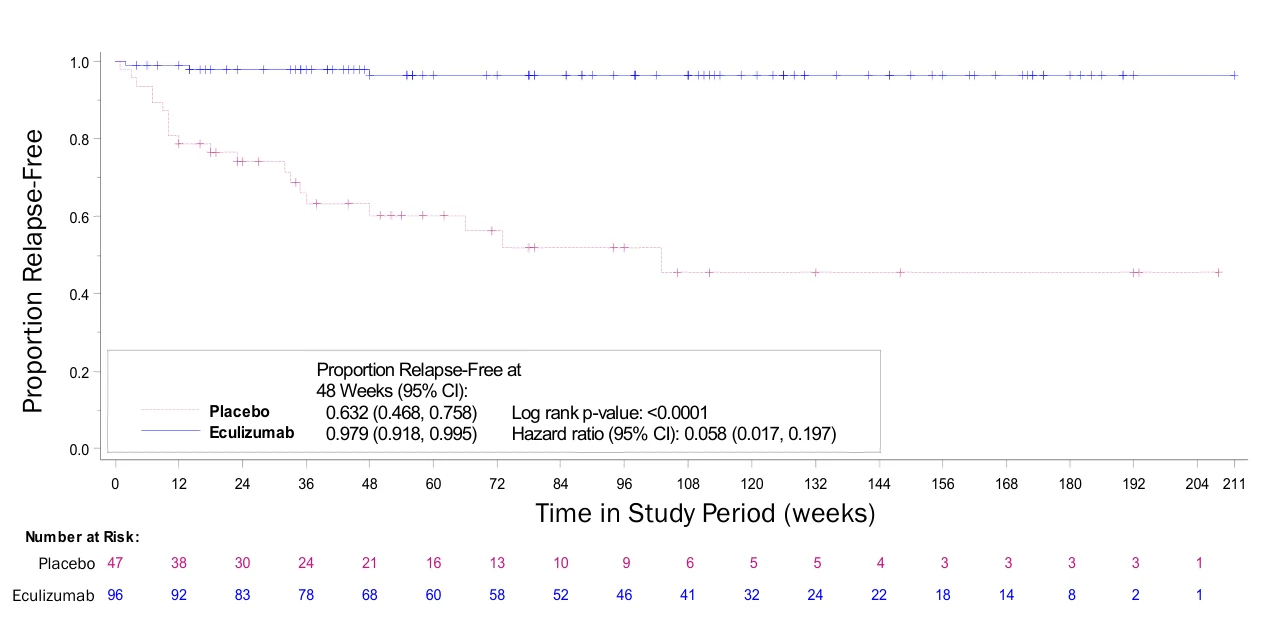
exchange).
15 MICROBIOLOGY
No microbiological information is required for this drug product.
16 NON-CLINICAL TOXICOLOGY
General Toxicology: The specificity of eculizumab for C5 in human serum was evaluated in two in vitro studies.
The tissue cross-reactivity of eculizumab was evaluated by assessing binding to a panel of 38 human tissues. C5 expression in the human tissue panel examined in this study is consistent with published reports of C5 expression, as C5 has been reported in smooth muscle, striated muscle, and renal proximal tubular epithelium. No unexpected tissue cross-reactivity was observed.
A 26-week, repeat-dose, toxicity study in mice with a surrogate antibody BB5.1, directed against murine C5, was performed. The treatment did not affect any of the toxicity parameters examined. C5-induced hemolytic activity in an ex vivo assay was effectively blocked throughout the course of the study in both female and male mice.
Carcinogenicity: No studies have been performed to evaluate the carcinogenic potential of eculizumab.
Genotoxicity: No studies have been performed to evaluate the genotoxic potential of eculizumab.
Reproductive and Developmental Toxicology: Animal reproductive and developmental toxicology studies have not been conducted with eculizumab, due to a lack of pharmacologic activity in non-human species but were conducted in mice with a murine surrogate complement inhibitory antibody, BB5.1. No clear treatment-related effects or adverse effects were observed in the murine surrogate reproductive and developmental toxicology studies in mice. When maternal exposure to the antibody occurred during organogenesis, two cases of retinal dysplasia and one case of umbilical hernia were observed among 230 offspring born to mothers exposed to the higher antibody dose; however, these findings were not clearly test-article related.