


Product Monograph - Zilbrysq
Recent Major Label Changes
| 3 Serious Warnings and Precautions Box | 2026-11 |
|---|---|
| 4 Dosage and Administration, 4.2 Recommended Dose and Dosage Adjustment | 2026-11 |
| 4 Dosage and Administration, 4.4 Administration | 2026-11 |
Table Of Contents
Certain sections or subsections that are not applicable at the time of the preparation of the most recent authorized product monograph are not listed.
Recent Major Label Changes ................................................................................................... 2
Table Of Contents ................................................................................................................... 2
Part 1: Healthcare Professional Information ........................................................................... 4
1 Indications .................................................................................................................. 4
1.1 Pediatrics .............................................................................................................. 4
1.2 Geriatrics .............................................................................................................. 4
2 Contraindications ........................................................................................................ 4
3 Serious Warnings and Precautions Box ....................................................................... 4
4 Dosage and Administration ......................................................................................... 5
4.1 Dosing Considerations .......................................................................................... 5
4.2 Recommended Dose and Dosage Adjustment ..................................................... 5
4.4 Administration ...................................................................................................... 6
4.5 Missed Dose ......................................................................................................... 6
5 Overdose..................................................................................................................... 6
6 Dosage Forms, Strengths, Composition, and Packaging ............................................... 7
7 Warnings and Precautions ........................................................................................... 7
7.1 Special Populations ............................................................................................... 9
7.1.1 Pregnancy ......................................................................................................... 9
7.1.2 Breastfeeding ................................................................................................... 9
7.1.3 Pediatrics .......................................................................................................... 9
7.1.4 Geriatrics .......................................................................................................... 9
8 Adverse Reactions ..................................................................................................... 10
8.1 Adverse Reaction Overview ................................................................................ 10
8.2 Clinical Trial Adverse Reactions .......................................................................... 10
8.2.1 Clinical Trial Adverse Reactions – Pediatrics ................................................... 11
8.3 Less Common Clinical Trial Adverse Reactions ................................................... 11
8.4 Abnormal Laboratory Findings: Hematologic, Clinical Chemistry and Other Quantitative Data ........................................................................................................... 11
9 Drug Interactions ...................................................................................................... 12
9.4 Drug-Drug Interactions ....................................................................................... 12
9.5 Drug-Food Interactions ....................................................................................... 12
9.6 Drug-Herb Interactions ....................................................................................... 12
9.7 Drug-Laboratory Test Interactions ...................................................................... 12
10 Clinical Pharmacology ............................................................................................... 12
10.1 Mechanism of Action .......................................................................................... 12
10.2 Pharmacodynamics ............................................................................................ 13
10.3 Pharmacokinetics ............................................................................................... 13
11 Storage, Stability and Disposal .................................................................................. 15
12 Special Handling Instructions .................................................................................... 15
Part 2: Scientific Information ................................................................................................ 16
13 Pharmaceutical Information ...................................................................................... 16
14 Clinical Trials ............................................................................................................. 17
14.1 Clinical Trials by Indication ................................................................................. 17
Myasthenia Gravis .......................................................................................................... 17
15 Microbiology ............................................................................................................. 20
16 Non-Clinical Toxicology ............................................................................................. 20
Patient Medication Information ........................................................................................... 21
Part 1: Healthcare Professional Information
1 Indications
ZILBRYSQ (zilucoplan injection) is indicated for the treatment of generalized myasthenia gravis (gMG) in adult patients who are anti-acetylcholine receptor (AChR) antibody positive. Patients continued to receive standard therapy throughout the pivotal trial (see 4.1 Dosing Considerations and 14 Clinical Trials).
1.1 Pediatrics
Pediatrics (<18 years of age): No data are available to Health Canada; therefore, Health Canada has not authorized an indication for pediatric use.
1.2 Geriatrics
Geriatrics (≥ 65 years of age): Limited data are available to Health Canada regarding this age group. Of the 213 patients with generalized myasthenia gravis exposed to ZILBRYSQ in Phase 2 and Phase 3 clinical trials, 55 (25.8%) were 65 years or older and 5 (2.3%) patients were 75 years or older. Based on pharmacokinetic analysis, age did not influence the pharmacokinetics of zilucoplan injection.
2 Contraindications
ZILBRYSQ is contraindicated in patients who are hypersensitive to this drug or to any ingredient in the formulation, including any non-medicinal ingredient, or component of the container. For a complete listing, see 6 Dosage Forms, Strengths, Composition, and Packaging.
ZILBRYSQ must not be initiated in patients:
- who are currently not vaccinated against Neisseria meningitidis
- with unresolved Neisseria meningitidis infection
See 7 Warnings and Precautions, Meningococcal infection.
3 Serious Warnings and Precautions Box
|
|---|
| ZILBRYSQ in Canada is available as part of a controlled distribution program under which prescribers must enrol patients and confirm vaccination with meningococcal vaccine. Prescribers must also counsel patients about the risk of meningococcal infection and provide them with the patient/carer guide and patient safety card. Further information about the ZILBRYSQ controlled distribution program can be requested at ucbcares.ca@ucb.com or by calling 1-866-709-8444. |
4 Dosage and Administration
4.1 Dosing Considerations
ZILBRYSQ is intended for use under the guidance and supervision of health professionals experienced in the management of patients with neuromuscular disorders.
Before starting therapy with ZILBRYSQ, patients must be vaccinated against Neisseria meningitidis. If treatment with ZILBRYSQ needs to start less than 2 weeks after vaccination against meningococcal infection, the patient must receive appropriate prophylactic antibiotic treatment until 2 weeks after the first vaccination dose.
Before initiating ZILBRYSQ, obtain baseline lipase and amylase levels (see 7 Warnings and Precautions, Hepatic/Biliary/Pancreatic and 7 Warnings and Precautions, Monitoring and Laboratory Tests).
ZILBRYSQ was studied in adult gMG patients with a Myasthenia Gravis Foundation of America (MGFA) clinical classification Class II to IV, who remained on their standard of care therapies (see 14 Clinical Trials). It has not been studied in gMG patients with an MGFA Class V.
4.2 Recommended Dose and Dosage Adjustment
The recommended dose of ZILBRYSQ for adult patients with gMG should be given as a subcutaneous injection once daily and administered about the same time every day.
Table 1: Total daily dose by body weight range (pre-filled syringe)
| Body weight of patient | Dose* | Number of pre-filled syringes (PFS) (plunger rod colour) |
|---|---|---|
| <56 kg | 16.6 mg | 1 PFS (RUBINE RED) |
| ≥56 to <77 kg | 23 mg | 1 PFS (ORANGE) |
| ≥77 kg | 32.4 mg | 1 PFS (DARK BLUE) |
* The recommended dose corresponds to approximately 0.3 mg/kg.
Table 2: Total daily dose by body weight range (autoinjector)
| Body weight of patient | Dose* | Number of autoinjectors (printed label colour) |
|---|---|---|
| Body weight of patient | Dose* | Number of autoinjectors (printed label colour) |
| <56 kg | 16.6 mg | 1 autoinjector (RASPBERRY) |
| ≥56 to <77 kg | 23 mg | 1 autoinjector (ORANGE) |
| ≥77 kg | 32.4 mg | 1 autoinjector (DARK BLUE) |
* The recommended dose corresponds to approximately 0.3 mg/kg.
Pediatrics (< 18 years of age): The safety and efficacy of ZILBRYSQ in children and adolescents below the age of 18 years has not been established. ZILBRYSQ is not indicated for use in pediatric patients.
Geriatrics (≥ 65 years of age): The clinical experience with ZILBRYSQ in elderly patients is limited. Based on pharmacokinetic analysis, no dose adjustment is required (see 10 Clinical Pharmacology, Pharmacokinetics, Special Populations and Conditions, Geriatrics).
Hepatic Impairment: No dose adjustment is required for patients with mild and moderate hepatic impairment. There are no data on patients with severe hepatic impairment and therefore, no dose adjustment recommendation can be made (see 10 Clinical Pharmacology, Pharmacokinetics, Special Populations and Conditions, Hepatic Insufficiency).
Renal Impairment: No dose adjustment is required in patients with renal impairment. There are no data on patients requiring dialysis (see 10 Clinical Pharmacology, Pharmacokinetics, Special Populations and Conditions, Renal Insufficiency).
4.4 Administration
ZILBRYSQ is administered by subcutaneous injection. Suitable injection sites include front of the thighs, abdomen and the back of the upper arms. Injection sites should be rotated, and injections should not be given in areas where the skin is tender, erythematous, bruised, indurated or where the skin has scars or stretch marks.
Administration should be performed by an individual (patient or their caregiver) who has been trained in injection techniques.
Additional information and instructions for the preparation and administration of ZILBRYSQ using the pre-filled syringe or the autoinjector are given in the package leaflet and relevant “INSTRUCTIONS FOR USE” (see INSTRUCTIONS FOR USE).
4.5 Missed Dose
If a dose is missed, administer the dose as soon as possible the same day. Thereafter, resume dosing at the regular scheduled time the following day. Do not administer more than one dose per day.
5 Overdose
Limited experience with doses higher than the recommended dose of ZILBRYSQ is available from clinical trials in humans.
In a healthy volunteer study 32 participants were exposed to supratherapeutic doses of 0.6 mg/kg, administered subcutaneously for up to 7 days. The adverse reactions observed at 0.6 mg/kg were injection site reactions and diarrhea. The overall safety data were consistent with the safety profile of the recommended dose (see 8.2 Clinical Trial Adverse Reactions).
In cases of overdose, it is recommended that patients are monitored closely for any adverse effects, and appropriate supportive measures should be instituted immediately.
| For the most recent information in the management of a suspected drug overdose, contact your regional poison control centre or Health Canada’s toll-free number, 1-844 POISON-X (1-844-764-7669). |
|---|
6 Dosage Forms, Strengths, Composition, and Packaging
Table 3: Dosage Forms, Strengths, and Composition
| Route of Administration | Dosage Form / Strength/Composition | Non-medicinal Ingredients |
|---|---|---|
| Subcutaneous use | Solution, 16.6 mg/0.416 mL, 23 mg/0.574 mL, and 32.4 mg/0.81 mL, [each corresponding to 40 mg/mL zilucoplan (as zilucoplan sodium)] in a single-dose pre-filled syringe with needle safety device or in a single-dose autoinjector | Dibasic sodium phosphate, anhydrous; monobasic sodium phosphate, monohydrate; sodium chloride; water for injection |
ZILBRYSQ is available as a single-dose pre-filled syringe or a single-dose autoinjector, with a 29G, ½” thin wall needle, containing a clear to slightly opalescent, colourless solution that is free of particles. ZILBRYSQ is supplied in three dose strengths of 16.6 mg/0.416 mL, 23 mg/0.574 mL and 32.4 mg/0.81 mL of zilucoplan free acid equivalent to 17 mg, 23.6 mg and 33.2 mg of zilucoplan sodium, respectively.
ZILBRYSQ pre-filled syringe is available as follows (with colour-coded plunger rods):
- 16.6 mg/0.416 mL pre-filled syringe, pre-assembled with a needle safety device, a finger grip and a RUBINE RED plunger rod
- 23 mg/0.574 mL pre-filled syringe, pre-assembled with a needle safety device, a finger grip and an ORANGE plunger rod
- 32.4 mg/0.81 mL pre-filled syringe, pre-assembled with a needle safety device, a finger grip and a DARK BLUE plunger rod
ZILBRYSQ autoinjector is available as follows (with colour-coded labels):
- 16.6 mg/0.416 mL autoinjector with RASPBERRY printed label
- 23 mg/0.574 mL autoinjector with ORANGE printed label
- 32.4 mg/0.81 mL autoinjector with DARK BLUE printed label
ZILBRYSQ is supplied in a pack of 7 pre-filled syringes or a pack of 7 autoinjectors.
7 Warnings and Precautions
Please see 3 Serious Warnings and Precautions Box.
Hepatic/Biliary/Pancreatic
Pancreatitis and pancreatic cysts have been reported in patients treated with ZILBRYSQ, although the causality has not been established.
During the open-label extension studies, seven (3.3%) patients experienced pancreatic events, including 4 (1.9%) patients with pancreatitis and 3 (1.4%) with pancreatic cysts.
In a 3-month, double-blind study, adverse reactions of increased lipase were reported in six (6.9%) patients treated with ZILBRYSQ compared to no patients on placebo, and adverse reactions of increased amylase were reported in four (4.7%) patients treated with ZILBRYSQ compared to one (1.1%) patient on placebo. Lipase levels exceeded three times the upper limit of normal in six (7%) patients after being started on ZILBRYSQ compared to no patients on placebo.
Patients should be informed of this risk before starting ZILBRYSQ (see 7 Warnings and Precautions, Monitoring and Laboratory Tests).
Immune
Neisseria infections
Meningococcal infection
Life-threatening meningococcal infections may occur in patients treated with complement inhibitors. The use of complement inhibitors may increase a patient’s susceptibility to serious meningococcal infections (meningitis and/or septicemia). Meningococcal disease due to any serogroup may occur. No cases of meningococcal infections were reported in the ZILBRYSQ placebo-controlled clinical studies, where patients were required to be vaccinated and/or receiving antibiotic prophylaxis.
Vaccines against serogroups A, C, Y, W135, and B, are recommended in preventing the commonly pathogenic meningococcal serogroups. Vaccinate for meningococcal disease according to the most current National Advisory Committee on Immunization (NACI) recommendations for patients with complement deficiencies or taking complement inhibitors. Revaccinate patients in accordance with NACI recommendations, considering the duration of ZILBRYSQ therapy.
Immunize patients without a history of meningococcal vaccination at least 2 weeks prior to receiving the first dose of ZILBRYSQ. ZILBRYSQ may be started earlier if the benefit of starting treatment less than 2 weeks after the first vaccination outweighs the risk of meningococcal infection. These patients must receive appropriate prophylactic antibiotics until 2 weeks after the first vaccination.
Vaccination reduces, but does not eliminate, the risk of meningococcal infections. Closely monitor patients for signs and symptoms of meningococcal infection and evaluate patients immediately if an infection is suspected. Inform patients of these signs and symptoms and steps to be taken to seek immediate medical care. Meningococcal infection may become rapidly life-threatening or fatal if not recognized and treated early. Discontinue ZILBRYSQ in patients who are undergoing treatment for serious meningococcal infections.
Other Neisseria infections
ZILBRYSQ blocks terminal complement activation; therefore, patients may have increased susceptibility to infections, especially with encapsulated bacteria, such as infections caused by Neisseria meningitidis and Neisseria gonorrhoeae. Persons receiving ZILBRYSQ are at increased risk for infections due to these bacteria, even after vaccination. Patients should be informed on the importance of gonorrhea prevention and treatment.
Monitoring and Laboratory Tests
Obtain lipase and amylase levels at baseline before starting treatment with ZILBRYSQ (see 4.1 Dosing Considerations and 7 Warnings and Precautions, Hepatic/Biliary/Pancreatic). Discontinue ZILBRYSQ in patients with suspected pancreatitis and initiate appropriate management until pancreatitis is ruled out or has resolved.
Reproductive Health
Fertility
The effect of ZILBRYSQ on human fertility has not been evaluated. Animal studies showed reduced spermatogenesis stages which however did not affect fertility (see 16 Non-Clinical Toxicology).
7.1 Special Populations
7.1.1 Pregnancy
There are no data from the use of ZILBRYSQ in pregnant women.
Animal studies do not indicate direct or indirect harmful effects with respect to reproductive toxicity (see 16 Non-Clinical Toxicology, Reproductive and Developmental Toxicology).
The decision on the potential use of ZILBRYSQ when planning and during pregnancy should be made on an individual basis, taking into account the impact of disease for the woman and her pregnancy, as well as the uncertainty on the potential effect of ZILBRYSQ on the fetus.
7.1.2 Breastfeeding
It is unknown whether ZILBRYSQ is excreted in human milk or absorbed systemically after oral ingestion by the baby. Precaution should be exercised because many drugs can be excreted in human milk.
A decision must be made whether to discontinue breast-feeding or to discontinue ZILBRYSQ taking into account the benefit of breast-feeding for the child, as well as any potential adverse effects, and the benefit of therapy for the woman based on their underlying condition.
7.1.3 Pediatrics
Pediatrics (<18 years of age): No data are available to Health Canada; therefore, Health Canada has not authorized an indication for pediatric use.
7.1.4 Geriatrics
Geriatrics (≥ 65 years of age): Limited data are available to Health Canada regarding this age group. Of the 213 patients with generalized myasthenia gravis exposed to ZILBRYSQ in Phase 2 and Phase 3 clinical trials, 55 (25.8%) were 65 years or older and 5 (2.3%) patients were 75 years or older. Based on pharmacokinetic analysis, age did not influence the pharmacokinetics of zilucoplan injection.
8 Adverse Reactions
8.1 Adverse Reaction Overview
A total of 86 individual patients were exposed to ZILBRYSQ during the 12-week placebo-controlled period in the Phase 3 study in gMG. The most common adverse reactions with ZILBRYSQ administered daily at approximately 0.3 mg/kg were injection site reactions (26.7%), upper respiratory tract infections (14.0%) and diarrhea (10.5%).
During the long-term open-label safety study, which enrolled 199 patients, a total of 84 patients were exposed to ZILBRYSQ for at least one year and 31 patients received the drug for over 3 years. Adverse reactions were similar to placebo-controlled studies, with the addition of morphea (5.0%).
8.2 Clinical Trial Adverse Reactions
Clinical trials are conducted under very specific conditions. Therefore, the frequencies of adverse reactions observed in the clinical trials may not reflect frequencies observed in clinical practice and should not be compared to frequencies reported in clinical trials of another drug.
Table 4: Adverse Reactions Reported in ≥ 5% or Patients treated with ZILBRYSQ and at a Higher Frequency than Placebo-treated patients in the controlled Phase 3 study.
System organ class Preferred term | ZILBRYSQ 0.3 mg / kg N = 86 n (%) | Placebo N = 88 n (%) | ||||
| General disorders and administration site conditions | ||||||
| Injection site reactions* | 23 (26.7) | 13 (14.8) | ||||
| Infections and infestations | ||||||
| Upper respiratory tract infections** | 12 (14.0) | 6 (6.8) | ||||
| Urinary tract infections | 7 (8.1) | 4 (4.5) | ||||
| Gastrointestinal disorders | ||||||
| Diarrhea | 9 (10.5) | 2 (2.3) | ||||
| Investigations | ||||||
| Lipase increased | 7 (8.1) | 1 (1.1) | ||||
| Amylase increased | 5 (5.8) | 2 (2.3) | ||||
* High Level term, includes the following Preferred terms: injection site bruising, injection site haematoma, injection site pain, injection site reaction, injection site haemorrhage, injection site rash
** High Level term, includes the following Preferred terms: nasopharyngitis, upper respiratory tract infection, sinusitis and tonsillitis
Injection site reactions
Most common terms were injection site bruising, pain, nodule, pruritus and hematoma. All cases were non-serious, mild or moderate in severity, and less than 1% of events led to treatment discontinuation.
Upper respiratory tract infections
Most common terms were nasopharyngitis, upper respiratory tract infection and sinusitis. More than 95% of the cases were non-serious, mild or moderate in severity and did not lead to treatment discontinuation.
Morphea
Cases of morphea (common, 1-10%) were observed after long-term treatment during the open-label extension study. The majority of the cases had a time to onset longer than one year after start of treatment, were mild or moderate in severity and did not lead to treatment discontinuation.
8.2.1 Clinical Trial Adverse Reactions – Pediatrics
The safety profile of ZILBRYSQ in the pediatric population has not been studied.
8.3 Less Common Clinical Trial Adverse Reactions
The following adverse reactions were reported in the double-blind placebo-controlled clinical trials at an incidence of <5% in ZILBRYSQ-treated patients, in more than one patient at a higher frequency (%) than placebo:
Investigations: blood eosinophils increased
8.4 Abnormal Laboratory Findings: Hematologic, Clinical Chemistry and Other Quantitative Data
Clinical Trial Findings
Pancreatic enzymes increased
Elevations of lipase and/or amylase were observed in clinical studies. These were transient and rarely led to treatment discontinuation (see 7 Warnings and Precautions, Hepatic/Biliary/Pancreatic).
Blood eosinophils increased
Elevations of blood eosinophils were observed in clinical studies. These were transient, not leading to treatment discontinuation and not associated with clinically relevant organ dysfunction.
Immunogenicity
As with all therapeutic peptides, there is a potential for immunogenicity. The detection of antibody formation is highly dependent on the sensitivity and specificity of the assay.
Additionally, the observed incidence of antibody positivity in an assay may be influenced by several factors including assay methodology, sample handling, timing of sample collection, concomitant medications and underlying disease. For these reasons, comparison of the incidence of antibodies to ZILBRYSQ in the studies described below with the incidence of antibodies in other studies or to other products is misleading.
In up to 12 weeks of treatment in Phase 3 study, 2.3% (2/86) of patients treated with ZILBRYSQ developed antidrug antibodies (ADA). A total of 9.3% (8/86) of ZILBRYSQ treated patients developed anti-PEG antibodies. Antibody titers were low and there was no evidence of an association between positive ADA status or positive anti-PEG status and the incidence of adverse events. There was no observed impact of ADA and anti-PEG positivity on pharmacokinetics, pharmacodynamics, efficacy and safety.
9 Drug Interactions
9.4 Drug-Drug Interactions
Clinical drug interaction studies have not been performed with ZILBRYSQ.
In vitro studies have shown that zilucoplan is not a substrate of major cytochrome P450 (CYP) enzymes (1A2, 2B6, 2C8, 2C9, 2C19, 2D6, and 3A) or transporters (P-gp, BCRP, OATP1B1, and OATP1B3). Based on the results from in vitro drug interaction testing, clinically relevant interactions between zilucoplan and substrates of CYP enzymes (1A2, 2B6, 2C8, 2C9, 2C19, 2D6, 3A, and 4F), uridine diphosphoglucuronosyl transferases (UGTs; 1A1, 1A3, 1A4, 1A6, 1A9, 2B7, and 2B15), and transporters (P-gp, BCRP, OATP1B1, OATP1B3, OAT1, OAT3, MATE1, MATE2-K, OCT1, and OCT2) is unlikely.
Table 5: Potential Drug-Drug Interactions
| Proper/Common name | Source of Evidence | Effect | Clinical comment |
| Rituximab | T | Potential inhibitory effect of zilucoplan injection on complement-dependent effect of rituximab. | Zilucoplan injection may reduce the complement-dependent pharmacodynamic effects of rituximab. |
Legend: T = Theoretical
9.5 Drug-Food Interactions
Interactions with food have not been studied.
9.6 Drug-Herb Interactions
Interactions with herbal products have not been studied.
9.7 Drug-Laboratory Test Interactions
Interactions with laboratory tests have not been studied.
10 Clinical Pharmacology
10.1 Mechanism of Action
Zilucoplan is a 15 amino acid, synthetic macrocyclic peptide, that binds to complement protein C5, thereby inhibiting its cleavage by the C5 convertase to C5a and C5b, which results in a downregulation of the assembly and cytolytic activity of the membrane attack complex (C5b-9, MAC). Additionally, increasing concentrations of zilucoplan destabilized a preformed C5b6 complex in vitro, which is the initiator of MAC formation.
The precise mechanism by which zilucoplan injection exerts its therapeutic effect in gMG is unknown, but is presumed to involve reduction of C5b-9 deposition at the neuromuscular junction.
10.2 Pharmacodynamics
The pharmacodynamic effect of zilucoplan injection was analysed through the ability of inhibiting ex vivo, complement-induced sheep red blood cell (sRBC) lysis.
In the Phase 2 study in gMG, patients received ZILBRYSQ 0.3 mg/kg, ZILBRYSQ 0.1 mg/kg or placebo daily for 12 weeks. There was rapid complement inhibition within 1-3 hours and at Week 12, complement inhibition was 95.7 % in patients receiving ZILBRYSQ 0.3 mg/kg, compared to 81.8% in patients receiving ZILBRYSQ 0.1 mg/kg.
In the Phase 3 study in gMG, patients received ZILBRYSQ 0.3 mg/kg or placebo daily for 12 weeks. Similarly, complete complement inhibition of 97.5% could be seen from Week 1 through Week 12 with ZILBRYSQ.
This effect was maintained in the Phase 3 open-label extension study, where complement inhibition at Week 12 was 97.3% in patients who were treated with ZILBRYSQ in Phase 2 or Phase 3 studies, and 95.9% in patients who were treated with placebo in Phase 2 or Phase 3 studies and switched to ZILBRYSQ in the open-label extension.
Data from the Phase 2 and Phase 3 studies demonstrate rapid, complete and sustained complement inhibition with ZILBRYSQ 0.3 mg/kg.
Cardiac Electrophysiology:
At a dose two times the maximum approved recommended dose, ZILBRYSQ does not cause clinically significant QTc interval prolongation.
10.3 Pharmacokinetics
The pharmacokinetic properties of zilucoplan injection and the major circulating metabolites (RA102758 and RA103488) have been evaluated in healthy adult subjects and in patients with gMG.
In the population PK analysis (0.05 to 0.6 mg/kg), zilucoplan injection pharmacokinetics is characterised by target dependent drug disposition with less than dose proportional increase in exposure with increasing doses, and after multiple doses compared to single dose.
Absorption:
Following single and multiple daily subcutaneous administration of ZILBRYSQ 0.3 mg/kg in healthy subjects, zilucoplan reached peak plasma concentration generally between 3 to 6 hours post-dose. Following daily subcutaneous dosing of ZILBRYSQ 0.3 mg/kg for 14 days in healthy subjects, both the peak plasma concentration and exposure (AUCtau) increased by approximately 3-fold.
In the Phase 3 study in patients with gMG, after daily repeated subcutaneous administration of ZILBRYSQ 0.3 mg/kg, plasma concentrations of zilucoplan were consistent, with steady state trough concentrations being reached by Week 4 of ZILBRYSQ treatment and maintained through Week 12.
Exposures after subcutaneous administration of single 0.3 mg/kg ZILBRYSQ doses in the abdomen, thigh or upper arm were comparable.
Distribution:
Zilucoplan and its 2 major metabolites are highly bound to plasma proteins (>99%). In the population PK analysis, the typical value of the apparent central volume of distribution (Vc/F) in a 70 Kg adult patient was estimated to be 3.51 L.
Metabolism:
In plasma, 2 major metabolites, RA103488 and RA102758 were detected. The AUCs of both metabolites were approximately 10% of the parent AUC. The formation of RA103488 is mainly due to CYP4F2. RA103488 has pharmacological activity similar to zilucoplan but is present at a much lower concentration compared to zilucoplan. The contribution of RA103488 to pharmacological activity is therefore expected to be low. RA102758, formed by protease mediated degradation, is pharmacologically inactive. Further, as a peptide, zilucoplan is expected to be degraded into small peptides and amino acids via catabolic pathways.
Elimination:
The mean plasma terminal elimination half-life was approximately 172 hours (7-8 days). The excretion of zilucoplan and its metabolites was measured in both urine and feces and was negligible or <1%.
Special Populations and Conditions
- Pediatrics: The pharmacokinetics of zilucoplan injection in pediatric patients has not been evaluated.
- Geriatrics: Based on population pharmacokinetic analysis, age did not influence the pharmacokinetics of zilucoplan injection. No dose adjustment is required.
- Sex: In the population PK analysis, no difference in pharmacokinetics between gender was observed. No dosing adjustment is required.
Ethnic Origin: In a Phase I clinical study in healthy Caucasian and Japanese subjects, the pharmacokinetic profile of zilucoplan and its two major metabolites was compared following a single dose of 0.3 mg/kg and after multiple dosing of 0.3 mg/kg for 14 days. Results were generally similar between both groups.
The population PK analysis demonstrated that there are no differences between the different race categories (Black/African American, Asian/Japanese, and Caucasians). No dosing adjustment is required.
Hepatic Insufficiency: The effects of moderate hepatic impairment on the pharmacokinetics of zilucoplan and its metabolites were studied in an open-label Phase I study, where a single dose of 0.3 mg/kg ZILBRYSQ was administered to healthy subjects and subjects with moderate hepatic impairment (as indicated by a Child-Pugh category of moderate [score of 7 to 9]).
Systemic exposure to zilucoplan injection was 24% lower in subjects with moderate impaired liver function compared to healthy subjects. Zilucoplan injection peak exposure as well as terminal half-life were comparable between both groups. Further pharmacodynamic analysis did not identify meaningful differences in complement levels or inhibition of complement activity between both groups. The change in zilucoplan injection exposures is not expected to be clinically significant. Based on these results, no dosing adjustment is required in patients with mild and moderate hepatic impairment. No subjects with severe impaired liver function were included, therefore, no data are available, and no dose adjustment recommendation can be made.
Renal Insufficiency: The effect of renal impairment on the pharmacokinetics of zilucoplan and its metabolites was studied in an open-label Phase I study, where a single-dose of ZILBRYSQ 0.3 mg/kg was administered to healthy subjects and subjects with severe renal impairment (creatinine clearance between 15 and <30 mL/min). A decrease in zilucoplan injection exposure of 13% was observed. This change in zilucoplan injection exposures is not expected to be clinically significant. The exposure to the active metabolite RA103488 was approximately 1.5-fold higher in subjects with severe renal impairment compared to subjects with normal renal function.
Based on the pharmacokinetic results, no dosing adjustment is required in patients with renal impairment.
- Weight: Population PK analysis on data collected across studies in gMG showed that body weight significantly influences the PK of zilucoplan injection. ZILBRYSQ dosing is based on body weight categories. No further dose adjustment is needed.
11 Storage, Stability, and Disposal
Store in a refrigerator (2°C to 8°C or 36°F to 46°F). Do not freeze.
Keep the pre-filled syringe or autoinjector in the original carton in order to protect from light.
Patients may store the ZILBRYSQ (zilucoplan injection) pre-filled syringe or autoinjector at room temperature in the original carton up to 30°C / 86°F for a single period of maximum 3 months with protection from light. Once ZILBRYSQ has been stored at room temperature, it should not be placed back into the refrigerator and should be discarded if not used within the 3 month period or by the expiry date, whichever occurs first.
12 Special Handling Instructions
Not applicable.
Part 2: Scientific Information
13 Pharmaceutical Information
Drug Substance
Proper/common name: Zilucoplan sodium
Chemical name: Acetyl‐[L-lysyl1-L-valyl2-L-glutamyl3-L-arginyl4-L phenylalanyl5-L aspartyl6]-N-methyl L-aspartyl7-L tert-leucyl8-L tyrosyl9-L-7- azatryptophyl10-L glutamyl11-L-tyrosyl12-L prolyl13-L cyclohexylglycyl14-[L-lysyl15, Nε-palmitoyl-γ-L-glutamyl-(1-amino-3,6,9,12,15,18,21,24,27,30,33,36,39,42,45,48,51,54,57,60,63,66,69,72-tetracosaoxapentaheptacontan-75-oyl)], cyclic (Lactam 1-6), tetra sodium
Molecular formula and molecular mass: C172H274N24O55Na4
3650.10 Da
Structural formula:
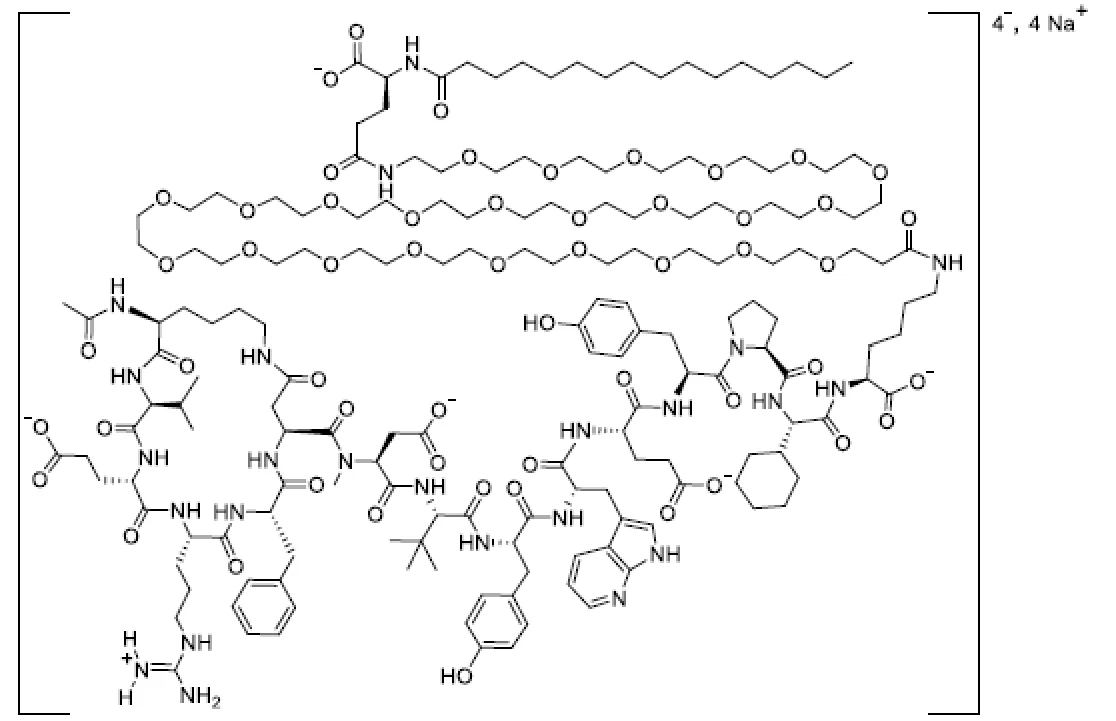
Physicochemical properties: zilucoplan is a 15-amino acid, synthetic macrocyclic peptide. In salt form at room temperature, zilucoplan sodium is an amorphous white to off-white powder. At room temperature, it is very soluble in water, buffer (50mM phosphate, pH 7.0), and methanol, and very slightly soluble in dichloromethane. It is also very soluble in slightly acidic to basic pH range.
14 Clinical Trials
14.1 Clinical Trials by Indication
Myasthenia Gravis
The efficacy of ZILBRYSQ (zilucoplan injection) for the treatment of generalized myasthenia gravis (gMG) in adult patients who are anti-AChR antibody positive was established in a 12-week, multicenter, randomized, double-blind placebo-controlled study (RAISE).
RAISE Study
Table 6: Summary of patient demographics for RAISE clinical trial in generalized Myasthenia Gravis
| Study # | Study design | Dosage, route of administration and duration | Study participants (n) | Mean age (Range) | Sex |
| RAISE | Phase 3, multicenter, randomized, double-blind, placebo-controlled | ZILBRYSQ: 0.3 mg/kg subcutaneous once daily for 12 weeks Placebo: Subcutaneous once daily for 12 weeks | Adult patients with generalized myasthenia gravis ZILBRYSQ: 86 Placebo: 88 | 53 (19-75) | Male: 43.1% Female: 56.9% |
A total of 174 patients were enrolled in the RAISE study and were randomized 1:1 to receive either ZILBRYSQ 0.3 mg/kg (n=86) or placebo (n=88). The patients were at least 18 years of age, had acetylcholine-receptor antibody positive generalized myasthenia gravis, MGFA Class II-IV (mild to severe), a Myasthenia Gravis-Activities of Daily Living (MG-ADL) Score of ≥ 6 and a Quantitative Myasthenia Gravis (QMG Score) of ≥ 12. Patients enrolled in the RAISE study were vaccinated against Neisseria meningitidis.
Stable standard of care (SOC) therapy was allowed. Baseline medications used to treat gMG were generally well-balanced across treatment groups. The majority of study participants received treatment for gMG at baseline which included parasympathomimetics (84.5%), systemic corticosteroids (63.2%) and immunosuppressants (51.1%).
Patients on concomitant medications to treat gMG continued on therapy at stable doses throughout the course of the study.
Overall, discontinuation rates were low. Eight subjects (4 per treatment group; 4.6%) did not complete the study. All patients that completed RAISE enrolled in the open-label extension study RAISE-XT.
Baseline characteristics were similar between treatment groups, including mean age at screening (53 years), mean age of disease onset (44 years), gender (34% male [ZILBRYSQ] vs 44% [placebo]), and mean duration of disease (9 years). Mean baseline MG-ADL total score was 10 in ZILBRYSQ and 11 in placebo group, and mean QMG total score was 19.
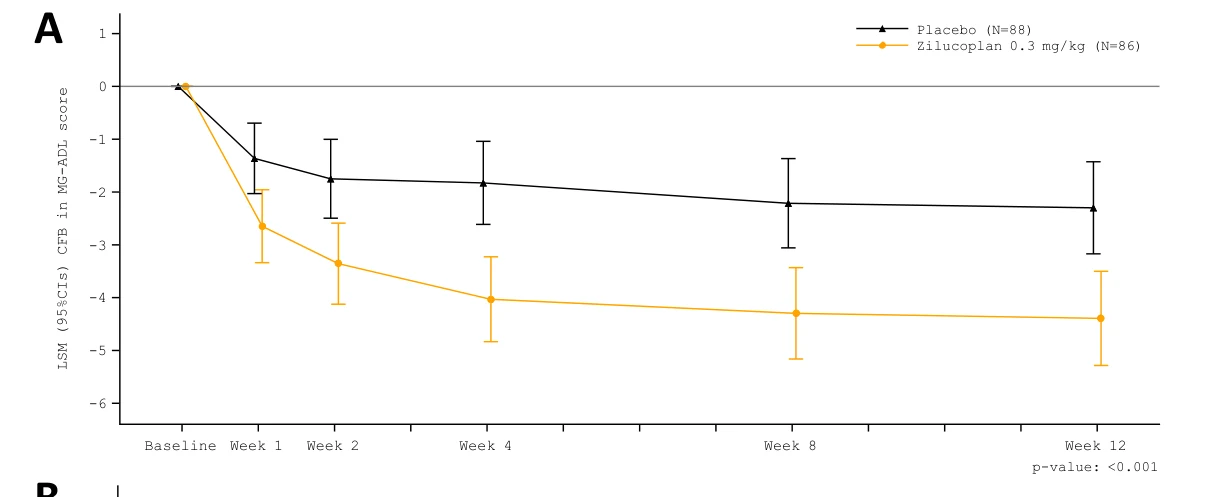
The primary efficacy endpoint in RAISE study was a comparison of the change from baseline (CFB) between treatment groups in the Myasthenia Gravis-Specific Activities of Daily Living scale (MG-ADL) total score at Week 12.
- The MG-ADL assesses the impact of gMG on daily functions of 8 signs or symptoms that are typically affected in gMG. Each item is assessed on a 4-point scale where a score of 0 represents normal function and a score of 3 represents loss of ability to perform that function. A total score ranges from 0 to 24, with the higher scores indicating more impairment.
The key secondary endpoints also assessed from baseline to Week 12 included the CFB in:
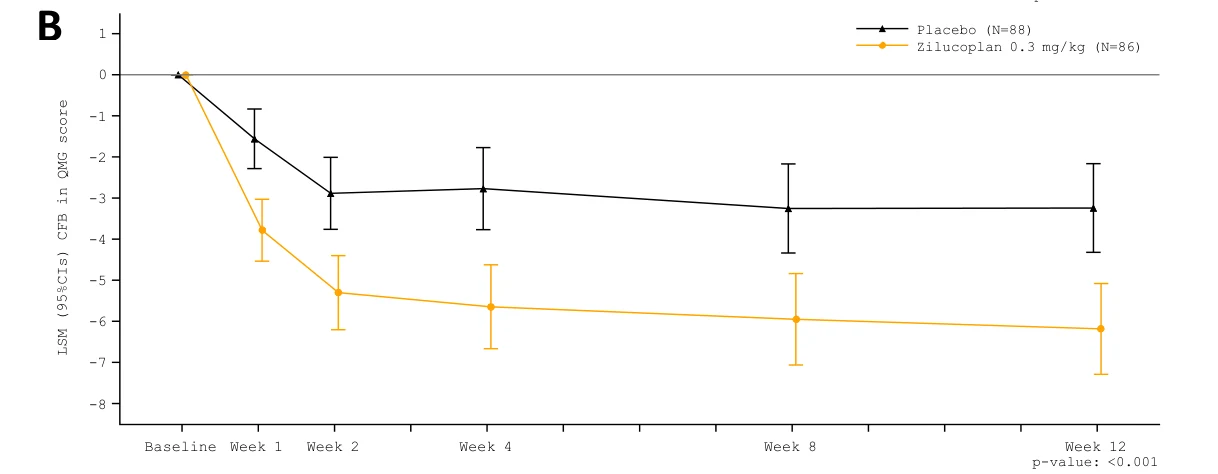
- Quantitative MG (QMG) total score – The QMG total score is a 13-item categorical grading system that assesses muscle weakness. Each item is assessed on a 4-point scale where a score of 0 represents no weakness and a score of 3 represents severe weakness. A total possible score ranges from 0 to 39, where higher scores indicate more severe impairment.
- Myasthenia Gravis Composite (MGC) total score
- MG-QoL15r
MG-ADL and QMG clinical responders were defined as having at least a 3 or 5 point decrease, respectively, at Week 12 without rescue therapy.
Study Results
Change from baseline at Week 12 is provided in Table 7.
Table 7: Change from Baseline at Week 12 in total scores for MG-ADL, QMG, MGC and MG-QoL15r [(LS Mean (95% CI)]
| Efficacy Endpoints | ZILBRYSQ (n = 86) | Placebo (n =88) | ZILBRYSQ change LS mean difference vs. placebo (95% CI) | p-value* |
|---|---|---|---|---|
| MG-ADL Total Score | -4.39 (-5.28, -3.50) | -2.30 (-3.17, -1.43) | -2.09¥ (-3.24, -0.95) | < 0.001 |
| QMG Total Score | -6.19 (-7.29, -5.08) | -3.25 (-4.32, -2.17) | -2.94¥ (-4.39, -1.49) | < 0.001 |
| MGC Total Score | -8.62 (-10.22, -7.01) | -5.42 (-6.98, -3.86) | -3.20¥ (-5.24, -1.16) | 0.0023 |
| MG-QoL15r Total Score | -5.65 (-7.17, -4.12) | -3.16 (-4.65, -1.67) | -2.49 (-4.45, -0.54) | 0.0128 |
CI = Confidence Interval; LS – Least Squares; ¥ denotes clinically meaningful improvement
* Analysis based on a MMRM ANCOVA model
Figure 1: Change from Baseline in MG-ADL Total Score (A) and QMG Total Score (B) through Week 12


Analysis based on MMRM ANCOVA model
Clinically meaningful change = 2- point change in MG-ADL score; Clinically meaningful change = 3- point change in QMG score; CFB = change from baseline; LSM = Least Squares Mean
The proportion of MG-ADL responders with at least a 3-point improvement at week 12 was statistically significantly greater for ZILBRYSQ (73.1%) compared to placebo (46.1%). The proportion of QMG responders with at least a 5-point improvement was also statistically significantly greater for ZILBRYSQ (58%) compared to placebo (33%). The proportion of clinical responders at higher response thresholds was consistently greater for ZILBRYSQ compared to placebo.
At Week 12, the cumulative proportion of patients that needed rescue therapy was lower in the ZILBRYSQ group (5%) compared with the placebo group (12%).
In the ongoing uncontrolled Open-Label Extension study, the subset of subjects randomized to ZILBRYSQ improved further and continued to demonstrate a sustained effect.
A
B
15 Microbiology
No microbiological information is required for this product.
16 Non-Clinical Toxicology
Based on pharmacological activity, similarity in metabolite profile, and ratio of metabolites to parent drug, the cynomolgus monkey is considered to be the most relevant animal species for toxicology testing and is therefore used in all in vivo safety pharmacology, repeat-dose toxicology and developmental and reproductive toxicology assessments.
Safety pharmacology: No effects on cardiovascular, respiratory or CNS safety pharmacology were observed in cynomolgus monkeys. In the cardiovascular and respiratory safety pharmacology study a single dose at 10 mg/kg was well tolerated in cynomolgus monkeys and no adverse effects or injection site findings were reported.
General Toxicology:
Single-Dose toxicology: No single-dose toxicology studies were conducted with zilucoplan sodium.
Repeat-dose toxicology: The toxicity profile of zilucoplan sodium was assessed following daily subcutaneous administration for 4-, 13- and 39- weeks at doses up to 10 mg/kg in cynomolgus monkeys.
In the 39-week study, 2 animals (one at 4.0 mg/kg and one at 6.0 mg/kg) developed cellular infiltrates and vesiculation of epithelial tissues, progressing to erosion and ulceration, which were considered adverse. Furthermore, lymphoid aggregates in the bone marrow (2 of 3 males and 3 of 3 females) as well as increased cellularity in the thymus (2 of 3 males and 3 of 3 females) and in the spleen (1 of 3 males and 2 of 3 females) were observed in animals receiving 6.0 mg/kg. A NOAEL was not declared, however, the highest dose that was considered tolerated was 2 mg/kg/day, which is the same dose as the NOAEL of the 13-week study. The 2 mg/kg/day dose in the 39 week study shows an AUC(0-24) of 541µg• h /mL, corresponding to 2.0-fold the expected exposure at the maximum recommended human dose.
Genotoxicity: Zilucoplan sodium was negative in the in vitro mutagenicity (Ames) and in vitro chromosomal aberration assays, and in the in vivo micronucleus test in rat bone marrow cells.
Carcinogenicity: No carcinogenicity studies were conducted with zilucoplan sodium. A weight of evidence approach was considered acceptable.
Reproductive and Developmental Toxicology: In a combined embryo-foetal development/enhanced pre/post-natal development study and a male fertility study in cynomolgus monkeys at doses up to 4 mg/kg, no maternal toxicity, number of viable foetuses, foetal development, placental weights, or reproductive organ histopathology were observed. While spermatogenesis was complete, reduced spermatogenesis stages was however reported. There were no adverse effects on infant growth and development and/or morphological findings of toxicological concern.
Data collected from an ex-vivo closed-circuit human placental transfer model suggest low transfer rate of zilucoplan sodium (0.5-1.0%) in the fetal compartment. The transfer rate of 0.5% was observed at a steady state plasma concentration of 10 µg/ml zilucoplan sodium, corresponding to a therapeutic dose of 0.3 mg/kg. The clinical relevance of these data in human pregnancies is unknown.