


Product Monograph - Wainua
Recent Major Label Changes
There are no recent major changes to this Product Monograph.
Table of Contents
Certain sections (as indicated in section 2.1. of the PM Guidance) or subsections that are not applicable at the time of the preparation of the most recent authorized Product Monograph are not listed.
Recent Major Label Changes ................................................................................................... 2
Table of Contents ...................................................................................................................... 2
Part 1: Healthcare Professional Information ........................................................................... 4
- 1.
Indications .......................................................................................................................... 4
1.1. Pediatrics ................................................................................................................. 4
1.2. Geriatrics .................................................................................................................. 4
- 2. Contraindications .............................................................................................................. 4
- 4.
Dosage and Administration .............................................................................................. 4
4.1. Dosing Considerations ............................................................................................. 4
4.2. Recommended Dose and Dosage Adjustment ......................................................... 4
4.4. Administration .......................................................................................................... 5
4.5. Missed Dose ............................................................................................................ 5
- 5. Overdose ............................................................................................................................ 5
- 6. Dosage Forms, Strengths, Composition and Packaging ................................................ 6
- 7.
Warnings and Precautions ................................................................................................ 6
General ............................................................................................................................... 6
Driving and Operating Machinery ........................................................................................ 6
Monitoring and Laboratory Tests......................................................................................... 6
Ophthalmologic ................................................................................................................... 7
Reproductive Health ........................................................................................................... 7
7.1. Special Populations .................................................................................................. 7
7.1.1. Pregnant Women ............................................................................................ 7
7.1.2. Breast-feeding................................................................................................. 8
7.1.3. Pediatrics ........................................................................................................ 8
7.1.4. Geriatrics ........................................................................................................ 8
- 8.
Adverse Reactions ............................................................................................................. 8
8.1. Adverse Reaction Overview ..................................................................................... 8
8.2. Clinical Trial Adverse Reactions ............................................................................... 9
8.3. Less Common Clinical Trial Adverse Reactions ......................................................10
8.4. Abnormal Laboratory Findings: Hematologic, Clinical Chemistry and Other Quantitative Data ...............................................................................................................10
- 9.
Drug Interactions ............................................................................................................. 11
9.2. Drug Interactions Overview .....................................................................................11
9.3. Drug-Behavioural Interactions .................................................................................11
9.4. Drug-Drug Interactions ............................................................................................11
9.5. Drug-Food Interactions ............................................................................................11
9.6. Drug-Herb Interactions ............................................................................................11
9.7. Drug-Laboratory Test Interactions ...........................................................................11
- 10.
Clinical Pharmacology .................................................................................................... 12
10.1. Mechanism of Action ...............................................................................................12
10.2. Pharmacodynamics .................................................................................................12
10.3. Pharmacokinetics ....................................................................................................13
- 11. Storage, Stability and Disposal ....................................................................................... 15
- 12. Special Handling Instructions ......................................................................................... 15
Part 2: Scientific Information ................................................................................................. 16
- 13. Pharmaceutical Information ............................................................................................ 16
- 14.
Clinical Trials ................................................................................................................... 18
14.1. Clinical Trials by Indication ......................................................................................18
Polyneuropathy Associated with Hereditary Transthyretin-mediated Amyloidosis (hATTR PN) ..........................................................................................................18
- 15. Microbiology .................................................................................................................... 23
- 16. Non-Clinical Toxicology .................................................................................................. 23
Patient Medication Information .............................................................................................. 24
Instructions for Use ................................................................................................................ 29
Part 1: Healthcare Professional Information
1. Indications
WAINUA (eplontersen injection) is indicated for:
- the treatment of polyneuropathy associated with stage 1 or stage 2 hereditary transthyretin-mediated amyloidosis (hATTR) in adults.
1.1. Pediatrics
Pediatrics (< 18 years of age): No data are available to Health Canada; therefore, Health Canada has not authorized an indication for pediatric use.
1.2. Geriatrics
Evidence from the pivotal clinical study suggests that use in the geriatric population is not associated with major differences in safety or efficacy.
2. Contraindications
WAINUA is contraindicated in:
- patients who are known to be hypersensitive to this drug or to any ingredient in the formulation, including any non-medicinal ingredient, or component of the container. For a complete listing, see 6 Dosage Forms, Strengths, Composition and Packaging.
4. Dosage and Administration
4.1. Dosing Considerations
- Treatment should be initiated by and remain under the supervision of a treating physician knowledgeable in the management of patients with amyloidosis.
- After proper training in the subcutaneous injection technique, patients or their caregivers may administer WAINUA, with medical follow-up as necessary.
- Follow administration instructions carefully (see 4.4 Administration).
- The decision to continue treatment in those patients whose disease progresses to FAP stage 3 polyneuropathy should be taken at the discretion of the physician based on the overall benefit and risk assessment.
- Patients receiving WAINUA should take oral supplementation of the recommended daily allowance of vitamin A (approximately 3000 IU per day). Vitamin A supplementation should be continued throughout treatment (see 7 Warnings and Precautions -General; 7 Warnings and Precautions -Ophthalmologic; 10.2 Pharmacodynamics).
4.2. Recommended Dose and Dosage Adjustment
Adults: The recommended dose of WAINUA is 45 mg administered by subcutaneous injection. Doses should be administered once monthly.
Pediatrics (< 18 years of age): Health Canada has not authorized an indication for pediatric use (see 1.1 Pediatrics).
Geriatrics: No dose adjustment is required in patients 65 years of age or older (see 10.3 Pharmacokinetics).
Renal impairment: No dose adjustment is necessary in patients with mild to moderate renal impairment (estimated glomerular filtration rate [eGFR] ≥ 45 to < 90 mL/min/1.73 m2) (see 10.3 Pharmacokinetics). WAINUA has not been studied in patients with eGFR<45 mL/min/1.73 m2 or end-stage renal disease.
Hepatic impairment: No dose adjustment is necessary in patients with mild hepatic impairment (see 10.3 Pharmacokinetics). WAINUA has not been studied in patients with moderate or severe hepatic impairment. WAINUA has not been studied in patients with prior liver transplant.
4.4. Administration
- WAINUA is for subcutaneous use only.
- Prior to initiation, train patients and/or caregivers on proper preparation and administration of WAINUA. Refer patients and/or caregivers to the comprehensive instructions for the administration of WAINUA, provided in the Patient Medication Information. The first injection administered by the patient or caregiver should be performed under the guidance of an appropriately qualified health care professional.
- The autoinjector should be removed from refrigerated storage at least 30 minutes before use and allowed to reach room temperature prior to injection. Other warming methods should not be used.
- Inspect WAINUA visually before use. The solution should appear colourless to yellow. Do not use if cloudiness, particulate matter or discolouration is observed prior to administration.
- If self-administered, inject WAINUA in the abdomen or upper thigh region. If a caregiver administers the injection, the back of the upper arm can also be used. Do not inject into scar tissue or areas that are reddened, inflamed, or swollen.
4.5. Missed Dose
If a dose of WAINUA is missed, then the next dose should be administered as soon as possible. Resume dosing at monthly intervals from the date of the last dose.
5. Overdose
There is no specific treatment for an overdose with eplontersen. In the event of an overdose, supportive medical care should be provided including consulting with a healthcare professional.
For the most recent information in the management of a suspected drug overdose, contact your regional poison control centre or Health Canada’s toll-free number, 1-844 POISON-X (1-844-764-7669).
6. Dosage Forms, Strengths, Composition and Packaging
Table 1 – Dosage Forms, Strengths and Composition
WAINUA is a sterile, preservative-free, clear, colourless to yellow solution for injection in a single-dose autoinjector.
Each autoinjector of WAINUA is filled to deliver 0.8 mL of solution containing 45 mg of eplontersen (equivalent to 47 mg eplontersen sodium). WAINUA is available in a carton containing one single-dose autoinjector.
The syringe in the autoinjector is comprised of type I glass with a staked 27 gauge ½ inch stainless steel needle, rigid needle shield, and chlorobutyl siliconized rubber stopper.
7. Warnings and Precautions
General
Reduced Serum Vitamin A Levels and Recommended Supplementation:
By reducing serum transthyretin (TTR) protein, treatment with WAINUA leads to a decrease in serum vitamin A levels. Supplementation at the recommended daily allowance/amount of vitamin A (3,000 IU/1,200 mcg RAE) is advised for patients taking WAINUA. Serum vitamin A levels should not be used to guide vitamin A supplementation during treatment with WAINUA (see 9.7 Drug-Laboratory Test Interactions; 10.2 Pharmacodynamics).
Any symptoms or signs related to vitamin A deficiency should be evaluated prior to initiation of treatment with WAINUA.
Driving and Operating Machinery
No studies with WAINUA have been performed to assess effects on the ability to drive and operate machinery during treatment. WAINUA is not expected to have significant influence on the ability to drive and use machines.
Monitoring and Laboratory Tests
Serum TTR is a carrier of retinol binding protein, which facilitates transport of vitamin A in the blood. Treatment with WAINUA reduces serum TTR levels, which results in reduced levels of retinol binding protein and vitamin A in the serum. However, transport and tissue uptake of vitamin A can occur through alternative mechanisms in the absence of retinol binding protein. As a result, laboratory tests for serum vitamin A do not reflect the total amount of vitamin A in
| Route of Administration | Dosage Form / Strength / Composition | Non-medicinal Ingredients |
| subcutaneous injection | solution; single-dose autoinjector [45 mg eplontersen (as eplontersen sodium) in 0.8mL] | disodium hydrogen phosphate anhydrous, hydrochloric acid, sodium chloride, sodium dihydrogen phosphate dihydrate, sodium hydroxide, and water for injection |
the body and should not be used to guide vitamin A supplementation during treatment with WAINUA (see 7 Warnings and Precautions - General; 10.2 Pharmacodynamics).
Ophthalmologic
Consistent with the mechanism of action (reductions in plasma TTR), WAINUA has been shown to reduce serum vitamin A (retinol) below normal levels (see 7 Warnings and Precautions - General, Reduced Serum Vitamin A Levels and Recommended Supplementation; 10.2 Pharmacodynamics).
Patients receiving WAINUA should take oral supplementation of the daily recommended dose of vitamin A to reduce the potential risk of ocular symptoms due to vitamin A deficiency. Referral for ophthalmological assessment is recommended if patients develop ocular symptoms consistent with vitamin A deficiency, including reduced night vision or night blindness, persistent dry eyes, eye inflammation, corneal inflammation or ulceration, corneal thickening or corneal perforation.
Reproductive Health
- Fertility
There is no information available on the effects of WAINUA on human fertility.
Administration of eplontersen or a pharmacologically-active rodent-specific surrogate to mice at doses up to 32-fold higher than the recommended human dose did not indicate any impact on male or female fertility (see 16 Non-Clinical Toxicology).
- Function
There is no data on the effects of WAINUA on human sexual function.
7.1. Special Populations
7.1.1. Pregnant Women
WAINUA is not recommended for use during pregnancy.
There are no data regarding the use of WAINUA in pregnant women. The effects of a reduction in maternal serum TTR or serum vitamin A levels on the fetus are unknown (see 10.2 Pharmacodynamics). Administration of eplontersen or a pharmacologically-active rodent-specific surrogate in doses 32-fold higher than recommended human dose in a combined fertility and embryo-fetal development toxicity study in mice did not result in effects on embryo fetal development (see 16 Non-Clinical Toxicology). However, animal studies do not reflect the potential teratogenic risk arising from unbalanced vitamin A levels.
WAINUA reduces the plasma levels of vitamin A, which is essential for normal fetal development and maternal health. Vitamin A levels that are too low or too high during pregnancy can increase the risk of fetal malformation. Increasing vitamin A supplementation above the daily recommended dose during pregnancy is unlikely to correct serum retinol levels and may be harmful to the fetus. (see 7 Warnings and Precautions - General, Reduced Serum Vitamin A Levels and Recommended Supplementation; 10.2 Pharmacodynamics).
Pregnancy should be ruled out before initiating WAINUA. Women of child-bearing potential should use effective contraception during treatment with WAINUA.
If a woman plans to become pregnant, both WAINUA and vitamin A supplementation should be discontinued, and serum vitamin A levels should be monitored and returned to normal before conception is attempted.
In the event of an unplanned pregnancy, WAINUA should be discontinued (see 7.1
Pregnant Women). Due to the long half-life of eplontersen (see 10.3 Pharmacokinetics), a vitamin A deficit may develop even after cessation of treatment. Vitamin A level should be monitored and managed as appropriate. Close monitoring of the fetus should be carried out, especially during the first trimester.
7.1.2. Breast-feeding
Human or animal lactation studies have not been conducted to assess the presence of eplontersen or its metabolites in breast milk, the effects on the breast-fed infant, or the effects on milk production for the mother. A risk to the breast-fed child cannot be excluded.
The developmental and health benefits of breast-feeding should be considered, along with the mother’s clinical need for WAINUA and any potential adverse effects on the breastfed infant from WAINUA or from the underlying maternal condition.
There is no information on the effect of WAINUA on vitamin A levels in human milk. Breast milk is a critical source of vitamin A for infants, crucial for early development. Concentrations of vitamin A in breast milk may be influenced by the mother’s vitamin A status (see 7 Warnings and Precautions - Reproductive Health).
7.1.3. Pediatrics
Pediatrics (< 18 years of age): No data are available to Health Canada; therefore, Health Canada has not authorized an indication for pediatric use (see 1.1 Pediatrics).
7.1.4. Geriatrics
Of the 144 patients treated with eplontersen in the NEURO-TTRansform Study, 44 (31%) patients were ≥ 65 years of age. No overall differences in safety or effectiveness were observed between these patients and younger adult patients. There is limited experience in patients ≥ 75 years of age. Greater sensitivity of some older individuals cannot be ruled out.
8. Adverse Reactions
8.1. Adverse Reaction Overview
In patients with polyneuropathy associated with hATTR (hATTR PN), the most commonly reported adverse events (incidence ≥ 5% and ≥ 2% more than external placebo), irrespective of causality, were vitamin A deficiency (11.8%), vomiting (8.3%), proteinuria (8.3%) and vision blurred (5.6%). The external placebo group, used for comparison, were from a Phase 3 trial with inotersen (up to 65 weeks). Serious adverse events (SAEs) occurred in 18.8% of patients treated with WAINUA for up to 85 weeks. The most common SAEs (≥ 1%) were vomiting (3.5%), nausea (1.4%), urinary tract infection (1.4%) and syncope (1.4%). In patients treated with WAINUA over 85 weeks, adverse events led to discontinuation in 5.6% of patients versus 3.3% of patients in the external placebo group over the course of 65 weeks.
8.2. Clinical Trial Adverse Reactions
Clinical trials are conducted under very specific conditions. The adverse reaction rates observed in the clinical trials; therefore, may not reflect the rates observed in practice and should not be compared to the rates in the clinical trials of another drug. Adverse reaction information from clinical trials may be useful in identifying and approximating rates of adverse drug reactions in real-world use.
The safety data reflects exposure to WAINUA in 144 patients with hATTR PN who were randomized to WAINUA and received at least one dose of WAINUA for up to 85 weeks. Of these, 141 patients received at least 6 months of treatment and 137 patients received at least 12 months of treatment. The mean duration of treatment was 541 days (range: 57 to 582 days).
The most frequent causally related adverse reaction with WAINUA during treatment was reduced serum vitamin A Levels (see 8.4 Abnormal Laboratory Findings: Hematologic, Clinical Chemistry and Other Quantitative Data). Other adverse reactions that occurred in the patients treated with WAINUA are shown in Table 2, as well as the frequency of those reactions in an external placebo group of patients (see 14.1 Clinical Trials by Indication).
Table 2 – Adverse Reaction Reported in at Least 5% of Patients Treated with WAINUA (Up to Week 85)
WAINUA N=144 (%) | |||
| Eye Disorders | |||
| Vision blurred | 6 | ||
| Cataract | 6 | ||
| Gastrointestinal Disorders | |||
| Vomiting | 9 | ||
| General Disorders and Administration Site Conditions | |||
| Injection site reactions+ | 6 | ||
| Metabolism and Nutrition Disorders | |||
| Vitamin A deficiency | 12 | ||
| Renal and Urinary Disorders | |||
| Proteinuria | 8 | ||
+ Includes injection site erythema and injection site pruritus.
Atrioventricular Block
Three serious adverse reactions of atrioventricular (AV) heart block (2%) occurred in WAINUA-treated patients, by week 85, including atrioventricular block complete, atrioventricular block, and atrioventricular block second degree.
Females
Some common adverse reactions were reported more frequently in women. Some adverse reactions reported as less common in the overall population, were reported more frequently in women (see 8.3 Less Common Clinical Trial Adverse Reactions). This includes anaemia (11.4%), peripheral oedema (13.6%), myalgia (9.1%), renal impairment (11.4%), pruritus (9.1%), alopecia (6.8%), rash (9.1%), syncope (6.8%), hypotension (11.4%), atrioventricular block (9.1%), and cataract (13.6%) (up to week 85).
Immunogenicity
In the open label pivotal Phase III clinical study (NEURO-TTRansform) in patients with hATTR PN, after an 84-week treatment period (median treatment duration of 561 days (80 weeks), range: 57 to 582 days), 58 patients (40.3%) developed treatment-emergent anti-drug antibodies (ADAs). The presence of treatment-emergent ADAs had no clinically meaningful impact on the efficacy, safety, pharmacokinetics, or pharmacodynamics of WAINUA. However, higher Ctrough was observed in ADA-positive subjects, the long-term impact of which has not been established (see 10.3 Pharmacokinetics; 14.1 Clinical Trials by Indication).
The observed incidence of ADAs is highly dependent on the sensitivity and specificity of the assay. Differences in assay methods preclude meaningful comparisons of the incidence of ADAs in the study described below with the incidence of anti-drug antibodies in other studies.
8.3. Less Common Clinical Trial Adverse Reactions
Patient numbers were too limited for an accurate determination of less common adverse reactions, their frequencies or causality (see 14.1 Clinical Trials by Indication).
The following is a list of treatment-emergent adverse events reported in patients treated with WAINUA in the safety population (N=144) up to 85 weeks. Those events reported in more than one eplontersen-treated patient, and at a higher incidence than in an external placebo group (comparison is limited to up to week 66) have been included. Those already reported in Table 2 have been excluded.
Although the events reported occurred during treatment with eplontersen, they were not necessarily caused by eplontersen. Some events were consistent with the natural history of the condition.
Blood and Lymphatic System Disorders: anaemia, leukopenia, lymphopenia, neutropenia
Cardiac Disorders: arrhythmia, atrioventricular block, atrioventricular block first degree, left ventricular hypertrophy, nodal rhythm
Ear and Labyrinth Disorders: vertigo, tinnitus
Eye Disorders: dry eye, age-related macular degeneration, visual impairment
Gastrointestinal Disorders: gastritis, gastrooesophageal reflux disease, oesophagitis, dental caries, rectal haemorrhage
General Disorders and Administration Site Conditions: non-cardiac chest pain, malaise, chest discomfort
Hepatobiliary Disorders: cholelithiasis
Infections and Infestations: upper respiratory tract infection, asymptomatic bacteriuria, cystitis, gingivitis, skin infection, localised infection
Investigations: alanine aminotransferase increased, blood creatine phosphokinase increased, gamma-glutamyltransferase increased, haemoglobin decreased, transaminases increased, N-terminal prohormone brain natriuretic peptide increased, platelet count decreased, troponin T increased, vitamin A decreased
Metabolism and Nutrition: hyponatraemia, dehydration, iron deficiency, vitamin B12 deficiency
Musculoskeletal and Connective Tissue Disorders: myalgia, tenosynovitis, synovitis, flank pain, osteoarthritis
Neoplasms Benign, Malignant and Unspecified (Incl Cysts And Polyps): skin papilloma, squamous cell carcinoma
Nervous System Disorders: syncope, burning sensation, carpal tunnel syndrome, polyneuropathy
Renal and Urinary Disorders: renal impairment, microalbuminuria, acute kidney injury, micturition urgency
Respiratory, Thoracic and Mediastinal Disorders: epistaxis, obstructive sleep apnea
Skin and Subcutaneous Tissue Disorders: rash, skin lesion, skin ulcer, alopecia, eczema, dermatitis
Vascular Disorders: orthostatic hypotension, hypotension, haematoma, hypertension
8.4. Abnormal Laboratory Findings: Hematologic, Clinical Chemistry and Other Quantitative Data
Vitamin A Decrease
In the NEURO-TTRansform study in patients with hATTR PN, all patients were instructed to take the recommended daily allowance of vitamin A. All patients treated with WAINUA had normal vitamin A levels at baseline, 96.5% of those developed vitamin A levels below the lower limit of normal (LLN) during the study (see 7 Warnings and Precautions - Reproductive Health; 10.2 Pharmacodynamics.
9. Drug Interactions
9.2. Drug Interactions Overview
No formal clinical drug interaction studies have been performed with WAINUA.
9.3. Drug-Behavioural Interactions
No formal studies on drug-behavioural interactions have been performed with WAINUA.
9.4. Drug-Drug Interactions
No formal clinical drug interaction studies have been conducted with eplontersen. In vitro studies indicate that eplontersen is not a substrate or inhibitor of transporters, does not interact with highly plasma protein bound drugs, and is not an inhibitor or inducer of CYP enzymes. Oligonucleotide therapeutics, including eplontersen, are not typically substrates of CYP enzymes. Therefore, eplontersen is not expected to cause or be affected by drug-drug interactions mediated through drug transporters, plasma protein binding or CYP enzymes.
9.5. Drug-Food Interactions
Interactions with food have not been established.
9.6. Drug-Herb Interactions
Interactions with herbal products have not been established.
9.7. Drug-Laboratory Test Interactions
Serum TTR is a carrier of retinol binding protein, which facilitates transport of vitamin A in the blood. Treatment with WAINUA reduces serum TTR levels, which results in reduced levels of retinol binding protein and vitamin A in the serum. However, transport and tissue uptake of vitamin A can occur through alternative mechanisms in the absence of retinol binding protein. As a result, laboratory tests for serum vitamin A do not reflect the total amount of vitamin A in the body and should not be used to guide vitamin A supplementation during treatment with WAINUA (see 7 Warnings and Precautions - General, Reduced Serum Vitamin A Levels and Recommended Supplementation, 10.1 Mechanism of Action).
10. Clinical Pharmacology
10.1. Mechanism of Action
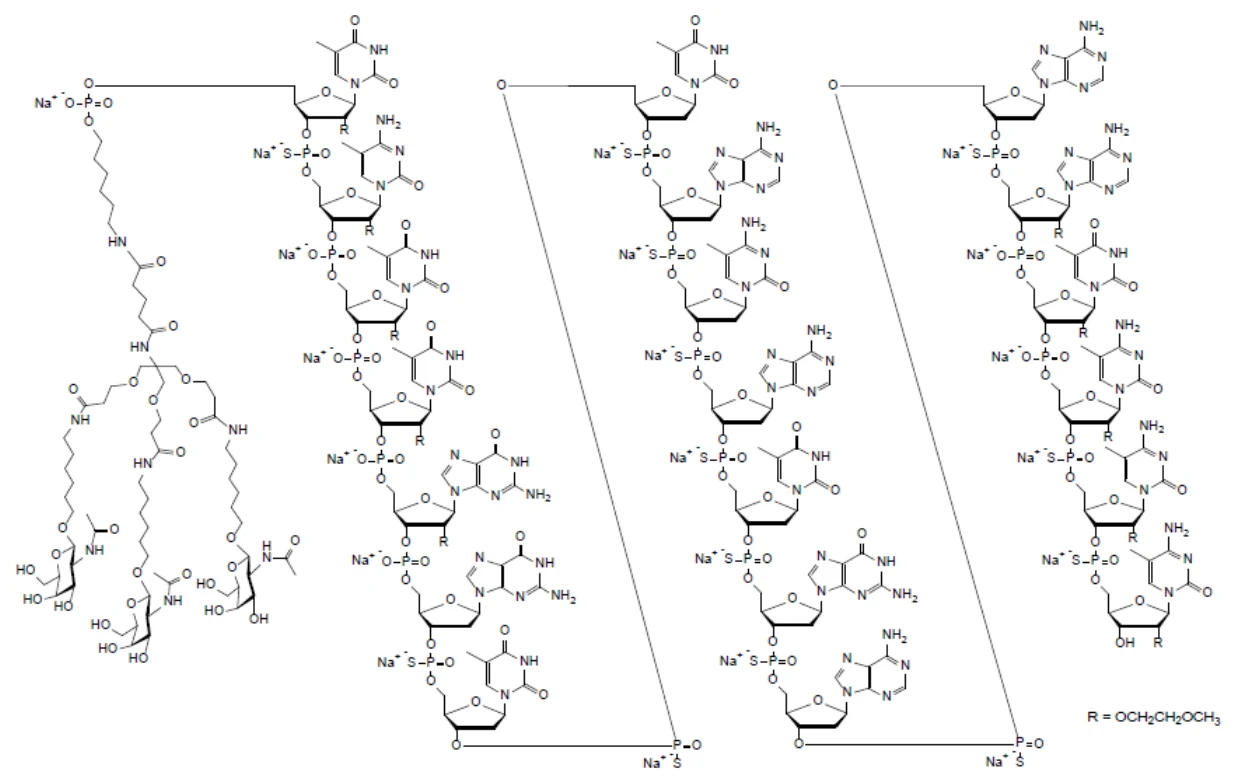
Eplontersen is a GalNAc conjugated 2′-O-2-methoxyethyl (2′-MOE)-modified chimeric gapmer antisense oligonucleotide (ASO) with a mixed backbone of phosphorothioate (PS) and phosphodiester (PO) internucleotide linkages. The GalNAc conjugate enables targeted delivery of the ASO to hepatocytes. As a silencer of transthyretin (TTR), eplontersen selectively binds to the TTR messenger RNA (mRNA) within the hepatocytes, which causes the degradation of both mutant and wild type TTR mRNA. This prevents the synthesis of TTR protein in the liver, resulting in significant reductions in the levels of mutated and wild type TTR protein secreted by the liver into the circulation.
10.2. Pharmacodynamics
In the pivotal Phase III study (see 14.1 Clinical Trials by Indication), following administration of 45 mg WAINUA dosage every 4 weeks (Q4W) to patients with polyneuropathy associated with hATTR, a decrease in serum TTR concentrations was observed as early as Week 5 (the first assessment), and TTR suppression continued through Week 35, when steady state was reached. WAINUA maintained a sustained reduction of TTR concentration throughout the duration of the treatment (84 weeks). With Q4W dosing, WAINUA reduced the least squares mean (LSM) serum TTR from baseline by 50.0% at Week 5, 65.3% at Week 9, 71.7% at Week 13, 78.2% at Week 25, 81.1% at Week 35, 81.0 % at Week 49, 80.4% at Week 57, and 81.6% at Week 65. By comparison, changes from baseline in LSM serum TTR observed with external placebo were 13.4% at Week 5, 10.5% at Week 8, 16.1% at Week 13, 15.6% at Week 23, 14.5% at Week 35, 10.0% at Week 47, 13.0% at Week 59, and 11.2% at Week 65. At week 65, the difference in change from baseline between the eplontersen group and the external placebo (-70.4%, 95% CI: -75.2, -65.7) is statistically significant. Change from baseline in serum TTR concentration was a co-primary endpoint of the study, at both the interim analysis (Week 35) and the final analysis (Week 65). The observed reduction from baseline in serum TTR concentrations compared to external placebo was consistent regardless of sex, race, age, region, body weight, cardiomyopathy (CM) status, previous treatment, Val30Met mutation status (V30M or non-V30M genotype), disease stage, and familial amyloid cardiomyopathy (FAC) clinical diagnosis at baseline.
Eplontersen also reduced mean steady state serum vitamin A by 71% by Week 37 (see 7 Warnings and Precautions - General). TTR is a carrier protein for retinol binding protein 4 (RBP4), which is the principal carrier of vitamin A (retinol). As a result, reductions in plasma TTR result in a reduction of plasma retinol levels to below the lower limit of normal.
Cardiac Electrophysiology
Dedicated QTc studies have not been conducted with WAINUA. The potential for QTc prolongation with eplontersen was evaluated in a randomized, placebo-controlled trial in healthy volunteers. At a dose 2.7 times the recommended dose of 45 mg eplontersen, no clinically relevant effect on the QT interval was observed.
10.3. Pharmacokinetics
The pharmacokinetic (PK) properties of WAINUA were evaluated following subcutaneous administration of single and multiple doses (once every 4 weeks) in healthy subjects and multiple doses (once every 4 weeks) in patients with hATTR.
Table 3 – Summary of eplontersen pharmacokinetic parameters in healthy volunteers.
| Cmax (mcg/mL) | Tmax (h) | t½ (days) | AUCτa (mcg•h/mL) | CLss/F (L/h) | Vz/F (L) | |
| Doseb | 0.215 (66.1) [10] | 3.00 (1.00, 3.00) [10] | 22.0 (72.1) [6] | 1.81 (36.3) [10] | 24.8 (36.3) [10] | 18662 (64.0) [6] |
Data presented are geometric mean, (geometric %CV), [N].
Tmax, is presented as median (minimum, maximum), [N].
a τ is 672 h
b Data is following 4th dose of eplontersen but is representative of single dose as no accumulation of eplontersen over time.
Absorption
Following subcutaneous administration, eplontersen is absorbed rapidly into systemic circulation with the time to maximum plasma concentrations of approximately 2 hours, based on population estimates.
Eplontersen Cmax and AUC showed a slightly greater than dose-proportional increase following single subcutaneous doses ranging from 45 to 120 mg (i.e., 1 to 2.7 times the recommended dose) in healthy volunteers.
Distribution
Based on animal studies (mouse, rat, and monkey), eplontersen distributes primarily to the liver and kidney cortex after subcutaneous dosing. Eplontersen is highly bound to human plasma proteins (> 98%). The population estimates for the apparent central volume of distribution is 12.9 L and the apparent peripheral volume of distribution is 11,100 L.
There are no clinical data on the PK of eplontersen in the liver.
Population estimates of steady state maximum concentrations (Cmax), trough concentrations (Ctrough), and area under the curve (AUCτ) were 0.218 mcg/mL, 0.000200 mcg/mL, and 1.95 mcg•h/mL, respectively, following 45 mg dosage every 4 weeks (Q4W) in patients with hATTR PN. No accumulation of eplontersen Cmax and AUC was observed in plasma after repeated dosing (once every 4 weeks). Accumulation was observed in Ctrough, and steady-state is reached after approximately 17 weeks.
Metabolism
Eplontersen is metabolized by endo- and exonucleases to short oligonucleotide fragments of varying sizes within the liver. There were no major circulating metabolites in humans. Oligonucleotide therapeutics, including eplontersen, are not typically metabolized by CYP450 enzymes.
Elimination
Eplontersen is primarily eliminated by metabolism followed by renal excretion of the short oligonucleotide metabolites. The mean fraction of unchanged ASO eliminated in urine was less than 1% of the administered dose within 24 hours. The terminal elimination half-life is approximately 3 weeks based on population estimates.
Special Populations and Conditions
- Pediatrics The safety and efficacy of WAINUA have not been studied in children or adolescents < 18 years old; therefore, Health Canada has not authorized an indication for pediatric use (see 1.1 Pediatrics).
- Geriatrics Clinical studies did not identify clinically meaningful differences in steady-state eplontersen pharmacokinetic parameters or TTR reduction between adult and elderly (≥ 65 years of age) patients.
- Sex Clinical studies did not identify clinically significant differences in steady state eplontersen pharmacokinetic parameters or TTR reduction based on sex.
- Pregnancy and Breast-feeding Eplontersen has not been studied in pregnant or breast-feeding women.
- Genetic Polymorphism Clinical studies did not identify clinically meaningful differences in steady-state eplontersen pharmacokinetic parameters or TTR reduction based on Val30Met mutation status.
- Ethnic Origin Clinical studies did not identify clinically significant differences in steady state eplontersen pharmacokinetic parameters or TTR reduction based on race.
- Hepatic Insufficiency No formal clinical studies have been conducted to investigate the effect of hepatic impairment on eplontersen. A population pharmacokinetic and pharmacodynamic analysis showed no clinically meaningful differences in the pharmacokinetics or pharmacodynamics of eplontersen based on mild hepatic impairment (total bilirubin ≤ 1 x ULN and AST > 1 x ULN, or total bilirubin > 1.0 to 1.5 x ULN and any AST). Eplontersen has not been studied in patients with moderate or severe hepatic impairment or in patients with prior liver transplant.
- Renal Insufficiency No formal clinical studies have been conducted to investigate the effect of renal impairment on eplontersen PK. A population pharmacokinetic and pharmacodynamic analysis showed no clinically meaningful differences in the pharmacokinetics or pharmacodynamics of eplontersen based on mild and moderate renal impairment (eGFR ≥ 45 to < 90 mL/min). Eplontersen has not been studied in patients with eGFR< 45 mL/min/1.73 m2 or in patients with end-stage renal disease.
- Obesity Clinical studies did not identify clinically meaningful differences in steady-state eplontersen pharmacokinetic parameters or TTR reductions based on bodyweight. No dedicated clinical studies of eplontersen have been conducted in obese patients.
- ADA Status Eplontersen PK parameters (Cmax and AUC0-6h) were similar between ADA-positive and ADA-negative patients. However, a persistent elevation in Ctrough was observed in patients with treatment-emergent ADAs (see 8.2 Clinical Trial Adverse Reactions).
11. Storage, Stability and Disposal
Store in a refrigerator (2°C – 8°C).
If needed, WAINUA can be stored at room temperature (up to 30°C) in the original carton for up to 6 weeks; if not used within the 6 weeks, discard WAINUA.
Do not freeze. Do not expose to heat.
Store in the original package in order to protect from light.
Following injection, the single-use pre-filled autoinjector should be immediately discarded in a puncture-resistant sharps container. Any unused medicinal product or waste material should be disposed of in accordance with local requirements.
12. Special Handling Instructions
In the absence of compatibility studies, this product must not be mixed with other medicinal products.
Part 2: Scientific Information
13. Pharmaceutical Information
Drug Substance
Non-proprietary name of the drug substance: eplontersen sodium
Chemical name: all-P-ambo-5′-O-{[(6-{5-[(tris{3-[6-(2-acetamido-2-deoxy-β-D-galactopyranosyloxy)hexylamino]-3-oxopropoxymethyl})methyl]amino-5-oxopentanamido}hexyl)]phospho}-2′-O-(2-methoxyethyl)-5-methyl-P-thiouridylyl-(3′-O→5′-O)-2′-O-(2-methoxyethyl)-5-methylcytidylyl-(3′-O→5′-O)-2′-O-(2-methoxyethyl)-5-methyluridylyl-(3′-O→5′-O)-2′-O-(2-methoxyethyl)-5-methyluridylyl-(3′-O→5′-O)-2′-O-(2-methoxyethyl)guanylyl-(3′-O→5′-O)-2′-deoxy-P-thioguanylyl-(3′-O→5′-O)-P-thiothymidylyl-(3′-O→5′-O)-P-thiothymidylyl-(3′-O→5′-O)-2′-deoxy-P-thioadenylyl-(3′-O→5′-O)-2′-deoxy-5-methyl-P-thiocytidylyl-(3′-O→5′-O)-2′-deoxy-P-thioadenylyl-(3′-O→5′-O)-P-thiothymidylyl-(3′-O→5′-O)-2′-deoxy-P-thioguanylyl-(3′-O→5′-O)-2′-deoxy-P-thioadenylyl-(3′-O→5′-O)-2′-deoxy-P-thioadenylyl-(3′-O→5′-O)-2′-O-(2-methoxyethyl)adenylyl-(3′-O→5′-O)-2′-O-(2-methoxyethyl)-5-methyluridylyl-(3′-O→5′-O)-2′-O-(2-methoxyethyl)-5-methyl-P-thiocytidylyl-(3′-O→5′-O)-2′-O-(2-methoxyethyl)-5-methyl-P-thiocytidylyl-(3′-O→5′-O)-2′-O-(2-methoxyethyl)-5-methylcytidine, icosasodium salt
Molecular formula and molecular weight:
eplontersen free acid:
C296H437N77O156P20S13
8606.5 Da
eplontersen icosasodium:
C296H417N77O156P20S13Na20
9046.1 Da
Structural formula:
Physicochemical properties: Eplontersen sodium is a white to yellow solid. It is freely soluble in water and aqueous sodium acetate buffer (pH 3) and phosphate buffered saline (pH 7.4). Eplontersen sodium is slightly soluble in methanol, and insoluble in acetone, ethanol, acetonitrile, isopropyl alcohol, and chloroform.
14. Clinical Trials
14.1. Clinical Trials by Indication
Polyneuropathy Associated with Hereditary Transthyretin-mediated Amyloidosis (hATTR PN)
Table 4 – Summary of Patient Demographics for Clinical Trials in hATTR PN
| Study # | Study design | Dosage, route of administration and duration | Study subjects (n) | Mean age (range) | Sex |
| ION-682884-CS3 (NEURO-TTRansform) | Phase III randomized (6:1), multicentre, open-label, externally-controlled trial | WAINUA 45 mg subcutaneous injection Q4W, through Week 81 or inotersen 284 mg subcutaneous injection Q1W, through Week 34; WAINUA 45 mg subcutaneous injection Q4W, Week 37 to 81 | WAINUA (144) | 53.0 (24, 82) | 69.4% male |
| inotersen (24) | 51.4 (30, 77) | 68.3% male | |||
The efficacy and safety of WAINUA was evaluated in the NEURO-TTRansform trial. Of the 144 patients randomised to eplontersen,140 (97.2%) patients completed treatment through Week 35, 135 (93.8%) completed treatment through Week 65 and 130 (90.3%) completed treatment through Week 85. Of the 24 patients randomized to the concurrent inotersen group, 20 (83.3 %) completed the 35 weeks inotersen treatment, all of whom switched to eplontersen treatment from Week 37 and completed treatment through Week 66. Furthermore, a total of 19 (79.2%) patients from the inotersen switch group completed the full 84-week treatment period.
Efficacy assessments were based on a comparison of the WAINUA arm of NEURO-TTRansform with an external placebo group of patients (N=60) from the inotersen pivotal study: randomised, double-blind, placebo-controlled, multicentre clinical trial in adult patients with hATTR PN (NEURO-TTR). That group received subcutaneous injections of placebo once weekly. Both studies employed identical eligibility criteria.
The characteristics of the WAINUA and external placebo groups were generally similar, and the potential imbalances in key baseline characteristics (Val30Met mutation status, disease stage and previous treatment) were accounted for in the prespecified statistical analysis. Of the patients who received WAINUA, the median patient age at baseline was 51.5 years and 69% of patients were male. Seventy eight percent (78%) of patients were Caucasian, 15% were Asian, 4% were Black, and 2% were reported as Other. Patients were from North America (15%), Europe (38%), and South America/Australia/New Zealand/Asia (48%).
Twenty-two (22) different transthyretin (TTR) variants were represented in total, the most frequent were: V30M (59%), A97S (15%), T60A (3%), L58H (3%), F64L (3%), and V122I (3%). Fifty-four (38%) of patients had the V30M genotype and early onset of symptoms (< 50 years old).
At baseline, 80% of patients had stage 1 disease (unimpaired ambulation; mild sensory, motor and autonomic neuropathy in the lower limbs), and 20% had stage 2 disease (assistance with ambulation required; moderate impairment of the lower limbs, upper limbs, and trunk). At baseline, the mean mNIS+7 composite score was 81.3 (SD 43.4) and the mean Norfolk QoL-DN total score was 44.1 (SD 26.6). Sixty-nine percent (69%) of patients had prior treatment with tafamidis or diflunisal.
Of the 39 (27.1%) patients who had diagnosis of TTR cardiomyopathy at study entry, 41% of patients were classified as New York Heart Association (NYHA) functional class I and 59% were NYHA class II.
Week 35 analyses (interim analysis):
A planned interim analysis was conducted after all patients completed Week 35 assessments. The primary efficacy endpoint assessed at the time of the interim analysis was the change from baseline to Week 35 in the modified Neuropathy Impairment Score+7 (mNIS+7) composite score. The mNIS+7 composite score is an objective assessment of neuropathy and comprises the NIS and Modified +7 composite scores. In the validated version of the mNIS+7 composite score used in the trial, the NIS objectively measures deficits in cranial nerve function, muscle strength, reflexes, and sensations, and the Modified +7 composite score assesses heart rate response to deep breathing, quantitative sensory testing (touch-pressure and heat-pain), and peripheral nerve electrophysiology. The mNIS+7 composite score had a range of -22.3 to 346.3 points, with higher scores representing a greater severity of disease.
The clinical meaningfulness of effects on the mNIS+7 was assessed by the key secondary endpoint: the change from baseline to Week 35 in the Norfolk Quality of Life – Diabetic Neuropathy (QoL-DN) questionnaire total score. The Norfolk QoL-DN scale is a patient-reported assessment that evaluates the subjective experience of neuropathy in the following domains: physical functioning/large fiber neuropathy, activities of daily living, symptoms, small fiber neuropathy, and autonomic neuropathy. The version of the Norfolk QoL-DN used in the trial had a range from -4 to 136 points, with higher scores representing greater impairment.
WAINUA was superior to the external placebo group at Week 35 for mNIS+7 with statistically significant LSM difference of -9.0 (95%CI: -13.5, -4.5; p < 0.0001) (see Table 5 and Table 1). The change from baseline in the mNIS+7 composite score (a measure of progression of neuropathy) was 0.22 with WAINUA vs. 9.22 with external placebo at 35 weeks. WAINUA was superior to the external placebo group at Week 35 for Norfolk QoL-DN with statistically significant LSM difference of -11.8 (95%CI: -16.8, -6.8; p< 0.0001) (see Table 5). Given the subjective nature of the Norfolk QoL-DN assessment, care should be taken when interpreting the significance of this data, particularly in the context of an open-label trial.
Week 65/66 (final analysis):
The co-primary efficacy endpoints assessed at the final analysis included change from baseline in mNIS+7 composite score at Week 66 and change from baseline in Norfolk QoL-DN total score at Week 66. Analysis was based on data collected up to 52 days after last dose of study drug. The results at Week 66 for the mNIS+7 composite and Norfolk total scores demonstrate that WAINUA significantly slowed progression of neuropathy and improved quality of life compared with external placebo. This was consistent with the results seen at Week 35 (see Table 5 and Figure 1). The statistical significance of the Week 66 results was not formally tested due to statistically significant results at Week 35.
The secondary endpoints were change from baseline in neuropathy symptoms and change (NSC) at Weeks 66 and 35, change from baseline in the physical component score (PCS) score of short form 36 item health survey (version 2) (SF-36) at Week 65, change from baseline in polyneuropathy disability (PND) score at Week 65, and change from baseline in modified body mass index (mBMI) at Week 65.
The NSC was a patient-answered questionnaire to quantify the type, distribution, and severity of muscle weakness, sensory symptoms, pain symptoms, and autonomic symptoms. Higher scores represent worse symptoms.
The SF-36 PCS included 4 scales assessing physical function, role limitations caused by physical problems, bodily pain, and general health. Higher scores represent better physical health.
The PND categorises disability by mobility (e.g., need for stick, crutch, wheelchair, or bed). Higher PND score represents worse disability.
Modified BMI (BMI × serum albumin) is an acceptable method of assessing nutritional status in ATTR. Higher scores represent better nutritional status and is considered to be an indicator of longer survival in hATTR PN patients.
All secondary endpoints showed statistically significant superiority to external placebo (see Table 5).
Week 85 (end of treatment analysis):
Week 85 data are not available for the external placebo group, as the treatment period in the NEURO-TTR study was limited to 66 weeks.
The observed effect in the WAINUA treated group in mNIS+7 composite score was consistent and sustained through the end of treatment at Week 85. The mean (SD) change from baseline in mNIS+7 composite score was -0.04 (16.2) at Week 35, -0.21 (17.6) at Week 66 and -2.9 (20.5) at Week 85. The mean Norfolk QoL-DN total score remained stable through Week 85. In the WAINUA treated group, the mean (SD) change from baseline in Norfolk QoL-DN total score was -4.8 (16.5) at Week 35, -7.2 (18.5) at Week 66 and -6.2 (18.0) at Week 85.
NSC, PND and mBMI benefits at week 66 remained consistent through Week 85, while SF-36 continued to show trend towards improvement.
| Table 5 – Results of study ION-682884-CS3 (NEURO-TTRansform) in patients with hATTR PN | |||||||||||||
|---|---|---|---|---|---|---|---|---|---|---|---|---|---|
| Baseline, Mean (SD) | LSM Change/Percent Change from Baseline, (SE) [95% CI] | WAINUA -Placebo* Difference in LSM [95% CI] | p-value | ||||||||||
| Placebo* | WAINUA | Placebo* | WAINUA | ||||||||||
| Week 35 | N=59 | N=140 | N=59 | N=140 | |||||||||
| Primary Endpoint | |||||||||||||
| mNIS+7 Composite Score1,2 | 74.12 (39.03) | 79.59 (42.32) | 9.22 (1.88) [5.54, 12.91] | 0.22 (1.87) [-3.46, 3.89] | -9.01 [-13.48, -4.54] | p < 0.0001 | |||||||
| Secondary Endpoint | |||||||||||||
| Norfolk QOL-DN Total Score1,2 | 48.60 (26.97) | 43.48 (26.25) | 8.67 (2.11) [4.53, 12.81] | -3.12 (2.08) [-7.19, 0.96] | -11.79 [-16.82, -6.76] | p < 0.0001 | |||||||
| Week 66 | N=59 | N=141 | N=59 | N=141 | |||||||||
| Primary Endpoint | |||||||||||||
| mNIS+7 Composite Score3 | 74.12 (39.03) | 79.81 (42.25) | 25.06 (2.39) [20.23, 29.88] | 0.30 (2.41) [-4.46, 5.06] | -24.76 [-30.96, -18.56] | p < 0.0001 | |||||||
| Norfolk QOL-DN Total Score3 | 48.60 (26.97) | 43.33 (26.21) | 14.24 (2.35) [9.51, 18.97] | -5.50 (2.30) [-10.03, -0.96] | -19.74 [-25.63, -13.84] | p < 0.0001 | |||||||
*External placebo group from another randomized controlled trial with inotersen (NEURO-TTR). 1 Participants with a missing mNIS+7 or Norfolk QoL-DN at Week 35 had value multiply imputed using an imputation model. Each of 500 imputed data sets was analyzed using simple ANCOVA model and the 500 ANCOVA model results were combined using Rubin’s rules. 2 Based on an ANCOVA model adjusted by propensity score with the effects of treatment, disease stage, Val30M mutation, previous treatment, and the baseline value. 3 Based on a MMRM adjusted by propensity score weights with fixed categorical effects for treatment, time, treatment-by-time interaction, disease stage, Val30M mutation, previous treatment, fixed covariates for the baseline value and the baseline-by-time interaction. One participant did not have a mNIS+7 or Norfolk QoL-DN assessment at Week 35 but did have an assessment for at least one of these at Week 66. Abbreviations: ANCOVA = analysis of covariance; CI = confidence interval; LSM = least squares mean; MMRM = mixed effects model with repeated measures; mNIS+7 = modified Neuropathy Impairment Score +7; Norfolk QoL-DN = Norfolk Quality of Life – Diabetic Neuropathy questionnaire; SD = standard deviation; SE = standard error | |||||||||||||
Figure 1 - LSM Change in mNIS+7 Composite Score from Baseline (NEURO-TTRansform Study) (full analysis set)
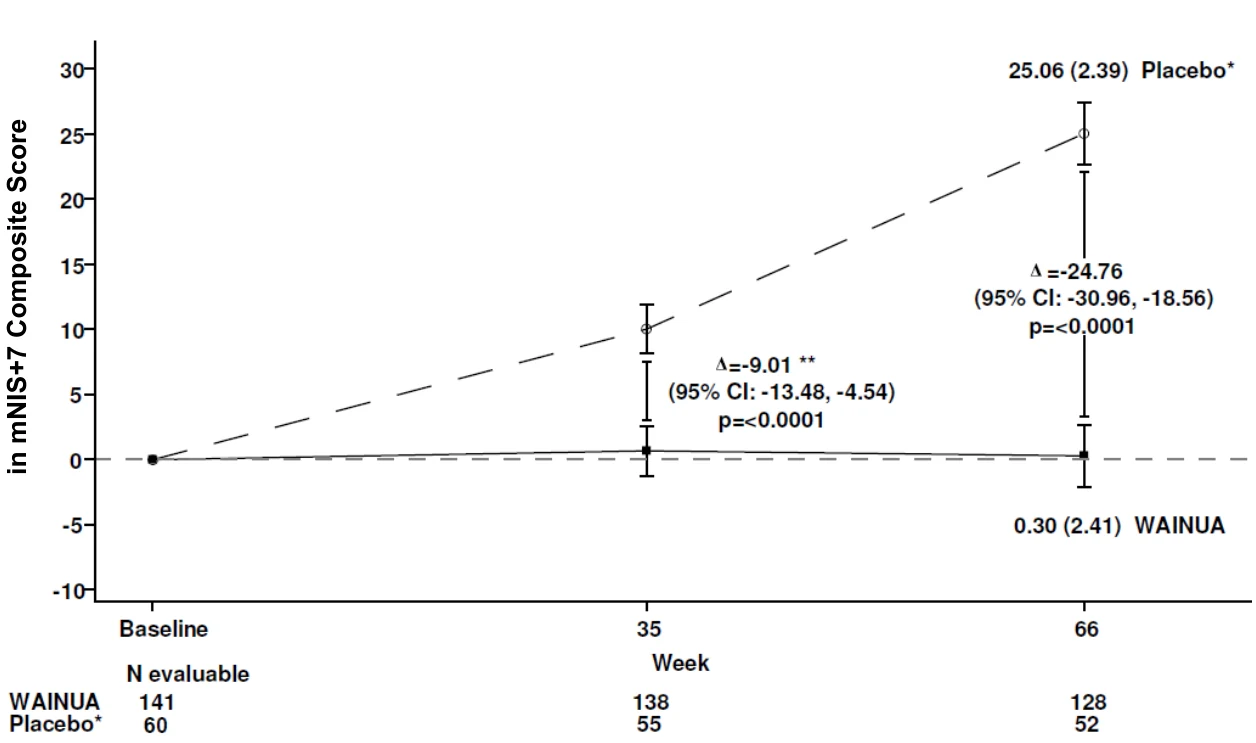
* External placebo group from another randomised controlled trial (NEURO-TTR).
** Treatment difference presents results from formal Week 35 interim analysis. Based on MI ANCOVA adjusted by propensity score weights with fixed categorical effects for treatment, disease stage, Val30Met mutation, previous treatment, and fixed covariates for the baseline. Only data up to Week 35 are included in the Week 35 interim analysis. Week 66 analysis based on MMRM adjusted by propensity score weights with categorical effects for treatment, time, treatment-by-time interaction, and disease stage, Val30Met mutation, previous treatment, and fixed covariates for the baseline and the baseline-by-time interaction. Analysis based on data collected up to 52 days after last dose of study treatment. Data up to Week 66 are included.
The Week 35 and Week 66 LS Mean treatment difference (WAINUA – Placebo) with 95% CI (unadjusted) are presented.
CI = Confidence interval; LS Mean = Least squares mean; SEM = standard error of mean, MI ANCOVA = Multiple imputation Analysis of covariance; MMRM = Mixed effects model with repeated measures.
At both Week 35 and Week 65/66, patients receiving WAINUA experienced a consistent treatment effect relative to placebo in the reduction of serum TTR concentration, mNIS+7 composite, and Norfolk QoL-DN total scores across all subgroups including age, sex, race, region, baseline mNIS+7 score, Val30Met mutation status, cardiomyopathy status, FAC diagnosis at baseline, and disease stage.
L S Me an ( S EM) Ch ang e fr o m Base line in m NIS +7 Co mp o site Sc o re
15. Microbiology
No microbiological information is required for this drug product.
16. Non-Clinical Toxicology
General Toxicology
Severely decreased platelet counts associated with spontaneous haemorrhage were observed in one monkey at the highest dose tested (24 mg/kg/week) in a sub-chronic 13-week study. Similar findings were not observed in monkeys dosed at a mid dose of 6 mg/kg/week. There were no platelet reductions observed in any monkeys in a chronic toxicity 9-month study with a monthly dosing at doses up to 25 mg/kg, which is 123-fold higher than the human AUC at the recommended therapeutic dose of eplontersen.
Extensive and persistent uptake of eplontersen was observed by various cell types in multiple organs of all tested animal species including monocytes/macrophages, kidney proximal tubular epithelia, Kupffer cells of the liver, and histiocytic cell infiltrates in lymph nodes and injection sites.
Genotoxicity
Eplontersen did not exhibit genotoxic potential in a battery of studies, including the in vitro (bacterial mutagenicity, chromosomal aberration in Chinese hamster lung) and in vivo (mouse bone marrow micronucleus) assays.
Carcinogenicity
In a subcutaneous carcinogenicity study in rasH2 transgenic mice, eplontersen was administered for 26 weeks at doses of 250, 500, and 1500 mg/kg/month. There was no evidence of carcinogenicity for eplontersen following 26 weeks of treatment in mice.
Reproductive and Developmental Toxicology
Weekly subcutaneous administration of eplontersen (0, 5, 25, or 75 mg/kg/week) or a mouse specific surrogate (25 mg/kg/week), associated with > 90% inhibition of TTR mRNA expression, to male and female mice prior to and during mating followed by every other day administration in females throughout the period of organogenesis, produced no adverse effects on fertility or embryo-fetal development. The highest dose of eplontersen (75 mg/kg/week), represents a 32 safety margin compared to the recommended human dose, based on an average human body weight of 60 kg.
Non-clinical toxicology studies of eplontersen do not reflect potential effects of vitamin A deficiency.
Juvenile Toxicity
No juvenile toxicology studies were performed for eplontersen.
Special Toxicology
No special toxicology studies have been performed for eplontersen.