


Product Monograph - Feiba NF (Takeda Canada, 650 Unit)
RECENT MAJOR LABEL CHANGES
| All Sections – Conversion to June 2017 Template | Jun, 2020 |
TABLE OF CONTENTS
[To update, right-click anywhere in the Table of Contents and select “Update Field”, “Update entire table”, click OK.]
RECENT MAJOR LABEL CHANGES ........................................................................................ 2
TABLE OF CONTENTS ............................................................................................................. 2
PART I: HEALTH PROFESSIONAL INFORMATION ................................................................. 4
1 INDICATIONS ................................................................................................................. 4
1.1 Pediatrics ............................................................................................................... 4
1.2 Geriatrics ............................................................................................................... 5
2 CONTRAINDICATIONS .................................................................................................. 5
3 SERIOUS WARNINGS AND PRECAUTIONS BOX ........................................................ 5
4 DOSAGE AND ADMINISTRATION ................................................................................ 6
4.1 Dosing Considerations ........................................................................................... 6
4.2 Recommended Dose and Dosage Adjustment ....................................................... 6
4.3 Administration ......................................................... Error! Bookmark not defined.
4.4 Reconstitution ........................................................................................................ 7
5 OVERDOSAGE ............................................................................................................. 10
6 DOSAGE FORMS, STRENGTHS, COMPOSITION AND PACKAGING ....................... 10
7 DESCRIPTION .............................................................................................................. 11
8 WARNINGS AND PRECAUTIONS ............................................................................... 12
8.1 Special Populations ............................................................................................. 15
8.1.1 Pregnant Women .............................................................................................15
8.1.2 Breast-feeding ..................................................................................................15
8.1.3 Pediatrics .........................................................................................................15
8.1.4 Geriatrics ..........................................................................................................15
9 ADVERSE REACTIONS ............................................................................................... 15
9.1 Adverse Reaction Overview ................................................................................. 15
9.2 Clinical Trial Adverse Reactions........................................................................... 15
9.3 Post-Market Adverse Reactions ........................................................................... 17
10 DRUG INTERACTIONS ................................................................................................ 18
10.1 Overview .......................................................................................................... 18
10.2 Drug-Drug Interactions ..................................................................................... 18
10.3 Drug-Food Interactions ..................................................................................... 18
10.4 Drug-Herb Interactions ..................................................................................... 18
10.5 Drug-Laboratory Test Interactions .................................................................... 18
10.6 Drug-Lifestyle Interactions ................................................................................ 19
11 ACTION AND CLINICAL PHARMACOLOGY ............................................................... 19
11.1 Mechanism of Action ........................................................................................ 21
11.2 Pharmacokinetics ............................................................................................. 21
12 STORAGE, STABILITY AND DISPOSAL ..................................................................... 21
13 SPECIAL HANDLING INSTRUCTIONS ........................................................................ 21
PART II: SCIENTIFIC INFORMATION ..................................................................................... 22
14 PHARMACEUTICAL INFORMATION ........................................................................... 22
15 CLINICAL TRIALS ........................................................................................................ 23
15.1 Trial Design and Study Demographics ............................................................. 23
15.2 Study Results ................................................................................................... 24
16 MICROBIOLOGY .......................................................................................................... 26
17 NON-CLINICAL TOXICOLOGY .................................................................................... 26
PATIENT MEDICATION INFORMATION ................................................................................. 27
PART I: HEALTH PROFESSIONAL INFORMATION
1 INDICATIONS
FEIBA NF (Anti-Inhibitor Coagulant Complex) is indicated for:
Use in Hemophilia A and B patients with inhibitors for:
- Control of spontaneous bleeding episodes
- Surgical interventions
- Routine prophylaxis to prevent or reduce the frequency of bleeding episodes in adults and children older than 6 years of age
Treatment should be initiated and supervised by a healthcare practitioner experienced in the use of coagulation agents and in the management of bleeding disorders. FEIBA NF may be used for treating non-haemophiliacs with acquired inhibitors to factors VIII, XI and XII in case of life-threatening haemorrhages.1
Clinical experience suggests that patients with a Factor VIII inhibitor titer of less than 5 B.U. may be successfully treated with Antihemophilic Factor. Patients with titers ranging between 5 and 10 B.U. may either be treated with Antihemophilic Factor or FEIBA NF. Cases with Factor VIII inhibitor titers greater than 10 B.U. have generally been refractory to treatment with Antihemophilic Factor.
Guidelines to First and Second Choice Treatment:
AICC = Anti-Inhibitor Coagulant Complex, FEIBA
AHF = Antihemophilic Factor
| Clinical Situation | |||
Patient’s Inhibitor Titer | Minor Bleeding | Major Bleeding | Surgery (Emergency) |
| less than 5 B.U. | AHF | AHF | AHF |
| 5 to 10 B.U. | AHF AICC | AHF AICC | AHF AICC |
| more than 10 B.U. | AICC | AICC | AICC |
Inadequate response to treatment may result from an abnormal platelet count or impaired platelet function which were present before treatment with FEIBA NF.
1.1 Pediatrics
Pediatrics (>6 years of age): Based on the data submitted and reviewed by Health Canada, the safety and efficacy of FEIBA NF in pediatric patients of 6 years or older has been established; therefore, Health Canada has authorized an indication in pediatric patients for
1 Rolović, Z.; Elezović, I.; Obrenović, B. Rizza C.: Life-threatening bleeding due to an acquired inhibitor to factor XII-XI successfully treated with 'activated' prothrombin complex concentrate (FEIBA). Br J Haematol. 1982 Aug;51(4):659.
routine prophylaxis to prevent or reduce the frequency of bleeding episodes in children older than 6 years of age only (see CLINICAL TRIALS, Routine Prophylaxis Study) .
Pediatrics (≤6 years of age):
- Case reports and limited clinical trial data suggest that FEIBA NF can be used in children younger than 6 years for the control of spontaneous bleeding episodes and surgical interventions
- No data are available in children younger than 6 years regarding the use of FEIBA NF for routine prophylaxis
- No data are available regarding the use of FEIBA NF in newborns
1.2 Geriatrics
No specific data is available on the use of FEIBA NF in the geriatric population.
2 CONTRAINDICATIONS
FEIBA NF is contraindicated in patients who are hypersensitive to this drug or to any ingredient in the formulation, including any non-medicinal ingredient, or component of the container. For a complete listing, see Dosage Forms, Strengths, Composition and Packaging.
The use of Anti-Inhibitor Coagulant Complex, FEIBA NF is contraindicated in patients who are known to have a normal coagulation mechanism and in patients who have hypersensitivity to the product.
It should not be given to patients with significant signs of disseminated intravascular coagulation
(DIC) or fibrinolysis. In patients with a tentative or definite diagnosis of coronary heart disease as well as in patients with acute thrombosis and/or embolism (including myocardial infarction) the use of FEIBA NF is only indicated in life-threatening bleeding events.
3 SERIOUS WARNINGS AND PRECAUTIONS BOX
Serious Warnings and Precautions
- Monitor patients receiving FEIBA for signs and symptoms of thromboembolic events.
- The physician should discuss the benefits and risks of this product with the patient, before prescribing or administering to the patient (see Warnings and Precautions – General).
- Thromboembolic events have been reported during post-marketing surveillance following infusion of FEIBA, particularly following the administration of high doses and/or in patients with thrombotic risk factors (see WARNINGS AND PRECAUTIONS AND ADVERSE EVENTS).
4 DOSAGE AND ADMINISTRATION
4.1 Dosing Considerations
Clinical trials have demonstrated that the response to treatment with Anti-Inhibitor Coagulant Complex, FEIBA, may differ from patient to patient with no correlation to the patient's inhibitor titer. Response may also vary between different types of hemorrhage (e.g. joint hemorrhage vs. CNS hemorrhage).
4.2 Recommended Dose and Dosage Adjustment
As a general guideline a dosage range of 50 to 100 FEIBA Units of FEIBA NF per kg of body weight is recommended. However, care should be taken to distinguish between the following indications, all of which have undergone careful clinical evaluation:
| Indication | Dose | Frequency and Duration |
|---|---|---|
| Joint Hemorrhages | 50-75 U/kg of body weight |
|
| Mucous Membrane Bleeding | 50 U/kg of body weight |
|
Soft Tissue Hemorrhage (i.e. retroperitoneal bleeding) | 100 U/kg of body weight |
|
| Indication | Dose | Frequency and Duration |
|---|---|---|
Other Severe Hemorrhages (i.e. CNS bleedings) | 100 U/kg of body weight |
|
| Surgery | 50-100 U/kg of body weight |
|
Routine Prophylaxis (prevention of bleeding episodes) | 85±15 U/kg of body weight (70 to 100 U/kg of body weight) |
|
* 1 Bethesda Unit is defined as that amount of antibody that will inhibit 50% of the FVIII activity of fresh average human plasma after incubation for 2 hours at 37°C
4.3 Reconstitution
Instructions for use for BAXJECT II Hi-Flow:
Reconstitution of powder to prepare a solution for injections
Use aseptic technique throughout entire procedure.
- 1. Warm the unopened vial containing the solvent (Sterile Water for Injection, EP) to room temperature if necessary, e.g. using a sterile water bath for warming within several minutes (max. +37°C).
- 2. Remove the protective caps from the FEIBA vial and solvent vial and cleanse the rubber stoppers with germicidal solution of both and allow to dry. Place the vials on a flat surface.
- 3. Open the package of BAXJECT II Hi-Flow device by peeling away the paper lid without touching the inside (Fig. a). Do not remove the transfer device from the package.
- 4. Turn the package over and insert the clear plastic spike through the solvent stopper (Fig. b). Grip the package at its edge and pull the package off BAXJECT II Hi-Flow (Fig. c). Do not remove the blue cap from BAXJECT II Hi-Flow.
- 5.
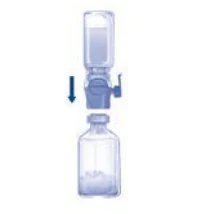
With the transfer device attached to the solvent vial, invert the system so that the solvent vial is on top of the device. Insert the purple plastic spike of BAXJECT II Hi-Flow through the
- FEIBA vial stopper. The vacuum will draw the solvent into the FEIBA vial (Fig. d).
- 6.
Swirl gently until all the material is dissolved. Ensure that FEIBA is completely dissolved, otherwise active material will not pass through the device filter.
Fig. a Fig. b Fig. c
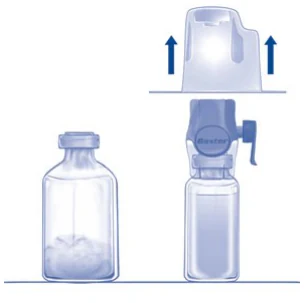
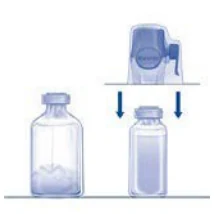
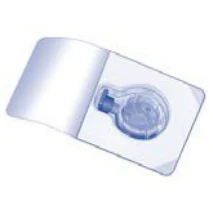
Fig.d
Injection/Infusion
Use aseptic technique throughout entire procedure.
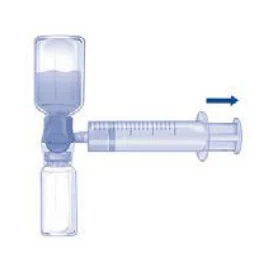
- 1. Remove the blue cap from BAXJECT II Hi-Flow. Take the syringe and connect it to BAXJECT II Hi-Flow (DO NOT DRAW AIR INTO THE SYRINGE) (Fig. e).
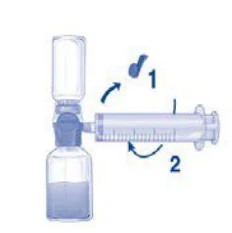
- 2. Invert the system (with FEIBA vial on top). Draw the FEIBA solution into the syringe by pulling the plunger back slowly (Fig. f).
- 3. Disconnect the syringe.
- 4.
Slowly inject the solution intravenously with a winged set for injection.
Fig. e Fig. f
Do not exceed an infusion rate of 2 U FEIBA/kg/Body Weight per minute. A syringe pump may be used to control the rate of administration.
Do not refrigerate after reconstitution!
After reconstitution, the solution should be inspected for particulate matter and discoloration prior to administration. Do not use solutions that are cloudy or have deposits.
Mixing of FEIBA with other products or substances must be avoided. It is advisable to flush venous access lines with isotonic saline prior to and after infusion of FEIBA.
After complete reconstitution of FEIBA NF its injection or infusion should be commenced as promptly as practicable, but must be completed within three hours following reconstitution.
The solution must be given by intravenous injection or intravenous drip infusion and the maximum injection or infusion rate must not exceed 2 units per kg of body weight per minute. In a patient with a body weight of 75 kg, this corresponds to an infusion rate of 2.5 - 7.5 mL per minute depending on the number of units per vial (see label on vial).
5 OVERDOSAGE
Some of the reported thromboembolic events occurred with doses above 200 U/kg. If signs or symptoms of thromboembolic events are observed, the infusion should be stopped immediately and appropriate diagnostic and therapeutic measures initiated.
| For management of a suspected drug overdose, contact your regional poison control centre. |
6 DOSAGE FORMS, STRENGTHS, COMPOSITION AND PACKAGING
To help ensure the traceability of biologic products, including biosimilars, health professionals should recognise the importance of recording both the brand name and the non-proprietary (active ingredient) name as well as other product-specific identifiers such as the Drug Identification Number (DIN) and the batch/lot number of the product supplied.
Anti-Inhibitor Coagulant Complex, FEIBA NF is supplied as freeze-dried powder, accompanied by a suitable volume of Sterile Water for Injection, E. P. and a Baxject II Hi-Flow device.
FEIBA is available in single-dose vials in the following nominal dosage strengths:
| Nominal Strength | Colour Code | Factor VIII Potency Range | Sterile Water Volume |
|---|---|---|---|
| 500 units | Orange | 350-650 units per vial | 10 mL |
| 500 units | Blue | 350-650 units per vial | 20 mL |
| 1000 units | Light Green | 700-1300 units per vial | 20 mL |
| 2500 units | Burgundy | 1750-3250 units per vial | 50 mL |
The number of FEIBA Units of Factor VIII inhibitor bypassing activity is stated on the label of each bottle
Table – Dosage Forms, Strengths, Composition and Packaging
7 DESCRIPTION
Anti-Inhibitor Coagulant Complex, FEIBA NF, is a freeze-dried sterile human plasma fraction with Factor VIII inhibitor bypassing activity. In vitro, FEIBA NF shortens the activated partial thromboplastin time (aPTT) of plasma containing Factor VIII inhibitor. Factor VIII inhibitor bypassing activity is expressed in arbitrary units. One FEIBA Unit of activity is defined as that amount of FEIBA NF which shortens the aPTT of a high titer Factor VIII inhibitor reference plasma to 50% of the blank value.
FEIBA NF contains Factors II, IX, and X, mainly non-activated, and Factor VII mainly in the activated form. The product contains approximately equal unitages of Factor VIII inhibitor bypassing activity and Prothrombin Complex Factors. In addition, 1-6 units of Factor VIII coagulant antigen (F VIII C: Ag) per mL are present. The preparation contains only traces of factors of the kinin generating system. It contains no heparin.
Reconstituted FEIBA NF contains 4 mg of trisodium citrate x 2 H2O and 8 mg of sodium chloride per mL.
| Route of Administration | Dosage Form / Strength/Composition | Non-medicinal Ingredients |
| Intravenous Injection or Infusion oral | 350-650 Units/10mL 350-650 Units/20mL 700-1300 Units/20mL 1750-3250 Units/50mL | Sodium Chloride and Trisodium Citrate |
FEIBA NF has been prepared from Source Plasma and/or Fresh Frozen Plasma. Individual donations of human plasma are combined to form plasma pools. Prior to being used for manufacture of FEIBA NF, each plasma pool is tested for the presence of genome sequences of the human immunodeficiency virus type 1 (HIV-1) and type 2 (HIV-2), hepatitis A virus (HAV), hepatitis B virus (HBV), hepatitis C virus (HCV) and Parvovirus B19 (B19V) using PCR.
To prevent the transmission of infective agents by the administration of FEIBA NF, prescribed manufacturing procedures utilized at the plasma collection centers and plasma testing laboratories are designed to reduce the risk of transmitting viral infections. They include measures taken for donor and plasma selection**, as well as virus removal and inactivation steps during manufacturing.
** All plasma units used for manufacture are ALT tested and non-reactive in tests for HBs-antigen and antibodies to HCV, HIV-1 and HIV-2. Before further processing all individual plasma donations are subjected to an inventory hold for a possible look-back of plasma donations suspected of infection.
This product is prepared from large pools of human plasma which may contain the causative agents of hepatitis and other viral diseases.
8 WARNINGS AND PRECAUTIONS
Please see the Serious Warnings and Precautions Box at the beginning of Part I: Health Professional Information.
General
Anti-Inhibitor Coagulant Complex, FEIBA NF must be used only in patients with circulating inhibitors to one or more coagulation factors and should not be used for the treatment of bleeding episodes resulting from coagulation factor deficiencies. It should not be given to patients with significant signs of disseminated intravascular coagulation (DIC) or fibrinolysis.
FEIBA should be used with particular caution in patients at risk of DIC, arterial or venous thrombosis
At first signs or symptoms of thromboembolic events, the infusion should be stopped immediately and appropriate diagnostic and therapeutic measures initiated.
Thromboembolic events, including disseminated intravascular coagulation (DIC), venous thrombosis, pulmonary embolism, myocardial infarction, and stroke, have occurred in the course of treatment with FEIBA. Many of these events occurred with doses above 200 U/kg/day or in patients with other risk factors (including DIC, advanced atherosclerotic disease, crush injury or septicemia) for thromboembolic events (e.g. patients in the postoperative state or with liver disease, infection, inflammation, cancer, angina pectoris or myocardial infarction). Concomitant treatment with recombinant Factor VIIa may increase the risk of developing a thromboembolic event. The possible presence of such risk factors should always be considered in patients with congenital and acquired hemophilia.
Thrombotic microangiopathy (TMA) has not been reported in FEIBA clinical studies. Cases of TMAs were reported in an emicizumab clinical trial where subjects received FEIBA as part of a treatment regimen for breakthrough bleeding. The safety and efficacy of FEIBA for breakthrough bleeding in patients receiving emicizumab has not been established. Consider the benefits and risks if FEIBA must be used in a patient receiving emicizumab prophylaxis. If treatment with FEIBA is considered required for patients receiving emicizumab, patients must be closely monitored by their physicians.
FEIBA can precipitate allergic-type hypersensitivity reactions that have included urticaria, angiodema, gastrointestinal manifestations, bronchospasm and hypotension; these reactions can be severe and can be systemic (e.g., anaphylaxis with urticaria and angioedema, bronchospasm, and circulatory shock). Allergic Reactions should be treated with antihistamines and glucocorticoids. In the case of shock medical attention should be initiated as appropriate. Other infusion reactions, such as chills, pyrexia, and hypertension have also been reported.
At first signs or symptoms of an infusion/hypersensitivity reaction, FEIBA administration should be stopped and medical care initiated as appropriate.
When considering re-exposure to FEIBA in patients with known or suspected hypersensitivity to the product the expected benefit and the risk of re-exposure must be carefully weighed, taking into account the known or suspected type of the patients hypersensitivity (allergic or nonallergic), including potential remedial and/or preventative therapy or alternative therapeutic agents.
Single doses of 100 units per kg bodyweight of Anti-Inhibitor Coagulant Complex, FEIBA NF and daily doses of 200 units per kg bodyweight of FEIBA NF should not be exceeded.
High doses of FEIBA NF should be given only as long as absolutely necessary to stop bleeding. In case of changes in blood pressure, pulse rate, respiratory distress, chest pain and cough, the infusion should be stopped promptly and appropriate diagnostic and therapeutic measures are to be initiated.
Laboratory indications of DIC are decreased fibrinogen, decreased platelet count, and/or presence of fibrin-fibrinogen degradation products (FDP). Other indications of DIC include significantly prolonged thrombin time, prothrombin time, or partial thromboplastin time.
Tests used to control efficacy such as aPTT, WBCT, and TEG do not correlate with clinical improvement. For this reason, attempts at normalizing these values by increasing the dose of FEIBA NF may not be successful and are strongly discouraged because of the potential hazard of producing DIC by overdosage.
This product is manufactured using components of human blood, which may contain the causative agents of hepatitis and other viral diseases. Standard measures to prevent infections resulting from the use of medicinal products prepared from human blood or plasma include selection of donors, screening of individual donations and plasma pools for specific markers of infection and the inclusion of effective manufacturing steps for the inactivation/removal of viruses. Despite this, when medicinal products prepared from human blood or plasma are administered, the possibility of transmitting infective agents cannot be totally excluded. This also applies to unknown or emerging viruses and other pathogens.
The measures taken are considered effective for enveloped viruses such as HIV, HBV, and HCV and for nonenveloped viruses such as HAV. The measures taken may be of limited value against noneneveloped viruses such as parvovirus B19. Parvovirus B19 infection may be serious for pregnant women (fetal infection) and for individuals with immunodeficiency or increased erythropoiesis (e.g. hemolytic anemia).
Appropriate vaccination (against hepatitis A and B) should be considered for patients in regular/repeat receipt of plasma-derived products including FEIBA.
PRECAUTIONS
Due to patient-specific factors the response to a bypassing agent can vary, and in a given bleeding situation patients experiencing insufficient response to one bypassing agent, use of another agent should be considered.
Anamnestic response with rise in Factor VIII inhibitor titer has been observed in 20% of the cases (see ACTION AND CLINICAL PHARMACOLOGY). Clinical and published data suggest that the efficacy of FEIBA is not reduced.
After administration of high doses of FEIBA, the transitory rise of passively transferred hepatitis B surface antibodies may result in a misleading interpretation of positive results in serological testing.
FEIBA contains blood group isohemagglutinins (anti-A and anti-B). Passive transmission of antibodies to erythrocyte antigens, e.g., A, B, D, may interfere with some serological tests for red cell antibodies, such as antiglobulin test (Coombs test).
The amount of sodium in the maximum daily dose may exceed the recommended daily allowance of dietary sodium for patients on a low sodium diet. In these patients, the amount of sodium from the product should be calculated and taken into account when determining dietary sodium intake.
Driving and Operating Machinery
There is no information of the effects of FEIBA on the ability to drive or operate an automobile or other heavy machinery.
Monitoring and Laboratory Tests
In case of inadequate response to treatment with the product, it is recommended that a platelet count be performed because a sufficient number of functionally intact platelets are considered to be necessary for the efficacy of the product.
Due to the complex mechanism of action, no direct monitoring of the drug substance is available. Coagulation tests such as whole blood clotting time (WBCT), and the aPTT may not correlate with clinical improvement.
Global hemostatic tests such as thromboelastogram (TEG) or Thrombin Generation Assay (TGA) may be useful tools to monitor and optimize the treatment; however, they are currently considered exploratory.
Fertility
No animal reproduction studies have been conducted with FEIBA.
The effects of FEIBA on fertility have not been established.
8.1 Special Populations
8.1.1 Pregnant Women
Pregnancy Category C
The safety of FEIBA NF during pregnancy and lactation has not been established. Pregnancy and postpartum period is characterized by an increased risk of thrombosis, and several complications of pregnancy are associated with an increased risk of DIC. FEIBA NF should be given to a pregnant woman only if clearly needed.
8.1.2 Breast-feeding
It is unknown if the drug is excreted in human milk. Because many drugs are excreted in human milk precaution should be exercised.
8.1.3 Pediatrics
- Case reports and limited clinical trial data suggest that FEIBA can be used in children younger than 6 years for the control of spontaneous bleeding episodes and surgical interventions
- No data are available in children younger than 6 years regarding the use of FEIBA NF for routine prophylaxis
- No data are available regarding the use of FEIBA NF in newborns
8.1.4 Geriatrics
No specific data is available on the use of FEIBA in the geriatric population.
9 ADVERSE REACTIONS
9.1 Adverse Reaction Overview
After application of high doses (single infusion of beyond 100 units per kg of weight, and daily doses of 200 units per kg of body weight) of Anti-Inhibitor Coagulant Complex, FEIBA NF, laboratory and/or clinical signs of DIC have occasionally been observed.
Other symptoms of hypersensitivity to plasma-derived products include lethargy and restlessness.
9.2 Clinical Trial Adverse Reactions
Because clinical trials are conducted under very specific conditions, the adverse reaction rates observed in the clinical trials may not reflect the rates observed in practice and should not be compared to the rates in the clinical trials of another drug. Adverse reaction information from clinical trials is useful for identifying drug-related adverse events and for approximating rates.
The adverse reactions presented in this section have been reported from 2 studies with FEIBA for the treatment of bleeding episodes in pediatric and adult patients with hemophilia A or B and inhibitors to factors VIII or IX. One study also enrolled acquired hemophilia patients with factor VIII inhibitors (4 of 49 patients).
| Adverse Reactions From Clinical Trials | |||
System Organ Class (SOC) | Preferred MedDRA (version - 18.0) Term | Frequency Category | Frequency Ratio (Percentage) n=36 |
| BLOOD AND LYMPHATIC SYSTEM DISORDERS | Increase of inhibitor titer (anamnestic response)*, a | Unknown | ¯ |
| IMMUNE SYSTEM DISORDERS | Hypersensitivityc | Common | 1/36 (2.8) |
| NERVOUS SYSTEM DISORDERS | Somnolence* Dizzinessb Dysgeusia* Headachec | Unknown Common Unknown Common | ¯ 1/36 (2.8) ¯ 1/36 (2.8) |
| VASCULAR DISORDERS | Hypotensionc | Common | 1/36 (2.8) |
| RESPIRATORY, THORACIC, AND MEDIASTINAL DISORDERS | Dyspnea* | Unknown | ¯ |
| GASTROINTESTINAL DISORDERS | Nausea* | Unknown | ¯ |
| SKIN AND SUBCUTANEOUS | Rashc | Common | 1/36 (2.8) |
| GENERAL DISORDERS AND ADMINISTRATION SITE CONDITIONS | Chills* Pyrexia* Chest pain* Chest discomfort* | Unknown Unknown Unknown Unknown | ¯ ¯ ¯ ¯ |
| INVESTIGATIONS | Hepatitis B surface antibody positivec | Common | 3/36 (8.3) |
Legend: ADR frequency is based upon the following scale: Very Common (≥1/10); Common (≥1/100 - <1/10),
Uncommon (≥1/1,000 - <1/100), Rare (≥1/10,000 - <1/1,000), Very Rare (<1/10,000)
* A precise estimate of the rate of these adverse reactions is not possible from the available data. ADR reported in the original studies (Hilgartner 1983, 2003; Sjamsoedin LJ. et al.,1981) only.
a Increase of inhibitor titer (anamnestic response) [not a MedDRA PT] is the rise of previously existing inhibitor titers occurring after the administration of FEIBA.
b ADR reported in the original studies (Hilgartner 1983, 2003; Sjamsoedin LJ. et al.,1981) and prophylaxis study (090701). Frequency shown is from the prophylaxis study.
c ADR reported in the prophylaxis study (090701). Frequency shown is from the prophylaxis study only.
9.3 Post-Market Adverse Reactions
The following adverse reactions have been reported during post marketing period. The frequency cannot be estimated due to the nature of the data and therefore is categorized as unknown:
| System organ classes according to MedDRA | Preferred MedDRA term (version - 8.0) |
BLOOD AND LYMPHATIC SYSTEM DISORDERS | Disseminated intravascular coagulation (DIC) |
| IMMUNE SYSTEM DISORDERS | Anaphylactic reaction |
| NERVOUS SYSTEM DISORDERS | Paresthesia Thrombotic stroke Embolic stroke |
| CARDIAC DISORDERS | *Myocardial infarction Tachycardia |
| VASCULAR DISORDERS | Thrombosis Venous thrombosis Arterial thrombosis Hypertension Flushing |
RESPIRATORY, THORACIC AND MEDIASTINAL DISORDERS | Pulmonary embolism Broncospasm Wheezing Cough |
| GASTROINTESTINAL DISORDERS | Vomiting Diarrhea Abdominal discomfort |
SKIN AND SUBCUTANEOUS TISSUE DISORDERS | Angioedema Urticaria Pruritus |
GENERAL DISORDERS AND ADMINISTRATION SITE CONDITIONS | Malaise Feeling hot Injection site pain |
* Myocardial infarctions occurred after the administration of doses above the maximum daily dose and/or prolonged application and/or the presence of risk factors for thromboembolism.
Rapid intravenous injection or infusion may cause a stabbing pain and numbness in the face and extremities as well as a drop in blood pressure.
10 DRUG INTERACTIONS
10.1 Overview
No adequate and well-controlled studies of the combined or sequential use of FEIBA and recombinant Factor VIIa or antifibrinolytics, or emicizumab have been conducted.
The possibility of thromboembolic events should be considered when systemic antifibrinolytics such as tranexamic acid and aminocaproic acid are used during treatment with FEIBA. Therefore, antifibrinolytics should not be used for approximately 6 to 12 hours after the administration of FEIBA.
In cases of concomitant rFVIIa use, according to available in vitro data and clinical observations a potential drug interaction may occur (potentially resulting in adverse events such as a thromboembolic event.)
Clinical experience from an emicizumab clinical trial suggests that a potential drug interaction may exist with emicizumab when FEIBA was used as part of a treatment regimen for breakthrough bleeding.
Coagulation factors derived from human plasma may be adsorbed by the inner surfaces of certain types of injection/infusion devices. If this were to occur, it could result in failure of therapy. Therefore, only plastic injection/infusion devices should be used with FEIBA.
10.2 Drug-Drug Interactions
Interactions with other drugs have not been established.
No compatibility studies have been performed with the product. Therefore, FEIBA must not be mixed with other medicinal products or solvents.
10.3 Drug-Food Interactions
Interactions with food have not been established.
10.4 Drug-Herb Interactions
Interactions with herbal products have not been established.
10.5 Drug-Laboratory Test Interactions
Interactions with laboratory tests have not been established.
10.6 Drug-Lifestyle Interactions
There is no information of the effects of FEIBA on the ability to drive or operate an automobile or other heavy machinery.
11 ACTION AND CLINICAL PHARMACOLOGY
Anamnestic response is an increase in inhibitor titer of preexisting inhibitors (antibodies) in some patients. FEIBA contains FIX and trace amounts of FVIII; which elicit a secondary immune response leading to an increase in inhibitor titer. Anamnestic response is generally transient and the titers decrease over time with continued regular use of FEIBA. The efficacy of FEIBA is not impacted by the increase in inhibitor titer.
Anti-Inhibitor Coagulant Complex, FEIBA NF, is an activated prothrombin complex preparation. Although Anti-Inhibitor Coagulation Complex, FEIBA NF, contains the coagulation factors of the prothrombin complex, it differs from the non-activated preparations in that it contains high quantities of FEIB-Activity (Factor VIII Inhibitor Bypassing Activity), which is expressed in arbitrary units, depending on the manufactured lot.
Anti-Inhibitor Coagulant Complex, FEIBA NF, has been developed for the treatment of patients with inhibitors to coagulation factors, in particular patients with inhibitors to factor VIII in whom factor VIII-preparations have a limited efficacy. Anti- Inhibitor Coagulant Complex, FEIBA NF, has been shown to correct defective coagulation in that its FEIB-Activity bypasses the inhibitor, initiating the clotting mechanism in a stage where factor VIII is no longer required. The mechanism which produces the bypass has been investigated in vitro by several authors.
Some of the preclinical investigations were initiated and conducted only after Anti-Inhibitor Coagulant Complex, FEIBA, had already been administered successfully in patients with defective coagulation systems and inhibitors. The early use in humans seemed to be justified because the composition of Anti-Inhibitor Coagulant Complex, FEIBA, as an activated prothrombin complex preparation, differed only slightly from that of non-activated prothrombin complex preparations. Another argument in support of clinical use was the absence of an adequate animal model that would be comparable with Factor VIII inhibitor patients, and this holds true up to this very moment. When preclinical studies were conducted at a later stage, this was done primarily with the object of characterizing the activated prothrombin complex preparation, which was important also for the future development of the product. It is important to note therefore that both toxicity and thrombogenicity tests were done on animals with normal coagulation systems and do therefore not permit comparison with patient groups for whom activated prothrombin complex preparations are indicated. As with all human blood products multiple use in one and the same animal is not possible because of the antigenicity of the test material.
What has been said about safety tests also holds true for efficacy tests. There are no animal models which could be correlated with the patient groups described above. Investigations in hemophilic dogs cannot be used to evaluate efficacy, as hemophilic patients without inhibitor will not be given Anti-Inhibitor Coagulant Complex, FEIBA NF. However, the efficacy of FEIBA NF was investigated in different animal models: the quantification of the thrombogenicity of FEIBA NF has been compared in a rabbit stasis model and the efficacy has been investigated in a rabbit bleeding model.
In Vitro Tests
These tests were conducted to demonstrate that Anti-Inhibitor Coagulant Complex, FEIBA VH, has a composition similar to that of non-activated prothrombin complex preparations. The results of the tests performed on eight lots of FElBA VH, demonstrated that FEIBA VH, contains approximately equal activities of factors II, VII, IX, and X - expressed in units of factors II, VII, IX, and X – and FEIB-activity, expressed in FEIBA Units. One vial of FEIBA, contains between 440 and 660 FEIBA Units, 550 and 750 Units of factor II, 411 and 809 Units of factor VII, 336 and 871 Units of factor IX, and 480 and 560 Units of factor X. Factor VII activity is present mainly as activated factor VII: between 89 and 98% of the total factor VII activity in FEIBA, is activated factor VII activity.
In Vivo Test for Thrombogenic Potential of FEIBA NF
Three lots of FEIBA NF and three lots of FEIBA VH were tested in a rabbit venous stasis model. Six animals were used per group. Each FEIBA preparation was tested in five different doses i.v. (1, 4, 10, 20, and 40 U/kg), to obtain complete dose-response curves.
Nearly identical dose-response curves were obtained for both preparations compared, and also for the three compared lots of FEIBA NF and FEIBA VH each.
These results cannot and should not be used to interpret the efficacy of FEIBA. Neither have these data unrestricted validity for safety evaluation, since this is a "venous stasis test" performed in rabbits with normal blood coagulation, and the results therefore cannot be compared to clinical results in inhibitor patients with impaired coagulation systems.
In general, clinical experience has shown FEIBA NF not to produce thrombogenic reactions in dosages of up to 100 FEIBA Units/kg of body weight. In the Wessler Test 4 FEIBA Units/kg of b.w. are not thrombogenic, while higher doses may have thrombogenic effects.
In Vivo Test for Efficacy of FEIBA NF
Three lots of FEIBA NF were compared with one lot of FEIBA VH in a rabbit bleeding model of antibody-induced haemophilia A with factor VIII inhibitor. FEIBA at a dose of 100 FEIBA Units/kg bodyweight or buffer was infused and cuticle bleeding rate was determined in parallel. 30 minutes later, cuticle bleeding rate was measured again. The data were statistically analyzed.
No statistically significant difference in the ability to reduce the rate of blood flow at a dose of
100 U FEIBA/kg was found between FEIBA NF and FEIBA VH. At a dose of 100 U FEIBA /kg bodyweight, both products reduced the Factor VIII-inhibitor related increased bleeding rate close to zero, indicating a strong procoagulant activity while the respective buffer control had no effect on the bleeding intensity. This result indicates that the introduction of nanofiltration did not alter the characteristics of the product.
Safety Pharmacology (In vivo Test for Anaphylactiod Potential)
The risk of an anaphylactoid reaction, evaluated in a guinea pig model for bronchospasm, after administration of FEIBA NF is at least as unlikely in clinical use as after administration of FEIBA VH.
11.1 Mechanism of Action
The components of the activated prothrombin complex, zymogen prothrombin (FII) and activated Factor X (FXa) play the crucial role in the action of FEIBA. The other zymogens and active enzymes enhance the thrombin generation process on the activated platelet surface thus achieving hemostasis bypassing the requirements of factor VIII (or FIX).
11.2 Pharmacokinetics
Since FEIBA NF is composed of different coagulation factors with varying half-lives for the single components, it is not possible to make any definite statement with regard to the pharmacokinetic properties of FEIBA NF.
12 STORAGE, STABILITY AND DISPOSAL
FEIBA NF can be stored refrigerated or at room temperature (between 2°C to +25°C) for the entire shelf-life of the product.
Avoid freezing, which may damage the diluent bottle.
FEIBA NF must not be used beyond the expiry date indicated on the label.
13 SPECIAL HANDLING INSTRUCTIONS
Reconstituted Solutions
Anti-Inhibitor Coagulant Complex, FEIBA NF is to be reconstituted only immediately before administration. The solution should then be used promptly. Any unused solution must be discarded.
PART II: SCIENTIFIC INFORMATION
14 PHARMACEUTICAL INFORMATION
Drug Substance
Proper name: Factor Eight Inhibitor Bypassing Activity
Chemical name: Not applicable
Molecular formula and molecular mass: Not applicable
Structural formula: FEIBA is comprised of the zymogen forms of the procoagulant factors FII, FVII, FIX, FX, and the anticoagulant protein C in a physiologically balanced ratio, approximately 1 U/1 U FEIBA. FEIBA contains trace amounts of the activated form of factors II, IX and X as well as activated factor VII; factor VIII coagulant antigen (F VIII C:Ag) is present in a concentration of up to 0.1 U/1 U FEIBA. The factors of the kallikrein-kinin system are present only in trace amounts, if at all.
Human blood coagulation factors II, VII, IX and X as well as their activated forms are glycoproteins characterized by 10 - 12 gamma-carboxylated glutamic acid residues, located in the amino terminal region of the zymogens, and a serine protease region.
Physicochemical properties: Not applicable
Product Characteristics
FEIBA NF is an Anti-Inhibitor Coagulant Complex (AICC). Its activity is based on its so-called "Factor Eight Inhibitor Bypassing Activity", i.e. activating the clotting cascade by multiple reactions, and thus achieving hemostasis even in the absence of factor VIII (or FIX).
Viral Inactivation
Standard measures to prevent infections resulting from the use of medicinal products prepared from human blood or plasma include selection of donors, screening of individual donations and plasma pools for specific markers of infection, and the inclusion of effective manufacturing steps for the inactivation of viruses. The manufacturing process of FEIBA NF includes a nanofiltration step and a two-step vapour heat treatment for virus inactivation and virus reduction. The nanofiltration is performed using a subsequent filtration through 75 nm and 35 nm filters. The vapour heat treatment is conducted for 10 hours at 60° ± 0.5°C with excess pressure of 190 ± 25 mbar followed by 1 hour at 80° ± 0.5°C with excess pressure of 375 ± 35 mbar.
Despite this, when medicinal products prepared from human blood or plasma are administered, the possibility of transmitting infective agents cannot totally be excluded. This also applies to unknown or emerging viruses and other pathogens.
The measures taken are considered effective for enveloped viruses such as HIV, HBV and HCV and for the non-enveloped virus HAV and parvovirus B19.
Appropriate vaccination (hepatitis A and B) should be considered for patients in regular/repeated receipt of human plasma-derived Factor VIII inhibitor products.
15 CLINICAL TRIALS
15.1 Trial Design and Study Demographics
A clinical study testing Antihemophilic Factor treated by a similar vapor heating procedure has shown none of 4 lots used in the study to produce nonA, nonB hepatitis in intensively followed patients naïve to blood product administration.
The safety and efficacy of FEIBA VH has been demonstrated by two prospective clinical trials. The first, conducted by Sixma and collaborators during 1979 and early 1980, was a randomized double-blind study comparing the effect of FEIBA VH and PROTHROMPLEX IMMUNO (a non- activated prothrombin complex concentrate) in 15 patients with haemophilia A and inhibitors to Factor VIII. A total of 150 bleeding episodes (primarily joint and musculoskeletal plus a few mucocutaneous) were treated. A single dose of 88 FEIBA Units per kg of body weight was used uniformly for treatments with FEIBA VH. The study showed that, based on subjective patient evaluation, FEIBA was fully effective in 41.0% and partly effective in 24.6% of episodes (i.e. combined effectiveness of 65.6%), while PROTHROMPLEX IMMUNO was rated fully effective in 25.0% and partly effective in 21.4% of episodes (i.e. combined effectiveness of 46.4%).
The second study with FEIBA was a multiclinic study conducted by Hilgartner et al. It was designed to evaluate the efficacy of FEIBA in the treatment of joint, mucous membrane, musculocutaneous and emergency bleeding episodes such as central nervous system hemorrhages and surgical bleedings. In 49 patients with inhibitor titres of greater than 5 Bethesda Units (from nine cooperating haemophilia centers), 489 single doses were given for the treatment of 165 bleeding episodes. The usual dosage was 50 FEIBA Units per kg of body weight, repeated at 12- hour intervals (6-hour intervals in mucous membrane bleedings), if necessary. Bleeding was controlled in 153 episodes (93%). In 130 (78%) of the episodes hemostasis was achieved with one or more infusions within 36 hours. Of these, 36% were controlled with one infusion within 12 hours. An additional 14% of episodes responded after more than 36 hours.
Of the 489 single doses only 18 (3.7%) caused minor transient reactions in recipients. 10 out of 49 patients (20%) showed a rise in their inhibitor titers. In 5 of these patients (10%) the rise was tenfold or more. However, of these 10 patients 3 had received Factor VIII or Factor IX concentrates within 2 weeks prior to treatment with FElBA. These anamnestic rises have not been observed to interfere with the efficacy of Anti-Inhibitor Coagulant Complex, FEIBA.
Routine Prophylaxis Study
A multicenter, open-label, prospective, randomized, parallel clinical study was conducted to compare FEIBA NF prophylaxis to on-demand treatment. Thirty six (36) hemophilia subjects (33 hemophilia A and 3 hemophilia B) with inhibitors refractory to Factor VIII or FIX treatment were analyzed in the primary analysis set (intent-to-treat). Subjects were randomized to receive 12 months ± 14 days of prophylactic or on-demand treatment with FEIBA NF. Seventeen (17) subjects were randomized to the prophylaxis arm and received 85 ± 15 U/kg of FEIBA NF every other day. Nineteen (19) subjects were randomized to the on-demand arm and received FEIBA NF for the treatment of acute bleeding episodes per the dose and dosing regimen recommended by the investigator. All subjects were being treated on an on-demand basis at study entry. Inclusion criteria were subjects with a history of high titer inhibitors or low titer refractory to increased factor VIII or IX dosing, age range between 4 and 65, and subjects receiving bypassing agents with ≥12 bleeds in the 12 months prior to trial entry. Subjects with a history of thromboembolic events, symptomatic liver disease, or a platelet count <100,000 per mL, and those receiving immune tolerance induction or routine prophylaxis were excluded.
The study population included 4 subjects ≥7 to <12 years, 5 subjects ≥12 and <16 years and 27 subjects ≥16 years. A total of 825 bleeding episodes were reported including 196 in the prophylaxis arm and 629 in the on-demand arm.
15.2 Study Results
Hemostatic efficacy for the treatment of acute bleeds was evaluated. The following table shows the number of infusions needed to control the bleeding by treatment group.
Table 2
Distribution of the Number of Bleeding Episodes Resolved with 1, 2, or greater than 2
Infusions by Treatment Regimen
(Study 090701: Additional Evaluations for Bleeding Episodes Analysis Set)
| Number of infusions used to control bleeds | |||||||
| 1 infusion a | 2 infusions a | >=3 infusions a | |||||
Treatment Regimen | Number of subjects | Number (%) of BEs | Number of subjects | Number (%) of BEs | Number of subjects | Number (%) of BEs | |
| Prophylaxis | 11 | 98 (56.6) | 13 | 41 (23.7) | 7 | 34 (19.7) | |
| On-Demand | 19 | 352 (56.5) | 16 | 134 (21.5) | 14 | 137 (22.0) | |
Abbreviations: BEs=bleeding episodes.
a Results presented by number of infusions (1, 2, and >=3) are mutually exclusive.
The overall median annual bleeding (ABR) rate (range) was 7.9 (0-43.9) for subjects on prophylaxis treatment compared to 28.7 (5.8-76.3) with on-demand treatment corresponding to a reduction of 72.5% in the median bleeding rate.
An analysis adjusting for the time subjects remained on study showed that the estimated mean bleeding rate was 12.1 for subjects receiving prophylaxis treatment and 33.5 for subjects receiving on-demand treatment. A comparison of the two treatment groups showed that the estimated mean bleeding rate was 2.8 times greater for subjects receiving on-demand treatment than for subjects receiving prophylaxis (p=0.0003).
Zero bleeding episodes were achieved on prophylaxis in 2/17 (11.8%) subjects in the intent-to-treat analysis sets. None of the on-demand subjects achieved zero bleeding episodes during the study.
Table 3 shows ABRs by bleed type and etiology between prophylaxis and on-demand regimens.
Table 3
Median (IQR) ABRs by Bleeding Etiology and Type (efficacy ITT analysis set)
| Etiology | Median (IQR) ABR a Prophylaxis (n=17) On-Demand (n=19) | |
| Spontaneousb | 5.6 (5.1) | 18.9 (32.6) |
| Traumatic | 2.5 (3.1) | 4.7 (8.7) |
| Joint | 6.0 (7.1) | 22.9 (32.8) |
| Non-Joint | 0.5 (2.0) | 2.9 (4.0) |
| Spontaneous Joint | 4.5 (5.1) | 16.6 (30.9) |
| Spontaneous Non-Joint | 0 (1.0) | 1.0 (2.0) |
| Traumatic Joint | 1.0 (3.1) | 4.0 (6.1) |
| Traumatic Non-Joint | 0 (1.0) | 0 (1.9) |
a Abbreviations: ABR = annualized bleeding episode rate, IQR – Inter Quartile Range. IQR is defined as the difference between the 75th percentile (3rd quartile) and the 25th percentile (first quartile). b Spontaneous includes unknown/undetermined etiology.
ABR by age category between prophylaxis and on-demand regimens is provided in Table 4.
Table 4
ABRs by Age Category for Prophylaxis vs. On-Demand Treatment (N=36) (Study 090701:Intent-to-Treat Efficacy Analysis Set)
Prophylaxis N=17 | On-Demand N=19 | ||||||||||||
| Age Category | Number of Subjects | ABR Median | Number of Subjects | ABR Median | |||||||||
| Children (>=7 to <12 years old) | 2 | 7.7 | 2 | 39.3 | |||||||||
| Adolescent a (>=12 to <16 years old) | 3 | 27.5 | 2 | 30.9 | |||||||||
| Adult (>=16 years old) | 12 | 6.9 | 15 | 23.9 | |||||||||
| All | 17 | 7.9 (8.1) b | 19 | 28.7 (32.3) b | |||||||||
Abbreviations: ABR = annualized bleeding episode rate
a One adolescent subject on prophylaxis had a higher rate of bleeding due to increased physical activity after study enrollment.
b Interquartile-range.
Table 5 indicates the number of new target joints as well as annualized bleeding episodes in new target joints between on-demand and prophylaxis regimens. Target joints are defined as ≥4 bleeding episodes within 6 months. In this study, ankles, knees, elbows and hips were considered as possible target joint locations. Pre-existing target joints were not considered as new target joints.
Table 5
Summary of New Target Joints: ABR and Number of New Target Joints
| Statistic | Prophylaxis (n=17) | On-Demand (n=19) |
Number of Subjects with New Target Joints | 5 | 11 |
| Number of New Target Joints | 7 | 23 |
Number of New Target Joint Bleeding Episodes | 46 | 243 |
| ABR Target Joint Median (IQR) a | 0.0 (4.1) | 5.9 (12.9) |
a Abbreviations: ABR = annualized bleeding episode rate, IQR= Interquartile Range. IQR is
defined as the difference between the 75th percentile (3rd quartile) and the 25th percentile (first quartile).
The results of the study demonstrate the safety and effectiveness of FEIBA prophylaxis in reducing the overall bleeding episode rate.
16 MICROBIOLOGY
FEIBA NF is a parenteral product and produced under aseptic conditions.
17 NON-CLINICAL TOXICOLOGY
Based on acute toxicity studies in mice and rats with doses exceeding the maximum daily dose in humans (i.e., greater than 200 U/kg body weight), it can be concluded that adverse effects related to FEIBA are primarily the result of hypercoagulation induced by the pharmacological properties of the product.
Repeat-dose toxicity testing in animals is impracticable due to interference with developing antibodies to heterologous protein.
Because human plasma proteins are not known to cause tumorigenic or mutagenic effects, experimental studies, particularly in heterologous species, are not considered necessary.
Acute Toxicity (LD50)
For FEIBA NF, two single dose toxicity studies conducted in mice and rats, respectively after intravenous application of FEIBA NF and FEIBA VH indicated no difference in acute toxicity. The No Observed Adverse Effect Level (NOAEL) was determined as 300 U/kg for mice and as 100 U/kg for rats. These animal models, in contrast to patients, have an intact coagulation system and were chosen to represent a worst-case scenario.
Further, an in-vivo study in rabbits concerning local tolerance indicated equally local tolerance of
FEIBA NF and FEIBA VH.