


Product Monograph - Iluvien
SUMMARY PRODUCT INFORMATION
| Route of Administration | Dosage Form / Strength | Clinically Relevant Nonmedicinal Ingredients |
| Ophthalmic intravitreal injection | Sterile intravitreal implant, 0.19 mg | The non-medicinal ingredients are not considered clinically relevant For a complete listing see Dosage Forms, Composition and Packaging section. |
INDICATIONS AND CLINICAL USE
ILUVIEN® (fluocinolone acetonide) 0.19 mg non-biodegradable intravitreal implant is indicated for the treatment of diabetic macular edema (DME) in patients who have been previously treated with a course of corticosteroids and did not have a clinically significant rise in intraocular pressure.
Geriatrics (>65 years of age):
No significant differences in efficacy and safety of ILUVIEN® by age were identified in the clinical studies.
Pediatrics (<18 years of age):
Safety and efficacy of ILUVIEN® in pediatric patients have not been established.
CONTRAINDICATIONS
- Patients who are hypersensitive to this drug or to any ingredient in the formulation or component of the container. For a complete listing, see the Dosage Forms, Composition and Packaging section of the product monograph.
- Patients with active or suspected ocular or periocular infections including most viral disease of the cornea and conjunctiva including active epithelial herpes simplex keratitis (dendritic keratitis), vaccinia, varicella, mycobacterial infections and fungal diseases.
- Patients with glaucoma.
- Patients who have aphakic eyes with rupture of the posterior lens capsule.
WARNINGS AND PRECAUTIONS
General
ILUVIEN® should be used with great caution in patients taking anti-coagulant or anti-platelet medicinal products, and only if the expected benefits outweigh the potential risks to the patient (see DRUG INTERACTIONS).
IOP Elevation
Prolonged use of corticosteroids, including ILUVIEN® (fluocinolone acetonide intravitreal implant), may result in elevated intraocular pressure with possible development of glaucoma resulting in damage to the optic nerve, defects in visual acuity and visual fields, posterior subcapsular cataract formation, delayed wound healing and perforation of the globe where there is thinning of the sclera.
Ocular Infection
Prolonged use of corticosteroids may suppress the host response and thus, increase the hazard of secondary ocular infections. Fungal and viral infections of the cornea are particularly prone to develop coincidentally with long-term applications of steroids. The possibility of fungal invasion should be considered in any persistent corneal ulceration where steroid treatment has been used. In purulent conditions of the eye, steroids may mask infection or enhance existing infection. Since resistance to infections is known to be reduced by corticosteroids, simultaneous bilateral injection is not recommended, in order to limit the potential for bilateral postoperative infection.
Corticosteroids are not recommended to be used in patients with a history of ocular herpes simplex because of the potential for reactivation of the viral infection (see CONTRAINDICATIONS).
Pseudophakic subjects who did not respond to treatment in the first 6 months after implantation should be supplemented by additional treatment without delay to prevent vision loss.
There is only limited information on retreatment with ILUVIEN® (see CLINICAL TRIALS). Repeat doses should only be considered when, in the physician’s opinion, the patient may benefit from retreatment without being exposed to significant risk.
The possible impacts of implant residuals after ILUVIEN® injection are unknown.
Ophthalmologic
Injection of the ILUVIEN® implant should be performed by a qualified professional with prerequisite training and thorough knowledge of the procedure to be performed.
Potential complications accompanying the intraocular injection of ILUVIEN® into the vitreous cavity may include, but are not limited to, the following: choroidal detachment, endophthalmitis, eye inflammation, hypotony, retinal detachment, vitreous haemorrhage, vitreous loss, wound dehiscence, temporary decreased visual acuity, exacerbation of intraocular inflammation and increased intraocular pressure.
Following the injection, patients should be monitored for elevation in intraocular pressure and for endophthalmitis. Monitoring may consist of a check for perfusion of the optic nerve head immediately after the injection, tonometry within 30 minutes following the injection, and biomicroscopy between two and seven days following the injection. Patients should be instructed to report without delay any symptoms suggestive of endophthalmitis.
Patient monitoring within two to seven days following the injection may permit early identification and treatment of ocular infection, increase in intraocular pressure or other complications. It is recommended that intra-ocular pressure be monitored thereafter.
Subsequently, it is also recommended that patients are monitored regularly for potential complications due to the extended duration of release of fluocinolone acetonide of approximately 36 months.
After the injection of ILUVIEN®, patients may experience a temporary decrease in visual acuity or blurred vision. Patients should not drive or use machines until their vision has recovered.
Risk of implant migration: patients in whom the posterior capsule of the lens is absent or has a tear are at risk of implant migration into the anterior chamber and of the implant possibly becoming visible in the pupillary area. This should be taken into consideration when examining patients complaining of visual disturbance after treatment.
The safety and efficacy of ILUVIEN® administered to both eyes concurrently have not been studied. It is recommended that an implant is not administered to both eyes at the same visit. Concurrent treatment of both eyes is not recommended until the patient’s systemic and ocular response to the first implant is known.
Cataract
In clinical studies, the percentage of phakic subjects with cataract in the study eye was lower in the sham group (50%) compared with the ILUVIEN® group (82%). Amongst phakic subjects treated with fluocinolone acetonide, 80% underwent cataract surgery. Phakic patients should be closely monitored for signs of cataract after treatment (see ADVERSE REACTIONS). Overall, median time to report a cataract (or progression of cataract) was shorter in the ILUVIEN® group (435 days) compared to the sham group (811 days).
Carcinogenesis and Mutagenesis
Long-term animal studies have not been performed on ILUVIEN® to evaluate the carcinogenic potential.
Nonclinical data reveal no special hazard for humans based on conventional studies of genotoxicity (see TOXICOLOGY).
Dependence/Tolerance
There is no abuse potential with ILUVIEN®.
Endocrine and Metabolism
Disturbances of corticosteroids on the HPA axis in humans were not evaluated. However, effects are not expected due to the negligible systemic exposure to fluocinolone acetonide (FA) from ILUVIEN®.
Peri-Operative Considerations
The intravitreal injection procedure should be carried out under controlled aseptic conditions which include the use of sterile gloves, a sterile drape, and a sterile eyelid speculum (or equivalent). Adequate anesthesia and a broad-spectrum microbicide should be given prior to the injection.
The use of steroids after cataract surgery may delay healing and increase the incidence of bleb formation.
Special Populations
Pregnant Women: There are no adequate and well-controlled studies of ILUVIEN® in pregnant women. Animal reproduction studies have not been conducted with fluocinolone acetonide. Corticosteroids have been shown to be teratogenic in laboratory animals when administered systemically at relatively low dosage levels (see TOXICOLOGY). ILUVIEN® should be used during pregnancy only if the potential benefit justifies the potential risk to the fetus.
Fertility: There is no fertility data available. However, effects on either male or female fertility are unlikely since the systemic exposure to fluocinolone acetonide following intravitreal administration is very low.
Nursing Women: Systemically administered corticosteroids are present in human milk and could suppress growth and interfere with endogenous corticosteroid production. The systemic concentration of fluocinolone acetonide following intravitreal treatment with ILUVIEN® is low. It is not known whether intravitreal treatment with ILUVIEN® could result in sufficient systemic absorption to produce detectable quantities in human milk. ILUVIEN® should be used during breastfeeding only if the potential benefit justifies the potential risk to the child.
Pediatrics (<18 years of age): Safety and efficacy of ILUVIEN® in pediatric patients have not been established.
Geriatrics (>65 years of age): No significant differences in efficacy and safety of ILUVIEN® by age were identified in the clinical studies.
Renal/hepatic Impairment: Negligible quantities of fluocinolone acetonide from ILUVIEN® are excreted via systemic circulation. No specific precautions for treatment of patients with renal or hepatic impairment are necessary.
ADVERSE REACTIONS
Adverse Drug Reaction Overview
Safety was evaluated in two phase 3 studies, known as the FAME studies, conducted in subjects with DME who had undergone previous laser therapy. A total of 953 subjects received at least 1 study treatment in the FAME studies: 185 subjects in the sham group, 375 subjects in 0.2 μg/day fluocinolone acetonide (FA) group (ILUVIEN®) and 393 subjects in 0.5 μg/day FA group.
After treatment with ILUVIEN® (fluocinolone acetonide intravitreal implant), the most common drug related adverse drug reactions were cataract operation (50% of subjects), cataract (46%), increased intraocular pressure (35%), myodesopia (18%) and eye pain (14%) Other adverse reactions associated with ophthalmic steroids including ILUVIEN® include visual acuity and field defects, secondary ocular infection from pathogens including herpes simplex, and perforation of the globe where there is thinning of the cornea or sclera.
A total of 416 (44%) subjects had at least 1 drug-related serious adverse event (SAE), all of which were ocular in nature. The most common drug-related SAE was cataract operation, followed by increased intraocular pressure, trabeculectomy, glaucoma or open angle glaucoma, glaucoma surgery, and trabeculoplasty.
A total of 93 (10%) subjects discontinued the FAME studies due to adverse events, including events resulting in death. The overall incidence of discontinuation due to adverse events was comparable among treatment groups. Most of the events leading to discontinuation were systemic in nature and unrelated to study drug.
Clinical Trial Adverse Drug Reactions
Because clinical trials are conducted under very specific conditions the adverse reaction rates observed in the clinical trials may not reflect the rates observed in practice and should not be compared to the rates in the clinical trials of another drug. Adverse drug reaction information from clinical trials is useful for identifying drug-related adverse events and for approximating rates.
Systemic Adverse Events
The common systemic adverse events reported in the FAME studies include events that are expected in diabetic subjects in a long-term study. The system with the most common events was infections (38.4% sham; 36.0% 0.2 μg/day FA; 41.2%, 0.5 μg/day FA) and included the following preferred terms at an incidence ≥ 5%: nasopharyngitis, pneumonia, sinusitis, upper respiratory tract infection, and urinary tract infection.
Systemic adverse events observed at an incidence ≥ 5% and at a higher frequency in the treatment group than sham, were: anemia (5%, sham; 9%, 0.2 μg/day FA; 12%, 0.5 μg/day FA); constipation (4%, sham; 5%, 0.2 μg/day FA; 7%, 0.5 μg/day FA); cough (4%, sham; 5%, 0.2 μg/day FA; 5%, 0.5 μg/day FA) and renal failure (5%, sham; 7%, 0.2 μg/day FA; 8%, 0.5 μg/day FA).
Ocular Adverse Events
Almost all of the drug-related adverse events were ocular events. Overall, in both sham and ILUVIEN groups, the most common ocular Treatment-Emergent Adverse Events (TEAEs) in the study eye were cataract operation (47%), cataract (46%), increased intraocular pressure (34%), floaters (coded to myodesopsia,16%), eye pain (15%), vitreous haemorrhage (12%), and conjunctival haemorrhage (12%). Other ocular adverse events observed in ≥5% of subjects in either active treatment group and/or at a 2-fold greater incidence in one or both active treatment groups versus sham were glaucoma or open angle glaucoma (combined values of glaucoma and open angle glaucoma are 2%, sham; 6%, 0.2 μg/day FA; 6%, 0.5 μg/day FA); posterior capsule opacification (3%, sham; 9%, 0.2 μg/day FA; 6%, 0.5 μg/day FA); visual impairment (4%, sham; 4%, 0.2 μg/day FA; 8%, 0.5 μg/day FA); ocular hyperaemia (2%, sham; 3%, 0.2 μg/day FA; 5%, 0.5 μg/day FA); corneal oedema (1%, sham; 3%, 0.2 μg/day FA; 3%, 0.5 μg/day FA) and optic atrophy (1%, sham; 2%, 0.2 μg/day FA; 4%, 0.5 μg/day FA). Table 1 below represents the most common ocular TEAEs in the study eye for sham and ILUVIEN groups individually.
Table 1 - Common (≥1.0%) Treatment-Emergent Ocular Adverse Events in the Study Eye (Integrated FAME Studies: Safety Population)
| Adverse Reactions | Sham n = 185 (%) | ILUVIEN n = 375 (%) |
|---|---|---|
| Anterior chamber cell | 1 (0.5) | 6 (1.6) |
| Blepharitis | 3 (1.6) | 7 (1.9) |
| Cataract | 53 (28.6) | 171 (45.6) |
| Cataract operation | 33 (17.8) | 188 (50.1) |
| Cataract subcapsular | 8 (4.3) | 28 (7.5) |
| Conjunctival haemorrhage | 20 (10.8) | 43 (11.5) |
| Corneal epithelium defect | 1 (0.5) | 4 (1.1) |
| Corneal oedema | 2 (1.1) | 12 (3.2) |
| Diplopia | 2 (1.1) | 5 (1.3) |
| Dry eye | 11 (5.9) | 23 (6.1) |
| Eye discharge | 1 (0.5) | 6 (1.6) |
| Eye irritation | 9 (4.9) | 27 (7.2) |
| Eye pain | 22 (11.9) | 51 (13.6) |
| Eye pruritus | 3 (1.6) | 10 (2.7) |
| Eyelid oedema | 1 (0.5) | 4 (1.1) |
| Foreign body sensation in eyes | 3 (1.6) | 12 (3.2) |
| Glaucoma or open angle glaucoma1 | 4 (2.2) | 21 (5.6) |
| Glaucoma surgery | 1 (0.5) | 7 (1.9) |
Adverse Reactions
Sham n = 185 (%) | ILUVIEN n = 375 (%) | |
|---|---|---|
| Intraocular pressure increased | 21 (11.4) | 132 (35.2) |
| Keratoconjunctivitis sicca | 1 (0.5) | 5 (1.3) |
| Myodesopsia | 13 (7.0) | 67 (17.9) |
| Myopia | 0 | 4 (1.1) |
| Ocular discomfort | 1 (0.5) | 7 (1.9) |
| Ocular hyperaemia | 3 (1.6) | 10 (2.7) |
| Ocular hypertension | 1 (0.5) | 9 (2.4) |
| Optic atrophy | 2 (1.1) | 8 (2.1) |
| Photophobia | 2 (1.1) | 7 (1.9) |
| Photopsia | 2 (1.1) | 5 (1.3) |
| Posterior capsule opacification | 6 (3.2) | 32 (8.5) |
| Retinal exudates | 0 | 6 (1.6) |
| Trabeculectomy | 0 | 10 (2.7) |
| Vision blurred | 13 (7.0) | 28 (7.5) |
| Visual acuity reduced | 17 (9.2) | 39 (10.4) |
| Vitreous detachment | 12 (6.5) | 26 (6.9) |
1 Includes the total number of unique subjects who experienced glaucoma or open-angle glaucoma.
Increased Intraocular Pressure (IOP) Related Events and Procedures
The incidence of elevated intraocular pressure in the study eye is presented in Table 2.
Table 2: Intraocular Pressure-Related Events and Procedures in the Study Eye (Integrated FAME Studies: Safety Population)
| Event | Sham n = 185 (%) | ILUVIEN n = 375 (%) |
| Elevation considered an adverse event1 | 22 (11.9) | 139 (37.1) |
| Elevation increase ≥ 12 mmHg | 15 (8.1) | 108 (28.8) |
| Elevation to >25 mmHg at any time | 18 (9.7) | 123 (32.8) |
| Elevation >30 mmHg at any time | 8 (4.3) | 69 (18.4) |
| Any IOP-lowering medication | 26 (14) | 144 (38) |
| Any surgical intervention for IOP2 | 1 (0.5) | 18 (4.8) |
1 Includes adverse event reports of ocular hypertension and intraocular pressure increased.
2 Includes the following procedures: trabeculectomy, glaucoma surgery, and vitrectomy for elevated IOP.
Cataracts Related Events in Phakic Subjects
At baseline, 235 of the 375 ILUVIEN® subjects were phakic; 121 of 185 sham-controlled subjects were phakic. The incidence of cataract development in patients who had a phakic study eye was higher in the ILUVIEN® group (82%) compared with sham (50%).
The median time to report a cataract (or progression of cataract) was shorter in the ILUVIEN® group (435 days) compared to the sham group (811 days). Among these patients, 80% of ILUVIEN® subjects vs. 27% of sham-controlled subjects underwent cataract surgery, generally within the first 18 months (Median Month 15 for both ILUVIEN® group and for sham) of the studies (see WARNINGS AND PRECAUTIONS).
Procedural Complication
The following adverse events were reported within 7 days after ILUVIEN® implantation, irrespective of their relation to treatment.
Cardiac disorders: myocardial infarction.
Eye disorders: arcus lipoides, cataract nuclear, conjunctival bleb, conjunctival disorder, conjunctival haemorrhage, conjunctival ulcer, corneal epithelium defect, corneal oedema, eye discharge, eye disorder, eye irritation, eye pain, eye swelling, hypotony of the eye, lacrimal disorder, maculopathy, myodesopsia, ocular discomfort, ocular hyperaemia, photophobia, photopsia, retinal artery occlusion, retinal neovascularisation, vision blurred, visual acuity reduced, visual impairment, vitreous detachment, vitreous disorder, vitreous haemorrhage.
Gastrointestinal disorders: diarrhoea, nausea, vomiting.
Infections: lower respiratory tract infection.
Procedural complications: foreign body in eye, post procedural complication, procedural pain.
Investigations: intraocular pressure increased, hypoglycaemia.
Musculoskeletal disorders: back pain, osteoporosis.
Nervous system disorders: head discomfort, headache, migraine.
Respiratory disorders: allergic respiratory symptom, sinus disorder.
Vascular disorders: hypertension.
Less Common Clinical Trial Ocular Adverse Events (<1%, Study Eye)
Eye Disorders: acquired corneal dystrophy, angle closure glaucoma, anterior capsule contraction, anterior chamber inflammation, arcus lipoides, asthenopia, blepharospasm, borderline glaucoma, cataract cortical, cataract diabetic, chalazion, conjunctival bleb, conjunctival disorder, conjunctival ulcer, corneal deposits, corneal abrasion, corneal erosion, corneal neovascularization, corneal opacity, corneal thinning, eye allergy, eye disorder, eye inflammation, eye oedema, eye swelling, eyelid irritation, eyelid ptosis, eyelids pruritus, glare, hypoaesthesia eye, hypotony of eye, iris adhesions, iris atrophy, iritis, keratitis, lacrimal disorder, lenticular opacities, macular hole, macular ischemia, Meibomian gland dysfunction, night blindness, ocular vascular disorder, open angle glaucoma, optic disc haemorrhage, optic ischemic neuropathy, optic nerve cupping, optic nerve disorder, papilloedema, pinguecula, polypoidal choroidal vasculopathy, posterior capsule rupture, presbyopia, punctate keratitis, retinal aneurysm, retinal artery occlusion, retinal detachment, retinal pigment epitheliopathy, retinal tear, retinal vein occlusion, scleral thinning, uveitis, visual acuity reduced transiently, vitreous degeneration, vitreous disorder, vitreous opacities, vitritis.
Infections and infestations: endophthalmitis, eye infection, eye infection fungal.
Injury, poisoning and procedural complications: chemical eye injury, corneal abrasion, eye operation complication, foreign body in the eye, procedural complications, procedural pain.
Investigations: corneal staining, intraocular pressure fluctuation, intraocular pressure test abnormal, optic nerve cup/disc ration increased.
Surgical and Medical Procedures: blepharoplasty, intraocular lens implant, removal of foreign body from eye, retinal operation.
Post-Market Adverse Drug Reactions
The following post-marketing unexpected ocular and non-ocular adverse drug reactions have been reported with the use of ILUVIEN®: corneal degeneration, cystoid macular oedema, halo, metamorphopsia, retinal disorder, retinal ischemia, vitreous floaters, device dislocation, device material opacification, injury associated with device, iridocyclitis, cyclophotocoagulation, photocoagulation, trabeculoplasty, diabetic retinal oedema, drug ineffective, medication errors and lens extraction.
DRUG INTERACTIONS
Overview
No drug interaction studies have been conducted with ILUVIEN® (fluocinolone acetonide intravitreal implant). Because of the negligible systemic levels of fluocinolone acetonide generated by the implant, interactions at the systemic level are not expected.
In the clinical studies, there were 24% of subjects in the sham treated group who were treated at any time with either anti-coagulant or anti-platelet medications as compared to 27% in the ILUVIEN® treated subjects. Subjects treated with ILUVIEN® concomitantly or within 30 days of cessation of treatment with anti-coagulant or anti-platelet medications experienced a slightly higher incidence of conjunctival haemorrhage versus the sham treated subjects (0.5% sham and 2.7% ILUVIEN® treated). The only other event reported at a higher incidence rate in the ILUVIEN® treated subjects was eye operation complication (0% sham and 0.3% ILUVIEN® treated). ILUVIEN® should be used with great caution in patients taking anti-coagulant or anti-platelet medicinal products, and only if the expected benefits outweigh the potential risks to the patient.
Drug- herb, drug-food and drug-laboratory interactions
Drug-herb, drug-food and drug-laboratory interactions were not studied with ILUVIEN®.
DOSAGE AND ADMINISTRATION
Dosing Considerations
Treatment with ILUVIEN® (fluocinolone acetonide intravitreal implant) is for intravitreal use only and should be administered by an ophthalmologist experienced in intravitreal injections. Each applicator can only be used for the treatment of a single eye.
The safety and efficacy of ILUVIEN® administered to both eyes concurrently have not been studied, therefore administration to both eyes is not recommended.
Patients should be monitored following the injection to permit early treatment if an infection or increased intraocular pressure occurs (see WARNINGS AND PRECAUTIONS).
Recommended Dose and Dosage Adjustment
ILUVIEN® is a non-biodegradable intravitreal implant in a drug delivery system containing 0.19 mg fluocinolone acetonide, designed to release fluocinolone acetonide for 36 months.
The recommended dose is one ILUVIEN® implant.
There is only very limited information on repeat dosing intervals less than 36 months and there is only limited experience with repeat administrations beyond two implants in patients with macular edema. Therefore, for macular edema, no more than two Iluvien injections should be used. There is only limited information on retreatment with ILUVIEN® (see CLINICAL TRIALS). Repeat doses should only be considered when, in the physician’s opinion, the patient may benefit from retreatment without being exposed to significant risk.
There is no post-marketing clinical experience for the removal of the Iluvien implant from the treated eye.
Missed Dose
Not applicable considering the method of administration.
Administration
The intravitreal injection procedure should be carried out under aseptic conditions, which include use of sterile gloves, a sterile drape, a sterile caliper, and a sterile eyelid speculum (or equivalent). Disinfection of the periocular skin, eyelid, and ocular surface are recommended prior to the injection. Adequate anesthesia and a broad-spectrum microbicide should be given prior to the injection.
The injection procedure for ILUVIEN® is as follows:
- 1.
The exterior of the tray should not be considered sterile. An assistant (non-sterile) should remove the tray from the carton and examine the tray and lid for damage. If damaged, do not use unit.
If acceptable, the assistant should peel the lid from the tray without touching the interior surface.
- 2. Visually check through the viewing window of the preloaded applicator to ensure that there is a drug implant inside.
- 3.
Remove the applicator from the tray with sterile gloved hands touching only the sterile interior tray surface and applicator.
The protective cap on the needle should not be removed until the patient is ready to be injected.
Prior to injection, the applicator tip must be kept above the horizontal plane to ensure that the implant is properly positioned within the applicator therefore mitigating the risk of the drug insert falling out of the inserter prior to drug administration.
- 4. To reduce the amount of air administered with the implant, the administration procedure requires two steps. Before inserting the needle into the eye, push the applicator button down and slide it to the first stop (at the curved black marks alongside the button track). At the first stop, release the button and it should move to the UP position. If the button does not rise to the UP position, do not proceed with this unit.
- 5. Optimal placement of the implant is inferior to the optic disc and posterior to the equator of the eye. Measure 4 millimeters inferotemporal from the limbus with the aid of calipers for point of entry into the sclera.
- 6. Carefully remove the protective cap from the needle and inspect the tip to ensure it is not bent.
- 7.
Gently displace the conjunctiva so that after withdrawing the needle, the conjunctival and scleral needle entry sites will not align. Care should be taken to avoid contact between the needle and the lid margin or lashes. Insert the needle through the conjunctiva and sclera. To release the implant, while the button is in the UP position, advance the button by sliding it forward to the end of the button track and remove the needle. Note: Ensure that the button reaches the end of the track before removing the
- needle.
- 8. Remove the lid speculum and perform indirect ophthalmoscopy to verify placement of the implant, adequate central retinal artery perfusion and absence of any other complications. Sclera depression may enhance visualisation of the implant.
OVERDOSAGE
No information is available on overdosage in humans. Given the nature of the product (i.e. injection by a physician), it is unlikely that overdose could occur.
| For management of a suspected drug overdose, contact your regional Poison Control Centre. |
ACTION AND CLINICAL PHARMACOLOGY
Mechanism of Action
Corticosteroids inhibit inflammatory responses to a variety of inciting agents. They inhibit edema, fibrin deposition, capillary dilation, leukocyte migration, capillary proliferation, fibroblast proliferation, deposition of collagen, and scar formation associated with inflammation. There is no generally accepted explanation for the mechanism of action of ocular corticosteroids.
Corticosteroids are thought to act by inhibition of phospholipase A2 via induction of inhibitory proteins collectively called lipocortins. It is postulated that these proteins control biosynthesis of potent mediators of inflammation such as prostaglandins and leukotrienes by inhibiting release of the common precursor, arachidonic acid. Arachidonic acid is released from membrane phospholipids by phospholipase A2.
Pharmacodynamics
Intraocular administration of a corticosteroid has shown to reduce intravitreal VEGF levels by turning off the gene for production of VEGF and causing regression of active neovascularization by direct inhibition of VEGF-producing cells. Additional pharmacological effects of glucocorticoids that contribute to efficacy in diabetic retinopathy include inhibition of migration of many types of cells, including T-cells, that release heparin, growth factors, and other angiogenic substances, and secretion of pro-inflammatory cytokines which stimulate VEGF production.
Pharmacokinetics
In a human pharmacokinetic study of ILUVIEN®, fluocinolone acetonide (FA) concentrations in plasma were below the lower limit of quantitation of the assay (100 pg/mL) at all post-administration time points from Day 7 through Month 36 following intravitreal administration. Aqueous humor FA concentrations decreased over the first 3−6 months in the treatment group.
Figure 1: FA Levels in Human Aqueous Humor in Subjects Receiving One ILUVIEN® Implant
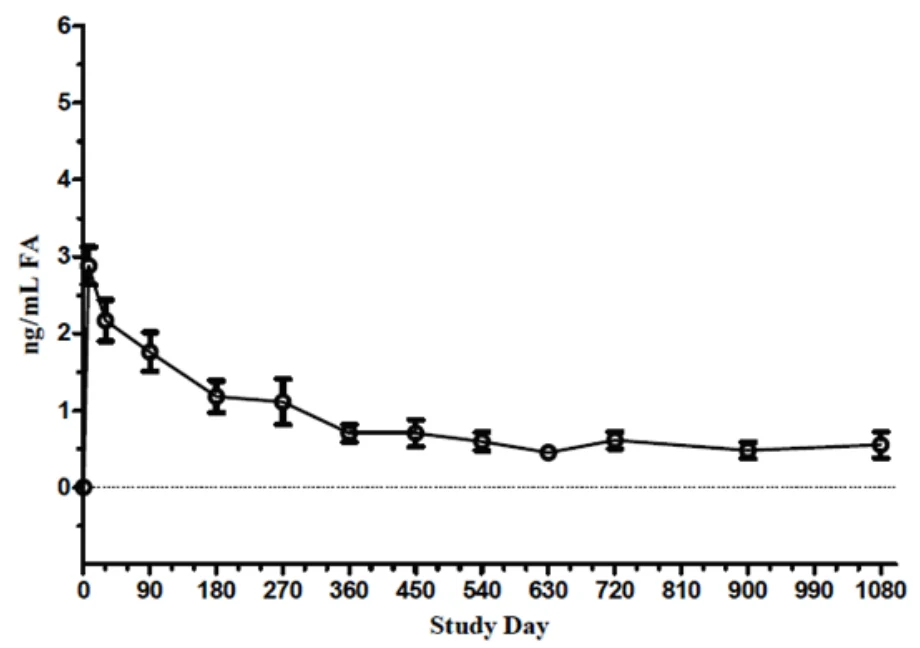
Mean Cmax values in the aqueous humor were 3.55 ng/mL and the maximal aqueous humor FA concentrations were observed on Day 7 for most of the subjects.
The human PK study demonstrates that FA intravitreal implants achieve long-term release of FA following administration in the posterior segment (vitreous).
No studies of permeability, protein binding, hepatic metabolism, or metabolic-based drug-drug interactions were performed because FA is delivered at the site of action and does not reach appreciable levels in the periphery.
Special Populations and Conditions
Hepatic/Renal Insufficiency: Negligible quantities of fluocinolone acetonide from ILUVIEN® are excreted via the systemic circulation.
STORAGE AND STABILITY
Store at room temperature (15 - 30°C).
SPECIAL HANDLING INSTRUCTIONS
Not applicable.
DOSAGE FORMS, COMPOSITION AND PACKAGING
ILUVIEN® (fluocinolone acetonide intravitreal implant) is supplied in a sterile single use preloaded applicator with a 25-gauge needle, packaged in a tray sealed with a lid inside a carton.
Each ILUVIEN® consists of a light brown 3.5 mm x 0.37 mm implant containing 0.19 mg of the active ingredient, fluocinolone acetonide and the following inactive ingredients: polyimide tube, polyvinyl alcohol and silicone adhesive.
PART II: SCIENTIFIC INFORMATION
PHARMACEUTICAL INFORMATION
Drug Substance
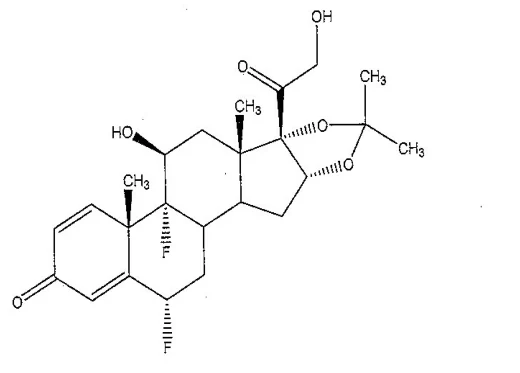
Proper name: Fluocinolone acetonide
Chemical name: (6α,11β, 16α)-6,9-difluoro-11,21-dihydroxy-16,17-[(1-methylethylidene)bis-(oxy)]-pregna-1,4-diene-3,20-dione
Molecular formula and molecular mass: C24H30F2O6(anhydrous), 452.49
Structural formula:
Physicochemical properties
Appearance/Description: White or almost white, microcrystalline powder
Solubility: Fluocinolone acetonide is practically insoluble in water, soluble in methanol, ethanol, chloroform and acetone and sparingly soluble in ether.
CLINICAL TRIALS
Study demographics and trial design
Efficacy was assessed in two phase 3 pivotal studies, known as the FAME studies, that were conducted in subjects with DME who had undergone previous laser therapy. The studies were multicenter, multinational, randomized, sham-controlled, double-masked, 36-month trials. Two FA (Fluocinolone Acetonide) dosage strengths were evaluated in clinical studies, i.e. 0.2 μg/day FA (ILUVIEN®) and 0.5 μg/day FA intravitreal implant.
Table 3 - Summary of study design and patient demographics
| Study # | Trial design | Dosage, route of administration and duration | Study subjects (N = number) | Mean age (Range) | Gender, Race |
| FAME A | Prospective, randomized, sham-controlled, double masked, multi-center | Intravitreal implant 0.2 μg/day FA 0.5 μg/day FA or sham injection Duration: 36 months | N = 481 Iluvien =190 0.5 μg/day FA = 196 Sham = 95 | 63.1 years (30.8–85.8) | M: 276 F: 205 W: 349 Black/AA: 29 Asian: 101 AI/AN: 1 other: 1 |
| FAME B | Prospective, randomized, sham-controlled, double masked, multi-center | Intravitreal implant 0.2 μg/day FA 0.5 μg/day FA or sham injection Duration: 36 months | N = 475 Iluvien =186 0.5 μg/day FA = 199 Sham = 90 | 61.8 years (20.5–86.6) | M: 292 F: 183 W: 319 Black/AA: 36 Asian: 111 other: 9 |
The inclusion/exclusion criteria were selected to recruit subjects with DME who had received prior laser photocoagulation with retinal thickness ≥250 microns. Enrollment was stratified by baseline BCVA (≤49 letters, ≥50 letters) because it was thought that response to treatment may be related to the subject’s initial visual status. In both FAME studies, mean BCVA letter scores in the study eye were comparable amongst treatment groups at baseline. In Study FAME A, the ILUVIEN® group had a BCVA mean value (SD) of 53 (13) at baseline versus 55 (11) in the sham group while in Study FAME B, the BCVA mean (SD) baseline value in the ILUVIEN® group was 53 (12) versus 55 (11) in the sham group.
The studies were randomized and double-masked to eliminate bias. To preserve masking, 2 investigators were used. One investigator performed the treatments and the other performed all assessments.
Additional laser treatment for macular edema was permitted in the study eye at the investigator’s discretion, starting at the 6-week visit, if the eye showed no improvement in edema compared to baseline. At later study visits, additional laser treatment was permitted based on the judgment of the assessing investigator provided the subject had not received retreatment with study drug within the last 6 weeks. Laser treatments were not to be performed less than 6 weeks from a visit where OCT was performed.
Subjects were eligible for retreatment with study drug at any time after the Month 12 assessments, but not after the Month 33 assessment, if they experienced vision loss (documented reduction of ≥5 letters in ETDRS visual acuity [VA]) or retinal thickening per optical coherence tomography (OCT) (minimum increase of 50 microns at the center of the fovea) as compared to the subject’s best status during the previous 12 months. In the integrated FAME studies, 29% and 26% of subjects received at least 1 retreatment with study drug in the sham treatment and the 0.2 μg/day FA groups, respectively.
Safety was evaluated in the two phase 3 studies (FAME studies) in which subjects were treated with 0.2 µg/day FA (n=375) (ILUVIEN®), 0.5 µg/day FA (n=393) or sham injection (n=185). Over the three-year follow-up period, approximately 25% of the subjects received more than one study treatment.
Study results
The primary efficacy endpoint in both trials was the proportion of subjects in whom vision had improved by 15 letters or more from baseline after 24 months of follow-up. In the Full Analysis population, the primary efficacy endpoint was met in each of the FAME studies.
Table 4: Visual Acuity outcomes at Month 24 (All randomized subjects with LOCF)
| Study | Outcomes | ILUVIEN® | Sham | Estimated Difference (95% CI) |
| FAME A | Gain of ≥15 letters in BCVA (n (%)) | 51 (27%) | 14 (15%) | 12.1% (2.6%, 21.6%) |
| Loss of ≥15 letters in BCVA (n (%)) | 26 (14%) | 5 (5%) | 8.4% (1.8%, 15.1%) | |
| Mean change from baseline in BCVA (SD) | 3.7 (18.7) | 3.2 (13.1) | 1.8 (-2.8, 6.3) | |
| FAME B | Gain of ≥15 letters in BCVA (n (%)) | 57 (31%) | 16 (18%) | 13.0% (2.7%, 23.4%) |
| Loss of ≥15 letters in BCVA (n (%)) | 22 (12%) | 9 (10%) | 1.8% (-5.9%, 9.6%) | |
| Mean change from baseline in BCVA (SD) | 5.2 (18.0) | 0.0 (15.6) | 6.1 (1.4, 10.8) |
a Study 1: ILUVIEN®, N=190; Sham, N=95
b Study 2: ILUVIEN®, N=186; Sham, N=90
Figure 2: Percentage of Subjects with ≥ 15 Letter Improvement Over Baseline (Integrated FAME Studies)
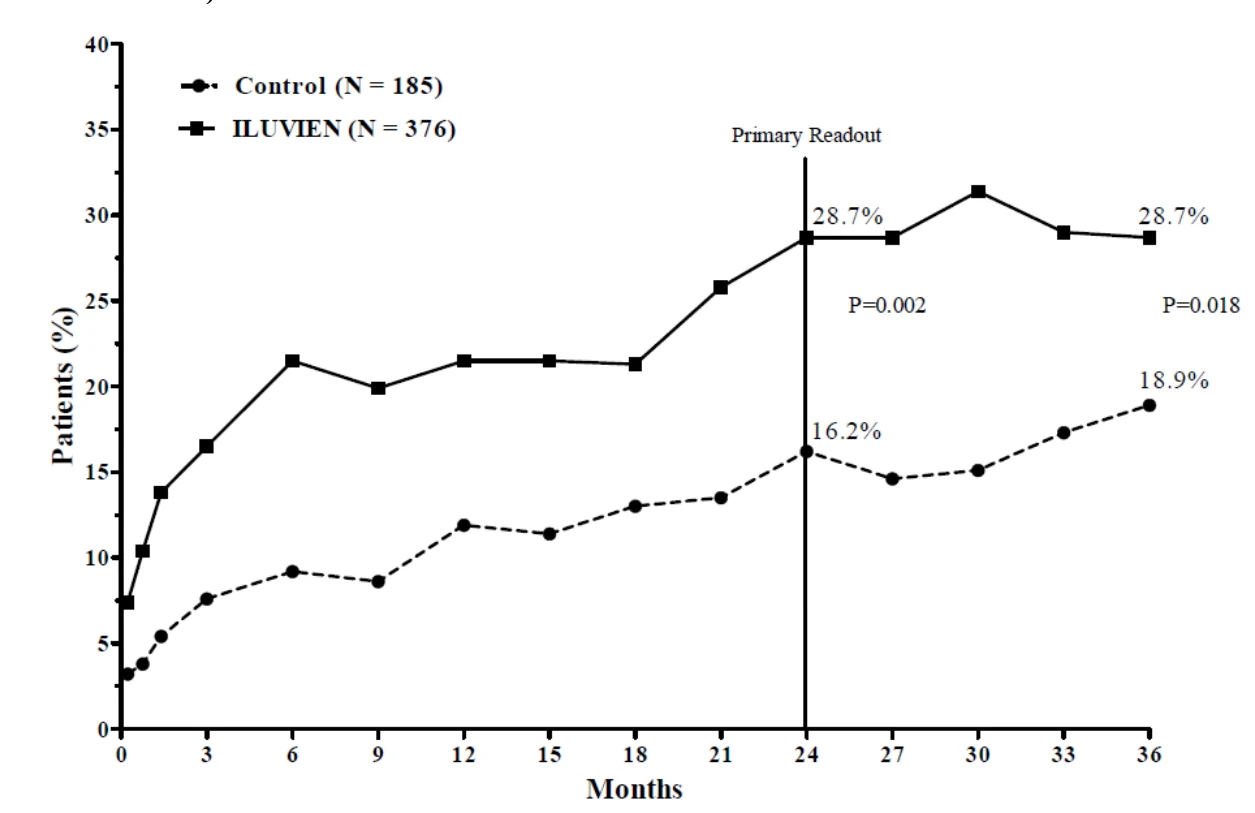
Onset of effect was relatively rapid, as the proportion of subjects with a ≥15-letter increase from baseline in BCVA in the study eye was statistically significantly higher in each active treatment group compared with the sham group starting as early as Week 3. Thereafter, the treatment effect was maintained (p≤0.018) through Month 36.
Based on information from the integrated FAME studies, an understanding of the timing and magnitude of the effect of cataract on BCVA has emerged. In the integrated FAME studies, most cataracts were reported between Months 6 and 18 in the ILUVIEN® treatment groups. This time frame coincided with a plateau in the proportion of subjects with a ≥15-letter increase from baseline in BCVA between Months 6 and 18 and an increased proportion of active-treated subjects who had a ≥15-letter decrease from baseline in BCVA (indicating loss of vision), the latter of which reversed in Year 3. (Figure 3)
Figure 3: Percentage (±ASE) of Subjects Treated with who had ≥ 15-Letter Increase from Baseline BCVA by Lens Status (Integrated FAME Studies: Full Analysis Population)
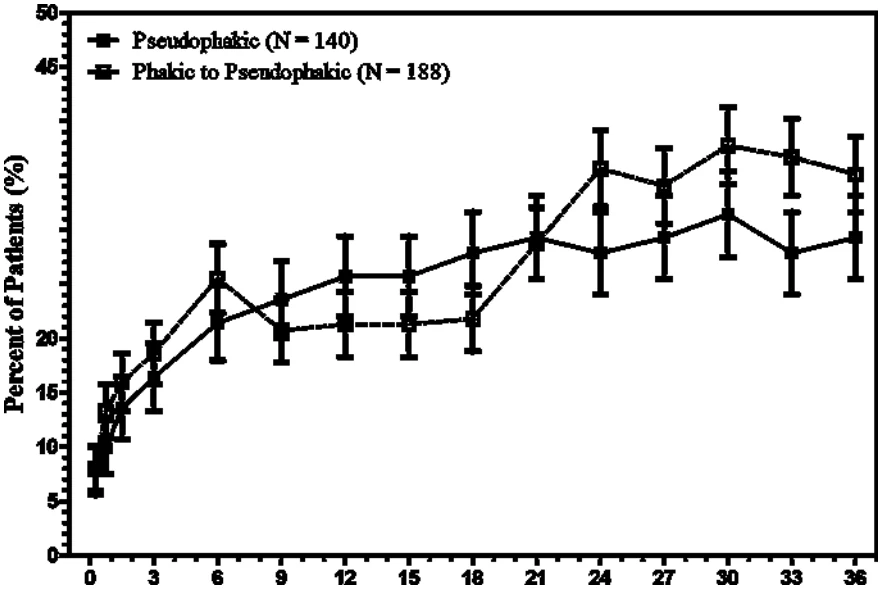
Abbreviations: ASE= asymptotic standard error; BCVA=best corrected visual acuity
Most cataract operations occurred after Month 12. In phakic subjects who became pseudophakic, improvement in mean BCVA letter scores was observed in subjects starting at Month 18. This effect continued through Month 36, suggesting that the full effect of ILUVIEN® may be realized once the confounding effects of cataract are removed.
DETAILED PHARMACOLOGY
Fluocinolone acetonide (FA) has been shown to reduce expression of VEGF in retinal pigmented epithelial cells. Fluocinolone acetonide intravitreal sustained release systems also reduced ocular inflammation in a rabbit model of uveitis, and showed neuroprotective effects in rodent models of retinal degeneration.
Safety Pharmacology
No specific safety pharmacology experiments with the intravitreal implant have been done. Although some local ocular secondary pharmacological effects were observed, systemic secondary pharmacological actions are not expected to occur as systemic levels of fluocinolone acetonide resulting from the implant are negligible.
Pharmacokinetics
There was no quantifiable systemic exposure of fluocinolone acetonide (FA) following intravitreal injection of FA implants to male and female Dutch Belted rabbits at 0.2, 0.5, and 1.0 µg/eye/day doses (targeted release rates). The ocular concentrations declined very gradually following the first dose and then increased with the second dose at month 12 for the mid and high dose levels. The elimination of fluocinolone acetonide from the ocular tissues was very slow with elimination half-lives generally exceeding 2000 hours, and was not apparently tissue or dose dependent. The estimated half-life of fluocinolone acetonide was considered the result of the controlled release of fluocinolone acetonide from the delivery system. The exposure of fluocinolone acetonide was generally highest in the choroid and pigmented epithelium followed by the lens or retina, the iris/ciliary body, and the vitreous humor or cornea. The ocular exposure of fluocinolone acetonide in the aqueous humor was predominantly below the limit of quantitation at all dose levels in rabbits. The local ocular tissue exposure increased with the dose, though no clear evidence of dose proportionality was indicated. There was no evidence of gender differences in ocular exposure of fluocinolone acetonide at any dose level. The observed exposure profiles are consistent with the mode of administration of fluocinolone acetonide.
TOXICOLOGY
General Toxicology
In a 24-month toxicity study in pigmented rabbits, following intravitreal injection of fluocinolone acetonide (FA) implant system, FA related findings were limited to the eye. A 9-month ocular toxicity study was also conducted in pigmented rabbits after the intravitreal administration of the FA implant system following a forced degradation of the test article. Cataracts and/or lens fiber degeneration were observed by ophthalmological examination and/or histopathological evaluation in both the 9-month forced degradation and 24-month pivotal studies, and may be related to pharmacologic effects of the fluocinolone acetonide component of FA intravitreal implant system. In the pivotal 24-month toxicity study, there was a dose-dependent increase in the frequency and severity of cataracts at nominal daily fluocinolone acetonide doses of 0.5 and 1.0 µg/eye/day; however, there were no apparent ocular effects at a nominal daily fluocinolone acetonide dose of 0.2 µg/eye/day.
Other ocular findings (e.g., focal retinal scarring) were considered likely related to experimental procedures, rather than fluocinolone acetonide itself.
No systemic toxicity was observed in either toxicity study. Quantifiable fluocinolone acetonide plasma concentrations were not observed at any dose level in the 24-month study; levels were below the quantitation limit of 200 pg/mL at the highest administered nominal fluocinolone acetonide dose of 1.0 µg/eye/day. Therefore, the absence of characteristic systemic effects of glucocorticoids such as body weight gain, Cushingoid syndrome, reductions in lymphocytes and lymphoid organ weights, and hepatic glycogen deposition and fatty liver changes was not unexpected.
Carcinogenicity
Long term animal studies have not been conducted to determine the carcinogenic potential of intravitreal injection of fluocinolone acetonide (FA) implant system.
Genotoxicity
Fluocinolone acetonide was not genotoxic in vitro in the Ames test (S. typhimurium and E. coli) and the mouse lymphoma TK assay, or in vivo in the mouse bone marrow micronucleus assay.
Reproductive and Developmental Toxicity
Long term animal studies have not been conducted to determine the effect on fertility of intravitreal injection of fluocinolone acetonide (FA) implant system. Fluocinolone acetonide has been shown to be teratogenic and abortifacient in rats and rabbits. This is considered a class effect of glucocorticosteroids. However, the doses of fluocinolone acetonide that produced these developmental and reproductive effects are several thousand-fold the amount of fluocinolone acetonide per day released by the ILUVIEN® system in humans.
REFERENCES
- 1. Ayalasomayajula SP, Ashton P, Kompella UB. Fluocinolone inhibits VEGF expression via glucocorticoid receptor in human retinal pigment epithelial (ARPE-19) cells and TNF-alpha-induced angiogenesis in chick chorioallantoic membrane (CAM). J Ocul Pharmacol Ther. 2009 Apr;25(2):97-103. doi: 10.1089/jop.2008.0090.
- 2. Brunton SA, Davis SN, Renda SM. Early intervention to achieve optimal outcomes in type 2 diabetes: a case presentation. Clin Cornerstone. 2006;8 Suppl 2:S6-S18.
- 3. Casilli L, Sauro M, Biraschi LM, Tarantino P, Michelazzi L. Toxicological Studies on Halopredone Acetate. Arzneimittel Forschung-Drug Research 1977; 27(11): 2102-2108.
- 4. Glybina IV, Kennedy A, Ashton P, Abrams GW, Iezzi R. Photoreceptor neuroprotection in RCS rats via low-dose intravitreal sustained-delivery of fluocinolone acetonide. Invest Ophthalmol Vis Sci. 2009 Oct;50(10):4847-57. doi: 10.1167/iovs.08-2831. Epub 2009 Apr 30.
- 5. Glybina IV, Kennedy A, Ashton P, Abrams GW, Iezzi R. Intravitreous delivery of the corticosteroid fluocinolone acetonide attenuates retinal degeneration in S334ter-4 rats. Invest Ophthalmol Vis Sci. 2010 Aug;51(8):4243-52. doi: 10.1167/iovs.09-4492. Epub 2010 Mar 10.
- 6. Kihlström I, Lundberg C. Teratogenicity study of the new glucocorticosteroid budesonide in rabbits. Arzneimittelforschung. 1987 Jan;37(1):43-6.
- 7. Mruthyunjaya P1, Khalatbari D, Yang P, Stinnett S, Tano R, Ashton P, Guo H, Nazzaro M, Jaffe GJ. Efficacy of low-release-rate fluocinolone acetonide intravitreal implants to treat experimental uveitis. Arch Ophthalmol. 2006 Jul;124(7):1012-8.