


Product Monograph - Jemperli
Recent Major Label Changes
| 1 Indications | 2024-07 |
|---|---|
| 1 Indications | 2025-04 |
| 4 Dosage and Administration, 4.1 Dosing Considerations | 2025-04 |
| 4 Dosage and Administration, 4.2 Recommended Dose and Dosage Adjustment | 2023-11 |
| 4 Dosage and Administration, 4.3 Reconstitution | 2025-04 |
| 4 Dosage and Administration, 4.4 Administration | 2023-11 |
| 7 Warnings and Precautions | 2023-11 |
| 7 Warnings and Precautions, Other immune-mediated adverse reactions | 2025-03 |
Table of Contents
Certain sections or subsections that are not applicable at the time of the preparation of the most recent authorized product monograph are not listed.
Recent Major Label Changes .................................................................................................. 2
Table of Contents................................................................................................................... 2
Part 1: Healthcare Professional Information........................................................................... 5
- 1.
Indications .................................................................................................................. 5
1.1. Pediatrics......................................................................................................... 5
1.2. Geriatrics ......................................................................................................... 5
- 2. Contraindications ....................................................................................................... 5
- 4.
Dosage and Administration ........................................................................................ 5
4.1. Dosing Considerations...................................................................................... 5
4.2. Recommended Dose and Dosage Adjustment ................................................... 6
4.3. Reconstitution ................................................................................................. 9
4.4. Administration ................................................................................................. 9
4.5. Missed Dose .................................................................................................... 9
- 5. Overdose ...................................................................................................................10
- 6. Dosage Forms, Strengths, Composition, and Packaging..............................................10
- 7.
Warnings and Precautions .........................................................................................10
General ......................................................................................................................10
Driving and Operating Machinery ...............................................................................10
Immune .....................................................................................................................11
Monitoring and Laboratory Tests ................................................................................14
Reproductive Health...................................................................................................14
7.1. Special Populations .........................................................................................14
7.1.1. Pregnancy ...................................................................................................14
7.1.2. Breastfeeding..............................................................................................15
7.1.3. Pediatrics ....................................................................................................15
7.1.4. Geriatrics ....................................................................................................15
- 8.
Adverse Reactions .....................................................................................................15
8.1. Adverse Reaction Overview .............................................................................15
8.2. Clinical Trial Adverse Reactions .......................................................................16
8.3. Less Common Clinical Trial Adverse Reactions .................................................20
8.4. Abnormal Laboratory Findings: Hematologic, Clinical Chemistry and Other Quantitative Data .......................................................................................................21
8.5. Post-Market Adverse Reactions .......................................................................23
- 9.
Drug Interactions .......................................................................................................23
9.2. Drug Interactions Overview .............................................................................23
9.4. Drug-Drug Interactions....................................................................................23
9.5. Drug-Food Interactions ...................................................................................23
9.6. Drug-Herb Interactions....................................................................................23
9.7. Drug-Laboratory Test Interactions ...................................................................23
- 10.
Clinical Pharmacology ................................................................................................23
10.1. Mechanism of Action...................................................................................23
10.2. Pharmacodynamics .....................................................................................24
10.3. Pharmacokinetics ........................................................................................24
10.4. Immunogenicity ..........................................................................................26
- 11. Storage, Stability, and Disposal..................................................................................26
Part 2: Scientific Information ................................................................................................27
- 13. Pharmaceutical Information ......................................................................................27
- 14.
Clinical Trials..............................................................................................................27
14.1. Clinical Trials by Indication...........................................................................27
Primary advanced or recurrent endometrial cancer (EC): JEMPERLI in combination with carboplatin and paclitaxel...........................................................................................27 dMMR or MSI-H recurrent or advanced EC that has progressed on or following prior treatment with a platinum containing regimen: Jemperli monotherapy .......................34
- 15. Microbiology .............................................................................................................36
- 16. Non-Clinical Toxicology..............................................................................................36
Patient Medication Information............................................................................................38
Part 1: Healthcare Professional Information
1. Indications
JEMPERLI (dostarlimab for injection) is indicated:
- in combination with carboplatin and paclitaxel for the treatment of adult patients with primary advanced or first recurrent endometrial cancer who are candidates for systemic therapy.
See 14. Clinical Trials for details on eligibility criteria including disease status in the pivotal RUBY study.
- as monotherapy for the treatment of adult patients with mismatch repair deficient (dMMR) or microsatellite instability-high (MSI-H) recurrent or advanced endometrial cancer that has progressed on or following prior treatment with a platinum containing regimen.
1.1. Pediatrics
Pediatrics (<18 years of age): No data are available to Health Canada; therefore, Health Canada has not authorized an indication for pediatric use.
1.2. Geriatrics
Geriatrics (≥ 65 years of age): No overall differences in safety or efficacy were reported between elderly patients (65 years and over) and younger patients (less than 65 years).
There are limited clinical data with dostarlimab in patients aged 75 years or over (see 4.2 Recommended Dose and Dosage Adjustment-Geriatrics; 7.1.4 Warnings and Precautions-Geriatrics).
2. Contraindications
Jemperli is contraindicated in patients who are hypersensitive to this drug or to any ingredient in the formulation, including any non-medicinal ingredient, or component of the container. For a complete listing, see 6. Dosage Forms, Strengths, Composition, and Packaging.
4. Dosage and Administration
4.1. Dosing Considerations
- Jemperli is for intravenous infusion after dilution (see 4.3 Reconstitution; 4.4 Administration).
- When Jemperli is used in monotherapy, patients should be selected for treatment based on MSI-H or dMMR tumour status as determined by an accredited laboratory using validated testing methods (see 14.1 Clinical Trials by Indication).
4.2. Recommended Dose and Dosage Adjustment
Jemperli in combination with carboplatin and paclitaxel
The recommended dose as combination therapy is 500 mg Jemperli administered as an intravenous infusion over 30 minutes every 3 weeks for 6 doses followed by 1000 mg every 6 weeks for all cycles thereafter.
The dosage regimen in combination with the chemotherapy is presented in Table 1.
Table 1 Dosage regimen for Jemperli in combination with carboplatin and paclitaxel
500 mg once every 3 weeks in combination with carboplatin and paclitaxela (1 Cycle = 3 weeks) | 1000 mg once every 6 weeks until disease progression or unacceptable toxicity (1 Cycle = 6 weeks) | |||||||||
|---|---|---|---|---|---|---|---|---|---|---|
| Cycle | Cycle 1 | Cycle 2 | Cycle 3 | Cycle 4 | Cycle 5 | Cycle 6 | Cycle 7 | Cycle 8 | Cycle 9 | Continue dosing Q6W |
| Week | 1 | 4 | 7 | 10 | 13 | 16 | 19 | 25 | 31 | |
3 weeks between Cycle 6 and Cycle 7 a Administer Jemperli prior to the chemotherapy when given on the same day.
Administration of Jemperli should continue according to the recommended dose and schedule until disease progression, unacceptable toxicity, or up to 3 years.
See 14. Clinical Trials for the dosages of the chemotherapy administered in combination with Jemperli in the pivotal study RUBY, and also refer to the Product Monographs of the chemotherapy agents, as appropriate.
Jemperli monotherapy
The recommended dosage of Jemperli as monotherapy in adult patients is:
- Dose 1 through Dose 4: 500 mg every 3 weeks
- Subsequent dosing beginning 3 weeks after Dose 4 (Dose 5 onwards): 1,000 mg every 6 weeks
The dosage regimen as monotherapy is presented in Table 2.
Table 2 Dosage regimen for Jemperli as monotherapy
500 mg once every 3 weeks (1 Cycle = 3 weeks) | 1000 mg once every 6 weeks until disease progression or unacceptable toxicity (1 Cycle = 6 weeks) | |||||||
|---|---|---|---|---|---|---|---|---|
| Cycle | Cycle 1 | Cycle 2 | Cycle 3 | Cycle 4 | Cycle 5 | Cycle 6 | Cycle 7 | Continue dosing Q6W |
| Week | 1 | 4 | 7 | 10 | 13 | 19 | 25 | |
| 3 weeks between Cycle 4 and Cycle 5 |
Administer Jemperli as an intravenous infusion over 30 minutes. Administration of dostarlimab could continue according to the recommended dose and schedule until disease progression or unacceptable toxicity.
Dose modifications
Dose reduction is not recommended. Dosing delay or discontinuation may be required based on individual safety and tolerability. Recommended dose modifications to manage adverse reactions are provided in Table 3.
Detailed guidelines for the management of immune-mediated adverse reactions and infusion-related reactions are described in 7 Warnings and Precautions, Immune.
Table 3 Recommended dose modifications for Jemperli
| Immune-mediated adverse reactions | Severity gradea | Dose modification |
|---|---|---|
| Colitis | 2 or 3 | Withhold dose. Restart dosing when toxicity resolves to Grade 0 or 1. |
| 4 | Permanently discontinue. | |
| Hepatitis | Grade 2 (ASTb or ALTc > 3 and up to 5 × ULNd or total bilirubin > 1.5 and up to 3 × ULN) | Withhold dose. Restart dosing when toxicity resolves to Grade 0 or 1. |
| Grade ≥3 (AST or ALT > 5 × ULN or total bilirubin > 3 × ULN) | Permanently discontinue (see exception below).e | |
| Type 1 diabetes mellitus (T1DM) | 3 or 4 (hyperglycaemia) | Withhold dose. Restart dosing in appropriately managed, clinically and metabolically stable patients. |
| Hypophysitis or adrenal insufficiency | 2, 3 or 4 | Withhold dose. Restart dosing when toxicity resolves to Grade 0 or 1. Permanently discontinue for recurrence or worsening while on adequate hormonal therapy. |
| Hypothyroidism or hyperthyroidism | 3 or 4 | Withhold dose. Restart dosing when toxicity resolves to Grade 0 or 1. |
| Pneumonitis | 2 | Withhold dose. Restart dosing when toxicity resolves to Grade 0 or 1. If Grade 2 recurs, permanently discontinue. |
| 3 or 4 | Permanently discontinue. | |
| Nephritis | 2 | Withhold dose. Restart dosing when toxicity resolves to Grade 0 or 1. |
| 3 or 4 | Permanently discontinue. | |
| Exfoliative dermatologic conditions (e.g. SJS, TEN, DRESS) | Suspected | Withhold dose for any grade. Restart dosing if not confirmed and when toxicity resolves to grade 0 or 1. |
| Confirmed | Permanently discontinue. | |
| Myocarditis | 2, 3 or 4 | Permanently discontinue. |
| Immune-mediated adverse reactions | Severity gradea | Dose modification |
|---|---|---|
| Severe neurological toxicities (myasthenic syndrome/myasthenia gravis, Guillain-Barré syndrome, encephalitis, transverse myelitis) | 2, 3 or 4 | Permanently discontinue. |
Other immune-mediated adverse reactions (including but not limited to rash, myositis, sarcoidosis, autoimmune haemolytic anemia, pancreatitis, iridocyclitis, uveitis, diabetic ketoacidosis, arthralgia, solid organ transplant rejection, graft-versus-host disease) | 3 | Withhold dose. Restart dosing when toxicity resolves to Grade 0 or 1. |
| 4 | Permanently discontinue. | |
| Recurrence of immune-mediated adverse reactions after resolution to ≤ Grade 1 (except for pneumonitis, see above) | 3 or 4 | Permanently discontinue. |
| Other adverse reactions | Severity gradea | Dose modification |
| Infusion-related reactions | 2 | Withhold dose. If resolved within 1 hour of stopping, may be restarted at 50% of the original infusion rate, or restart when symptoms resolve with pre-medication. If Grade 2 recurs with adequate pre-medication, permanently discontinue. |
| 3 or 4 | Permanently discontinue. |
a Toxicity graded per National Cancer Institute Common Terminology Criteria for Adverse Events (CTCAE) version 5.0.
b AST = aspartate aminotransferase
c ALT = alanine aminotransferase
d ULN = upper limit of normal
e For patients with liver metastases who begin treatment with Grade 2 increase of AST or ALT, if AST or ALT increases by ≥50% relative to baseline and lasts for at least 1 week, then treatment should be discontinued.
Geriatrics
No dose adjustment is recommended for patients who are 65 years of age or over. There are limited clinical data with Jemperli in patients 75 years of age or over.
Pediatrics
Health Canada has not authorized an indication for pediatric use.
Hepatic Insufficiency
No dose adjustment is recommended for patients with mild hepatic impairment. Data are not sufficient for drawing any conclusion on patients with moderate hepatic impairment and there are no data in patients with severe hepatic impairment (see 10.3 Pharmacokinetics).
Renal Insufficiency
No dose adjustment is recommended for patients with mild or moderate renal impairment. Data are not sufficient for drawing any conclusion on patients with severe renal impairment or end stage renal disease undergoing dialysis (see 10.3 Pharmacokinetics).
4.3. Reconstitution
Jemperli should be inspected visually for particulate matter and discolouration prior to administration. Jemperli is a slightly opalescent colourless to yellow solution. Discard the vial if visible particles are observed.
For the 500-mg dose, withdraw 10 mL of Jemperli from a vial and transfer into an intravenous (IV) bag containing sodium chloride 9 mg/mL (0.9%) solution for injection, or glucose 50 mg/mL (5%) solution for injection. The final concentration of the diluted solution should be between 2 mg/mL and 10 mg/mL. The total volume of the infusion solution must not exceed 250 mL.
For the 1,000-mg dose, withdraw 10 mL of Jemperli from each of two vials (withdraw 20 mL total) and transfer into an IV bag containing sodium chloride 9 mg/mL (0.9%) solution for injection or glucose 50 mg/mL (5%) solution for injection. The final concentration of the diluted solution should be between 4 mg/mL to 10 mg/mL. The total volume of the infusion solution must not exceed 250 mL.
Mix diluted solution by gentle inversion. Do not shake the final infusion bag. Discard any unused portion left in the vial (see 11. Storage, Stability, and Disposal).
4.4. Administration
Jemperli is for intravenous infusion only.
Jemperli should be administered by intravenous infusion using an intravenous infusion pump over 30 minutes. Tubing should be made from polyvinyl chloride (PVC), platinum cured silicon or polypropylene (PP); fittings made from PVC or polycarbonate and needles made from stainless steel. A 0.2 or 0.22 micron in-line polyethersulfone (PES) filter must be used during administration of Jemperli.
Jemperli must not be administered as an intravenous push or bolus injection. Do not co-administer other drugs through the same infusion line.
For instructions on dilution of the medicinal product before administration, see 4.3 Reconstitution.
4.5. Missed Dose
It is very important to not miss a dose of this medicine. If a planned dose of Jemperli is missed, it should be administered as soon as possible. The schedule of administration should be adjusted to maintain the prescribed dosing interval.
5. Overdose
There is no information on overdosage with Jemperli. The maximum tolerated dose of Jemperli has not been determined.
If overdose is suspected, the patient should be closely monitored for any signs or symptoms of adverse reactions or effects, and appropriate standard of care measures should be instituted immediately.
| For the most recent information in the management of a suspected drug overdose, contact your regional poison control centre or Health Canada’s toll-free number, 1-844 POISON-X (1-844-764-7669). |
|---|
- 6. Dosage Forms, Strengths, Composition, and Packaging
To help ensure the traceability of biologic products, including biosimilars, health professionals should recognise the importance of recording both the brand name and the non-proprietary (active ingredient) name as well as other product-specific identifiers such as the Drug Identification Number (DIN) and the batch/lot number of the product supplied.
Table 4 Dosage Forms, Strengths, and Composition
Description
Jemperli is packaged in a carton containing one 10mL single-use vial with clear to slightly opalescent colourless to yellow solution, essentially free from visible particles. Each mL of solution for infusion contains 50 mg of dostarlimab. The solution for infusion has a pH of approximately 6.0 and an osmolality of approximately 300 mOsm/kg.
7. Warnings and Precautions
General
Jemperli should be administered under the supervision of physicians experienced in the treatment of cancer.
Driving and Operating Machinery
Exercise caution when driving or operating a vehicle or potentially dangerous machinery.
| Route of Administration | Dosage Form / Strength/Composition | Non-Medicinal Ingredients |
| Intravenous infusion | Solution for infusion 500 mg/10 mL vial (50 mg/mL) | Citric acid monohydrate; L-arginine hydrochloride; polysorbate 80; sodium chloride; tri-sodium citrate dihydrate; water for injection |
Immune
Immune-mediated adverse reactions, which may be severe or fatal, have occured in patients treated with antibodies blocking the programmed cell death protein-1 / programmed death-ligand 1 (PD-1/PD-L1) pathway, including Jemperli. While immune-mediated adverse reactions usually occur during treatment with PD-1/PD-L1 blocking antibodies, symptoms can also manifest after discontinuation of treatment. Immune-mediated adverse reactions may occur in any organ or tissue and may affect more than one body system simultaneously. Important immune-mediated adverse reactions listed in this section are not inclusive of all possible severe and fatal immune-mediated reactions.
Early identification and management of immune-mediated adverse reactions are essential to ensure safe use of PD-1/PD-L1 blocking antibodies. Patients should be monitored for symptoms and signs of immune-mediated adverse reactions. Clinical and haematological chemistries, including liver, kidney and thyroid function tests, should be evaluated at baseline and periodically during treatment. For suspected immune-mediated adverse reactions, adequate evaluation including specialty consultation should be ensured.
Based on the severity of the adverse reaction, Jemperli should be withheld or permanently discontinued and corticosteroids (1 to 2 mg/kg/day prednisone or equivalent) or other appropriate therapy administered (see below and 4.2 Recommended Dose and Dosage Adjustment). Upon improvement to Grade 0 or 1, corticosteroid taper should be initiated and continued for at least 1 month or longer. Based on limited data from clinical studies in patients whose immune-mediated adverse reactions could not be controlled with corticosteroid use, administration of other systemic immunosuppressants can be considered. Hormone replacement therapy for endocrinopathies should be instituted as warranted.
Treatment with Jemperli should be permanently discontinued for any Grade 3 immune-mediated adverse reaction that recurs and for any Grade 4 immune-mediated adverse reaction toxicity, except for endocrinopathies that are controlled with replacement hormones and unless otherwise specified in 4.2 Recommended Dose and Dose Adjustment.
- Immune-mediated pneumonitis
Immune-mediated pneumonitis has been reported in patients receiving Jemperli (see 8.2 Clinical Trial Adverse Reactions). Patients should be monitored for signs and symptoms of pneumonitis. Suspected pneumonitis should be confirmed with radiographic imaging and other causes excluded. Patients should be managed with Jemperli treatment modifications and corticosteroids (see 4.2 Recommended Dose and Dosage Adjustment, Dose Modifications and 8. Adverse Reactions).
- Immune-mediated colitis
Jemperli can cause immune-mediated colitis (see 8. Adverse Reactions). Monitor patients for signs and symptoms of colitis and manage with Jemperli treatment modifications, anti-diarrheal agents and corticosteroids (see 4.2 Recommended Dose and Dosage Adjustment and 8. Adverse Reactions).
- Immune-mediated hepatitis
Jemperli can cause immune-mediated hepatitis. Monitor patients for changes in liver function periodically as indicated based on clinical evaluation and manage with Jemperli treatment modifications and corticosteroids (see 4.2 Recommended Dose and Dosage Adjustment and 8. Adverse Reactions).
- Immune-mediated endocrinopathies
Immune-mediated endocrinopathies, including hypothyroidism, hyperthyroidism, thyroiditis, hypophysitis, type 1 diabetes mellitus, diabetic ketoacidosis and adrenal insufficiency (primary and secondary), have been reported in patients receiving Jemperli. Long-term hormone replacement therapy may be necessary in cases of immune-mediated endocrinopathies.
Adrenal insufficiency
Immune-mediated adrenal insufficiency (primary and secondary) occurred in patients receiving Jemperli. Patients should be monitored for clinical signs and symptoms of adrenal insufficiency. For symptomatic adrenal insufficiency, patients should be managed as recommended in 4.2 Recommended Dose and Dosage Adjustment (see 8. Adverse Reactions).
Hypophysitis
Jemperli can cause hypophysitis. Monitor patients for signs and symptoms of hypophysitis (including hypopituitarism). Administer corticosteroids and hormone replacement as clinically indicated (See 4.2 Recommended Dose and Dosage Adjustment).
Type 1 diabetes mellitus
Jemperli can cause type 1 diabetes mellitus, including diabetic ketoacidosis. Monitor patients for hyperglycemia or other signs and symptoms of diabetes. Administer insulin for type 1 diabetes and withhold Jemperli in cases of severe hyperglycemia until metabolic control is achieved (See 4.2 Recommended Dose and Dosage Adjustment).
Thyroid disorders (Hypothyroidism and hyperthyroidism)
Immune-mediated thyroid disorders, including hypothyroidism and hyperthyroidism (including thyroiditis) occurred in patients receiving Jemperli. Hypothyroidism may follow hyperthyroidism. Patients should be monitored for changes in thyroid function (at the start of treatment, periodically during treatment and as indicated based on clinical evaluation) and clinical signs and symptoms of thyroid disorders. Hypothyroidism may be managed with hormone replacement therapy (if indicated). Initiate medical management for control of hyperthyroidism.
Immune-mediated hypothyroidism and hyperthyroidism (including thyroiditis) should be managed as recommended in 4.2 Recommended Dose and Dosage Adjustment (see 8. Adverse Reactions).
- Immune-mediated nephritis
Jemperli can cause immune-mediated nephritis (see 8. Adverse Reactions). Monitor patients for changes in renal function and manage with Jemperli treatment modifications and corticosteroids (see 4.2 Recommended Dose and Dosage Adjustment).
- Immune-mediated skin adverse reactions
Immune-mediated skin reactions including rash, pruritus and pemphigoid been reported in patients receiving Jemperli (see 8.2 Clinical Trial Adverse Reactions). Patients should be monitored for signs and symptoms of severe skin reactions and exclude other causes. Immune-mediated severe skin reactions should be managed as recommended for other immune-mediated adverse reactions (see 4.2 Recommended Dose and Dosage Adjustment).
Cases of Stevens-Johnson Syndrome (SJS) or toxic epidermal necrolysis (TEN), some with fatal outcomes, have been reported in patients treated with PD-1 inhibitors. Exfoliative dermatological conditions should be managed as recommended in 4.2 Recommended Dose and Dosage Adjustment. For signs and symptoms of SJS or TEN, withold treatment and refer the patient for specialized care for assessment and further treatment. If SJS or TEN is confirmed, permanently discontinue treament.
Caution should be used when considering the use of Jemperli in a patient who has previously experienced a severe or life-threatening skin adverse reaction on prior treatment with other immune-stimulatory anticancer agents.
- Other immune-mediated adverse reactions
Given the mechanism of action, Jemperli can cause other clinically important immune-mediated adverse reactions including potentially serious events [e.g. myositis, myocarditis, encephalitis, demyelinating neuropathy (including Guillain Barré syndrome), sarcoidosis, aplastic anemia].
Clinically significant immune-mediated adverse reactions reported in less than 1% of patients treated with Jemperli as monotherapy in clinical trials include encephalitis, autoimmune haemolytic anemia, pancreatitis, uveitis, and iridocyclitis. Patients should be monitored for signs and symptoms of immune-mediated adverse reactions and managed as described in 4.2 Recommended Dose and Dosage Adjustment.
Solid organ transplant rejection has been reported in the post-marketing setting in patients treated with PD-1 inhibitors. Treatment with Jemperli may increase the risk of rejection in solid organ transplant recipients. The benefit of treatment with Jemperli versus the risk of possible organ rejection should be considered in these patients.
- Complications of Allogeneic HSCT after PD-1/PD-L1–Blocking Antibody
Fatal and other serious complications can occur in patients who receive allogeneic haematopoietic stem cell transplantation (HSCT) before or after being treated with a PD-1/PD-L1–blocking antibody. Transplant-related complications include hyperacute graft-versus-host disease (GvHD), acute GvHD, chronic GvHD, hepatic veno-occlusive disease after reduced intensity conditioning, and steroid-requiring febrile syndrome (without an identified infectious cause). These complications may occur despite intervening therapy between PD-1/PD-L1 blockade and allogeneic HSCT.
Follow patients closely for evidence of transplant-related complications and intervene promptly. Consider the benefit versus risks of treatment with a PD-1/PD-L1–blocking antibody prior to or after an allogeneic HSCT.
- Infusion-related reactions
Jemperli can cause infusion-related reactions, including hypersensitivity, which can be severe. For severe (Grade 3) or life-threatening (Grade 4) infusion-related reactions, stop infusion and permanently discontinue Jemperli (see 4.2 Recommended Dose and Dosage Adjustment).
Monitoring and Laboratory Tests
Patients should be monitored for signs and symptoms of immune-mediated adverse reactions and managed as described in 4.2 Recommended Dose and Dosage Adjustment.
For suspected immune-mediated adverse reactions, adequate evaluation including specialty consultation should be ensured (see 7. Warnings and Precautions, Immune).
Patients should be evaluated for clinical and haematological chemistries, including liver function tests (hepatic transaminase and bilirubin levels), serum electrolytes and renal and thyroid function tests, at baseline and periodically during treatment.
Reproductive Health
- Fertility
Fertility studies have not been conducted with Jemperli (see 16. Non-Clinical Toxicology).
- Embryo-fetal toxicity
Jemperli can cause fetal harm. Pregnant women or women with reproductive potential should be advised of the potential risk associated with the administration of Jemperli to the fetus (see 7.1.1 Pregnant Women). Verify pregnancy status in females of reproductive potential prior to initiating Jemperli.
Women of childbearing potential should use effective contraception during treatment with Jemperli and until 4 months after the last dose of Jemperli.
7.1. Special Populations
7.1.1. Pregnancy
There are no available data on the use of Jemperli in pregnant women. Animal reproduction and development studies have not been conducted with Jemperli; however, inhibition of the PD-1/PD-L1 pathway has been shown in murine models of pregnancy to disrupt tolerance to the fetus and to result in an increase in fetal loss (See 16. Non-Clinical Toxicology). These results indicate a potential risk, based on its mechanism of action, that administration of Jemperli during pregnancy could cause fetal harm, including increased rates of abortion or stillbirth. Human IgG4 immunoglobulins (IgG4) are known to cross the placental barrier; therefore, being an IgG4, Jemperli has the potential to be transmitted from the mother to the developing fetus.
Jemperli is not recommended during pregnancy. Women of childbearing potential should use effective contraception during treatment with Jemperli and until 4 months after the last dose of Jemperli.
7.1.2. Breastfeeding
It is unknown if Jemperli is secreted in human milk. A risk to the newborns/infants cannot be excluded. Precaution should be exercised because many drugs can be secreted in human milk. Because of the potential for serious adverse reactions in breastfed children, Jemperli should not be used during breast-feeding and breast-feeding should be avoided for at least 4 months after the last dose of Jemperli.
7.1.3. Pediatrics
No data are available to Health Canada; therefore, Health Canada has not authorized an indication for pediatric use.
7.1.4. Geriatrics
No overall differences in safety or efficacy were reported between elderly patients (65 years and over) and younger patients (less than 65 years). No dose adjustment is recommended for patients who are aged 65 years or over.
There are limited clinical data with dostarlimab in patients aged 75 years or over (see 4.2 Recommended Dose and Dosage Adjustment-Geriatrics).
8. Adverse Reactions
8.1. Adverse Reaction Overview
Primary advanced or recurrent endometrial cancer (EC): Jemperli in combination with carboplatin and paclitaxel
The safety of Jemperli in combination with carboplatin and paclitaxel was evaluated in patients with primary advanced or recurrent endometrial cancer in the RUBY study (see 14. Clinical Trials). Patients received Jemperli 500 mg (n = 241) or placebo (n = 246) in combination with carboplatin and paclitaxel every 3 weeks for 6 doses followed by Jemperli 1,000 mg or placebo every 6 weeks until disease progression or unacceptable toxicity. Among the 241 patients, 38.6% were exposed for >1 year and 24.1% were exposed for >2 years.
The most common treatment emergent adverse events (≥ 10%) occurring at a higher rate in patients receiving Jemperli in combination with carboplatin and paclitaxel as compared to patients receiving placebo in combination with carboplatin and paclitaxel (Table 5) were alopecia (55.6%), nausea (54.4%), rash (38.2%), pruritus (20.3%), hypokalemia (19.9%), hypothyroidism (16.2%), hypertension (13.7%), pyrexia (12.9%), alanine aminotransferase increased (12.9%), aspartate aminotransferase increased (12.0%), blood creatinine increased (11.6%), depression (11.2%), and dry skin (10.0%).
Serious adverse reactions occurred in 39.8% of patients receiving Jemperli in combination with carboplatin and paclitaxel; the serious adverse reactions which occurred in ≥ 2% of patients were sepsis (including urosepsis) and pyrexia. Fatal adverse reactions occurred in 2.5% of patients receiving Jemperli, among which septic shock (0.8%), and myelosuppression (0.4%) were considered related to Jemperli.
In patients receiving Jemperli in combination with carboplatin and paclitaxel, Jemperli was permanently discontinued due to adverse reactions in 19.1% of patients. Adverse reactions that required permanent Jemperli discontinuation in ≥2 patients (0.8%) included rash (including rash maculo-papular), infusion related reaction, alanine aminotransferase increased, aspartate aminotransferase increased, diarrhea, pancreatitis, and pneumonitis.
Jemperli dosage interruptions due to an adverse reaction occurred in 2.5% of patients who received Jemperli in combination with carboplatin and paclitaxel. An adverse reaction that required Jemperli dosage interruption in ≥ 2 patients (0.8%) was alanine aminotransferase increased.
dMMR or MSI-H recurrent or advanced EC that has progressed on or following prior treatment with a platinum-containing regimen: Jemperli monotherapy
The safety of Jemperli in monotherapy has been evaluated in 605 patients (i.e. pooled safety population) with endometrial cancer or other advanced solid tumours who received dostarlimab monotherapy in the open-label, multi-cohort GARNET study, including 153 patients with dMMR/MSI-H recurrent or advanced endometrial cancer. Patients received doses of 500 mg every 3 weeks for 4 doses followed by 1000 mg every 6 weeks for all cycles thereafter (see 4.2 Recommended Dose and Dosage Adjustment). The median treatment duration for the monotherapy pooled population was 24 weeks (range 1 to 229 weeks), including 31.6% of patients treated for greater than one year and 18.7 % of patients treated for greater than two years.
The most common adverse reactions (≥ 10 %) were anemia (28.6 %), diarrhea (26.0%), nausea (25.8 %), vomiting (19.0 %), arthralgia (17.0 %) pruritus (14.2 %), rash (13.2 %), pyrexia (12.4 %), aspartate aminotransferase increased (11.2 %) and hypothyroidism (11.2 %). Adverse reactions were serious in 11.2 % of patients; most serious adverse reactions were immune-mediated adverse reactions (see 8.2 Clinical Trial Adverse Reactions, Immune-mediated Adverse Reactions). Serious adverse reactions reported in ≥ 1 % of patients were pyrexia (1.7 %), vomiting (1.5 %), nausea (1.3 %), anemia (1.3 %) and pneumonitis (1.3 %). Jemperli was permanently discontinued due to adverse reactions in 38 (6.3 %) patients, most of them were immune-mediated events. Adverse reactions leading to dose interruption were reported in 71 (11.7 %) patients. The safety profile for patients with dMMR/MSI-H endometrial cancer in the GARNET study (N=153) was not different from that of the overall monotherapy population (i.e. monotherapy pooled safety population).
General
Adverse reactions known to occur with dostarlimab or with combination therapy components given alone may occur during treatment with these medicinal products in combination, even if these reactions were not reported in clinical studies with combination therapy.
See 7. Warnings and Precautions for additional information regarding immune-mediated adverse reactions.
8.2. Clinical Trial Adverse Reactions
Clinical trials are conducted under very specific conditions. Therefore, the frequencies of adverse reactions observed in the clinical trials may not reflect frequencies observed in clinical practice and should not be compared to frequencies reported in clinical trials of another drug.
Immune-mediated Adverse Reactions
The selected adverse reactions described below are based on the safety of dostarlimab in a monotherapy pooled safety database of 605 patients in the GARNET study in patients with endometrial cancer or other advanced solid tumours. Immune-mediated adverse reactions were defined as events of grade 2 and above from a pre-specified list of terms; the frequencies below exclude grade 1 events. The management guidelines for these adverse reactions are described in section 4.2 Recommended Dose and Dosage Adjustment.
Immune-mediated pneumonitis Immune-mediated pneumonitis occurred in 14 (2.3 %) patients, including grade 2 (1.3 %), grade 3 (0.8 %) and grade 4 (0.2%) pneumonitis. Pneumonitis led to discontinuation of dostarlimab in 8 (61.3 %) patients.
Systemic corticosteroids (prednisone ≥ 40 mg per day or equivalent) were required in 11 (78.6%) patients experiencing pneumonitis. Pneumonitis resolved in 11 (78.6 %) patients.
Immune-mediated colitis Colitis occurred in 8 (1.3 %) patients, including grade 2 (0.7 %) and grade 3 (0.7 %) colitis. Colitis did not lead to discontinuation of dostarlimab in any patients.
Systemic corticosteroids (prednisone ≥ 40 mg per day or equivalent) were required in 5 (62.5 %) patients. Colitis resolved in 5 (62.5 %) patients experiencing colitis.
Immune-mediated hepatitis Hepatitis occurred in 2 (0.3 %) patients, all were grade 3. Systemic corticosteroids (prednisone ≥ 40 mg per day or equivalent) were required in 1 (50.0 %) patient. Hepatitis led to discontinuation of dostarlimab in 1 (0.2 %) patient and resolved in all 2 patients.
Immune-mediated endocrinopathies
Hypothyroidism occurred in 46 (7.6 %) patients, all of which were grade 2. Hypothyroidism did not lead to discontinuation of dostarlimab and resolved in 17 (37.0 %) patients.
Hyperthyroidism occurred in 14 (2.3 %) patients, including grade 2 (2.1 %) and grade 3 (0.2 %). Hyperthyroidism did not lead to discontinuation of dostarlimab and resolved in 10 (71.4 %) patients.
Thyroiditis occurred in 2 (0.3 %) patients; both were grade 2. Neither event of thyroiditis resolved; there were no discontinuations of dostarlimab due to thyroiditis.
Adrenal insufficiency occurred in 7 (1.2 %) patients, including grade 2 (0.5 %), and grade 3 (0.7 %). Adrenal insufficiency resulted in discontinuation of dostarlimab in 1 (0.2 %) patient and resolved in 4 (57.1 %) patients.
Immune-mediated nephritis Nephritis, including tubulointerstitial nephritis, occurred in 3 (0.5 %) patients; all were grade 2. Systemic corticosteroids (prednisone ≥ 40 mg per day or equivalent) were required in 2 (66.7 %) patients experiencing nephritis. Nephritis led to discontinuation of dostarlimab in 1 (0.2 %) patient and resolved in all 3 patients.
Immune-mediated skin adverse reactions Immune-mediated rash (rash, rash maculo-papular, rash macular, rash pruritic, pemphigoid, drug eruption, skin toxicity, toxic skin eruption) occurred in 31 (5.1 %) patients, including Grade 3 in 9 (1.5 %) patients receiving dostarlimab. The median time to onset of rash was 57 days (range 2 days to 1485 days). Systemic corticosteroids (prednisone ≥ 40 mg per day or equivalent) were required in 9 (29.0 %) patients experiencing rash. Rash led to discontinuation of dostarlimab in 1 (0.2%) patient and resolved in 23 (74.2 %) patients.
Infusion-related reactions Infusion-related reactions including hypersensitivity occurred in 6 (1.0 %) patients, including grade 2 (0.3 %) and grade 3 (0.2 %) infusion-related reactions. Systemic corticosteroids (prednisone ≥ 40 mg per day or equivalent) were required in 1 (16.7 %) patient. All patients recovered from the infusion-related reaction.
Combination Therapy: Endometrial cancer (EC) patient population: Jemperli in combination with carboplatin and paclitaxel
Table 5 summarizes the adverse events that occurred in ≥10% of patients with primary advanced or recurrent EC and which were higher in patients receiving Jemperli in combination with carboplatin and paclitaxel versus patients receiving placebo in combination with carboplatin and paclitaxel in RUBY.
Table 5 Treatment Emergent Adverse Events (≥10%) in Patients with Endometrial Cancer who received Jemperli in Combination with Carboplatin and Paclitaxel, and which occurred at a higher rate than in Patients receiving Placebo with Carboplatin and Paclitaxel (between arm difference of ≥5% [All Grades] or ≥ 2% [Grades 3-4]) (RUBY study)a
| Treatment Emergent Adverse Event | Jemperli with Carboplatin and Paclitaxel N = 241 | Placebo with Carboplatin and Paclitaxel N = 246 | |||||||||
|---|---|---|---|---|---|---|---|---|---|---|---|
All Grades n (%) | Grade 3 or 4 n (%) | All Grades n (%) | Grade 3 or 4 n (%) | ||||||||
Endocrine disorders Hypothyroidismb | 39 (16.2) | 0 | 17 (6.9) | 1 (0.4) | |||||||
Gastrointestinal disorders Nausea | 131 (54.4) | 7 (2.9) | 114 (46.3) | 4 (1.6) | |||||||
General and administration site conditions Pyrexia | 31 (12.9) | 0 | 15 (6.1) | 2 (0.8) | |||||||
Investigations Alanine aminotransferase increased Aspartate aminotransferase increased Blood creatinine increased | 31 (12.9) 29 (12.0) 28 (11.6) | 5 (2.1) 5 (2.1) 2 (0.8) | 16 (6.5) 11 (4.5) 15 (6.1) | 1 (0.4) 2 (0.8) 0 | |||||||
Metabolism and nutrition disorders Hypokalemiac | 48 (19.9) | 13 (5.4) | 36 (14.6) | 10 (4.1) | |||||||
Psychological disorders Depressiond | 27 (11.2) | 0 | 13 (5.3) | 0 | |||||||
Skin and subcutaneous tissue disorders Alopeciae Rashf Pruritusg Dry skin | 134 (55.6) 92 (38.2) 49 (20.3) 24 (10.0) | 0 17 (7.1) 1 (0.4) 0 | 123 (50.0) 50 (20.3) 36 (14.6) 12 (4.9) | 3 (1.2) 3 (1.2) 0 0 | |||||||
Vascular disorders Hypertensionh | 33 (13.7) | 17 (7.1) | 20 (8.1) | 8 (3.3) | |||||||
a Additional adverse reactions known to occur with JEMPERLI or chemotherapy agents given alone may occur during treatment with these medicinal products in combination; refer to the Product Monographs for carboplatin and paclitaxel prior to the initiation of treatment.
b Includes hypothyroidism, immune-mediated hypothyroidism, blood thyroid stimulating hormone increased, thyroxine decreased, tri-iodothyronine decreased.
c Includes hypokalaemia and blood potassium decreased.
d Includes depression, depressed mood, depressive symptom.
e Includes alopecia and alopecia totalis.
f Includes rash, rash maculo-papular, rash macular, rash papular, vulvovaginal rash, palmar-plantar erythrodysaesthesia syndrome, rash pruritic, rash pustular, erythema nodosum, skin exfoliation, erythema.
g Includes pruritus, vulvovaginal pruritus, pruritus genital.
h Includes hypertension and blood pressure increased.
Graded per National Cancer Institute Common Terminology Criteria for Adverse Events Version 4.03.
dMMR or MSI-H EC patient population: Jemperli monotherapy
Table 6 summarises adverse reactions that occurred in ≥ 1 % patients with dMMR/MSI-H endometrial cancer who received Jemperli (N=153) in the GARNET study.
Table 6 Adverse Reactions (incidence ≥1%) in dMMR/MSI-H EC Patients who Received Jemperli in GARNET study
| Adverse Reaction | Jemperli (N = 153) | |
|---|---|---|
| All Grades n (%) | Grade 3 or 4 n (%) | |
| Blood and Lymphatic System | ||
| Anemia | 51 (33.3) | 26 (17.0) |
| Endocrine disorders | ||
| Hypothyroidism | 18 (11.8) | 0 |
Hyperthyroidism Adrenal insufficiency | 8 (5.2) 2 (1.3) | 0 |
| 1 (0.7) | ||
| Gastrointestinal | ||
| Nausea | 50 (32.7) | 1 (0.7) |
| Diarrhea | 45 (29.4) | 4 (2.6) |
| Vomiting | 34 (22.2) | 1 (0.7) |
| Gastritis | 5 (3.3) | 1 (0.7) |
| Colitis | 3 (2.0) | 2 (1.3) |
| General and Administration Site | ||
| Pyrexia | 21 (13.7) | 0 |
| Chills | 10 (6.5) | 0 |
Hepatobiliary disorders Hypertransaminasaemia | 3 (2.0) | 0 |
| Investigations | ||
| Alanine aminotransferase increased | 14 (9.2) | 4 (2.6) 1 (0.7) 2 (1.3) |
| Aspartate aminotransferase increased | 13 (8.5) | |
| Transaminases increased | 4 (2.6) | |
| Musculoskeletal and Connective Tissue | ||
| Arthralgia | 33 (21.6) | 3 (2.0) |
| Myalgia | 16 (10.5) | 0 |
| Respiratory, Thoracic, and Mediastinal | ||
| Pneumonitis | 6 (3.9) | 2 (1.3) |
| Skin and Subcutaneous Tissue | ||
| Pruritus | 29 (19.0) | 2 (1.3) |
| Rash | 24 (15.7) | 0 |
| Erythema | 6 (3.9) | 0 |
| Rash maculo-papular | 3 (2.0) | 0 |
Toxicity was graded per National Cancer Institute Common Terminology Criteria for Adverse Events Version 4.03.
8.3. Less Common Clinical Trial Adverse Reactions
The following adverse reactions were reported in <1 % of patients with recurrent or advanced dMMR/MSI-H endometrial cancer, treated with Jemperli in the GARNET study (N=153). Adverse reactions presented elsewhere in this section are excluded.
Endocrine disorders: hypophysitis
Eye disorders: iridocyclitis, uveitis
Gastrointestinal: immune-mediated enterocolitis, pancreatitis, pancreatitis acute
Hepatobiliary disorders: hepatic cytolysis
Infections and infestations: encephalitis
Musculoskeletal and connective tissue: immune-mediated arthritis, immune-mediated myositis
Renal and urinary: nephritis, tubulointerstitial nephritis
Respiratory, thoracic and mediastinal: immune-mediated lung disease, interstitial lung disease
Skin and subcutaneous: drug eruption, pemphigoid, rash pruritic, skin toxicity
The following clinically important adverse reactions were reported in <10 % of patients with primary advanced or recurrent endometrial cancer treated with Jemperli in the RUBY study (N=241). Adverse reactions presented elsewhere in this section are excluded.
Cardiovascular disorders: myocarditis
Endocrine disorders: adrenal insufficiency, thyroiditis, type 1 diabetes mellitus, hypophysitis, hyperthyroidism
Eye disorders: uveitis, iritis
Gastrointestinal disorders: pancreatitis, colitis, autoimmune hepatitis
Immune system disorders: sarcoidosis
Musculoskeletal and connective tissue disorders: immune-mediated arthritis, myositis
Nervous System disorders: encephalitis
Respiratory, thoracic and mediastinal disorders: pneumonitis
8.4. Abnormal Laboratory Findings: Hematologic, Clinical Chemistry and Other Quantitative Data
Clinical Trial Findings
Table 7 summarizes laboratory abnormalities in patients with EC who received Jemperli in combination with platinum-containing chemotherapy (RUBY study).
Table 7 Laboratory Abnormalities that Worsened from Baseline in ≥ 10% of Patients with Endometrial Cancer Receiving Jemperli with carboplatin and paclitaxel and at a Higher Incidence Rate than in those Receiving placebo with carboplatin and paclitaxel (Between Arm Difference of ≥5% [All Grades] or ≥ 2% [Grades 3-4]) (RUBY study)
| Laboratory Test | Jemperli with Carboplatin and Paclitaxel N = 241 | Placebo with Carboplatin and Paclitaxel N = 246 | ||||||
|---|---|---|---|---|---|---|---|---|
All Gradesa % | Grade 3 or 4a % | All Gradesa % | Grade 3 or 4a % | |||||
| Hematology | ||||||||
Decreased lymphocytes White blood cell decreased | 117 (48.5) 153 (63.5) | 41 (17.0) 35 (14.5) | 100 (40.7) 144 (58.5) | 35 (14.2) 27 (11.0) | ||||
| Laboratory Test | Jemperli with Carboplatin and Paclitaxel N = 241 | Placebo with Carboplatin and Paclitaxel N = 246 | ||||||
|---|---|---|---|---|---|---|---|---|
All Gradesa % | Grade 3 or 4a % | All Gradesa % | Grade 3 or 4a % | |||||
| Chemistry | ||||||||
Alanine Aminotransferase increased Alkaline phosphatase increased Aspartate Aminotransferase increased Creatinine increased Hypergylcemia Hypoalbuminemia Serum amylase increased Blood bilirubin increasedb | 77 (32.0) 73 (30.3) 96(39.8) 186 (77.2) 119 (49.4) 76 (31.5) 61 (25.3) 15 (6.2) | 11 (4.6) 10 (4.1) 13 (5.4) 9 (3.7) 30 (12.4) 8 (3.3) 22 (9.1) 7 (2.9) | 48 (19.5) 54 (22.0) 58 (23.6) 202 (82.1) 108 (43.9) 54 (22.0) 32 (13.0) 8 (3.3) | 3 (1.2) 2 (0.8) 5 (2.0) 2 (0.8) 25 (10.2) 1 (0.4) 9 (3.7) 2 (0.8) | ||||
| Electrolytes | ||||||||
Hypokalemia Hypomagnesemia Hyponatremia | 77 (32.0) 112 (46.5) 74 (30.7) | 20 (8.3) 11 (4.6) 19 (7.9) | 71 (28.9) 117 (47.6) 55 (22.4) | 11 (4.5) 6 (2.4) 10(4.1) | ||||
a Consists of new onset of laboratory abnormality or worsening of baseline laboratory abnormality, or missing values. Patients with missing post-baseline values were included in worsening as a conservative approach.
b Blood bilirubin increase was observed in <10% of patients with endometrial cancer receiving Jemperli with carboplatin and paclitaxel.
Table 8 summarizes laboratory abnormalities worsening from baseline to Grade 3 or 4 in ≥1 % of patients with dMMR/MSI-H EC on Jemperli monotherapy (GARNET study).
Table 8 Laboratory Abnormalities that Worsened from Baseline to Grade 3 or 4 Occurring in ≥1% of Patients with dMMR/MSI-H Endometrial Cancer Receiving Jemperli in monotherapy (GARNET Study)
| Laboratory Test | Jemperli N=153 | |
|---|---|---|
| All Gradesa n (%) | Grades 3 or 4 n (%) | |
Hematology Decreased lymphocytes Decreased leukocytes Decreased neutrophils Decreased hemoglobin | 71 (46.4) 31 (20.3) 26 (17.0) 77 (50.3) | 22 (14.4) 3 (2.0) 4 (2.6) 28 (18.3) |
| Chemistry Decreased albumin Increased creatinine Increased alkaline phosphatase Increased aspartate aminotransferase Increased alanine aminotransferase | 54 (35.3) 49 (32.0) 46 (30.1) 48 (31.4) 38 (24.8) | 4 (2.6) 5 (3.3) 4 (2.6) 3 (2.0) 7 (4.6) |
Electrolytes Decreased sodium Decreased magnesium | 45 (29.4) 41 (26.8) | 9 (5.9) 3 (2.0) |
| Decreased potassium Increased calcium | 33 (21.6) 11 (7.2) | 3 (2.0) 3 (2.0) |
|---|
a Consists of new onset of laboratory abnormality or worsening of baseline laboratory abnormality.
8.5. Post-Market Adverse Reactions
Guillain Barré syndrome including demyelinating polyneuropathy has been reported in <1% of patients, across clinical trials of dostarlimab in combination with other anti-cancer agents.
9. Drug Interactions
9.2. Drug Interactions Overview
No formal drug-drug interaction studies have been conducted with dostarlimab. Dostarlimab is considered to have low potential to affect pharmacokinetics of other drugs based on the lack of effect on cytokines, cytochrome P450, and active substance transporters.
9.4. Drug-Drug Interactions
Immunosuppression
The use of systemic corticosteroids or immunosuppressants before starting Jemperli should be avoided because of their potential interference with the pharmacodynamic activity and efficacy of Jemperli. However, systemic corticosteroids or other immunosuppressants can be used after starting Jemperli to treat immune-mediated adverse reactions (See 7. Warnings and Precautions).
9.5. Drug-Food Interactions
Interactions with food have not been established.
9.6. Drug-Herb Interactions
Interactions with herbal products have not been established.
9.7. Drug-Laboratory Test Interactions
Interactions with laboratory tests have not been established.
10. Clinical Pharmacology
10.1. Mechanism of Action
Dostarlimab is an anti-programmed cell death protein-1 (PD-1) immunoglobulin G4 (IgG4) humanised monoclonal antibody (mAb), derived from a stable Chinese hamster ovary (CHO) cell line.
Binding of the PD-1 ligands, PD-L1 and PD-L2, to the PD-1 receptor found on T cells inhibits T-cell proliferation and cytokine production. Upregulation of PD-1 ligands occurs in some tumours and signaling through this pathway can contribute to inhibition of active T-cell immune surveillance of tumours.
Dostarlimab binds to PD-1 and blocks its interaction with PD-L1 and PD-L2, releasing inhibition of PD-1 pathway-mediated immune response, including the anti-tumour immune response. In syngeneic mouse tumour models, blocking PD-1 activity resulted in decreased tumour growth.
10.2. Pharmacodynamics
Dostarlimab provides sustained target engagement as measured by direct PD-1 binding and IL-2 production throughout the dosing interval at the recommended therapeutic dosing regimen.
Cardiac Electrophysiology
In a phase 1, open-label, single-arm study of Jemperli administered to patients with multiple tumour types, no large mean increase from baseline in QTc interval (i.e. >10 ms) was detected following treatment with Jemperli at the recommended therapeutic dose, when assessed at 0.5 hours postdose.
10.3. Pharmacokinetics
Dostarlimab pharmacokinetics (PK) as monotherapy or in combination with platinum-containing chemotherapy were assessed using non-compartmental analysis (NCA) and population PK (n=546) in endometrial cancer, based approach for both single agent Jemperli (monotherapy) and Jemperli in combination with carboplatin and paclitaxel. The pharmacokinetics of dostarlimab is linear in the dose range of 1 to 10 mg/kg. NCA PK parameters corresponding to the 500 mg (single dose) is summarized in Table 9. At the recommended therapeutic dose for monotherapy (500 mg administered intravenously every 3 weeks for 4 doses, followed by 1,000 mg every 6 weeks), or at the recommended therapeutic dose for combination with platinum-containing chemotherapy (500 mg administered intravenously every 3 weeks for 6 doses, followed by 1000 mg every 6 weeks), dostarlimab shows an approximate two-fold accumulation (Cmin), consistent with the terminal half-life. The exposures of dostarlimab administered as a monotherapy and in combination with carboplatin and paclitaxel were comparable.
Table 9 Summary of Dostarlimab Non-Compartmental pharmacokinetic parameters in Patients with Solid Tumours
Cmax (µg/mL)a | Cmin (µg/mL) a | Tmax (h)b | t½ (h)a | AUC0-∞ /AUC(0-tao)c (µg.h/mL)a | CL (mL/h) a | Vd/Vdss (mL) a | |
Monotherapy Single Dose Mean (500 mg Q3W) [N=6] | 171.1 (20.0) | 39.17 (26.7) | 0.96 (0.5-3.02) | 346.8 (12.3) | AUC0-∞ 55510 (24.2) | 9.007 (24.2) | Vd 4506 (20.5) |
a Geometric mean and geometric coefficient of variation (%), when applicable
b Median (range), when applicable
Cmax: maximum drug concentration, Cmin: minimum drug concentration, Tmax: time when maximum drug concentration is attained, t1/2: drug half life, AUC0-∞:area under the concentration-time curve between times zero and infinity, CL: systemic drug clearance, Vd : volume of distribution after single dose, Q3W: every three weeks
Absorption
Jemperli is administered via the intravenous route and therefore is immediately and expected to be completely bioavailable.
Distribution
The geometric mean volume of distribution of dostarlimab at steady state is approximately 5.81 L (% Coefficient of Variation (%CV): 14.9%).
Metabolism
The metabolic pathway of dostarlimab has not been characterized. As a humanized IgG4 monoclonal antibody, dostarlimab is expected to be degraded into small peptides and amino acids via catabolic non-specific pathways in the same manner as endogenous IgG.
Jemperli in combination with carboplatin and paclitaxel: When dostarlimab was administered at 500 mg every 3 weeks in combination with carboplatin and paclitaxel, followed by 1000 mg every 6 weeks, the CL parameter was decreased by 7.8% based on population PK modelling. There was no meaningful impact on dostarlimab exposure.
Elimination
The geometric mean clearance (CL) parameter at steady state and terminal half-life are 6.81 mL/h (30.2% CV) and 23.2 days (20.8% CV), respectively.
Special populations and conditions
Based on population pharmacokinetic analysis, age (24-86 years), sex, race, ethnicity, and tumour type did not have an effect on pharmacokinetic parameters of dostarlimab.
- Hepatic Insufficiency: No dose adjustment is needed in patients with mild hepatic impairment (total bilirubin (TB) 1.0 to 1.5 x ULN or AST > ULN as defined using the National Cancer Institute criteria of hepatic dysfunction) based on a population PK analysis. Data are not sufficient for drawing any conclusion on patients with moderate hepatic impairment (TB > 1.5 to 3 x ULN and any AST) and no data in patients with severe hepatic impairment (TB > 3 x ULN and any AST).
- Renal Insufficiency: No dose adjustment is needed in patients with mild (estimated Glomerular Filtration Rate (eGFR) < 90 and ≥ 60 mL/min/1.73 m2) or moderate (eGFR < 60 and ≥ 30 mL/min/1.73 m2) renal impairment based on a population PK analysis. Data are not sufficient for drawing a conclusion on patients with severe (eGFR < 30 and ≥ 15 mL/min/1.73 m2) renal impairment.
10.4. Immunogenicity
As with all therapeutic proteins, there is a potential for immunogenicity.
Anti-drug antibodies (ADA) were tested in 384 patients who received dostarlimab monotherapy as 500 mg Q3W for the first 4 cycles followed by 1000 mg Q6W dostarlimab and the incidence of dostarlimab treatment-emergent ADAs was 2.1%. Neutralizing antibodies were detected in 1.0% of patients.
Co-administration with carboplatin and paclitaxel did not affect dostarlimab immunogenicity. In the RUBY study, there was no incidence of dostarlimab treatment-emergent ADAs or treatment-emergent neutralizing antibodies in 225 patients who were treated with dostarlimab at a dose of 500 mg every 3 weeks for 6 doses in combination with carboplatin and paclitaxel followed by 1000 mg of dostarlimab every 6 weeks thereafter.
Due to the limited number of patients who tested positive for ADAs, no conclusions can be drawn concerning a potential effect of immunogenicity on efficacy or safety.
- 11. Storage, Stability, and Disposal
Store undiluted vial refrigerated at 2°C to 8°C in the original carton in order to protect from light until time of preparation.
The diluted dose may be stored either:
- At room temperature up to 25°C for no more than 6 hours from the time of dilution until the end of infusion.
- Under refrigeration at 2°C to 8°C for no more than 24 hours from time of dilution until end of infusion. If refrigerated, allow the diluted solution to come to room temperature prior to administration.
Do not freeze.
Disposal
Any unused medicinal product or waste material should be disposed of in accordance with local requirements.
Part 2: Scientific Information
13. Pharmaceutical Information
Drug Substance
Proper name: dostarlimab
Chemical name: Immunoglobulin G4-kappa, anti-[Homo sapiens PDCD1(programmed cell death 1, PD1, PD1 CD279)], humanized monoclonal antibody
Molecular formula and molecular mass: C6420H9832N1680O2014S44 (non-glycosylated form with C-terminal lysine residues) and 143.9 kDa.
Structure/Structural formula: Dostarlimab is a humanized IgG4 monoclonal antibody. It is a glycosylated homodimer consisting of two identical heavy chains and two identical light chains, with 12 intra-chain disulfide bonds and 4 inter-chain disulfide bonds.
Physicochemical properties: Formulated drug substance: dostarlimab is a clear to slightly opalescent, colorless to yellow solution, essentially free from visible particles.
Product characteristics:
Dostarlimab is produced from recombinant-DNA technology in a Chinese Hamster Ovary (CHO)-derived cell line.
14. Clinical Trials
14.1. Clinical Trials by Indication
Primary advanced or recurrent endometrial cancer (EC): JEMPERLI in combination with carboplatin and paclitaxel
The efficacy and safety of dostarlimab in combination with carboplatin-paclitaxel were investigated in RUBY, a multicentre, randomized, double-blinded, placebo-controlled Phase 3 study conducted in patients with primary advanced or recurrent EC.
Table 10 Summary of Patient Demographics for Clinical Trials in primary advanced or recurrent EC
| Study # | Study Design | Dosage, Route of Administration, Duration | Study Subjects (n) | Mean Age (range) | Sex |
|---|---|---|---|---|---|
| 213361, RUBY | Multicentre, randomized, double-blind, controlled study | Part 1 Arm 1: Dostarlimab: 500 mg IV Q3W (Cycles 1 to 6) and 1000 mg IV Q6W (Cycle 7 and thereafter) Carboplatin: AUC 5 mg•mL/min IV Q3W (Cycles 1 to 6 only) Paclitaxel: 175 mg/m2 IV Q3W (Cycles 1 to 6 only) | Part 1: n=494 | 63.5 (39-85) | Female |
| Study # | Study Design | Dosage, Route of Administration, Duration | Study Subjects (n) | Mean Age (range) | Sex |
|---|---|---|---|---|---|
Arm 2: Placebo: IV Q3W (Cycles 1 to 6) and IV Q6W (Cycle 7 and thereafter) Carboplatin: AUC 5 mg•mL/min IV Q3W (Cycles 1 to 6 only) Paclitaxel: 175 mg/m2 IV Q3W (Cycles 1 to 6 only) | |||||
Q3W: every 3 weeks; Q6W: every 6 weeks; IV: intravenous; AUC: area under curve
The key eligibility criteria for the study were International Federation of Gynaecology and Obstetrics (FIGO) primary Stage III or Stage IV disease, including Stage IIIA to IIIC1 disease with presence of evaluable or measurable disease per RECIST v.1.1, Stage IIIC1 patients with carcinosarcoma, clear cell, serous, or mixed histology (containing ≥10% carcinosarcoma, clear cell, or serous histology) regardless of presence of evaluable or measurable disease on imaging, Stage IIIC2 or Stage IV disease regardless of presence of evaluable or measurable disease. The study also included patients with first recurrent EC with a low potential for cure by radiation therapy or surgery alone or in combination, including patients who had first recurrent disease and were naïve to systemic anticancer therapy or who had received prior neo-adjuvant/adjuvant systemic anticancer therapy and had a recurrence or progressive disease ≥6 months after completing treatment (first recurrence).
The study excluded patients who had received prior therapy with an anti-PD-1, anti PD-L1, or anti PD-L2 agent, patients who had received prior anticancer therapy (chemotherapy, targeted therapies, hormonal therapy, radiotherapy, or immunotherapy) within 21 days or <5 times the half-life of the most recent therapy prior to Study Day 1, whichever is shorter, patients with uterine sarcoma, patients with known uncontrolled central nervous system metastases, carcinomatosis meningitis, or both.
Treatment continued for up to 3 years or until unacceptable toxicity, disease progression or investigator decision. Treatment could continue beyond 3 years or beyond disease progression if the patient was clinically stable and considered to be deriving clinical benefit by the investigator. Assessment of tumour status was performed every 6 weeks through week 25, every 9 weeks through week 52 and every 12 weeks thereafter.
Patients were randomized (1:1) to receive dostarlimab 500 mg plus carboplatin AUC 5 mg/mL/min and paclitaxel 175 mg/m2 every 3 weeks for 6 cycles followed by dostarlimab 1000 mg every 6 weeks or placebo plus carboplatin AUC 5 mg/mL/min and paclitaxel 175 mg/m2 every 3 weeks for 6 cycles followed by placebo every 6 weeks. Randomization was stratified by MMR/MSI status, prior external pelvic radiotherapy, and disease status (recurrent, primary Stage III, or primary Stage IV).
The identification of dMMR/MSI-H tumour status (dMMR/MSI-H vs. mismatch repair proficient (MMRp)/microsatellite stable (MSS)) was prospectively determined based on local testing assays (immunohistochemistry [IHC], polymerase chain reaction [PCR] or next generation sequencing [NGS]), or central testing (IHC) when no local result was available. Efficacy data is presented per MMR/MSI status at randomization.
The primary efficacy outcomes were investigator-assessed PFS according to RECIST v1.1 in the dMMR/MSI-H population and in the overall population, and overall survival (OS) in the overall population. Secondary efficacy outcome measures included objective response rate (ORR), and duration of response (DOR).
A total of 494 patients with EC were evaluated for efficacy in the RUBY study. Demographic and baseline characteristics are summarized in Table 11.
Table 11 Demographic and baseline characteristics of patients with endometrial cancer (RUBY study)
| Characteristic | Overall Population N = 494 | dMMR/MSI-H Population N = 122 | |||||||||||||||||
|---|---|---|---|---|---|---|---|---|---|---|---|---|---|---|---|---|---|---|---|
| Jemperli with Carboplatin and Paclitaxel | Placebo with Carboplatin and Paclitaxel | Jemperli with Carboplatin and Paclitaxel | Placebo with Carboplatin and Paclitaxel | ||||||||||||||||
| N = 245 | N = 249 | N = 60 | N = 62 | ||||||||||||||||
| Race, n (%) | |||||||||||||||||||
| White | 189 (77.1) | 191 (76.7) | 49 (81.7) | 52 (83.9) | |||||||||||||||
| Black or African American | 28 (11.4) | 31 (12.4) | 4 (6.7) | 7 (11.3) | |||||||||||||||
| Asian | 7 (2.9) | 8 (3.2) | 3 (5.0) | 0 | |||||||||||||||
| Othersa | 21 (8.6) | 19 (7.6) | 4 (6.7) | 3 (4.8) | |||||||||||||||
| Age (years) | |||||||||||||||||||
| Median | 64.0 | 65.0 | 61.0 | 66.0 | |||||||||||||||
| Min, max | 41, 81 | 28, 85 | 45, 81 | 39, 85 | |||||||||||||||
| ECOG performance status, n (%) | |||||||||||||||||||
| 0 | 145 (60.2) | 160 (65.0) | 33 (55.9) | 36 (58.1) | |||||||||||||||
| 1 | 96 (39.8) | 86 (35.0) | 26 (44.1) | 26 (41.9) | |||||||||||||||
| Disease status, n (%) | |||||||||||||||||||
| Primary Stage III | 48 (19.6) | 51 (20.5) | 13 (21.7) | 14 (22.6) | |||||||||||||||
| Primary Stage IV | 80 (32.7) | 80 (32.1) | 17 (28.3) | 17 (27.4) | |||||||||||||||
| Recurrent | 117 (47.8) | 118 (47.4) | 30 (50.0) | 31 (50.0) | |||||||||||||||
| Histology at Diagnosis, n (%) | |||||||||||||||||||
| Endometrioidb | 134 (54.7) | 136 (54.6) | 48 (80.0) | 51 (82.3) | |||||||||||||||
| Serous adenocarcinoma | 50 (20.4) | 52 (20.9) | 3 (5.0) | 3 (4.8) | |||||||||||||||
| Carcinosarcoma | 25 (10.2) | 19 (7.6) | 5 (8.3) | 1 (1.6) | |||||||||||||||
| Otherc | 36 (14.7) | 42 (16.9) | 4 (6.7) | 7 (11.3) | |||||||||||||||
| Previous Therapy, n (%) | |||||||||||||||||||
| Characteristic | Overall Population N = 494 | dMMR/MSI-H Population N = 122 | ||||||||
|---|---|---|---|---|---|---|---|---|---|---|
| Jemperli with Carboplatin and Paclitaxel | Placebo with Carboplatin and Paclitaxel | Jemperli with Carboplatin and Paclitaxel | Placebo with Carboplatin and Paclitaxel | |||||||
| Surgery | 224 (91.4) | 224 (90.0) | 56 (93.3) | 57 (91.9) | ||||||
| Received Previous Radiotherapy for Endometrial Cancer | 71 (29.0) | 69 (27.7) | 20 (33.3) | 23 (37.1) | ||||||
| Any Prior Anticancer Systemic Treatment | 48 (19.6) | 52 (20.9) | 10 (16.7) | 12 (19.4) | ||||||
| Residual disease at baselined , n (%) | 212 (86.5) | 219 (88.0) | 53 (88.3) | 57 (91.9) | ||||||
a American Indian or Alaska Native, Native Hawaiian, or other Pacific Islander, Mixed Race, Unknown, Not Reported.
b Adenocarcinoma or adenocarcinoma-variants.
c Clear cell adenocarcinoma, mixed, undifferentiated carcinoma, mucinous adenocarcinoma, mixed carcinoma with >=10% of carcinosarcoma, clear cell or serous histology.
d Subjects with measurable or evaluable disease at baseline.
Study Results
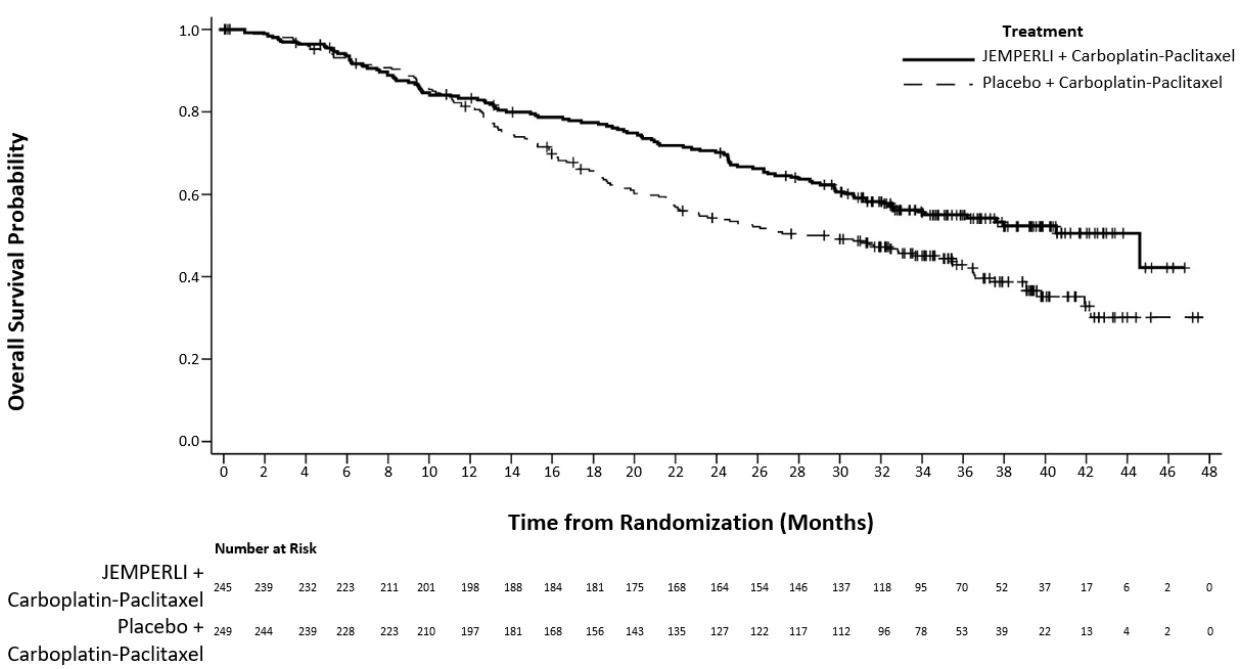
Efficacy results are shown in Table 12 and Figure 1-3.
Table 12 Efficacy Results in the Endometrial Cancer population (RUBY study)
| Overall Population | dMMR/MSI-H Populationa | ||||||||||||||||
|---|---|---|---|---|---|---|---|---|---|---|---|---|---|---|---|---|---|
| Endpoint | Jemperli with Carboplatin and Paclitaxel N = 245 | Placebo with Carboplatin and Paclitaxel N = 249 | Jemperli with Carboplatin and Paclitaxel N = 60 | Placebo with Carboplatin and Paclitaxel N = 62 | |||||||||||||
| Progression Free Survival (PFS) b | |||||||||||||||||
| Number (%) of patients with event | 135 (55.1) | 177 (71.1) | 23 (38.3) | 47 (75.8) | |||||||||||||
| Median in months (95% CI)c | 11.8 (9.6, 17.1) | 7.9 (7.6, 9.5) | 30.3 (11.8, NR) | 7.7 (5.6, 9.7) | |||||||||||||
| Hazard ratio (95% CI)d | 0.64 (0.51, 0.80) | 0.29 (0.17, 0.50) | |||||||||||||||
| p-valuee | <0.0001 | <0.0001 | |||||||||||||||
| Overall survival (OS) f,g | |||||||||||||||||
| Number (%) of patients with event | 109 (44.5) | 144 (57.8) | |||||||||||||||
| Median in months (95%) c | 44.6 (32.6, NR) | 28.2 (22.1, 35.6) | |||||||||||||||
| Hazard Ratio (95% CI)d | 0.69 (0.54, 0.89) | ||||||||||||||||
| p-valuee | 0.0020 | ||||||||||||||||
dMMR = Mismatch Repair Deficient, MSI-H = Microsatellite Instability-High, NR = Not Reached a MMR/MSI status as defined at randomization.
b Median follow-up of 25 months. PFS is a primary endpoint for the overall population and the dMMR/MSI-H population respectively.
c By Brookmeyer and Crowley method.
d Based on stratified Cox regression model.
e One-sided p-value based on stratified log-rank test.
f Median follow-up of 37 months.
g OS is a primary endpoint for the overall population only.
Figure 1. Progression-Free Survival per RECIST v1.1, as assessed by Investigator in Patients with dMMR/MSI-H Endometrial Cancer (RUBY study)
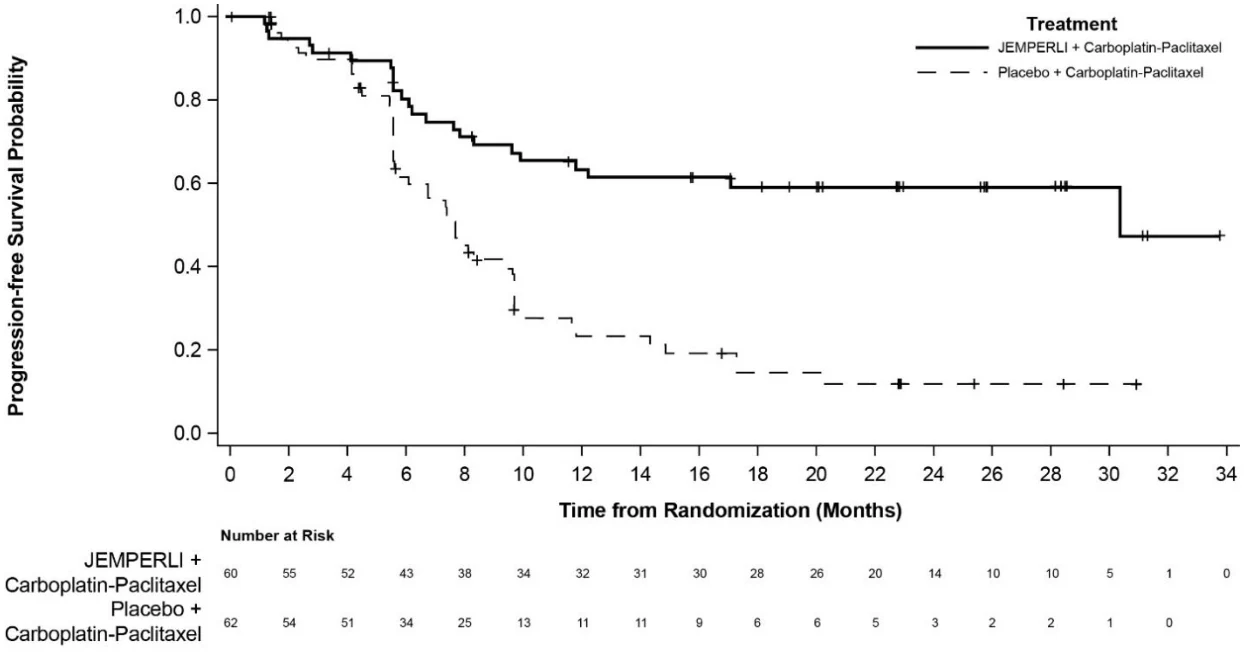
Figure 2. Progression-free Survival per RECIST v1.1, as assessed by Investigator in Patients with Endometrial Cancer (RUBY study, overall population)
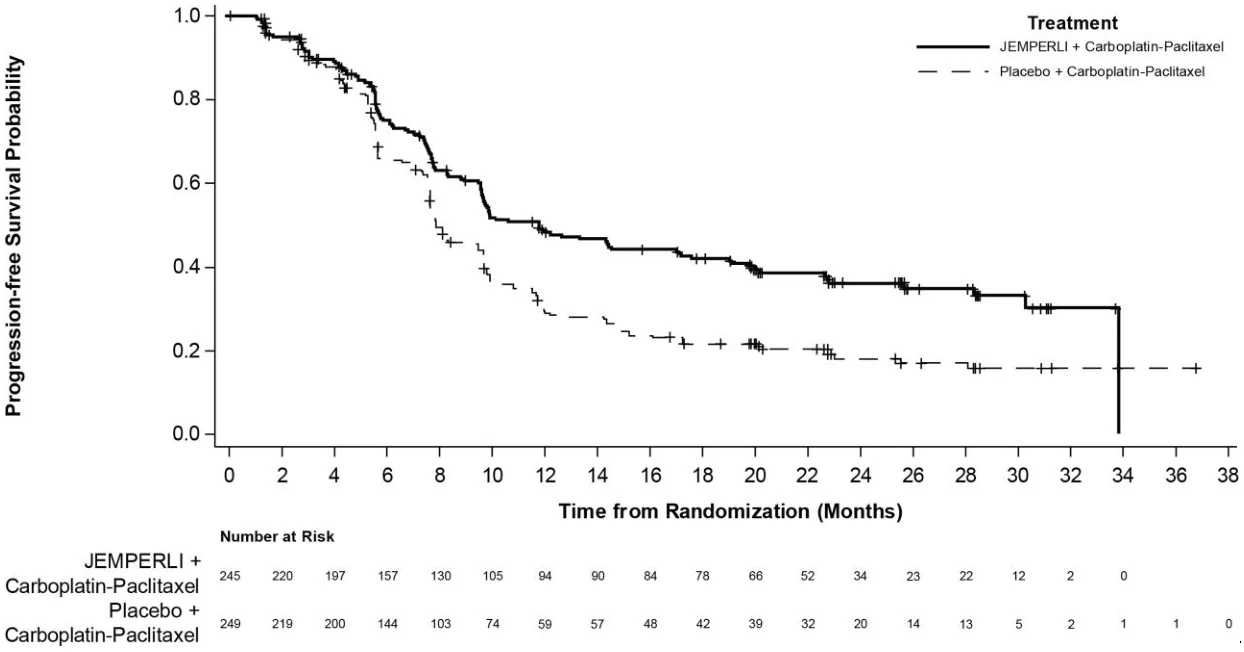
Figure 3. Overall Survival in Patients with Endometrial Cancer (RUBY study, overall population)
In a pre-specified exploratory analysis of OS in the dMMR/MSI-H population with a median follow-up of 37 months, the HR was 0.34 (95% CI: 0.18, 0.62) with median OS not reached for the Jemperli plus carboplatin-paclitaxel arm (n=60) versus a median OS of 30.8 months (95% CI: 18.7, NR) for the placebo plus carboplatin-paclitaxel arm (n=62).
In a pre-specified exploratory analysis of PFS in the MMRp/MSS population with a median follow-up of 25 months, the HR was 0.78 (95% CI: 0.6, 1.0) with a median PFS of 9.8 months (95% CI: 9.0, 12.6) for the Jemperli plus carboplatin-paclitaxel arm (n=185) versus 7.9 months (95% CI:7.6, 9.8) for the placebo plus carboplatin-paclitaxel arm (n=187). In a pre-specified exploratory analysis of OS in the MMRp/MSS population with a median follow-up of 37 months, the HR was 0.82 (95% CI: 0.62, 1.08) with a median OS of 32.5 months (95% CI: 28.6, NR) for the Jemperli plus carboplatin-paclitaxel arm (n=185) versus 28.2 months (95% CI: 21.9, 36.1) for the placebo plus carboplatin-paclitaxel arm (n=187).
Among patients with target or non-target lesions at baseline in the overall population, in the Jemperli plus carboplatin-paclitaxel arm (n=212), ORR was 70.3% (95% CI: 63.6%, 76.3%), consisting of 53 patients (25.0 %) with complete responses and 96 patients (45.3 %) with partial responses. The median DOR was 10.6 months (95% CI: 8.2, 17.6) among the 149 responders. In the placebo plus carboplatin-paclitaxel arm (n=219), ORR was 64.8% (95% CI: 58.1%, 71.2%), consisting of 43 patients (19.6 %) with complete responses and 99 patients (45.2 %) with partial responses. The median DOR was 6.2 months (95% CI: 4.4, 6.7) among the 142 responders.
In a pre-specified exploratory analysis of OS (with a median follow-up of 37 months) for the subgroups in the overall population defined by disease status (primary Stage III, primary Stage IV, and recurrent), the HRs (Jemperli plus carboplatin-paclitaxel vs. placebo plus carboplatin-paclitaxel) were 1.32 (95% CI: 0.66, 2.66), 0.78 (95% CI: 0.52, 1.17) and 0.51 (95% CI: 0.36, 0.74) for the patients with primary Stage III, primary Stage IV and recurrent EC, respectively.
dMMR or MSI-H recurrent or advanced EC that has progressed on or following prior treatment with a platinum containing regimen: Jemperli monotherapy
The efficacy and safety of Jemperli as monotherapy were investigated in the GARNET study, a multicentre, uncontrolled, multiple parallel cohort, open-label phase-1 study. The GARNET study included expansion cohorts in subjects with recurrent or advanced solid tumours who have limited available treatment options.
GARNET study Cohort A1 enrolled 153 patients with dMMR/MSI-H endometrial cancer who have progressed on or after a platinum containing regimen, with 143 assessed for efficacy. The identification of dMMR/MSI-H tumour status was prospectively determined based on local testing. Local diagnostic assays (IHC, PCR or NGS) available at the sites were used for the detection of the dMMR/MSI-H status in tumour material. Most of the sites used IHC as it was the most common assay available.
Patients with the following status were excluded from the GARNET study: ECOG baseline performance score ³2; uncontrolled central nervous system metastases or carcinomatous meningitis; other malignancies within the last 2 years; immunodeficiency or receiving immunosuppressive therapy within 7 days; active HIV, hepatitis B or hepatitis C infection; active autoimmune disease requiring systemic treatment in the past 2 years excluding replacement therapy; history of interstitial lung disease; or receiving live vaccine within 14 days.
Patients received Jemperli 500 mg every 3 weeks for 4 cycles followed by 1000 mg every 6 weeks. Treatment continued until unacceptable toxicity or disease progression that was either symptomatic, rapidly progressive, required urgent intervention, or occurred with a decline in performance status. The median duration of treatment was 34 weeks, with a minimum of 3 weeks and a maximum of 220 weeks (51 months), and 37 (24%) of subjects who received any amount of dostarlimab received treatment >102 weeks (2 years).
The major efficacy outcome measures were objective response rate (ORR) and duration of response (DOR) as assessed by blinded independent central radiologists’ (BICR) review according to Response Evaluation Criteria in Solid Tumors (RECIST v1.1). The efficacy population (N=143) was defined as patients who had measurable disease by BICR at baseline and had minimum of 24 weeks follow-up or had less than 24 weeks of follow-up and discontinued due to adverse events or disease progression.
Demographic and baseline characteristics are summarized in Table 13.
Table 13 Demographic and baseline characteristics of patients with dMMR/MSI-H endometrial cancer in GARNET study
| Demographic Characteristics | |
|---|---|
| Characteristic | Total (N=143) |
| Race, n (%) | |
| White | 110 (76.9) |
| 4 (2.8) | |
| Asian | 5 (3.5) |
| American Indian or Alaska Native | 3 (2.1) |
| Unknown | 1 (0.7) |
| Demographic Characteristics | |
|---|---|
| Not Reported | 20 (14.0) |
| Age (years) | |
| n | 143 |
| Median | 65.0 |
| Min, max | 39, 85 |
| Age group, n (%) | |
| <65 years | 68 (7.6) |
| ≥65 years to <75 years | 61 (42.7) |
| ≥75 years | 14 (9.8) |
| ECOG performance status | |
| 0 | 56 (39.2) |
| 1 | 87 (60.8) |
| Primary Cancer History | |
| Variable, n (%) | Total (N=143) |
| Grade of disease at diagnosis | |
| Grade 1 | 38 (26.6) |
| Grade 2 | 56 (39.2) |
| Grade 3 | 44 (30.8) |
| Not assessable | 5 (3.5) |
| FIGO stage at diagnosis | |
| Stage I | 49 (34.3) |
| Stage II | 13 (9.1) |
| Stage III | 51 (35.7) |
| Stage IV | 30 (21.0) |
| Prior Anticancer Treatment | |
| Variable, n (%) | Total (N=143) |
| Any prior anticancer treatment | 143 (100) |
| Prior surgery for study indication | 127 (88.8) |
| Any prior anticancer radiotherapy | 101 (70.6) |
| Prior bevacizumab use | 5 (3.5) |
| Any prior adjuvant/neo-adjuvant anticancer treatment | 75 (52.4) |
| Number of prior anticancer regimens | |
| 1 | 90 (62.9) |
| 2 | 35 (24.5) |
| 3 | 15 (10.5) |
| ≥4 | 3 (2.1) |
| Number of prior regimens for metastatic diseasea | |
| 0 | 61 (42.7) |
| 1 | 68 (47.6) |
| 2 | 13 (9.1) |
| 3 | 1 (0.7) |
Abbreviations: BMI=body mass index; dMMR=mismatch repair-deficient; EC=endometrial cancer; FIGO=International Federation of Gynecology and Obstetrics; ECOG=Eastern Cooperative Oncology Group; max=maximum; min=minimum; MMR-unk=unknown mismatch repair tumour status; MSI-H=microsatellite instability high.
a Excluding neo-adjuvant, adjuvant regimens, and hormonal agents.
Study Results
A total of 143 patients (18 years or older) with dMMR/MSI-H EC, at least one target lesion at baseline and 24 weeks of tumour assessment data were assessed for efficacy in the GARNET study. A total of 10 patients were excluded from primary efficacy analysis due to no measurable disease at baseline by RECIST 1.1 per BICR. At the time of analysis, 70.6% of subjects and 49% of subjects had discontinued treatment and discontinued from the study respectively.
The efficacy results of GARNET study for dMMR /MSI-H endometrial cancer patients are shown in Table 14.
Table 14 Efficacy results in GARNET study for patients with dMMR/MSI-H endometrial cancer
| Endpoint | Jemperli (N=143)a |
|---|---|
| Primary endpoints | |
| Objective response rate (ORR) | |
ORR n (%) (95% CI) | 65 (45.5) (37.1, 54.0) |
| Complete response rate n (%) | 23 (16.1) |
| Partial response rate n (%) | 42 (29.4) |
| Duration of response (DOR) b | |
| Median in months (range) | Not reached (1.18+, 47.21+) |
| Patients with duration ≥12 months n (%) | 52 (80.0) |
| Patients with duration ≥ 24 months, n (%) | 29 (44.6) |
CI: Confidence interval
a Efficacy data with a median follow-up of 27.6 months (cut-off date 01 Nov 2021)
b For patients with a partial or complete response.
+ongoing at last assessment
15. Microbiology
No microbiological information is required for this drug product.
16. Non-Clinical Toxicology
General Toxicology: Dostarlimab was administrated by IV to cynomolgus monkeys in a single dose study and two repeat-dose studies: 4-weeks and 13-weeks. Dostarlimab was generally well tolerated in cynomolgus monkeys in the single- and 4-weeks repeat-dose toxicity studies and the no observed adverse effect level (NOAEL) in both studies was considered to be 100 mg/kg, the top dose. The NOAEL could not be determined in the 13-weeks repeat-dose study.
In Study 4010-09-003, dostarlimab was administrated by IV to cynomolgus monkeys (4 animals/ sex/group) at dose levels of 10, 30, and 100 mg/kg once weekly over 13 weeks (14 doses in total). After completion of dosing, 2 animals/sex/group from the control and high-dose groups were assigned to an 8-week treatment-free recovery period. One male receiving 10 mg/kg dostarlimab was euthanized on Day 89 due to chronic, unresolved, generalized skin findings (first recorded on Day 5) and secondary swollen and firm inguinal lymph nodes. The skin findings were indicative of an immune reaction and they could be exaggerated pharmacological effects of dostarlimab based on the mechanism of action. Additionally, liquid feces observed in all groups, including control, was considered a possible drug-related effect at ≥30 mg/kg/week dose given the increased incidence over concurrent controls and timing relative to dosing. However, there were no correlated changes in body weight and food consumption, or associated pathology findings, thus, it was not considered adverse. Also, sporadic and dose-unrelated macroscopic and/or microscopic findings of an immune-mediated nature were observed in the skin, kidney, liver, or heart of 1-2 animals per group, dosed with dostarlimab. These findings could be the anticipated pharmacological effects or drug-related exacerbation of background findings.
Genotoxicity: No studies have been performed to assess the potential of dostarlimab for genotoxicity.
Carcinogenicity: No studies have been performed to assess the potential of dostarlimab for carcinogenicity.
Reproductive and developmental toxicology: Animal reproduction studies have not been conducted with dostarlimab. The PD-1/PD-L1 pathway is thought to be involved in maintaining tolerance to the fetus throughout pregnancy. Blockade of PD-L1 signalling has been shown in murine models of pregnancy to disrupt tolerance to the fetus and to result in an increase in fetal loss. These results indicate a potential risk that the administration of Jemperli during pregnancy could cause fetal harm, including increased rates of abortion or stillbirth.
Animal fertility studies have not been conducted with dostarlimab. In 1-month and 3-month repeat-dose toxicology studies in cynomolgus monkeys, there were no notable effects in the male and female reproductive organs; however, these results may not be representative at all of the potential clinical risks because of the immaturity of the reproductive system of animals used in the studies. Therefore, fertility toxicity remains unknown.
Juvenile toxicity: No studies have been performed to assess the potential of Jemperli for juvenile animal toxicity.
Special toxicology: No immunotoxicity or local tolerance studies have been performed with dostarlimab. Tissue cross-reactivity studies were performed in human and cynomolgus monkey tissues in two Jemperli doses, 0.5 or 5.0 μg/mL. Dostarlimab-specific binding was observed at 0.5 or 5.0 μg/mL in both human and cynomolgus monkey tissues. Binding in cynomolgus monkey tissues was similar to that of human tissues; however, a greater amount of staining was present in the human tissue panel. In both the human and cynomolgus monkey studies, there was no unexpected binding, and hence no tissue cross-reactivity was observed.