


Product Monograph - Mylotarg
RECENT MAJOR LABEL CHANGES
| 7 WARNINGS AND PRECAUTIONS, | 01/2023 |
|---|
TABLE OF CONTENTS
Sections or subsections that are not applicable at the time of authorization are not listed.
RECENT MAJOR LABEL CHANGES............................................................................................ 2
TABLE OF CONTENTS .............................................................................................................. 2
PART I: HEALTH PROFESSIONAL INFORMATION ..................................................................... 4
1 INDICATIONS .............................................................................................................. 4
1.1 Pediatrics .......................................................................................................... 4
1.2 Geriatrics........................................................................................................... 4
2 CONTRAINDICATIONS ................................................................................................. 4
3 SERIOUS WARNINGS AND PRECAUTIONS BOX ............................................................ 4
4 DOSAGE AND ADMINISTRATION................................................................................. 5
4.1 Dosing Considerations ....................................................................................... 5
4.2 Recommended Dose and Dosage Adjustment..................................................... 5
4.3 Reconstitution ................................................................................................... 8
4.4 Administration................................................................................................... 9
4.5 Missed Dose ...................................................................................................... 9
5 OVERDOSAGE ........................................................................................................... 10
6 DOSAGE FORMS, STRENGTHS, COMPOSITION AND PACKAGING ............................... 10
7 WARNINGS AND PRECAUTIONS ................................................................................ 10
7.1 Special Populations .......................................................................................... 13
7.1.1 Pregnant Women ....................................................................................... 13
7.1.2 Breast-feeding............................................................................................ 14
7.1.3 Pediatrics ................................................................................................... 14
7.1.4 Geriatrics ................................................................................................... 14
8 ADVERSE REACTIONS ................................................................................................ 14
8.1 Adverse Reaction Overview.............................................................................. 14
8.2 Clinical Trial Adverse Reactions ........................................................................ 15
8.3 Less Common Clinical Trial Adverse Reactions .................................................. 22
8.4 Abnormal Laboratory Findings: Hematologic, Clinical Chemistry and Other Quantitative Data ...................................................................................................... 22
8.5 Post-Market Adverse Reactions........................................................................ 23
9 DRUG INTERACTIONS................................................................................................ 24
9.2 Drug Interactions Overview.............................................................................. 24
9.4 Drug-Drug Interactions .................................................................................... 24
9.5 Drug-Food Interactions .................................................................................... 25
9.6 Drug-Herb Interactions .................................................................................... 25
9.7 Drug-Laboratory Test Interactions .................................................................... 25
10 CLINICAL PHARMACOLOGY ....................................................................................... 25
10.1 Mechanism of Action.................................................................................. 25
10.2 Pharmacodynamics .................................................................................... 25
10.3 Pharmacokinetics ....................................................................................... 26
11 STORAGE, STABILITY AND DISPOSAL ......................................................................... 28
12 SPECIAL HANDLING INSTRUCTIONS........................................................................... 29
PART II: SCIENTIFIC INFORMATION ...................................................................................... 30
13 PHARMACEUTICAL INFORMATION............................................................................ 30
14 CLINICAL TRIALS........................................................................................................ 31
14.1 Clinical Trials by Indication.......................................................................... 31
15 MICROBIOLOGY ........................................................................................................ 35
16 NON-CLINICAL TOXICOLOGY ..................................................................................... 35
PATIENT MEDICATION INFORMATION ................................................................................. 38
PART I: HEALTH PROFESSIONAL INFORMATION
1 INDICATIONS
Mylotarg (gemtuzumab ozogamicin for injection) is indicated for:
- Combination therapy with daunorubicin (DNR) and cytarabine (AraC) for the treatment of patients with previously untreated, de novo CD33-positive acute myeloid leukemia (AML), except acute promyelocytic leukemia
1.1 Pediatrics
Pediatrics (< 18 years of age): Based on the data submitted and reviewed by Health Canada, the safety and efficacy of Mylotarg in combination with chemotherapy in pediatric patients with newly-diagnosed AML has not been established; therefore, Health Canada has not authorized an indication for pediatric use (see 7.1.3 Pediatrics).
1.2 Geriatrics
Use of Mylotarg in combination with DNR and AraC in newly-diagnosed adult patients with de novo AML is supported by a randomized, controlled trial that included 50 patients greater than or equal to 65 years of age. No overall differences in safety or effectiveness were observed in this trial between these subjects and younger subjects (see 7.1.4 Geriatrics).
2 CONTRAINDICATIONS
- Mylotarg (gemtuzumab ozogamicin for injection) is contraindicated in patients who are hypersensitive to this drug or to any ingredient in the formulation, including any non-medicinal ingredient, or component of the container. For a complete listing, see 6 DOSAGE FORMS, STRENGTHS, COMPOSITION AND PACKAGING.
3 SERIOUS WARNINGS AND PRECAUTIONS BOX
Serious Warnings and Precautions
|
|---|
4 DOSAGE AND ADMINISTRATION
4.1 Dosing Considerations
- Mylotarg (gemtuzumab ozogamicin for injection) should be administered under the supervision of a physician experienced in the use of anticancer medicinal products and in an environment where full resuscitation facilities are immediately available.
- Mylotarg should be used only in patients eligible to receive intensive induction chemotherapy.
- Premedication with a corticosteroid, antihistamine, and acetaminophen is recommended 1 hour prior to Mylotarg dosing to help ameliorate infusion related symptoms (see 7 WARNINGS AND PRECAUTIONS).
- Appropriate measures to help prevent the development of tumor lysis-related hyperuricemia such as hydration, administration of antihyperuricemic or other agents for treatment of hyperuricemia must be taken (see 7 WARNINGS AND PRECAUTIONS).
- For patients with hyperleukocytosis (leukocyte count >30,000/mm3), cytoreduction is recommended prior to administration of Mylotarg (see Table 2).
- Mylotarg must be reconstituted and diluted before administration. For instructions on reconstitution and dilution of the medicinal product before administration, see 4.3 Reconstitution.
4.2 Recommended Dose and Dosage Adjustment
A treatment course including Mylotarg in combination therapy for adults with newly-diagnosed de novo CD33-positive acute myeloid leukemia (AML) consists of 1 induction cycle and 2 consolidation cycles.
Induction
The recommended dose of Mylotarg is 3 mg/m2/dose (up to a maximum of one 4.5 mg vial) infused over a 2-hour period on Days 1, 4, and 7 in combination with daunorubicin (DNR), 60 mg/m2/day infused over 30 minutes on Day 1 to Day 3, and cytarabine (AraC) 200 mg/m2/day by continuous infusion on Day 1 to Day 7.
For patients requiring a second induction cycle, do NOT administer Mylotarg during the second induction cycle. Only DNR and AraC should be administered during the second induction cycle, at the following recommended dosing: DNR 35 mg/m2/day on Days 1 and 2, and AraC 1 g/m2 every 12 hours, on Day 1 to Day 3.
Consolidation
For patients experiencing a complete remission (CR) following induction, defined as fewer than 5% blasts with no Auer rods in the bone marrow and the absence of peripheral blood leukemic blasts, full recovery of peripheral blood counts (absolute neutrophil count [ANC] of more than 1.0 x 10⁹ cells/L, and platelet count of more than 100 x 109/L), transfusion independence and resolution of any extramedullary disease, up to 2 consolidation courses of intravenous DNR (60 mg/m2 for 1 day [first course] or 2 days [second course]) in combination with intravenous AraC (1000 mg/m2 per 12 hours, infused over 2 hours on Day 1 to Day 4) with intravenous Mylotarg (3 mg/m2/dose infused over 2 hours up to a maximum dose of one 4.5 mg vial on Day 1) are recommended. Table 1 shows dosing regimens for Mylotarg in combination with chemotherapy.
| Table 1. Dosing Regimens for Mylotarg in Combination With Chemotherapy | |||||||||
|---|---|---|---|---|---|---|---|---|---|
| Treatment Course | Mylotarg | Daunorubicin | Cytarabine | ||||||
| Inductiona,c | 3 mg/m2/dose (up to a maximum dose of one 4.5 mg vial) on Days 1,4, and 7 | 60 mg/m2/day on Days 1-3 | 200 mg/m2/day on Days 1-7 | ||||||
| Second induction (if required) | Do NOT administer Mylotarg during the second induction cycle. | 35 mg/m2/day on Days 1-2 | 1 g/m2/every 12 hours on Days 1-3 | ||||||
| Consolidation Course 1a,b,c | 3 mg/m2/dose (up to a maximum dose of one 4.5 mg vial) on Day 1 | 60 mg/m2/day on Day 1 | 1 g/m2/every 12 hours from Days 1-4 | ||||||
| Consolidation Course 2a,b,c | 3 mg/m2/dose (up to a maximum dose of one 4.5 mg vial) on Day 1 | 60 mg/m2/day on Days 1-2 | 1 g/m2/every 12 hours from Days 1-4 | ||||||
a. See Table 2 and Table 3 for dose modification information. b. For patients experiencing a complete remission following induction. c. See Table 3 for dose modification information. | |||||||||
Dose and schedule modifications
Hepatic Impairment:
No adjustment to dose of Mylotarg is required in patients with hepatic impairment defined by total bilirubin ≤2-times the ULN, and AST and/or ALT ≤2.5-times ULN. Delay treatment with Mylotarg until recovery of total bilirubin to ≤2-times ULN and, AST and ALT to ≤2.5-times ULN prior to each dose. Mylotarg has not been studied in patients with hepatic impairment defined by total bilirubin >2-times the ULN, or AST or ALT >2.5-times ULN (see 4.2 Recommended Dose and Dosage Adjustment, Dose modification for adverse drug reactions and 10.3 Pharmacokinetics).
Renal Impairment:
No adjustment to dose of Mylotarg is required in patients with mild to moderate renal impairment. Mylotarg has not been studied in patients with severe renal impairment (see 10.3 Pharmacokinetics).
Schedule modification for hyperleukocytosis
In patients with hyperleukocytic (leukocyte count >30,000/mm3) AML, cytoreduction is recommended either with leukapheresis, oral hydroxyurea, or AraC with or without hydroxyurea to reduce the peripheral white blood cell (WBC) count 48 hours prior to administration of Mylotarg(see 7 WARNINGS AND PRECAUTIONS, General).
If AraC is used for leukoreduction with or without hydroxyurea in patients with previously untreated, de novo hyperleukocytic AML receiving Mylotarg in combination therapy, apply the following modified schedule (Table 2):
| Table 2. Schedule Modification for the Treatment of Hyperleukocytosis With Cytarabine | ||||||||
|---|---|---|---|---|---|---|---|---|
| Treatment Course | Mylotarg | Daunorubicin | Cytarabine | Hydroxyurea | ||||
| Inductiona | 3 mg/m2/dose (up to a maximum dose of one 4.5 mg vial) on Days 3, 6, and 9 | 60 mg/m2/day on Days 3-5 | 200 mg/m2/day on Days 1-7 | Day 1 (as per standard medical practice) | ||||
| a. See Table 3 for additional dose modification information. | ||||||||
Dose modification for adverse drug reactions
Monitor blood counts frequently through resolution of cytopenias. Monitor blood counts and chemistries at least three times per week through recovery from treatment-related toxicities. Dose modification of Mylotarg is recommended based on individual safety and tolerability (see 7 WARNINGS AND PRECAUTIONS). Management of some adverse drug reactions may require dose interruptions or permanent discontinuation of Mylotarg(see 7 WARNINGS AND PRECAUTIONS and 8 ADVERSE REACTIONS).
Table 3 shows the dose modification guidelines for hematologic and nonhematologic toxicities.
| Table 3. Dosage Modifications for Hematologic and Nonhematologic Toxicities | ||
|---|---|---|
| Hematologic and Nonhematologic Toxicities | Recommended Action | |
| Persistent thrombocytopenia |
| |
| Persistent neutropenia |
| |
| VOD/SOS |
| |
| Table 3. Dosage Modifications for Hematologic and Nonhematologic Toxicities | ||
|---|---|---|
| Hematologic and Nonhematologic Toxicities | Recommended Action | |
| Total bilirubin greater than 2 × ULN, or AST and/or ALT greater than 2.5 × ULN |
| |
| Infusion related reactions |
| |
| Other severe or life-threatening nonhematologic toxicities |
| |
| Abbreviations: ALT=alanine aminotransferase; AST=aspartate aminotransferase; SOS=sinusoidal obstruction syndrome; VOD=venoocclusive disease; ULN=upper limit of normal. | ||
4.3 Reconstitution
Parenteral Products:
Use appropriate aseptic technique for the reconstitution and dilution procedures. Mylotarg is light sensitive and should be protected from light during reconstitution, dilution, and administration.
Reconstitution
- Calculate the dose (mg) of Mylotarg required.
- Prior to reconstitution, allow the vial to reach room temperature (below 25°C) for approximately 5 minutes. Reconstitute each vial with 5 mL of water for injections to obtain a single-use solution of 1 mg/mL of gemtuzumab ozogamicin that delivers 4.5 mL (4.5 mg).
- Gently swirl the vial to aid dissolution. Do not shake.
- Inspect the reconstituted solution for particulates and discoloration. The reconstituted solution may contain small white to off-white, opaque to translucent, and amorphous to fiber-like particles.
- Mylotarg contains no bacteriostatic preservatives.
- If the reconstituted solution cannot be used immediately, it may be stored in the original vial for up to 16 hours in a refrigerator (2°C-8°C) or up to 3 hours at room temperature (below 30°C). Protect from light and do not freeze.
Dilution
Calculate the required volume of the reconstituted solution needed to obtain the appropriate dose according to patient body surface area. Withdraw this amount from the vial using a syringe. Mylotarg vials are filled with 5 mg of drug product with a 0.5 mL overfill. When reconstituted to a 1 mg/mL concentration as directed, the minimum extractable content of the
- vial is 4.5 mg (4.5 mL). Protect from light. Discard any unused reconstituted solution left in the vial.
Doses must be mixed to a concentration between 0.075 mg/mL to 0.234 mg/mL according to the following instructions:
- Doses less than 3.9 mg must be prepared for administration by syringe. Add the reconstituted Mylotarg solution to a syringe with sodium chloride 9 mg/mL (0.9%) solution for injection to a final concentration between 0.075 mg/mL to 0.234 mg/mL. Protect from light.
- Doses greater than or equal to 3.9 mg are to be diluted in a syringe or an intravenous bag in an appropriate volume of sodium chloride 9 mg/mL (0.9%) solution for injection to ensure a final concentration between 0.075 mg/mL to 0.234 mg/mL. Protect from light.
- Gently invert the infusion container to mix the diluted solution. Do not shake.
- Following dilution with sodium chloride 9 mg/mL (0.9%) solution for injection, MYLOTARG solution should be infused immediately. If not used immediately, the diluted solution may be stored up to 18 hours in a refrigerator (2-8°C) and up to 6 hours at room temperature (below 30°C). The allowed time at room temperature (below 30°C) includes the time required for preparation of the diluted solution, equilibration, if needed, and administration to the patient. The maximum time from preparation of the diluted solution through administration should not exceed 24 hours. Protect from light and do not freeze.
- It is recommended that the infusion container be made of polyvinyl chloride (PVC) with DEHP, ethylene vinyl acetate (EVA) or polyolefin (polypropylene and/or polyethylene).
Administration
- Filtration of the diluted solution is required. An in-line, low protein-binding 0.2 micron polyethersulphone (PES) filter must be used for infusion of Mylotarg.
- Doses administered by syringe must utilize small bore infusion lines (microbore) with an in-line, low protein-binding 0.2 micron polyethersulphone (PES) filter.
- During the infusion, the intravenous bag or syringes need to be protected from light using a light (including ultraviolet light) blocking cover. The infusion line does not need to be protected from light.
- Infuse the diluted solution for 2 hours. The infusion must be completed prior to the end of the allowed 6-hour storage of the diluted solution at room temperature (below 30°C). Infusion lines made of PVC (DEHP- or non DEHP-containing), polyurethane or polyethylene are recommended.
- Flush the intravenous line after each dose with 0.9% sodium chloride.
Do not mix Mylotarg with, or administer as an infusion with, other medicinal products.
4.4 Administration
Administer Mylotarg intravenously by infusion over a 2-hour period under close clinical monitoring, including pulse, blood pressure, and temperature. Do not administer Mylotarg as an intravenous push or bolus.
4.5 Missed Dose
Management of some adverse reactions may require dose interruptions or permanent discontinuation of Mylotarg (see 4.2 Recommended Dose and Dosage Adjustment, Table 3).
5 OVERDOSAGE
Treatment of Mylotarg(gemtuzumab ozogamicin for injection) overdose should consist of general supportive measures.
| For management of a suspected drug overdose, contact your regional poison control centre. |
|---|
6 DOSAGE FORMS, STRENGTHS, COMPOSITION AND PACKAGING
Table 4 – Dosage Forms, Strengths, Composition and Packaging
The container is an amber Type 1 glass vial, with butyl rubber stopper and crimp seal with flip-off cap. Each carton contains 1 vial.
7 WARNINGS AND PRECAUTIONS
Please see 3 SERIOUS WARNINGS AND PRECAUTIONS BOX.
General
Infusion-related reactions (including anaphylaxis)
Life-threatening or fatal infusion-related reactions, including anaphylaxis, have been reported in clinical studies and in the post-marketing setting with Mylotarg (gemtuzumab ozogamicin for injection; see 8.2 Clinical Trial Adverse Reactions). These can occur during or within 24 hours following infusion of Mylotarg. Signs and symptoms of infusion-related reactions may include fever and chills, and less frequently hypotension, tachycardia, and respiratory symptoms. Perform infusion of Mylotarg under close clinical monitoring, including pulse, blood pressure, and temperature.
Premedication with a corticosteroid, antihistamine, and acetaminophen is recommended 1 hour prior to Mylotarg dosing (see 4.1 Dosing Considerations). Interrupt infusion immediately for patients who develop evidence of severe reactions, especially dyspnea, bronchospasm, or clinically significant hypotension. Patients should be monitored during infusion and for at least 1 hour following infusion, or until signs and symptoms completely resolve. Discontinue Mylotarg treatment in patients who develop signs or symptoms of anaphylaxis, including severe respiratory symptoms or clinically significant hypotension (see 4 DOSAGE AND ADMINISTRATION, Dose and schedule modifications).
Tumor lysis syndrome (TLS)
Fatal reports of TLS complicated by acute renal failure with Mylotarg have been reported in the post-marketing setting. In clinical studies with Mylotarg, TLS was reported (see 8 ADVERSE REACTIONS). In
| Route of Administration | Dosage Form / Strength/Composition | Non-medicinal Ingredients |
| Intravenous infusion | White to off-white lyophilized cake or powder containing one 4.5 mg single-use vial | Dextran 40; Dibasic sodium phosphate, anhydrous; Monobasic sodium phosphate, monohydrate; Sodium chloride; Sucrose |
patients with hyperleukocytic acute myeloid leukemia (AML) leukoreduction should be considered with hydroxyurea or leukapheresis to reduce the peripheral WBC count to below 30,000/mm3 prior to administration of Mylotarg to reduce the risk of inducing TLS (see 4 DOSAGE AND ADMINISTRATION, Dose and schedule modifications).
Patients should be monitored for signs and symptoms of TLS and treated according to standard medical practice. Appropriate measures to help prevent the development of tumor lysis-related hyperuricemia such as hydration, administration of antihyperuricemic (e.g., allopurinol) or other agents for treatment of hyperuricemia (e.g., rasburicase) must be taken.
Carcinogenesis and Mutagenesis
Formal carcinogenicity studies have not been conducted with gemtuzumab ozogamicin (see 16 NON-CLINICAL TOXICOLOGY).
Cardiovascular
QT interval prolongation has been observed in patients treated with Mylotarg and with other drugs containing calicheamicin. In patients treated with Mylotarg monotherapy, no clinically meaningful QT prolongation is observed (see 10.2 Pharmacodynamics).
When administering Mylotarg to patients who have a history of or predisposition for QTc prolongation, who are taking medicinal products that are known to prolong QT interval, and in patients with electrolyte disturbances, obtain electrocardiograms (ECGs) and electrolytes prior to the start of treatment and as needed during administration.
Driving and Operating Machinery
No studies on the effect of Mylotarg on the ability to drive and use machines have been performed. Fatigue has been reported during treatment with Mylotarg (see 8 ADVERSE REACTIONS). Mylotarg may affect one’s ability to drive or operate a vehicle or potentially dangerous machinery.
Hematologic
Myelosuppression/cytopenia
With Mylotarg treatment, life-threatening or fatal infections and bleeding/haemorrhagic events were reported. In clinical studies with Mylotarg, neutropenia, thrombocytopenia, anemia, leukopenia, febrile neutropenia, lymphopenia, and pancytopenia, some of which were life-threatening or fatal, were reported (see 8.2 Clinical Trial Adverse Reactions). Complications associated with neutropenia and thrombocytopenia may include infections and bleeding/haemorrhagic events, respectively.
Persistent thrombocytopenia and more frequent platelet transfusions have been observed in patients treated with Mylotarg.
Monitor complete blood counts prior to and following each dose of Mylotarg and monitor patients for signs and symptoms of infection, bleeding/haemorrhage, or other effects of myelosuppression during treatment with Mylotarg. Blood counts should be frequently monitored after treatment with Mylotarg until resolution of cytopenias. Routine clinical and laboratory surveillance testing during and after treatment with Mylotarg is indicated.
Management of patients with severe infection, bleeding/haemorrhage, or other effects of myelosuppression, including severe neutropenia or persistent thrombocytopenia, may require a dose delay or permanent discontinuation of Mylotarg (see 4 DOSAGE AND ADMINISTRATION, Dose and schedule modifications).
Hepatic/Biliary/Pancreatic
Hepatotoxicity, including hepatic venoocclusive disease/sinusoidal obstruction syndrome
(VOD/SOS)
Life-threatening or fatal hepatotoxicity events, including VOD/SOS and hepatic failure, have been reported in patients treated with Mylotarg (see 8.2 Clinical Trial Adverse Reactions).
Hepatotoxicity, including VOD/SOS events, has been reported in association with the use of Mylotarg as a single agent, and as part of a combination chemotherapy regimen, in patients without a history of liver disease or hematopoietic stem cell transplant (HSCT). Based on an analysis of potential risk factors, adult patients who received Mylotarg as monotherapy, either before or after an HSCT, and patients with moderate or severe hepatic impairment are at increased risk for developing VOD/SOS (see 8.2 Clinical Trial Adverse Reactions).
Due to the risk of VOD/SOS, monitor patients closely for signs and symptoms of VOD/SOS. These may include elevations in alanine aminotransferase (ALT), aspartate aminotransferase (AST), total bilirubin, and alkaline phosphatase, which should be monitored prior to each dose of Mylotarg. In addition, monitor for hepatomegaly (which may be painful), rapid weight gain, and ascites. Monitoring only total bilirubin may not identify all patients at risk of VOD/SOS. For patients who develop abnormal liver tests, more frequent monitoring of liver tests and clinical signs and symptoms of hepatotoxicity is recommended.
For patients who proceed to HSCT, close monitoring of liver tests is recommended during the post-HSCT period, as appropriate. Although no definitive relationship was found between VOD/SOS and time of HSCT relative to higher Mylotarg monotherapy doses, the ALFA-0701 study recommended an interval of 2 months between the last dose of Mylotarg and HSCT.
Management of signs or symptoms of hepatic toxicity may require a dose interruption or discontinuation of Mylotarg(see 4 DOSAGE AND ADMINISTRATION, Dose and schedule modifications). In patients who experience VOD/SOS, discontinue Mylotarg and treat according to standard medical practice.
Monitoring and Laboratory Tests
Hepatic
Due to the risk of VOD/SOS, monitor closely for signs and symptoms of VOD/SOS. These may include ALT, AST, total bilirubin, and alkaline phosphatase, which should be monitored prior to each dose of Mylotarg. In addition, monitor for hepatomegaly (which may be painful), rapid weight gain, and ascites. Monitoring only total bilirubin may not identify all patients at risk of VOD/SOS. For patients who develop abnormal liver tests, more frequent monitoring of liver tests and clinical signs and symptoms of hepatotoxicity is recommended. For patients who proceed to HSCT, close monitoring of liver tests is recommended during the post-HSCT period, as appropriate (see 7 WARNINGS AND PRECAUTIONS, Hepatic/Biliary/Pancreatic, Hepatotoxicity, including VOD/SOS).
Hematologic
Monitor complete blood counts prior to and following each dose of Mylotarg and monitor patients for signs and symptoms of infection, bleeding/haemorrhage, or other effects of myelosuppression during treatment with Mylotarg. Blood counts should be frequently monitored after treatment with Mylotarg until resolution of cytopenias. Routine clinical and laboratory surveillance testing during and after treatment with Mylotarg is indicated (see 7 WARNINGS AND PRECAUTIONS, Hematologic, Myelosuppression/cytopenia).
Infusion-related reactions
Perform infusion of Mylotarg under close clinical monitoring, including pulse, blood pressure, and temperature. Infusion-related reactions should be monitored during the infusion and for at least 1 hour after the end of the infusion, or until signs and symptoms have completely resolved. (see 7 WARNINGS AND PRECAUTIONS, General, Infusion related reactions).
Tumor Lysis Syndrome
Patients should be monitored for signs and symptoms of TLS and treated according to standard medical practice (see 7 WARNINGS AND PRECAUTIONS, General, Tumor lysis syndrome).
Reproductive Health: Female and Male Potential
Women of childbearing potential should be advised to avoid becoming pregnant while receiving
Mylotarg.
Advise women of childbearing potential to use 2 methods of effective contraception during treatment with Mylotarg, and for at least 7 months after the last dose. Advise men with female partners of childbearing potential to use 2 methods of effective contraception during treatment with MYLOTARG and for at least 4 months after the last dose.
- Fertility
There is no information regarding the effects of Mylotarg on the fertility in patients. Based on nonclinical findings in animals, male and female fertility may be compromised by treatment with
Mylotarg (see 16 NON-CLINICAL TOXICOLOGY, Reproductive and Developmental Toxicology). Both men and women should seek advice for fertility preservation before treatment.
7.1 Special Populations
7.1.1 Pregnant Women
There are very limited data for the use of Mylotarg (gemtuzumab ozogamicin for injection) in pregnant patients. Based on its mechanism of action and nonclinical safety findings in animals, Mylotarg could cause embryo-fetal harm when administered to a pregnant woman. In addition, studies in animals have shown developmental toxicity (see 16 NON-CLINICAL TOXICOLOGY, Reproductive and Developmental Toxicology).
Mylotarg is not recommended during pregnancy and in women of childbearing potential not using contraception.
7.1.2 Breast-feeding
There is no information regarding the presence of Mylotarg or its metabolites in human milk, the effects on the breastfed infant, or the effects on milk production. Because many drugs are excreted in human milk precaution should be exercised. Due to the potential for adverse reactions in breastfed infants, women should not breastfeed during treatment with Mylotarg and for at least 1 month after the final dose.
7.1.3 Pediatrics
Pediatrics (<18 years of age): Based on the data submitted and reviewed by Health Canada, the safety and efficacy of Mylotarg in pediatric patients, including those with newly diagnosed AML, has not been established; therefore, Health Canada has not authorized an indication for pediatric use (see 1 INDICATIONS).
7.1.4 Geriatrics
No adjustment to dose of Mylotarg is required in elderly patients (≥65 years) (see 1 INDICATIONS).
8 ADVERSE REACTIONS
8.1 Adverse Reaction Overview
The following adverse reactions associated with Mylotarg (gemtuzumab ozogamicin for injection) are discussed in detail under 7 WARNINGS AND PRECAUTIONS. Appropriate management and dosing considerations regarding these adverse events are outlined under 4 DOSAGE AND ADMINISTRATION: Dose modification for adverse reactions.
- Infusion-related reactions
- Tumour lysis syndrome (TLS)
- Myelosuppression/cytopenia, including infection and bleeding/haemorrhagic events
- Hepatotoxicity, including VOD/SOS
In the combination therapy study ALFA-0701, in patients who received Mylotarg in combination with DNR and AraC, 67.2% experienced a serious adverse reaction. Selected clinically relevant serious adverse drug reactions were hepatotoxicity, including VOD/SOS (3.8%), haemorrhage (9.9%), severe infection (41.2%), and TLS (1.5%). The most common (>2%) serious adverse drug reactions with Mylotarg included: thrombocytopenia, bronchopulmonary aspergillosis, septic shock, febrile bone marrow aplasia, bacterial sepsis, acute kidney injury, pneumonia, sepsis, acute respiratory distress syndrome, Escherichia sepsis, acute myeloid leukemia, venooclusive disease, hepatocellular injury, cholestatic liver injury, febrile neutropenia, mucosal inflammation, disease progression, and enterococcal sepsis.
The most common selected adverse drug reactions (>30%, grouped terms) in the combination therapy study were haemorrhage and infection. The most frequently (≥10%) reported adverse reactions were epistaxis, purpura, haematoma, device-related infection, petechiae, catheter site haemorrhage, blood blister, haematuria, gingival bleeding, mouth haemorrhage, thrombocytopenia, haemoptysis, device-related sepsis and bronchopulmonary aspergillosis. The most frequent (≥1%) adverse drug reactions that led to permanent discontinuation in the combination therapy study were thrombocytopenia, VOD, haemorrhage, and infection.
Fatal adverse drug reactions were experienced by 7 (5.3%) patients who received Mylotarg and 5 (3.6 %) patients in the control arm. In the Mylotarg arm, these deaths were due to: VOD, septic shock, subdural haematoma, cerebral haematoma, and intracranial haematoma. In the control arm, these deaths were due to septic shock and cerebral haemorrhage. The occurrence of deaths within 28 days of last dose of any study treatment was 6 events (4.6%) in the Mylotarg arm and 5 events (3.6%) in the control arms.
Information about adverse drug reactions from three Phase 2 monotherapy studies (201/202/203) is presented in order to provide full characterization of adverse drug reactions. Studies 201, 202, and 203 were single-arm studies in adult patients with CD33-positive AML in first relapse (N= 277) using a Mylotarg monotherapy dosing regimen of 9 mg/m2 on Days 1 and 15. In these monotherapy studies, clinically relevant serious adverse reactions also included infusion related reactions (2.5%), thrombocytopenia (21.7%), and neutropenia (34.3%). In monotherapy studies the most common adverse reactions (>30%) included pyrexia, nausea, infection, chills, haemorrhage, vomiting, thrombocytopenia, fatigue, headache, stomatitis, diarrhoea, abdominal pain, and neutropenia. The most frequent (≥1%) adverse reactions that led to permanent discontinuation in monotherapy studies were infection, haemorrhage, multi-organ failure, and VOD.
8.2 Clinical Trial Adverse Reactions
Clinical trials are conducted under very specific conditions. The adverse reaction rates observed in the clinical trials; therefore, may not reflect the rates observed in practice and should not be compared to the rates in the clinical trials of another drug. Adverse reaction information from clinical trials may be useful in identifying and approximating rates of adverse drug reactions in real-world use.
The overall safety profile of Mylotarg is based on data from patients with acute myeloid leukaemia (AML) from the combination therapy study ALFA-0701, monotherapy studies 201/202/203, monotherapy study B1761031, and from post-marketing experience.
In the combination therapy study, safety data consisting of selected treatment emergent adverse events (TEAEs) considered most important for understanding the safety profile of Mylotargincluded all grades haemorrhages, all grades venoocclusive disease (VOD), and severe infections. All of these TEAEs were determined to be adverse drug reactions.
The safety evaluation of Mylotarg (3 mg/m2 on Days 1, 4 and 7) in combination with daunorubicin and cytarabine in adult patients with previously untreated de novo acute myeloid leukemia (AML) is based on data from the ALFA-0701 (n=271) study (see 14 CLINICAL TRIALS). The study was designed to compare the clinical efficacy and safety of patients treated with Mylotarg in combination with daunorubicin (DNR) and cytarabine (AraC; Mylotarg arm; N=135) versus patients treated with DNR and AraC alone (control arm; N=136). The age of patients in this study ranged from 50-70, with a median of 62 years. In this study, 131 patients were treated with Mylotarg plus DNR and AraC. During the induction course, 123 (93.9%) received the 3 fractionated doses. Mylotarg was received by 91 (69.5%) of patients during the first consolidation course and 64 (48.9%) of patients during the second consolidation course.
Table 5 shows the adverse drug reactions occurring ≥1% from the ALFA-0701 study reported in patients with previously untreated de novo AML who received Mylotarg in combination.
Table 5. Summary of Adverse Drug Reactions occurring ≥1% from the ALFA-0701 study
Mylotarg + Daunorubicin + Cytarabine (N=131) | Daunorubicin + Cytarabine (N=137) | |||||||||||
|---|---|---|---|---|---|---|---|---|---|---|---|---|
System Organ Class Adverse Reaction | All Grades % | Grade 3/4 % | All Grades % | Grade 3/4 % | ||||||||
| Blood and lymphatic system disorders | ||||||||||||
| Thrombocytopenia | 15.3 | 14.5 | 0 | 0 | ||||||||
| Hepatobiliary disorders | ||||||||||||
| Venoocclusive liver disease | 4.6 | 2.3 | 1.5 | 1.5 | ||||||||
| Infections and infestations | ||||||||||||
| Sepsis and Bactaeremiaa | 53.4 | 51.9 | 46.7 | 43.8 | ||||||||
| Other infectionsb | 28.2 | 28.2 | 28.5 | 28.5 | ||||||||
| Fungal infectionsc | 15.3 | 15.3 | 10.2 | 10.2 | ||||||||
| Bacterial infectionsd | 9.2 | 9.2 | 5.1 | 5.1 | ||||||||
| Gastrointestinal infectionse | 8.4 | 8.4 | 8.0 | 8.0 | ||||||||
| Lower respiratory tract infectionsf | 5.3 | 5.3 | 11.0 | 11.0 | ||||||||
| Skin infectionsg | 2.3 | 2.3 | 3.7 | 3.7 | ||||||||
| Vascular disorders | ||||||||||||
| Other haemorrhageh | 64.9 | 11.5 | 50.3 | 3.7 | ||||||||
| Epistaxis | 62.6 | 1.5 | 36.5 | 0 | ||||||||
| Subcutaneous haemorrhagej | 60.3 | 5.3 | 39.4 | 4.4 | ||||||||
| Upper gastrointestinal haemorrhagek | 33.6 | 6.1 | 16.8 | 0.7 | ||||||||
| Lower gastrointestinal haemorrhagel | 17.6 | 3.8 | 16.8 | 1.5 | ||||||||
| Central nervous system haemorrhagem | 3.1 | 0 | 0.7 | 0 | ||||||||
a Sepsis and Bacteraemia includes the following reported for gemtuzumab ozogamicin: device related sepsis, bacterial sepsis, septic shock, staphylococcal sepsis, streptococcal sepsis, enterococcal sepsis, escherichia bacteraemia, escherichia sepsis, sepsis, klebsiella sepsis, staphylococcal bacteraemia, candida sepsis, pseudomonal sepsis, streptococcal bacteraemia, acinetobacter bacteraemia, enterobacter sepsis, enterococcal bacteraemia, pseudomonal bacteraemia. b Other infections includes the following reported for gemtuzumab ozogamicin (in ≥1%): device related infection, urinary tract infection. c Fungal infection includes the following reported for gemtuzumab ozogamicin: bronchopulmonary aspergillosis, aspergillus infection, candida infection, systemic candida. d Bacterial infections includes the following reported for gemtuzumab ozogamicin: escherichia urinary tract infection, streptococcal infection, bacterial pyelonephritis, capnocytophaga infection, cystitis escherichia, respiratory tract infection bacterial, staphylococcal infection, stomatococcal infection, urinary tract infection bacterial, urinary tract infection pseudomonal. | ||||||||||||
Mylotarg + Daunorubicin + Cytarabine (N=131) | Daunorubicin + Cytarabine (N=137) | ||||
|---|---|---|---|---|---|
System Organ Class Adverse Reaction | All Grades % | Grade 3/4 % | All Grades % | Grade 3/4 % | |
e Gastrointestinal infections includes the following reported for gemtuzumab ozogamicin: clostridium difficile colitis, clostridium difficile infection, anal abscess, anal infection, enterocolitis bacterial f Lower respiratory tract infections includes the following reported for gemtuzumab ozogamicin: pneumonia, lung infection g Skin infections includes the following reported for gemtuzumab ozogamicin: cellulitis h Other haemorrhage includes the following reported for gemtuzumab ozogamicin (in ≥1%): catheter site haemorrhage, haematuria, haemoptysis, catheter site, haematoma, conjunctival haemorrhage, post procedural haemorrhage, haemorrhage, eye haemorrhage, pulmonary alveolar haemorrhage, metrorrhagia, retinal haemorrhage, blood urine present, ear haemorrhage, infusion site haemorrhage, procedural haemorrhage, vaginal haemorrhage, wound haemorrhage. j Subcutaneous haemorrhage includes the following reported for gemtuzumab ozogamicin: purpura, haematoma, petechiae, blood blister, puncture site haemorrhage, contusion, ecchymosis, post procedural haematoma, skin haemorrhage, vessel puncture site haemorrhage. k Upper gastrointestinal hemorrhage includes the following reported for gemtuzumab ozogamicin: gingival bleeding, mouth haemorrhage, haematemesis, lip haemorrhage, tongue haematoma, gastric haemorrhage, oral mucosa haematoma. l Lower gastrointestinal haemorrhage includes the following reported for gemtuzumab ozogamicin: rectal haemorrhagemelaena, haematochezia, haemorrhoidal haemorrhage, anal haemorrhage, diarrhoea haemorrhage, gastrointestinal haemorrhage. m Central nervous system haemorrhage includes the following reported for gemtuzumab ozogamicin: subdural haematoma, cerebral haematoma, intracranial haematoma. | |||||
Table 6 summarizes the selected adverse reactions reported in patients with previously untreated de novo AML who received Mylotarg in a combination.
| Table 6. Selected Adverse Drug Reactions Captured During a Retrospective Review of Predefined Events in Patients With Previously Untreated AML Who Received Mylotarg (Combination Therapy ALFA-0701) | ||||||||||
|---|---|---|---|---|---|---|---|---|---|---|
System Organ Class Adverse Reaction | Mylotarg + Daunorubicin + Cytarabine (N=131) | Daunorubicin + Cytarabine (N=137) | ||||||||
All Grades % | Grade 3/4 % | All Grades % | Grade 3/4 % | |||||||
| Infections and infestations | ||||||||||
| Infection*,a | 77.9 | 76.3 | 77.4 | 74.5 | ||||||
| Vascular disorders | ||||||||||
| Haemorrhage*,b | 90.1 | 20.6 | 78.1 | 8.8 | ||||||
| Hepatobiliary disorders | ||||||||||
| Venoocclusive liver disease*,c | 4.6 | 2.3 | 1.5 | 1.5 | ||||||
AML=acute myeloid leukemia; N=number of patients; PT=preferred term. * Including fatal outcome. a. Infection includes any reported preferred terms for gemtuzumab ozogamicin retrieved by applying the Medical Dictionary for Regulatory Activities (MedDRA) Version 18.0 System Organ Class Infections and infestations, and includes fatal events. Infection includes Sepsis and Bacteraemia (53.4%), Fungal infection (15.3%), Lower respiratory tract infection (5.3%), Bacterial infection (9.2%), Gastrointestinal infection (8.4%), Skin infection (2.3%), and Other infections (28.4%). b. Haemorrhage includes any reported preferred terms for gemtuzumab ozogamicin retrieved by applying the Medical Dictionary for Regulatory Activities (MedDRA) Version 18.0 Standard MedDRA Query (narrow) for Haemorrhage terms (excluding laboratory terms). Haemorrhage includes Central nervous system haemorrhage (3.1%), Upper gastrointestinal haemorrhage (33.6%), Lower gastrointestinal haemorrhage (17.6%), Subcutaneous haemorrhage (60.3%), Other haemorrhage (64.9%), and Epistaxis (62.6%). c. Venoocclusive liver disease includes the following reported PTs: Venoocclusive disease and Venoocclusive liver disease*. | ||||||||||
Hepatotoxicity, including hepatic VOD/SOS
In the combination therapy study in patients with previously untreated de novo AML treated with fractionated doses of Mylotarg in combination with chemotherapy (N=131), hepatotoxicity, including severe, life-threatening, and sometimes fatal hepatic VOD/SOS events, was reported. Hepatotoxicity with fatal outcome occurred in 5 (3.7%) patients in the combination therapy study and in 1 (0.7%) patient in the control arm.
In the combination therapy study (N=131), VOD events were reported in 6 (4.6%) patients during or following treatment, 2 (1.5%) of these events were fatal. Five (3.8%) of these VOD events occurred within 28 days of last dose of Mylotarg. One VOD event occurred more than 28 days of last dose of Mylotarg; with 1 of these events occurring a few days after having started a HSCT conditioning regimen. The median time from the last Mylotarg dose to onset of VOD was 9 days (range: 2-298 days). VOD was also reported in 2 patients who received Mylotarg as a follow-up therapy following relapse of AML after chemotherapy treatment in the control arm of the combination therapy study. Both of these patients experienced VOD more than 28 days after the last dose of Mylotarg treatment. One of these patients experienced VOD 25 days after the subsequent HSCT. In the control arm receiving chemotherapy without ever receiving Mylotarg, there were zero VOD events.
Based on an analysis of potential risk factors, adult patients who received non-fractionated Mylotarg as monotherapy, patients who had received an HSCT prior to gemtuzumab ozogamicin exposure were 2.6 times more likely (95% confidence interval [CI]: 1.448, 4.769) to develop VOD compared to patients without HSCT prior to treatment with gemtuzumab ozogamicin; patients who had received an HSCT following treatment with gemtuzumab ozogamicin were 2.9 times more likely (95% CI: 1.502, 5.636) to develop VOD compared to patients without HSCT following treatment with gemtuzumab ozogamicin; and patients who had moderate/severe hepatic impairment at baseline were 8.7 times more likely (95% CI: 1.879, 39.862) to develop VOD compared to patients without moderate/severe hepatic impairment at baseline.
Patients should be monitored for hepatotoxicity (see 7 WARNINGS AND PRECAUTIONS). Management of signs or symptoms of hepatic toxicity may require a dose interruption or discontinuation of Mylotarg (see 4 DOSAGE AND ADMINISTRATION, Dose and schedule modifications).
Myelosuppression/cytopenia
In the combination therapy study in patients with previously untreated de novo AML treated with fractionated doses of Mylotarg in combination with chemotherapy, Grade 3/4 decreases in leukocytes, neutrophils, and platelets were observed in 131 (100%), 124 (96.1%), and 131 (100%) patients, respectively. In the control group (N=137), Grade 3/4 decreases in leukocytes, neutrophils, and platelets were observed in 135 (99.3%), 131 (97.0%), and 136 (100.0%), respectively.
Platelet and neutrophil recovery
During the induction phase, 109 (83.2%) and 99 (75.6%) patients receiving Mylotarg had platelet recovery to counts of 50,000/mm3 and 100,000/mm3, respectively. In the control arm, 118 patients (86.1%) had platelet recovery to 50,000/mm3 and 111 patients (81.0%) had platelet recovery to 100,000/mm3.The median times to platelet recovery to counts of 50,000/mm3 and 100,000/mm3 were 34 and 35 days, respectively for patients receiving Mylotarg, and 29.0 and 30.0 days for the patients in the control arm. During the Consolidation 1 phase, 92 (94.8%) and 71 (73.2%) patients receiving Mylotarg had a platelet recovery to counts of 50,000/mm3, and 100,000/mm3, respectively, while 86 (88.7%) and 80 (82.5%) patients in the control arm had platelet recovery to counts of 50,000/mm3, and 100,000/mm3. The median times to platelet recovery to counts of 50,000/mm3 and 100,000/mm3 were 32 and 35 days, respectively for patients receiving Mylotarg and 27.0 and 28.0 days for those in the control arm. During the Consolidation 2 phase, 80 (97.6%) and 70 (85.4%) patients receiving Mylotarg had a platelet recovery to counts of 50,000/mm3 and 100,000/mm3, respectively. The median times to platelet recovery to counts of 50,000/mm3 and 100,000/mm3 were 36.5 and 43 days, respectively. In the control arm during the Consolidation 2 phase, 85 (95.5%) and 82 (92.1%) patients had a platelet recovery to counts of 50,000/mm3 and 100,000/mm3, respectively. The median times to platelet recovery to counts of 50,000/mm3 and 100,000/mm3 were 30.0 and 32.0 days, respectively. Platelet recovery to both counts of 50,000/mm3 and 100,000/mm3 was longer for patients who received Mylotarg through all treatment phases compared to patients in the control arm.
Thrombocytopenia with platelet counts <50,000/mm3 persisting 45 days after the start of therapy for responding patients (CR and complete remission with incomplete platelet recovery [CRp]) occurred in 22 (20.4%) patients receiving Mylotarg and 2 (2.0%) patients in the control arm. The number of patients with persistent thrombocytopenia remained similar across treatment courses (8 [7.4%] patients at the induction phase, 8 [8.5%] patients at the Consolidation 1 phase, and 10 [13.2%] patients at the Consolidation 2 phase). In the control arm, persistent thrombocytopenia was experienced by 1 (1.0%) patient in the induction phase, no patients at the Consolidation 1 phase, and 2 (2.4%) patients at the Consolidation 2 phase.
During the induction phase, 121 (92.4%) and 118 (90.1%) patients had a documented neutrophil recovery to ANC of 500/mm3 and 1000/mm3, respectively. The median time to neutrophil recovery to ANC of 500/mm3 and 1000/mm3 was 25 days. In the control arm during the induction phase, 125 (91.2%) and 120 (87.6%) patients had a documented neutrophil recovery to ANC of 500/mm3 and 1000/mm3, respectively. The median time to neutrophil recovery to ANC of 500/mm3 and 1000/mm3 was 24.0 and 25.0 days, respectively. In the Consolidation 1 phase of therapy, 94 (96.9%) patients had neutrophil recovery to counts of 500/mm3, and 91 (94%) patients recovered to counts of 1000/mm3. The median times to neutrophil recovery to ANC of 500/mm3 and 1000/mm3 were 21 and 25 days, respectively. In the control arm during the Consolidation 1 phase, 94 (96.9%) and 89 (91.8%) patients had a documented neutrophil recovery to ANC of 500/mm3 and 1000/mm3, respectively. The median time to neutrophil recovery to ANC of 500/mm3 and 1000/mm3 was 22.0 and 24.0 days, respectively. In the Consolidation 2 phase of therapy, 80 (97.6%) patients had neutrophil recovery to counts of 500/mm3, and 79 (96.3%) patients recovered to counts of 1000/mm3. The median times to neutrophil recovery to ANC of 500/mm3 and 1000/mm3 were 22 and 27 days, respectively. In the control arm during the Consolidation 2 phase, 88 (98.9%) and 88 (98.9%) patients had a documented neutrophil recovery to ANC of 500/mm3 and 1000/mm3, respectively. The median time to neutrophil recovery to ANC of 500/mm3 and 1000/mm3 was 22.0 and 26.0 days, respectively.
Infections
In the combination therapy study, in patients with de novo AML treated with fractionated doses of Mylotarg in combination with chemotherapy (N=131), 102 (77.9%) patients experienced all-causality severe (Grade ≥3) infections. In the control arm, 106 (77.4%) patients experienced all-causality severe (Grade ≥3) infections. Treatment-related death due to septic shock was reported in 1 (0.8%) patient receiving Mylotarg and in 3 patients (2.2%) in the control arm.
Bleeding/haemorrhagic events
In the combination therapy study (N=131), all grades and Grade 3/4 bleeding/haemorrhagic events were reported in 118 (90.1%) and 27 (20.6%) patients, respectively. The most frequent Grade 3 bleeding/haemorrhagic events were haematemesis (3.1%), haemoptysis (3.1%), and haematuria (2.3%). Grade 4 bleeding/haemorrhagic events were reported in 4 (3.1%) patients (gastrointestinal haemorrhage, haemorrhage, and pulmonary alveolar haemorrhage [2 patients]). Fatal bleeding/haemorrhagic events were reported in 3 (2.3%) patients (cerebral haematoma, intracranial haematoma, and subdural haematoma). In the control arm, all grades and Grade 3/4 bleeding/haemorrhagic events were reported in 107 (78.1%) and 12 (8.8%) patients, respectively. The most frequent Grade 3 bleeding/haemorrhagic event was purpura (2.2%). Fatal bleeding/haemorrhagic events were reported in 1 (0.7%) patient (cerebral haemorrhage).
Management of patients with severe infection, bleeding/haemorrhage, or other effects of myelosuppression, including severe neutropenia or persistent thrombocytopenia, may require a dose delay or permanent discontinuation of Mylotarg (see 4 DOSAGE AND ADMINISTRATION, Dose and schedule modifications and 7 WARNINGS AND PRECAUTIONS, Hematologic).
Immunogenicity
As with all therapeutic proteins, there is potential for immunogenicity. In the monotherapy study B1761031, in 50 adult patients with relapsed or refractory CD33 positive AML, the anti-drug antibody (ADA) against Mylotarg was evaluated using electrochemiluminescence (ECL) method. For patients whose ADA samples were tested positive, a cell-based assay was developed to measure neutralizing antibody (NAb) against Mylotarg.
The incidence of ADA and NAb was 12.0% and 2.0%, respectively. The presence of ADA had no statistically significant or clinically relevant effects on pharmacokinetics of total hP67.6 antibody or conjugated calicheamicin. None of the patients experienced anaphylaxis, hypersensitivity or other clinical sequelae related to ADA. There was no evidence that the presence of ADA had a direct association with any potential safety issues.
The detection of ADAs is highly dependent on the sensitivity and specificity of the assay. The incidence of antibody positivity in an assay may be influenced by several factors, including assay methodology, circulating drug concentrations, sample handling, timing of sample collection, concomitant medications, and underlying disease. For these reasons, comparison of incidence of antibodies to Mylotarg with the incidence of antibodies to other products may be misleading.
8.3 Less Common Clinical Trial Adverse Reactions
Additional clinically significant less common events include the following adverse drug reactions and discontinuations due to adverse events:
Blood and lymphatic system disorders: Febrile neutropenia
Cardiac disorders: Acute coronary syndrome
Hepatobiliary disorders: Cholecystitis acute, Hepatitis cholestatic, Hepatotoxicity
Nervous system disorders: Cerebral hematoma, Peripheral neuropathy
Renal and urinary disorders: Acute kidney injury, Renal failure
8.4 Abnormal Laboratory Findings: Hematologic, Clinical Chemistry and Other Quantitative Data
Table 7 summarizes hematologic and chemistry laboratory abnormalities by treatment arm for patients treated in ALFA-0701.
| Table 7. Clinically Relevant Laboratory Abnormalities in Patients With Previously Untreated AML Who Received Mylotarg (Combination Therapy-ALFA-0701) | ||||||||||||||
|---|---|---|---|---|---|---|---|---|---|---|---|---|---|---|
| Laboratory Abnormality | N | Mylotarg + Daunorubicin + Cytarabine | N | Daunorubicin + Cytarabine | ||||||||||
All Grades % | Grade 3/4 % | All Grades % | Grade 3/4 % | |||||||||||
| Haematology | ||||||||||||||
| Activated partial thromboplastin time prolonged | 125 | 80.0 | 6.4 | 127 | 57.5 | 5.5 | ||||||||
| Haemoglobin decreased | 130 | 100 | 86.2 | 136 | 100 | 89.7 | ||||||||
| Lymphocytes (absolute) decreased | 129 | 98.5 | 90.7 | 135 | 97.8 | 89.6 | ||||||||
| Neutrophils decreased | 129 | 97.7 | 96.1 | 135 | 98.5 | 97.0 | ||||||||
| Platelets decreased | 131 | 100 | 100 | 136 | 100 | 100 | ||||||||
| Prothrombin time increased | 92 | 84.8 | 3.3 | 92 | 89.1 | 0 | ||||||||
| White blood cells decreased | 131 | 100 | 100 | 136 | 99.3 | 99.3 | ||||||||
| Chemistry | ||||||||||||||
| Alanine aminotransferase (ALT) increased | 129 | 78.3 | 10.9 | 134 | 81.3 | 15.7 | ||||||||
| Alkaline phosphatase increased | 128 | 79.7 | 13.3 | 132 | 68.9 | 5.3 | ||||||||
| Aspartate aminotransferase (AST) increased | 129 | 89.2 | 14.0 | 134 | 73.9 | 9.0 | ||||||||
| Blood bilirubin increased | 126 | 51.6 | 7.1 | 132 | 50.8 | 3.8 | ||||||||
| Glucose decreased | 125 | 23.2 | 0.8 | 135 | 11.9 | 1.5 | ||||||||
| Hyperglycaemia | 125 | 92.0 | 19.2 | 135 | 91.1 | 17.8 | ||||||||
| Hyperuricemia | 117 | 32.5 | 2.6 | 123 | 28.5 | 0 | ||||||||
| Phosphate decreased | 129 | 89.2 | 65.1 | 134 | 69.4 | 40.3 | ||||||||
| Potassium decreased | 130 | 93.1 | 57.7 | 135 | 82.2 | 31.1 | ||||||||
| Sodium decreased | 130 | 90.0 | 44.6 | 135 | 85.9 | 27.4 | ||||||||
| AML=acute myeloid leukemia; N=number of patients. | ||||||||||||||
8.5 Post-Market Adverse Reactions
The following adverse drug reactions have been identified during post-approval use of Mylotarg. Because these reactions are reported voluntarily from a population of uncertain size, it is not possible to reliably estimate their frequency or establish a causal relationship to drug exposure.
Gastrointestinal disorders: Neutropenic colitis*
Infections and infestations: Fungal lung infections including Pulmonary mycosis and Pneumocystis jirovecii pneumonia*; and bacterial infections including Stenotrophomonas infection
Renal and urinary disorders: haemorrhagic cystitis*
Respiratory, thoracic and mediastinal disorders: Interstitial pneumonia*
* including fatal events
9 DRUG INTERACTIONS
9.2 Drug Interactions Overview
No clinical drug interaction studies have been performed with Mylotarg (gemtuzumab ozogamicin for injection).
9.4 Drug-Drug Interactions
Effect of other drugs on gemtuzumab ozogamicin
In vitro, N-acetyl gamma calicheamicin dimethyl hydrazide is primarily metabolized via nonenzymatic reduction. Therefore, coadministration of Mylotarg with inhibitors or inducers of cytochrome P450 (CYP) or uridine diphosphate glucuronosyltransferase (UGT) drug metabolizing enzymes are unlikely to alter the exposure to N-acetyl gamma calicheamicin dimethyl hydrazide.
No clinical drug interaction studies have been performed. Based on population PK analyses, the combination of gemtuzumab ozogamicin with hydroxyurea, daunorubicin (DNR) and cytarabine (AraC) is not predicted to cause clinically meaningful changes in the pharmacokinetics (PK) of hP67.6 or unconjugated calicheamicin.
Effect of gemtuzumab ozogamicin on other drugs
Effect on CYP substrates
In vitro, N-acetyl gamma calicheamicin dimethyl hydrazide and gemtuzumab ozogamicin had a low potential to inhibit the activities of CYP1A2, CYP2A6 (tested only using gemtuzumab ozogamicin), CYP2B6, CYP2C8, CYP2C9, CYP2C19, CYP2D6, and CYP3A4/5 at clinically relevant concentrations. In vitro, N-acetyl gamma calicheamicin dimethyl hydrazide and gemtuzumab ozogamicin had a low potential to induce the activities of CYP1A2, CYP2B6, and CYP3A4 at clinically relevant concentrations.
Effect on UGT substrates
In vitro, N-acetyl gamma calicheamicin dimethyl hydrazide had a low potential to inhibit the activities of UGT1A1, UGT1A4, UGT1A6, UGT1A9, and UGT2B7 at clinically relevant concentrations.
Effect on drug transporter substrates
In vitro, N-acetyl gamma calicheamicin dimethyl hydrazide had a low potential to inhibit the activities of P-gp, breast cancer resistance protein (BCRP), bile salt export pump (BSEP), multidrug resistance associated protein (MRP) 2, multidrug and toxin extrusion protein (MATE)1 and MATE2K, organic anion transporter (OAT)1 and OAT3, organic cation transporter (OCT) 1 and OCT 2, and organic anion transporting polypeptide (OATP)1B1 and OATP1B3 at clinically relevant concentrations.
Effect on AraC and DNR
No clinical drug interaction studies have been performed. Based on population PK analyses, the combination of gemtuzumab ozogamicin with DNR and AraC is not predicted to cause clinically meaningful changes in the PK of these agents.
9.5 Drug-Food Interactions
Interactions with food have not been established.
9.6 Drug-Herb Interactions
Interactions with herbal products have not been established.
9.7 Drug-Laboratory Test Interactions
Interactions with laboratory tests have not been established.
10 CLINICAL PHARMACOLOGY
10.1 Mechanism of Action
Mylotarg (gemtuzumab ozogamicin for injection) is a CD33-directed ADC. Gemtuzumab is a humanized immunoglobulin class G subtype 4 (IgG4) antibody which specifically recognizes human CD33. The antibody portion (hP67.6) binds specifically to the CD33 antigen, a sialic acid-dependent adhesion protein found on the surface of myeloid leukemic blasts and immature normal cells of myelomonocytic lineage, but not on normal hematopoietic stem cells. The small molecule, N-acetyl gamma calicheamicin dimethyl hydrazide, is a cytotoxic semisynthetic natural product. N-acetyl gamma calicheamicin dimethyl hydrazide is covalently attached to the antibody via an AcBut (4-(4'-acetylphenoxy) butanoic acid linker. Nonclinical data suggest that the anticancer activity of gemtuzumab ozogamicin is due to the binding of the ADC to CD33-expressing cancer cells, followed by internalization of the ADC-CD33 complex, and the intracellular release of N-acetyl gamma calicheamicin dimethyl hydrazide via hydrolytic cleavage of the linker. Activation of N-acetyl gamma calicheamicin dimethyl hydrazide induces double-stranded DNA breaks, subsequently inducing cell cycle arrest and apoptotic cell death.
10.2 Pharmacodynamics
In vitro cytotoxicity assays showed that gemtuzumab ozogamicin was effective at selectively killing human leukemia cell line (HL-60) target cells. In nonclinical murine models, gemtuzumab ozogamicin demonstrates antitumor effects in the HL-60 human promyelocytic leukemia xenograft tumor in athymic mice. Combining DNR and AraC chemotherapy with gemtuzumab ozogamicin was effective in eliminating disease and prolonging survival in nonclinical acute myeloid leukemia (AML) models.
Saturation of a high percentage of CD33 antigenic sites is presumed to be required for maximum delivery of calicheamicin to leukemic blast cells. Near maximal peripheral CD33 saturation was observed across studies after gemtuzumab ozogamicin dosing at dose levels of 2 mg/m2 and above.
Cardiac Electrophysiology
The effect of gemtuzumab ozogamicin on corrected QT interval was evaluated in monotherapy study B1761031, in 50 adult patients with relapsed or refractory CD33 positive AML. At therapeutic plasma concentrations, the largest mean QTcF interval change from baseline was 5.10 msec (90% CI: 2.15, 8.06 msec). There were no patients with a maximum QTcF increase from baseline of >60 msec and no patients had a QTcF >480 msec. One (1) event each of atrial fibrillation (Grade 3) and supraventricular tachycardia (Grade 3) occurred in the same patient. No Grade 4 or Grade 5 cardiac conduction adverse events were reported.
Based on the concentration-QTc interval analysis, the expected median change in QTcF from baseline for total hP67.6 antibody was 0.842 msec (95% CI: -1.93, 3.51 msec) at an average observed plasma Cmax. For unconjugated calicheamicin, the expected median change in QTcF from baseline was 0.602 msec (95% CI: -2.17, 2.72 msec) at an approximate observed plasma Cmax following administration at the recommended dosing regimen of gemtuzumab ozogamicin.
10.3 Pharmacokinetics
Gemtuzumab ozogamicin is an ADC composed of CD33-directed monoclonal antibody (hP67.6) that is covalently linked to the cytotoxic agent N-acetyl-gamma calicheamicin dimethyl hydrazide. The pharmacokinetic (PK) of gemtuzumab ozogamicin is described by measuring PK characteristics of the antibody (hP67.6) as well as conjugated and unconjugated calicheamicin derivatives.
Given that the hP67.6 portion renders target selectivity on the intact molecule, and that Mylotarg dosages are reported in terms of milligrams of protein (hP67.6), the hP67.6 concentration results are reported as the primary PK measures. After gemtuzumab ozogamicin binds to the target it is internalized and N-acetyl calicheamicin dimethyl hydrazide is released by hydrolytic cleavage.
The PK in patients with previously untreated, de novo CD33-positive acute myeloid leukemia (AML) who received gemtuzumab ozogamicin at 3 mg/m2 (on Days 1, 4, and 7) fractionated dosing regimen in a combination with daunorubicin (DNR) and cytarabine (AraC) has not been studied. However, clinical PK data were collected following a monotherapy dosing regimen (3 mg/m2 up to one 4.5 mg vial on Days 1, 4, 7) of Mylotarg. Exposures as measured by geometric mean AUC72 and Cmax following single dose (i.e., Cycle 1 Day 1) were 93,490 pg.hr/mL and 6,457 pg/mL for conjugated calicheamicin; 3,797 ng.hr/mL and 282.1 ng/mL for total hP67.6 antibody, respectively. Exposures as measured by geometric mean AUC336 and Cmax following multiple doses (i.e., Cycle 1 Day 7) were 461,500 pg.hr/mL and 11,740 pg/mL for conjugated calicheamicin 26,820 ng.hr/mL and 585.6 ng/mL for total hP67.6 antibody, respectively. The PK data for unconjugated calicheamicin are not presented due to instability issues in plasma. The PK findings of study B1761031 are summarized in Table 8.
| Table 8. Summary of Gemtuzumab Ozogamicin Pharmacokinetic Parameters in Patients with Relapsed/Refractory CD33-Positive Acute Myeloid Leukemia following a Monotherapy Dosing Regimen at 3 mg/m2 (on Days 1, 4, and 7) | ||||||||||||||||
|---|---|---|---|---|---|---|---|---|---|---|---|---|---|---|---|---|
| Parametera | Cmax | Cmin | Tmax | t½ (h) | AUCb | CL | Vd | |||||||||
| Conjugated Calicheamicin | ||||||||||||||||
| Single dose | 6457 (81) [50] | 63.1 (NA) [49] | 2.080 (0.933-5.83) [50] | NC | 93490 (82) [50] | NC | NC | |||||||||
| Multiple dose | 11740 (79) [47] | 865 (147) [47] | 2.130 (0.000-6.25) [47] | NC | 313000 (111) [47] | 15.02 (112) [47] | NC | |||||||||
| Total hP67.6 Antibody | ||||||||||||||||
| Table 8. Summary of Gemtuzumab Ozogamicin Pharmacokinetic Parameters in Patients with Relapsed/Refractory CD33-Positive Acute Myeloid Leukemia following a Monotherapy Dosing Regimen at 3 mg/m2 (on Days 1, 4, and 7) | ||||||||||||||
|---|---|---|---|---|---|---|---|---|---|---|---|---|---|---|
| Parametera | Cmax | Cmin | Tmax | t½ (h) | AUCb | CL | Vd | |||||||
| Single dose | 282.1 (77) [50] | 0 (NA) [49] | 2.080 (0.933-4.25) [49] | NC | 3797 (135) [48] | NC | NC | |||||||
| Multiple dose | 585.6 (105) [47] | 89.2 (113) [47] | 2.170 (1.92-6.40) [47] | NC | 14630 (152) [47] | 0.3212 (153) [47] | NC | |||||||
Based on noncompartmental analysis in study B1761031. Abbreviations: AUC72=area under the plasma concentration-time profile from time zero to 72 hr post dose; AUCtau=area under the plasma concentration-time profile from time zero to time tau, the dosing interval where tau= 72 hr; Cmax=maximum plasma concentration; CL=clearance; n=Number of participants contributing to the summary statistics; NC=not calculable; NA=not applicable; Tmax=time for Cmax; T1/2= terminal phase half life; Vd=volume of distribution. a. Geometric mean (geometric % coefficient of variation) [n] for all except median (range)[n] for Tmax. b. parameter presented as AUC72 for single dose and AUCtau for multiple doses. Units for analyte conjugated calicheamicin: pg/ml for Cmax and Cmin, pg.hr/ml for AUC72 and AUCtau. Units for analyte Total hP67.6 antibody: ng/ml for Cmax and Cmin, ng.hr/ml for AUC72 and AUCtau. Units for analytes conjugated calicheamicin and Total hP67.6 antibody: L/hr for CL and hr for Tmax. | ||||||||||||||
Absorption
Mylotarg is administered via the intravenous route and therefore is immediately and expected to be completely bioavailable.
Distribution
In vitro, the binding of N-acetyl gamma calicheamicin dimethyl hydrazide to human plasma proteins is approximately 97%. In vitro, N-acetyl gamma calicheamicin dimethyl hydrazide is a substrate of P-glycoprotein (P-gp). Population PK analyses in 50 patients with relapsed or refractory AML following a monotherapy dosing regimen (3 mg/m2 up to one 4.5 mg vial on Days 1, 4, 7) of gemtuzumab ozogamicin found the total volume of distribution of hP67.6 antibody (sum of V1 [13.0 L] and V2 [6.91 L]) to be approximately 20 L.
Metabolism
The primary metabolic pathway of gemtuzumab ozogamicin is anticipated to be hydrolytic release of N-acetyl gamma calicheamicin dimethyl hydrazide. In vitro studies demonstrated that N-acetyl gamma calicheamicin dimethyl hydrazide is extensively metabolized, primarily via nonenzymatic reduction of the disulfide moiety. The activity (cytotoxicity) of the resultant metabolites is expected to be significantly attenuated.
Elimination
Gemtuzumab ozogamicin PK was well characterized by a 2-compartment model with linear and time-dependent clearance components. Based on population PK analysis in 50 patients with relapsed or refractory AML following a monotherapy dosing regimen (3 mg/m2 up to one 4.5 mg vial on Days 1, 4, 7) of gemtuzumab ozogamicin, the clearance of total hP67.6 antibody was 0.288 L/h, and the terminal elimination half-life (t½) was estimated to be 96.6 h. Based on noncompartmental analysis in study B1761031, the clearance of total hP67.6 antibody was 0.321 L/h.
Special Populations and Conditions
- Age, ethnic origin, and sex: Based on a population PK analysis, age, race, and gender did not significantly affect Mylotarg disposition.
Hepatic Impairment: No formal PK studies of Mylotarg have been conducted in patients with hepatic impairment.
Based on a population PK analysis, the clearance parameter of gemtuzumab ozogamicin (hP67.6 antibody and unconjugated calicheamicin) is not expected to be affected by mild hepatic impairment status, as defined by National Cancer Institute Organ Dysfunction Working Group (NCI ODWG). The analysis included 405 patients in the following NCI ODWG impairment status categories: mild (B1, n=58 and B2, n=19), moderate (C, n=6) and normal hepatic function (n=322). The PK of gemtuzumab ozogamicin has not been studied in patients with severe hepatic impairment (see 4.1 Dosing Considerations).
Renal Impairment: No formal PK studies of gemtuzumab ozogamicin have been conducted in patients with renal impairment (see 4.1 Dosing Considerations).
Based on population PK analysis in 406 patients, the clearance parameter of gemtuzumab ozogamicin in patients with mild renal impairment (CLcr 60-89 mL/min; n=149) or moderate renal impairment (CLcr 30-59 mL/min; n=47), was similar to patients with normal renal function (CLcr ≥90 mL/min; n=209). The impact of severe renal impairment on PK of gemtuzumab ozogamicin could not be assessed, since data are available from a single patient only (CLcr 15-29 mL/min; n=1).
11 STORAGE, STABILITY AND DISPOSAL
Store in refrigerator (2°C to 8°C).
Do not freeze.
Store the vial in the original carton to protect from light.
Following reconstitution and dilution, the solution should be protected from light and should be used immediately. If the product cannot be used immediately, the diluted solution may be stored up to 18 hours in a refrigerator (2°C to 8°C) and up to 6 hours at room temperature (below 30°C). The allowed time at room temperature (below 30°C) includes the time required for preparation of the diluted solution, equilibration, if needed, and administration to the patient. The maximum time from preparation of the diluted solution through administration should not exceed 24 hours (see 4.3 Reconstitution).
12 SPECIAL HANDLING INSTRUCTIONS
Use appropriate aseptic technique for the reconstitution and dilution procedures (see 4.3 Reconstitution). Mylotarg (gemtuzumab ozogamicin for injection) is light sensitive and should be protected from light during reconstitution, dilution, and administration.
PART II: SCIENTIFIC INFORMATION
13 PHARMACEUTICAL INFORMATION
Drug Substance
Proper name: gemtuzumab ozogamicin
Chemical name:
- (1) Immunoglobulin G4, anti-(human CD33 antigen) human-mouse monoclonal hP67.6 γ4-chain), disulfide with human-mouse monoclonal hP67.6 κ-chain, dimer, methyl [(lR,4Z, 8S, 13E)-[8-[[2-O-[4-(acetylethylamino)-2,4-dideoxy-3-O-methyl-α-L-threo-pentopyranosyl]-4,6-dideoxy-4-[[[2,6-dideoxy-4-S-[4- [ (6-deoxy-3-O-methyl-α-L-mannopyranosyl)oxy]-3-iodo-5,6-dimethoxy-2-methylbenzoyl]-4-thio-β-D-ribo-hexopyranosyl]oxy]amino]- β-D-glucopyranosyl]oxy]-13-[2-[[3-[2-[1-[4-(4-amino-4-oxobutoxy)phenyl] ethylidene]hydrazino]-1,1-dimethyl-3-oxopropyl]dithio]ethylidene]-1-hydroxy-11-oxobicyclo[7.3.1]trideca-4,9-diene-2,6-diyn-10-yl]carbamate conjugate;
- (2) Immunoglobulin G4 (human-mouse monoclonal hP67.6 γ4-chain anti-human antigen CD33), disulfide with human-mouse monoclonal hP67.6 κ-chain, dimer, conjugate with methyl (1R, 4Z, 8S, 13E)-13-[2-[[2-[[[p-(3-carbamoylpropoxy)- α-methylbenzylidene]hydrazino] carbonyl]-1,1-dimethylethyl]dithio]ethylidene]-8-[[4,6-dideoxy-4-[[[2,6-dideoxy-4-S-[4-[(6-deoxy-3-O-methyl-α-L-mannopyranosyl)oxy]-3-iodo-5,6-dimethoxy-o-toluoyl]-4-thio-β-D-ribo-hexopyranosyl]oxy]amino]-2-O-[2,4-dideoxy-4-(N-ethylacetamido)-3-O-methyl-α-L-threo-pentopyranosyl]- β-D-glucopyranosyl]oxy]-1-hydroxy-11-oxobicyclo[7.3.1] trideca-4,9-diene-2,6-diyne-10-carbamate.
Molecular formula and molecular mass:
Gemtuzumab ozogamicin drug substance has heterogeneity in composition of glycans and number of calicheamicin derivative conjugated per gemtuzumab molecule. As a result, definitive molecular mass is not applicable. For the predominant N-glycoform of gemtuzumab ozogamicin with 2 and 3 calicheamicin derivative moieties attached, the theoretical molecular masses are 151,520 Da and 153,185 Da, respectively.
Structural formula:
Physicochemical properties:
Gemtuzumab ozogamicin is an antibody-drug conjugate (ADC) composed of the CD33-directed monoclonal antibody (hP67.6; recombinant humanized immunoglobulin [Ig] G4, kappa antibody produced by mammalian cell culture in NS0 cells) that is covalently linked to the cytotoxic agent
N-acetyl gamma calicheamicin. Gemtuzumab ozogamicin consists of conjugated and
unconjugated gemtuzumab. The conjugated molecules differ in the number of activated calicheamicin derivative moieties attached to gemtuzumab. The number of conjugated calicheamicin derivatives per gemtuzumab molecule ranges from predominantly 0 to 6, with an average of 2 to 3 moles of calicheamicin derivative per mole of gemtuzumab.
14 CLINICAL TRIALS
14.1 Clinical Trials by Indication
Combination Therapy With Daunorubicin (DNR) And Cytarabine (Arac) For The Treatment Of Patients With Previously Untreated, De Novo CD33-Positive Acute Myeloid Leukemia (AML), Except Acute Promyelocytic Leukemia
Table 9 - Summary of patient demographics in Study ALFA-0701 (mITT population)
| Study # | Study design | Dosage, route of administration and duration | Study subjects (n) | Mean age (Range) | Sex (%) |
| ALFA-0701 | Phase 3, randomized open-label, parallel-arm study to compare the efficacy of DNR, AraC and GO versus DNR and AraC combination in patients with de novo AML aged 50 to 70 years. | Induction: DNR 60 mg/m²/day D1-3; AraC 200 mg/m²/day D1-7; GO 3 mg/m² (maximum dose 5 mg) D1, 4, 7. versus DNR 60 mg/m²/d, D1-3; AraC 200 mg/m²/d, D1-7. Second induction: Patients who did not achieve a response after first induction could receive a second induction with DNR and AraC at the following dosing: DNR 35 mg/m2/d, D1-2; AraC 1 g/m2 /12 h, D1-3. Consolidation: Patients with response after induction received 2 courses of treatment: Course 1: DNR 60 mg/m2 D1; AraC 1 g/m²/12 h, D1-4: GO 3 mg/m² (maximum dose 5 mg), D1 according to initial random assignment versus DNR 60 mg/m2 D1; AraC 1 g/m²/12 h, D1-4. Course 2: DNR 60 mg/m2 D1- 2; AraC 1 g/m²/12 h, D1-4; GO 3 mg/m² (maximum dose 5 mg), D1 according to initial random assignment versus DNR 60 mg/m2 D1- 2; AraC 1 g/m²/12 h, D1-4. | mITT population: Total N=271 GO N=135 No GO N=136 | GO 62.0 (50-70) No GO 61.0 (50-70) | GO Male: 74 (54.8) Female: 61 (45.2) No GO Male: 60 (44.1) Female: 76 (55.9) |
D = day; h = hour; GO = gemtuzumab ozogamicin; DNR = daunorubicin; AraC = cytarabine
Bioavailability and safety of Mylotarg (gemtuzumab ozogamicin for injection) were evaluated in a multicenter, randomized, open-label, Phase 3 study (ALFA-0701) of 271 patients comparing the addition of Mylotarg to a standard chemotherapy induction regimen of daunorubicin (DNR) and cytarabine (AraC) versus DNR and AraC alone. Eligible patients were between 50 and 70 years of age with previously untreated de novo acute myeloid leukemia (AML).
A total of 271 patients were enrolled across 26 centers in France between January 2008 and November 2010.
Patients were randomized (1:1) to receive induction therapy consisting of DNR (60 mg/m2 on Days 1 to 3) and AraC (200 mg/m2 on Days 1 to 7) with (Mylotarg arm; N=135) or without (Control arm; N=136) Mylotarg 3 mg/m2 (up to maximum of one vial) on Days 1, 4, and 7. Patients who did not achieve a response after first induction could receive a second induction with DNR and AraC at the following dosing: DNR 35 mg/m2/day on Days 1 and 2, and AraC 1 g/m2 every 12 hours on Day 1 to Day 3. Patients with response received consolidation therapy with 2 courses of treatment (see 4.2 Recommended Dose and Dosage Adjustment) including DNR (60 mg/m2 on Day 1 of consolidation course 1; 60 mg/m2 on Days 1 and 2 of consolidation course 2) and AraC (1 g/m2 every 12 hours on Days 1 to 4) with or without Mylotarg 3 mg/m2 (up to a maximum of one vial) on Day 1 according to their initial randomization. Patients who experienced remission were also eligible for allogeneic transplantation. An interval of at least 2 months between the last dose of Mylotarg and transplantation was recommended.
The primary endpoint was event-free survival (EFS), measured from the date of randomization until induction failure, relapse, or death by any cause. Induction failure and relapse were assessed by independent review with the date of induction failure set at the randomization date. The key secondary endpoint was overall survival (OS). Overall response, defined by patients who had a complete remission (CR) or complete remission with incomplete platelet recovery was also assessed in this study.
The median age of patients was 62 years and most patients (87.8%) had an Eastern Cooperative Oncology Group performance status (ECOG PS) of 0 to 1 at baseline. Baseline characteristics were balanced between treatment arms with the exception of gender as a higher percentage of males were enrolled in the Mylotarg arm (54.8%) than in the DA alone arm (44.1%). Overall, 59.0% and 65.3% of patients had documented favorable/intermediate risk disease by the National Comprehensive Cancer Network (NCCN) and European LeukemiaNet (ELN) 2010 risk classifications, respectively. CD33 expression on AML blasts by flow cytometry harmonized from local laboratory results was determined in 194/271 (71.6%) patients overall. Few patients (13.7%) had low CD33 expression (less than 30% of blasts).
Study ALFA-0701 met its primary objective of demonstrating that Mylotarg added in fractionated doses (3 mg/m2 × 3) to standard induction chemotherapy for patients with previously untreated de novo AML resulted in a statistically significant improvement in EFS. The findings for EFS and OS are summarized in Table 10 and the Kaplan-Meier plot for EFS is shown in Figure 1. There was no statistically significant difference between treatment arms in overall survival.
| Table 10. Efficacy Results from Study ALFA-0701 (mITT population) | ||||||||||
|---|---|---|---|---|---|---|---|---|---|---|
| Mylotarg + Daunorubicin + Cytarabine | Daunorubicin + Cytarabine | |||||||||
| Event-free survival | N=135 | N=136 | ||||||||
| Number of events, n (%) | 78 (57.8) | 100 (73.5) | ||||||||
| Median EFS in months [95% CI]a | 13.6 [9.0, 19.2] | 8.5 [7.5, 12.0] | ||||||||
| Hazard ratio [95% CI]b | 0.661 [0.491, 0.891] | |||||||||
| p-valuec | 0.0059 | |||||||||
| Overall survival | N=135 | N=136 | ||||||||
| Number of deaths, n (%) | 80 (59.3) | 88 (64.7) | ||||||||
| Median OS in months [95% CI]a | 27.5 [21.4, 45.6] | 21.8 [15.5, 27.4] | ||||||||
| Hazard ratio [95% CI]b | 0.807 [0.596, 1.093] | |||||||||
The mITT population included all patients who were randomized, unless withdrawal of consent prior to start of treatment and were analyzed according to initial randomization arm. Abbreviations: CI=confidence interval; EFS=event-free survival; mITT=modified intent-to-treat; n=number of events; N=number of patients; OS=overall survival. a. Median estimated by Kaplan-Meier method; CI based on the Brookmeyer-Crowley method with log-log transformation. b. Based on the Cox proportional hazards model versus daunorubicin + cytarabine. c. 2-sided p-value from the log-rank test. | ||||||||||
Figure 1. Kaplan-Meier Plot of Event-Free Survival (Determined by Independent Review, ITT Population)
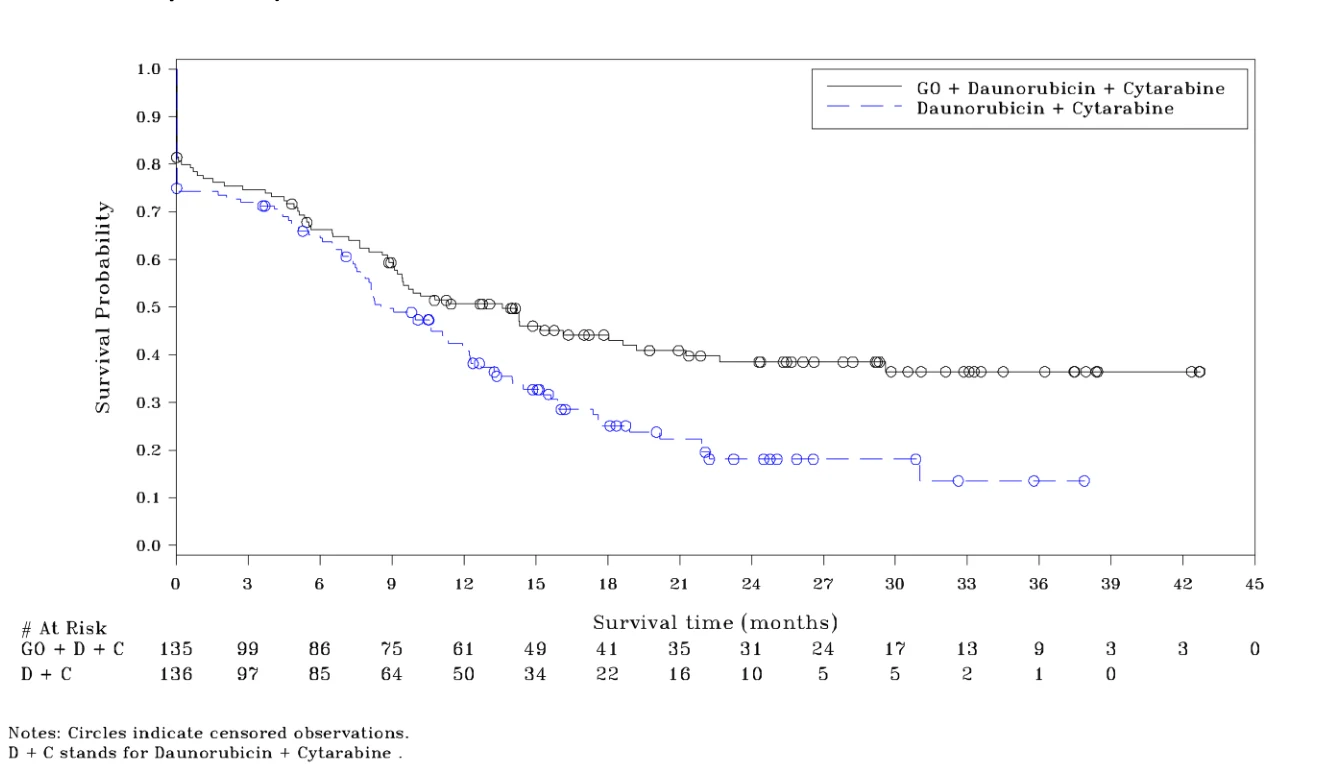
Abbreviations: C=cytarabine; D=daunorubicin; GO=gemtuzumab ozogamicin; mITT=modified intent-to-treat.
The results of EFS by investigator assessment were consistent with the results for EFS by independent review (median EFS of 17.3 months in the Mylotarg arm and of 9.5 months in the control arm; HR: 0.562, 95% CI: 0.415-0.762).
Among the 271 randomized patients, 100/135 (74.1%) of patients in the Mylotarg arm and 96/136 (70.6%) of patients in the control arm experienced an overall response (defined as CR+ CRp) as assessed per investigator assessment.
15 MICROBIOLOGY
No microbiological information is required for this drug product.
16 NON-CLINICAL TOXICOLOGY
General Toxicology:
Repeat-dose toxicity
In repeat-dose toxicity studies in rats and/or monkeys up to 12 weeks in duration, the important toxicities occurred in the liver (liver enzyme elevations, hepatocellular alterations, oval cell/bile duct hyperplasia, and sinusoidal dilation with hepatocyte atrophy), bone marrow and lymphoid organs (hypocellularity), hematology parameters (decreased red blood cell [RBC] mass and WBC counts, mainly lymphocytes), kidney (tubular and/or glomerular alterations, and proteinuria), eye (degeneration and pigmentation of corneal epithelium, and peripapillary swelling of the optic nerve) and male (atrophy of seminiferous tubules, oligospermia, and mammary gland atrophy) and female (atrophy of ovary, oviduct, uterus, and cervix) reproductive organs. Effects on liver, kidney, and male reproductive organs in rats, and on lymphoid tissues in monkeys were not reversible in the 6-week studies following a 4-week nondosing period (approximately 3.7 and 18 times, respectively for rats, and 7.4 and 36 times, respectively for monkeys, the human clinical exposure after the second dose of 9 mg/m2, or after the third dose of 3 mg/m2 based on AUC168, respectively). Effects on female reproductive organs and the eye in monkeys were adverse in the 12-week study (approximately 193 and 322 times, respectively, the human clinical exposure after the third dose of 3 mg/m2, and approximately 39 and 66 times, respectively, the human clinical exposure after the second dose of 9 mg/m2, based on AUC168).
Genotoxicity:
Gemtuzumab ozogamicin was clastogenic in vivo in the bone marrow of mice at ≥22.1 mg/m2. This is consistent with the known induction of DNA breaks by calicheamicin and other enediyne antitumour antibiotics. N-acetyl gamma calicheamicin dimethyl hydrazide (the released cytotoxin) was mutagenic in the bacterial reverse mutation assay and clastogenic in the in vitro micronucleus assay in human TK6 cells.
Carcinogenicity:
Formal carcinogenicity studies have not been conducted with gemtuzumab ozogamicin. After 6 weeks of administration of gemtuzumab ozogamicin to rats, preneoplastic lesions (minimal to slight oval cell hyperplasia) were observed in the liver at 7.2 mg/m2/week (approximately 11 and 54 times the human clinical exposure after the second dose of 9 mg/m2 or after the third dose of 3 mg/m2, respectively, based on AUC168). There were no preneoplastic or neoplastic lesions observed in monkeys up to 22 mg/m2/week (approximately 23 and 115 times, respectively, the human clinical exposure after the second dose of 9 mg/m2, or after the third dose of 3 mg/m2, respectively, based on AUC168). Preneoplastic and neoplastic lesions have been observed in the livers of rats with other antibody-calicheamicin conjugates
Reproductive and Developmental Toxicology:
In the female fertility study where treated female rats were mated with untreated male rats at the end of the dosing period, no gemtuzumab ozogamicin–related effects on copulation or fertility were observed; however, slightly lower numbers of corpora lutea at 1.08 mg/m2/day and increased embryolethality at ≥0.36 mg/m2/day were observed in the presence of maternal toxicity. Gemtuzumab ozogamicin-related findings in the reproductive tract of female monkeys were observed after 12 weeks of dosing at ≥2.2 mg/m2/week (atrophy in the ovary, oviduct, uterus, and cervix; approximately 13 and 66 times the human clinical exposure after the second dose of 9 mg/m2, or after the third dose of 3 mg/m2, respectively, based on AUC168). Female reproductive tract findings were adverse at ≥6.6 mg/m2/week (approximately 39 and 193 times the human clinical exposure after the second dose of 9 mg/m2, or after the third dose of 3 mg/m2, respectively, based on AUC168) due to the anticipated potential for disruption or loss of a normal menstrual cycle and thereby normal reproductive function.
In the male fertility study where treated male rats were mated with untreated female rats at the end of the dosing period, gemtuzumab ozogamicin-related effects on male reproduction included lower spermatogonia and spermatocytes, decreases in testicular spermatids and epididymal sperm, vacuolation of the nucleus in spermatids, and/or appearance of giant cells at ≥0.12 mg/m2/day. Additional findings included effects on the testes (≥0.12 mg/m2/day) and epididymides (≥0.36 mg/m2/day); both organs were macroscopically small and decreased in weight as well as fertility (1.08 mg/m2/day). When male rats were mated again after a 9-week nondosing period, effects on sperm and fertility were worse but there was partial recovery of the lower spermatogonia and spermatocytes in the testes. In the 6-week toxicity study with gemtuzumab ozogamicin, effects on male reproductive organs (testes, epididymides, and mammary gland) were observed at ≥2.4 mg/m2/week (approximately 3.7 or 18 times the human clinical exposure after the second human dose of 9 mg/m2 or after the third human dose of 3 mg/m2, respectively, based on AUC). Effects on rat male reproductive organs were partially reversible or not reversible following a 4-week nondosing period. Effects on male monkey reproductive organs in a 6-week toxicity study included findings in the testes and epididymides and decreased mean testes weight at 18 mg/m2/week (approximately 17 or 81 times the human clinical exposure after the second human dose of 9 mg/m2 or after the third human dose of 3 mg/m2, respectively, based on AUC168). During the 12-week study in monkeys, adverse findings in the reproductive tract of sexually mature males were observed at ≥2.2 mg/m2/week (approximately 13 and 66 times the human clinical exposure after the second dose of 9 mg/m2, or after the third dose of 3 mg/m2, respectively, based on AUC168) and consisted of slight to marked degeneration of seminiferous tubules in the testis; minimal or slight luminal cellular debris and oligospermia and minimal to moderate epithelial degeneration in the epididymis; and slight epithelial atrophy, slight duct ectasia, and minimal or slight sperm stasis in the seminal vesicle.
In an embryo-fetal development study in rats, pregnant animals received daily intravenous doses up to 1.2 mg/m2/day gemtuzumab ozogamicin during the period of organogenesis. Lower fetal body weight, higher incidence of fetal wavy ribs, and lower incidence of fetal skeletal ossification were observed at ≥0.15 mg/m2/day. Increased embryolethality and fetal morphological anomalies (digital malformations, absence of the aortic arch, anomalies in the long bones in the forelimbs, misshapen scapula, absence of a vertebral centrum, and fused sternebrae) were observed at 0.36 mg/m2/day. Increased embryolethality was also observed in the presence of maternal toxicity at ≥0.36 mg/m2/day in female fertility and early embryonic development studies. All doses with embryo-fetal effects were observed in the presence of maternal toxicity. The lowest dose with embryo-fetal effects in rats (0.15 mg/m2/day) was 2.0 or 9.7 times the human clinical exposure after the second human dose of 9 mg/m2 or after the third human dose of 3 mg/m2, respectively, based on AUC168.