


Product Monograph - Imjudo
Recent Major Label Changes
| 1 Indications, 1.1 Pediatrics | 2025-XX |
|---|---|
| 4 Dosage and Administration, 4.2 Recommended Dose and Dosage Adjustment | 2025-XX |
| 7 Warnings and Precautions | 2024-05 |
| 7 Warnings and Precautions, 7.1.3 Pediatrics | 2025-XX |
Table of Contents
Certain sections (as indicated in section 2.1. of the PM Guidance) or subsections that are not applicable at the time of the preparation of the most recent authorized product monograph are not listed.
Recent Major Label Changes ................................................................................................... 2
Table of Contents ...................................................................................................................... 2
Part 1: Healthcare Professional Information ........................................................................... 4
- 1.
Indications .......................................................................................................................... 4
1.1. Pediatrics ................................................................................................................ 4
1.2. Geriatrics ................................................................................................................ 4
- 2. Contraindications .............................................................................................................. 4
- 3. Serious Warnings and Precautions Box .......................................................................... 4
- 4.
Dosage and Administration............................................................................................... 4
4.2. Recommended Dose and Dosage Adjustment ....................................................... 4
4.3. Reconstitution ......................................................................................................... 8
4.4. Administration ......................................................................................................... 8
- 5. Overdose ............................................................................................................................ 9
- 6. Dosage Forms, Strengths, Composition, and Packaging ............................................... 9
- 7.
Warnings and Precautions .............................................................................................. 10
General ..............................................................................................................................10
Driving and Operating Machinery .......................................................................................10
Hepatic/Biliary/Pancreatic ..................................................................................................10
Immune .............................................................................................................................10
Monitoring and Laboratory Tests .......................................................................................13
Reproductive Health ..........................................................................................................13
7.1. Special Populations ...............................................................................................13
7.1.1. Pregnancy ......................................................................................................13
7.1.2. Breastfeeding .................................................................................................13
7.1.3. Pediatrics .......................................................................................................14
7.1.4. Geriatrics .......................................................................................................14
- 8.
Adverse Reactions .......................................................................................................... 14
8.1. Adverse Reaction Overview ...................................................................................14
8.2. Clinical Trial Adverse Reactions ............................................................................16
8.3. Less Common Clinical Trial Adverse Reactions .....................................................20
8.4. Abnormal Laboratory Findings: Hematologic, Clinical Chemistry, and Other Quantitative Data ...............................................................................................................20
8.5. Post-Market Adverse Reactions .............................................................................21
- 9.
Drug Interactions ............................................................................................................. 21
9.3. Drug-Behaviour Interactions ..................................................................................21
9.4. Drug-Drug Interactions ...........................................................................................21
9.5. Drug-Food Interactions ..........................................................................................21
9.6. Drug-Herb Interactions ...........................................................................................21
9.7. Drug-Laboratory Test Interactions .........................................................................22
- 10.
Clinical Pharmacology .................................................................................................... 22
10.1. Mechanism of Action .............................................................................................22
10.2. Pharmacodynamics ...............................................................................................22
10.3. Pharmacokinetics ..................................................................................................22
10.4. Immunogenicity......................................................................................................24
- 11. Storage, Stability, and Disposal ...................................................................................... 24
- 12. Special Handling Instructions ......................................................................................... 25
Part 2: Scientific Information ................................................................................................. 26
- 13. Pharmaceutical Information ............................................................................................ 26
- 14.
Clinical Trials ................................................................................................................... 26
14.1. Clinical Trials by Indication ....................................................................................26
Hepatocellular Carcinoma .....................................................................................26
- 15. Microbiology .................................................................................................................... 30
- 16. Non-Clinical Toxicology .................................................................................................. 30
- 17. Supporting Product Monographs ................................................................................... 30
Patient Medication Information .............................................................................................. 31
Part 1: Healthcare Professional Information
1. Indications
IMJUDO® (tremelimumab for injection) in combination with durvalumab is indicated for the first-line treatment of adult patients with unresectable hepatocellular carcinoma (uHCC) who require systemic therapy (see 14 Clinical Trials).
- When using IMJUDO in combination with durvalumab, consult the Product Monograph for durvalumab for further information on this drug.
1.1. Pediatrics
Pediatrics (<18 years of age): Based on the data submitted and reviewed by Health Canada, the safety and efficacy of IMJUDO in pediatric patients has not been established; therefore, Health Canada has not authorized an indication for pediatric use. See 7 Warnings and Precautions, Pediatrics; and 10 Clinical Pharmacology, Pharmacokinetics.
1.2. Geriatrics
Of the 462 patients with uHCC treated with IMJUDO and durvalumab, 236 (51%) patients were older than 65 years of age, 173 (37.4%) patients were ≥65 years to <75 years and 63 (13.6%) patients were 75 years or older. Evidence from clinical studies and experience suggests there were no overall differences in efficacy between patients 65 years or older and younger patients. Evidence from clinical studies suggests the use in the geriatric population may be associated with differences in safety in the uHCC population. See 7 Warnings and Precautions, Special Populations.
2. Contraindications
IMJUDO is contraindicated in patients who are hypersensitive to tremelimumab or to any ingredient in the formulation, including any non-medicinal ingredient, or component of the container. For a complete listing, see 6 Dosage Forms, Strengths, Composition, and Packaging.
3. Serious Warnings and Precautions Box
|
|---|
4. Dosage and Administration
4.2. Recommended Dose and Dosage Adjustment
Hepatocellular Carcinoma
IMJUDO in combination with durvalumab
The recommended dose of IMJUDO is 300 mg as a single dose, followed by durvalumab 1500 mg at Day 1 of Cycle 1. Continue durvalumab 1500 mg as a single agent every 4 weeks.
Patients with a body weight of 30 kg or less must receive weight-based dosing, equivalent to IMJUDO 4 mg/kg as a single dose followed by durvalumab 20 mg/kg at Day 1 of Cycle 1; continue durvalumab 20 mg/kg as a single agent every 4 weeks.
Treatment should continue until disease progression or unacceptable toxicity.
When using IMJUDO in combination with durvalumab, consult the Product Monograph for durvalumab for further information on this drug.
Dose reduction or escalation is not recommended during treatment with IMJUDO in combination with durvalumab. Treatment withholding or discontinuation may be required based on individual safety and tolerability.
Immune-mediated adverse reactions requiring specific treatment modification and management are summarized in Table 1. Refer to 7 Warnings and Precautions for further management recommendations, monitoring and evaluation information.
Table 1 – Treatment modifications for IMJUDO in combination with durvalumab in patients with uHCC
| Adverse Reactions | Severitya | Treatment Modification | |
|---|---|---|---|
| Adverse Reactions | Severitya | Treatment Modification | |
| Adverse Reactions | Severitya | Treatment Modification | |
| Immune-mediated pneumonitis/interstitial lung disease | Grade 2 | Withhold doseb | |
| Grade 3 or 4 | Permanently discontinue | ||
| Immune-mediated hepatitis | ALT or AST >3 – ≤5 x ULN or total bilirubin >1.5 – ≤3 x ULN | Withhold doseb | |
| ALT or AST > 5 – ≤10 x ULN | Withhold doseb | ||
| Concurrent ALT or AST >3 x ULN and total bilirubin >2 x ULNc | Permanently discontinue | ||
ALT or AST >10 x ULN or total bilirubin >3 x ULN | |||
| Immune-mediated hepatitis in HCC (or secondary tumour | ALT or AST >2.5 – ≤5 x BLV and ≤20 x ULN | Withhold doseb | |
| involvement of the liver with abnormal baseline values)d | ALT or AST >5 – 7 x BLV and ≤ 20 x ULN or Concurrent ALT or AST >2.5 – 5 x BLV and ≤20 x ULN and total bilirubin >1.5 - <2 x ULNc | Withhold doseb | |
ALT or AST >7 x BLV or >20 x ULN whichever occurs first or bilirubin >3 x ULN | Permanently discontinue | ||
| Immune-mediated colitis or diarrhea | Grade 2 or 3 | Withhold doseb | |
| Grade 4 | Permanently discontinue | ||
| Intestinal perforation of ANY grade | Permanently discontinue | ||
| Immune-mediated hyperthyroidism, thyroiditis | Grade 2 – 4 | Withhold dose until clinically stable | |
| Immune-mediated hypothyroidism | Grade 2 – 4 | No changes | |
| Immune-mediated adrenal insufficiency, hypophysitis/hypopituitarism | Grade 2 – 4 | Withhold dose until clinically stable | |
| Immune-mediated Type 1 diabetes mellitus | Grade 2 – 4 | No changes | |
| Immune-mediated nephritis | Grade 2 with serum creatinine >1.5 – 3 x (ULN or baseline) | Withhold doseb | |
Grade 3 with serum creatinine >3 x baseline or >3 – 6 x ULN; Grade 4 with serum creatinine >6 x ULN | Permanently discontinue | ||
| Immune-mediated rash or dermatitis (including pemphigoid) | Grade 2 for >1 week or Grade 3 | Withhold doseb | |
| Grade 4 | Permanently discontinue | ||
| Infection | Grade 3 or 4 | Withhold dosee | |
| Immune-mediated myocarditis | Grade 2 – 4 | Permanently discontinue | |
| Immune-mediated myositis/polymyositis/ rhabdomyolysis | Grade 2 or 3 | Withhold doseb,f | |
| Grade 4 | Permanently discontinue | ||
| Immune-mediated myasthenia gravis | Grade 2 – 4 | Permanently discontinue | |
| Immune-mediated encephalitis | Grade 2 – 4 | Permanently discontinue | |
| Immune-mediated Guillain-Barré syndrome | Grade 2 – 4 | Permanently discontinue | |
| Other immune-mediated adverse reactionsg | Grade 2 or 3 | Withhold doseb | |
| Grade 4 | Permanently discontinue | ||
| Infusion-related reactions | Grade 1 or 2 | Interrupt or slow the rate of infusion | |
| Grade 3 or 4 | Permanently discontinue | ||
a Common Terminology Criteria for Adverse Events, version 4.03. ALT: alanine aminotransferase; AST: aspartate aminotransferase; BLV: baseline value; ULN: upper limit of normal.
b After withholding, durvalumab can be resumed within 12 weeks if the adverse reactions improved to ≤ Grade 1 and the corticosteroid dose has been reduced to ≤ 10 mg prednisone or equivalent per day. Durvalumab should be permanently discontinued for recurrent Grade 3 adverse reactions, as applicable.
c For patients with alternative cause follow the recommendations for AST or ALT increases without concurrent bilirubin elevations.
d If AST and ALT are less than or equal to ULN at baseline in patients with liver involvement, withhold or permanently discontinue durvalumab based on recommendations for hepatitis with no liver involvement.
e Symptomatic management; treat with anti-infectives for suspected or confirmed infections.
f Permanently discontinue durvalumab if the adverse reaction does not resolve to ≤ Grade 1 within 30 days or if there are signs of respiratory insufficiency.
g Includes immune thrombocytopenia, pancreatitis, immune-mediated arthritis, and uveitis.
For non-immune-mediated adverse reactions, withhold durvalumab for Grade 2 and 3 adverse reactions until ≤ Grade 1 or return to baseline. Durvalumab should be discontinued for Grade 4 adverse reactions (except for Grade 4 laboratory abnormalities, for which the decision to discontinue should be based on accompanying clinical signs/symptoms and clinical judgment).
Special patient populations
Based on a population pharmacokinetic analysis, no dose adjustment of IMJUDO is recommended based on patient age, body weight, gender, and race (see 10 Clinical Pharmacology).
Pediatrics (<18 years of age): Based on the data submitted and reviewed by Health Canada, the safety and efficacy of IMJUDO in pediatric patients has not been established; therefore, Health Canada has not authorized an indication for pediatric use (see 10 Clinical Pharmacology, Pharmacokinetics).
Geriatrics (≥ 65 years): No dose adjustment is required for elderly patients (≥ 65 years of age) (see 10 Clinical Pharmacology).
Renal Impairment: Based on a population pharmacokinetic analysis, no dose adjustment of IMJUDO is recommended in patients with renal impairment. IMJUDO has not been studied in patients with severe renal impairment (see 10 Clinical Pharmacology).
Hepatic Impairment: Based on a population pharmacokinetic analysis, no dose adjustment of IMJUDO is recommended for patients with mild or moderate hepatic impairment. IMJUDO has not been studied in patients with severe hepatic impairment (see 10 Clinical Pharmacology).
4.3. Reconstitution
- Visually inspect drug product for particulate matter and discolouration. IMJUDO is a clear to slightly opalescent, colourless to slightly yellow solution. Discard the vial if the solution is cloudy, discoloured or visible particles are observed. Do not shake the vial.
- Withdraw the required volume from the vial(s) of IMJUDO and transfer into an intravenous (IV) bag containing 0.9% Sodium Chloride Injection, or 5% Dextrose Injection. Mix diluted solution by gentle inversion. The final concentration of the diluted solution should be between 0.1 mg/mL and 10 mg/mL.
- Do not freeze or shake the solution.
- No incompatibilities between IMJUDO and 0.9% Sodium Chloride or 5% Dextrose in polyvinylchloride or polyolefin IV bags have been observed.
- This drug product must not be mixed with other drug products during its preparation.
- Care must be taken to ensure the sterility of prepared solutions.
- Do not re-enter the vial after withdrawal of drug.
- Discard any unused portion left in the vial.
4.4. Administration
IMJUDO is only to be administered by intravenous infusion.
IMJUDO is supplied as a single-dose vial and does not contain any preservatives, therefore aseptic technique must be observed.
Administer infusion solution intravenously over 60 minutes through an intravenous line containing a sterile, low-protein binding 0.2 or 0.22 micron in-line filter.
Do not co-administer other drugs through the same infusion line and infusion bag. After each dose, flush the infusion line.
Administer IMJUDO prior to durvalumab on the same day of Cycle 1. Observing patient for 60 minutes is recommended following completion of IMJUDO infusion. IMJUDO and durvalumab are administered as separate intravenous infusions.
When using IMJUDO in combination with durvalumab, consult the Product Monograph for durvalumab for further information on this drug.
5. Overdose
There is no specific treatment in the event of an IMJUDO overdose, and symptoms of overdose are not established. In the event of an overdose, physicians should follow general supportive measures and should treat symptomatically.
| For the most recent information in the management of a suspected drug overdose, contact your regional poison control centre or Health Canada’s toll-free number, 1-844 POISON-X (1-844-764-7669). |
|---|
- 6. Dosage Forms, Strengths, Composition, and Packaging
To help ensure the traceability of biologic products, healthcare professionals should record both the brand name and the non-proprietary (active ingredient) name as well as other product-specific identifiers such as the Drug Identification Number (DIN) and the batch/lot number of the product supplied.
Table 2 – Dosage Forms, Strengths, and Composition
Description
IMJUDO is a sterile, preservative-free, clear to slightly opalescent, colourless to slightly yellow solution, free from or practically free from visible particles.
Packaging
1.25 mL (a total of 25 mg tremelimumab) concentrate in a Type I glass vial with an elastomeric stopper and a violet flip-off aluminum seal. Pack size of 1 single-dose vial.
15 mL (a total of 300 mg tremelimumab) concentrate in a Type I glass vial with an elastomeric stopper and a dark blue flip-off aluminum seal. Pack size of 1 single-dose vial.
| Route of Administration | Dosage Form/Strength/Composition | Non-Medicinal Ingredients |
| Intravenous infusion | Single-use vial solution of:
| Disodium edetate dihydrate, L-histidine, L-histidine hydrochloride monohydrate, Polysorbate 80, α,α-Trehalose dihydrate, and Water for Injection |
7. Warnings and Precautions
General
IMJUDO (tremelimumab) should be administered under the supervision of healthcare practitioners experienced in the treatment of cancer.
When using IMJUDO in combination with durvalumab, consult the durvalumab Product Monograph for further information on this drug.
Driving and Operating Machinery
If patients experience adverse reactions affecting their ability to concentrate and react, they should be advised not to drive or operate machinery.
Hepatic/Biliary/Pancreatic
Hepatocellular Carcinoma
In unresectable hepatocellular carcinoma, there are no clinical data available for Child-Pugh Class B patients and Child-Pugh Class C patients (see 14 Clinical Trials).
Immune
Immune-Mediated Adverse Reactions
For suspected immune-mediated adverse reactions, adequate evaluation should be performed to confirm etiology or exclude alternate etiologies. Based on the severity of the adverse reaction, IMJUDO in combination with durvalumab should be withheld and corticosteroids administered. Upon improvement to ≤ Grade 1, corticosteroid taper should be initiated and continued over at least 1 month. Consider increasing dose of corticosteroids and/or using additional systemic immunosuppressants if there is worsening or no improvement.
Adverse reactions observed with immunotherapies such as IMJUDO in combination with durvalumab may differ from those observed with non-immunotherapies and may require immunosuppression. Immune-mediated adverse reactions have occurred at higher frequencies when IMJUDO was administered in combination with durvalumab compared with durvalumab as monotherapy. Early identification of adverse reactions and timely intervention are an important part of the safe use of IMJUDO in combination with durvalumab.
Immune-mediated adverse reactions may involve any organ system or tissue and may affect more than one body system simultaneously. Immune-mediated adverse reactions can manifest at any time during treatment with IMJUDO in combination with durvalumab; however, immune-mediated adverse reactions can occur after discontinuation of treatment. Important immune-mediated adverse reactions listed in this section are not inclusive of all possible severe and fatal immune-mediated reactions.
Monitor patients continuously (even after the last dose) for signs, symptoms and laboratory abnormalities indicative of immune-mediated adverse reactions. Evaluate suspected immune-mediated adverse reactions to exclude other causes. Immune-mediated adverse reactions are managed with treatment modification, administration of corticosteroids and/or supportive care. Refer to 4 Dosage and Administration, Table 1 for recommended treatment modifications.
Immune-mediated pneumonitis
Immune-mediated pneumonitis or interstitial lung disease, defined as requiring use of systemic corticosteroids and with no clear alternate etiology, occurred in patients receiving IMJUDO in combination with durvalumab, including fatal cases (8 Adverse Reactions, Immune-mediated pneumonitis). Patients should be monitored for signs and symptoms of pneumonitis. Suspected pneumonitis should be confirmed with radiographic imaging and other infectious and disease-related etiologies excluded and managed as recommended in Table 1. For Grade 2 events, an initial dose of 1 – 2 mg/kg/day prednisone or equivalent should be initiated followed by a taper. For Grade 3 or 4 events, an initial dose of 2 – 4 mg/kg/day methylprednisolone or equivalent should be initiated followed by a taper.
Immune-mediated hepatitis
Immune-mediated hepatitis, defined as requiring use of systemic corticosteroids and with no clear alternate etiology, occurred in patients receiving IMJUDO in combination with durvalumab, including fatal cases (8 Adverse Reactions, Immune-mediated hepatitis). Patients should be monitored for abnormal liver tests prior to and periodically during treatment with IMJUDO in combination with durvalumab. Immune-mediated hepatitis should be managed as recommended in Table 1. Corticosteroids should be administered with an initial dose of 1 – 2 mg/kg/day prednisone or equivalent followed by taper for all grades.
Immune-mediated colitis
Immune-mediated colitis or diarrhea, defined as requiring use of systemic corticosteroids and with no clear alternate etiology, occurred in patients receiving IMJUDO in combination with durvalumab (8 Adverse Reactions, Immune-mediated colitis). Intestinal perforation and large intestine perforation were reported in patients receiving IMJUDO in combination with durvalumab. Patients should be monitored for signs and symptoms of colitis/diarrhea and intestinal perforation and managed as recommended in Table 1. Corticosteroids should be administered with an initial dose of 1 – 2 mg/kg/day prednisone or equivalent followed by a taper for Grades 2 – 4. Consult a surgeon immediately if intestinal perforation of ANY grade is suspected.
Immune-mediated endocrinopathies
Immune-mediated hypothyroidism/hyperthyroidism/thyroiditis
Immune-mediated hypothyroidism, hyperthyroidism or thyroiditis have occurred in patients receiving IMJUDO in combination with durvalumab (8 Adverse Reactions, Immune-mediated endocrinopathies). Patients should be monitored for abnormal thyroid function tests prior to and periodically during treatment and managed as recommended in Table 1. For immune-mediated hypothyroidism, initiate thyroid hormone replacement as clinically indicated for Grades 2 – 4. For immune-mediated hyperthyroidism/thyroiditis, symptomatic management can be implemented for Grades 2 – 4.
Immune-mediated adrenal insufficiency
Immune-mediated adrenal insufficiency occurred in patients receiving IMJUDO in combination with durvalumab (8 Adverse Reactions, Immune-mediated adrenal insufficiency). Patients should be monitored for clinical signs and symptoms of adrenal insufficiency and managed as recommended in Table 1. Corticosteroids should be administered with an initial dose of 1 – 2 mg/kg/day prednisone or equivalent followed by taper and a hormone replacement as clinically indicated for Grades 2 – 4.
Immune-mediated type 1 diabetes mellitus
Immune-mediated type 1 diabetes mellitus, which can present with diabetic ketoacidosis, occurred in patients receiving IMJUDO in combination with durvalumab (8 Adverse Reactions, Immune-mediated type 1 diabetes mellitus). Patients should be monitored for clinical signs and symptoms of type 1 diabetes mellitus and managed as recommended in Table 1. Treatment with insulin can be initiated as clinically indicated for Grades 2 – 4.
Immune-mediated hypophysitis/hypopituitarism
Immune-mediated hypophysitis or hypopituitarism occurred in patients receiving IMJUDO in combination with durvalumab (8 Adverse Reactions, Immune-mediated hypophysitis/hypopituitarism). Patients should be monitored for clinical signs and symptoms of hypophysitis or hypopituitarism and managed as recommended in Table 1. Corticosteroids should be administered with an initial dose of 1 – 2 mg/kg/day prednisone or equivalent followed by taper and a hormone replacement as clinically indicated for Grades 2 – 4.
Immune-mediated nephritis
Immune-mediated nephritis, defined as requiring use of systemic corticosteroids and with no clear alternate etiology, occurred in patients receiving IMJUDO in combination with durvalumab (8 Adverse Reactions, Immune-mediated nephritis). Patients should be monitored for abnormal renal function tests prior to and periodically during treatment with IMJUDO in combination with durvalumab and managed as recommended in Table 1. Corticosteroids should be administered with an initial dose of 1 – 2 mg/kg/day prednisone or equivalent followed by taper for Grades 2 – 4.
Immune-mediated rash
Immune-mediated rash or dermatitis (including pemphigoid), defined as requiring use of systemic corticosteroids and with no clear alternate etiology, occurred in patients receiving IMJUDO in combination with durvalumab (8 Adverse Reactions, Immune-mediated rash). Patients should be monitored for signs and symptoms of rash or dermatitis and managed as recommended in Table 1. Corticosteroids should be administered with an initial dose of 1 – 2 mg/kg/day prednisone or equivalent followed by taper for Grade 2 > 1 week or Grade 3 and 4.
Immune-mediated myocarditis
Immune-mediated myocarditis, which can be fatal, occurred in patients receiving IMJUDO in combination with durvalumab (see 8 Adverse Reactions, Other immune-mediated adverse reactions). Patients should be monitored for signs and symptoms of immune-mediated myocarditis and managed as recommended in Table 1. Corticosteroids should be administered with an initial dose of 2 – 4 mg/kg/day prednisone or equivalent followed by taper for Grades 2 – 4. If no improvement within 2 to 3 days despite corticosteroids, promptly start additional immunosuppressive therapy. Upon resolution (Grade 0), corticosteroid taper should be initiated and continued over at least 1 month.
Other immune-mediated adverse reactions
Given the mechanism of action of IMJUDO and durvalumab, other potential immune-mediated adverse reactions may occur in patients receiving the combination of IMJUDO with durvalumab. The following immune-mediated adverse reactions have been observed: myasthenia gravis, myositis, polymyositis, rhabdomyolysis, Guillain-Barré syndrome, immune-mediated arthritis, uveitis, immune thrombocytopenia, pancreatitis, encephalitis, Stevens-Johnson syndrome, and hypoparathyroidism. The following clinically significant immune-mediated adverse reactions have been observed in patients who received other immune-checkpoint inhibitors: meningitis, demyelination, toxic epidermal necrolysis, hemolytic anemia, sarcoidosis and retinal detachment. Patients should be monitored for signs and symptoms and managed as recommended in Table 1. Corticosteroids should be administered with an initial dose of 1 – 2 mg/kg/day prednisone or equivalent followed by taper for Grades 2 – 4.
Infusion-related reactions
Patients should be monitored for signs and symptoms of infusion-related reactions and managed as recommended in 4.2 Recommended Dose and Dosage Adjustment. Severe infusion-related reactions have been reported in patients receiving IMJUDO in combination with durvalumab (8 Adverse Reactions, Infusion-related reactions). For Grade 1 or 2 severity, may consider pre-medications for prophylaxis of subsequent infusion reactions. For Grade 3 or 4, manage severe infusion-related reactions per institutional standard, appropriate clinical practice guidelines and/or society guidelines.
Monitoring and Laboratory Tests
Monitor AST, ALT, bilirubin, renal, and thyroid function prior to starting treatment and as indicated based on clinical evaluation.
Reproductive Health
Fertility
There are no data on the potential effects of tremelimumab on fertility in humans.
7.1. Special Populations
7.1.1. Pregnancy
In animal reproduction studies, administration of tremelimumab to pregnant cynomolgus monkeys during the period of organogenesis was not associated with maternal toxicity or any effects on pregnancy maintenance or embryofetal development (16 Non-Clinical Toxicology). There are no data on the use of tremelimumab in pregnant women. Based on its mechanism of action, tremelimumab has the potential to impact pregnancy maintenance and may cause fetal harm when administered to a pregnant woman. Human IgG2 is known to cross the placental barrier. Tremelimumab is not recommended during pregnancy and in women of childbearing potential not using effective contraception during treatment and for at least 3 months after the last dose.
7.1.2. Breastfeeding
There is no information regarding the presence of tremelimumab in human milk, the absorption and effects on the breastfed infant, or the effects on milk production. Human IgG2 is excreted in human milk. Because of the potential for adverse reactions from tremelimumab in breastfed infants, lactating women are advised not to breastfeed during treatment and for at least 3 months after the last dose.
7.1.3. Pediatrics
Pediatrics (<18 years of age): Based on the data submitted and reviewed by Health Canada, the safety and efficacy of IMJUDO in pediatric patients has not been established; therefore, Health Canada has not authorized an indication for pediatric use (see 10 Clinical Pharmacology, Pharmacokinetics).
7.1.4. Geriatrics
Geriatrics (≥ 65 years): No dose adjustment is required for elderly patients (≥ 65 years of age). Of the 462 patients with uHCC treated with IMJUDO in combination with durvalumab, 173 patients were ≥65 years to <75 years, 63 patients were 75 years or older. No overall clinically meaningful differences in efficacy were reported between patients ≥ 65 years of age and younger patients. The rates of adverse events were higher with increasing age. Adverse events possibly related to treatment were 72.1%, 79.8%, and 85.7% for patients younger than 65 years, ≥65 years to <75 years, and 75 years or older, respectively. There was a higher rate of adverse events with outcome of death in patients 65 years or older (10.6%) relative to patients who were younger than 65 years (4.0%). In addition, there was a higher discontinuation rate due to adverse events in patients 65 years or older (18.6%) relative to patients who were younger than 65 years (8.4%).
8. Adverse Reactions
8.1. Adverse Reaction Overview
Unresectable hepatocellular carcinoma (uHCC)
The safety of IMJUDO in combination with durvalumab in patients with unresectable hepatocellular carcinoma (uHCC) was evaluated in the HIMALAYA study, a randomized, open-label, multicenter study. Patients received IMJUDO in combination with durvalumab (N=388), durvalumab as a single agent 1500 mg every 4 weeks (N=388) or sorafenib 400 mg orally twice daily (N=374). Patients on the combination therapy of IMJUDO plus durvalumab received a single dose of IMJUDO 300 mg in combination with durvalumab 1500 mg, followed by durvalumab 1500 mg as a single agent every 4 weeks. Patients were treated until disease progression or unacceptable toxicity. All of the 388 patients received the initial single dose of IMJUDO; the median duration of exposure to IMJUDO in combination with durvalumab was 5.5 months (range 0.4 to 41.9).
For patients receiving IMJUDO in combination with durvalumab, the most commonly reported adverse events (reported by ≥ 10% patients) were pruritus, diarrhea, rash, fatigue, decreased appetite, pyrexia, AST increased, hypothyroidism, nausea, abdominal pain, insomnia and asthenia.
In patients receiving IMJUDO in combination with durvalumab 50.5% reported grade 3 or 4 adverse events, and the most common adverse events (occurring in ≥ 5% of patients) were lipase increase and AST increased. In patients receiving durvalumab monotherapy 37.1% reported grade 3 or 4 adverse events, and the most common adverse event (occurring in ≥ 5% of patients) was AST increased. In patients receiving sorafenib 52.4% reported grade 3 or 4 adverse events, and the most common adverse events (occurring in ≥ 5% of patients) were hypertension and palmar-plantar erythrodysaesthesia syndrome.
In patients receiving IMJUDO in combination with durvalumab 34.5% reported adverse events leading to dose delays or interruption of any study treatment, and the most common adverse events (occurring in ≥ 3% of patients) were ALT increased, amylase increased, diarrhea and AST increased. In patients receiving durvalumab monotherapy 24.5% reported adverse events leading to dose delays or interruption of any study treatment and the most common adverse events (occurring in ≥ 3% of patients) were AST increased and ALT increased. In patients receiving sorafenib 47.6% reported adverse events leading to dose delays or interruption of any study treatment and the most common adverse events (occurring in ≥ 3% of patients) were palmar-plantar erythrodysaesthesia.
In patients receiving IMJUDO in combination with durvalumab 13.7% reported discontinuation due to adverse events and the most common adverse events (occurring in ≥ 1% of patients) was hepatitis and AST increased. In patients receiving durvalumab monotherapy 8.2% reported discontinuation due to adverse events. In patients receiving sorafenib 16.8% reported discontinuation due to adverse events and the most common adverse events (occurring in ≥ 1% of patients) were palmar-plantar erythrodysaesthesia-syndrome, diarrhea and abdominal pain.
Serious adverse events occurred in 40.5% of patients receiving IMJUDO in combination with durvalumab, and the most commonly reported serious adverse event (reported in ≥ 1% patients) were pneumonia (1.8%), anaemia (1.3%), diabetes mellitus (1%), pneumonitis (1%), ascites (1%), upper gastro-intestinal haemorrhage (1.8%), sepsis (2.1%), diarrhea (2.3%), death (1%), and pyrexia (1%). Serious adverse events occurred in 29.6% of patients receiving durvalumab monotherapy, and the most commonly reported events (reported in ≥ 1% patients) were sepsis (1%), gastro-intestinal haemorrhage (1.3%), esophageal varices haemorrhage (1%), death (2.1%), hepatic function abnormal (1.3%) and pyrexia (1.5%). Serious adverse events occurred in 29.7% of patients receiving sorafenib, and the most commonly reported events (reported in ≥ 1% patients) were pneumonia (2.1%), urinary tract infection (1.1%), dyspnea (1.1%), abdominal pain (1.6%), diarrhea (1.6%), upper gastro-intestinal haemorrhage (1.1%), hepatic failure (1.3%), and death (1.3%).
Adverse events with outcome of death occurred in 7.7% of patients treated with IMJUDO in combination with durvalumab versus 6.7% of patients treated with durvalumab monotherapy and 7.2% of patients treated with sorafenib. Fatal adverse events possibly related to treatment as assessed by the investigator in IMJUDO in combination with durvalumab occurred in 2.3% of patients and included hepatitis, myocarditis, immune-mediated hepatitis (2 patients), pneumonitis, myasthenia gravis, nervous system disorder, acute respiratory distress syndrome, and hepatic failure. The majority of these events were attributed to disease progression, metastases or viral etiology but the role of study treatment could not be definitively ruled out.
Immune-mediated adverse reactions were reported in 35.8% of patients treated with IMJUDO in combination with durvalumab (Grade 3 or 4 events 12.6%) and 16.5% of patients treated with durvalumab alone (Grade 3 or 4 events 6.4%). In the IMJUDO plus durvalumab arm, immune-mediated adverse reactions requiring systemic corticosteroids were reported in 24.7% of patients, and endocrine therapy in 17.0% of patients. In the durvalumab monotherapy arm, immune-mediated adverse reactions requiring systemic corticosteroids were reported in 10.8% of patients, and endocrine therapy in 6.7% of patients.
8.2. Clinical Trial Adverse Reactions
Clinical trials are conducted under very specific conditions. Therefore, the frequencies of adverse reactions observed in the clinical trials may not reflect frequencies observed in clinical practice and should not be compared to frequencies reported in clinical trials of another drug.
Table 3 lists the incidence of adverse drug reactions found in at least 1% of patients with uHCC treated with IMJUDO in combination with durvalumab in the HIMALAYA study.
Table 3 – Adverse Drug Reactions Occurring in ≥1% of Patients with Hepatocellular Carcinoma receiving IMJUDO in combination with durvalumab Compared to Sorafenib in HIMALAYA
| System organ class/preferred term | IMJUDO + durvalumab (n=388) | Sorafenib (n=374) | |||||||||||||||||||||||
|---|---|---|---|---|---|---|---|---|---|---|---|---|---|---|---|---|---|---|---|---|---|---|---|---|---|
| System organ class/preferred term | IMJUDO + durvalumab (n=388) | Sorafenib (n=374) | |||||||||||||||||||||||
| Adverse Drug Reaction | Frequency of any Grade | Frequency of Grade 3-4 | Frequency of any Grade | Frequency of Grade 3-4 | |||||||||||||||||||||
| Endocrine disorders | |||||||||||||||||||||||||
| Adrenal insufficiency | 6 (1.5%) | 0 | 0 | 0 | |||||||||||||||||||||
| Hyperthyroidisma | 38 (9.8%) | 1 (0.3%) | 2 (0.5%) | 0 | |||||||||||||||||||||
| Hypothyroidismb | 52 (13.4%) | 0 | 21 (5.6%) | 0 | |||||||||||||||||||||
| Thyroiditisc | 8 (2.1%) | 0 | 2 (0.5%) | - | |||||||||||||||||||||
| Gastrointestinal disorders | |||||||||||||||||||||||||
| Abdominal paind | 75 (19.3%) | 7 (1.8%) | 87 (23.2%) | 15 (4.0%) | |||||||||||||||||||||
| Amylase increased | 29 (7.5%) | 14 (3.6%) | 10 (2.7%) | 3 (0.8%) | |||||||||||||||||||||
| Colitise | 10 (2.6%) | 6 (1.5%) | 2 (0.5%) | 0 | |||||||||||||||||||||
| Diarrhea | 103 (26.5%) | 17 (4.4%) | 167 (44.7%) | 16 (4.3%) | |||||||||||||||||||||
| Lipase increased | 34 (8.8%) | 24 (6.2%) | 15 (4.0%) | 11 (2.9%) | |||||||||||||||||||||
| Pancreatitisf | 5 (1.3%) | 2 (0.5%) | 2 (0.5%) | 1 (0.3%) | |||||||||||||||||||||
| General disorders and administration site conditions | |||||||||||||||||||||||||
| Oedema peripheralg | 36 (9.3%) | 2 (0.5%) | 24 (6.4%) | 0 | |||||||||||||||||||||
| Pyrexia | 50 (12.9%) | 1 (0.3%) | 33 (8.8%) | 0 | |||||||||||||||||||||
| Hepatobiliary disorders | |||||||||||||||||||||||||
Aspartate aminotransferase increased /Alanine aminotransferase increasedh | 58 (14.9%) | 25 (6.4%) | 35 (9.4%) | 15 (4.0%) | |||||||||||||||||||||
| Hepatitisi | 23 (5.9%) | 7 (1.8%) | 1 (0.3%) | 0 | |||||||||||||||||||||
| Infections and infestations | |||||||||||||||||||||||||
| Dental and oral soft tissue infectionsj | 6 (1.5%) | 0 | 2 (0.5%) | - | |||||||||||||||||||||
| Influenza | 10 (2.6%) | 0 | 4 (1.1%) | 1 (0.3%) | |||||||||||||||||||||
| Pneumoniak | 17 (4.4%) | 4 (0.1%) | 13 (3.5%) | 6 (1.6%) | |||||||||||||||||||||
| Upper respiratory tract infectionsl | 32 (8.2%) | 0 | 15 (4.0%) | - | |||||||||||||||||||||
| Injury, poisoning and procedural complications | |||||||||||||||||||||||||
| Infusion-related reactionm | 6 (1.5%) | 0 | 2 (0.5%) | 0 | |||||||||||||||||||||
| Musculoskeletal and connective tissue disorders | |||||||||||||||||||||||||
| Myalgia | 12 (3.1%) | 1 (0.3%) | 10 (2.7%) | 0 | |||||||||||||||||||||
| Renal and urinary disorders | |||||||||||||||||||||||||
| Blood creatinine increased | 14 (3.6%) | 1 (0.3%) | 5 (1.3%) | 1 (0.3%) | |||||||||||||||||||||
| Dysuria | 6 (1.5%) | 0 | 3 (0.8%) | - | |||||||||||||||||||||
| Respiratory, thoracic and mediastinal disorders | |||||||||||||||||||||||||
| Cough/Productive cough | 34 (8.8%) | 0 | 26 (7.0%) | 1 (0.3%) | |||||||||||||||||||||
| Pneumonitis | 10 (2.6%) | 0 | 2 (0.5%) | 0 | |||||||||||||||||||||
| Skin and subcutaneous tissue disorders | |||||||||||||||||||||||||
| Dermatitisn | 6 (1.5%) | 0 | 6 (1.6%) | 1 (0.3%) | |||||||||||||||||||||
| Night sweats | 4 (1.0%) | 0 | 2 (0.5%) | - | |||||||||||||||||||||
| Pruritus | 89 (22.9%) | 0 | 24 (6.4%) | 1 (0.3%) | |||||||||||||||||||||
| Rasho | 116 (29.9%) | 9 (2.3%) | 80 (21.4%) | 8 (2.1%) | |||||||||||||||||||||
a Includes blood thyroid stimulating hormone decreased and hyperthyroidism.
b Includes blood thyroid stimulating hormone increased, hypothyroidism and immune-mediated hypothyroidism.
c Includes autoimmune thyroiditis, immune-mediated thyroiditis, thyroiditis and thyroiditis subacute.
d Includes abdominal pain, abdominal pain lower, abdominal pain upper and flank pain.
e Includes colitis, enteritis and enterocolitis.
f Includes pancreatitis and pancreatitis acute.
g Includes oedema peripheral and peripheral swelling.
h Includes alanine aminotransferase increased, aspartate aminotransferase increased, hepatic enzyme increased and transaminases increased.
i Includes autoimmune hepatitis, hepatitis, hepatocellular injury, hepatotoxicity and immune-mediated hepatitis.
j Includes periodontitis, pulpitis dental, tooth abscess and tooth infection.
k Includes pneumocystis jirovecii pneumonia and pneumonia.
l Includes nasopharyngitis, pharyngitis, rhinitis, tracheobronchitis and upper respiratory tract infection.
m Includes infusion-related reaction and urticaria.
n Includes dermatitis and immune-mediated dermatitis.
o Includes eczema, erythema, rash, rash macular, rash maculo-papular, rash papular and rash pruritic.
Additional Information on Selected Adverse Reactions
IMJUDO 300 mg as a single dose, in combination with durvalumab 1500 mg in uHCC:
The data for the following selected adverse reactions is based on 462 patients from the HIMALAYA study and Study 22 (N=74), an open-label, multi-part, multicenter study.
Immune-mediated pneumonitis
In patients receiving IMJUDO in combination with durvalumab in uHCC, immune-mediated pneumonitis occurred in 6 (1.3%) patients, including Grade 3 in 1 (0.2%) patient and Grade 5 (fatal) in 1 (0.2%) patient. The median time to onset was 29 days (range: 5-774 days). All patients received systemic corticosteroids, and 5 of the 6 patients received high-dose corticosteroid treatment (at least 40 mg prednisone or equivalent per day). One patient also received other immunosuppressants. Treatment was discontinued in 2 patients. Resolution occurred in 3 patients.
Immune-mediated hepatitis
In patients receiving IMJUDO in combination with durvalumab in uHCC, immune-mediated hepatitis occurred in 34 (7.4%) patients, including Grade 3 in 20 (4.3%) patients, Grade 4 in 1 (0.2%) patient and Grade 5 (fatal) in 3 (0.6%) patients. The median time to onset was 29 days (range: 13-313 days). All patients received systemic corticosteroids, and 32 of the 34 patients received high-dose corticosteroid treatment (at least 40 mg prednisone or equivalent per day). Nine patients also received other immunosuppressants. Treatment was discontinued in 10 patients. Resolution occurred in 13 patients.
Immune-mediated colitis
In patients receiving IMJUDO in combination with durvalumab in uHCC, immune-mediated colitis or diarrhea occurred in 31 (6.7%) patients, including Grade 3 in 17 (3.7%) patients. The median time to onset was 23 days (range: 2-479 days). All patients received systemic corticosteroids, and 28 of the 31 patients received high-dose corticosteroid treatment (at least 40 mg prednisone or equivalent per day). Four patients also received other immunosuppressants. Treatment was discontinued in 5 patients. Resolution occurred in 29 patients.
Intestinal perforation was not observed in patients receiving IMJUDO in combination with durvalumab in uHCC but it was observed in clinical trials of patients receiving IMJUDO in combination with durvalumab.
Immune-mediated endocrinopathies
Immune-mediated hypothyroidism
In patients receiving IMJUDO in combination with durvalumab in uHCC, immune-mediated hypothyroidism occurred in 46 (10.0%) patients. The median time to onset was 85 days (range: 26-763 days). One patient received high-dose corticosteroid treatment (at least 40 mg prednisone or equivalent per day). All patients required other therapy (thiamazole, carbimazole, propylthiouracil, perchlorate, calcium channel blocker, or beta-blocker). Resolution occurred in 6 patients. Immune-mediated hypothyroidism was preceded by immune-mediated hyperthyroidism in 4 patients.
Immune-mediated hyperthyroidism
In patients receiving IMJUDO in combination with durvalumab in uHCC, immune-mediated hyperthyroidism occurred in 21 (4.5%) patients, including Grade 3 in 1 (0.2%) patient. The median time to onset was 30 days (range: 13-60 days). Four patients received systemic corticosteroids and high-dose corticosteroid treatment (at least 40 mg prednisone or equivalent per day). Twenty patients required other therapy (thiamazole, carbimazole, propylthiouracil, perchlorate, calcium channel blocker, or beta-blocker). One patient discontinued treatment due to hyperthyroidism. Resolution occurred in 17 patients.
Immune-mediated thyroiditis
In patients receiving IMJUDO in combination with durvalumab in uHCC, immune-mediated thyroiditis occurred in 6 (1.3%) patients. The median time to onset was 56 days (range: 7-84 days). Two patients received systemic corticosteroids, and 1 of the 2 patients received high-dose corticosteroid treatment (at least 40 mg prednisone or equivalent per day). All patients required other therapy including hormone replacement therapy, thiamazole, carbimazole, propylthiouracil, perchlorate, calcium channel blocker, or beta-blocker. Resolution occurred in 2 patients.
Immune-mediated adrenal insufficiency
In patients receiving IMJUDO in combination with durvalumab in uHCC, immune-mediated adrenal insufficiency occurred in 6 (1.3%) patients, including Grade 3 in 1 (0.2%) patient. The median time to onset was 64 days (range: 43-504 days). All patients received systemic corticosteroids, and 1 of the 6 patients received high-dose corticosteroid treatment (at least 40 mg prednisone or equivalent per day). Resolution occurred in 2 patients.
Immune-mediated type 1 diabetes mellitus
In patients receiving IMJUDO in combination with durvalumab in uHCC, immune-mediated type 1 diabetes mellitus was not observed but was observed in clinical trials of patients receiving IMJUDO in combination with durvalumab.
Immune-mediated hypophysitis/hypopituitarism
In patients receiving IMJUDO in combination with durvalumab in uHCC, immune-mediated hypophysitis/hypopituitarism occurred in 5 (1.1%) patients. The median time to onset for the events was 149 days (range: 27-242 days). Four patients received systemic corticosteroids, and 1 of the 4 patients received high-dose corticosteroid treatment (at least 40 mg prednisone or equivalent per day). Three patients also required endocrine therapy. Resolution occurred in 2 patients.
Immune-mediated nephritis
In patients receiving IMJUDO in combination with durvalumab in uHCC, immune-mediated nephritis occurred in 4 (0.9%) patients, including Grade 3 in 2 (0.4%) patients. The median time to onset was 53 days (range: 26-242 days). All patients received systemic corticosteroids, and 3 of the 4 received high-dose corticosteroid treatment (at least 40 mg prednisone or equivalent per day). Treatment was discontinued in 2 patients. Resolution occurred in 3 patients.
Immune-mediated rash
In patients receiving IMJUDO in combination with durvalumab in uHCC, immune-mediated rash or dermatitis (including pemphigoid) occurred in 26 (5.6%) patients, including Grade 3 in 9 (1.9%) patients and Grade 4 in 1 (0.2%) patient. The median time to onset was 25 days (range: 2-933 days). All patients received systemic corticosteroids and 14 of the 26 patients received high-dose corticosteroid treatment (at least 40 mg prednisone or equivalent per day). One patient received other immunosuppressants. Treatment was discontinued in 3 patients. Resolution occurred in 19 patients.
Immune-mediated pancreatitis
In patients receiving IMJUDO in combination with durvalumab in uHCC, immune-mediated pancreatitis occurred in 9 (1.9%) patients, including Grade 3 - 4 in 7 (1.5%) patients. The median time to onset was 37 days (range: 27 to 534 days). All patients received systemic corticosteroids and 7 of the 9 patients received high-dose corticosteroid treatment (at least 40 mg prednisone or equivalent per day). Resolution occurred in 6 patients.
Other immune-mediated adverse reactions
The following clinically significant, immune-mediated adverse reactions occurred at an incidence of less than 1% of 462 patients with uHCC treated with IMJUDO in combination with durvalumab in clinical trials: myocarditis (fatal), myositis, myasthenia gravis (fatal), Stevens-Johnson syndrome and hypoparathyroidism.
The following immune-mediated adverse reactions occurred at an incidence of less than 1% in clinical trials of patients receiving IMJUDO in combination with durvalumab: Guillain-Barré Syndrome.
Infusion-related reactions
In patients receiving IMJUDO in combination with durvalumab in uHCC, infusion-related reactions occurred in 7 (1.5%) patients.
8.3. Less Common Clinical Trial Adverse Reactions
The following additional adverse reactions considered drug-related were reported in less than
1% of patients treated with IMJUDO in combination with durvalumab in the HIMALAYA study. Adverse reactions presented elsewhere are excluded.
Cardiovascular disorders: myocarditis (0.5%)
Endocrine disorders: hypopituitarism/hypophysitis (0.8%)
Eye disorders: retinal detachment (0.5%)
Infections and infestations: oral candidiasis (0.8%)
Musculoskeletal and connective tissue disorders: myositis (0.8%), polymyositis (0.3%)
Nervous system disorders: myasthenia gravis (0.5%)
Renal and urinary disorders: nephritis (0.8%)
Respiratory, thoracic and mediastinal disorders: dysphonia (0.8%), interstitial lung disease (0.3%)
Skin and subcutaneous tissue disorders: pemphigoid (0.3%)
8.4. Abnormal Laboratory Findings: Hematologic, Clinical Chemistry, and Other Quantitative Data
Table 4 summarizes the laboratory abnormalities that occurred patients treated with IMJUDO in combination with durvalumab in the HIMALAYA study.
Table 4 – Laboratory Abnormalities Worsening from Baseline Occurring in ≥ 20%1 of Patients in the HIMALAYA study
IMJUDO +durvalumab (n = 388) | Sorafenib (n = 374) | ||||||||||
|---|---|---|---|---|---|---|---|---|---|---|---|
IMJUDO +durvalumab (n = 388) | Sorafenib (n = 374) | ||||||||||
| Laboratory Abnormality | Any grade2 (%)3 | Grade 32 or 4 (%)3 | Any grade2 (%)3 | Grade 32 or 4 (%)3 | |||||||
| Chemistry | |||||||||||
| Aspartate Aminotransferase increased | 63.1 | 26.8 | 54.6 | 21.1 | |||||||
| Alanine Aminotransferase increased | 56.2 | 17.8 | 52.6 | 12.2 | |||||||
| Sodium decreased | 46.0 | 15.3 | 39.8 | 11.1 | |||||||
| Bilirubin increased | 41.4 | 8.2 | 47.4 | 10.5 | |||||||
| Alkaline Phosphatase increased | 41.2 | 8.3 | 44.4 | 5.4 | |||||||
| Glucose increased | 38.9 | 13.5 | 29.1 | 3.7 | |||||||
| Calcium decreased | 33.5 | 0 | 43.0 | 0.3 | |||||||
| Albumin decreased | 31.3 | 0.5 | 37.1 | 1.7 | |||||||
| Potassium increased | 28.4 | 3.8 | 21.3 | 2.6 | |||||||
| Creatinine increased | 20.9 | 1.3 | 14.8 | 0.9 | |||||||
| Hematology | |||||||||||
| Hemoglobin decreased | 51.6 | 4.8 | 40.3 | 6.0 | |||||||
| Lymphocytes decreased | 41.4 | 11.1 | 39.3 | 10.0 | |||||||
| Platelets decreased | 28.8 | 1.6 | 34.7 | 3.1 | |||||||
| Leukocytes decreased | 20.2 | 0.8 | 30.1 | 1.1 | |||||||
1The frequency cut-off is based on any grade change from baseline for IMJUDO in combination with durvalumab. 2 Graded according to NCI CTCAE version 4.03. 3 Each test incidence is based on the number of patients who had both baseline and at least one on-study laboratory measurement available: IMJUDO with durvalumab (range: 367-378) and sorafenib (range:344-352). | |||||||||||
8.5. Post-Market Adverse Reactions
The following adverse reactions have been identified during post-approval use of IMJUDO in combination with durvalumab:
Eye disorders: uveitis
Musculoskeletal and connective tissue disorders: immune-mediated arthritis, rhabdomyolysis
Nervous system disorders: Guillain-Barré syndrome
9. Drug Interactions
9.3. Drug-Behaviour Interactions
The interaction of IMJUDO with individual behavioural risks (e.g. cigarette smoking, cannabis use, and/or alcohol consumption) has not been studied.
9.4. Drug-Drug Interactions
Tremelimumab is an immunoglobulin and the primary elimination pathways of tremelimumab are protein catabolism via reticuloendothelial system or target-mediated disposition; therefore, no formal pharmacokinetic (PK) drug-drug interaction studies have been conducted with tremelimumab since no metabolic drug-drug interactions are expected.
9.5. Drug-Food Interactions
Interactions with food have not been established.
9.6. Drug-Herb Interactions
Interactions with herbal products have not been established.
9.7. Drug-Laboratory Test Interactions
Interactions with laboratory tests have not been established.
10. Clinical Pharmacology
10.1. Mechanism of Action
CTLA-4 is primarily expressed on the surface of T lymphocytes and is a negative regulator of T-cell activity. Interaction of CTLA-4 with its ligands, CD80 and CD86, limits effector T-cell activation, through a number of potential mechanisms, but primarily by limiting co-stimulatory signalling through CD28. Tremelimumab is a selective, fully human IgG2 antibody that blocks CTLA-4 interaction with CD80 and CD86, thus enhancing T-cell activation and proliferation, which may result in increased T-cell diversity and enhanced antitumour immune activity.
10.2. Pharmacodynamics
The pharmacodynamic response and exposure-response relationships of tremelimumab in combination with durvalumab have not been fully characterized in patients with uHCC.
The effect on ECG intervals has been evaluated in a phase 1, open label study of tremelimumab (at 1, 3 or 10 mg/kg) in combination with durvalumab (at 3, 10, 15 or 20 mg/kg) administered to patients with advanced non-small cell lung cancer, and no relationship was observed between tremelimumab concentration and QTc intervals.
10.3. Pharmacokinetics
The pharmacokinetics of tremelimumab was studied in patients with solid tumours following administration of doses 1 mg/kg, 3 mg/kg and 10 mg/kg administered intravenously once every 4 weeks for 4 doses. The pharmacokinetics of tremelimumab as a single dose of 300 mg were evaluated in patients with uHCC.
The AUC of tremelimumab increased proportionally from 1mg/kg to 10 mg/kg every 4 weeks and steady state was achieved at approximately 12 weeks. There was no clinically meaningful difference between the PK of tremelimumab as monotherapy or in combination with durvalumab.
Table 5 – Summary of Tremelimumab Pharmacokinetic Parameters in patients with solid tumors including uHCC
| Cmax (µg/mL) | T½ (day) | AUCdose1 (ug•day/mL) | CL (L/day) | V1 (L) | V2 (L) | |
|---|---|---|---|---|---|---|
300 mg (Single dose) Geometric Mean (CV) [n] | 86.5 (23.9%) [2406] | 16.9 (18.5%) [2406] | 763 (28.0%) [2406] | 0.286 (32.3%) [2406] | 3.45 (24.0%) [2406] | 2.66 (33.9%) [2406] |
Based on Population PK analysis.
Abbreviations: Cmax, maximum serum concentration; T1/2, terminal elimination half-life; AUCdose1, area under the serum concentration-time curve after single tremelimumab infusion to day 28; CL, clearance; V1, central volume of distribution; V2, peripheral volume of distribution
Absorption
Tremelimumab in combination with durvalumab is administered via the intravenous route and therefore is immediately and expected to be completely bioavailable.
Distribution
Based on the population pharmacokinetic analysis, the geometric mean (% coefficient of variation [CV%]) of tremelimumab for central (V1) and peripheral (V2) volume of distribution was 3.45 (24%) and 2.66 (34%) L, respectively.
Metabolism
Tremelimumab is a humanized IgG with a large molecular weight and is eliminated by widely distributed proteolytic enzymes. It is not subject to hepatic elimination pathway.
Elimination
Tremelimumab PK monotherapy was well characterized by a 2-compartment model with linear clearance components. Based on the population pharmacokinetic analysis, the geometric mean (CV%) terminal half-life of tremelimumab was 16.9 days (19%) after a single dose of 300 mg and 18.2 days (19%) during steady state. The geometric mean (CV%) clearance of tremelimumab was 0.286 L/day (32%) after a single dose and 0.263 L/day (32%) during steady state.
Special populations and conditions
Based on a population PK analysis, age, body weight, gender, positive anti-drug antibody (ADA) status, albumin levels, LDH levels, creatinine levels, tumour type, race, mild renal impairment (creatinine clearance (CrCL) 60 to 89 mL/min), moderate renal impairment (creatinine clearance (CrCL) 30 to 59 mL/min), mild hepatic impairment (bilirubin ≤ ULN and AST > ULN or bilirubin >1.0 to 1.5 × ULN and any AST), moderate hepatic impairment (bilirubin >1.5 to 3 x ULN and any AST) or ECOG/WHO status had no clinically significant effect on the PK of tremelimumab.
Pediatrics The PK of tremelimumab in combination with durvalumab was evaluated in a
- study of 50 pediatric patients with an age range from 1 to 17 years in study D419EC00001. Patients received tremelimumab 1 mg/kg either in combination with durvalumab 20 mg/kg or in combination with durvalumab 30 mg/kg every 4 weeks for 4 cycles, followed by durvalumab as monotherapy every 4 weeks. Based on population PK analysis, tremelimumab systemic exposure in pediatric patients ≥35 kg receiving tremelimumab 1 mg/kg every 4 weeks was similar to exposure in adults receiving 1 mg/kg every 4 weeks, whereas in pediatric patients <35 kg, exposure was lower by approximately 45% for AUC0-INF and 51% for AUC0-28 relative to adults.
- Geriatrics No dose adjustment is required for elderly patients (≥65 years of age). Of the 462 patients with uHCC treated with IMJUDO in combination with durvalumab, 173 patients were ≥65 years to <75 years and 63 patients were 75 years or older. No overall clinically meaningful differences in PK were reported between patients ≥ 65 years of age and younger patients.
- Hepatic Insufficiency The effect of severe hepatic impairment (bilirubin >3.0 x ULN and any AST) on the PK of tremelimumab is unknown.
- Renal Insufficiency The effect of severe renal impairment (CrCL 15 to 29 mL/min) on the PK of tremelimumab is unknown.
10.4. Immunogenicity
As with all therapeutic proteins, there is a potential for immunogenicity.
Immunogenicity of tremelimumab is based on pooled data in 2075 patients who were treated with IMJUDO 75 mg or 1 mg/kg and evaluable for the presence of anti-drug antibodies (ADAs). Two-hundred fifty-two patients (12.1%) tested positive for treatment-emergent ADAs. Neutralizing antibodies against tremelimumab were detected in 10.0% (208/2075) patients. The presence of ADAs did not impact tremelimumab pharmacokinetics, and there was no apparent effect on efficacy and safety.
In the HIMALAYA study, of the 182 patients who were treated with IMJUDO in combination with durvalumab and evaluable for the presence of ADAs against tremelimumab, 20 (11.0%) patients tested positive for treatment-emergent ADAs. Neutralizing antibodies against tremelimumab were detected in 4.4% (8/182) patients. The presence of ADAs did not have an apparent effect on pharmacokinetics or safety; however, due to the low incidence the possible effect on the efficacy could not be determined.
Immunogenicity assay results are highly dependent on several factors, including assay sensitivity and specificity, assay methodology, sample handling, timing of sample collection, concomitant medications, and underlying disease.
For these reasons, comparison of incidence of antibodies to tremelimumab with the incidence of antibodies to other products may be misleading.
- 11. Storage, Stability, and Disposal
Store unopened vials of IMJUDO under refrigeration at 2°C to 8°C in the original carton to protect from light. Do not freeze or shake.
IMJUDO does not contain a preservative. Administer infusion solution immediately once prepared. If infusion solution is not administered immediately, it can be stored in the IV bag:
- For up to 24 hours under refrigeration at 2°C to 8°C from the time of preparation, or
- For up to 24 hours at room temperature up to 30°C from the time of preparation.
12. Special Handling Instructions
Any unused medicinal product or waste material should be disposed of in accordance with local requirements.
Part 2: Scientific Information
13. Pharmaceutical Information
Drug Substance
Non-proprietary name of the drug substance(s): Tremelimumab
Molecular formula and molecular mass: The molecular weight for tremelimumab is 149,145 Da
Structure (for biologics)/Structural formula: Tremelimumab is a human anti-cytotoxic T-lymphocyte antigen 4 (CTLA-4)- immunoglobulin G2 (IgG2a) monoclonal antibody.
Physicochemical properties: The tremelimumab drug substance is a clear to slightly opalescent, colourless to slightly yellow liquid with a density of 1.034 g/mL. The tremelimumab drug substance is formulated in 20 mM histidine/histidine-HCl monohydrate, 222 mM trehalose dihydrate, 0.27 mM disodium edetate dihydrate, 0.02% (w/v) Polysorbate 80, pH 5.5 at a concentration of 20 mg/mL (nominal).
Pharmaceutical standard: Professed
Product Characteristics:
Tremelimumab is a fully human anti-human Cytotoxic T Lymphocyte-associated Antigen 4 (CTLA-4 or CD152) monoclonal antibody of the IgG2a isotype. Tremelimumab is produced in mouse cells by recombinant DNA technology.
14. Clinical Trials
14.1. Clinical Trials by Indication
Hepatocellular Carcinoma
Trial Design and Study Demographics
The efficacy of IMJUDO (tremelimumab for injection) in combination with durvalumab was evaluated in the HIMALAYA study, a randomised, open-label, multicenter study in patients with confirmed uHCC who did not receive prior systemic treatment for HCC. The study included patients with BCLC Stage C or B (not eligible for locoregional therapy), Child-Pugh Score Class A, and ECOG performance status of 0 or 1.
The study excluded patients with co-infection of viral hepatitis B and hepatitis C; active or prior documented gastrointestinal (GI) bleeding within 12 months; ascites requiring non-pharmacologic intervention within 6 months; hepatic encephalopathy within 12 months before the start of treatment; main portal vein thrombosis; history of or current brain metastases or spinal cord compression; active or prior documented autoimmune or inflammatory disorders; history of allogeneic organ transplantation (e.g., liver transplant), and Child-Pugh Score Class B and C. Patients did not require an esophagogastroduodenoscopy prior to enrollment. For patients with a history of GI bleeding for more than 12 months or assessed as high risk for esophageal varices by the Investigator, adequate endoscopic therapy according to institutional standards was required.
Patients were randomized (1:1:1) to the IMJUDO plus durvalumab arm, the durvalumab alone arm and the sorafenib arm (See Table 6). Randomisation was stratified by macrovascular invasion (MVI) (yes vs. no), etiology of liver disease (confirmed hepatitis B virus vs. confirmed hepatitis C virus vs. others) and ECOG performance status (0 vs. 1).
Table 6 – Summary of Patient Demographics in Unresectable Hepatocellular Carcinoma (HIMALAYA)
| Study # | Study design | Dosage, route of administration and duration | Study subjects (n) | Mean age (Range) | Sex |
D419CC00002 (HIMALAYA) | Phase III, randomized, open-label, multicenter, international study | IMJUDO in combination with durvalumab: IMJUDO 300 mg as a single priming dose + durvalumab 1500 mg; followed by durvalumab 1500 mg every 4 weeks, intravenous Or durvalumab 1500 mg every 4 weeks, intravenous Or sorafenib 400 mg twice daily, oral | IMJUDO in combination with durvalumab: 393 durvalumab monotherapy: 389 sorafenib: 389 | 63 years (18-88 years) | Male: 987/1171 (84.3%) Female: 184/1171 (15.7%) |
Treatment continued until disease progression or unacceptable toxicity. Study treatment was permitted beyond disease progression if the patient was clinically stable and was deriving clinical benefit as determined by the investigator.
The primary objective was to assess the overall survival (OS) between the IMJUDO plus durvalumab arm versus the sorafenib arm. The secondary objective was to assess OS between the durvalumab arm versus the sorafenib arm. Key secondary endpoints were investigator-assessed progression-free survival (PFS), objective response rate (ORR) according to RECIST v 1.1. Tumor assessments were conducted every 8 weeks for the first 12 months and then every 12 weeks thereafter.
The baseline demographics of the overall study population were as follows: male (83.7%), age <65 years (50.4%), median age of 64 years (range: 18 to 88 years), white (44.6%), Asian (50.7%), black or African American (1.7%), ECOG PS 1 (37.2%), Child-Pugh Class score A (99.5%), BCLC Stage B (19.2%), BCLC Stage C (80.8%), macrovascular invasion (25.2%), extrahepatic spread (53.4%), viral etiology [hepatitis B (30.6%), hepatitis C (27.2%), uninfected (42.2%)], Albumin-Bilirubin (ALBI) score 2 (46.8%), ALBI score 3 (0.5%) and alpha-fetoprotein (AFP) ≥ 400 ng/mL (34.5%).
Study Results
The efficacy results for the combination of IMJUDO plus durvalumab vs. sorafenib are presented in Table 7 and Figure 1. The study met the primary pre-specified objective of statistically significant improvement in overall survival for IMJUDO in combination with durvalumab compared with sorafenib.
Table 7 – Efficacy Results in Unresectable Hepatocellular Carcinoma, HIMALAYA (Full analysis set)
IMJUDO + durvalumab (n=393) | Durvalumab monotherapy (n=389) | Sorafenib (n=389) | ||||||||||
|---|---|---|---|---|---|---|---|---|---|---|---|---|
| Follow up duration | ||||||||||||
| Median follow up (months) | 33.2 | 32.6 | 32.2 | |||||||||
| Range | 31.7-34.5 | 31.6-33.7 | 30.4-33.7 | |||||||||
| OS | ||||||||||||
| Number of deaths (%) | 262 (66.7) | 280 (72.0) | 293 (75.3) | |||||||||
Median OS (months) (95% CI) | 16.4 (14.2-19.6) | 16.6 (14.1-19.1) | 13.8 (12.3-16.1) | |||||||||
| HR vs. sorafenib (95% CI)a | 0.76 (0.64, 0.90) | 0.83 (0.70, 0.98) | - | |||||||||
| p-value | 0.0013 | 0.0293 | - | |||||||||
| PFS | ||||||||||||
| Number of events (%) | 335 (85.2) | 345 (88.7) | 327 (84.1) | |||||||||
Median PFS (months) (95% CI) | 3.78 (3.68-5.32) | 3.65 (3.19-3.75) | 4.07 (3.75-5.49) | |||||||||
| HR vs. Sorafenib (95% CI)a | 0.89 (0.76, 1.04) | 1.00 (0.86, 1.17) | - | |||||||||
a Based on a stratified Cox proportional hazard model adjusting for baseline covariates (Extrahepatic Spread, Albumin-Bilirubin score, Alpha Fetoprotein, and Barcelona Clinic Liver Cancer Staging).
CI=Confidence Interval
Figure 1 Kaplan-Meier curve of OS for IMJUDO in combination with durvalumab vs. sorafenib (Full analysis set)
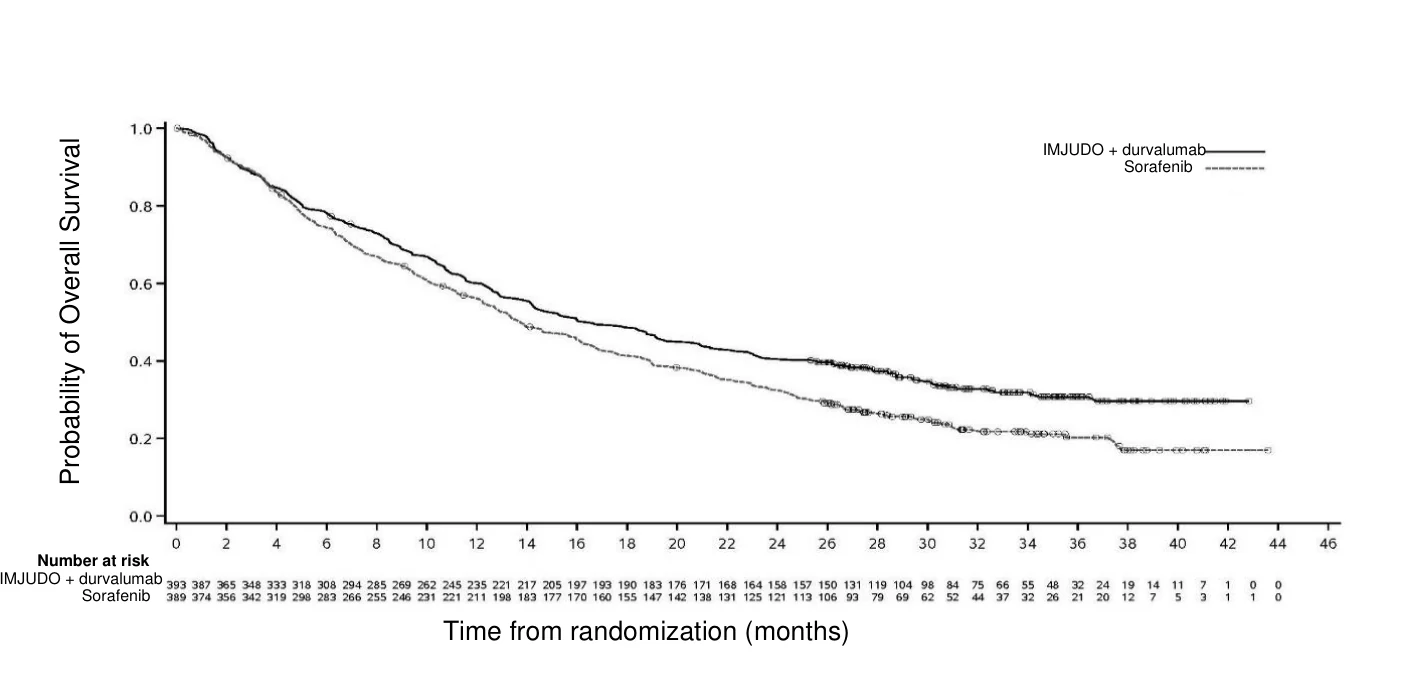
In an exploratory OS analysis, controlling for EHS, ALBI, Alpha-Fetoprotein and BCLC staging, between the IMJUDO plus durvalumab arm versus the sorafenib arm for the subgroups defined by the stratification factor of etiology status (HCV, HBV and Others), the HRs are 0.92 (95% CI: 0.65, 1.30), 0.60 (95% CI: 0.44, 0.81) and 0.78 (95% CI: 0.60, 1.01), respectively.
IMJUDO + durvalumab
Sorafenib
IMJUDO + durvalumab
Sorafenib
Time from randomization (months)
Pr oba bi lity of O v eral l Surv i v al
Number at risk
15. Microbiology
No microbiological information is required for this drug product.
16. Non-Clinical Toxicology
Carcinogenicity The carcinogenic and genotoxic potential of tremelimumab have not been evaluated.
Reproductive and developmental toxicology Animal fertility studies have not been conducted with tremelimumab.
17. Supporting Product Monographs
IMFINZI (durvalumab for injection, concentrate for solution for infusion, 50 mg/mL), submission control 282097, Product Monograph, AstraZeneca Canada Inc. (2025-01-17)