


Product Monograph - Yervoy
Recent Major Label Changes
| 1 INDICATIONS | 2026-xx |
|---|---|
| 4 DOSAGE AND ADMINISTRATION, 4.2 Recommended Dose and Dosage Adjustment | 2026-xx |
| 7 WARNINGS AND PRECAUTIONS | 2026-xx |
Table of Contents
Certain sections or subsections that are not applicable at the time of the preparation of the most recent authorized product monograph are not listed.
Recent Major Label Changes ................................................................................................... 3
Table of Contents ................................................................................................................... 3
Part 1: Healthcare Professional Information ........................................................................... 6
- 1.
Indications ....................................................................................................................... 6
1.1. Pediatrics .................................................................................................................. 7
1.2. Geriatrics .................................................................................................................. 7
- 2. Contraindications ............................................................................................................ 7
- 3. Serious Warnings and Precautions Box ............................................................................ 7
- 4.
Dosage and Administration ............................................................................................. 8
4.1. Dosing Considerations .............................................................................................. 8
4.2. Recommended Dose and Dosage Adjustment ......................................................... 8
4.4. Administration ........................................................................................................ 17
4.5. Missed Dose ........................................................................................................... 17
- 5. Overdose ....................................................................................................................... 17
- 6. Dosage Forms, Strengths, Composition, and Packaging ................................................. 18
- 7.
Warnings and Precautions ............................................................................................. 18
General ............................................................................................................................... 18
Driving and Operating Machinery ....................................................................................... 19
Hematologic ....................................................................................................................... 19
Hepatic/Biliary/Pancreatic .................................................................................................. 19
Immune .............................................................................................................................. 19
Infusion Reaction ................................................................................................................ 28
Monitoring and Laboratory Tests ....................................................................................... 28
Ophthalmologic .................................................................................................................. 28
Renal ................................................................................................................................... 28
Reproductive Health ........................................................................................................... 29
7.1. Special Populations ................................................................................................ 29
7.1.1. Pregnancy ...................................................................................................... 29
7.1.2. Breastfeeding ................................................................................................ 29
7.1.3. Pediatrics ....................................................................................................... 29
7.1.4. Geriatrics ....................................................................................................... 29
- 8.
Adverse Reactions ......................................................................................................... 30
8.1. Adverse Reaction Overview .................................................................................... 30
8.2. Clinical Trial Adverse Reactions .............................................................................. 30
8.2.1. Clinical Trial Adverse Reactions – Pediatrics .................................................. 32
8.3. Less Common Clinical Trial Adverse Reactions ....................................................... 33
8.5. Post-Market Adverse Reactions ............................................................................. 38
- 9.
Drug Interactions ........................................................................................................... 38
9.2. Drug Interactions Overview .................................................................................... 38
9.3. Drug-Behaviour Interactions .................................................................................. 38
9.4. Drug-Drug Interactions ........................................................................................... 39
9.5. Drug-Food Interactions........................................................................................... 39
9.6. Drug-Herb Interactions ........................................................................................... 39
9.7. Drug-Laboratory Test Interactions ......................................................................... 39
- 10.
Clinical Pharmacology ................................................................................................... 39
10.1. Mechanism of Action .............................................................................................. 39
10.2. Pharmacodynamics ................................................................................................ 39
10.3. Pharmacokinetics ................................................................................................... 39
10.4. Immunogenicity ...................................................................................................... 42
- 11. Storage, Stability, and Disposal ...................................................................................... 42
- 12. Special Handling Instructions ......................................................................................... 42
Part 2: Scientific Information ................................................................................................ 43
- 13. Pharmaceutical Information .......................................................................................... 43
- 14.
Clinical Trials .................................................................................................................. 44
14.1. Clinical Trials by Indication ..................................................................................... 44
- 15. Microbiology ................................................................................................................. 47
- 16. Non-Clinical Toxicology .................................................................................................. 48
- 17. Supporting Product Monographs ................................................................................... 50
Patient Medication Information ........................................................................................... 51
Part 1: Healthcare Professional Information
1. Indications
PrYERVOY® (ipilimumab for injection) is indicated for:
Unresectable or Metastatic Melanoma:
- Yervoy as a single agent is indicated for the treatment of unresectable or metastatic melanoma.
Yervoy in combination with nivolumab is indicated for the treatment of adult patients with unresectable or metastatic melanoma who have not received prior systemic therapy for unresectable or metastatic melanoma.
- When using Yervoy in combination with nivolumab, consult Product Monograph for nivolumab for further information on this drug.
Metastatic Renal Cell Carcinoma (RCC):
- Yervoy, in combination with nivolumab, is indicated for the treatment of adult patients with intermediate/poor-risk advanced or metastatic RCC.
- When using Yervoy in combination with nivolumab, consult Product Monograph for nivolumab for further information on this drug.
Metastatic Non-Small Cell Lung Cancer (NSCLC):
- Yervoy, in combination with nivolumab, is indicated for the treatment of adult patients with metastatic NSCLC, expressing PD-L1 ≥ 1% as determined by a validated test, with no EGFR or ALK genomic tumour aberrations, and no prior systemic therapy for metastatic NSCLC.
- Yervoy, in combination with nivolumab and 2 cycles of platinum-doublet chemotherapy, is indicated for the treatment of adult patients with metastatic NSCLC with no EGFR or ALK genomic tumour aberrations, and no prior systemic therapy for metastatic NSCLC.
Microsatellite Instability-High (MSI-H)/ Mismatch Repair Deficient (dMMR) Metastatic Colorectal Cancer:
- Yervoy, in combination with nivolumab, is indicated for the first-line treatment of adult patients with unresectable or metastatic microsatellite instability-high (MSI-H) or mismatch repair deficient (dMMR) colorectal cancer.
Yervoy, in combination with nivolumab, is indicated for the treatment of adult patients with MSI-H or dMMR metastatic colorectal cancer after prior fluoropyrimidine-based therapy in combination with oxaliplatin or irinotecan.
The marketing authorization with conditions is primarily based on tumour objective response rate and durability of response. An improvement in survival has not yet been established.
Unresectable Malignant Pleural Mesothelioma (MPM):
- Yervoy, in combination with nivolumab, is indicated for the treatment of adult patients with unresectable malignant pleural mesothelioma (MPM) who have not received prior systemic therapy for MPM.
Unresectable or Metastatic Esophageal Squamous Cell Carcinoma (ESCC):
- Yervoy, in combination with nivolumab, is indicated for the treatment of adult patients with unresectable or metastatic ESCC, with tumour cell PD-L1 expression ≥ 1% as determined by a validated test, and no prior systemic therapy for metastatic ESCC.
Unresectable or Advanced Hepatocellular Carcinoma (HCC):
Yervoy, in combination with nivolumab, is indicated for the first-line treatment of adult patients with unresectable or advanced HCC.
1.1. Pediatrics
Pediatrics (<18 years of age): Based on the data submitted and reviewed by Health Canada, the safety and efficacy of Yervoy in pediatric patients has not been established; therefore, Health Canada has not authorized an indication for pediatric use (see 8 Adverse Reactions, Clinical Trial Adverse Reactions (Pediatrics), and 10 Clinical Pharmacology, Special Populations and Conditions).
1.2. Geriatrics
Geriatrics (≥ 65 years of age): Of the 131 patients treated with Yervoy 3 mg/kg monotherapy in the study MDX-010-20, 30% were 65 years of age or older. No overall differences in safety or efficacy were reported between elderly patients (≥ 65 years) and younger patients (<65 years).
2. Contraindications
- Yervoy is contraindicated in patients who are hypersensitive to this drug or to any ingredient in the formulation, including any non-medicinal ingredient, or component of the container. For a complete listing, see 6 Dosage Forms, Strengths, Composition And Packaging.
- Yervoy is also contraindicated in patients with active, life-threatening autoimmune disease, or with organ transplantation graft where further immune activation is potentially imminently life-threatening (see 7 Warnings and Precautions).
When using Yervoy in combination with nivolumab, consult Product Monograph for nivolumab for further information on this drug.
3. Serious Warnings and Precautions Box
Yervoy as monotherapy or in combination with nivolumab can cause severe and fatal immune-mediated adverse reactions, including enterocolitis, intestinal perforation, hepatitis, dermatitis (including toxic epidermal necrolysis), Stevens-Johnson syndrome, neuropathy, endocrinopathy, pneumonitis, interstitial lung disease, myocarditis, encephalitis, myasthenia gravis, autoimmune hemolytic anemia as well as toxicities in other organ systems. While most of these reactions occurred during the induction period, onset months after the last dose has been reported (see 7 Warnings and Precautions and 8 Adverse Reactions). Early diagnosis and appropriate management are essential to minimize life-threatening complications. Patients should be monitored for signs and symptoms suggestive of immune-mediated adverse reactions [see 4 Dosage and Administration and 7 Warnings and Precautions]. Yervoy as monotherapy or in combination with nivolumab must be permanently discontinued for any severe immune-mediated adverse reaction that recurs and for any life-threatening immune-mediated adverse reaction (see 7 Warnings and Precautions and 4 Dosage and Administration). Healthcare professionals should consult the nivolumab Product Monograph prior to initiation of |
|---|
| Yervoy in combination with nivolumab. |
4. Dosage and Administration
4.1. Dosing Considerations
For currently authorized Yervoy combination regimens containing nivolumab, refer to the nivolumab Product Monograph Section 4 for the applicable nivolumab formulation, dosage and method of administration.
Consult the respective Product Monographs for each agent administered in combination with Yervoy for further information.
Clinical chemistries (e.g., electrolytes, liver function test, adrenocorticotropic hormone (ACTH) level, and thyroid function tests) should be evaluated at baseline and before each dose.
Patient Selection
Metastatic NSCLC:
Select patients with metastatic NSCLC for treatment with Yervoy in combination with nivolumab based on PD-L1 expression. A test authorized by Health Canada which is equivalent to that used in clinical trials should be required.
MSI-H/dMMR metastatic colorectal cancer:
Patients should be selected for treatment based on MSI-H or dMMR tumor status as determined by an experienced laboratory using validated testing methods.
When using Yervoy in combination with nivolumab consult Product Monograph for nivolumab for further information.
4.2. Recommended Dose and Dosage Adjustment
Recommended Dose - Yervoy as monotherapy
Melanoma:
The recommended induction regimen of Yervoy is 3 mg/kg administered intravenously over a 30-minute period every 3 weeks to a maximum of four doses, and within 16 weeks of the first dose. Patients should receive the entire induction regimen (four doses) as tolerated, regardless of the appearance of new lesions or growth of existing lesions. Assessments of tumor response to Yervoy should be conducted only after completion of induction therapy.
Liver function tests (LFTs), thyroid function tests, and electrolytes should be evaluated at baseline and before each dose of Yervoy. In addition, any signs or symptoms of immune-mediated adverse reactions, including diarrhea and colitis, should be assessed during treatment (see 7 Warnings and Precautions).
Recommended Dose - Yervoy in combination with nivolumab
Melanoma:
The recommended dose of Yervoy is 3 mg/kg administered as an intravenous infusion over 30 minutes in combination with nivolumab 1 mg/kg administered intravenously over 30 minutes, on the same day, every 3 weeks for the first 4 doses or until unacceptable toxicity, whichever occurs earlier. After the completion of the 4 doses of Yervoy and nivolumab, administer nivolumab as a single agent, either:
- 3 mg/kg every 2 weeks or
- 240 mg every 2 weeks or
- 480 mg every 4 weeks
as an intravenous infusion over 30 minutes (Table 1). Continue treatment as long as clinical benefit is observed or until treatment is no longer tolerated by the patient.
Table 1: Recommended doses and infusion times for intravenous administration of ipilimumab in combination with nivolumab
| Combination phase, every 3 weeks for 4 dosing cycles | Monotherapy phase | |
|---|---|---|
| Nivolumab | 1 mg/kg over 30 minutes | 3 mg/kg every 2 weeks over 30 minutes1 or 240 mg every 2 weeks over 30 minutes1 or 480 mg every 4 weeks over 30 minutes2 |
| Ipilimumab | 3 mg/kg over 30 minutes | - |
- 1. 3 weeks after the last dose of the combination of nivolumab and ipilimumab
- 2. 6 weeks after the last dose of the combination of nivolumab and ipilimumab
Renal Cell Carcinoma and previously treated metastatic MSI-H/dMMR colorectal cancer:
The recommended dose of Yervoy is 1 mg/kg administered as an intravenous infusion over 30 minutes, in combination with 3 mg/kg nivolumab administered intravenously over 30 minutes, on the same day, every 3 weeks for the first 4 doses. After completion of the combination phase, administer nivolumab as a single agent, either:
- 3 mg/kg every 2 weeks or
- 240 mg every 2 weeks or
- 480 mg every 4 weeks
as an intravenous infusion over 30 minutes (Table 2). Continue treatment as long as clinical benefit is observed or until treatment is no longer tolerated by the patient.
Table 2: Recommended doses and infusion times for intravenous administration of ipilimumab in combination with nivolumab
| Combination phase, every 3 weeks for 4 dosing cycles | Monotherapy phase | |
|---|---|---|
| Nivolumab | 3 mg/kg over 30 minutes | 3 mg/kg every 2 weeks over 30 minutes1 or 240 mg every 2 weeks over 30 minutes1 or 480 mg every 4 weeks over 30 minutes2 |
| Ipilimumab | 1 mg/kg over 30 minutes | - |
- 1. 3 weeks after the last dose of the combination of nivolumab and ipilimumab
- 2. 6 weeks after the last dose of the combination of nivolumab and ipilimumab
Previously untreated unresectable or metastatic MSI-H or dMMR colorectal cancer
The recommended dose for first-line treatment of dMMR or MSI-H CRC is 1 mg/kg ipilimumab in combination with 240 mg of nivolumab administered intravenously every 3 weeks for a maximum of 4 doses, followed by nivolumab monotherapy administered intravenously at either 240 mg every 2 weeks or at 480 mg every 4 weeks. For the monotherapy phase, the first dose of nivolumab should be administered 3 weeks after the last dose of the combination of nivolumab and ipilimumab. Treatment with nivolumab is recommended until disease progression, unacceptable toxicity, or up to 24 months in patients without disease progression
Table 3: Recommended doses and infusion times for intravenous administration of ipilimumab in combination with nivolumab
| Combination phase, every 3 weeks for 4 dosing cycles | Monotherapy phase | |
|---|---|---|
| Nivolumab | 240 mg over 30 minutes | 240 mg every 2 weeks over 30 minutes or 480 mg every 4 weeks over 30 minutes |
| Ipilimumab | 1 mg/kg over 30 minutes | - |
Unresectable malignant pleural mesothelioma
The recommended dose of Yervoy is 1 mg/kg every 6 weeks (30-minute intravenous infusion) in combination with nivolumab either 3 mg/kg every 2 weeks or 360 mg every 3 weeks (30-minute intravenous infusion). Treatment is continued until disease progression, unacceptable toxicity, or up to 2 years in patients without disease progression.
Table 4: Recommended doses and infusion times for intravenous administration of nivolumab in combination with ipilimumab
| Recommended Dose | Duration | |
|---|---|---|
| Nivolumab | 3 mg/kg over 30 minutes every 2 weeks OR 360 mg over 30 minutes every 3 weeks | In combination with ipilimumab until disease progression, unacceptable toxicity, or up to 2 years in patients without disease progression |
| Ipilimumab | 1 mg/kg over 30 minutes every 6 weeks | In combination with nivolumab until disease progression, unacceptable toxicity, or up to 2 years in patients without disease progression |
Metastatic NSCLC
For previously untreated metastatic NSCLC, select patients for Yervoy in combination with nivolumab treatment based on the presence of positive PD-L1 expression as determined by an experienced laboratory using a validated test. A test authorized by Health Canada which is equivalent to that used in clinical trials should be required.
The recommended dose of Yervoy in combination with nivolumab for previously untreated metastatic NSCLC is 1 mg/kg every 6 weeks (30-minute intravenous infusion) in combination with nivolumab 3 mg/kg every 2 weeks or 360 mg every 3 weeks (30-minute intravenous infusion) until disease progression, unacceptable toxicity, or up to 2 years in patients without disease progression.
Unresectable or Metastatic Esophageal Squamous Cell Carcinoma
The recommended dose is 1 mg/kg Yervoy administered IV over 30 minutes every 6 weeks in combination with 3 mg/kg nivolumab administered IV over 30 minutes every 2 weeks, or 1 mg/kg Yervoy administered IV over 30 minutes every 6 weeks in combination with 360 mg nivolumab administered IV over 30 minutes every 3 weeks. Treatment is recommended until disease progression, unacceptable toxicity, or up to 2 years in patients without disease progression.
Unresectable or advanced hepatocellular carcinoma
The recommended dose of Yervoy is 3 mg/kg administered as an intravenous infusion over 30 minutes, in combination with 1 mg/kg nivolumab administered intravenously over 30 minutes, on the same day, every 3 weeks for a maximum 4 doses.
After completion of the combination therapy for a maximum 4 doses, administer nivolumab as a single agent, either:
- 240 mg every 2 weeks or
- 480 mg every 4 weeks
as an intravenous infusion over 30 minutes. Continue treatment of nivolumab as single agent until disease progression, unacceptable toxicity, or up to 2 years.
Table 5: Recommended doses and infusion times for intravenous administration of ipilimumab in combination with nivolumab
| Combination phase, every 3 weeks for 4 dosing cycles | Monotherapy phase | |
|---|---|---|
| Nivolumab | 1 mg/kg over 30 minutes | 240 mg every 2 weeks over 30 minutes or 480 mg every 4 weeks over 30 minutes |
| Ipilimumab | 3 mg/kg over 30 minutes | - |
Recommended Dose - Yervoy in combination with nivolumab and chemotherapy:
Metastatic NSCLC
The recommended dose is Yervoy 1 mg/kg administered as a 30-minute intravenous infusion every 6 weeks in combination with nivolumab 360 mg administered as a 30-minute intravenous infusion every 3 weeks, and platinum-doublet chemotherapy administered every 3 weeks for 2 cycles. After completion of 2 cycles of chemotherapy, treatment is continued with Yervoy 1 mg/kg every 6 weeks in combination with nivolumab 360 mg every 3 weeks until disease progression, unacceptable toxicity, or up to 2 years in patients without disease progression (Table 6).
Table 6: Recommended doses and infusion times for intravenous administration of ipilimumab in combination with nivolumab and platinum-doublet chemotherapy
| Recommended Dose | Duration | |
|---|---|---|
| Nivolumab | 360 mg over 30 minutes every 3 weeks | In combination with ipilimumab until disease progression, unacceptable toxicity, or up to 2 years in patients without disease progression |
| Ipilimumab | 1 mg/kg over 30 minutes every 6 weeks | In combination with nivolumab until disease progression, unacceptable toxicity, or up to 2 years in patients without disease progression |
| Chemotherapy | histology-based platinum doublet chemotherapy every 3 weeks | 2 cycles of histology-based platinum-doublet chemotherapy |
Recommended Dosage Adjustment - Yervoy Monotherapy
Table 7: When to withhold dose of Yervoy as Monotherapy
| Withhold scheduled dose1 of Yervoy for any moderate immune-mediated adverse reactions. | |
|---|---|
| Withhold scheduled dose1 of Yervoy for any moderate immune-mediated adverse reactions. | |
| Any moderate immune-mediated adverse reactions | Action |
| Any moderate immune-mediated adverse reactions | Action |
| Gastrointestinal: | |
| Moderate diarrhea or colitis that either is not controlled with medical management or that persists (5-7 days) or recurs. |
|
Hepatic Grade 23 elevation in AST, ALT, or total bilirubin. | |
Endocrine Symptomatic endocrinopathy. | |
Skin: Severe (Grade 3)3 skin rash or widespread/intense pruritus regardless of etiology. | |
Neurological: Moderate (Grade 2)3 unexplained motor neuropathy, muscle weakness, or sensory neuropathy (lasting more than 4 days) | |
| Other moderate adverse reactions4 | |
- 1. No dose reduction of Yervoy is recommended.
- 2. Until administration of all 4 doses or 16 weeks from first dose, whichever occurs earlier.
- 3. Toxicity grades are in accordance with National Cancer Institute Common Terminology Criteria for Adverse Events. Version 4.0 (NCI-CTCAE v4).
- 4. Any other organ system adverse reactions that are considered immune-related should be graded according to CTCAE. The decision whether to withhold a dose should be based on severity.
Table 8: When to permanently discontinue Yervoy as Monotherapy
Permanently discontinue Yervoy for any of the following: Persistent moderate adverse reactions or inability to reduce corticosteroid dose to 7.5 mg prednisone or equivalent per day. Failure to complete full treatment course within 16 weeks from administration of first dose. | |
|---|---|
| Severe or life-threatening adverse reactions, including any of the following: | NCI-CTCAE v41 Grade |
Gastrointestinal: Colitis with abdominal pain, fever, ileus, or peritoneal signs; increase in stool frequency (7 or more over baseline), stool incontinence, need for intravenous hydration for more than 24 hours, gastrointestinal hemorrhage, and gastrointestinal perforation. | Grade 3 or 4 diarrhea or colitis. |
Hepatic: Severe elevations in aspartate aminotransferase (AST), alanine aminotransferase (ALT), or total bilirubin, or symptoms of hepatotoxicity. | Grade 3 or 4 elevation in AST, ALT, or total bilirubin. |
Skin: Stevens-Johnson syndrome, toxic epidermal necrolysis, or rash complicated by full thickness dermal ulceration, or necrotic, bullous, or hemorrhagic manifestations or severe pruritus. | Grade 4 rash or Grade 3 pruritus. |
Neurologic: New onset or worsening, severe motor or sensory neuropathy, Guillain-Barré syndrome, or myasthenia gravis. | Grade 3 or 4 motor or sensory neuropathy. |
Other organ systems2: Severe immune-mediated reactions involving any organ system (eg, nephritis, pneumonitis, pancreatitis, non-infectious myocarditis). Immune-mediated ocular disease that is unresponsive to topical immunosuppressive therapy. | ≥ Grade 3 immune-related reactions3 ≥ Grade 2 for immune-related eye disorders NOT responding to topical immunosuppressive therapy. |
- 1. Toxicity grades are in accordance with National Cancer Institute Common Terminology Criteria for Adverse Events. Version 4.0 (NCI-CTCAE v4).
- 2. Any other organ system adverse reactions that are demonstrated or suspected to be immune-related should be graded according to CTCAE. The decision whether to discontinue Yervoy should be based on severity.
- 3. Patients with severe (Grade 3 or 4) endocrinopathy controlled with hormone replacement therapy may remain on therapy.
Recommended Dosage Adjustment - Combination with nivolumab or with nivolumab and chemotherapy
For treatment with Yervoy in combination with nivolumab or Yervoy in combination with nivolumab and chemotherapy, dose escalation or reduction is not recommended. Dosing delay or discontinuation may be required based on individual safety and tolerability.
Treatment with Yervoy in combination with nivolumab may be continued for clinically stable patients with initial evidence of disease progression until disease progression is confirmed. Atypical responses (i.e., an initial transient increase in tumour size or small new lesions within the first few months followed by tumour shrinkage) have been observed.
Table 9: Recommended Treatment Modifications for Yervoy in Combination with nivolumab or with nivolumab and chemotherapy
| Target Organ/System | Adverse Reaction1 | Treatment Modification |
|---|---|---|
| Endocrine | Grade 2 or 3 hypothyroidism, Grade 2 or 3 hyperthyroidism, and Grade 2 hypophysitis Grade 2 adrenal insufficiency Grade 3 diabetes | Withhold dose(s) until symptoms resolve and acute management with corticosteroids, if needed, is complete2 |
Grade 3 or 4 hypophysitis Grade 4 hypothyroidism Grade 4 hyperthyroidism Grade 3 or 4 adrenal insufficiency Grade 4 diabetes | Permanently discontinue treatment3 | |
| Gastrointestinal | Grade 2 diarrhea or colitis | Withhold dose(s) until symptoms resolve and management with corticosteroids is complete |
| Grade 3 or 4 diarrhea or colitis | Permanently discontinue treatment | |
| Hepatic | Patients with normal AST/ALT/bilirubin at baseline: | |
| Grade 2 elevation in aspartate aminotransferase (AST), alanine aminotransferase (ALT), or total bilirubin | Withhold dose(s) until laboratory values return to baseline and management with corticosteroids is complete | |
| Grade 3 or 4 elevation in AST, ALT, or total bilirubin | Permanently discontinue treatment3 | |
| Hepatic in patients with HCC | If AST/ALT is within normal limits at baseline and increases to > 3 and ≤ 10 times ULN or Baseline AST/ALT is > 1 and ≤ 3 times ULN and increases to > 5 and ≤ 10 times ULN or Baseline AST/ALT is > 3 and ≤ 5 times ULN and increases to > 8 and ≤ 10 times ULN | Withhold dose(s) until laboratory values return to baseline and management with corticosteroids, if needed, is complete |
AST/ALT increases to > 10 times ULN or Total bilirubin increases to > 3 times ULN | Permanently discontinue treatmentc | |
| Pulmonary | Grade 2 pneumonitis | Withhold dose(s) until symptoms resolve, radiographic abnormalities improve, and management with corticosteroids is complete |
| Grade 3 or 4 pneumonitis | Permanently discontinue treatment3 | |
| Renal | Grade 2 creatinine elevation | Withhold dose(s) until creatinine returns to baseline and management with corticosteroids is complete |
| Grade 3 or 4 creatinine elevation | Permanently discontinue treatment3 | |
| Skin | Grade 3 rash | Withhold dose(s) until symptoms resolve and management with corticosteroids is complete |
| Suspected Stevens-Johnson syndrome (SJS) or toxic epidermal necrolysis (TEN) | Withhold dose(s) | |
Grade 4 rash Confirmed SJS/TEN | Permanently discontinue treatment3 | |
| Encephalitis | New-onset moderate or severe neurologic signs or symptoms | Withhold dose(s) until symptoms resolve and management with corticosteroids is complete |
| Immune-mediated encephalitis | Permanently discontinue treatment3 | |
| Myocarditis | Grade 2 myocarditis | Withhold dose(s) until symptoms resolve and management with corticosteroids is complete. Retreatment may be considered after recovery. |
| Grade 3 myocarditis | Permanently discontinue treatment3 | |
| Other | Grade 3 | Withhold dose(s) until symptoms resolve or improve and management with corticosteroids is complete |
| Grade 4 or recurrent Grade 3, Grade 3 or 4 infusion reaction, persistent Grade 2 or 3 despite treatment modification, inability to reduce corticosteroid dose to 10 mg prednisone or equivalent per day | Permanently discontinue treatment3 |
- 1. National Cancer Institute Common Terminology Criteria for Adverse Events (CTCAE) v4.0.
- 2. May resume treatment while receiving physiologic replacement therapy.
- 3. See 7 Warnings and Precautions for treatment recommendations.
When Yervoy is administered in combination with nivolumab, if either agent is withheld, the other agent should also be withheld. If dosing is resumed after a delay, either the combination treatment or nivolumab monotherapy could be resumed based on the evaluation of the individual patient.
See 7 Warnings and Precautions for detailed management guidelines of immune-mediated adverse reactions.
Pediatrics (<18 years of age): The efficacy and safety of Yervoy in pediatric patients have not been established. Health Canada has not authorized an indication for pediatric use (see 8.2.1 Adverse Reactions, Clinical Trial Adverse Reactions - Pediatrics, and 10 Clinical Pharmacology, Special Populations and Conditions).
Renal impairment
The safety and efficacy of Yervoy have not been studied in patients with renal impairment. Based on covariate analysis of renal impairment on the CL parameter, in the population pharmacokinetic model, no specific dose adjustment is considered necessary in patients with mild to moderate renal dysfunction (see 7 Warnings and Precautions and 10 Clinical Pharmacology).
Hepatic Impairment
The safety and efficacy of Yervoy have not been studied in patients with hepatic impairment. Based on a covariate analysis of hepatic impairment on the CL parameter, in the population pharmacokinetic model, no specific dose adjustment is considered necessary in patients with mild hepatic impairment (see 7 Warnings and Precautions and 10 Clinical Pharmacology).
4.4. Administration
Yervoy must not be administered as an intravenous push or bolus injection. The entire solution of the ipilimumab dose must be infused through a compatible low-protein-binding in-line filter (refer to the “Preparation for Administration” section for compatible filters). A separate infusion line must be used for the infusion, and the line must be flushed with sterile sodium chloride 9 mg/mL (0.9%) solution for injection or 5% dextrose injection at the end of infusion.
Once opened, the product should be infused or diluted and infused immediately. If not used immediately, the infusion solution (undiluted or diluted between 1 mg/mL and 4 mg/mL) may be stored for up to 24 hours either under refrigeration (2° to 8°C) or at room temperature (20° to 25°C).
When Yervoy is administered in combination with nivolumab or with nivolumab and chemotherapy, nivolumab should be given first followed by Yervoy and then chemotherapy (if applicable), on the same day. Use separate infusion bags and filters for each infusion.
PREPARE INFUSION USING ASEPTIC TECHNIQUE.
Yervoy may be used for intravenous administration without dilution after transferring to an infusion container using an appropriate sterile syringe, or after diluting with sterile sodium chloride 9 mg/mL (0.9% solution) or 5% dextrose injection solution to a concentration ranging from 1 mg/mL to 4 mg/mL. An in-line, sterile, non-pyrogenic, compatible, low protein-binding filter must be used for intravenous administration.
Do not shake product.
The drug product should be inspected visually for particulate matter and discoloration prior to administration. Discard vial if solution is cloudy, there is pronounced discoloration (solution may have pale yellow color), or there is foreign particulate matter other than translucent-to-white, amorphous particles.
Determine the number of vials of Yervoy needed (see 4 Dosage and Administration). Allow the vials to stand at room temperature for approximately 5 minutes. Withdraw the required volume of ipilimumab solution using an appropriate sterile syringe and transfer into a sterile, evacuated glass bottle or intravenous bag (PVC or non-PVC).
Yervoy is compatible with:
- Glass, polyvinylchloride (PVC) and non-PVC bags
- PVC intravenous extension/administration sets
- Polyethersulfone (0.2 micrometer and 1.2 micrometer) and nylon (0.2 micrometer) in-line filters
Partially used vials or empty vials of Yervoy should be discarded in accordance with local requirements.
4.5. Missed Dose
If a planned dose of Yervoy is missed, it should be administered as soon as possible. The schedule of administration should be adjusted to maintain the prescribed dosing interval.
5. Overdose
The maximum tolerated dose of Yervoy has not been determined. In case of overdosage, patients should be closely monitored for signs or symptoms of adverse reactions, and appropriate symptomatic treatment should be instituted.
| For the most recent information in the management of a suspected drug overdose, contact your regional poison control centre or Health Canada’s toll-free number, 1-844 POISON-X (1-844-764-7669). |
|---|
- 6. Dosage Forms, Strengths, Composition, and Packaging
To help ensure the traceability of biologic products, healthcare professionals should recordboth the brand name and the non-proprietary (active ingredient) name as well as other product-specific identifiers such as the Drug Identification Number (DIN) and the batch/lot number of the product supplied.
Table 10: Dosage Forms, Strengths, Composition and Packaging
Yervoy is supplied at a nominal concentration of 5 mg/mL ipilimumab in 50-mg and 200-mg single-use vials. The solution has an approximate pH of 7.
7. Warnings and Precautions
Please see the 3 Serious Warnings and Precautions Box.
General
Yervoy should be administered under the supervision of physicians experienced in the treatment of cancer.
Immune-mediated adverse reactions have occurred at higher frequencies when Yervoy was administered in combination with nivolumab compared with Yervoy as monotherapy. Most immune-mediated adverse reactions improved or resolved with appropriate management, including initiation of corticosteroids and treatment modifications.
When using Yervoy in combination with nivolumab, consult Product Monograph for nivolumab for further information on this drug.
Patients with ocular melanoma or active central nervous metastases
The safety and efficacy of Yervoy were not established in patients with ocular melanoma or active central nervous metastases.
Patients on controlled sodium diet
Each mL of this medicinal product contains 0.1 mmol (or 2.30 mg) sodium. To be taken into consideration when treating patients on a controlled sodium diet.
| Route of Administration | Dosage Form / Strength/Composition | Non-medicinal Ingredients |
| Intravenous infusion | Injection / 50 mg ipilimumab / 10 mL (5 mg/mL) Injection / 200 mg ipilimumab / 40 mL (5 mg/mL) | Diethylene triamine pentaacetic acid (DTPA), mannitol, polysorbate 80, sodium chloride, tris hydrochloride, and Water for Injection USP. Sodium hydroxide or hydrochloric acid is added as necessary to adjust pH. |
Concurrent administration with vemurafenib
The concurrent administration of Yervoy and vemurafenib is not recommended. In a Phase 1 trial, asymptomatic Grade 3 LFT elevations (ALT/AST with or without total bilirubin) were reported in 6 of 10 patients treated with the combination of Yervoy (3 mg/kg) and vemurafenib (960 mg or 720 mg twice daily) administered concurrently These results do not impact the currently approved use of Yervoy as monotherapy (see 14 Clinical Trials).
Patient Counseling Information
Patients should be advised to report immediately any signs or symptoms suggestive of immune-mediated adverse reactions as described in 7 Warnings and Precautions. The importance of reporting any worsening of symptoms or severity should be emphasized. Patients should be strongly advised not to treat any of these symptoms with over-the-counter medications without consultation with a health care provider.
Driving and Operating Machinery
Because of potential adverse reactions such as fatigue (see 8 Adverse Reactions), patients should be advised to use caution when driving or operating machinery.
Hematologic
Haemophagocytic lymphohistiocytosis (HLH)
Haemophagocytic lymphohistiocytosis (HLH) has been reported in relation to the use of Yervoy (ipilimumab) either as monotherapy, or in combination with nivolumab. Patients should be closely monitored. If HLH is suspected, Yervoy or Yervoy in combination with nivolumab should be withheld. If HLH is confirmed, Yervoy or Yervoy in combination with nivolumab should be discontinued and treatment for HLH should be initiated, as deemed medically appropriate (see 8 Adverse Reactions).
Hepatic/Biliary/Pancreatic
The safety and efficacy of Yervoy have not been studied in patients with hepatic impairment. Clinical experience with Yervoy is limited in patients with transaminase levels 5 times ULN or greater or bilirubin levels greater than 2 times ULN at baseline and must be administered with caution in these patients (see 14 Clinical Trials). In the population pharmacokinetic analysis of data from clinical studies concerning patients with metastatic melanoma, the covariate pre-existing mild hepatic impairment did not influence the CL parameter in the population PK model of ipilimumab and on this basis, no specific dose adjustment is necessary in patients with mild hepatic impairment (total bilirubin [TB] >1.0 × to 1.5 × the upper limit of normal [ULN] or AST >ULN) (see 10 Clinical Pharmacology).
Immune
Immune-Mediated Adverse Reactions - Yervoy as monotherapy
Yervoy is an immune-potentiator and can cause inflammatory adverse reactions resulting from increased or excessive immune activity (immune-mediated adverse reactions), likely to be related to its mechanism of action.
Immune-mediated adverse reactions, sometime fatal, can involve any organ systems, although more commonly manifest in gastrointestinal tract, liver, skin, endocrine, and nervous systems. Early diagnosis and appropriate management are essential to minimize life-threatening complications. Signs and symptoms suggestive of immune-mediated adverse reactions may be non-specific (e.g., diarrhea, increased stool frequency, bloody stool, liver function test elevations, rash and endocrinopathies) and must be considered Yervoy-related, unless an alternate etiology is identified. Most immune-mediated adverse reactions occurred during the induction period; however, onset months after the last dose of Yervoy has also been reported.
Yervoy-specific management guidelines for immune-mediated adverse reactions are described in Table 7 and Table 8. Due to the mechanism of the inflammatory reactions observed with Yervoy, systemic high-dose corticosteroids with or without additional immunosuppressive therapy may be required for management of severe immune-mediated adverse reactions. A summary of high-dose corticosteroid use in patients who had severe to fatal immune-mediated adverse reactions is presented in Adverse Reactions (Table 13).
Immune-Mediated Gastrointestinal Adverse Reactions
In Study MDX-010-20, severe, life-threatening, or fatal immune-mediated enterocolitis (diarrhea of 7 or more stools above baseline, fever, ileus, peritoneal signs; Grade 3–5) occurred in 34 (7%) Yervoy-treated patients, and moderate enterocolitis (diarrhea with up to 6 stools above baseline, abdominal pain, mucus or blood in stool; Grade 2) occurred in 28 (5%) Yervoy-treated patients. Across all Yervoy-treated patients (n=511), 5 (1%) patients developed intestinal perforation, 4 (0.8%) patients died as a result of complications, and 26 (5%) patients were hospitalized for severe enterocolitis.
The median time to onset was 7.4 weeks (range 1.6–13.4) after the initiation of Yervoy and the median number of doses prior to onset was 3 (range 1-4) for patients with Grade 3-5 enterocolitis. The median time to onset was 6.3 weeks (range 0.3–18.9) and the median number of doses prior to onset was 3 (range 1-4) for patients with Grade 2 enterocolitis.
Twenty-nine patients (85%) with Grade 3–5 enterocolitis were treated with high-dose (³40 mg prednisone equivalent per day) corticosteroids, with a median dose of 80 mg/day of prednisone or equivalent; the median duration of treatment was 2.3 weeks (ranging up to 13.9 weeks) followed by corticosteroid taper. Of the 29 patients with Grade 3–5 enterocolitis who received high-dose corticosteroids, 21 (72%) experienced complete resolution, 1 (3%) experienced improvement to Grade 2 severity, and 7 (24%) experienced no improvement to £ Grade 2 severity (including 2 [7%] with fatal outcome). Of the 28 patients with moderate enterocolitis, 13 (46%) were not treated with systemic corticosteroids, 8 (29%) were treated with <40 mg prednisone or equivalent per day for a median duration of 5.1 weeks, and 7 (25%) were treated with high-dose corticosteroids for a median duration of 10 days prior to corticosteroid taper. Among the 28 patients with Grade 2 enterocolitis, 22 (79%) experienced complete resolution, 3 (11%) improved, and 3 (11%) did not improve.
Infliximab was administered to 6 of the 62 patients (10%) with moderate, severe, or life-threatening immune-mediated enterocolitis following inadequate response to corticosteroids. In these patients, infliximab was administered once or twice usually at a dose of 5 mg/kg. All 6 patients treated with infliximab achieved resolution of their enterocolitis.
Monitor patients for signs and symptoms of enterocolitis (such as diarrhea, abdominal pain, mucus or blood in stool, with or without fever) and of bowel perforation (such as peritoneal signs and ileus). In symptomatic patients, rule out infectious etiologies and consider endoscopic evaluation for persistent or severe symptoms.
Cytomegalovirus (CMV) infection/reactivation has been reported in patients treated with Yervoy. Most of these cases occurred in patients with corticosteroid-refractory immune-related colitis. Stool infections work-up (including CMV, other viral etiology, culture, Clostridium difficile, ova, and parasite) should be performed upon presentation of diarrhea or colitis to exclude infectious or other alternate etiologies.
Management recommendations for diarrhea or colitis are based on severity of symptoms (per NCI-CTCAE v4 severity grading classification). Patients with mild-to-moderate (Grade 1 or 2) diarrhea (an increase of up to 6 stools per day) or suspected mild-to-moderate colitis (eg, abdominal pain or blood in stools) may remain on Yervoy. Symptomatic treatment (eg, loperamide, fluid replacement) and close monitoring are advised.
Permanently discontinue Yervoy in patients with severe (Grade 3 or 4) diarrhea or colitis and initiate systemic corticosteroids at a dose of 1 to 2 mg/kg/day of prednisone or equivalent. Upon improvement to Grade 1 or less, initiate corticosteroid taper and continue to taper over at least one month. In clinical trials, rapid corticosteroid tapering resulted in recurrence or worsening symptoms of enterocolitis in some patients (see 4 Dosage and Administration).
Withhold Yervoy dosing for moderate enterocolitis; administer anti-diarrheal treatment and, if persistent for 5-7 days, initiate systemic corticosteroids at a dose of 0.5 mg/kg/day prednisone or equivalent. If resolution to Grades 0-1 or return to baseline occurs, Yervoy may be resumed (see 4 Dosage and Administration).
Addition of an alternative immunosuppressive agent to the corticosteroid therapy, or replacement of the corticosteroid therapy, should be considered in corticosteroid-refractory immune-related colitis if other causes are excluded (including CMV infection/reactivation evaluated with viral PCR on biopsy, and other viral, bacterial, and parasitic etiology)
Immune-Mediated Hepatic Adverse Reactions
Yervoy is associated with serious immune-related hepatotoxicity. Fatal hepatic failure has been reported in clinical trials.
In MDX-010-20, severe, life-threatening, or fatal hepatotoxicity (aspartate aminotransferase [AST] or alanine aminotransferase [ALT] elevations of more than 5 times the upper limit of normal or total bilirubin elevations more than 3 times the upper limit of normal; Grade 3–5) occurred in 8 (2%) Yervoy-treated patients, with fatal hepatic failure in 0.2% and hospitalization in 0.4% of Yervoy-treated patients. An additional 13 (2.5%) patients experienced moderate hepatotoxicity manifested by liver function test abnormalities (AST or ALT elevations of more than 2.5 times but not more than 5 times the upper limit of normal or total bilirubin elevation of more than 1.5 times but not more than 3 times the upper limit of normal; Grade 2). The underlying pathology for hepatotoxicity was not ascertained in all patients but in some instances did include immune-mediated hepatitis. Among the 8 patients with Grade 3-5 hepatitis, the median number of Yervoy doses prior to onset was 3 (range 1-4).
Monitor liver function tests (hepatic transaminase and bilirubin levels) and assess patients for signs and symptoms of hepatotoxicity before each dose of Yervoy. In patients with hepatotoxicity, rule out infectious or malignant causes and increase frequency of liver function test monitoring until resolution.
Permanently discontinue Yervoy in patients with Grade 3 or 4 transaminase or bilirubin elevation and administer systemic corticosteroids at a dose of 1 to 2 mg/kg/day of prednisone or equivalent. Once symptoms have resolved and liver function tests (LFTs) show sustained improvement or return to baseline, initiate corticosteroid tapering and continue to taper over 1 month. Across the clinical development program for Yervoy, mycophenolate treatment has been administered in patients who have persistent severe hepatitis despite high-dose corticosteroids.
Withhold Yervoy in patients with Grade 2 transaminase or total bilirubin elevation and LFTs must be monitored until resolution. Upon improvement, Yervoy may be resumed (see 4 Dosage and Administration).
Immune-mediated Skin Adverse Reactions
In Study MDX-010-20, severe, life-threatening, or fatal immune-mediated dermatitis (eg, Stevens-Johnson syndrome, toxic epidermal necrolysis, or rash complicated by full thickness dermal ulceration, or necrotic, bullous, or hemorrhagic manifestations; Grade 3–5) occurred in 13 (2.5%) Yervoy-treated patients. One (0.2%) patient died as a result of toxic epidermal necrolysis and one additional patient required hospitalization for severe dermatitis. There were 63 (12%) patients with moderate (Grade 2) dermatitis.
The median time to onset of moderate, severe, or life-threatening immune-mediated dermatitis was 3.1 weeks and ranged up to 17.3 weeks from the initiation of Yervoy. The median number of Yervoy doses prior to onset was 2 (range 1-4) for patients with Grade 2-5 dermatitis.
Seven (54%) Yervoy-treated patients with severe dermatitis received high-dose corticosteroids (median dose 60 mg prednisone/day or equivalent) for up to 14.9 weeks followed by corticosteroid taper. Of these 7 patients, 6 had complete resolution; time to resolution ranged up to 15.6 weeks. The other patient had no improvement.
Of the 63 patients with moderate dermatitis, 25 (40%) were treated with systemic corticosteroids (median of 60 mg/day of prednisone or equivalent) for a median of 2.1 weeks, 7 (11%) were treated with only topical corticosteroids, and 31 (49%) did not receive systemic or topical corticosteroids. Forty-four (70%) patients with moderate dermatitis were reported to have complete resolution, 7 (11%) improved to mild (Grade 1) severity, and 12 (19%) had no reported improvement.
Monitor patients for signs and symptoms of dermatitis such as rash and pruritus. Unless an alternate etiology has been identified, signs or symptoms of dermatitis should be considered immune-mediated.
Permanently discontinue Yervoy in patients with very severe (Grade 4) rash, (including Stevens-Johnson syndrome, toxic epidermal necrolysis, or rash complicated by full thickness dermal ulceration, or necrotic, bullous, or hemorrhagic manifestations) or severe (Grade 3) pruritus. Administer systemic corticosteroids at a dose of 1 to 2 mg/kg/day of prednisone or equivalent. When dermatitis is controlled, corticosteroid tapering should occur over a period of at least 1 month.
Withhold Yervoy dosing in patients with severe (Grade 3) signs and symptoms. If initial symptoms improve to mild (Grade 1) or resolve, Yervoy may be resumed (see 4 Dosage and Administration).
Patients with a mild-to-moderate (Grade 1 or 2) skin adverse reaction may remain on Yervoy therapy with symptomatic treatment (eg, antihistamines). Administer topical or systemic corticosteroids if there is no improvement of symptoms within 1 week.
Caution should be used when considering the use of Yervoy in a patient who has previously experienced a severe or life-threatening skin adverse reaction on a prior cancer immune stimulatory therapy.
Immune-mediated Neuropathies
In Study MDX-010-20, one case of fatal Guillain-Barré syndrome and one case of severe (Grade 3) peripheral motor neuropathy were reported. Across the clinical development program of Yervoy, myasthenia gravis and additional cases of Guillain-Barré syndrome have been reported.
Monitor for symptoms of motor or sensory neuropathy such as unilateral or bilateral weakness, sensory alterations, or paresthesia. Permanently discontinue Yervoy in patients with severe neuropathy (Grade 3 or 4, interfering with daily activities) such as Guillain-Barré-like syndromes. Institute medical intervention as appropriate for management of severe neuropathy. Consider initiation of systemic corticosteroids at a dose of 1 to 2 mg/kg/day prednisone or equivalent for severe neuropathies. Withhold Yervoy dosing in patients with moderate (Grade 2) neuropathy (not interfering with daily activities). If neurologic symptoms resolve to baseline, Yervoy may be resumed (see 4 Dosage and Administration).
Immune-mediated Endocrinopathies
In Study MDX-010-20, severe to life-threatening immune-mediated endocrinopathies (requiring hospitalization, urgent medical intervention, or interfering with activities of daily living; Grade 3–4) occurred in 9 (1.8%) Yervoy-treated patients. All 9 patients had hypopituitarism and some had additional concomitant endocrinopathies such as adrenal insufficiency, hypogonadism, and hypothyroidism. Six of the 9 patients were hospitalized for severe endocrinopathies. Moderate endocrinopathy (requiring hormone replacement or medical intervention; Grade 2) occurred in 12 (2.3%) patients and consisted of hypothyroidism, adrenal insufficiency, hypopituitarism, and one case each of hyperthyroidism and Cushing’s syndrome. The median time to onset of moderate to severe immune-mediated endocrinopathy was 11 weeks and ranged up to 19.3 weeks after the initiation of Yervoy. The median number of doses prior to onset was 4 (range 1-4) for patients with Grade 2-5 endocrinopathy.
Monitor patients for clinical signs and symptoms of hypophysitis, adrenal insufficiency (including adrenal crisis), and hyper- or hypothyroidism. Patients may present with fatigue, headache, mental status changes, abdominal pain, unusual bowel habits, and hypotension, or nonspecific symptoms which may resemble other causes such as brain metastasis or underlying disease. Unless an alternate etiology has been identified, signs or symptoms of endocrinopathies should be considered immune-mediated.
Monitor thyroid function tests and clinical chemistries at the start of treatment, before each dose, and as clinically indicated based on symptoms. In a limited number of patients, hypophysitis was diagnosed by imaging studies through enlargement of the pituitary gland.
If pituitary imaging or laboratory tests of endocrine function are abnormal, withhold Yervoy dosing. Initiate systemic corticosteroids at a dose of 1 to 2 mg/kg/day of prednisone or equivalent, and initiate appropriate hormone replacement therapy (see 4 Dosage and Administration).
Other Immune-mediated Adverse Reactions, Including Ocular Manifestations
The following clinically significant immune-mediated adverse reactions were seen in less than 1% of Yervoy-treated patients in Study MDX-010-20: nephritis, pneumonitis, meningitis, pericarditis, uveitis, iritis, and hemolytic anemia.
Across the clinical development program for Yervoy, the following likely immune-mediated adverse reactions were also reported with less than 1% incidence: myocarditis, angiopathy, temporal arteritis, vasculitis, polymyalgia rheumatica, conjunctivitis, blepharitis, episcleritis, scleritis, leukocytoclastic vasculitis, erythema multiforme, psoriasis, pancreatitis, arthritis, and autoimmune thyroiditis.
Permanently discontinue Yervoy for clinically significant or severe (Grade 3 or 4) immune-mediated adverse reactions. Initiate systemic corticosteroids at a dose of 1 to 2 mg/kg/day prednisone or equivalent for severe immune-mediated adverse reactions.
Administer corticosteroid eye drops to patients who develop uveitis, iritis, or episcleritis. Permanently discontinue Yervoy for immune-mediated ocular disease that is unresponsive to local immunosuppressive therapy (see 4 Dosage and Administration). Transient vision loss has been reported in patients with ipilimumab-related ocular inflammations.
Vogt-Koyanagi-Harada syndrome (VKHS)
Cases of Vogt-Koyanagi-Harada syndrome have been reported post-marketing. Vogt-Koyanagi-Harada syndrome (VKH) also known as uveo-meningitis syndrome is a rare multisystem disease of presumed autoimmune cause affecting pigmented tissues containing melanin. It is characterized by chronic uveitis, poliosis (decrease or absence of melanin in head hair), alopecia, dysacousia (a condition in which ordinary sounds produce discomfort or pain), vitiligo, and signs of meningeal irritation.
Graft-versus-host disease (GVHD)
Fatal or serious graft-versus-host disease (GVHD) can occur in patients who receive a cytotoxic T lymphocyte-associated antigen 4 (CTLA-4) receptor blocking antibody either before or after allogeneic hematopoietic stem cell transplantation (HSCT). Follow patients closely for evidence of GVHD and intervene promptly. Consider the benefit versus risks of treatment with a CTLA-4 receptor blocking antibody after allogeneic HSCT.
Solid organ transplant rejection
Solid organ transplant rejection, some with fatal outcome, has been reported in the post-marketing setting in patients who receive treatment with a CTLA-4 receptor blocking antibody. Treatment with Yervoy is contraindicated in solid organ transplant recipients (see 2 Contraindications and 8.5 Adverse Reactions, Post-Market Adverse Reactions).
Immune-mediated adverse reactions - Yervoy in combination with nivolumab
Patients should be monitored for signs and symptoms suggestive of immune-mediated adverse reactions and appropriately managed with treatment modification. Yervoy in combination with nivolumab must be permanently discontinued for any severe immune-mediated adverse reaction that recurs and for any life-threatening immune-mediated adverse reaction.
Patients should be monitored continuously (at least up to 5 months after the last dose) as an adverse reaction with Yervoy in combination with nivolumab may occur at any time during or after discontinuation of therapy. If immunosuppression with corticosteroids is used to treat an adverse reaction, a taper of at least 1 month duration should be initiated upon improvement. Rapid tapering may lead to worsening of the adverse reaction. Non-corticosteroid immunosuppressive medications should be added if there is worsening or no improvement despite corticosteroid use.
Do not resume Yervoy in combination with nivolumab while the patient is receiving immunosuppressive doses of corticosteroids or other immunosuppressive medications. Prophylactic antibiotics should be used to prevent opportunistic infections in patients receiving immunosuppressive medications.
Immune-Mediated Endocrinopathies
Severe endocrinopathies, including hypothyroidism, hyperthyroidism, adrenal insufficiency (including secondary adrenocortical insufficiency), hypophysitis (including hypopituitarism), diabetes mellitus (including fulminant type I diabetes), and diabetic ketoacidosis have been observed with Yervoy in combination with nivolumab. Monitor patients for signs and symptoms of endocrinopathies such as fatigue, weight change, headache, mental status changes, abdominal pain, unusual bowel habits, and hypotension, or nonspecific symptoms which may resemble other causes such as brain metastasis or underlying disease, changes in blood glucose levels and thyroid function. If signs or symptoms are present, complete endocrine function evaluation.
For Grade 2 or 3 hypothyroidism, withhold Yervoy in combination with nivolumab and initiate thyroid hormone replacement therapy. For Grade 2 or 3 hyperthyroidism, withhold Yervoy in combination with nivolumab and initiate antithyroid therapy. For Grade 4 hypothyroidism, or Grade 4 hyperthyroidism, permanently discontinue Yervoy in combination with nivolumab. Corticosteroids at a dose of 1 to 2 mg/kg/day methylprednisolone equivalents should also be considered, as clinically indicated. Upon improvement, for Grade 2 or 3, resume Yervoy in combination with nivolumab after corticosteroid taper. Monitoring of thyroid function should continue to ensure appropriate hormone replacement is utilized.
For Grade 2 adrenal insufficiency, withhold Yervoy in combination with nivolumab, and initiate physiologic corticosteroid replacement. For Grade 3 or 4 (life-threatening) adrenal insufficiency, permanently discontinue Yervoy in combination with nivolumab. Monitoring of adrenal function and hormone levels should continue to ensure appropriate corticosteroid replacement is utilized.
For Grade 2 hypophysitis, withhold Yervoy in combination with nivolumab and initiate appropriate hormone therapy. For Grade 3 or 4 hypophysitis, permanently discontinue Yervoy in combination with nivolumab. Corticosteroids at a dose of 1 to 2 mg/kg/day methylprednisolone equivalents should also be considered, as clinically indicated. Upon improvement, for Grade 2, resume Yervoy in combination with nivolumab after corticosteroid taper. Monitoring of pituitary function and hormone levels should continue to ensure appropriate hormone replacement is utilized.
For Grade 3 diabetes, Yervoy in combination with nivolumab should be withheld, and insulin replacement should be initiated as needed. Monitoring of blood sugar should continue to ensure appropriate insulin replacement is utilised. For Grade 4 diabetes, permanently discontinue both Yervoy and nivolumab.
Immune-Mediated Gastrointestinal Adverse Reactions
Severe diarrhea or colitis have been observed with Yervoy in combination with nivolumab. Monitor patients for diarrhea and additional symptoms of colitis, such as abdominal pain and mucus or blood in stool. Rule out infectious and disease-related etiologies.
Cytomegalovirus (CMV) infection/reactivation has been reported in patients with corticosteroid-refractory immune-related colitis. Stool infections work-up (including CMV, other viral etiology, culture, Clostridium difficile, ova, and parasite) should be performed upon presentation of diarrhea or colitis to exclude infectious or other alternate etiologies.
For Grade 4 diarrhea or colitis, permanently discontinue Yervoy in combination with nivolumab and initiate corticosteroids at a dose of 1 to 2 mg/kg/day methylprednisolone equivalents.
Grade 3 diarrhea observed with Yervoy in combination with nivolumab requires permanent discontinuation of treatment and initiation of corticosteroids at a dose of 1 to 2 mg/kg/day methylprednisolone equivalents.
For Grade 2 diarrhea or colitis, withhold Yervoy in combination with nivolumab and start immediate corticosteroid treatment at a dose of 0.5 to 1 mg/kg/day methylprednisolone equivalents. Upon improvement, resume Yervoy in combination with nivolumab after corticosteroid taper if needed. If worsening or no improvement occurs despite initiation of corticosteroids, increase dose to 1 to 2 mg/kg/day methylprednisolone equivalents and permanently discontinue Yervoy in combination with nivolumab.
Addition of an alternative immunosuppressive agent to the corticosteroid therapy, or replacement of the corticosteroid therapy, should be considered in corticosteroid-refractory immune-related colitis if other causes are excluded (including CMV infection/reactivation evaluated with viral PCR on biopsy, and other viral, bacterial, and parasitic etiology).
Immune-Mediated Hepatic Adverse Reactions
Severe hepatotoxicity, including hepatitis have been observed with Yervoy in combination with nivolumab. Monitor patients for signs and symptoms of hepatotoxicity, such as transaminase and total bilirubin elevations. Rule out infectious and disease-related etiologies.
For Grade 3 or 4 transaminase or total bilirubin elevation, permanently discontinue Yervoy in combination with nivolumab and initiate corticosteroids at a dose of 1 to 2 mg/kg/day methylprednisolone equivalents.
For Grade 2 transaminase or total bilirubin elevation, withhold Yervoy in combination with nivolumab and start immediate corticosteroid treatment at a dose of 0.5 to 1 mg/kg/day methylprednisolone equivalents. Upon improvement, resume Yervoy in combination with nivolumab after corticosteroid taper if needed. If worsening or no improvement occurs despite initiation of corticosteroids, increase dose to 1 to 2 mg/kg/day methylprednisolone equivalents and permanently discontinue Yervoy in combination with nivolumab.
Immune-Mediated Pulmonary Adverse Reactions
Severe pneumonitis or interstitial lung disease, including fatal cases have been observed with Yervoy in combination with nivolumab. Monitor patients for signs and symptoms of pneumonitis, such as radiographic changes (eg, focal ground glass opacities, patchy filtrates), dyspnea, and hypoxia. Rule out infectious and disease-related etiologies.
For Grade 3 or 4 pneumonitis, permanently discontinue Yervoy in combination with nivolumab and initiate corticosteroids at a dose of 2 to 4 mg/kg/day methylprednisolone equivalents.
For Grade 2 (symptomatic) pneumonitis, withhold Yervoy in combination with nivolumab and initiate corticosteroids at a dose of 1 mg/kg/day methylprednisolone equivalents. Upon improvement, resume Yervoy in combination with nivolumab after corticosteroid taper. If worsening or no improvement occurs despite initiation of corticosteroids, increase dose to 2 to 4 mg/kg/day methylprednisolone equivalents and permanently discontinue Yervoy in combination with nivolumab.
Immune-Mediated Renal Adverse Reactions
Severe nephrotoxicity, including nephritis and renal failure have been observed with Yervoy in combination with nivolumab. Monitor patients for signs and symptoms of nephrotoxicity. Most patients present with asymptomatic increase in serum creatinine. Rule out disease-related etiologies.
For Grade 3 or 4 serum creatinine elevation, permanently discontinue Yervoy in combination with nivolumab and initiate corticosteroids at a dose of 1 to 2 mg/kg/day methylprednisolone equivalents.
For Grade 2 serum creatinine elevation, withhold Yervoy in combination with nivolumab and initiate corticosteroid treatment at a dose of 0.5 to 1 mg/kg/day methylprednisolone equivalents. Upon improvement, resume Yervoy in combination with nivolumab after corticosteroid taper. If worsening or no improvement occurs despite initiation of corticosteroids, increase dose to 1 to 2 mg/kg/day methylprednisolone equivalents and permanently discontinue Yervoy in combination with nivolumab.
Immune-Mediated Skin Adverse Reactions
Severe rash has been observed with Yervoy in combination with nivolumab.
Monitor patients for rash. Withhold Yervoy in combination with nivolumab for Grade 3 rash and permanently discontinue Yervoy in combination with nivolumab for Grade 4 rash. Administer corticosteroids at a dose of 1 to 2 mg/kg/day methylprednisolone equivalents for severe or life-threatening rash.
Rare cases of Stevens-Johnson syndrome (SJS) and toxic epidermal necrolysis (TEN), some with fatal outcome, have been observed. If symptoms or signs of SJS or TEN appear, Yervoy in combination with nivolumab should be withheld and the patient referred to a specialized unit for assessment and treatment. If the patient has confirmed SJS or TEN, permanent discontinuation of Yervoy in combination with nivolumab is recommended.
Immune-Mediated Encephalitis
Immune-mediated encephalitis has been observed in less than 1% of patients treated with Yervoy in combination with nivolumab in clinical trials across doses and tumour types, including one fatal case of limbic encephalitis.
Withhold Yervoy in combination with nivolumab in patients with new-onset moderate to severe neurologic signs or symptoms and evaluate to rule out infectious or other causes of moderate to severe neurologic deterioration. Evaluation may include, but not be limited to, consultation with a neurologist, brain MRI, and lumbar puncture.
If other etiologies are ruled out, administer corticosteroids at a dose of 1 to 2 mg/kg/day prednisone equivalents for patients with immune-mediated encephalitis, followed by corticosteroid taper. Permanently discontinue Yervoy in combination with nivolumab for immune-mediated encephalitis (see 4 Dosage and Administration).
Other Immune-Mediated Adverse Reactions
Across clinical trials of Yervoy in combination with nivolumab investigating various doses and tumour types, the following immune-mediated adverse reactions were reported in less than 1% of patients: uveitis, Guillain-Barré syndrome, pancreatitis, autoimmune neuropathy (including facial and abducens nerve paresis), demyelination, myasthenic syndrome, myasthenia gravis, aseptic meningitis, gastritis, sarcoidosis, duodenitis, myositis, myocarditis, rhabdomyolysis, and aplastic anemia. Cases of Vogt-Koyanagi-Harada syndrome, hypoparathyroidism, and myelitis have been reported during post approval use of Yervoy in combination with nivolumab.
For suspected immune-mediated adverse reactions, perform adequate evaluation to confirm etiology or exclude other causes. Based on the severity of the adverse reaction, withhold Yervoy in combination with nivolumab and administer corticosteroids. Upon improvement, resume Yervoy in combination with nivolumab after corticosteroid taper. Permanently discontinue Yervoy in combination with nivolumab for any severe immune-mediated adverse reaction that recurs and for any life-threatening immune-mediated adverse reaction.
Cases of autoimmune hemolytic anemia, some with fatal outcome, have been reported with Yervoy in combination with nivolumab. Patients with signs and symptoms of anemia should undergo a prompt diagnostic workup to evaluate for autoimmune hemolytic anemia. If autoimmune hemolytic anemia is suspected, hematology consultation should be initiated. Based on the severity of anemia as defined by hemoglobin level, withhold or permanently discontinue Yervoy in combination with nivolumab. Red blood cell transfusion may be necessary in severe cases.
Cases of myotoxicity (myositis, myocarditis, and rhabdomyolysis), some with fatal outcome, have been reported with Yervoy in combination with nivolumab. Some cases of myocarditis can be asymptomatic, so a diagnosis of myocarditis requires a high index of suspicion. Therefore, patients with cardiac or cardio-pulmonary symptoms should undergo a prompt diagnostic workup to evaluate for myocarditis with close monitoring. If myocarditis is suspected, prompt initiation of a high dose of steroids (prednisone 1 to 2 mg/kg/day or methylprednisolone 1 to 2 mg/kg/day), and prompt cardiology consultation with diagnostic workup including electrocardiogram, troponin assay, and echocardiogram should be initiated. Additional testing may be warranted, as guided by the cardiologist, and may include cardiac magnetic resonance imaging. Once a diagnosis is established, Yervoy in combination with nivolumab should be withheld. For Grade 3 myocarditis, Yervoy in combination with nivolumab therapy should be permanently discontinued (see 4 Dosage and Administration).
Patients Requiring Immunosuppressive Therapy for Life-Threatening Disease or Condition
Patients who require systemic immunosuppressive therapy for pre-existing active autoimmune disease or for organ transplantation graft maintenance were not evaluated in clinical studies. Ipilimumab is a T-cell potentiator that enables the immune response (see 10.1 Clinical Pharmacology - Mechanism of Action) and may interfere with immunosuppressive therapy, resulting in an exacerbation of the underlying disease or increased risk of graft rejection. Yervoy should not be administered in patients with active, life-threatening autoimmune disease, or with organ transplantation graft where further immune activation is potentially imminently life-threatening (see 2 Contraindications).
Infusion Reaction
There were isolated cases of severe infusion reaction in clinical trials and postmarketing use. In case of a severe infusion reaction, Yervoy infusion should be discontinued and appropriate medical therapy administered. Patients with mild or moderate infusion reaction may receive Yervoy with close monitoring.
Monitoring and Laboratory Tests
Liver function tests must be assessed at baseline and before each dose of ipilimumab. In addition, thyroid function test should be performed and electrolytes monitored before each dose. Patients should be closely monitored during treatment for signs and symptoms indicative of immune-mediated adverse reactions including, but not limited to, adrenal insufficiency, hypophysitis, increased frequency of bowel movements, diarrhea, abdominal pain, mucus or blood in stool with or without fever, peritoneal signs, ileus; elevated transaminase and bilirubin levels; rash, pruritus; muscle weakness (unilateral or bilateral), sensory alterations, paresthesia; headache, fatigue, mental status changes, unusual bowel habits, hypotension; eye pain, and visual disturbances.
Ophthalmologic
Serous Retinal detachment
Cases of serous retinal detachment have been reported post-marketing. Prompt evaluation and treatment for the underlying cause of the retinal detachment is necessary to avoid permanent vision damage.
Renal
The safety and efficacy of Yervoy have not been studied in patients with renal impairment. In the population pharmacokinetic analysis of data from clinical studies in patients with metastatic melanoma, the covariate pre-existing mild and moderate renal impairment did not influence the CL parameter in the population PK model of ipilimumab and on this basis, no specific dose adjustment is necessary (see 10 Clinical Pharmacology).
Reproductive Health
Advise females of reproductive potential to use effective contraception during treatment with a Yervoy-containing regimen and for 3 months after the last dose of Yervoy (see 7.1.1 Warnings and Precautions, Pregnancy).
7.1. Special Populations
7.1.1. Pregnancy
Animal reproduction studies have shown reproductive toxicity (see 16 Non-Clinical Toxicology).
Based on its mechanism of action and data from animal studies, Yervoy can cause fetal harm when administered to a pregnant woman. In animal reproduction studies, administration of ipilimumab to cynomolgus monkeys from the onset of organogenesis through delivery resulted in higher incidences of abortion, stillbirth, premature delivery (with corresponding lower birth weight), and higher incidences of infant mortality in a dose-related manner. The effects of ipilimumab are likely to be greater during the second and third trimesters of pregnancy. Advise pregnant women of the potential risk to a fetus. Advise females of reproductive potential to use effective contraception during treatment with a Yervoy-containing regimen and for 3 months after the last dose of Yervoy.
Human IgG1 is known to cross the placental barrier; therefore, ipilimumab has the potential to be transmitted from the mother and cause harm to the developing fetus. Yervoy should not be used during pregnancy unless the potential benefits justify the potential risks to the fetus.
7.1.2. Breastfeeding
Ipilimumab has been shown to be present at very low levels in milk from cynomolgus monkeys treated during pregnancy. It is not known whether ipilimumab is secreted in human milk. However, because human IgG1 is known to be secreted in human breast milk, there is potential for ipilimumab to be passed from mother to nursing child. Women who are taking Yervoy should not breast feed.
7.1.3. Pediatrics
Pediatrics (< 18 years of age): Based on the data submitted and reviewed by Health Canada, the safety and efficacy of Yervoy in pediatric patients has not been established; therefore, Health Canada has not authorized an indication for pediatric use (see 8.2.1 Adverse Reactions, Clinical Trial Adverse Reactions - Pediatrics, and 10 Clinical Pharmacology, Special Populations and Conditions).
7.1.4. Geriatrics
Geriatrics (≥ 65 years of age): Of the 131 patients treated with Yervoy 3 mg/kg monotherapy, 30% were 65 years of age or older. No overall differences in safety or efficacy were reported between the elderly patients (≥ 65 years) and younger patients (< 65 years).
8. Adverse Reactions
8.1. Adverse Reaction Overview
Unless otherwise specified, the data described below reflect exposure to Yervoy at 3 mg/kg in previously treated patients with unresectable or metastatic melanoma from a Phase 3 study (Study MDX-010-20: Yervoy monotherapy n=131; Yervoy in combination with an investigational gp100 peptide vaccine [gp100] n=380). Patients in this study received a median of 4 doses (range 1 to 4 doses).
When using Yervoy in combination with nivolumab, consult Product Monograph for nivolumab for further information on this drug.
8.2. Clinical Trial Adverse Reactions
Clinical trials are conducted under very specific conditions. The adverse reaction rates observed in the clinical trials; therefore, may not reflect the rates observed in practice and should not be compared to the rates in the clinical trials of another drug. Adverse reaction information from clinical trials may be useful in identifying and approximating rates of adverse drug reactions in real-world use.
Yervoy is most commonly associated with adverse reactions resulting from increased or excessive immune activity (see 7 Warnings and Precautions for guidance on management of immune-mediated adverse reactions). Most of these adverse reactions, including severe reactions, resolved following initiation of appropriate medical therapy or withdrawal of Yervoy (see 7 Warnings and Precautions).
In patients who received 3 mg/kg Yervoy monotherapy in Study MDX-010-20, the most frequently reported adverse reactions (occurring at ≥10%) were diarrhea, rash, pruritus, fatigue, nausea, vomiting, decreased appetite, and abdominal pain (Table 11). The majority of adverse reactions were mild to moderate (Grade 1 or 2). Yervoy therapy was discontinued for adverse reactions in 10% of patients; colitis and diarrhea were the most common adverse reactions that led to discontinuation of Yervoy therapy.
Table 11 presents adverse reactions reported in at least 1% of patients treated with Yervoy 3 mg/kg in the pivotal study MDX-010-20.
Table 11: Adverse Reactions Reported in at least 1% of Patients Treated with Yervoy 3 mg/kg in MDX-010-20 (During Induction)
| Number (%) of Patients | |||||||
|---|---|---|---|---|---|---|---|
| Yervoy 3 mg/kg n=131 | Yervoy 3 mg/kg+gp1001 n=380 | gp 1001 n=132 | |||||
| System Organ Class/ Preferred Term | Any Grade | Grade 3/4 | Any Grade | Grade 3/4 | Any Grade | Grade 3/4 | |
| Gastrointestinal Disorders | |||||||
| Diarrhea | 35 (27) | 6 (5) | 111 (29) | 13 (3) | 18 (14) | 1 (0.8) | |
| Nausea | 30 (23) | 0 | 71 (19) | 1 (0.3) | 23 (17) | 0 | |
| Vomiting | 16 (12) | 0 | 34 (9) | 1 (0.3) | 9 (7) | 1 (0.8) | |
| Abdominal pain | 14 (11) | 0 | 38 (10) | 1 (0.3) | 9 (7) | 0 | |
| Colitis | 10 (8) | 7 (5) | 19 (5) | 11 (3) | 1 (0.8) | 0 | |
| Constipation | 3 (2) | 0 | 17 (4) | 0 | 2 (2) | 0 | |
| Gastrointestinal hemorrhage | 2 (2) | 0 | 8 (2) | 1 (0.3) | 1 (0.8) | 0 | |
| Gastroesophageal reflux disease | 1 (0.8) | 0 | 4 (1) | 0 | 3 (2) | 0 | |
| Skin and Subcutaneous Tissue Disorders | |||||||
| Pruritus | 34 (26) | 0 | 69 (18) | 1 (0.3) | 14 (11) | 0 | |
| Rash | 34 (26) | 1 (0.8) | 77 (20) | 6 (2) | 8 (6) | 0 | |
| Erythema | 7 (5) | 0 | 18 (5) | 1 (0.3) | 4 (3) | 0 | |
| Alopecia | 2 (2) | 0 | 3 (0.8) | 0 | 0 | 0 | |
| Night sweats | 2 (2) | 0 | 7 (2) | 0 | 0 | 0 | |
| Vitiligo | 2 (2) | 0 | 13 (3) | 0 | 1 (0.8) | 0 | |
| Dermatitis | 1 (0.8) | 0 | 5 (1) | 1 (0.3) | 0 | 0 | |
| Urticaria | 1 (0.8) | 0 | 9 (2) | 0 | 1 (0.8) | 0 | |
| Dry skin | 0 | 0 | 6 (2) | 0 | 2 (2) | 0 | |
| General Disorders and Administration Site Conditions | |||||||
| Fatigue | 31 (24) | 6 (5) | 89 (23) | 10 (3) | 26 (20) | 2 (2) | |
| Pyrexia | 11 (8) | 0 | 41 (11) | 1 (0.3) | 9 (7) | 0 | |
| Chills | 7 (5) | 0 | 12 (3) | 1 (0.3) | 6 (5) | 0 | |
| Asthenia | 6 (5) | 2 (2) | 15 (4) | 0 | 5 (4) | 1 (0.8) | |
| Injection Site Reaction | 5 (4) | 0 | 185 (49) | 5 (1) | 50 (38) | 0 | |
| Edema | 5 (4) | 1 (0.8) | 11 (3) | 0 | 2 (2) | 0 | |
| Pain | 2 (2) | 0 | 8 (2) | 0 | 4 (3) | 0 | |
| Metabolism and Nutrition Disorders | |||||||
| Decreased appetite | 15 (11) | 0 | 39 (10) | 1 (0.3) | 8 (6) | 1 (0.8) | |
| Dehydration | 2 (2) | 0 | 7 (2) | 1 (0.3) | 1 (0.8) | 0 | |
| Hypokalemia | 1 (0.8) | 0 | 4 (1) | 0 | 0 | 0 | |
| Musculoskeletal Disorders | |||||||
| Musculoskeletal pain2 | 6 (5) | 0 | 33 (9) | 4 (1) | 10 (8) | 1 (0.8) | |
| Arthralgia | 5 (4) | 1 (0.8) | 12 (3) | 0 | 4 (3) | 0 | |
| Myalgia | 5 (4) | 0 | 24 (6) | 0 | 3 (2) | 0 | |
| Muscle spasms | 1 (0.8) | 0 | 5 (1) | 0 | 2 (2) | 0 | |
| Vascular Disorders | |||||||
| Flushing | 6 (5) | 0 | 8 (2) | 0 | 0 | 0 | |
| Hypotension | 4 (3) | 2 (2) | 6 (2) | 1 (0.3) | 1 (0.8) | 0 | |
| Hot flush | 1 (0.8) | 0 | 4 (1) | 0 | 4 (3) | 0 | |
| Investigations | |||||||
| Decreased weight | 4 (3) | 0 | 10 (3) | 0 | 2 (2) | 0 | |
| Increased ALT | 2 (2) | 0 | 3 (0.8) | 2 (0.5) | 2 (2) | 0 | |
| Decreased blood corticotrophin | 2 (2) | 1 (0.8) | 0 | 0 | 0 | 0 | |
| Increased AST | 1 (0.8) | 0 | 4 (1) | 1 (0.3) | 1 (0.8) | 0 | |
| Endocrine Disorders | |||||||
| Hypopituitarism | 5 (4) | 4 (3) | 5 (1) | 4 (1) | 0 | 0 | |
| Adrenal insufficiency | 2 (2) | 0 | 2 (0.5) | 2 (0.5) | 0 | 0 | |
| Hyperthyroidism | 2 (2) | 0 | 3 (0.8) | 0 | 0 | 0 | |
| Hypothyroidism | 2 (2) | 0 | 6 (2) | 1 (0.3) | 2 (2) | 0 | |
| Nervous System Disorders | |||||||
| Headache | 6 (5) | 1 (0.8) | 30 (8) | 2 (0.5) | 8 (6) | 1 (0.8) | |
| Dizziness | 1 (0.8) | 0 | 7 (2) | 0 | 5 (4) | 0 | |
| Lethargy | 0 | 0 | 4 (1) | 0 | 1 (0.8) | 0 | |
| Peripheral sensory neuropathy | 0 | 0 | 9 (2) | 0 | 2 (2) | 0 | |
| Respiratory, Thoracic, and Mediastinal Disorders | |||||||
| Cough | 4 (3) | 0 | 12 (3) | 1 (0.3) | 2 (2) | 0 | |
| Dyspnea | 2 (2) | 1 (0.8) | 6 (2) | 1 (0.3) | 3 (2) | 1 (0.8) | |
| Blood and Lymphatic Disorders | |||||||
| Anemia | 2 (2) | 0 | 20 (5) | 2 (0.5) | 2 (2) | 1 (0.8) | |
| Eye Disorders | |||||||
| Blurred vision | 3 (2) | 0 | 4 (1) | 0 | 2 (2) | 0 | |
| Uveitis | 2 (2) | 0 | 1 (0.3) | 0 | 1 (0.8) | 0 | |
| Hepatobiliary Disorders | |||||||
| Abnormal hepatic function | 2 (2) | 1 (0.8) | 3 (0.8) | 0 | 4 (3) | 3 (2) | |
| Renal and Urinary Disorders | |||||||
| Renal failure | 2 (2) | 1 (0.8) | 0 | 0 | 1 (0.8) | 0 | |
| Neoplasms Benign, Malignant and Unspecified | |||||||
| Tumor pain | 2 (2) | 0 | 4 (1) | 0 | 1 (0.8) | 0 | |
- 1. Combination of Yervoy+gp100 is not a recommended regimen. gp100 peptide vaccine is an experimental control. See 4 Dosage and Administration for the recommended dosage.
- 2.
Musculoskeletal pain is a composite term which includes back pain, bone pain, musculoskeletal chest pain, musculoskeletal discomfort, myalgia, neck pain, pain in extremity, and spinal pain.
8.2.1. Clinical Trial Adverse Reactions – Pediatrics
Two pediatric studies, NCI17458/CA184070 and CA184178, were conducted including 45 subjects aged from 2.4 to 21.8 years old who had advanced solid tumors including melanoma. Four dose levels of Yervoy were investigated: 1, 3, 5 or 10 mg/kg, administered every 3 weeks for 4 doses. Among all the study subjects, 32 were aged 12 years and older and 5 of them were treated at dose level of 3 mg/kg. Decreased lymphocyte count, prolonged activated partial thromboplastin time (APTT), hyperglycemia and pleural effusion were observed in these 2 studies, in addition to the ARs reported in adult patients. Due to the limited pediatric data, the safety of Yervoy in children has not been fully established. In children and adolescents 12 years of age and older, the incidences of severe (Grade 3 or 4) adverse reactions and severe (Grade 3 or 4) immune-mediated adverse reactions were numerically higher at certain dose levels among pediatric subjects than those in adults. Hepatic, pancreatic, gastrointestinal immune-mediated adverse reactions and autoimmune disorders could be the most common severe (Grade 3 or 4) immune-mediated adverse reactions in pediatric subjects. No data pooling was conducted for children younger than 12 years.
8.3. Less Common Clinical Trial Adverse Reactions
The following additional adverse reactions were reported in less than 1% of patients treated with Yervoy 3 mg/kg monotherapy or in combination with gp100 in Study MDX-010-20 (excluding immune-mediated adverse reaction terms presented in Table 12):
Less Common Clinical Trial Adverse Reactions (0.1 - <1%)
Cardiac disorders: angiopathy, atrial fibrillation, arrhythmia
Blood and lymphatic system disorders: hemolytic anemia, neutropenia, thrombocytopenia
Eye disorders: eye pain, foreign body sensation in eyes, iritis, vitreous hemorrhage, reduced visual acuity
General disorders and administration site condition: multi-organ failure, infusion related reaction
Gastrointestinal disorders: gastrointestinal perforation, intestinal perforation, large intestine perforation, peritonitis, gastroenteritis, jaundice
Hepatobiliary disorders: hepatitis, hepatic failure, hepatomegaly
Immune system disorders: hypersensitivity
Infections and Infestations: sepsis, septic shock, conjunctivitis, upper respiratory tract infection, lower respiratory infection
Investigations: increased blood bilirubin, abnormal liver function test, increased lipase, increased blood amylase, decreased blood cortisol, increased blood creatinine, increased blood thyroid stimulating hormone
Metabolism and Nutrition Disorders: tumor lysis syndrome, hypophosphatemia, hyponatremia
Musculoskeletal and connective tissue disorders: arthritis, polymyalgia rheumatica
Neoplasms Benign, Malignant and Unspecified (incl cysts and polyps): paraneoplastic syndrome
Nervous system disorders: Guillain-Barré syndrome, peripheral neuropathy, tremor, ataxia, cranial neuropathy, myoclonus, brain edema
Psychiatric disorders: depression, confusional state, mental status changes
Renal and urinary disorders: urinary tract infection
Reproductive system and Breast Disorder: amenorrhea, hypogonadism, libido decreased
Respiratory, thoracic, and mediastinal disorders: respiratory failure, allergic rhinitis, acute respiratory distress syndrome
Skin and subcutaneous tissue disorders: toxic epidermal necrolysis (including Stevens Johnson Syndrome), leukocytoclastic vasculitis
Vascular disorders: orthostatic hypotension
Table 12 presents the per-patient incidence of severe, life-threatening, or fatal immune-mediated adverse reactions by Yervoy treatment group from Study MDX-010-20.
Table 12: Severe to Fatal Immune-mediated Adverse Reactions in MDX-010-20 (During Induction)
| Number (%) of Patients | |||||||||
| Yervoy 3 mg/kg n=131 | Yervoy 3 mg/kg+gp1001 n=380 | ||||||||
| Any Immune-mediated Adverse Reaction | 19 (15) | 47 (12) | |||||||
| Enterocolitis2,3 | 9 (7) | 25 (7) | |||||||
| Hepatotoxicity2 | 1 (0.8) | 7 (2) | |||||||
| Dermatitis2 | 3 (2) | 10 (3) | |||||||
| Neuropathy2 | 1 (0.8) | 1 (0.3) | |||||||
| Endocrinopathy | 5 (4) | 4 (1) | |||||||
| Hypopituitarism | 5 (4) | 4 (1) | |||||||
| Adrenal insufficiency | 0 | 2 (0.5) | |||||||
| Other | |||||||||
| Pneumonitis | 0 | 1 (0.3) | |||||||
| Meningitis | 0 | 1 (0.3) | |||||||
| Nephritis | 1 (0.8) | 0 | |||||||
| Eosinophilia4,5 | 1 (0.8) | 0 | |||||||
| Pericarditis2,4 | 0 | 1 (0.3) | |||||||
- 1. Combination of Yervoy+gp100 is not a recommended regimen. gp100 peptide vaccine is an experimental control. See 4 Dosage and Administration for the recommended dosage.
- 2. Including fatal outcome.
- 3. Including intestinal perforation.
- 4. Underlying etiology not established.
- 5. Occurred after induction.
Five patients experienced immune-mediated adverse reactions with onset greater than 2 months after the last dose of Yervoy. All had previously experienced similar immune-mediated adverse reactions while on study, of which 4 were treated with corticosteroids. One of these 5 patients died due to large intestine perforation approximately 5 months after the last dose of Yervoy and at least 1 month after receiving dacarbazine and temozolomide. Another patient experienced severe enterocolitis and moderate dermatitis approximately 3 months and 4.5 months, respectively, after the last dose of Yervoy; both of these adverse reactions completely resolved. Immune-mediated adverse reactions in the remaining 3 patients were of moderate intensity and included hypothyroidism, enterocolitis, and dermatitis with onset between 2.5 and 10.5 months after the last dose of Yervoy.
Five patients developed new immune-mediated adverse reactions while receiving high-dose corticosteroid treatment for an earlier immune-mediated adverse reaction. Of the 5 patients, 3 developed a new immune-mediated adverse reaction on the day of the initiation of the high-dose corticosteroids, and 2 developed a new immune-mediated adverse reaction after 1 and 4 days of treatment.
A summary of severe to fatal immune-mediated adverse reactions, including treatment outcome for patients who received high-dose corticosteroids or infliximab, is presented in Table 13.
Table 13: High-Dose Systemic Corticosteroid Administration in Patients with Grade 3-5 Immune-mediated Adverse Reactions: Patients Receiving Either Yervoy-containing Regimen (n=511)
| Number (%) with Grade 3-5 Immune-mediated Adverse Reaction (n=511) | Number Receiving High-dose Corticosteroids/ Number with Grade 3-5 Immune-mediated Adverse Reaction (%) | ||||||||||||||||||||||||||
|---|---|---|---|---|---|---|---|---|---|---|---|---|---|---|---|---|---|---|---|---|---|---|---|---|---|---|---|
| Grade 3-5 Immune-mediated Adverse Reactions | 66 (13%) | 44/66 (67%) | |||||||||||||||||||||||||
| Immune-mediated Enterocolitis | 34 (7%) | 29/34 (85%) | |||||||||||||||||||||||||
| Immune-mediated Hepatitis | 8 (2%) | 2/8 (25%) | |||||||||||||||||||||||||
| Immune-mediated Dermatitis | 13 (3%) | 7/13 (54%) | |||||||||||||||||||||||||
| Immune-mediated Neuropathy | 2 (0.4%) | 1/2 (50%) | |||||||||||||||||||||||||
| Immune-mediated Endocrinopathy | 9 (2%) | 6/9 (67%) | |||||||||||||||||||||||||
| Other immune-mediated Adverse Reactions | 4 (0.8%) | 2/4 (50%) | |||||||||||||||||||||||||
| Treatment Discontinuation Due to Grade 3-5 Immune-mediated Adverse Reactions6 | Number Discontinuing/Number with Grade 3-5 Immune-mediated Adverse Reaction (%) | ||||||||||||||||||||||||||
| Immune-mediated Enterocolitis | 17/34 (50%) | ||||||||||||||||||||||||||
| Immune-mediated Hepatitis | 2/8 (25%) | ||||||||||||||||||||||||||
| Immune-mediated Dermatitis | 1/13 (8%) | ||||||||||||||||||||||||||
| Immune-mediated Neuropathy | 0 | ||||||||||||||||||||||||||
| Immune-mediated Endocrinopathy | 1/9 (11%) | ||||||||||||||||||||||||||
| Other immune-mediated Adverse Reactions | 2/4 (50%) | ||||||||||||||||||||||||||
| Number Resolved or Not Resolved/Number Receiving High-Dose Corticosteroids (%) | |||||||||||||||||||||||||||
| Clinical Outcomes Following Treatment with High-Dose Corticosteroids | Resolved | Not Resolved - Last Grade Reported | |||||||||||||||||||||||||
| Grade 1 | Grade 2 | Grade 3 | Grade 4 | Fatal | |||||||||||||||||||||||
| Immune-mediated Enterocolitis | 21/297 (72%) | 0 | 1/29 (3%) | 4/29 (14%) | 1/29 (3%) | 2/29 (7%) | |||||||||||||||||||||
| Immune-mediated Hepatitis | 2/2 (100%) | 0 | 0 | 0 | 0 | 0 | |||||||||||||||||||||
| Immune-mediated Dermatitis | 6/7 (86%) | 0 | 0 | 0 | 0 | 1/7 8 (14%) | |||||||||||||||||||||
| Immune-mediated Neuropathy | 1/1 (100%) | 0 | 0 | 0 | 0 | 0 | |||||||||||||||||||||
| Immune-mediated Endocrinopathy | 3/6 9 (50%) | 0 | 1/6 (17%) | 1/6 (17%) | 0 | 0 | |||||||||||||||||||||
| Other Immune-mediated Adverse Reactions | 2/2 (100%) | 0 | 0 | 0 | 0 | 0 | |||||||||||||||||||||
| Number Resolved or Not Resolved/Number Receiving Infliximab (%) | |||||||||||||||||||||||||||
| Clinical Outcomes Following Treatment with infliximab | Resolved | Not Resolved- Last Grade Reported | |||||||||||||||||||||||||
| Grade 1 | Gra de 2 | Grade 3 | Grade 4 | Fatal | |||||||||||||||||||||||
| Immune-mediated Enterocolitis | 6/6 (100%) | 0 | 0 | 0 | 0 | 0 | |||||||||||||||||||||
- 6. With or without high-dose corticosteroids
- 7. One of the 21 patients had a resolution of enterocolitis following corticosteroid therapy but died 4 months later (5 months after the last dose of Yervoy) due to large intestine perforation. The patient had received two chemotherapies after discontinuation of Yervoy and before experiencing the fatal large intestine perforation.
- 8. One patient had toxic epidermal necrolysis for which the last recorded severity grade after corticosteroid therapy was Grade 4. This patient subsequently died from acute respiratory distress syndrome (ARDS). Of note, this patient had lung metastasis at baseline and was diagnosed with Grade 4 pneumonia prior to the onset of the ARDS event. This case was included as a fatal immune-mediated dermatitis event in Table 13 since the contribution of toxic epidermal necrolysis to the fatal outcome could not be ruled out.
- 9. Three of the 6 cases of immune-mediated endocrinopathy did not resolve. Two unresolved cases are captured in the table. An additional patient had a resolution (Grade 0) per the investigator assessment but was considered not resolved because the patient required long-term hormone replacement therapy.
Deaths
In patients who received either Yervoy monotherapy (n=131) or Yervoy in combination with gp100 (n=380) in MDX-010-20, there were 8 deaths (1.6%) due to immune-mediated adverse reactions: 2 (1.5%) occurred in the Yervoy monotherapy group (large intestine perforation and hepatic failure) and 6 (1.6%) in the Yervoy in combination with gp100 group (toxic epidermal necrolysis with acute respiratory distress syndrome; colitis with gastrointestinal perforation; intestinal perforation; multi-organ failure due to peritonitis; Guillain-Barré syndrome; and pericardial effusion [pericarditis]).
An additional 5 (1.0%) Yervoy-related deaths were reported: 2 (1.5%) in the Yervoy monotherapy group (angiopathy; infection and renal failure with septic shock) and 3 (0.8%) in the Yervoy in combination with gp100 group (sepsis; myelofibrosis; severe colitis and hyponatremia associated with fatal sepsis).
Other Studies
The safety profile of Yervoy 3 mg/kg in chemotherapy-naïve patients pooled across Phase 2 and 3 clinical trials (n= 75; treated) and in treatment-naïve (i.e., naïve to chemotherapy, BRAF inhibitors or immunotherapy) patients in a retrospective observational study (n= 120) was similar to that in previously treated advanced melanoma.
The following serious adverse reactions were also reported in patients with advanced melanoma treated with Yervoy in clinical studies (regardless of dose or regimen; n=1498 unless otherwise noted). Adverse reactions presented elsewhere in this section are excluded.
Gastrointestinal disorders
0.1% – <1% – pancreatitis
<0.1% - oesophagitisa, large intestinal ulcer, pancreatitis (autoimmune)a, mucosal inflammationa, peritonitis (infectious)a
General Disorders and Administration Site Conditions
<0.1% - Influenza-like Illness (symptoms)a, systemic inflammatory response syndromea
Investigations
<0.1% - Increased blood alkaline phosphatasea, increased gamma-glutamyltransferasea, abnormal blood prolactina
Endocrine disorders
<0.1% – autoimmune thyroiditis, hyperpituitarism, secondary adrenocortical insufficiency
Metabolism and nutrition disorders
<0.1% – alkalosis
Hepatobiliary disorders
0.1% – <1% – autoimmune hepatitis
Nervous system disorders
0.1% – <1% – dysarthria
<0.1% – meningism, myasthenia gravisa, meningitis (aseptic)a, autoimmune central neuropathy (encephalitis)a , optic neuritisa
Blood and lymphatic system disorders
<0.1% – polycythemia
Respiratory, thoracic and mediastinal disorders
0.1% – <1% – lung infiltration
Musculoskeletal and connective tissue disorders
<0.1% - polymyositis, myositisa
Eye disorders
<0.1% – episcleritis, eye edema, scleritis, ocular myositisa
Renal and urinary disorders
0.1%–<1% – hematuria
<0.1% – autoimmune nephritis, proteinuria, renal tubular acidosis
Vascular disorders
<0.1% – peripheral ischemia, Raynaud’s phenomenon, temporal arteritis, vasculitis
Immune System Disorders
<0.1% - sarcoidosisa<0.01% - anaphylactic reaction (shock)a
Cardiac disorders
<0.1% – cardiomyopathy, myocarditis, pericardial effusion (pericarditis)a
Ear disorders
<0.1% - neurosensory hypoacusisa
a Reported in clinical studies outside the completed clinical trials in melanoma.
Additional adverse reactions have been reported in clinical trials of melanoma. These additional reactions all occurred at a frequency of <1%: Eczema, syncope, hair colour changes and cytokine release syndrome.
8.5. Post-Market Adverse Reactions
The following events have been identified during post-approval use of Yervoy or Yervoy in combination with nivolumab. Because reports are voluntary from a population of unknown size, an estimate of frequency cannot be made.
Drug Reaction with Eosinophilia and Systemic Symptoms (DRESS) has been very rarely reported with Yervoy in post-marketing use.
Blood and lymphatic system disorders: haemophagocytic lymphohistiocytosis, autoimmune hemolytic anemia
Cardiac disorders: pericarditis
Endocrine: hypoparathyroidism
Eye disorders: Vogt-Koyanagi-Harada syndrome, Serous retinal detachment
Gastrointestinal disorders: stomatitis (uncommon)
Immune system disorders: graft-versus-host disease, solid organ transplant rejection (see 7 Warnings and Precautions).
9. Drug Interactions
9.2. Drug Interactions Overview
Ipilimumab is a human monoclonal antibody that is not metabolized by cytochrome P450 enzymes (CYPs) or other drug metabolizing enzymes. In a drug interaction study of Yervoy administered alone and in combination with chemotherapy (dacarbazine or paclitaxel/carboplatin) in patients with treatment-naïve advanced melanoma, ipilimumab did not have an observable, clinically relevant effect on the pharmacokinetics of substrates of CYP1A2, CYP2E1, CYP2C8, and CYP3A4 when coadministered with substrates of these CYP isozymes (ie, paclitaxel/carboplatin, dacarbazine or its metabolite, 5-aminoimidazole-4-carboxamide (AIC)).
Except for treatment of immune-mediated adverse reactions, systemic immunosuppressants, including systemic corticosteroids, should be avoided as they could interfere with the pharmacodynamic activity of ipilimumab.
The use of anticoagulants is known to increase the risk of gastrointestinal hemorrhage. Since gastrointestinal hemorrhage is an adverse reaction with ipilimumab, patients who require concomitant anticoagulant therapy should be monitored closely (see 8 Adverse Reactions).
When using Yervoy in combination with nivolumab, consult Product Monograph for nivolumab for further information on this drug.
9.3. Drug-Behaviour Interactions
Drug-behavioural interactions have not been established.
9.4. Drug-Drug Interactions
Interactions with other drugs have not been established.
9.5. Drug-Food Interactions
Interactions with food have not been established.
9.6. Drug-Herb Interactions
Interactions with herbal products have not been established.
9.7. Drug-Laboratory Test Interactions
Interactions with laboratory tests have not been established.
10. Clinical Pharmacology
10.1. Mechanism of Action
CTLA-4 is a key regulator of T cell activity. Ipilimumab, a recombinant fully human monoclonal antibody, is a CTLA-4 immune checkpoint inhibitor that blocks T-cell inhibitory signals induced by the CTLA-4 pathway, increasing the number of tumor reactive T effector cells which mobilize to mount a direct T-cell immune attack against tumor cells. CTLA-4 blockade can also reduce T regulatory cell function, which may lead to an increase in anti-tumor immune response. Ipilimumab may selectively deplete T regulatory cells at the tumor site, leading to an increase in the intratumoral T effector/T regulatory cell ratio which drives tumor cell death.
10.2. Pharmacodynamics
The pharmacodynamics of Yervoy is not completely understood. In patients with melanoma who received Yervoy, the mean peripheral blood absolute lymphocyte counts (ALC) increased throughout the induction dosing period. In Phase 2 studies, this increase occurred in a dose-dependent fashion. In Study MDX-010-20 (see 14 Clinical Trials), Yervoy at 3 mg/kg given with or without gp100 increased ALC throughout the induction dosing period, but no meaningful change in ALC was observed in the control group of patients who received an investigational gp100 peptide vaccine alone.
In peripheral blood of patients with melanoma, a mean increase in the percent of activated HLA-DR+ CD4+ and CD8+ T cells and a mean decrease in the percent of naïve (CCR7+ CD45RA+) CD4+ and CD8+ T cells were observed after treatment with Yervoy, consistent with its mechanism of action. A mean increase in the percent of central memory (CCR7+ CD45RA-) CD4+ and CD8+ T cells and a smaller, but significant, mean increase in the percent of effector memory (CCR7- CD45RA-) CD8+ T cells also was observed after treatment with Yervoy.
10.3. Pharmacokinetics
The pharmacokinetics of ipilimumab was studied in 785 patients with unresectable or metastatic melanoma who received induction doses ranging from 0.3 to 10 mg/kg administered once every 3 weeks for 4 doses. Of the 785 treated patients, 30 (3.8%) had intensive pharmacokinetic sampling. The data obtained from intensive sampling in 30 patients with advanced melanoma were analyzed using Non-Compartmental Pharmacokinetic Analysis.
Table 14: Summary Statistics of Pharmacokinetic Parameters from Intensively Sampled Subjects
| Study Day | T-HALF (day) Mean (SD) [N] | CL (mL/hr/kg) Geo.Mean (95% CI) [N] | Vss (mL/kg) Geo.Mean (95%CI) [N] |
|---|---|---|---|
| 1 | 9.45 (3.17) [18] | 0.218 (0.180,0.265) [15] | 68.3 (57.2,81.6) [15] |
| 43 | 15.44 (6.90) [30] | 0.129 (0.105,0.146) [28] | 62.0 (56.2,68.5) [28] |
Pharmacokinetic parameters are summarized in Table 14 above. The mean (SD) terminal half-life of ipilimumab was 15.4 (6.90) days, and the mean (95% CI) of CL and volume of distribution at steady state (Vss) were 0.218 (0.180, 0.265) mL/hr/kg for Day 1 and 0.129 (0.105, 0.146) mL/hr/kg for Day 43 and 68.3 (57.2, 81.6) mL/kg for Day 1 and 62.0 (56.2, 68.5) mL/kg for Day 43, respectively. The small Vss value indicates that ipilimumab is confined primarily to the extracellular fluid volume which is consistent with its large molecular weight. Observed peak and trough mean ipilimumab serum concentrations are reported in Table 15.
Peak concentrations (Cmax) and trough concentrations (Cmin) of ipilimumab were found to be dose proportional with the dose range examined. Upon multiple dosing of Yervoy every 3 weeks, systemic accumulation was observed as evident by an accumulation index (AI) 1.37-fold or less for Cmax and Cmin. In addition, 95% of ipilimumab steady-state concentrations are achieved by the fourth dose of Yervoy administrated every 3 weeks.
Table 15: Summary of Observed Peak (Cmax) and Trough (Cmin) Ipilimumab Serum Concentration Values in Studies (CA184004, CA184007, CA184008, CA184022, CA184024 and CA184078)
| Parameter | 0.3 mg/kg | 3 mg/kg | 10 mg/kg |
|---|---|---|---|
Cmax (μg/mL) (Day 1 Dose) | 5.18±1.20 (n=32) | 72.58±105.94 (n=74) | 188.24±44.60 (n=515) |
Cmax (μg/mL) (Day 43 Dose) | 6.63 ±1.48 (n=31) | 74.78 ±55.85 (n=68) | 227.62 ± 133.78 (n=395) |
Cmax AI (Day 43/Day1) | 1.37 ±0.772 (n=22) | 1.26 ±0.814 (n=48) | 1.33 ±1.520 (n=332) |
Cmin (μg/mL) (Day 1 Dose) | NA | NA | 39.2 ±8.2 (n=6) |
Cmin (μg/mL) (Day 43 Dose) | 2.1 ±1.1 (n=30) | 18.93 ±10.61 (n=63) | 53.094 ±26.01 (n=363) |
Cmin AI (Day 43/Day1) | NA | NA | 1.36 ± 0.45 (n=3) |
Note : The end of infusion concentration value is taken to be Cmax.
Including all patients who had PK assessment taken from both dense and sparse sampling.
Absorption
Yervoy is dosed via the IV route and therefore is immediately and completely bioavailable.
Distribution
The volume of distribution of ipilimumab at steady state was 68.3 (57.2, 81.6) mL/kg for Day 1 and 62.0 (56.2, 68.5) mL/kg for Day 43. The small Vss value indicates that ipilimumab is confined primarily to the extracellular fluid volume which is consistent with its large molecular weight. Pharmacokinetic parameters are summarized in Table 14 above.
Metabolism
The metabolic pathway of nivolumab has not been characterized.
Elimination
The mean (SD) terminal half-life of ipilimumab was 15.44 (6.90) days for Day 43, and the mean (95% CI) of CL was 0.218 (0.180, 0.265) mL/hr/kg for Day 1 and 0.129 (0.105, 0.146) mL/hr/kg for Day 43. Pharmacokinetic parameters are summarized in Table 14 above.
Special populations and conditions
No controlled studies have been conducted to evaluate the pharmacokinetics of ipilimumab in patients with hepatic or renal impairment.
Cross-study analyses were performed on data from 785 patients with melanoma who received single or multiple infusions of Yervoy at doses of 0.3, 3, or 10 mg/kg. In population pharmacokinetic analyses, the covariate pre-existing mild to moderate renal impairment, mild hepatic impairment, or prior systemic anticancer therapy did not influence the CL parameter in the population PK model of ipilimumab.
Pediatrics
The efficacy of Yervoy in pediatric patients has not been established. Health Canada has not authorized an indication for pediatric use. Yervoy has been studied in two trials with a total of 45 pediatric patients of which 17 adolescent patients 12 years of age and older had advanced melanoma.
Yervoy was evaluated in a dose-finding trial in pediatric patients with untreatable, relapsed or refractory solid malignant tumors and in an open label trial in adolescent patients with previously treated or untreated, unresectable Stage 3 or 4 malignant melanoma (see 8.2.1 Adverse Reactions, Clinical Trial Adverse Reactions - Pediatrics). In a population PK analysis using available pooled data from 565 patients from 4 phase 2 adult studies (N=521) and 2 pediatric studies (N=44), the covariate baseline body weight had a positive correlation with the CL parameter in the POPPK model of ipilimumab. This is the justification for dosing on a per weight basis. The covariate of age (2-87 years) had no effect on the CL parameters in the POPPK model of ipilimumab. Dose-normalized exposures (Cmin, Cmax) in adolescents are comparable with that in adults, as shown below. Based on this analysis, the exposure at 3 mg/kg in the adolescent and adult populations is comparable.
Table 16: Summary of Clearance (CL), Peak (Cmax) and Trough (Cmin) Ipilimumab Serum Concentration Values In Adolescents and Adults from the Population PK Analysis
| Age range (years) | No Subjects | CL (mL/h) | Cmin1 (µg/mL/(mg/kg)2 | Cmax1 (µg/mL/(mg/kg))1 |
|---|---|---|---|---|
| 12 to < 18 | 26 | 8.72 | 6.95 (53%) | 26.7 (26%) |
| 18 to 87 | 530 | 14.7 | 5.05 (50.1%) | 24 (17.7%) |
- 1. The Trough (Cmin) and Peak (Cmax) Ipilimumab concentration at steady state
- 2. Geometric mean, dose normalized (CV%)
The safety and efficacy of Yervoy have not been studied in patients with renal impairment. In a population pharmacokinetic analysis of patients with metastatic melanoma, the covariate pre-existing mild to moderate renal dysfunction did not influence the CL parameter in the population PK model of ipilimumab, and on this basis, no specific dose adjustment is considered necessary. Clinical and pharmacokinetic data with pre-existing severe renal impairment are limited, and the potential need for dose adjustment in these patients cannot be determined (see 7 Warnings And Precautions and 4 Dosage and Administration).
10.4. Immunogenicity
Less than 2% of patients with advanced melanoma who received Yervoy in Phase 2 and 3 clinical studies developed antibodies against ipilimumab. None of these patients had any infusion-related or peri-infusional hypersensitivity or anaphylactic reactions. Neutralizing antibodies against ipilimumab were not detected. Overall, no apparent association was observed between antibody development and adverse reactions.
- 11. Storage, Stability, and Disposal
Yervoy must be stored refrigerated at 2°C to 8°C with protection from light. Do not freeze. Since Yervoy does not contain preservatives, any unused portion remaining in the vial must be discarded.
12. Special Handling Instructions
None.
Part 2: Scientific Information
13. Pharmaceutical Information
Drug Substance
Proper name: Ipilimumab
Molecular formula and molecular mass: The predominant product has a molecular formula of C6572 H10126 N1734 O2080 S40 and predicted molecular weight of 147,991 Daltons.
Structural formula: Ipilimumab is a fully human immunoglobulin (IgG1κ) consisting of four polypeptide chains; two identical heavy chains primarily consisting of 447 amino acids each with two identical kappa light chains consisting of 215 amino acids each linked through inter-chain disulfide bonds.
Physicochemical properties: Ipilimumab drug substance at 5 mg/mL in 20 mM Tris HCl, 0.1 M sodium chloride,1.0% w/v mannitol, 0.1 mM pentetic acid, 0.01% w/v polysorbate 80, pH 7.0, is a clear to slightly opalescent, colorless to pale yellow liquid. Light (few) particulates may be present. The absorptivity for ipilimumab is calculated to be 1.53 mL mg-1 cm-1.
Product Characteristics:
Ipilimumab for Injection is formulated as a clear, colorless, sterile, non-pyrogenic, single-use, isotonic aqueous solution. Light (few) particulates may be present. Ipilimumab for Injection, 50 mg/10 mL (5 mg/mL) and 200 mg/40 mL (5 mg/mL) are supplied in 10-mL or 50-mL Type I flint glass vials, respectively, stoppered with gray butyl stoppers and sealed with aluminum seals. The drug product is formulated at a pH of 7.
14. Clinical Trials
14.1. Clinical Trials by Indication
Unresectable or Metastatic Melanoma
Overall survival (OS) benefits of YERVOY at the recommended dose of 3 mg/kg in previously treated patients with unresectable or metastatic melanoma was demonstrated in a Phase 3 study (Study MDX-010-20).
Study MDX-010-20: A Phase 3, double-blind study enrolled patients with unresectable or metastatic melanoma who had previously been treated with regimens containing one or more of the following: IL-2, dacarbazine, temozolomide, fotemustine, or carboplatin. Patients were randomized in a 3:1:1 ratio to receive Yervoy 3 mg/kg in combination with an investigational gp100 peptide vaccine (gp100), Yervoy 3 mg/kg monotherapy, or gp100 alone.
The study included patients with HLA-A2 *0201 type; this HLA type supports the immune presentation of gp100. Patients were enrolled regardless of their baseline BRAF mutation status. The study excluded patients with active autoimmune disease (or those receiving systemic immunosuppression for organ transplantation), ocular melanoma, primary central nervous system melanoma, active untreated brain metastasis, human immunodeficiency virus (HIV), hepatitis B, hepatitis C, and ECOG performance status > 1. Patients without liver metastasis who had a baseline AST ≥ 2 x ULN, patients with liver metastasis who had a baseline AST > 5 x ULN, and patients with a baseline total bilirubin ≥ 2 x ULN were also excluded.
Yervoy/placebo was administered at 3 mg/kg as an intravenous infusion every 3 weeks for four doses. Gp100/placebo was administered at a dose of 2 mg peptide by deep subcutaneous injection every 3 weeks for four doses. Patients with apparent tumor burden increase before completion of the induction period were continued on induction therapy as tolerated if they had adequate performance status. Assessments of tumor response to Yervoy were conducted at 12 and 24 weeks, and every 3 months thereafter. Patients with evidence of objective tumor response at 12 or 24 weeks had assessment for confirmation of durability of response at 16 or 28 weeks, respectively.
A total of 676 patients were randomized: 137 to the Yervoy monotherapy group, 403 to the Yervoy + gp100 group, and 136 to the gp100 group. The proportions of treated patients who received all 4 doses were 67%, 64%, and 59%, respectively. Median follow-up was 9.5 months (range 0.36-55.06), 9.4 months (range 0.03-54.08), and 6.2 months (range 0.03-44.65), respectively. Baseline characteristics were well balanced across treatment groups. A total of 77 (12%) treated patients had a history of previously treated brain metastases that was clinically stable at study entry. Demographic and baseline disease characteristics are shown in Table 17.
Table 17: Baseline Characteristics in Study MDX-010-20
Yervoy 3 mg/kg n=137 | Yervoy 3 mg/kg+gp10011 n=403 | gp1001 n=136 | |
|---|---|---|---|
| Men | 59% | 61% | 54% |
| Women | 41% | 39% | 46% |
| Age (median) | 57 years | 57 years | 57 years |
| M-Stage at study entry (%) | |||
| M0 | 1% | 1% | 3% |
| M1a (soft tissue) | 10% | 9% | 8% |
| M1b (lung) | 16% | 19% | 17% |
| M1c (all viscera) | 73% | 71% | 72% |
| ECOG | |||
| 0 (%) | 53% | 58% | 51% |
| 1 (%) | 47% | 41% | 45% |
| 2 (%) | 1% | 1% | 3% |
| 3 (%) | 0% | <1% | 0% |
| Elevated Baseline LDH1 | 39% | 37% | 38% |
- 1. Combination of Yervoy+gp100 is not a recommended regimen; gp100 peptide vaccine is an experimental control. See 4 Dosage And Administration for the recommended dosage.
The primary endpoint was overall survival (OS) in the Yervoy + gp100 group vs. the gp100 group. Key secondary endpoints were OS in the Yervoy + gp100 group vs. the Yervoy monotherapy group and in the Yervoy monotherapy group vs. the gp100 group. Other secondary endpoints included best overall response rate (BORR) up to Week 24 and duration of response.
The OS results are shown in Figure 1 and Table 18.
Figure 1 Overall Survival in Study MDX-010-20
Table 18: Summary and Comparison of Overall Survival in Study MDX-010-20
Yervoy 3 mg/kg n=137 | Yervoy 3 mg/kg++gp1001 n=403 | gp1001 n=136 | |
|---|---|---|---|
| Number of events | 100 | 306 | 119 |
| Median (months) | 10.1 | 10.0 | 6.4 |
| 95% CI for median | (8.0, 13.8) | (8.5, 11.5) | (5.5, 8.7) |
| HR vs. gp100 with 95% CI | 0.66 (0.51, 0.87) 2 | 0.68 (0.55, 0.85) 2 | |
| Log-rank p value vs. gp100 | 0.00262,3 | 0.0004b | |
| HR vs. Yervoy with 95% CI | 1.04 (0.83, 1.30) 2 | ||
| Overall Survival at 1 year | 46% | 44% | 25% |
| Overall Survival at 2 years | 24% | 22% | 14% |
- 1. Combination of Yervoy+gp100 is not a recommended regimen; gp100 peptide vaccine is an experimental control. See 4 Dosage and Administration for the recommended dosage.
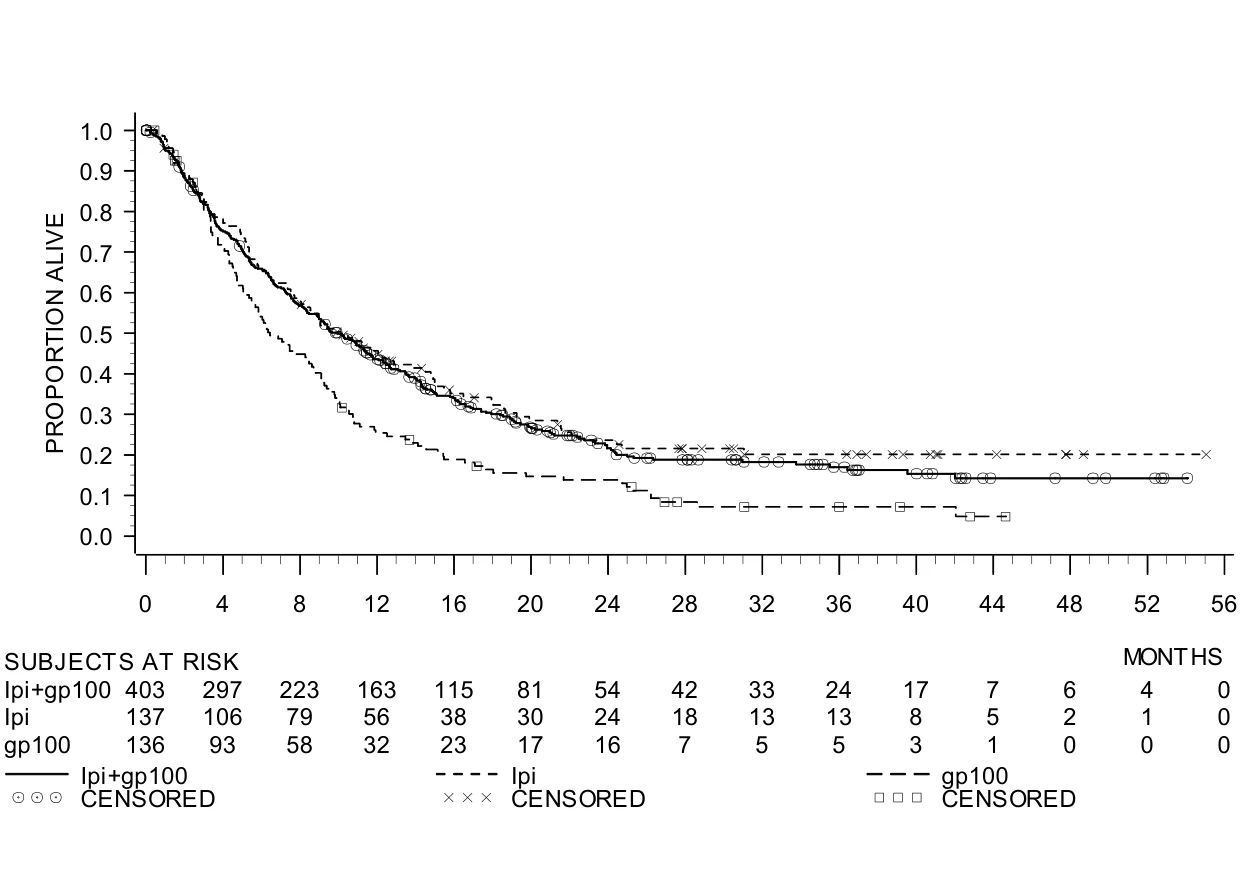
- 2. Cox model for Hazard ratios (HR) and log-rank test p-values were stratified by baseline M-stage at randomization (M0, M1a, M1b vs. M1c) and prior treatment with IL-2 (Yes vs. No).
- 3. P-values for the comparison of the Yervoy monotherapy arm and the gp 100 arm are not been adjusted for multiple comparisons.
Results of best overall response rate and duration of response are presented in Table 18.
Table 19: Efficacy of Yervoy in Study MDX-010-20
Yervoy 3 mg/kg n=137 | Yervoy 3mg/kg+gp10011 n=403 | gp100 11 n=136 | |
|---|---|---|---|
| BORR22 (up to Week 24) % (95% CI) | 10.9% (6.3, 17.4) | 5.7% (3.7, 8.4) | 1.5% (0.2, 5.2) |
| CR (%) | 1.5% | 0.2% | 0 |
| PR (%) | 9.5% | 5.5% | 1.5% |
| SD (%) | 17.5% | 14.4% | 9.6% |
| Median Duration of Response (Range) | Not Reached (2.8-44.2+) | 11.5 months (1.9-44.4+) | Not Reached (2.0-5.6+) |
- 1. Combination of Yervoy+gp100 is not a recommended regimen; gp100 peptide vaccine is an experimental control. See 4 Dosage and Administration for the recommended dosage.
- 2. Based on investigator assessment.
CA184045: In a Phase 2, multicenter, open-label study in patients with unresectable Stage III or Stage IV melanoma who had failed or were intolerant to at least 1 prior systemic therapy, a total of 2751 patients were treated with ipilimumab 3 mg/kg. The median number of doses received during the induction phase was 4 in the overall study group. In the subgroup of patients with Eastern Cooperative Oncology Group performance status ≥ 2 (n=214, 212 subjects with ECOG=2), median number of doses received was 2, and 25% of the patients completed the entire induction regimen (four doses). Seventy-five percent of patients were discontinued from ipilimumab treatment during the induction phase, and disease progression was the most common reason for treatment discontinuation (67% of patients).
CA184161: A Phase 1 study was conducted to investigate the safety of the concurrent administration of vemurafenib and Yervoy in patients with BRAFV600-mutated metastatic melanoma not previously treated with CTLA-4 blocking antibodies or with BRAF or MEK inhibitors. Following a 1-month lead-in with monotherapy vemurafenib (960 mg or 720 mg twice daily), patients received combination therapy with Yervoy (3 mg/kg IV every 3 weeks) and vemurafenib administered concurrently. Of the 10 patients who received the combination regimen, 6 developed Grade 3 elevation of ALT/AST, 1 of which also developed Grade 3 elevation of total bilirubin. All were asymptomatic and reversible with either interruption or permanent discontinuation of the drugs, and/or treatment with corticosteroids (see 7 Warnings and Precautions).
For information on clinical studies with Yervoy (ipilimumab for injection) in combination with nivolumab, consult Product Monograph for nivolumab.
15. Microbiology
No microbiological information is required for this drug product.
16. Non-Clinical Toxicology
General Toxicology:
Repeat-Dose Toxicity
In intravenous repeat-dose toxicology studies in monkeys, ipilimumab was tolerated without adverse effects at doses up to 30 mg/kg/day administered every 3 days for 3 doses (peak serum concentrations ≤ 682 mg/mL), at 10 mg/kg (equivalent to approximately 3 times the human dose on body-weight basis) administered weekly for 1 month (mean AUC (0-168h) and AUC (0-63 days) of 31.6 μg•h/mL and 102.1 μg•h/mL, respectively), at 1 mg/kg administered weekly for 10 weeks, and at doses up to 10 mg/kg/day administered approximately monthly for up to 6 months. In an exploratory pharmacology/toxicity study, 1 of 6 monkeys was euthanatized in moribund condition due to colitis after receiving 2 monthly doses of ipilimumab at 10 mg/kg in combination with 3 vaccines. In another pharmacology study, 1 monkey receiving ipilimumab approximately monthly at 10 mg/kg in combination with another immunomodulatory antibody and vaccines developed dermatitis/rash 4 weeks following a 3 month dosing period, whereas another monkey in this study developed an infusion reaction within minutes following a dose of ipilimumab. Colitis and rash were infrequent events in preclinical studies (~6% of monkeys receiving approximate monthly doses of ipilimumab at 10 mg/kg and 3% of monkeys in all repeat-dose studies). Since the infusion reaction was not reproducible upon a controlled ipilimumab rechallenge, the drug relationship to this event remains unclear; however, the occurrence of acute cytokine release resulting from a rapid injection rate is possible.
Genotoxicity:
Since it is not expected that large recombinant proteins like ipilimumab would interact directly with DNA or other chromosomal materials, genotoxicity studies were not conducted for ipilimumab.
Carcinogenicity:
No formal animal studies have been performed to establish the carcinogenic potential of ipilimumab. Carcinogenicity studies are generally not needed for oncolytic agents intended for treatment of advanced systemic disease. Despite the development of a fatal lymphoproliferative disorder in CTLA-4 knockout mice, there were no hyperplastic, preneoplastic, or neoplastic lesions in the peripheral blood or lymphoid tissues of ipilimumab-treated monkeys in toxicology studies, despite long-term treatment at a clearly immunostimulatory dose of 10 mg/kg.
Non-clinical studies conducted with CTLA-4 blocking antibodies demonstrated anti-proliferative effects. In mouse tumor models, treatment with CTLA-4 blocking mAbs resulted in the induction of an antitumor immune response able to delay tumor growth or eradicate established tumors. In tumor models where anti-CTLA-4 therapy was ineffective, combination with several therapeutic modalities, including surgery, vaccination, radiotherapy and immunomodulatory agents, demonstrated synergistic effects to control tumor growth.
Reproductive and Developmental Toxicology:
Pregnant monkeys received ipilimumab every 21 days from the onset of organogenesis in the first trimester through delivery, at dose levels either 2.6 or 7.2 times higher than the clinical dose of 3 mg/kg of ipilimumab (by AUC). No treatment-related adverse effects on reproduction were detected during the first two trimesters of pregnancy. Beginning in the third trimester, the ipilimumab groups experienced higher incidences of abortion, stillbirth, premature delivery (with corresponding lower birth weight), and higher incidences of infant mortality in a dose-related manner compared to controls. Developmental external or visceral abnormalities were identified in the urogenital system of 2 infants exposed in utero to ipilimumab 30 mg/kg every 3 weeks. One female infant had unilateral renal agenesis of the left kidney and ureter, and one male infant had an imperforate urethra with associated urinary obstruction and subcutaneous scrotal edema. The relationship of these malformations to treatment is unclear.
Human IgG1 is known to cross the placental barrier; therefore, Yervoy has the potential to be transmitted from the mother and cause harm to the developing fetus. The effects of ipilimumab are likely to be greater during the second and third trimesters of pregnancy. Advise pregnant women of the potential risk to a fetus. Advise females of reproductive potential to use effective contraception during treatment with a Yervoy-containing regimen and for 3 months after the last dose of Yervoy.
Yervoy should not be used during pregnancy unless the potential benefits justify the potential risks to the fetus.
Impairment of Fertility
No formal studies of effects of ipilimumab on fertility have been conducted. As part of the routine histopathological examination of organs collected in toxicity studies, the male and female reproductive organs were evaluated, including assessments of sperm and ovum morphology and maturation. There were no histopathologic changes in these organs that could be attributed to ipilimumab. In a chronic 6-month toxicology study using sexually mature monkeys ranging in age from 7 to 8 years, drug-related changes in reproductive organ weights were limited to decreases in absolute and relative testicular (27 to 50%) weights at 10 mg/kg; however, there were no corresponding microscopic changes in these organs. There were no other drug-related changes in male or female reproductive or endocrine organ weights or drug-related microscopic findings in these organs.
In tissue crossreactivity studies, ipilimumab specifically bound to activated lymphocytes expressing CTLA-4 in several normal human and/or cynomolgus monkey tissues (tonsil, gastrointestinal tract, lymphoid system, lung, kidney, liver, skin, and/or peripheral blood). In addition, ipilimumab bound specifically to connective tissue in human and cynomolgus monkey placenta and to connective tissue in cynomolgus monkey ovary; no specific binding was observed in human ovary. Despite specific binding of ipilimumab to cynomolgus monkey ovarian tissue, no gross or microscopic ovarian findings were observed in ipilimumab toxicity studies conducted in monkeys. Therefore, binding of ipilimumab to connective tissue in cynomolgus monkey ovary is also not expected to have any biological or toxicological relevance, especially since similar binding was not observed with human ovaries
17. Supporting Product Monographs
- 1. OPDIVO® (Intravenous Infusion, 10 mg nivolumab/mL), 289379, Product Monograph, Bristol-Myers Squibb Canada (July 16, 2025).