


Product Monograph - Epkinly
Recent Major Label Changes
| 1 Indications | 2026-09 |
|---|---|
| 3 Serious Warnings and Precautions Box | 2026-09 |
| 4 Dosage and Administration, 4.1 Dosing considerations | 2026-09 |
| 4 Dosage and Administration, 4.2 Recommended Dose and Dosage Adjustment | 2026-09 |
| 4 Dosage and Administration, 4.3 Reconstitution | 2026-09 |
| 4 Dosage and Administration, 4.5 Missed Dose | 2026-09 |
| 7 Warnings and Precautions, Immune | 2026-09 |
| 7 Warnings and Precautions, Serious Infections | 2026-09 |
| 7 Warnings and Precautions, Neurologic | 2026-09 |
| 7 Warnings and Precautions, 7.1 Special Populations, 7.1.4 Geriatrics | 2026-09 |
Table of Contents
Certain sections (as indicated in section 2.1. of the PM Guidance) or subsections that are not applicable at the time of the preparation of the most recent authorized product monograph are not listed.
Recent Major Label Changes ................................................................................................... 2
Table of Contents ................................................................................................................... 2
Part 1: Healthcare Professional Information ........................................................................... 5
- 1.
Indications ....................................................................................................................... 5
1.1. Pediatrics .................................................................................................................. 5
1.2. Geriatrics .................................................................................................................. 5
- 2. Contraindications ............................................................................................................ 5
- 3. Serious Warnings and Precautions Box ............................................................................ 5
- 4.
Dosage and Administration ............................................................................................. 6
4.1. Dosing Considerations .............................................................................................. 6
4.2. Recommended Dose and Dosage Adjustment ......................................................... 8
For patients with relapsed or refractory diffuse large B-cell lymphoma ......................... 8
For patients with relapsed or refractory follicular lymphoma, in combination with lenalidomide and rituximab ............................................................................................ 9
4.3. Reconstitution ........................................................................................................ 11
4.4. Administration ........................................................................................................ 14
4.5. Missed Dose ........................................................................................................... 14
Diffuse large B-cell lymphoma ....................................................................................... 14
Follicular lymphoma ...................................................................................................... 15
- 5. Overdose ....................................................................................................................... 16
- 6. Dosage Forms, Strengths, Composition, and Packaging ................................................. 16
- 7.
Warnings and Precautions ............................................................................................. 17
Driving and Operating Machinery ....................................................................................... 17
Endocrine and Metabolism ................................................................................................. 17
Hepatic/Biliary/Pancreatic .................................................................................................. 17
Immune .............................................................................................................................. 17
Cytokine Release Syndrome .......................................................................................... 17
Serious Infections .......................................................................................................... 20
Cytopenias ..................................................................................................................... 20
Vaccines ........................................................................................................................ 21
Neurologic .......................................................................................................................... 21
Renal ................................................................................................................................... 24
Reproductive Health ........................................................................................................... 24
7.1. Special Populations ................................................................................................ 24
7.1.1. Pregnancy ...................................................................................................... 24
7.1.2. Breastfeeding ................................................................................................ 25
7.1.3. Pediatrics ....................................................................................................... 25
7.1.4. Geriatrics ....................................................................................................... 25
- 8.
Adverse Reactions ......................................................................................................... 25
8.1. Adverse Reaction Overview .................................................................................... 25
8.2. Clinical Trial Adverse Reactions .............................................................................. 27
8.3. Less Common Clinical Trial Adverse Reactions ....................................................... 32
8.4. Abnormal Laboratory Findings: Hematologic, Clinical Chemistry, and Other Quantitative Data ............................................................................................................... 33
8.5. Post-Market Adverse Reactions ............................................................................. 34
- 9.
Drug Interactions ........................................................................................................... 34
9.2. Drug Interactions Overview .................................................................................... 34
9.3. Drug-Behaviour Interactions .................................................................................. 35
9.4. Drug-Drug Interactions ........................................................................................... 35
9.5. Drug-Food Interactions........................................................................................... 35
9.6. Drug-Herb Interactions ........................................................................................... 35
9.7. Drug-Laboratory Test Interactions ......................................................................... 35
- 10.
Clinical Pharmacology ................................................................................................... 35
10.1. Mechanism of Action .............................................................................................. 35
10.2. Pharmacodynamics ................................................................................................ 35
10.3. Pharmacokinetics ................................................................................................... 35
10.4. Immunogenicity ...................................................................................................... 37
- 11. Storage, Stability, and Disposal ...................................................................................... 37
Part 2: Scientific Information ................................................................................................ 38
- 13. Pharmaceutical Information .......................................................................................... 38
- 14.
Clinical Trials .................................................................................................................. 39
14.1. Clinical Trials by Indication ..................................................................................... 39
Large B-cell lymphoma (LBCL) ....................................................................................... 39
Follicular lymphoma ...................................................................................................... 41
- 15. Microbiology ................................................................................................................. 44
- 16. Non-Clinical Toxicology ................................................................................................... 44
Patient Medication Information ........................................................................................... 45
Part 1: Healthcare Professional Information
1. Indications
EPKINLY (epcoritamab injection / epcoritamab for injection) is indicated:
- For the treatment of adult patients with relapsed or refractory diffuse large B-cell lymphoma (DLBCL), not otherwise specified, DLBCL transformed from indolent lymphoma, high grade B-cell lymphoma (HGBCL), primary mediastinal B-cell lymphoma (PMBCL) or follicular lymphoma Grade 3B (FLG3b) after two or more lines of systemic therapy and who have previously received or are unable to receive CAR-T cell therapy.
- In combination with lenalidomide and rituximab for the treatment of adult patients with relapsed or refractory Grade 1, 2, or 3a follicular lymphoma (FL) who have received at least one prior line of systemic therapy.
1.1. Pediatrics
Pediatrics (< 18 years of age): EPKINLY is not indicated in the pediatric population, as the safety and efficacy of EPKINLY in pediatric patients less than 18 years of age have not been evaluated (see 4.2 Recommended Dose and Dosage Adjustment).
1.2. Geriatrics
Geriatrics (≥ 65 years of age): In patients with LBCL, no clinically meaningful differences in safety or efficacy were observed between patients ≥ 65 years of age compared with younger adult patients.
In patients with FL, no clinically meaningful differences in efficacy were observed between patients ≥ 65 years of age compared with younger adult patients. A higher incidence of serious and fatal treatment-emergent adverse events was observed in patients ≥ 65 years of age compared to younger patients (see 7.1.4 Geriatrics; and 10.3 Pharmacokinetics, Special Populations and Conditions).
2. Contraindications
- EPKINLY is contraindicated in patients who are hypersensitive to this drug or to any ingredient in the formulation, including any non-medicinal ingredient, or component of the container. For a complete listing, (see 6 Dosage Forms, Strengths, Composition and Packaging).
- Serious Warnings and Precautions Box
Serious Warnings and Precautions
|
|---|
|
4. Dosage and Administration
4.1. Dosing Considerations
- Counsel patients on the risks associated with EPKINLY and distribute the Patient Card prior to administration of the first step-up dose (SUD).
- EPKINLY should only be administered under the supervision of a health professional experienced in the treatment of cancer patients and who has access to appropriate medical support to manage severe reactions such as cytokine release syndrome (CRS) and immune effector cell-associated neurotoxicity syndrome (ICANS).
- EPKINLY should not be administered to patients with active infections.
- EPKINLY should not be administered to patients who have recently (within 4 weeks) received a live or live-attenuated vaccine (see 7 Warnings and Precautions).
- Certain doses of EPKINLY require dilution prior to administration (see 4.2 Recommended Dose and Dosage Adjustment and 4.3 Reconstitution).
Premedication and Prophylaxis
- Prophylaxis against Pneumocystis jirovecii pneumonia (PJP) and herpes virus infections is strongly recommended during treatment with EPKINLY.
- EPKINLY should be administered to adequately hydrated patients. Details on recommended premedication for CRS is detailed in Table 1.
Table 1. Epcoritamab Premedication for CRS
| Cycle | Patient requiring premedication | Premedicationa | Administration |
| Cycle 1 | All patients |
|
|
|
| ||
| Cycle 2 and beyond | Patients who experienced Grade 2 or 3c CRS with previous dose |
|
|
| a. Premedication used for combination agents may also serve as premedication for EPKINLY at the discretion of the treating physician, provided that the doses administered are at least equivalent. b. Dexamethasone is the preferred corticosteroid for CRS prophylaxis. c. Patients will be permanently discontinued from EPKINLY after a Grade 4 CRS event. | |||
Monitoring
Monitor patients for potential CRS and immune effector cell-associated neurotoxicity syndrome (ICANS) following EPKINLY administrations during Cycle 1 and in subsequent cycles as needed at the discretion of the health professional. Counsel patients on the signs and symptoms associated with CRS and ICANS and on seeking immediate medical attention should signs or symptoms occur at any time (see 7 Warnings and Precautions). For patients with DLBCL, for 24 hours following administration of the first full dose of 48 mg (Day 15 of Cycle 1), patients should remain within proximity of a healthcare facility and be monitored for signs and symptoms of CRS and ICANS, or alternatively consider hospitalization. For patients with FL, the duration of monitoring following the first full dose of 48 mg (Day 22 of Cycle 1) may vary based on individual patient risk factors (see 7 Warnings and Precautions).
4.2. Recommended Dose and Dosage Adjustment
For patients with relapsed or refractory diffuse large B-cell lymphoma
- EPKINLY is administered by subcutaneous (SC) injection only in 28-day cycles with 2 step-up doses.
- Patients receive a step-up dose 1 on Day 1 (0.16 mg) and step-up dose 2 on Day 8 (0.8 mg) of Cycle 1 using the 4 mg/0.8 mL (5 mg/mL) EPKINLY vial with light blue cap that requires dilution before administration (see 4.3 Reconstitution and 4.4 Administration).
- The first full EPKINLY dose (48 mg) is taken on Day 15 of Cycle 1 using the 48 mg/0.8 mL (60 mg/mL) EPKINLY vial with orange cap that is not diluted (see 4.3 Reconstitution and 4.4 Administration).
- Weekly 48 mg doses of EPKINLY continue for Cycles 2 and 3 using the EPKINLY vial with the orange cap.
- Starting in Cycle 4 and continuing through Cycle 9, the 48 mg EPKINLY doses are administered once every two weeks (Days 1 and 15 only of each cycle).
- Starting in Cycle 10, the 48 mg EPKINLY dose is taken once every 4 weeks (Day 1 only of each 28-day cycle).
- EPKINLY is taken according to the following schedule until disease progression or unacceptable toxicity.
Table 2. Dosing Schedule for Patients with Relapsed or Refractory Diffuse Large B-Cell Lymphoma
| Cycle of treatmenta | Dosing Schedule | Days | EPKINLY Dose | |
| Cycle 1 | Weekly | 1 | Step-up dose 1 | 0.16 mgb |
| 8 | Step-up dose 2 | 0.8 mgb | ||
| 15 | First full dose | 48 mg | ||
| 22 | Full dose | 48 mg | ||
| Cycles 2 and 3 | Weekly | 1, 8, 15, 22 | Full dose | 48 mg |
| Cycles 4 to 9 | Every two weeks | 1, 15 | 48 mg | |
| Cycles 10+ | Every four weeks | 1 | 48 mg | |
a. A cycle is 28 days. b. 0.16 mg and 0.8 mg are step-up doses and 48 mg is a full dose. | ||||
For patients with relapsed or refractory follicular lymphoma, in combination with lenalidomide and rituximab
- EPKINLY is administered by subcutaneous (SC) injection only in 28-day cycles for a fixed duration of treatment with 3 step-up doses, for a total of 12 cycles or until disease progression or unacceptable toxicity, whichever occurs first.
- Patients receive step-up dose 1 on Day 1 (0.16 mg), step-up dose 2 on Day 8 (0.8 mg), and step-up dose 3 on Day 15 (3 mg) of Cycle 1 using the 4 mg/0.8 mL (5 mg/mL) EPKINLY vial with light blue cap. Step-up dose 1 and 2 require dilution before administration, while step-up dose 3 is not diluted (see 4.3 Reconstitution and 4.4 Administration).
- The first full EPKINLY dose (48 mg) is taken on Day 22 of Cycle 1 using the 48 mg/0.8 mL (60 mg/mL) EPKINLY vial with orange cap that is not diluted (see 4.3 Reconstitution and 4.4 Administration).
- Weekly 48 mg doses of EPKINLY continue for Cycles 2 and 3 using the EPKINLY vial with the orange cap.
- Starting in Cycle 4 and continuing through Cycle 12, the 48 mg EPKINLY doses are administered once every four weeks (Day 1 of each 28-day cycle).
- Administer lenalidomide 20 mg orally once daily (from Day 1 to Day 21) in Cycles 1-12 and rituximab 375 mg/m2 intravenously every week in Cycle 1 (on Days 1, 8, 15, and 22) and every 4 weeks in Cycles 2-5 (on Day 1). On days when lenalidomide and rituximab are co-administered, consider administering lenalidomide and rituximab prior to EPKINLY. Lenalidomide dose should be reduced for patients with renal impairment (see 14.1 Clinical Trials by Indication, Follicular lymphoma).
Table 3. Dosing Schedule for Patients with Relapsed or Refractory Follicular Lymphoma, in Combination with Lenalidomide and Rituximab
| Cycle of treatmenta | Dosing Schedule | Days | EPKINLY Dose | |
| Cycle 1 | Weekly | 1 | Step-up dose 1 | 0.16 mgb |
| 8 | Step-up dose 2 | 0.8 mgb | ||
| 15 | Step-up dose 3 | 3 mgb | ||
| 22 | First full dose | 48 mg | ||
| Cycles 2 and 3 | Weekly | 1, 8, 15, 22 | Full dose | 48 mg |
| Cycles 4 to 12 | Every four weeks | 1 | 48 mg | |
a. A cycle is 28 days. b. 0.16 mg, 0.8 mg and 3 mg are step-up doses and 48 mg is a full dose. | ||||
Table 4. Recommended Dose Modifications for Adverse Reactions
| Adverse Reaction | Severity | Action |
|---|---|---|
| Adverse Reaction | Severity | Action |
| CRS (including HLH) (see 7 Warnings and Precautions) | Grades 1-3 |
|
| Grade 4 |
| |
| ICANS (see 7 Warnings and Precautions) | Grades 1-2 |
|
| Grade 3 |
| |
| Grade 4 |
| |
| Infections1 (see 7 Warnings and Precautions) | Grades 1-3 |
|
| Grade 4 |
| |
| PML | All Grade |
|
| Neutropenia or febrile neutropenia1 (see 8 Adverse Reactions) | Absolute neutrophil count less than 0.5 x 10⁹/L |
|
| Thrombocytopenia1 (see 8 Adverse Reactions) | Platelet count less than 50 x 109/L |
|
| Other adverse reactions1 (see 8 Adverse Reactions) | Grade 3 or higher |
|
CRS and ICANS graded according to ASTCT consensus criteria.
| ||
Dosing in Special Populations
Pediatrics (< 18 years of age)
EPKINLY is not indicated in the pediatric population, as the safety and efficacy of EPKINLY in pediatric patients less than 18 years of age have not been evaluated.
Geriatric (≥ 65 years of age)
Dose adjustments are not considered necessary for EPKINLY based on age.
Renal impairment
Dose adjustments are not considered necessary in patients with mild to moderate renal impairment. Patients with severe renal impairment were excluded from clinical studies with EPKINLY and no dose recommendations can be made for these patients.
Hepatic impairment
Dose adjustments are not considered necessary in patients with mild hepatic impairment. Patients with moderate or severe hepatic impairment were excluded from clinical studies with EPKINLY and no dose recommendations can be made for these patients.
4.3. Reconstitution
Dose Preparation
Read this entire section carefully before preparation of EPKINLY. Certain doses of EPKINLY require dilution prior to administration.
Use aseptic techniques to prepare EPKINLY. DO NOT filter the diluted solution because of potential loss of active ingredient.
The following table outlines the materials needed for preparation of the step-up doses.
Table 5. Materials Needed for Preparation of the Step-up Doses
| Materials needed | |
| Step-Up Dose 1 (0.16 mg) | Step-Up Dose 2 (0.8 mg) |
| 4 mg/0.8 mL (5 mg/mL) EPKINLY vial with light blue cap | 4 mg/0.8 mL (5 mg/mL) EPKINLY vial with light blue cap |
| 0.9% Sodium Chloride Injection, USP | 0.9% Sodium Chloride Injection, USP |
| Two empty sterile vials between 10 and 20 mL | One empty sterile vial between 10 and 20 mL |
Recommended Syringe Sizes:
| Recommended Syringe Sizes:
|
Step-Up Dose 1 (0.16 mg) Preparation Instructions – (2 dilutions required):
Use an appropriately sized syringe, vial and needle for each transfer step.
DO NOT invert, vortex, or vigorously shake the vial. |
|---|
At end of the first dilution for step-up dose 1, the concentration is 0.8 mg/mL. |
At end of the second dilution for step-up dose 1, the concentration is 0.16 mg/mL. |
|
Label the syringe 0.16 mg and include the time of day. |
Discard the vial and any unused portions of EPKINLY in accordance with local requirements.
Use prepared EPKINLY immediately or store EPKINLY solution in the syringe in a refrigerator and protect from light up to 24 hours from the time of preparation (see 11 Storage, Stability and Disposal).
Step-Up Dose 2 (0.8 mg) Preparation Instructions – (1 dilution required):
Use an appropriately sized syringe, vial and needle for each transfer step.
DO NOT invert, vortex, or vigorously shake the vial. |
|---|
At end of the dilution for step-up dose 2, the concentration is 0.8 mg/mL. |
|
Label the syringe 0.8 mg and include the time of day. |
Discard the vial and any unused portions of EPKINLY in accordance with local requirements.
Use prepared EPKINLY immediately or store EPKINLY solution in the syringe in a refrigerator and protect from light up to 24 hours from the time of preparation (see 11 Storage, Stability and Disposal).
Step-Up Dose 3 (3 mg) Preparation Instructions – (No dilution required):
EPKINLY 3 mg 3rd step-up dose is required for FL patients only (see 4 Dosage and Administration).
|
|---|
|
|---|
| DO NOT invert, vortex, or vigorously shake the vial. |
|---|
Withdraw 0.6 mL of EPKINLY into a syringe |
Label the syringe 3mg and include the time of day |
Discard the vial and any unused portions of EPKINLY in accordance with local requirements.
48 mg Full Dose Preparation Instructions – (No dilution required):
EPKINLY 48 mg/0.8 mL (60 mg/mL) vial is supplied as ready-to-use solution that does not need dilution prior to administration.
DO NOT invert, vortex, or vigorously shake the vial. |
|---|
Withdraw 0.8 mL of EPKINLY into a syringe. |
Label the syringe 48 mg and include the time of day. |
Discard the vial and any unused portions of EPKINLY in accordance with local requirements.
4.4. Administration
EPKINLY should be administered by subcutaneous injection (SC) by a health professional. Each vial of EPKINLY is intended for single dose only.
The administration of EPKINLY takes place over the course of 28-day cycles, following the dosing schedule in 4.2 Recommended Dose and Dosage Adjustment.
EPKINLY should be inspected visually for particulate matter and discoloration prior to administration.
Site of Administration
The injection site should be preferably in the lower part of the abdomen or the thigh. Changing the injection site from left or right side or vice versa is recommended especially during the weekly administration (Cycles 1-3).
4.5. Missed Dose
Table 6. Recommendations for Restarting Therapy with EPKINLY After Dosage Delay
Diffuse large B-cell lymphoma
| Last Dose Administered | Time Since the Last Dose Administered | Action for Next Dose(s)a |
|---|---|---|
| Last Dose Administered | Time Since the Last Dose Administered | Action for Next Dose(s)a |
| 0.16 mg on Cycle 1 Day 1 | More than 8 days | Repeat 0.16 mg, then administer 0.8 mg the following week, followed by two weekly doses of 48 mg. Then resume the planned dosage schedule beginning with Day 1 of the subsequent cycle. |
| 0.8 mg on Cycle 1 Day 8 | 14 days or less | Administer 48 mg then resume the recommended dosage schedule. |
| More than 14 days | Repeat 0.16 mg, then administer 0.8 mg the following week, followed by two weekly doses of 48 mg. Then resume the planned dosage schedule beginning with Day 1 of the subsequent cycle. | |
| 48 mg on Cycle 1 Day 15 onwards | 6 weeks or less | Administer 48 mg, then resume the recommended dosage schedule. |
| More than 6 weeks | Repeat 0.16 mg, then administer 0.8 mg the following week, followed by two weekly doses of 48 mg. Then resume the planned dosage schedule beginning with Day 1 of the subsequent cycle. | |
| a. Administer pretreatment medication prior to EPKINLY dose and monitor patients accordingly (see 4 Dosage and Administration). | ||
Follicular lymphoma
| Last Dose Administered | Time Since the Last Dose Administered | Action for Next Dose(s)a |
|---|---|---|
| 0.16 mg on Cycle 1 Day 1 | More than 8 days | Repeat 0.16 mg, then administer 0.8 mg the following week, followed by 3 mg the week after, then one full dose of 48 mg. Then resume the planned dosage schedule beginning with Day 1 of the subsequent cycle. |
| 0.8 mg on Cycle 1 Day 8 | More than 8 days | Repeat 0.16 mg, then administer 0.8 mg the following week, followed by 3 mg the week after, then one full dose of 48 mg. Then resume the planned dosage schedule beginning with Day 1 of the subsequent cycle. |
| 3 mg on Cycle 1 Day 15 | 14 days or less | Administer 48 mg, then resume the recommended dosage schedule. |
| More than 14 days | Repeat 0.16 mg, then administer 0.8 mg the following week, followed by 3 mg the week after, then one full dose of 48 mg. Then resume the planned dosage schedule beginning with Day 1 of the subsequent cycle. | |
| 48 mg on Cycle 1 Day 22 onwards | 6 weeks or less | Administer 48 mg, then resume the recommended dosage schedule. |
| More than 6 weeks | Repeat 0.16 mg, then administer 0.8 mg the following week, followed by 3 mg the week after, then one full dose of 48 mg. Then resume the |
5. Overdose
In the event of overdose, monitor the patient for any signs or symptoms of adverse reactions and administer appropriate supportive treatment.
| For the most recent information in the management of a suspected drug overdose, contact your regional poison control centre or Health Canada’s toll-free number, 1-844 POISON-X (1-844-764-7669). |
|---|
- 6. Dosage Forms, Strengths, Composition, and Packaging
Table 7. Dosage Forms, Strengths, Composition and Packaging
Description
EPKINLY concentrate for solution, for subcutaneous injection (4 mg [5 mg/mL]) and EPKINLY solution for subcutaneous injection (48 mg [60 mg/mL]) are sterile, preservative free, clear to slightly opalescent, colourless to slightly yellow solutions, practically free of visible particles, supplied in glass vials as:
|
|---|
The vial stopper is not made from natural rubber latex (made of bromobutyl rubber).
| Last Dose Administered | Time Since the Last Dose Administered | Action for Next Dose(s)a |
|---|---|---|
| planned dosage schedule beginning with Day 1 of the subsequent cycle. | ||
| a. Administer pretreatment medication prior to EPKINLY dose and monitor patients accordingly (see 4 Dosage and Administration). | ||
| Route of Administration | Dosage Form / Strength/Composition | Non-medicinal Ingredients |
| Subcutaneous | Concentrate for solution for injection/ 5 mg/mL 4 mg epcoritamab in 0.8 mL solution | Acetic acid, polysorbate 80, sodium acetate trihydrate, D-sorbitol, and water for injection |
| Subcutaneous | Solution for injection/ 60 mg/mL 48 mg epcoritamab in 0.8 mL solution | Acetic acid, polysorbate 80, sodium acetate trihydrate, D-sorbitol, and water for injection |
7. Warnings and Precautions
Please see 3 Serious Warnings and Precautions Box.
Driving and Operating Machinery
EPKINLY may have an influence on the ability to drive or operate machinery. Patients experiencing symptoms that might affect their ability to drive or use machines (e.g., symptoms of CRS or ICANS, such as pyrexia, tachycardia, hypotension, chills, hypoxia, depressed level of consciousness) should be advised not to drive or use machines until symptoms resolve.
Endocrine and Metabolism
Tumour Lysis Syndrome
Tumour Lysis Syndrome (TLS) has been reported in patients receiving EPKINLY (see 8 Adverse Reactions). Patients at an increased risk for TLS are recommended to receive hydration and prophylactic treatment with a uric acid lowering agent. Patients should be monitored for signs or symptoms of TLS, especially patients with high tumour burden or rapidly proliferative tumours, and patients with reduced renal function. Patients should be monitored for blood chemistries and abnormalities should be managed promptly.
Hepatic/Biliary/Pancreatic
The safety and efficacy of EPKINLY in patients with moderate and severe hepatic impairment have not been studied (see 10.3 Pharmacokinetics, Special Populations and Conditions).
Immune
Cytokine Release Syndrome
Cytokine Release Syndrome (CRS), which may be life-threatening or fatal, occurred in patients receiving EPKINLY. The most common signs and symptoms of CRS include pyrexia, hypotension and hypoxia. Other signs and symptoms of CRS in greater than two patients include chills, tachycardia, headache and dyspnea.
For patients with large B-cell lymphoma (LBCL) in study EPCORE NHL-1,the median time to onset of CRS from the most recent administered EPKINLY dose was 2 days (range: 1 to 11 days). The median time to onset after the first full dose was 20.6 hours (range: 0.2 to 7 days). Most CRS events occurred in Cycle 1 and were associated with the first full dose of EPKINLY. Median duration of CRS was 3 Days (range: 1 to 27 days). Administer prophylactic medications including corticosteroids to mitigate the risk of CRS (see 4 Dosage and Administration). In addition to corticosteroids use, tocilizumab was used to manage CRS event in 15% of patients.
For patients with follicular lymphoma in EPCORE FL-1 treated with EPKINLY at the recommended 3-step SUD schedule in combination with lenalidomide and rituximab, the median time to onset of CRS from the most recently administered EPKINLY dose across all doses was 78 hours (range: 0.2 to 12 days). The median time to onset after the first full 48 mg dose was 41 hours (range: 0.3 to 12 days). The median duration of CRS events was 2 days (range: 0.1 to 26 days).
Monitor patients for CRS following EPKINLY administrations during Cycle 1 and in subsequent cycles as needed at the discretion of the health professional. At the first signs or symptoms of CRS, institute treatment of supportive care with tocilizumab and/or corticosteroids as per institutional guidelines considering the recommendations listed in Table 8. Counsel patients on the signs and symptoms associated with CRS and instruct patients to contact their health professional and seek immediate medical attention should signs or symptoms occur at any time.
For patients with DLBCL, for 24 hours following administration of the first full dose of 48 mg, patients should remain within proximity of a healthcare facility and be monitored for signs and symptoms of CRS, or alternatively consider hospitalization. For patients with FL, the duration of monitoring following the first full dose of 48 mg (Day 22 of Cycle 1) may vary based on individual patient risk factors.
Management of CRS may require either temporary delay or discontinuation of EPKINLY based on the severity of CRS as per recommendations in Table 8. Patients who experience CRS should be monitored more frequently during the next scheduled EPKINLY administration. Withhold or discontinue EPKINLY as indicated in Table 4 (see 4 Dosage and Administration).
Haemophagocytic lymphohistiocytosis (HLH), including fatal cases, have been reported in patients receiving EPKINLY, and in some instances HLH has been reported independently of CRS. HLH should be considered when the presentation of CRS is atypical or unresponsive and/or when clinical manifestations of HLH present such as prolonged fever, cytopenias, hyperferritinemia, coagulopathy and elevated liver enzymes. If HLH is suspected, withhold EPKINLY and initiate treatment for HLH per current practice guidelines.
Table 8. CRS Grading and Management in Clinical Trials with EPKINLYa
| Grade | Recommended Therapy |
|---|---|
| Grade | Recommended Therapy |
| Grade | Recommended Therapy |
Grade 1
| Anticytokine Therapy: Consider anticytokine therapy in certain cases (e.g., advanced age, high tumour burden, circulating tumour cells, fever refractory to antipyretics): Tocilizumab 8 mg/kg IV over 1 hour (not to exceed 800 mg per dose). Repeat tocilizumab after at least 8 hours as needed. Maximum of 2 doses in a 24-hour period. In case of concurrent ICANS choose alternative to tocilizumab (e.g., siltuximab, anakinra). See Table 9. Corticosteroids: Consider dexamethasone 10-20 mg per day (or equivalent). In case of concurrent ICANS, initiation of corticosteroids is highly recommended. |
Grade 2b
AND
AND/OR
| Anticytokine Therapy Tocilizumab 8 mg/kg IV over 1 hour (not to exceed 800 mg per dose). Repeat tocilizumab after at least 8 hours as needed. Maximum of 2 doses in a 24-hour period. If CRS is refractory to initial anticytokine therapy, initiate/increase dose of corticosteroid therapy and consider alternative anticytokine therapy. In case of concurrent ICANS choose alternative to tocilizumab (e.g., siltuximab, anakinra). See Table 9. Corticosteroids: Consider dexamethasone 10-20 mg per day (or equivalent). In case of concurrent ICANS, initiation of corticosteroids is highly recommended. |
Grade 3b
AND
AND/OR
| Anticytokine therapy: Tocilizumab 8 mg/kg IV over 1 hour (not to exceed 800 mg per dose). Repeat tocilizumab after at least 8 hours as needed. Maximum of 2 doses in a 24-hour period. If CRS is refractory to initial anticytokine therapy, initiate/increase dose of corticosteroid therapy and consider alternative anticytokine therapy. In case of concurrent ICANS choose alternative to tocilizumab (e.g., siltuximab, anakinra). See Table 9. Corticosteroids: Dexamethasone (e.g., 10-20 mg IV every 6 hours). If no response, initiate methylprednisolone 1000 mg/day. |
Grade 4
AND
AND/OR | Anticytokine Therapy: Tocilizumab 8 mg/kg IV over 1 hour (not to exceed 800 mg per dose). Repeat tocilizumab after at least 8 hours as needed. Maximum of 2 doses in a 24-hour period. If CRS is refractory to initial anticytokine therapy, initiate/increase dose of corticosteroid therapy and consider alternative anticytokine therapy. |
| In case of concurrent ICANS choose alternative to tocilizumab (e.g., siltuximab, anakinra). See Table 9. Corticosteroids: Dexamethasone (e.g., 10-20 mg IV every 6 hours). If no response, initiate methylprednisolone 1000 mg/day. |
CRS was graded according to ASTCT consensus criteria. a. The recommendations describe the CRS management in Study EPCORE NHL-1. Treat CRS per institutional guidelines. b. When Grade 2 or 3 CRS occurred with the second full dose or beyond, CRS prophylaxis was administered in clinical trials with each subsequent dose until EPKINLY was given without a subsequent CRS event (of any grade). | |
Serious Infections
Treatment with EPKINLY increases the risk of infections. Serious infections, including fatal infections, infections with opportunistic pathogens and viral reactivation, were observed in patients treated with EPKINLY in clinical trials. The most frequent type of serious infections observed with EPKINLY were pneumonia, sepsis, COVID-19, COVID 19-pneumonia, cellulitis, bacteremia, septic shock, and upper respiratory tract infection.
Hypogammaglobulinemia has also been reported in patients receiving EPKINLY. Monitor immunoglobulin levels during treatment with EPKINLY and treat with subcutaneous or intravenous immunoglobulin (IVIG) therapy as clinically indicated. Infection precautions, and antimicrobials, including antibiotic or antiviral prophylaxis, should be used according to local institutional guidelines.
Cases of progressive multifocal leukoencephalopathy (PML), including fatal cases, have been reported in patients treated with EPKINLY. If neurological symptoms suggestive of PML occur during EPKINLY therapy, treatment with EPKINLY should be withheld and appropriate diagnostic measures initiated. Discontinue EPKINLY if PML is confirmed.
Avoid administration of EPKINLY in patients with clinically significant active systemic infections. As appropriate, administer prophylactic antimicrobials and consider surveillance testing for reactivation during treatment with EPKINLY (see 4 Dosage and Administration). Monitor patients for signs and symptoms of infections prior to and during treatment and treat according to standard/local guidelines and practice.
Cytopenias
EPKINLY can cause serious or severe cytopenias, including neutropenia, lymphopenia, anemia, and thrombocytopenia (see 8 Adverse Reactions).
Monitor complete blood counts throughout treatment. Based on the severity of cytopenias, temporarily withhold or permanently discontinue EPKINLY (see 4.2 Recommended Dose and Dosage Adjustment). Consider prophylactic granulocyte colony-stimulating factor administration as applicable.
Vaccines
Patients who received live vaccines were excluded from clinical studies with EPKINLY. Vaccination with live or live attenuated vaccines is not permitted for at least 4 weeks prior to the start of EPKINLY and at any point during treatment.
Neurologic
Immune effector cell associated neurotoxicity syndrome
Immune effector cell associated neurotoxicity syndrome (ICANS), including a fatal event, have occurred in patients receiving EPKINLY. ICANS, a serious or life-threatening neurologic event, may manifest as aphasia, altered level of consciousness, impairment of cognitive skills, motor weakness, seizures, and cerebral edema.
For patients with LBCL in study EPCORE NHL-1, the median time to onset of ICANS from the start of EPKINLY treatment (Cycle 1 Day 1) was 16.5 days (range: 8 to 141 days). The majority of cases of ICANS occurred within Cycle 1 of EPKINLY treatment, however some events occurred with delayed onset. The median duration of ICANS was 5 days (range: 1 to 9 days). The onset of ICANS can be concurrent with CRS, following resolution of CRS or in the absence of CRS.
Monitor patients for signs and symptoms of ICANS following EPKINLY administrations during Cycle 1 and in subsequent cycles as needed at the discretion of the health professional. At the first signs or symptoms of ICANS start treatment with corticosteroids and non-sedating-anti-seizure medications as per institutional guidelines considering the recommendations in Table 9. For patients with DLBCL, for 24 hours following administration of the first full dose of 48 mg, patients should remain within proximity of a healthcare facility and be monitored for signs and symptoms of ICANS, or alternatively consider hospitalization. For patients with FL, the duration of monitoring following the first full dose of 48 mg (Day 22 of Cycle 1) may vary based on individual patient risk factors.
Counsel patients on the signs and symptoms of ICANS and that the onset of events may be delayed. Instruct patients to contact their health professional and seek immediate medical attention should signs or symptoms occur at any time. Delay or discontinue EPKINLY as recommended in Table 4 (see 4 dosage and administration).
Table 9. ICANS Grading and Management in Clinical Trials with EPKINLY1
| Gradea | Recommended Therapy | |
|---|---|---|
| Gradea | Recommended Therapy | |
| Gradea | Recommended Therapy | |
| Gradea | Recommended Therapy | |
Grade 1 ICE scorec 7-9b OR depressed level of consciousnessb: awakens spontaneously | Dexamethasone, 10 mg IV every 12 hours Consider non-sedating anti-seizure medication (e.g., levetiracetam) until resolution of ICANS Anticytokine therapy No concurrent CRS: Anticytokine therapy not recommended. Concurrent CRS: Anticytokine therapy recommended. Choose alternative to tocilizumab (e.g., siltuximab, anakinra) if possible. | |
| ||
Grade 2 ICE scorec 3-6 OR depressed level of consciousnessb: awakens to voice | Dexamethasone at 10-20 mg IV every 12 hours Consider non-sedating anti-seizure medication (e.g., levetiracetam) until resolution of ICANS. Anticytokine therapy: No concurrent CRS: Anticytokine therapy not recommended. Concurrent CRS: Anticytokine therapy recommended. Choose alternative to tocilizumab (e.g., siltuximab, anakinra) if possible.
| |
Grade 3 ICE scorec 0-2 OR depressed level of consciousnessb: awakens only to tactile stimulus, OR seizuresb, either:
OR raised intracranial pressure: focal/local oedemab on neuroimagingc | Dexamethasone 10-20 mg IV every 6 hours. If no response, initiate methylprednisolone 1000 mg/day. Consider non-sedating anti-seizure medication (e.g., levetiracetam) until resolution of ICANS. Anticytokine Therapy No concurrent CRS: Anticytokine therapy not recommended. Concurrent CRS: Anticytokine therapy recommended: Choose alternative to tocilizumab (e.g., siltuximab, anakinra) if possible.
| |
Grade 4 ICE scorec, b 0 OR depressed level of consciousnessb either:
OR seizuresb, either:
OR | Dexamethasone 10-20 mg IV every 6 hours. If no response, initiate methylprednisolone 1000 mg/day. Consider non-sedating anti-seizure medication (e.g., levetiracetam) until resolution of ICANS. Anticytokine therapy: No concurrent CRS: Anticytokine therapy not recommended. Concurrent CRS: Anticytokine therapy recommended. Choose alternative to tocilizumab (e.g., siltuximab, anakinra) if possible.
| |
motor findingsb:
| ||
a. ICANS graded according to ASTCT ICANS Consensus Grading. b. ICANS grade is determined by the most severe event (ICE score, level of consciousness, seizures, motor findings, raised ICP/cerebral oedema) not attributable to any other cause. c. If patient is arousable and able to perform Immune Effector Cell-Associated Encephalopathy (ICE) Assessment, assess: Orientation (oriented to year, month, city, hospital = 4 points); Naming (name 3 objects, e.g., point to clock, pen, button = 3 points); Following Commands (e.g., “show me 2 fingers” or “close your eyes and stick out your tongue” = 1 point); Writing (ability to write a standard sentence = 1 point; and Attention (count backwards from 100 by ten = 1 point). If patient is unarousable and unable to perform ICE Assessment (Grade 4 ICANS) = 0 points. | ||
Renal
The safety and efficacy of EPKINLY in patients with severe renal impairment has not been studied (see 10.3 Pharmacokinetics, Special Populations and Conditions).
Reproductive Health
Fertility
No fertility studies have been conducted with EPKINLY. The effects of epcoritamab on male and female fertility are not known.
7.1. Special Populations
7.1.1. Pregnancy
Verify pregnancy status in females of reproductive potential prior to initiating EPKINLY treatment.
Based on its mechanism of action, EPKINLY may cause fetal harm, including B-cell lymphocytopenia and alterations in normal immune responses, when administered to pregnant women, since IgG1 antibodies, such as epcoritamab, can cross the placental resulting in fetal exposure. There are no data on the use of EPKINLY in pregnant women. Developmental and reproduction animal studies have not been conducted with epcoritamab. Advise pregnant women of the potential risk to a fetus.
Women of childbearing potential should use effective contraception during treatment with EPKINLY and for at least 4 months after the last dose.
7.1.2. Breastfeeding
It is not known whether EPKINLY is excreted in human milk or its effect on milk production. Since IgGs are known to be present in milk, neonatal exposure to epcoritamab may occur via lactational transfer. Breast feeding should be discontinued during treatment with EPKINLY and for at least 4 months after the last dose.
7.1.3. Pediatrics
Pediatrics (< 18 years of age): EPKINLY is not indicated in the pediatric population, as the safety and efficacy of EPKINLY in pediatric patients less than 18 years of age have not been evaluated.
7.1.4. Geriatrics
Geriatrics (≥ 65 years of age):
In patients with LBCL who received EPKINLY in EPCORE NHL-1, 48 (31%) were ≥ 65 to < 75 years of age and 29 (18%) were ≥ 75 years of age. No clinically meaningful differences in safety were observed between patients ≥ 65 years of age compared with younger adult patients.
In patients with relapsed or refractory FL who received EPKINLY in combination with lenalidomide and rituximab in the EPCORE FL-1 study, 155 (64%) were < 65 years of age, 68 (28%) were ≥ 65 to < 75 years of age and 20 (8.2%) were ≥75 years of age. Serious adverse events were reported in 82 (52.9%), 41 (60.3%) and 12 (60.0%) patients, and fatal adverse events in 2 (1.3%), 3 (4.4%) and 1 (5.0%) patients, in these age subgroups, respectively.
8. Adverse Reactions
8.1. Adverse Reaction Overview
Large B-cell lymphoma
The safety of EPKINLY was evaluated in a single-arm study (Study EPCORE NHL-1) in patients with relapsed or refractory LBCL after two or more lines of systemic therapy. The study included patients with DLBCL not otherwise specified, DLBCL arising from indolent lymphoma, high grade B-cell lymphoma, primary mediastinal B-cell lymphoma (PMBCL) and follicular lymphoma Grade 3B (FLG3b). A total of 157 patients received at least one dose of EPKINLY (48 mg) in the expansion phase, which forms the basis of the safety and efficacy analysis for this single arm study.
The median duration of exposure to EPKINLY was 4.1 months (range: 0 to 18 months).
Serious adverse reactions occurred in 57% of patients. Serious adverse reactions (≥ 2%) included CRS, infections (including sepsis, COVID-19, and pneumonia), pleural effusion, febrile neutropenia, pyrexia, and ICANS.
Fatal adverse reactions occurred in 3.8% of patients who received EPKINLY, including COVID- 19 (1.3%), hepatotoxicity (0.6%), ICANS (0.6%), myocardial infarction (0.6%), and pulmonary embolism (0.6%). Discontinuation due to adverse reactions occurred in 7.6% of patients. Discontinuations of EPKINLY occurring in two or more patients were COVID-19 or myelodysplastic syndrome (1.3%) each.
Dose delays due to adverse reactions occurred in 34% of patients. The most common (≥2% overall) adverse reactions leading to delay were CRS (n = 11 [7.0%]), neutropenia (n = 7 [4.5%]), thrombocytopenia (n = 4 [2.5%]), pyrexia (n = 4 [2.5%]), and pleural effusion (n = 4 [2.5%]).
Follicular lymphoma
The safety of EPKINLY in combination with lenalidomide and rituximab was evaluated in an open-label, randomized, multicenter study (Study EPCORE FL-1) in patients with relapsed or refractory FL after one prior line of therapy. Patients received EPKINLY in combination with lenalidomide and rituximab (N=243) or lenalidomide and rituximab alone (N=238). See 14.1 Clinical Trials by Indication.
With the exception of CRS and ICANS, the safety results presented below and in Table 11 represent data from 243 patients who received EPKINLY following the 2-step SUD schedule or the recommended 3-step SUD schedule in combination with lenalidomide and rituximab. The data presented for CRS and ICANS reflect the 133 patients who received EPKINLY at the recommended 3-step SUD schedule in combination with lenalidomide and rituximab.
Of the 133 patients who received EPKINLY at the recommended 3-step SUD schedule in combination with lenalidomide and rituximab, CRS occurred in 26% of patients, with Grade 1 CRS occurring in 21% and Grade 2 in 5% of patients. Serious adverse reactions due to CRS occurred in 12% of patients who received EPKINLY in combination with lenalidomide and rituximab. Dose delays (interruptions) of EPKINLY due to CRS occurred in 11% of patients.
Of the 243 patients who received EPKINLY in combination with lenalidomide and rituximab, the median duration of exposure for EPKINLY, lenalidomide, and rituximab, was 12 (range: 1 to 12), 12 (range: 1 to 12), and 5 (range: 1 to 8) cycles, respectively.
Of the 243 patients who received epcoritamab following the 2-step SUD schedule or recommended 3-step SUD schedule in combination with lenalidomide and rituximab, the most common (≥ 20%) adverse reactions were neutropenia (74%), rash (43%), upper respiratory tract infections (35%), CRS (35%), fatigue (33%), diarrhea (31%), injection site reactions (28%), anemia (28%), constipation (28%), thrombocytopenia (28%), hypogammaglobulinemia (25%), COVID-19 (24%), pyrexia (24%), and pneumonia (24%). Serious adverse reactions occurred in 44% of patients who received epcoritamab in combination with lenalidomide and rituximab. Serious adverse reactions in ≥ 5% of patients included CRS (19%), pneumonia (15%), COVID-19 (7.8%), and febrile neutropenia (5.3%). Fatal adverse events were reported in 1.6% of patients.
Permanent discontinuation of EPKINLY due to an adverse reaction occurred in 8.6% of patients who received EPKINLY in combination with lenalidomide and rituximab. Adverse reactions which resulted in permanent discontinuation of EPKINLY in more than 1 patient included pneumonia, COVID-19, upper respiratory tract infections, and neutropenia.
Dose delays of EPKINLY due to an adverse reaction occurred in 76.1% of patients who received EPKINLY in combination with lenalidomide and rituximab. Adverse reactions which resulted in dose delays of EPKINLY in ≥ 5% of patients included neutropenia, upper respiratory tract infections, COVID-19, pneumonia, CRS, rash, and thrombocytopenia.
In the EPKINLY arm, adverse reactions led to lenalidomide dose interruption in 74.5%, dose reduction in 23.5%, and permanent discontinuation in 18.5% of patients. Adverse events led to rituximab dose interruption in 60.1% and permanent discontinuation in 2.9% of patients.
8.2. Clinical Trial Adverse Reactions
Clinical trials are conducted under very specific conditions. The adverse reaction rates observed in the clinical trials; therefore, may not reflect the rates observed in practice and should not be compared to the rates in the clinical trials of another drug. Adverse reaction information from clinical trials may be useful in identifying and approximating rates of adverse drug reactions in real-world use.
EPCORE NHL-1
Table 10 provides adverse reactions reported in patients with relapsed or refractory LBCL who were assigned to receive the 48 mg full dose and received at least 1 dose of EPKINLY. Adverse reactions are listed by MedDRA body system organ class, rate, and frequency.
Table 10. Adverse Reactions (≥ 5%) Reported in Patients with Relapsed or Refractory LBCL Treated with EPKINLY Monotherapy in Study EPCORE NHL-1
| Adverse Reaction by System Organ Class | EPKINLY N = 157 | |||||
|---|---|---|---|---|---|---|
| Adverse Reaction by System Organ Class | EPKINLY N = 157 | |||||
| Adverse Reaction by System Organ Class | EPKINLY N = 157 | |||||
All Grades n (%) | Grade ≥ 3 n (%) | |||||
All Grades n (%) | Grade ≥ 3 n (%) | |||||
All Grades n (%) | Grade ≥ 3 n (%) | |||||
| Blood and lymphatic system disorders | ||||||
| Neutropeniaa | 44 (28.0) | 33 (21.0) | ||||
| Anaemiab | 29 (18.5) | 16 (10.2) | ||||
| Thrombocytopeniac | 24 (15.3) | 11 (7.0) | ||||
| Cardiac disorders | ||||||
| Cardiac arrhythmiasd | 18 (11.5) | 1 (0.6) | ||||
| Gastrointestinal disorders | ||||||
| Abdominal paine | 36 (22.9) | 3 (1.9) | ||||
| Diarrhoea | 32 (20.4) | 0 | ||||
| Nausea | 31 (19.7) | 2 (1.3) | ||||
| Constipation | 20 (12.7) | 0 | ||||
| Vomiting | 19 (12.1) | 1 (0.6) | ||||
| General disorders and administration site conditions | ||||||
| Fatiguef | 47 (29.9) | 5 (3.2) | ||||
| Injection site reactionsg | 44 (28.0) | 0 | ||||
| Pyrexiah | 37 (23.6) | 0 | ||||
| Edemai | 22 (14.0) | 3 (1.9) | ||||
| Chills | 8 (5.1) | 0 | ||||
| Pain | 8 (5.1) | 0 | ||||
| Immune system disorders | ||||||
| Cytokine release syndromej | 78 (49.7) | 4 (2.5) | ||||
| Infections and infestations | ||||||
| Bacterial infectionsk | 28 (17.8) | 8 (5.1) | ||||
| Viral infectionsl | 28 (17.8) | 9 (5.7) | ||||
| Pneumoniam | 13 (8.3) | 5 (3.2) | ||||
| Fungal infectionsn | 9 (5.7) | 0 | ||||
| Investigations | ||||||
| Alanine aminotransferase increased | 9 (5.7) | 1 (0.6) | ||||
| Metabolism and nutrition disorders | ||||||
| Decreased appetite | 19 (12.1) | 1 (0.6) | ||||
| Hypokalaemia | 12 (7.6) | 1 (0.6) | ||||
| Hypomagnesaemia | 10 (6.4) | 0 | ||||
| Hypophosphataemia | 8 (5.1) | 2 (1.3) | ||||
| Musculoskeletal and connective tissue disorders | ||||||
| Back pain | 16 (10.2) | 1 (0.6) | ||||
| Arthralgia | 11 (7.0) | 1 (0.6) | ||||
| Nervous system disorders | ||||||
| Headache | 21 (13.4) | 1 (0.6) | ||||
| Immune effector cell-associated neurotoxicity syndromej | 10 (6.4) | 1 (0.6) | ||||
| Psychiatric disorders | ||||||
| Insomnia | 15 (9.6) | 1 (0.6) | ||||
| Respiratory, thoracic and mediastinal disorders | ||||||
| Pleural effusion | 14 (8.9) | 6 (3.8) | ||||
| Cough | 11 (7.0) | 0 | ||||
| Dyspnoea | 11 (7.0) | 3 (1.9) | ||||
| Skin and subcutaneous tissue disorders | ||||||
| Rasho | 23 (14.6) | 1 (0.6) | ||||
| Pruritus | 11 (7.0) | 0 | ||||
| Vascular disorders | ||||||
| Hypotension | 11 (7.0) | 3 (1.9) | ||||
Events were graded using NCI CTCAE version 5.0. a. Neutropenia includes neutropenia and neutrophil count decreased. b. Anaemia includes anaemia and serum ferritin decreased. c. Thrombocytopenia includes platelet count decreased and thrombocytopenia. d. Cardiac arrhythmias include atrial fibrillation, bradycardia, long QT syndrome, sinus bradycardia, sinus tachycardia, supraventricular extrasystoles, supraventricular tachycardia, and tachycardia. e. Abdominal pain includes abdominal discomfort, abdominal pain, abdominal pain lower, abdominal pain upper, and abdominal tenderness. f. Fatigue includes asthenia, fatigue, and malaise. g. Injection site reactions include injection site bruising, injection site erythema, injection site hypertrophy, injection site inflammation, injection site mass, injection site pain, injection site pruritus, injection site rash, injection site reaction, injection site swelling, and injection site urticaria. h. Pyrexia includes body temperature increased and pyrexia. i. Edema includes face oedema, generalised oedema, oedema, oedema peripheral, and peripheral swelling. j. Events graded using American Society for Transplant and Cellular Therapy consensus criteria. k. Bacterial infections include bacterial pyelonephritis, campylobacter gastroenteritis, campylobacter infection, cellulitis, device related infection, enterococcal infection, enterocolitis infectious, escherichia urinary tract infection, folliculitis, gastroenteritis, helicobacter infection, omphalitis, osteomyelitis, pyelonephritis, rash pustular, skin infection, staphylococcal bacteraemia,staphylococcal infection, urinary tract infection, urinary tract infection enterococcal, and urinary tract infection pseudomonal. l. Viral infections include asymptomatic COVID-19, bronchitis, COVID-19, cytomegalovirus infection, cytomegalovirus infection reactivation, gastroenteritis viral, herpes simplex, herpes zoster, laryngitis, myringitis, oral herpes, pharyngitis, respiratory syncytial virus infection, rhinovirus infection, sialoadenitis, and upper respiratory tract infection. m. Pneumonia includes COVID-19 pneumonia, lower respiratory tract infection, pneumonia, and respiratory tract infection. n. Fungal infection includes body tinea, candida infection, oesophageal candidiasis, oral candidiasis, and urinary tract infection fungal. o. Rash includes dermatitis bullous, erythema, palmar erythema, penile erythema, rash, rash erythematous, rash maculo-papular, recall phenomenon, seborrheic dermatitis, and skin exfoliation. | ||||||
EPCORE FL-1
Table 11. provides adverse reactions reported in patients with relapsed or refractory FL who received EPKINLY in combination with lenalidomide and rituximab with a difference between Arms of ≥ 5% for all Grades or ≥ 2% for Grade 3 or 4 in EPCORE FL-1
Table 11. Adverse Reactions in Patients with Relapsed or Refractory FL Who Received EPKINLY in Combination with Lenalidomide and Rituximab with a Difference Between Arms of ≥ 5% for All Grades or ≥ 2% for Grade 3 or 4 in EPCORE FL-1
| Adverse Reaction§ | EPKINLY + Lenalidomide and Rituximab (N=243) | Lenalidomide and Rituximab (N=238) | ||
|---|---|---|---|---|
| Adverse Reaction§ | EPKINLY + Lenalidomide and Rituximab (N=243) | Lenalidomide and Rituximab (N=238) | ||
| Adverse Reaction§ | EPKINLY + Lenalidomide and Rituximab (N=243) | Lenalidomide and Rituximab (N=238) | ||
All Grades n (%) | Grade 3 or 4 n (%) | All Grades n (%) | Grade 3 or 4 n (%) | |
All Grades n (%) | Grade 3 or 4 n (%) | All Grades n (%) | Grade 3 or 4 n (%) | |
All Grades n (%) | Grade 3 or 4 n (%) | All Grades n (%) | Grade 3 or 4 n (%) | |
| Blood and lymphatic system disorders | ||||
| Neutropeniaa | 180 (74.1) | 167 (68.7) | 123 (51.7) | 100 (42.0) |
| Thrombocytopeniab | 67 (27.6) | 23 (9.5) | 44 (18.5) | 15 (6.3) |
| Anemiac | 68 (28.0) | 19 (7.8)# | 41 (17.2) | 11 (4.6) |
| Lymphopeniad | 42 (17.3) | 31 (12.8) | 25 (10.5) | 10 (4.2) |
| Febrile neutropenia | 15 (6.2) | 15 (6.2) | 6 (2.5) | 6 (2.5) |
| Gastrointestinal disorders | ||||
| Diarrhea | 75 (30.9) | 10 (4.1)# | 60 (25.2) | 7 (2.9)# |
| Constipation | 67 (27.6) | 2 (0.8)# | 51 (21.4) | 0 |
| Nausea | 41 (16.9) | 0 | 28 (11.8) | 1 (0.4)# |
| Mucositise | 24 (9.9) | 0 | 8 (3.4) | 0 |
| General disorders and administration site conditions | ||||
| Fatiguef | 80 (32.9) | 13 (5.3)# | 59 (24.8) | 5 (2.1)# |
| Injection site reactionsg | 68 (28.0) | 0 | 1 (0.4) | 0 |
| Pyrexia | 58 (23.9) | 1 (0.4)# | 33 (13.9) | 3 (1.3)# |
| Immune system disorders | ||||
| Hypogammaglobulinemiam | 60 (24.7) | 1 (0.4) | 11 (4.6) | 0 |
| Cytokine release syndrome†‡ | 35 (26.3) | 0 | 1 (0.4) | 0 |
| Infections and infestations | ||||
| Upper respiratory tract infectionsh | 86 (35.4) | 11 (4.5) | 55 (23.1) | 2 (0.8)# |
| COVID-19i | 58 (23.9) | 14 (5.8)# | 33 (13.9) | 4 (1.7)# |
| Pneumoniaj | 57 (23.5) | 40 (16.5) | 22 (9.2) | 13 (5.5) |
| Cytomegalovirus infectionk | 18 (7.4) | 5 (2.1)# | 3 (1.3) | 0 |
| Herpes virus infectionl | 18 (7.4) | 2 (0.8)# | 2 (0.8) | 0 |
| Investigations | ||||
| Blood potassium decreasedn | 48 (19.8) | 16 (6.6)# | 21 (8.8) | 6 (2.5) |
| Alanine aminotransferase increased | 46 (18.9) | 15 (6.2)# | 23 (9.7) | 2 (0.8)# |
| Aspartate aminotransferase increased | 29 (11.9) | 5 (2.1)# | 15 (6.3) | 3 (1.3)# |
| Nervous system disorders | ||||
| Neurological changeso | 30 (12.3) | 0 | 13 (5.5) | 0 |
| Headache | 27 (11.1) | 0 | 9 (3.8) | 0 |
| Psychiatric disorders | ||||
| Insomnia | 35 (14.4) | 0 | 8 (3.4) | 0 |
| Skin and subcutaneous tissue disorders | ||||
| Rashp | 105 (43.2) | 26 (10.7)# | 80 (33.6) | 14 (5.9)# |
§ Adverse reactions were graded based on CTCAE Version 5.0. † The frequency of CRS is based on 133 patients with FL who received EPKINLY at the recommended 3-step SUD schedule in combination with lenalidomide and rituximab in EPCORE FL-1 vs 238 patients with FL who received lenalidomide and rituximab ‡ CRS was graded using ASTCT consensus criteria (Lee et al., 2019).# Only grade 3 adverse reactions occurred. a Neutropenia includes neutropenia, neutrophil count decreased. b Thrombocytopenia includes platelet count decreased, thrombocytopenia. c Anemia includes anaemia, serum ferritin decreased. d Lymphopenia includes lymphocyte count decreased, lymphopenia. eMucositis includes aphthous ulcer, mouth ulceration, mucosal infection, mucosal inflammation, oropharyngeal pain, stomat itis. f Fatigue includes asthenia, fatigue, lethargy, malaise. g Injection site reactions includes injection site cellulitis, injection site erythema, injection site inflammation, injection site nodule, injection site pain, injection site pruritus, injection site reaction, injection site swelling. h Upper respiratory tract infections includes acute sinusitis, laryngitis, nasopharyngitis, pharyngitis, respiratory syncytial virus infection, rhinitis, rhinovirus infection, sinusitis, upper respiratory tract infection. i COVID-19 includes COVID-19, COVID-19 pneumonia, coronavirus infection, coronavirus pneumonia. | ||||
j Pneumonia includes atypical pneumonia, bronchopulmonary aspergillosis, infective exacerbation of bronchiectasis, pneumocystis jirovecii pneumonia, pneumonia, pneumonia acinetobacter, pneumonia bacterial, pneumonia cytomegaloviral, pneumonia fungal, pneumonia haemophilus, pneumonia influenza, pneumonia legionella, pneumonia mycoplasmal, pneumonia parainfluenzae viral, pneumonia pneumococcal, pneumonia pseudomonal, pneumonia respiratory syncytial viral, pneumonia viral. k Cytomegalovirus infection includes cytomegalovirus chorioretinitis, cytomegalovirus colitis, cytomegalovirus infection, cytomegalovirus infection reactivation, cytomegalovirus viraemia. l Herpesvirus infection includes congenital herpes simplex infection, herpes simplex, herpes simplex reactivation, herpes virus infection, herpes zoster, oral herpes, varicella zoster virus infection. m Hypogammaglobulinaemia includes blood immunoglobulin G decreased, hypogammaglobulinaemia, hypoglobulinaemia, immunoglobulins decreased. n Blood potassium decreased includes hypokalaemia. o Neurological changes includes balance disorder, brain fog, cognitive disorder, confusional state, disturbance in attention, dysphonia, essential tremor, hypoacusis, memory impairment, tremor, vertigo. p Rash includes application site rash, blister, catheter site rash, dermatitis, erythema, rash, rash erythematous, rash macular, rash maculo-papular, rash papular, rash pruritic, rash pustular, skin exfoliation, skin reaction, toxic skin eruption, urticaria. | ||||
In EPCORE FL-1, CRS of any grade occurred in 26% (35/133) of patients treated with EPKINLY at the recommended 3-step SUD schedule in combination with lenalidomide and rituximab. The incidence of Grade 1 CRS was 21% (28/133) and Grade 2 was 5.3% (7/133). At the time of analysis, there were no Grade ≥ 3 CRS events reported.
Recurrent CRS occurred in 10% (13/133) of patients. Of all the CRS events, most (88%) occurred during Cycle 1. In Cycle 1, CRS occurred in 6% (8/133) of patients after the step-up dose 1 (Cycle 1 Day 1), 3.8% (5/133) of patients after the step-up dose 2 (Cycle 1 Day 8), 2.3% (3/132) of patients after the step-up dose 3 (Cycle 1 Day 15), and 19% (25/132) of patients after the first full dose (Cycle 1 Day 22). The median time to onset of CRS from the most recently administered EPKINLY dose across all doses was 78 hours (range: 0.2 to 12 days). The median time to onset after the first full 48 mg dose was 41 hours (range: 0.3 to 12 days). All CRS events resolved and the median duration of CRS events was 2 days (range: 0.1 to 26 days).
ICANS occurred in 0.8% (1/133) of patients with FL treated with EPKINLY at the recommended 3-step SUD schedule in combination with lenalidomide and rituximab, with a single event reported as Grade 1. The event occurred after the 48 mg dose on Cycle 1 Day 22 and ICANS resolved in 3 days.
Serious infections were reported in 33% (81/243) of patients with FL treated with EPKINLY in combination with lenalidomide and rituximab. The most common were pneumonia (10%), COVID-19 (4.5%), and COVID-19 pneumonia (3.7%).
8.3. Less Common Clinical Trial Adverse Reactions
For large B-cell lymphoma
Blood and lymphatic system disorders: Lymphopenia (4.5%), leukopenia (3.2%), febrile neutropenia (2.5%)
Infections and infestations: Sepsis (4.5%)
Immune system disorders: Hypogammaglobulinemia (2.5%)
Metabolism and nutrition disorders: Tumour lysis syndrome (1.3%)
Neoplasms benign, malignant, and unspecified: Tumour flare (2.5%)
For follicular lymphoma
Nervous system disorders: Immune effector cell-associated neurotoxicity syndrome (0.8%, among subjects who received the 3-step SUD schedule)
Infections and infestations: Sepsis (0.4%)
Metabolism and nutrition disorders: Tumour lysis syndrome (0.4%)
8.4. Abnormal Laboratory Findings: Hematologic, Clinical Chemistry, and Other Quantitative Data
Clinical Trial Findings for EPCORE NHL-1
The following table summarizes treatment-emergent shifts from baseline in laboratory abnormalities in Study EPCORE NHL-1.
Table 12. Laboratory Abnormalities Worsening from Baseline with Grade 3 to 4 Occurring in ≥10% of Patients with Relapsed or Refractory LBCL Treated with EPKINLY Monotherapy in Study EPCORE NHL-1
EPKINLY NCI CTAE Grade | |||||
|---|---|---|---|---|---|
| Laboratory Abnormalitya | All Grades (%)b | Grade 3 or 4 (%)b,c | |||
| Lymphocyte count decreased | 87.0 | 77.4 | |||
| Neutrophils count decreased | 50.0 | 31.8 | |||
| White blood cells decreased | 52.9 | 22.2 | |||
| Hemoglobin decreased | 62.1 | 12.4 | |||
| Platelets decreased | 48.4 | 12.4 | |||
a. Percentages based on patients with a baseline and at least one post-baseline assessment for the specific laboratory parameter. b. N=146 for lymphocyte count decreased; N=148 for neutrophils count decreased; N=153 for white blood cells decreased; N=153 for hemoglobin decreased; N=153 for platelets decreased. c. Includes shifts from Grade 0-2 at baseline to Grade 3-4 post-baseline and shifts from Grade 3 at baseline to Grade 4 post-baseline. | |||||
Clinical Trial Findings for EPCORE FL-1
The following table summarizes treatment-emergent shifts from baseline in laboratory abnormalities in Study EPCORE FL-1.
Table 13. Laboratory Abnormalities (≥ 30% All Grades and ≥ 10% Higher) that Worsened from Baseline in Patients with Relapsed or Refractory FL Who Received EPKINLY in Combination with Lenalidomide and Rituximab in EPCORE FL 1
| EPKINLY + Lenalidomide and Rituximab1 | Lenalidomide and Rituximab1 | |||||||
|---|---|---|---|---|---|---|---|---|
| Laboratory Abnormality | All Grades (%) | Grade 3 or 4 (%) | All Grades (%) | Grade 3 or 4 (%) | ||||
| Hematology | ||||||||
| Neutrophils decreased | 88.1 | 69.1 | 78.0 | 44.9 | ||||
| Lymphocytes decreased | 86.0 | 63.2 | 58.3 | 15.3 | ||||
| Hemoglobin decreased | 67.5 | 8.6 | 51.9 | 4.6 | ||||
| Platelets decreased | 51.9 | 11.5 | 40.3 | 6.4 | ||||
| Chemistry | ||||||||
| Alanine aminotransferase increased | 58.8 | 7.0 | 39.1 | 0.9 | ||||
| Phosphate decreased2 | 51.0 | N/A | 28.8 | N/A | ||||
| Sodium decreased | 44.9 | 4.1 | 23.4 | 3.0 | ||||
| Potassium decreased | 44.4 | 9.5 | 20.5 | 5.1 | ||||
| Aspartate aminotransferase increased | 41.2 | 3.3 | 31.2 | 0.9 | ||||
Laboratory abnormalities were graded based on CTCAE Version 5.0 1 The denominator used to calculate the rate varied from 241 to 243 in the EPKINLY arm, and 229 to 237 in the comparator arm, based on the number of patients with a baseline value and at least one post-treatment value. 2 CTCAE Version 5.0 does not include numeric thresholds for grading of hypophosphatemia; all grades represent patients with lab value < Lower Limit of Normal (LLN). | ||||||||
8.5. Post-Market Adverse Reactions
The following adverse reactions have been identified during post-market use of EPKINLY. Because these reactions are reported voluntarily from a population of uncertain size, it is generally not possible to reliably estimate their frequency or establish a causal relationship to drug exposure.
- haemophagocytic lymphohistiocytosis (HLH)
- progressive multifocal leukoencephalopathy (PML)
9. Drug Interactions
9.2. Drug Interactions Overview
No formal drug interaction studies have been conducted with EPKINLY.
9.3. Drug-Behaviour Interactions
Drug-behavioral interactions have not been established
9.4. Drug-Drug Interactions
No formal drug-drug interaction studies have been performed.
EPKINLY causes release of cytokines (see 10.2 Pharmacodynamics) that may suppress activity of CYP enzymes, resulting in increased exposure of CYP substrates. On initiation of EPKINLY therapy in patients being treated with CYP450 substrates with a narrow therapeutic index, therapeutic monitoring CYP substrates should be considered.
9.5. Drug-Food Interactions
Interactions with food have not been established.
9.6. Drug-Herb Interactions
Interactions with herbal products have not been established.
9.7. Drug-Laboratory Test Interactions
Interactions with laboratory tests have not been established.
10. Clinical Pharmacology
10.1. Mechanism of Action
Epcoritamab is a humanized IgG1-bispecific antibody that binds to a specific extracellular epitope of CD20 on B cells and to CD3 on T cells. The activity of epcoritamab is dependent upon simultaneous engagement of CD20-expressing cells and CD3-expressing endogenous T cells by epcoritamab that induces specific T-cell activation and T-cell-mediated killing of CD20-expressing cells.
10.2. Pharmacodynamics
Epcoritamab decreases circulating B cells to undetectable level (CD19 B-cell counts < 10 cell/µl) after the first full dose (48 mg) and the decrease was sustained while patients remained on treatment.
Following subcutaneous administration of epcoritamab, transient and modest elevations of circulating levels of selected cytokines (IFN-γ, TNFα, IL-6, IL-2, and IL-10) occurred, mostly after the first full dose (48 mg) with peak levels between 24 and 72 hours. Levels returned to baseline prior to the subsequent full dose.
10.3. Pharmacokinetics
The population pharmacokinetics following subcutaneous administration of epcoritamab was characterized by a two-compartment model with first order subcutaneous absorption and target-mediated drug elimination.
Epcoritamab area under the concentration-time curve (AUC) increased more than proportionally over a full dosage range from 1.5 to 60 mg (0.03125 to 1.25 times the approved recommended dosage).
Following the recommended SC dose of epcoritamab 48 mg, the geometric mean (% CV) Cmax of epcoritamab is 10.8 mcg/mL (41.7%) and AUC0-7d is 68.9 day*mcg/mL (45.1%) at the end of the weekly dosing schedule.
The geometric mean (% CV) Cmax of epcoritamab is 7.52 mcg/mL (41.1%) and AUC0-14d is 82.6 day*mcg/mL (49.3%) at the end of q2w schedule.
The geometric mean (% CV) Cmax of epcoritamab is 4.76 mcg/mL (51.6%) and AUC0-28d is 74.3 day*mcg/mL (69.5%) at steady state during the q4w schedule.
Absorption
The median (range) Tmax of epcoritamab after the first full dose and end of the weekly dosing regimen (end of Cycle 3) treatment doses were 4 (0.3 to 7) days and 2.3 (0.3 to 3.2) days, respectively, based on population PK modeling.
Distribution
The geometric mean (% CV) central volume of distribution is 8.27 L (27.5%), apparent steady-state volume of distribution is 25.6 L (81.8%) and apparent inter-compartmental clearance is 0.5 L/day (72.5%) based on population PK modeling.
Metabolism The metabolism of epcoritamab has not been directly studied. Epcoritamab is expected to be degraded into small peptides and amino acids via catabolic pathways.
Elimination
The geometric mean (% CV) clearance (L/day) is 0.441 (27.8%). The population PK model-derived geometric mean half-life of full dose epcoritamab (48 mg) ranged from 22 to 25 days based on frequency of dosing.
Epcoritamab in Combination with lenalidomide and rituximab
Based on populational pharmacokinetic modelling, there were no clinically meaningful differences in pharmacokinetic parameters when EPKINLY was administered in combination with lenalidomide and rituximab compared to EPKINLY administered as monotherapy.
Special populations and conditions
No clinically important effects on the pharmacokinetics of epcoritamab were observed based on age (20 to 89 years), sex, race/ethnicity (White, Asian, and Other), mild to moderate renal impairment (CrCl ≥ 30 ml/min to CrCl < 90 mL/min), and mild hepatic impairment (total bilirubin ≤ ULN and AST > ULN, or total bilirubin 1 to 1.5 times ULN and any AST) after accounting for differences in bodyweight.
No patients with severe renal impairment to end-stage renal disease (CrCl < 30 mL/min) or moderate to severe hepatic impairment (total bilirubin > 1.5 times ULN and any AST) were studied, and therefore the pharmacokinetics of epcoritamab is unknown in these populations.
Body weight has a statistically significant effect on the pharmacokinetics of epcoritamab: Cycle 1 median average concentration was 13% lower in the higher BW group (85 to 144 kg) and 37% higher in the lower BW group (39 to 65 kg) compared to patients with BW of 65 to less than 85 kg, however this effect is not clinically relevant across body weight categories (< 65kg, 65 to < 85, ≥ 85).
Pediatrics
The pharmacokinetics of epcoritamab in pediatric patients has not been evaluated.
10.4. Immunogenicity
EPKINLY has the potential to induce anti-drug antibodies (ADA). The incidence of antibodies to EPKINLY was low and all the patients who were positive had low titers (≥ 1 in 0.6% [1/158]).
In EPCORE NHL-1 clinical study, 4 of 158 (2.5%) patients with DLBCL who were treated with EPKINLY at the full dose of 48 mg and evaluable for the presence of anti-drug antibodies (ADA) tested positive for anti-epcoritamab antibodies with titers of 1:320 or less. Test for neutralizing antibody was not performed. There was no evidence of an altered pharmacokinetic profile with anti-epcoritamab binding antibody development based on a population PK analysis.
Anti-epcoritamab antibodies developed in 2.1% of patients (5 of 238) with FL treated with epcoritamab in combination with lenalidomide and rituximab in Study EPCORE FL-1 (up to 12 cycles) (see 14 Clinical Trials).
Due to the low number of patients with ADAs, a meaningful analysis of the clinical and clinical pharmacology impact of ADA is limited.
- 11. Storage, Stability, and Disposal
Store and transport refrigerated between 2 and 8°C (36 and 46°F).
Keep in the original carton to protect from light. Do not freeze. Do not shake.
Storage for Prepared EPKINLY
Use immediately or store EPKINLY solution in a refrigerator and protect from light up to 24 hours from the time of preparation, between 2 and 8°C (36 and 46°F). Within these 24 hours, EPKINLY solution can be stored for 12 hours at room temperature from the start of dose preparation to administration. Minimize exposure to daylight. Allow EPKINLY solution to equilibrate to room temperature before administration. Discard unused EPKINLY solution beyond the allowable storage time.
Part 2: Scientific Information
13. Pharmaceutical Information
Drug Substance
Proper name
Epcoritamab (INN)
Chemical name
Recombinant anti-human CD20 and anti-human CD3 bispecific antibody
Molecular formula and molecular mass
Based on the amino acid sequence, the molecular formula of the disulfide bonded epcoritamab molecule without post-translational modifications is C6583H10157N1743O2088S44. The predicted molecular weight of unglycosylated epcoritamab is approximately 149 kDa.
Structural formula
Epcoritamab is a glycoprotein belonging to the immunoglobulin (Ig) superfamily, composed of two heavy chains and two light chains.
Physicochemical properties
Clear to slightly opalescent, colorless to slightly yellow liquid
Product Characteristics:
Epcoritamab is manufactured from two biological intermediates, which are produced in Chinese hamster ovary (CHO) cells using recombinant DNA technology.
Epcoritamab has a regular IgG1 structure and biochemical characteristics typical of human IgG1.
14. Clinical Trials
14.1. Clinical Trials by Indication
Large B-cell lymphoma (LBCL)
Trial Design and Study Demographics
Table 14. Summary of Patient Demographics for Clinical Trials in Large B-Cell Lymphoma (LBCL)
| Study # | Study design | Dosage, route of administration and duration | Study subjects (n) | Mean age (Range) Years | Sex n(%) |
| EPCORE NHL-1 | open-label, multi cohort, multicenter, single arm |
| 157 | 62 (20-83) | Female 63 (40) Male 94 (60) |
Study EPCORE NHL-1 was an open-label, multi-cohort, multicenter, single-arm trial that evaluated epcoritamab as monotherapy in patients with relapsed or refractory large B-cell lymphoma (LBCL) after two or more lines of systemic therapy. The safety and efficacy population included 157 patients with relapsed or refractory diffuse large B-cell lymphoma (DLBCL) not otherwise specified (DLBCL NOS), DLBCL transformed from indolent lymphoma, high grade B-cell lymphoma (HGBCL), primary mediastinal B-cell lymphoma (PMBCL) or follicular lymphoma Grade 3B (FLG3b). The study excluded patients with CNS involvement of lymphoma, allogeneic HSCT or solid organ transplant, ongoing active infectious diseases, any patients with known impaired T-cell immunity, a creatinine clearance of less than 45 mL/min, alanine aminotransferase >3 times the upper limit of normal and cardiac ejection fraction less than 45%.
The median age of patients on study was 64 (range: 20 to 83), 60% were male, 97% had and Eastern Cooperative Oncology Group (ECOG) performance status of 0 or 1 and most were either of White (61%) or Asian descent (19%) or were not reported (15%). The median number of prior therapies was 3 (range: 2 to 11), with 29% receiving two prior therapies, 32% receiving 3 prior therapies, and 39% receiving 4 or more prior therapies. Twenty percent of patients had prior autologous hematopoietic stem cell transplants (HSCTs) and 39% had received prior chimeric antigen receptor (CAR) T-cell therapy. Eighty-three percent of patients had disease refractory to their last therapy and 29% were refractory to CAR T-cell therapy.
Patients continued to receive EPKINLY until disease progression or unacceptable toxicity. In the setting of a suspected tumour flare reaction, continued treatment was permitted and subsequent responses to therapy were reported (see Study Results).
Study Results
The primary efficacy endpoint was overall response rate (ORR) determined by Lugano criteria (2014) as assessed by an Independent Review Committee (IRC). The key secondary efficacy outcome measures included IRC assessed complete response (CR) rate, partial response (PR) rate, duration of response (DOR), and duration of complete response (DOCR). The median follow-up time was 10.7 months (range: 0.3 to 17.9 months).
Table 15. Efficacy Results in Study EPCORE NHL-1
| Efficacy Endpoints | EPKINLY N=157 |
|---|---|
| Primary Endpoint | |
| IRC-Assessed Overall Response Rate (ORR) | |
| Patients with CR or PR, n (%) | 99 (63) |
| 95% CI | (55.0, 70.6) |
| Secondary Endpoints | |
| Complete Response (CR), n (%) | 61 (39) |
| 95% CI | (31.2, 46.9) |
| Partial Response (PR), n (%) | 38 (24) |
| 95% CI | (17.7, 31.7) |
| Duration of Response (DOR)a | |
| Median (95% CI), months | 12 (6.6, NR) |
| 9-month estimate, % (95% CI) | 61 (49.3, 70.0) |
| Duration of Complete Response (DOCR)b | |
| Median (95% CI), months | 12 (9.7, NR) |
| 9-month estimate, % (95% CI) | 86 (71.8, 93.6) |
CI = confidence interval; IRC = independent review committee; a. Determined by Lugano criteria (2014) as assessed by independent review committee (IRC). a. DOR is defined as the date of first response (PR or CR) until disease progression or death due to any cause. b. DOCR is defined as the date of first complete response until disease progression or death due to any cause. Note: 95% CI for response rates were calculated by using Clopper and Pearson method. | |
Of the 99 patients who had a response to therapy, 10 patients had a tumour flare reaction who continued on therapy as per protocol and had a subsequent partial or complete response (7 PRs and 3 CRs). Among patients who have previously received CAR T-cell therapy, the overall response rate was 54% (33/61) and the complete response rate was 34% (21/61).
The median time to response was 1.4 months (range: 1.0 to 8.4) and the median time to CR was 2.7 months (range: 1.2 to 11.1).
Follicular lymphoma
Trial Design and Study Demographics
Table 16. Summary of Patient Demographics for Clinical Trials in Follicular Lymphoma (FL)
| Study # | Study design | Dosage, route of administration and duration | Study subjects (n) | Mean age (Range) Years | Sex n (%) |
| EPCORE FL-1 (M20-638) | open-label, randomized, multicenter global trial | Patients were randomized to receive EPKINLY in combination with lenalidomide and rituximab (Epco + R2) or lenalidomide and rituximab alone (R2). EPKINLY dosing:
Or until disease progression or unacceptable toxicity, which occurred first. In both treatment arms, lenalidomide was given orally at a dose of 20 mg once daily from Days 1 to 21 for 12 Cycles (For patients with CrCl < 60 mL/min at study entry, lenalidomide was started from 10 mg daily, going up to 15 mg if tolerated for 2 cycles) while rituximab was administered intravenously at a dose of 375 mg/m2 on Days 1, 8, 15, and 22 of Cycle 1, followed by administration on Day 1 of Cycles 2 to 5. | Epco + R2: 243 R2: 245 | Epco + R2: 59.5 (30 - 84) R2: 61.7 (24 - 89) | Epco + R2: Female 104 (43) Male 139 (57) R2: Female 107 (44) Male 138 (56) |
Study EPCORE FL-1 was an open-label, randomized, multicenter, global clinical trial which evaluated EPKINLY in combination with lenalidomide and rituximab in patients with relapsed or refractory follicular lymphoma (R/R FL) after at least one prior line of therapy containing an anti-CD20 monoclonal antibody drug in combination with chemotherapy. Patients were randomized to receive EPKINLY in combination with lenalidomide and rituximab (Epco + R2) or lenalidomide and rituximab alone (R2). Eligible patients had histologically confirmed CD20+ Grade 1 to 3a FL. The study excluded patients with known CNS involvement by lymphoma, prior allograft, known active infection, known impaired T-cell immunity, creatinine clearance < 50 mL/min, alanine transaminase > 3 times the upper limit of normal, clinically significant cardiovascular disease, and lenalidomide-refractory disease.
Patient characteristics were generally balanced between the two groups. The median age of patients on study was 61 (range: 24 to 89), 57% were male, and most were either of White (73%) or Asian descent (24%) or Black or African American (2%).
Disease-related baseline characteristics in the Intent to treat population were as follows: Sixty nine percent of patients had eastern cooperative oncology group (ECOG) performance status 0. ECOG 1 was reported in 29% and ECOG 2 was reported in 2%. Ann Arbor stage II occurred in 17%, stage III occurred in 29%, and stage IV in 54%. Bulky disease (>6 cm) was present in 34%. Baseline follicular lymphoma international prognostic index (FLIPI) scores were 0 to 1 in 24%, FLIPI score of 2 was reported in 32%, and FLIPI score of 3 to 5 in 44%. The median number of prior therapies was 1 (range 1 to 7); 59% had one prior line, 24% had two prior lines, and 17% had three or more lines. Prior stem cell transplant was reported in 8%. Refractory to the last line of therapy was reported in 34%; refractory to both anti-CD20 and alkylator therapy was reported in 37%. Progression of disease within 24 months of first-line systemic therapy (POD24) was reported in 41%.
Patients received EPKINLY in 28-day cycles for a total of 12 cycles or until disease progression or unacceptable toxicity, whichever occurred first.
Study Results
Efficacy was established based on dual primary measures, which were progression free survival (PFS) and overall response rate (ORR) determined by Lugano 2014 criteria as assessed by Independent Review Committee (IRC). Additional efficacy outcome measures included complete response (CR) and duration of response (DOR). EPCORE FL-1 demonstrated a statistically significant improvement in both PFS and ORR by IRC assessment for EPKINLY in combination with lenalidomide and rituximab compared to lenalidomide and rituximab alone.
In the ITT population (data cut off date 10 January 2025), the median duration of study follow-up in patients who were randomized to receive EPKINLY in combination with lenalidomide and rituximab was 10.4 months (range: 0 to 27). The median duration of study follow-up in patients who were randomized to receive lenalidomide and rituximab alone was 10.2 months (range: 0 to 25).
Table 17. Efficacy Results in Study EPCORE FL-1
| Outcome per IRC | EPKINLY +lenalidomide and rituximab (N = 243) | lenalidomide and rituximab (N=245) | |||||||||||
|---|---|---|---|---|---|---|---|---|---|---|---|---|---|
| Primary endpoints | |||||||||||||
| PFS | |||||||||||||
| Number of events, n (%) | 23 (9) | 75 (31) | |||||||||||
| Progressive disease | 19 (83) | 63 (84) | |||||||||||
| Death | 4 (17) | 12 (16) | |||||||||||
| Median (95% CI), months | NR (21.9, NR) | 11.2 (10.5, NR) | |||||||||||
| Hazard ratio (95% CI)b, e | 0.21 (0.13, 0.33) | ||||||||||||
| P-valueb, d | < 0.0001 | ||||||||||||
| ORR, n (%) c | 111 (96) | 94 (81) | |||||||||||
| (95% CI) | (90.2, 98.6) | (72.7, 87.7) | |||||||||||
| Risk difference (95% CI)a, b | 14.9 (7.1, 22.8) | ||||||||||||
| P-valueb,f | < 0.0001 | ||||||||||||
| Key secondary endpoint | |||||||||||||
| CRR, n% | 181 (74) | 106 (43) | |||||||||||
| (95% CI) | (68.5, 79.8) | (37.0, 49.7) | |||||||||||
| Risk difference (95% CI)a, b | 31.3 (23.1, 39.4) | ||||||||||||
| P-valueb, f | < 0.0001 | ||||||||||||
PFS = progression free survival; NR = not reached; ORR = overall response rate; CRR= complete response rate. a. Based on Mantel-Haenszel method adjusted for randomization stratification factors b. Stratified by disease history and region c. Based on Lugano Criteria per IRC assessment in the first 232 patients from ITT population with at least 12 months (48 weeks) of follow-up from the date of randomization. d. P-value (one-sided) is by stratified log-rank test. e. HR is from stratified Cox proportional hazard model. f. P-value (one-sided) is by stratified Cochran-Mantel-Haenszel test. | |||||||||||||
The Kaplan-Meier curve for PFS as determined by Lugano 2014 criterial per IRC assessment is shown in Figure 1.
Figure 1: Kaplan-Meier Plot of PFS (ITT Population) EPCORE FL-1
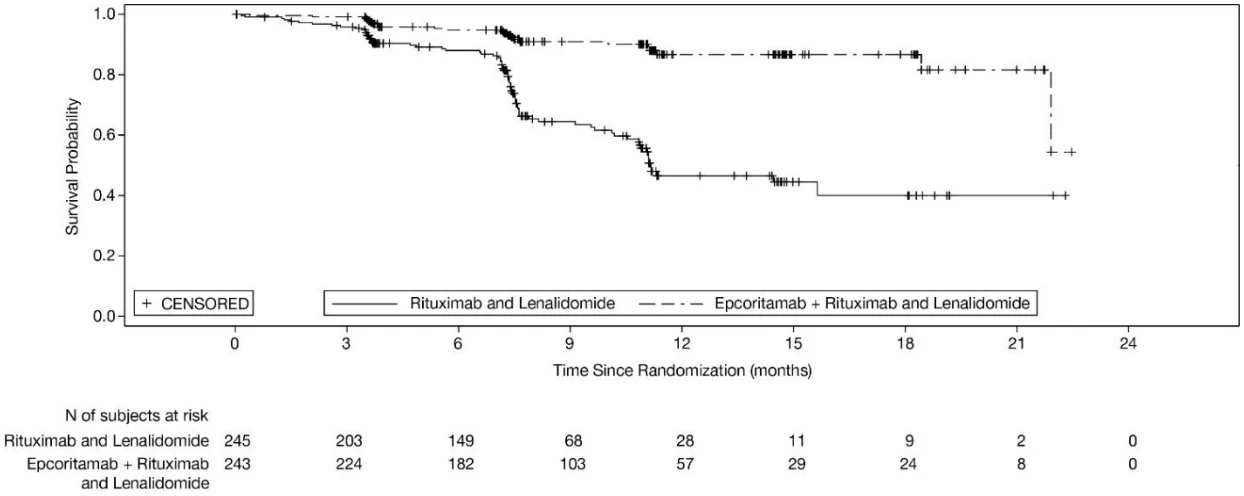
After a median duration of follow-up of 14.8 months, the median overall survival had not been reached in either arm.
15. Microbiology
No microbiological information is required for this drug product.
16. Non-Clinical Toxicology
Animal pharmacology and/or toxicology: Effects generally consistent with the pharmacologic mechanism of action of epcoritamab were observed in cynomolgus monkeys. These findings included dose-related adverse clinical signs (including vomiting, decreased activity, and mortality [at high doses]) and cytokine release, reversible hematologic alterations, reversible B-cell depletion in peripheral blood, and reversible decreased lymphoid cellularity in secondary lymphoid tissues.
Carcinogenicity: Carcinogenicity studies have not been conducted with epcoritamab.
Genotoxicity: Genotoxicity studies have not been conducted with epcoritamab.
Impairment of fertility: Animal fertility studies have not been conducted with epcoritamab.
Reproductive and Developmental Toxicology: Animal reproduction studies have not been conducted with epcoritamab.