


Product Monograph - Elrexfio
Recent Major Label Changes
| 4 Dosage and Administration, Recommended Dose and Dosage Adjustment | 09/2025 |
|---|---|
| 4 Dosage and Administration, Dosing Considerations | 12/2025 |
| 7 Warnings and Precautions, Infections | 12/2025 |
Table of Contents
Certain sections or subsections that are not applicable at the time of the preparation of the most recent authorized product monograph are not listed.
Recent Major Label Changes ................................................................................................... 2
Table of Contents ................................................................................................................... 2
1 Indications ............................................................................................................... 5
1.1 Pediatrics .............................................................................................................. 5
1.2 Geriatrics .............................................................................................................. 5
2 Contraindications ..................................................................................................... 5
3 Serious Warnings and Precautions Box ................................................................... 5
4 Dosage and Administration ......................................................................................... 6
4.1 Dosing Considerations .......................................................................................... 6
4.2 Recommended Dose and Dosage Adjustment ..................................................... 6
4.4 Administration .................................................................................................... 13
4.5 Missed Dose ....................................................................................................... 14
5 Overdose................................................................................................................... 14
6 Dosage Forms, Strengths, Composition and Packaging .............................................. 15
7 Warnings and Precautions ......................................................................................... 15
7.1 Special Populations ............................................................................................. 18
7.1.1 Pregnancy ....................................................................................................... 18
7.1.2 Breastfeeding ................................................................................................. 19
7.1.3 Pediatrics ........................................................................................................ 19
7.1.4 Geriatrics ........................................................................................................ 19
8 Adverse Reactions ..................................................................................................... 19
8.1 Adverse Reaction Overview ................................................................................ 19
8.2 Clinical Trial Adverse Reactions .......................................................................... 19
8.3 Less Common Clinical Trial Adverse Reactions ................................................... 22
8.4 Abnormal Laboratory Findings: Hematologic, Clinical Chemistry and Other Quantitative Data ........................................................................................................... 22
9 Drug Interactions ...................................................................................................... 23
9.2 Drug Interactions Overview ................................................................................ 23
9.5 Drug-Food Interactions ....................................................................................... 23
9.6 Drug-Herb Interactions ....................................................................................... 23
9.7 Drug-Laboratory Test Interactions ...................................................................... 23
10 Clinical Pharmacology ............................................................................................... 24
10.1 Mechanism of Action .......................................................................................... 24
10.2 Pharmacodynamics ............................................................................................ 24
10.3 Pharmacokinetics ............................................................................................... 24
11 Storage, Stability and Disposal .................................................................................. 25
12 Special Handling Instructions .................................................................................... 25
Part 2: Scientific Information ................................................................................................ 26
13 Pharmaceutical Information ...................................................................................... 26
14 Clinical Trials ............................................................................................................. 27
14.1 Clinical Trials by Indication ................................................................................. 27
Relapsed or refractory multiple myeloma ...................................................................... 27
14.3 Immunogenicity .................................................................................................. 29
15 Microbiology ............................................................................................................. 29
16 Non-Clinical Toxicology ............................................................................................. 29
Patient Medication Information ........................................................................................... 30
Part 1: Healthcare Professional Information
1 Indications
Elrexfio (elranatamab injection) is a B-cell maturation antigen (BCMA)-directed and CD3-directed bispecific antibody indicated as monotherapy for:
- the treatment of adult patients with relapsed or refractory multiple myeloma who have received at least 3 prior lines of therapy, including a proteasome inhibitor, an immunomodulatory agent, and an anti-CD38 monoclonal antibody, and who have demonstrated disease progression on the last therapy
1.1 Pediatrics
Pediatrics (<18 years of age): No data are available to Health Canada; therefore, Health Canada has not authorized an indication for pediatric use (see 7.1.3 Pediatrics).
1.2 Geriatrics
Geriatrics (≥ 65 years of age): Of the 183 patients with relapsed or refractory multiple myeloma treated with Elrexfio in a clinical trial at the recommended dosage, 62% were 65 years of age or older, and 19% were 75 years of age or older. Evidence from clinical studies does not suggest that use in the geriatric population is associated with differences in safety or effectiveness (see 7.1.4 Geriatrics).
2 Contraindications
- Elrexfio is contraindicated in patients who are hypersensitive to this drug or to any ingredient in the formulation, including any non-medicinal ingredient, or component of the container. For a complete listing, see 6 Dosage Forms, Strengths, Composition and Packaging.
3 Serious Warnings and Precautions Box
- Cytokine Release Syndrome (CRS), including life-threatening or fatal reactions, can occur in patients receiving Elrexfio. Initiate treatment with Elrexfio step-up dosing schedule to reduce the risk of CRS. Monitor patients for signs or symptoms of CRS. Withhold Elrexfio until CRS resolves. Provide supportive care and treatment as needed or permanently discontinue based on severity (see 4 Dosage and Administration and 7 Warnings and Precautions).
- Neurologic toxicity, including Immune Effector Cell-Associated Neurotoxicity Syndrome (ICANS) and serious and life-threatening reactions, can occur with Elrexfio. Monitor patients for signs and symptoms of neurologic toxicity, including ICANS, during treatment. The onset of ICANS may be concurrent with CRS, following resolution of CRS, or in the absence of CRS. Withhold Elrexfio until the neurologic toxicity resolves or permanently discontinue based on severity (see 4 Dosage and Administration and 7 Warnings and Precautions).
4 Dosage and Administration
4.1 Dosing Considerations
- Premedication prior to the first three doses of Elrexfio is recommended (see 4.4 Administration, Pre-treatment Medications).
- Elrexfio should be administered by a healthcare professional with appropriate medical support to manage severe reactions, including cytokine release syndrome (CRS) and neurologic toxicity, including immune effector cell-associated neurotoxicity syndrome (ICANS) (see 7 Warnings and Precautions).
- Pregnancy status for females of child-bearing potential should be verified prior to starting treatment with Elrexfio.
- Do not initiate treatment with Elrexfio in patients with active infection.
- Prior to initiating treatment with Elrexfio, prophylactic antimicrobials (eg., prevention of pneumocystis jirovecii pneumonia) and anti-virals (eg., prevention of herpes zoster reactivation) should be considered per local institutional guidelines.
- Patients at risk of cytomegalovirus (CMV) infection should be monitored and managed for CMV reactivation per local institutional guidelines.
- Administer Elrexfio subcutaneously according to the step-up dosing schedule to reduce the incidence and severity of CRS and ICANS (see 4.2 Recommended Dose and Dosage Adjustment, Table 1).
4.2 Recommended Dose and Dosage Adjustment
Recommended Dose
The recommended dosing schedule for Elrexfio is provided in Table 1. The recommended doses of Elrexfio subcutaneous (SC) injection are step-up doses of 12 mg on Day 1 and 32 mg on Day 4 of week 1, followed by the first treatment dose of 76 mg on Day 8, and then 76 mg weekly thereafter through week 24.
For patients who have received at least 24 weeks of treatment and have achieved a response (i.e., a partial response or better that has been maintained for at least 2 months), the dose interval should transition to an every two-week schedule beginning at 25 weeks. For patients who have received at least 24 weeks of treatment with Elrexfio at the every two-weeks dosing schedule and have maintained the response, the dose interval should transition to an every four-weeks schedule beginning at 49 weeks (see Table 1).
Continue treatment with Elrexfio until disease progression or unacceptable toxicity.
Administer Elrexfio subcutaneously according to the step-up dosing schedule in Table 1. The step-up regimen is intended to reduce the risk and/or severity of CRS and/or ICANS. Failure to follow the recommended dosing schedule for initiation or re-initiation of therapy may increase the risk and/or severity of adverse events such as CRS.
Table 1 – Elrexfio Dosing Schedule
| Dosing Schedule | Week / Day | Dose | |
| Step-up Dosinga, b | Week 1: Day 1 | Step-up dose 1 | 12 mg SC |
| Week 1: Day 4 | Step-up dose 2 | 32 mg SC | |
| Weekly Dosinga, c, d | Week 2-24: Day 1 | Treatment dose | 76 mg SC once weekly |
| Every 2 Weeks Dosingd, e | Week 25 onward: Day 1 | Treatment dose | 76 mg SC once every two weeks |
| Every 4 weeks Dosingd,f, g | Week 49 onward: Day 1 | Treatment dose | 76 mg SC once every four weeks |
Abbreviations: SC = subcutaneous
- a. Administer pre-treatment medications prior to the first three doses of Elrexfio (see 4.4 Administration, Pre-treatment Medications).
- b. A minimum of 2 days should be maintained between step-up dose 1 (12 mg) and step-up dose 2 (32 mg).
- c. A minimum of 3 days should be maintained between step-up dose 2 (32 mg) and the first full treatment (76 mg) dose.
- d. Maintain a minimum of 6 days between treatment doses.
- e. For patients who have achieved and maintained a partial response or better for 2 months.
- f. For patients who have received at least 24 weeks of treatment at the every two-week schedule.
- g. For patients who maintained the response.
Note: See Table 2 for recommendations on restarting Elrexfio after dose delays.
Restarting Elrexfio After Dosage Delay
If a dose of Elrexfio is delayed, restart therapy based on the recommendations listed in Table 2 and resume the dosing schedule accordingly (see 4.2 Recommended Dose and Dosage Adjustment). Administer pre-treatment medications prior to step-up dose 1 and step-up dose 2. Monitor patients accordingly.
Table 2 – Recommendations for Restarting Therapy with Elrexfio After Dosage Delay
| Last administered dose | Duration of delay from the last administered dose | Action | |||
|---|---|---|---|---|---|
| Step-up dose 1 (12 mg) | 2 weeks or less (≤14 days) | Restart Elrexfio at step-up dose 2 (32 mg).a If tolerated, increase to 76 mg 4 days later. | |||
| Greater than 2 weeks (>14 days) | Restart Elrexfio step-up dosing schedule at step-up dose 1 (12 mg).a | ||||
| Step-up dose 2 (32 mg) | 2 weeks or less (≤14 days) | Restart Elrexfio at 76 mg. | |||
| Greater than 2 weeks to less than or equal to 4 weeks (15 days and ≤28 days) | Restart Elrexfio at step-up dose 2 (32 mg).a If tolerated, increase to 76 mg 1 week later. | ||||
| Greater than 4 weeks (>28 days) | Restart Elrexfio step-up dosing schedule at step-up dose 1 (12 mg).a | ||||
| Any full treatment dose (76 mg) | 6 weeks or less (≤42 days) | Restart Elrexfio at 76 mg. | |||
| Greater than 6 weeks to less or equal to 12 weeks (43 days to ≤84 days) | Restart Elrexfio at step-up dose 2 (32 mg).a If tolerated, increase to 76 mg 1 week later. | ||||
| Greater than 12 weeks (>84 days) | Restart Elrexfio step-up dosing schedule at step-up dose 1 (12 mg).a | ||||
| a. Administer pre-treatment medications prior to the Elrexfio dose. | |||||
If a dose of Elrexfio is missed, administer the dose as soon as possible, and adjust the dosing schedule as needed to maintain the dosing interval (see 4.5 Missed Dose).
Dosage Modifications for Elrexfio
Dosage reductions of Elrexfio are not recommended.
Dose delays may be required to manage toxicities related to Elrexfio (see 7 Warnings and Precautions). Recommendations on restarting Elrexfio after a dose delay are provided in Table 2.
See Tables 3 and 4 for recommended actions for adverse reactions of CRS and ICANS, respectively. See Table 5 for recommended actions for other adverse reactions following administration of Elrexfio. Consider further management per current practice guidelines.
Management of Cytokine Release Syndrome (CRS)
Identify CRS based on clinical presentation (see 7 Warnings and Precautions ). Evaluate and treat other causes of fever, hypoxia, and hypotension.
If CRS is suspected, withhold Elrexfio until CRS resolves. Manage CRS according to the recommendations in Table 3 and consider further management per current practice guidelines. Administer supportive therapy for CRS, which may include intensive care for severe or life-threatening CRS and also, but not limited to, the use of anti-pyretic agents, intravenous fluid support, vasopressors, anti-IL-6 or anti-IL-6 receptor medications, corticosteroids or supplemental oxygen. Consider laboratory testing to monitor for disseminated intravascular coagulation (DIC), hematology parameters, as well as pulmonary, cardiac, renal, and hepatic function.
Table 3 – Recommendations for Management of CRS
| Gradea | Presenting Symptoms | Actions |
| Gradea | Presenting Symptoms | Actions |
| Grade 1 | Temperature ≥38°Cb |
|
| Grade 2 | Temperature ≥38°C with either:
|
|
Grade 3 (First occurrence) | Temperature ≥38°C with either:
|
|
| Grade 3 (Recurrent) | Temperature ≥38 °C with either:
|
|
| Grade 4 | Temperature ≥38°C with either:
|
|
- a. Based on American Society for Transplantation and Cellular Therapy (ASTCT) 2019 grading for CRS.
- b. Attributed to CRS. Fever may not always be present concurrently with hypotension or hypoxia as it may be masked by interventions such as antipyretics or anti-cytokine therapy.
- c. See Table 2 for recommendations on restarting Elrexfio after dose delays.
- d. Low-flow nasal cannula is ≤6 L/min, and high-flow nasal cannula is >6 L/min.
Management of Neurologic Toxicity Including ICANS
At the first sign of neurologic toxicity, including ICANS, withhold Elrexfio and consider neurology evaluation. Rule out other causes of neurologic symptoms. Provide supportive therapy, which may include intensive care, for severe or life-threatening neurologic toxicities, including ICANS (see 7 Warnings and Precautions). Manage ICANS according to the recommendations in Table 4 and consider further management per current practice guidelines.
Table 4 – Recommendations for Management ICANS
| Gradea | Presenting Symptomsb | Actions |
| Gradea | Presenting Symptomsb | Actions |
| Grade 1 | ICE score 7-9c or depressed level of consciousnessd: awakens spontaneously. |
|
| Grade 2 | ICE score 3-6c or depressed level of consciousnessd: awakens to voice. |
|
Grade 3 (First occurrence) | ICE score 0-2c or depressed level of consciousnessd: awakens only to tactile stimulus, or seizuresd, either:
or raised intracranial pressure: focal/local edema on neuroimagingd |
|
| Grade 3 (recurrent) | ICE score 0-2c |
|
or depressed level of consciousnessd: awakens only to tactile stimulus, or seizuresd, either:
or raised intracranial pressure: focal/local edema on neuroimagingd |
| |
| Grade 4 | ICE score 0c or depressed level of consciousnessd either:
or seizuresd, either:
or motor findingsd:
or raised intracranial pressure / cerebral oedemad, with signs/symptoms such as:
|
|
- a. Based on American Society for Transplantation and Cellular Therapy (ASTCT) 2019 grading for ICANS.
- b. Management is determined by the most severe event, not attributable to any other cause.
- c. If patient is arousable and able to perform Immune Effector Cell-Associated Encephalopathy (ICE) Assessment, assess: Orientation (oriented to year, month, city, hospital = 4 points); Naming (name 3 objects, e.g., point to clock, pen, button = 3 points); Following Commands (e.g., “show me 2 fingers” or “close your eyes and stick out your tongue” = 1 point); Writing (ability to write a standard sentence = 1 point; and Attention (count backwards from 100 by ten = 1 point). If patient is unarousable and unable to perform ICE Assessment (Grade 4 ICANS) = 0 points.
- d. Not attributable to any other cause.
- e. See Table 2 for recommendations on restarting Elrexfio after dose delays.
- f. All references to dexamethasone administration are dexamethasone or equivalent.
Table 5 – Recommended Dosage Modifications for Other Adverse Reactions
| Adverse Reactions | Severity | Actions |
Hematologic Adverse Reactions (see 8 Adverse Reactions) | Absolute neutrophil count less than 0.5 X 10⁹/L |
|
| Febrile neutropenia |
| |
| Hemoglobin less than 8 g/dL |
| |
Platelet count less than 25,000/mcL Platelet count between 25,000/mcL and 50,000/mcL with bleeding |
| |
Infections and other Non-hematologic Adverse Reactionsa (see 8 Adverse Reactions) | Grade 3 |
|
| Grade 4 |
| |
| Progressive Multifocal Leukoencephalop athy (PML) | All Grades |
|
- a. Based on National Cancer Institute Common Terminology Criteria for Adverse Events (NCI-CTCAE), Version 5.0.
- b. See Table 2 for recommendations on restarting Elrexfio after dose delays.
Special Populations
Elderly (65 years of age and older)
No dose adjustment is necessary (see 10.2 Pharmacodynamics and 10.3 Pharmacokinetics).
Renal impairment
No dose adjustment is recommended in patients with mild to moderate renal impairment. Elrexfio has not been studied in patients with severe renal impairment (see 10.3 Pharmacokinetics).
Hepatic impairment
No dose adjustments are required for mild hepatic impairment. The effects of moderate to severe hepatic impairment on the pharmacokinetics of elranatamab have not been studied (see 10.3 Pharmacokinetics).
Pediatric population
Health Canada has not authorized an indication for pediatric use (see 7.1.3 Pediatrics).
4.4 Administration
Elrexfio should be administered by a healthcare professional with access to appropriate medical support to manage severe reactions, including CRS and neurologic toxicity, including ICANS (see 7 Warnings and Precautions).
Elrexfio is intended for subcutaneous use by a healthcare provider only. Do not administer Elrexfio intravenously.
Pre-Treatment Medications
Administer the following pre-treatment medications approximately 1 hour before the first three doses of Elrexfio in the dosing schedule, which includes step-up dose 1, step-up dose 2, and the first full treatment dose (76 mg) as described in Table 1 to reduce the risk of CRS (see 7 Warnings and Precautions):
- acetaminophen (or equivalent) 650 mg orally
- dexamethasone (or equivalent) 20 mg orally or intravenously
- diphenhydramine (or equivalent) 25 mg orally
Preparation of Elrexfio
Elrexfio 76 mg/1.9 mL (40 mg/mL) vial and 44 mg/1.1 mL (40 mg/mL) vial are supplied as ready-to-use solutions that do not need dilution prior to administration.
Elrexfio is a clear to slightly opalescent, and colourless to pale brown liquid solution. Inspect Elrexfio visually for particulate matter and discolouration prior to administration, whenever solution and container permit. Do not administer if solution is discoloured or contains particulate matter.
Use aseptic technique to prepare and administer Elrexfio.
Elrexfio vials are single-use and do not contain any preservatives.
Prepare Elrexfio following the instructions below (see Table 6) depending on the required dose. It is suggested to use a 44 mg/1.1 mL (40 mg/mL) single-use vial for step-up dose 1 or step-up dose 2.
Table 6 - Preparation Instructions for Elrexfio
| Required Dose | Dose Volume |
| 76 mg (Full treatment dose) | 1.9 mL |
| 32 mg (Step-up dose 2) | 0.8 mL |
| 12 mg (Step-up dose 1) | 0.3 mL |
Remove the appropriate strength Elrexfio vial from refrigerated storage (2 °C to 8 °C). Once removed from refrigerated storage, equilibrate Elrexfio to ambient temperature (15 °C to 30 °C). Do not warm ELREXFIO in any other way.
Withdraw the required injection volume of Elrexfio from the vial into an appropriately sized syringe with stainless steel injection needles (30G or wider) and polypropylene or polycarbonate syringe material. Discard unused portion.
Once punctured, use vial immediately. If the prepared dosing syringe is not used immediately, store syringe between 2°C to 8°C for a maximum of 72 hours or between 8°C to 30°C for a maximum of 24 hours. Discard any solution remaining in the vial after single withdrawal (see 11 Storage, Stability and Disposal).
Administration
Inject Elrexfio into the subcutaneous tissue of the abdomen (preferred injection site). Alternatively, Elrexfio may be injected into the subcutaneous tissue at other sites (e.g., thigh). Do not inject into tattoos or scars or areas where the skin is red, bruised, tender, hard or not intact.
Monitoring
- Instruct the patient to remain within proximity of a healthcare facility for 48 hours after each step-up dose.
- Monitor daily for 48 hours for signs and symptoms of CRS after administration of step-up dose 1 or step-up dose 2 (See Table 1).
- Alternatively, consider monitoring the patient in hospital for 48 hours after each step-up dose (see Table 1) (see 4 Dosage and Administration and 7 Warnings and Precautions).
4.5 Missed Dose
If a dose of Elrexfio is missed, administer the dose as soon as possible, and adjust the dosing schedule to maintain the dosing interval (see Table 1).
5 Overdose
There has been minimal experience of overdose in clinical studies. The maximum tolerated dose has not been determined. In clinical studies, doses up to 76 mg have been administered.
Treatment
In the event of an overdose, the patient should be monitored for any signs or symptoms of adverse reactions and appropriate supportive treatment should be instituted immediately.
For the most recent information in the management of a suspected drug overdose, contact your regional poison control centre or Health Canada’s toll-free number, 1-844 POISON-X (1-844-764-7669).
6 Dosage Forms, Strengths, Composition and Packaging
To help ensure the traceability of biologic products, health professionals should record the brand name and the non-proprietary (active ingredient) name as well as other product-specific identifiers such as the Drug Identification Number (DIN) and the batch/lot number of the administered product.
Table 7 – Dosage Forms, Strengths, and Composition
Elrexfio is a sterile, preservative-free, clear to slightly opalescent and colourless to pale brown liquid solution supplied as:
- 76 mg/1.9 mL (40 mg/mL) in a single-use vial
- 44 mg/1.1 mL (40 mg/mL) in a single-use vial
Elrexfio is supplied in a single-use glass vial sealed with a chlorobutyl rubber stopper (rubber serum stopper) and an aluminum seal with a flip-off cap. Each Elrexfio carton contains 1 glass vial.
7 Warnings and Precautions
Please see 3 Serious Warnings and Precautions Box.
Driving and Operating Machinery
Elrexfio may impair one’s ability to drive and use machines.
Due to the potential for neurologic toxicity including Immune Effector Cell-Associated Neurotoxicity Syndrome (ICANS), patients receiving Elrexfio are at risk of depressed level of consciousness (see 8 Adverse Reactions). Advise patients not to drive or operate heavy or potentially dangerous machinery during the Elrexfio step-up dosing schedule and for 48 hours after completing each of the 2 step-up doses within the Elrexfio and in the event of new onset of neurologic toxicity until resolution of any neurological symptoms.
| Route of Administration | Dosage Form / Strength/Composition | Non-medicinal Ingredients |
| Subcutaneous | Solution for injection, 40 mg/mL 44 mg/1.1 mL and 76 mg/1.9 mL single-use vials | edetate disodium dihydrate, L-histidine, L--histidine hydrochloride monohydrate, polysorbate 80, sucrose, water for injection |
Hematologic
Neutropenia
Elrexfio can cause neutropenia and febrile neutropenia. In patients who received Elrexfio at the recommended dose in the C1071003 clinical trial, decreased neutrophils occurred in 61.7%, with Grade 3 or 4 neutrophil decrease in 50.8%. Febrile neutropenia occurred in 2.2% of patients (see 8 Adverse Reactions).
Monitor complete blood cell counts at baseline and periodically during treatment. Provide supportive care according to current practice guidelines. Monitor patients with neutropenia for signs of infection. Withhold Elrexfio based on severity (see 4.2 Recommended Dose and Dosage Adjustment, Dosage Modifications for Elrexfio).
Hepatic
Elrexfio can cause hepatotoxicity. In the C1071003 clinical trial, elevated ALT occurred in 36% of patients, with Grade 3 or 4 ALT elevation occurring in 3.8%; elevated AST occurred in 40% of patients, with Grade 3 or 4 AST elevation occurring in 6%. Grade 3 or 4 total bilirubin elevations occurred in 0.5% of patients. Liver enzyme elevation can occur with or without concurrent CRS.
Monitor liver enzymes and bilirubin at baseline and during treatment as clinically indicated. Withhold Elrexfio or consider permanent discontinuation of Elrexfio based on severity.
Immune
Concomitant use of Live Viral Vaccines
The safety of immunization with live viral vaccines during or following Elrexfio treatment has not been studied. Vaccination with live virus vaccines is not recommended within 4 weeks of the first dose of Elrexfio and during treatment with Elrexfio.
Cytokine Release Syndrome (CRS)
Elrexfio can cause CRS, including life-threatening or fatal reactions (see 8 Adverse Reactions).
In the C1071003 clinical trial, CRS occurred in 57.9% of patients who received Elrexfio at the recommended dosing schedule (see 4.2 Recommended Dose and Dosage Adjustment), with Grade 1 CRS in 43.7% of patients, Grade 2 CRS in 13.7% of patients, and Grade 3 CRS in 0.5% of patients. Recurrent CRS occurred in 13.1% of patients. CRS was most common after the first step-up dose (43.2% of patients) or the second step-up dose (19.1% of patients), with 7.1% of patients having CRS after the first treatment dose (76 mg) and 1.6% of patients after a subsequent dose. The median time to onset of CRS was 2 (range: 1 to 9) days after the most recent dose, with a median duration of 2 (range: 1 to 19) days.
Clinical signs and symptoms of CRS may include, but are not limited to, fever, hypoxia, chills, hypotension, tachycardia, headache, and elevated liver enzymes. Among patients who received Elrexfio according to the recommended dosing schedule, 19.1% received tocilizumab (or siltuximab) and 8.7% received corticosteroids for treatment of CRS.
Initiate therapy according to Elrexfio step-up dosing schedule to reduce risk of CRS. Administer pre-treatment medications prior to the first three doses of Elrexfio to reduce risk of CRS and monitor patients following administration of Elrexfio accordingly (see 4.2 Recommended Dose and Dosage Adjustment).
Counsel patients to seek medical attention should signs or symptoms of CRS occur. At the first sign of CRS, immediately evaluate the patient’s need for hospitalization. Manage CRS according to the recommendations in Table 3 and consider further management per current practice guidelines. Supportive therapy for CRS (including but not limited to anti-pyretic agents, intravenous fluid support, vasopressors, corticosteroids, anti-IL-6 or anti-IL-6 receptor medications, supplemental oxygen) should be administered as appropriate. Laboratory testing to monitor for disseminated intravascular coagulation (DIC), hematology parameters, as well as pulmonary, cardiac, renal and hepatic function should be considered. Withhold or permanently discontinue Elrexfio based on severity (see 4.2 Recommended Dose and Dosage Adjustment, Dosage Modifications for Elrexfio).
Hypogammaglobulinemia
Hypogammaglobulinemia was reported as an adverse reaction in 13.1% of patients receiving Elrexfio at the recommended dosage in the C1071003 clinical trial (see 8 Adverse Reactions).
Monitor immunoglobulin levels during treatment with Elrexfio. Consider subcutaneous or intravenous immunoglobulin therapy if IgG levels fall below 400 mg/dL and treat patients according to current practice guidelines, including infection precautions and antimicrobial prophylaxis.
Infections
Elrexfio can cause severe, life-threatening, or fatal infections. In the C1071003 clinical trial, in patients who received Elrexfio according to the recommended dosing schedule, serious infections, including opportunistic infections, occurred in 41.5% of patients, with Grade 3 or 4 infections in 31.1%, and fatal infections in 6.6% (see 8 Adverse Reactions). Opportunistic infections included cytomegalovirus infection and reactivation, pneumocystis jirovecii pneumonia, adenovirus infection, and hepatitis B reactivation.
Cases of progressive multifocal leukoencephalopathy (PML) caused by the John Cunningham virus, including fatal events, have also been reported in patients treated with Elrexfio (see 8 Adverse Reactions). If neurological symptoms suggestive of PML occur during Elrexfio therapy, treatment with Elrexfio should be withheld and appropriate diagnostic measures initiated. Discontinue Elrexfio if PML is confirmed.
Do not initiate treatment with Elrexfio in patients with active infections. Monitor patients for signs and symptoms of infection prior to and during treatment with Elrexfio and treat appropriately. Withhold Elrexfio based on severity (see 4.2 Recommended Dose and Dosage Adjustment, Dosage Modifications for Elrexfio). Administer prophylactic antimicrobials and anti-virals according to current practice guidelines. Consider treatment with subcutaneous or intravenous immunoglobulin (IVIG) as appropriate (see 7 Warnings and Precautions, Immune, Hypogammaglobulinemia).
Hepatitis B Virus reactivation
Hepatitis B virus reactivation has been reported in patients treated with drugs directed against B cells, and in some cases, may result in fulminant hepatitis, hepatic failure, and death.
Patients with evidence of positive HBV serology should be monitored for clinical and laboratory signs of HBV reactivation while receiving Elrexfio, and for at least six months following the end of treatment.
In patients who develop reactivation of HBV while on Elrexfio, withhold treatment with
Elrexfio as indicated in Table 5 and manage per local institutional guidelines (see 4 Dosage and Administration).
Neurologic
Neurologic toxicity, including Immune Effector Cell-Associated Neurotoxicity Syndrome (ICANS)
Elrexfio can cause serious or life-threatening neurologic toxicity, including ICANS.
In the C1071003 clinical trial, neurologic toxicity occurred in 59% of patients who received Elrexfio at the recommended dosing schedule (see 4.2 Recommended Dose and Dosage Adjustment), with Grade 3 neurologic toxicity occurring in 7.1% of patients. Neurologic toxicities included headache (18%), encephalopathy (14%), sensory neuropathy (13%), motor dysfunction (14%) and Guillain-Barre Syndrome (0.5%).
In the C1071003 clinical trial, ICANS occurred in 3.3% of patients who received Elrexfio at the recommended dosing schedule (see 4.2 Recommended Dose and Dosage Adjustment). Most patients had ICANS after the first step-up dose (2.7%), 1 (0.5%) patient had ICANS after the second step-up dose and 1 (0.5%) patient had ICANS after subsequent dose(s). Recurrent ICANS occurred in 1.1% of patients. The median time to onset was 3 (range: 1 to 4) days after the most recent dose, with a median duration of 2 (range: 1 to 18) days. The most frequent clinical manifestations of ICANS included a depressed level of consciousness and Grade 1 or Grade 2 Immune Effector Cell-Associated Encephalopathy (ICE) scores. The onset of ICANS can be concurrent with CRS, following resolution of CRS, or in the absence of CRS. Among patients who received Elrexfio at the recommended dosing schedule, 2.2% received corticosteroids, 1.1% received tocilizumab (or siltuximab), and 0.5% received anakinra for treatment of ICANS.
Counsel patients to seek medical attention should signs or symptoms of neurologic toxicity occur. Monitor patients for signs and symptoms of neurologic toxicities during treatment with Elrexfio. At the first sign of neurologic toxicity, including ICANS, evaluate and treat patients immediately based on severity. Withhold or permanently discontinue Elrexfio based on severity per recommendations in Table 4 and consider further management per current practice guidelines.
Reproductive Health
Elrexfio may cause fetal harm when administered to a pregnant woman (see 7.1.1 Pregnant women).
Pregnancy Testing
Verify the pregnancy status of females of reproductive potential prior to initiating treatment with Elrexfio.
Contraception
Advise women of reproductive potential to use effective contraception during treatment and for 5 months after the last dose.
Fertility
There are no data on the effect of Elrexfio on human fertility. Effects of elranatamab on male and female fertility have not been evaluated in animal studies.
7.1 Special Populations
7.1.1 Pregnancy
There are no human or animal data to assess the risk of elranatamab use during pregnancy. Human immunoglobulin (IgG) is known to cross the placenta after the first trimester of pregnancy. Based on the mechanism of action, elranatamab may cause fetal harm when administered to a pregnant woman and therefore Elrexfio is not recommended for use during pregnancy (see 10.1 Mechanism of Action).
Elrexfio is associated with hypogammaglobulinemia, therefore, assessment of immunoglobulin levels in newborns of mothers treated with Elrexfio should be considered.
7.1.2 Breastfeeding
It is not known whether elranatamab is excreted in human or animal milk, affects breastfed infants or affects milk production. Human IgGs are known to be excreted in breast milk.
A risk to the breastfed child cannot be excluded and therefore breast-feeding is not recommended during treatment with Elrexfio and for 5 months after the last dose.
7.1.3 Pediatrics
Pediatrics (<18 years of age): No data are available to Health Canada; therefore, Health Canada has not authorized an indication for pediatric use.
7.1.4 Geriatrics
Geriatrics (≥ 65 years of age): Of the 183 patients with relapsed or refractory multiple myeloma treated with Elrexfio in study C1071003 at the recommended dosage, 62.0% were 65 years of age or older, and 19.3% were 75 years of age or older. No overall differences in safety or effectiveness were observed between patients ≥65 and ≥75 years of age compared to younger patients.
8 Adverse Reactions
8.1 Adverse Reaction Overview
The following adverse reactions associated with Elrexfio are discussed in detail under 7 Warnings and Precautions. Appropriate management and dosing considerations regarding these adverse events are outlined under 4 Dosage and Administration, Dosage modifications for Elrexfio.
- Cytokine release syndrome
- Neurologic toxicity, including ICANS
- Infections
- Hypogammaglobulinemia
- Neutropenia
The most frequent adverse reactions of any grade in patients enrolled in study C1071003 who received the recommended dosing regimen were CRS (57.9%), anaemia (53.6%), neutropenia (44.3%), fatigue (42.6%), injection site reaction (37.2%), diarrhea (35.5%), upper respiratory tract infection (34.4%), thrombocytopenia (35.0%), pneumonia (31.7%), lymphopenia (29.5%), decreased appetite (26.2%), rash (25.7%), arthralgia (21.9%), nausea (21.3%), hypokalemia (21.3%), and pyrexia (21.3%).
Serious adverse reactions were reported in 68.3% of patients who received Elrexfio, including pneumonia (25.1%), sepsis (13.1%), CRS (12.6%), anaemia (5.5%), upper respiratory tract infection (4.4%), urinary tract infection (3.3%), dyspnoea (2.2%), pyrexia (2.2%), and febrile neutropenia (2.2%).
8.2 Clinical Trial Adverse Reactions
Clinical trials are conducted under very specific conditions. The adverse reaction rates observed in the clinical trials; therefore, may not reflect the rates observed in practice and should not be compared to the rates in the clinical trials of another drug. Adverse reaction information from clinical trials may be useful in identifying and approximating rates of adverse drug reactions in real-world use.
Relapsed/Refractory Multiple Myeloma
The clinical trial data described in 7 Warnings and Precautions and in this section reflect exposure to Elrexfio in study C1071003 in 183 patients who received the recommended dose regimen (N=183 including 64 patients with prior BCMA-directed antibody drug conjugate [ADC] or chimeric antigen receptor [CAR] T cell therapy [supportive Cohort B]). Among patients who received Elrexfio, 42.1% were exposed for 6 months or longer and 9.3% were exposed for one year or longer. The median duration of Elrexfio treatment was 4.1 (range: 0.03 to 14.9) months.
The median age of patients who received Elrexfio was 68 years (range: 36 to 88 years); 52% were male; 61% were White, 10% were Hispanic/Latino, 9% were Asian, and 6% were Black.
Table 8 summarizes adverse reactions with ≥10% incidence.
Table 8 – Adverse Reactions (≥10%) in Patients who Received Elrexfio in Study C1071003 (MagnetisMM-3)
System Organ Class Preferred Term | Elrexfio n = 183 | |||||
|---|---|---|---|---|---|---|
System Organ Class Preferred Term | Elrexfio n = 183 | |||||
All Grades (%) | Grade 3/4 (%) | |||||
All Grades (%) | Grade 3/4 (%) | |||||
Blood and lymphatic system disorders Anemiaa Neutropeniab Thrombocytopeniac Lymphopeniad Leukopeniae | 53.6 44.3 35.0 29.5 15.8 | 42.1 42.6 25.1 27.3 10.9 | ||||
Cardiac disorders Cardiac arrhythmiaf | 16.4 | 1.6 | ||||
Gastrointestinal disorders Diarrhea Nausea Constipation Vomiting | 35.5 21.3 14.2 14.2 | 1.1 0 0 0 | ||||
General disorders and site administration conditions Fatigueg Injection site reactionh Pyrexia Edemai | 42.6 37.2 21.3 18.0 | 5.5 0 2.7 1.1 | ||||
Immune system disorders Cytokine release syndrome Hypogammaglobulinemiaj | 57.9 13.1 | 0.5 2.2 | ||||
Infections and infestations Upper respiratory tract infectionk Pneumonial Sepsism Urinary tract infectionn | 34.4 31.7 15.3 12.0 | 4.9 19.1 10.9 4.4 | ||||
Injury, poisoning and procedural complications Fall | 10.4 | 0.5 | ||||
Investigations Transaminases increasedo | 15.8 | 4.9 | ||||
Metabolism and nutrition disorders Decreased appetite Hypokalemia | 26.2 21.3 | 1.1 8.2 | ||||
Musculoskeletal and connective tissue disorders Arthralgiap | 21.9 | 1.1 | ||||
Nervous system disorders Headache Encephalopathyq Sensory neuropathyr Motor dysfunctions | 18.0 14.2 12.6 14.2 | 0 2.2 0.5 1.1 | ||||
Psychiatric disorders Insomnia | 13.1 | 0 | ||||
Respiratory, thoracic and mediastinal disorders Cought Dyspneau | 24.0 15.8 | 0 3.8 | ||||
Skin and Subcutaneous Tissue disorders Rashv Dry skin Skin exfoliationw | 25.7 13.7 10.4 | 0 0 0 | ||||
Vascular disorders Hemorrhagex | 12.6 | 1.6 | ||||
- a. Anemia includes anaemia, haemoglobin decreased, red blood cell count decreased, haematocrit decreased, normochromic anaemia, normocytic anaemia, normochromic normocytic anaemia, aplasia pure red cell.
- b. Neutropenia includes neutropenia, neutrophil count decreased, neutrophil percentage decreased, cyclic neutropenia, agranulocytosis, granulocytopenia, granulocyte count decreased.
- c. Thrombocytopenia includes thrombocytopenia, platelet count decreased.
- d. Lymphopenia includes lymphopenia, lymphocyte count decreased, lymphocyte percentage decreased, CD4 lymphocytes decreased, CD4 lymphocyte percentage decreased, CD8 lymphocytes decreased, CD8 lymphocyte percentage decreased.
- e. Leukopenia includes leukopenia, white blood cell count decreased.
- f. Cardiac arrhythmia includes atrial fibrillation, bradycardia, sinus bradycardia, sinus tachycardia, tachycardia, ventricular extrasystoles, ventricular tachycardia.
- g. Fatigue includes fatigue, asthenia, malaise.
- h. Injection site reaction includes injection site reaction, injection site erythema, injection site pruritus, injection site rash, injection site induration, injection site pain, injection site urticaria, injection site dryness, injection site haemorrhage, injection site inflammation.
- i. Edema includes oedema, oedema peripheral, eye oedema, fluid retention, lip oedema, localised oedema, periorbital oedema, peripheral swelling.
- j. Hypogammaglobulinemia includes participants with adverse events of blood immunoglobulin G decreased, hypogammaglobulinaemia, immunoglobulins decreased.
- k. Upper respiratory tract infection includes upper respiratory tract infection, sinusitis, acute sinusitis, pharyngitis, rhinitis, rhinovirus infection, viral upper respiratory tract infection, bronchitis viral, chronic sinusitis, nasopharyngitis, sinusitis bacterial, bronchitis, respiratory tract infection viral.
- l. Pneumonia includes pneumonia, COVID-19 pneumonia, bronchopulmonary aspergillosis, lower respiratory tract infection, lower respiratory tract infection viral, pneumocystis jirovecii pneumonia, pneumonia adenoviral, pneumonia bacterial, pneumonia cytomegaloviral, pneumonia fungal, pneumonia influenzal, pneumonia pseudomonal, pneumonia viral.
- m. Sepsis includes sepsis, bacteraemia, device related bacteraemia, device related sepsis, escherichia bacteraemia, escherichia sepsis, klebsiella sepsis, pseudomonal sepsis, septic shock, staphylococcal bacteraemia, staphylococcal sepsis, streptococcal sepsis, urosepsis.
- n. Urinary tract infection includes urinary tract infection, cystitis, urinary tract infection bacterial, escherichia urinary tract infection, urinary tract infection enterococcal.
- o. Transaminases increased includes alanine aminotransferase increased and aspartate aminotransferase increased.
- p. Arthralgia includes arthralgia, pain in extremity.
- q. Encephalopathy includes agitation, altered state of consciousness, cognitive disorder, confusional state, delirium, depressed level of consciousness, disorientation, hallucination, lethargy, memory impairment, metabolic encephalopathy, somnolence, toxic encephalopathy.
- r. Sensory neuropathy includes burning sensation, dysesthesia, hypoesthesia, neuropathy peripheral, paresthesia, parosmia, peripheral sensorimotor neuropathy, peripheral sensory neuropathy, polyneuropathy, sensory loss.
- s. Motor dysfunction includes ataxia, balance disorder, gait disturbance, motor dysfunction, muscle contracture, muscle spasms, muscular weakness, peripheral motor neuropathy, peroneal nerve palsy, tremor.
- t. Cough includes cough, productive cough, upper-airway cough syndrome.
- u. Dyspnea includes dyspnea, dyspnea exertional, respiratory distress.
- v. Rash incudes erythema, palmar-plantar erythrodysaesthesia syndrome, rash, rash erythematous, rash macular, rash maculo-papular, rash pustular, symmetrical drug-related intertriginous and flexural exanthema.
- w. Skin exfoliation includes dermatitis exfoliative, dermatitis exfoliative generalised, skin exfoliation.
- x. Hemorrhage includes anal haemorrhage, conjunctival haemorrhage, diarrhoea haemorrhagic, ear haemorrhage, epistaxis, haemarthrosis, haematoma, haematoma muscle, haematuria, haemorrhoidal haemorrhage, intestinal haemorrhage, rectal haemorrhage, subdural haematoma, upper gastrointestinal haemorrhage, vascular access site haemorrhage.
8.3 Less Common Clinical Trial Adverse Reactions
Clinically relevant adverse reactions in <10% of patients who received Elrexfio included the following: cytomegalovirus infection (7.7%), ICANS (3.3%), febrile neutropenia (2.2%), and progressive multifocal leukoencephalopathy (0.5%).
8.4 Abnormal Laboratory Findings: Hematologic, Clinical Chemistry and Other Quantitative Data
Clinical Trial Findings
Table 9 summarizes laboratory abnormalities in patients who received the recommended dose regimen in study C1071003.
Table 9 – Select Laboratory Abnormalities (≥30%) That Worsened from Baseline in Patients Who Received Elrexfio in Study C1071003
| Laboratory Abnormality | Elrexfio n = 183 | ||||
All Grades (%) | Grade 3/4 (%) | ||||
| Hematology | |||||
| Hemoglobin decreased | 68.1 | 43.4 | |||
| Lymphocyte count decreased | 90.7 | 83.6 | |||
| Neutrophil count decreased | 61.7 | 50.8 | |||
| Platelet count decreased | 61.2 | 31.7 | |||
| White blood cell decreased | 68.9 | 40.4 | |||
| Chemistry | |||||
| Albumin decreased | 55.2 | 5.5 | |||
| Alkaline phosphatase increased | 34.4 | 1.1 | |||
| ALT increase | 35.5 | 3.8 | |||
| AST increase | 39.8 | 5.5 | |||
| Creatinine clearance decreased | 32.2 | 9.9 | |||
| Creatinine increased | 37.9 | 3.3 | |||
| Potassium decrease | 36.3 | 8.2 | |||
Laboratory tests were graded according to NCI CTCAE Version 5.0.
9 Drug Interactions
9.2 Drug Interactions Overview
No clinical studies evaluating the drug interaction potential of elranatamab have been conducted.
Elrexfio causes release of cytokines (see 10.2 Pharmacodynamics) that may suppress activity of cytochrome P450 (CYP) enzymes, resulting in increased exposure of CYP substrates. The highest risk of drug-drug interaction is expected to occur during and up to 14 days after the step-up dosing schedule for Elrexfio (see 4 Dosage and Administration) as well as during and up to 14 days after CRS. Monitor for toxicity or concentrations of drugs that are sensitive CYP substrates where minimal concentration changes may lead to serious adverse reactions. Adjust the dose of the concomitant CYP substrate drug as needed.
9.5 Drug-Food Interactions
No formal drug-food interaction studies have been conducted with Elrexfio.
9.6 Drug-Herb Interactions
No formal drug-herb interaction studies have been conducted with Elrexfio.
9.7 Drug-Laboratory Test Interactions
No formal drug-laboratory test interaction studies have been conducted with Elrexfio.
10 Clinical Pharmacology
10.1 Mechanism of Action
Elranatamab is a bispecific B-cell maturation antigen (BCMA)-directed T-cell engaging antibody that binds BCMA on plasma cells, plasmablasts, and multiple myeloma cells and CD3-epsilon on T cells leading to selective cytolysis of the BCMA expressing cells. The anticancer activity of elranatamab involves selective therapeutic targeting and activation of T cells re-directed against BCMA-expressing malignant plasma cells. Elranatamab activated T-cells, caused proinflammatory cytokine release, and resulted in multiple myeloma cell lysis.
10.2 Pharmacodynamics
Exposure-Response Relationships
Serum concentrations of cytokines (IL-2, IL-6, IL-8, IL-10, TNF-α, and IFN-γ) were measured before and after administration of step-up dose 1, step-up dose 2, and the first three full treatment doses of Elrexfio. Time of the maximum cytokine concentration generally occurred during the step-up dosing and concentrations continue to decrease over the course of the first month of treatment.
10.3 Pharmacokinetics
Pharmacokinetic parameters are presented as a geometric mean (coefficient of variation [CV]%) and are based upon subcutaneously administered unless otherwise specified.
The Cmax and AUCtau of unbound elranatamab after the first subcutaneous dose increased in an approximately dose proportional manner over the evaluated dose range via SC administration (~6 to 76 mg). The median accumulation ratios after 24 weeks of weekly dosing (steady state), relative to the first subcutaneous dose of elranatamab 76 mg, for Cmax and AUCtau were observed to be 6.6-fold and 11.2-fold, respectively. The summary of predicted unbound elranatamab pharmacokinetics parameters presented in Table 10, and the PK parameters in the text below, are based on estimates from a population pharmacokinetic (POPPK) model.
Table 10 - Geometric mean (CV%) of Predicted Elranatamab Pharmacokinetic Parameters After Dosing via SC Administration (76 mg) in Patients with Relapsed or Refractory Multiple Myeloma
| Timepoint | Parameters | ||
|---|---|---|---|
Cavg (mcg/mL) | Cmax (mcg/mL) | Ctrough (mcg/mL) | |
| End of weekly dose (week 24)a | 32.0 (46%) | 33.0 (46%) | 30.5 (48%) |
| Steady state (biweekly dosing)a,b | 17.7 (53%) | 19.5 (51%) | 15.1 (60%) |
| Steady state (every 4 weeks dosing)a,c | 8.8 (58%) | 11.5 (54%) | 5.9 (78%) |
| Abbreviations: Cmax=maximum serum concentration; Cavg=average drug concentration during the dosing interval; Ctrough=trough concentration. | |||
| a. In patients who have achieved a response. | |||
| b. Steady state exposure of elranatamab biweekly dose is approximated at week 48. | |||
| c. Steady state exposure of elranatamab once every 4 weeks dose is approximated at week 72. | |||
Absorption
The predicted mean bioavailability of elranatamab was 56.2% when administered subcutaneously. The median Tmax after the first dose of elranatamab SC administration across all SC dose levels ranged from 3 to 7 days.
Distribution
The mean (coefficient of variation [CV]%) central volume of distribution of unbound elranatamab in the population PK model was estimated to be 4.78 L (69%). The mean peripheral volume of distribution was 2.83 L.
Metabolism
Metabolism studies were not conducted with elranatamab as these are not considered necessary or relevant for biologics. Similar to other therapeutic proteins with molecular weights above the glomerular filtration cut-off, elranatamab is expected to be metabolized primarily by catabolic degradation following endocytosis by the mononuclear phagocytic system.
Elimination
The predicted half-life of unbound elranatamab from the population PK model was 22 days (64%) at the 76 mg dose. The clearance estimated from the population PK model was 0.324 L/day (100%).
Special Populations and Conditions
Age, ethnic origin, sex and Obesity: No clinically relevant differences in the pharmacokinetics of elranatamab were observed age (36 to 89 years), sex (167 male, 154 female), race (193 White, 49 Asian, 29 Black), and body weight (37 to 160 kg).
Hepatic Impairment: No formal studies of Elrexfio in patients with hepatic impairment have been conducted. Based on population pharmacokinetics covariate analysis, free elranatamab exposure in the model was not affected by mild hepatic impairment (total bilirubin >1 to 1.5 times upper limit of normal (ULN) and any aspartate aminotransferase (AST), or total bilirubin ≤ULN and AST>ULN). No data are available in patients with moderate (total bilirubin >1.5 to 3.0 x ULN and any AST) or severe (total bilirubin >3.0 x ULN and any AST) hepatic impairment.
Renal Impairment: No formal studies of Elrexfio in patients with renal impairment have been conducted. Based on population pharmacokinetics covariate analysis, free elranatamab exposure in the model was not affected by mild (60 mL/min/1.73 m2 ≤estimated glomerular filtration rate (eGFR) <90 mL/min/1.73 m2) or moderate renal impairment (30 mL/min/1.73 m2 ≤eGFR <60 mL/min/1.73 m2). Limited data are available in patients with severe renal impairment.
11 Storage, Stability and Disposal
Store at 2°C to 8°C in the original carton until time of use to protect from light.
Do not freeze or shake the vial or carton.
12 Special Handling Instructions
Once punctured, the vial should be used immediately. If the prepared dosing syringe is not used immediately, store syringe between 2°C to 8°C for a maximum of 72 hours or between 8°C to 30°C for a maximum of 24 hours. The vial and any contents remaining after withdrawal of a single-use should be discarded. Any unused medicinal product or waste material should be disposed of in accordance with local requirements.
Part 2: Scientific Information
13 Pharmaceutical Information
Drug Substance
Non-proprietary name of the drug substance: elranatamab injection
Chemical name: Not applicable. Elranatamab a recombinant humanized bispecific antibody.
Molecular formula and molecular mass: Elranatamab is a recombinant humanized bispecific antibody (immunoglobulin gamma-2 with kappa light chains, IgG2 kappa), with one heavy chain / light chain pair directed against cluster of differentiation 3 (CD3) and one heavy chain/light chain pair directed against B-cell maturation antigen (BCMA). The molecular weight of elranatamab is approximately 148.5 kDa.
Structure:
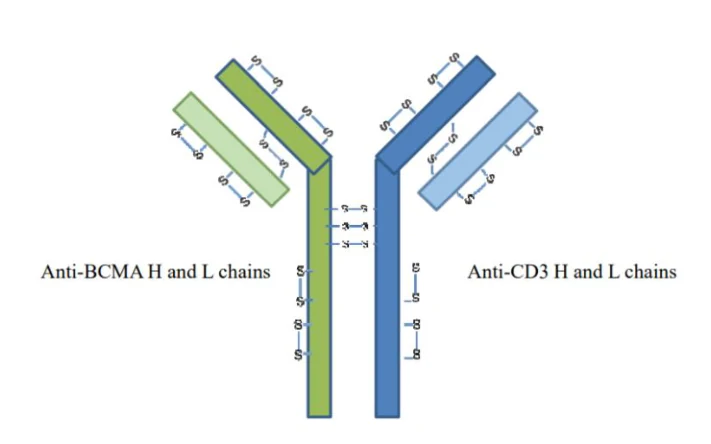
Physicochemical properties: Elranatamab injection is a sterile, preservative-free, clear to slightly opalescent, and colourless to pale brown liquid solution for subcutaneous administration. The pH is 5.8.
Product Characteristics:
Elranatamab is a bispecific, humanized modified immunoglobulin 2 (IgG2) kappa antibody derived from two monoclonal antibodies (mAbs), an anti-BCMA mAb and an anti-CD3 mAb. Each of these mAbs contributes one distinct heavy (H) chain and one distinct light (L) chain to the bispecific elranatamab. The resulting 4-chain bispecific antibody is covalently linked via five inter-chain disulfide bonds.
Elranatamab is produced using two recombinant Chinese hamster ovary (CHO) cell lines, one that contains the DNA encoding the sequence for anti-BCMA monoclonal antibody (mAb) and one that contains the sequence for anti-CD3 mAb, which are grown separately in suspension culture using chemically-defined (CD), animal-derived component-free (ACF) media.
14 Clinical Trials
14.1 Clinical Trials by Indication
Relapsed or refractory multiple myeloma
The efficacy of Elrexfio monotherapy was evaluated in adult patients with relapsed or refractory multiple myeloma in an open-label, non-randomized, multi-center, Phase 2 study (MagnetisMM-3, C1071003). The study included patients who were refractory to at least one proteasome inhibitor (PI), one immunomodulatory agent (IMiD), and one anti-CD38 monoclonal antibody. MagnetisMM-3 included 123 patients who were naïve to prior BCMA-directed therapy (pivotal Cohort A). Patients had measurable disease by International Myeloma Working Group (IMWG) criteria at enrollment. The study included patients with an Eastern Cooperative Oncology Group (ECOG) score of ≤2, adequate baseline bone marrow (absolute neutrophil count ≥1.0 x 10⁹/L, platelet count ≥25 x 109/L, hemoglobin level ≥8 g/dL), renal (CrCL ≥ 30 mL/min), and hepatic (AST and ALT ≤2.5 x ULN, total bilirubin ≤2 x ULN) function, and left ventricular ejection fraction ≥40%. Stem cell transplant within 12 weeks prior to enrollment; active infection; ongoing grade ≥2 peripheral sensory or motor neuropathy; and history of Guillain-Barre syndrome (GBS), GBS variants, or grade ≥ 3 peripheral motor polyneuropathy were study exclusion criteria.
Eligible patients were administered Elrexfio by subcutaneous injection at step-up doses of 12 mg on Day 1 and 32 mg on Day 4. On day 8, patients received the first treatment dose of Elrexfio (76 mg). Thereafter, patients received 76 mg once weekly. After 24 weeks, in patients who achieved an IMWG response category of partial response or better with responses persisting for at least 2 months, the dose interval was changed from 76 mg every week to 76 mg every 2 weeks, and from every 2 weeks to every 4 weeks after at least 24 weeks of 76 mg every 2 weeks dosing (see 4 Dosage and Administration).
Table 11 - Summary of patient demographics in study C1071003 MagnetisMM-3
| Study # | Study design | Dosage, route of administration and duration | Study subjects (N) | Mean age (Range) | Sex |
| C1071003 | Phase 2, open label, multicenter, non-randomized study of elranatamab monotherapy in participants with MM who are refractory to at least one proteasome inhibitor, one immunomodulatory drug and one anti-CD38 antibody | Elranatamab monotherapy SC QW at 76 mg starting Day 8 with step-up priming doses of 12 mg on Day 1 and 32 mg on Day 4. After 24 weeks, for patients who achieved PR or better for at least 2 months, SC Q2W at 76 mg and from Q2W to Q4W after at least 24 weeks of 76 mg every Q2W dosing. Cohort A (pivotal): No prior BCMA-directed treatment | N= 123 Cohort A: 123 | Cohort A: 68 (36 to 89) years | Cohort A: 68 (55.3%) Male 55 (44.7%) Female |
Abbreviations: ADC = antibody drug conjugate; BCMA = B cell maturation antigen; CAR-T = chimeric antigen receptor T-cell therapy; MM = multiple myeloma; PR = Partial Response; QW = weekly; Q2W = once every two weeks; SC = subcutaneous.
Among the 123 patients treated in pivotal Cohort A, the median age was 68 (range: 36 to 89) years with 19.5% of patients ≥75 years of age. Forty-five percent were female; 58.5% were White, 13.0% were Asian, 8.9% were Hispanic/Latino, 7.3% were Black. Disease stage (R-ISS) at study entry was 22.8% in Stage I, 55.3% in Stage II, and 15.4% in Stage III. The median time since initial diagnosis of multiple myeloma to enrollment was 72.9 (range: 16 to 228) months. Patients had received a median of 5 prior lines of therapy (range: 2 to 22) with 96.0% having received ≥3 prior lines of therapy. Ninety-seven percent were triple-class refractory, and 95.9% were refractory to their last line of therapy. Sixty-eight percent received prior autologous stem cell transplantation, and 5.7% received prior allogenic stem cell transplantation. High-risk cytogenetics [t(4;14), t(14;16), or del(17p)] were present in 25.2% of patients. Thirty-two percent of patients had extramedullary disease [presence of any plasmacytoma (extramedullary and/or paramedullary) with a soft-tissue component] at baseline by Blinded Independent Central Review (BICR).
Efficacy results were based on response rate and duration of response (DOR), as assessed by BICR based on the IMWG criteria. Results from BCMA-directed therapy naïve patients (pivotal Cohort A) are shown in Table 12. The median (range) follow-up for responders was 10.9 (3.6, 20.1) months.
Table 12 – Efficacy Results of MagnetisMM-3 study (pivotal Cohort A) in Relapsed or Refractory Multiple Myeloma
Elrexfio BCMA-directed therapy naïve subjects (Cohort A) (N = 123) | |
Objective Response Rate (ORR: sCR+CR+VGPR+PR), n (%)(95% CI) Stringent complete response (sCR) Complete response (CR) Very good partial response (VGPR) Partial response (PR) | 75 (61.0%) (51.8, 69.6) 16 (13.0%) 18 (14.6%) 34 (27.6%) 7 (5.7%) |
Complete Response Rate (sCR+CR), n (%) (95% CI) | 34 (27.6%) (20.0, 36.4) |
Duration of Response (DOR) (months) Number of responders Mediana (95% CI) Probability of retaining response at 6 monthsa (95% CI) Probability of retaining response at 9 monthsa (95% CI) | 75 NR (12.0, NE) 90 (80.2, 95.1) 84.4 (72.7, 91.4) |
Abbreviations: CI = Confidence interval; NR = Not reached; NE = Not estimable
a Kaplan-Meier estimate
Among responders (n=75), the median time to first response was 1.2 months (range 0.9 – 7.4 months).
After a median (range) follow-up of 27.9 (3.6, 36.8) months for responders, the ORR was 61.0% (95% CI: 51.8, 69.6), with 16.3% of patients achieving sCR, 21.1% of patients achieving CR, 18.7% of patients achieving VGPR, and 4.9% of patients achieving a PR. The median duration of response was not estimable (95% CI: NE, NE). The probability of retaining response at 12 months was 73.4% (95% CI: 61.4, 82.1), and 66.9% (95% CI: 54.4, 76.7) at 24 months.
14.3 Immunogenicity
The observed incidence of anti-drug antibodies is highly dependent on the sensitivity and specificity of the assay. Differences in assay methods preclude meaningful comparisons of the incidence of anti-drug antibodies (ADA) in the studies described below with the incidence of anti-drug antibodies in other studies, including those of elranatamab or of other elranatamab products.
In the MagnetisMM-3 study, 16 out of 168 participants evaluable for immunogenicity (9.5%) treated with Elrexfio for up to 36 months at the recommended dose developed anti-elranatamab antibodies. There was no identified clinically significant effect of aDA on PK, safety or effectiveness of elranatamab.
15 Microbiology
No microbiological information is required for this drug product.
16 Non-Clinical Toxicology
General Toxicology: Pivotal 1- and 3-month toxicity studies using the subcutaneous route were conducted with Elrexfio in cynomolgus monkey. The key effects identified in these studies were increased cytokines, decreased BCMA-expressing cells (a subset of B cells and plasma cells), fluctuations in peripheral T cell and NK cell numbers, immunosuppression and secondary infection.
Genotoxicity: Genotoxicity studies with Elrexfio have not been conducted.
Carcinogenicity: Carcinogenicity studies with Elrexfio have not been conducted.
Reproductive and Developmental Toxicology: Reproductive and developmental toxicity studies with Elrexfio have not been conducted.
Due to B cell lymphocytopenia and the potential impact of CRS on pregnancy, there is a probable risk of fetal harm associated with the use of Elrexfio.