


Product Monograph - Removab
SUMMARY PRODUCT INFORMATION
Route of Administration | Dosage Form / Strength | Clinically Relevant Nonmedicinal Ingredients |
| Intraperitoneal | Concentrate for solution for infusion / 0.1 mg/mL | None. For a complete listing see Dosage Forms, Composition and Packaging section. |
DESCRIPTION
Removab (catumaxomab) is a mouse (mouse IgG2a) - rat (rat IgG2b) hybrid monoclonal antibody produced in a mouse-rat hybrid-hybridoma cell line. Catumaxomab is specifically directed against the epithelial cell adhesion molecule (EpCAM) and the CD3 antigen. A third binding site in the Fc-region (Fcγ receptors) enables interaction with accessory immune cells. Due to catumaxomab’s binding properties, tumor cells, T-cells and accessory immune cells come in close proximity. Thereby, a concerted immunoreaction against tumor cells is induced resulting in the destruction of tumor cells.
INDICATIONS AND CLINICAL USE
Removab (catumaxomab) is indicated for the palliative management of malignant ascites via intraperitoneal infusion in patients with EpCAM-positive carcinomas where standard therapy is not available or no longer feasible.
Geriatrics (> 65 years of age): Patients older than 65 years were included in clinical studies. In the pivotal study the median age of catumaxomab treated patients was 59 years with a minimum of 23 years and a maximum of 85 years. 29 % of catumaxomab treated patients (46 of 157 patients) were older than 65 years. Overall, there was no obvious trend for adverse reactions and adverse reactions of CTCAE Grade ≥ 3 between the elderly (≥65 years) and non-elderly (<65 years) age groups. The efficacy of catumaxomab was observed in both geriatric and non-geriatric subgroups (See CLINICAL TRIALS).
Pediatrics (<18 years of age): The safety and effectiveness of Removab in pediatric patients have not been established.
CONTRAINDICATIONS
Patients who are hypersensitive to this drug or to murine (rat and/or mouse) proteins or to any ingredient in the formulation or component of the container. For a complete listing, see the DOSAGE FORMS, COMPOSITION AND PACKAGING section of the Product Monograph.
WARNINGS AND PRECAUTIONS
Cytokine release related symptoms
As release of pro-inflammatory and cytotoxic cytokines is initiated by the binding of catumaxomab to immune and tumor cells, cytokine release related clinical symptoms such as fever, nausea, vomiting and chills have been very commonly reported during and after Removab administration (see ADVERSE REACTIONS). Dyspnoea and hypo-/hypertension are commonly observed. In the clinical studies in patients with malignant ascites, 1000 mg paracetamol intravenously was routinely administered prior to Removab infusion for pain and pyrexia control. Despite this premedication, patients experienced the adverse reactions described above with an intensity of up to grade 3, according to the Common Terminology Criteria for Adverse Events (CTCAE) of the US National Cancer Institute. Other or additional standard pre-medication with analgesic / antipyretic / nonsteroidal anti-inflammatory medicinal products is recommended.
Systemic Inflammatory Response Syndrome (SIRS), which may also occur uncommonly due to the mechanism of action of catumaxomab, develops, in general, within 24 hours after Removab infusion, showing symptoms of fever, tachycardia, tachypnea and leucocytosis (see ADVERSE REACTIONS). Standard therapy or premedication, e.g. analgesic /antipyretic / nonsteroidal anti-inflammatory is appropriate to limit the risk.
General
Removab must be administered under the supervision of a qualified health professional who is experienced in the use of anti-neoplastic medicinal products and in the management of patients with malignant ascites. Appropriate management of therapy and complications is only possible when adequate diagnostic and treatment facilities are readily available.
Only the following components can be used for the dilution and administration of Removab as Removab is only compatible with:
- 50 mL polypropylene syringes
- polyethylene perfusion tubing with an inner diameter of 1 mm and a length of 150 cm
- polycarbonate infusion valves / Y connections
- polyurethane, polyurethane silicon coated catheters
Adherence to the specified material and equipment listed is required to ensure accurate and consistent dose delivery.
Removab must not be administered as a bolus or by any route other than intraperitoneally.
A solid performance status expressed as Body Mass Index (BMI) > 17 (to be assessed after drainage of ascites fluid) and Karnofsky Index > 60 is required prior to Removab therapy.
Abdominal pain
Abdominal pain was very commonly reported as an adverse reaction. This transient effect is considered partially a consequence of the intraperitoneal route of administration.
Acute infection
In presence of factors interfering with the immune system, in particular acute infections, the administration of Removab is not recommended.
Ascites drainage
Appropriate medical management of ascites drainage is a prerequisite for Removab treatment in order to assure stable circulatory and renal functions. This must at least include ascites drainage until stop of spontaneous flow or symptom relief, and if appropriate, supportive replacement therapy with crystalloids and / or colloids.
Hepatic impairment or portal vein thrombosis / obstruction
Patients with hepatic impairment of a higher severity grade than moderate and / or with more than 70% of the liver metastasized and / or portal vein thrombosis / obstruction have not been investigated. Treatment of these patients with Removab should only be considered after a thorough evaluation of benefit / risk.
Cardiovascular
Conditions such as hypovolaemia, hypotension and circulatory decompensation must be resolved prior to each Removab infusion. Blood volume, blood pressure and heart rate should be assessed before each Removab infusion.
Haematology
Hypoproteinaemia must be resolved prior to each Removab infusion. Blood protein should be assessed before each Removab infusion.
Renal impairment
Patients with renal impairment of a higher severity grade than mild have not been investigated. Treatment of these patients with Removab should only be considered after a thorough evaluation of benefit / risk. Renal function should be assessed before each Removab infusion. Acute renal impairment should be resolved prior to each Removab infusion.
Perfusion System
Only the following material must be used for the application of Removab
- 50 mL polypropylene syringes
- polyethylene perfusion tubing with an inner diameter of 1 mm and a length of 150 cm
- polycarbonate infusion valves / Y connections
- polyurethane, polyurethane silicon coated catheters
Special Populations
Pregnant Women: There are no adequate data from the use of Removab in pregnant women. It is not known whether Removab can cause fetal harm when administered to pregnant women or can affect reproduction capacity. Removab should not be used during pregnancy.
Nursing Women: It is unknown whether catumaxomab is excreted in human breast milk. A decision must be made whether to discontinue breast-feeding or to discontinue/abstain from Removab therapy taking into account the benefit of breast-feeding for the child and the benefit of therapy for the woman.
Pediatrics (< 18 years of age): The safety and effectiveness of Removab in pediatric patients have not been established. Removab is not recommended for use in pediatric patients
Geriatrics (> 65 years of age): Patients older than 65 years were included in clinical studies. In the pivotal study the median age of catumaxomab treated patients was 59 years with a minimum of 23 years and a maximum of 85 years. 29 % of catumaxomab treated patients (46 of 157 patients) were older than 65 years. Overall, there was no obvious trend for adverse reactions and adverse reactions of CTCAE Grade ≥ 3 between the elderly (≥65 years) and non-elderly (<65 years) age groups.
Ethnicity
Patients of non-Caucasian origin have not been included in clinical studies in relevant numbers.
Monitoring and laboratory tests
Laboratory parameters that are potentially sensitive to the release of cytokines, such as white blood cell count, neutrophil count, peripheral lymphocyte count, and liver function test, showed transient changes after each infusion. Median values remained mild to moderate in terms of CTCAE grading. In the Overall Population, the most frequently reported laboratory abnormalities reported as AEs were increased C-reactive protein (15%) and Gamma-glutamyltransferase (GGT) (13%). With the exception of the parameters that are potentially sensitive to cytokine release as described above, no clear pattern was seen for any other laboratory parameter.
ADVERSE REACTIONS
Adverse Drug Reaction Overview
In clinical studies the most frequently reported serious adverse drug reactions were abdominal pain and cytokine release related symptoms. Approximately 90% of patients in the overall population and 85% in the pivotal study experienced adverse drug reactions.
Adverse reactions of special interest
The following definitions of Common Terminology Criteria of Adverse Events (CTCAE) of the
US National Cancer Institute apply: CTCAE grade 1=mild, CTCAE grade 2=moderate, CTCAE grade 3=severe, CTCAE grade 4=life-threatening.
Cytokine release related symptoms (CRRS):
Very commonly reported acute infusion-related reactions due to release of cytokines included fever, nausea, vomiting and chills. These reactions were frequently observed during and after Removab infusions with a severity grade of 1 and 2 and were fully reversible. Grade 3 pyrexia (5%), vomiting (3.9%), nausea (2.3%), dyspnoea (1.6%), hypotension (1.2%), hypertension (0.8%), and chills (0.8%) were reported. Grade 4 dyspnoea and hypotension were also reported in one patient each. Symptoms of pain and pyrexia can be ameliorated or avoided by pre-medication (see DOSAGE AND ADMINISTRATION, WARNINGS AND PRECAUTIONS).
Systemic Inflammatory Response Syndrome (SIRS):
In 0.8% of patients symptoms of SIRS were observed within 24 hours after Removab infusion, such as grade 3 tachycardia and fever, and grade 4 dyspnoea. These reactions resolved under symptomatic treatment.
Abdominal pain:
In 48.1% of patients abdominal pain was reported as an adverse reaction reaching grade 3 in 9.7% of patients, but it resolved under symptomatic treatment.
Clinical Trial Adverse Drug Reactions
Because clinical trials are conducted under very specific conditions the adverse reaction rates observed in the clinical trials may not reflect the rates observed in practice and should not be compared to the rates in the clinical trials of another drug. Adverse drug reaction information from clinical trials is useful for identifying drug-related adverse events and for approximating rates.
Malignant ascites
Safety data are presented below for patients with symptomatic malignant ascites due to EpCAM positive carcinoma who received paracentesis plus catumaxomab or paracentesis alone in the pivotal study IP-REM-AC-01. There was a 2:1 randomization (170 catumaxomab patients / 88 control group patients). Of the 170 patients randomized to the catumaxomab arm 157 patients were treated with catumaxomab (safety set). There were no relevant differences between the treatment groups regarding demographics. Catumaxomab was administered as four intraperitoneal infusions over 6 hours with increased doses of 10, 20, 50 and 150 micrograms on day 0, 3, 7 and 10, respectively. 83 % of patients received all four doses.
Table 1 Incidence of adverse reactions in catumaxomab treated patients* with malignant ascites (pivotal study IP-REM-AC-01) Treatment group
Catumaxomab [N = 157] | Control [N = 88] | |
| ADRs | AEs | |
SOC Preferred Term | % of patients | |
| Blood and lymphatic system disorders | ||
| Anaemia | 8.9 | 3.4 |
| Leukocytosis | 10.2 | - |
| Lymphopenia | 15.3 | 1.1 |
| Neutrophilia | 4.5 | 1.1 |
| Thrombocythaemia | 2.5 | - |
| Cardiac Disorders | ||
| Tachycardia | 9.6 | 2.3 |
| Gastrointestinal disorders | ||
| Abdominal distension | 1.9 | 1.1 |
| Abdominal pain | 38.9 | 11.4 |
| Abdominal pain lower | 1.9 | - |
| Abdominal pain upper | 3.8 | - |
| Constipation | 2.5 | 8.0 |
| Diarrhoea | 10.2 | 1.1 |
| Dry mouth | 1.3 | - |
| Dyspepsia | 4.5 | 2.3 |
| Flatulence | 1.3 | 1.1 |
| Haematemesis | 1.3 | 1.1 |
| Ileus | 5.1 | 2.3 |
| Ileus paralytic | 6.3 | - |
| Impaired gastric emptying | 1.3 | - |
| Nausea | 33.1 | 10.2 |
| Subileus | 1.9 | - |
| Vomiting | 27.4 | 9.1 |
| General disorders and administration site conditions | ||
| Application site inflammation | 1.3 | - |
| Asthenia | 3.2 | 2.3 |
| Chills | 13.4 | - |
| Fatigue | 10.8 | 5.7 |
| Hyperthermia | 1.3 | - |
| Influenza-like illness | 2.5 | 1.1 |
| Pain | 5.1 | - |
| Pyrexia | 59.2 | 2.3 |
| Thirst | 1.9 | - |
| Hepatobiliary disorders | ||
| Cytolytic hepatitis | 1.3 | - |
| Hepatic failure | 1.9 | - |
| Infections and infestations | ||
| Infection | 1.9 | - |
| Treatment group | ||
Catumaxomab [N = 157] | Control [N = 88] | |
| ADRs | AEs | |
| Oral candidiasis | 1.3 | - |
| Metabolism and nutrition disorders | ||
| Anorexia | 8.9 | 3.4 |
| Dehydration | 1.9 | 1.1 |
| Hyperglycaemia | 1.3 | 2.3 |
| Hypocalcaemia | 1.9 | 1.1 |
| Hypoglycaemia | 1.3 | - |
| Hyponatraemia | 2.5 | - |
| Hypoproteinaemia | 3.2 | 2.3 |
| Musculoskeletal and connective tissue disorders | ||
| Myalgia | 1.3 | - |
| Nervous system disorders | ||
| Headache | 1.3 | 2.3 |
| Lethargy | 1.3 | - |
| Paraesthesia | 1.3 | - |
| Psychiatric disorders | ||
| Agitation | 1.3 | - |
| Insomnia | 2.5 | 2.3 |
| Renal and urinary disorders | ||
| Haematuria | 1.9 | - |
| Leukocyturia | 1.3 | - |
| Proteinuria | 3.2 | 1.1 |
| Reproductive system and breast disorders | ||
| Pelvic pain | 1.3 | - |
| Respiratory, thoracic and mediastinal disorders | ||
| Dyspnoea | 2.5 | 4.5 |
| Pleural effusion | 1.3 | 2.3 |
| Skin and subcutaneous tissue disorders | ||
| Erythema | 1.9 | - |
| Exanthem | 1.3 | 1.1 |
| Hyperhidrosis | 1.9 | - |
| Pruritus | 1.3 | - |
| Rash | 1.9 | - |
| Skin reaction | 1.3 | - |
| Vascular disorders | ||
| Hypotension | 8.3 | 1.1 |
*Please note that adverse reactions of the catumaxomab group were matched with treatment emergent adverse events observed in the control group.
This side-by-side analysis of adverse reactions of the catumaxomab group with the control group should be considered with caution due to the asymmetric study design resulting in a 5-fold
longer observation period in the catumaxomab group. With longer observation periods the likelihood of reporting of adverse events is increasing, particularly in end-stage cancer patients.
Integrated safety analysis
The nature and frequency of adverse reactions described in this section were analyzed in an integrated safety analysis on the basis of 5 clinical studies consisting of 258 patients in the indications malignant ascites (193 patients), peritoneal carcinomatosis (24 patients) and ovarian cancer (41 patients) with intraperitoneal application of Removab.
Approximately 90% of patients experienced adverse reactions. In Table 2 adverse reactions reported with catumaxomab are listed and classified according to frequency and System Organ Class. Frequency groupings are defined according to the following convention: very common (≥1/10), common (≥1/100 to <1/10) Within each frequency grouping, adverse reactions are presented in order of decreasing seriousness.
Table 2 Adverse reactions with catumaxomab from an integrated safety analysis comprising 258 patients from 5 clinical studies
| Blood and lymphatic system disorders | |
| Very common | Lymphopenia. |
| Common | Leucocytosis, anaemia, neutrophilia, thrombocythaemia. |
| Cardiac disorders | |
| Common | Tachycardia. |
| Ear and labyrinth disorders | |
| Common | Vertigo. |
| Gastrointestinal disorders | |
| Very common | Abdominal pain*, nausea, vomiting, diarrhoea. |
| Common | Ileus*, sub-ileus*, constipation, dyspepsia, abdominal distension, flatulence, gastric disorder, gastroesophageal reflux disease, stomatitis. |
| General disorders and administration site conditions | |
| Very common | Pyrexia*, fatigue, chills, pain. |
| Common | Asthenia, influenza-like illness, chest pain, oedema, thirst. |
| Hepatobiliary disorders | |
| Common | Hyperbilirubinaemia, cytolytic hepatitis. |
| Infections and infestations | |
| Common | Infection, erythaema induratum, urinary tract infection. |
| Metabolism and nutrition disorders | |
| Common | Anorexia, hyponatraemia, hypocalcaemia, hypokalaemia, hypoproteinaemia, dehydration, hyperglycaemia. |
| Musculoskeletal and connective tissue disorders | |
| Common | Arthralgia, back pain, myalgia. |
| Nervous system disorders | |
| Common | Headache, dizziness. |
| Psychiatric disorders | |
| Common | Anxiety, insomnia. |
| Renal and urinary disorders | |
| Common | Oliguria, leucocyturia, proteinuria, haematuria. |
| Respiratory, thoracic and mediastinal disorders | |
| Common | Dyspnoea*, pleural effusion. |
| Skin and subcutaneous tissue disorders | |
| Common | Exanthema, dermatitis allergic, skin reaction, erythaema, rash, hyperhidrosis, pruritus, urticaria. |
| Vascular disorders | |
| Common | Hypotension, hypertension, flushing, hot flush. |
* were also reported as serious adverse reactions
Less Common Clinical Trial Adverse Drug Reactions (<1%)
Gastrointestinal: gastric haemorrhage, intestinal obstruction
General disorders and administration site conditions: application site inflammation, extravasation
Infections and infestations: catheter-related infection, skin infection
Nervous system disorders: convulsion
Renal and urinary disorders: renal failure acute
Respiratory, thoracic and mediastinal disorders: pulmonary embolism, pleural effusion
Skin and subcutaneous tissue disorders: dermatitis allergic, rash, skin exfoliation, skin reaction
These adverse drug reactions were also reported as serious adverse reactions.
Abnormal haematologic and clinical chemistry findings
Transient liver enzyme increase and changes in white blood cell counts without clinical consequences are to be expected after the administration of Removab. These laboratory parameters showed transient changes after each infusion, and median values remained mild to moderate in terms of CTCAE grading.
Immunogenicity
The induction of human anti-murine (rat and / or mouse) antibodies (HAMAs/HARAs) is an intrinsic effect of murine monoclonal antibodies. Current data on catumaxomab derived from the pivotal study show that only 5.6% of patients (7/124) were HAMA positive before the 4th infusion. HAMAs were present in 94% of patients one month after the last catumaxomab infusion. No hypersensitivity reactions were observed. Data from a second cycle of Removab treatment is not available from clinical study.
Post-Market Adverse Drug Reactions
In the EU post-marketing period, more than 900 patients were treated with Removab in clinical studies and with marketed drug. Overall, the summary description of serious adverse reactions received after marketing authorization confirms the known adverse reaction pattern. This profile reflects on one side the release of cytokines as part of the mode of action of Removab and consequences of the paracentesis procedure, and on the other side the generally poor health and condition status of patients in end stage progressive malignant disease.
DRUG INTERACTIONS
No interaction studies have been performed.
Effects on ability to drive and use machines
No studies on the effects on the ability to drive and use machines have been performed. Patients experiencing infusion-related symptoms should be advised not to drive and use machines until symptoms abate.
DOSAGE AND ADMINISTRATION
Recommended Dose and Dosage Adjustment
Removab dosing schedule comprises the following four intraperitoneal infusions: 1st dose 10 microgram on day 0
2nd dose 20 microgram on day 3
3rd dose 50 microgram on day 7
4th dose 150 microgram on day 10
Removab has to be administered as constant rate intraperitoneal infusion with an infusion time of 6 hours. An interval of at least two days must elapse between infusions. The interval between the infusion days can be prolonged in case of relevant adverse reactions. The overall treatment period should not exceed 20 days. No dose reductions of Removab were investigated during clinical trials. Efficacy and safety of Removab for retreatment have not been adequately assessed in clinical trials.
Administration
Removab must be administered under the supervision of a qualified health professional who is experienced in the use of anti-neoplastic medicinal products and in the management of patients with malignant ascites. Adequate diagnostic and treatment facilities should be available for appropriate management of therapy and complications.
Adequate monitoring of the patient after the end of Removab infusion is recommended. In the pivotal study patients were monitored for 24 hours after each infusion.
Prior to intraperitoneal infusion pre-medication with analgesic / antipyretic / nonsteroidal anti-inflammatory medicinal products is recommended. In the pivotal trial 1000mg paracetamol
intravenously was routinely administered prior to Removab infusion for pain and pyrexia control.
Removab must be administered as an intraperitoneal infusion only.
Removab must not be administered by intraperitoneal bolus or by any other route of administration.
The diluted Removab solution for infusion is administered intraperitoneally as constant rate infusion using an adequate pump system.
Before administration of Removab the concentrate for solution for infusion must be diluted only in sodium chloride 9 mg/mL (0.9%) solution for injection.
Removab must not be mixed / come in contact with other medicinal
products / diluents / materials except those mentioned in Material and equipment required.
Material and equipment required
Only the following components can be used for the dilution and administration of Removab as Removab is only compatible with:
- 50 mL polypropylene syringes
- polyethylene perfusion tubing with an inner diameter of 1 mm and a length of 150 cm
- polycarbonate infusion valves / Y connections
- polyurethane, polyurethane silicon coated catheters
Adherence to the specified material and equipment listed is required to ensure accurate and consistent dose delivery.
In addition the following is required:
- Sodium chloride 9 mg/mL (0.9%) solution for injection
- Precision perfusion pump
Instructions for dilution prior to administration
Vigorous shaking should be avoided.
- Based on the dose, the appropriate amount of sodium chloride 9 mg/mL (0.9%) solution for injection is extracted with a 50 mL syringe (Table 3).
- An additional air buffer of at least 3 mL is included in the 50 mL syringe.
- The tip cap from the Removab pre-filled syringe is removed with the tip pointing up.
- The enclosed cannula is attached to the Removab pre-filled syringe. For each syringe a new cannula is used.
- The pre-filled syringe cannula is inserted through the 50 mL syringe opening so that the cannula is immersed in the sodium chloride 9 mg/mL (0.9%) solution for injection (Figure 1).
- The entire content of the syringe (Removab concentrate plus air buffer) is injected from the pre-filled syringe directly into the sodium chloride 9 mg/ml (0.9%) solution for injection.
The plunger rod MUST NOT be drawn back to rinse the pre-filled syringe, in order to avoid
contamination and to ensure that the correct volume is ejected.
- The 50 mL syringe is closed with a cap and shaken gently to mix the solution. Any air bubble(s) from the 50 mL syringe is eliminated.
- The peelable sticker, which is provided on the inner side of the Removab carton box, displaying the text “Diluted Removab. Intraperitoneal use only.” must be attached to the 50 mL syringe containing the diluted Removab solution for intraperitoneal infusion. This is a precautionary measure to ensure that Removab is infused only via the intraperitoneal route of administration.
- The 50 mL syringe is inserted in the infusion pump.
Table 3 Preparation of Removab solution for intraperitoneal infusion
Number of infusion / Dose | Number of Removab pre- filled syringe(s) | Total volume of Removab concentrate for solution for infusion (mL) | Sodium chloride 9 mg/mL (0.9%) solution for injection (mL) | Final volume for administration (mL) | |
10 microgram pre-filled syringe | 50 microgram pre-filled syringe | ||||
| 1st infusion 10 microgram | 1 | 0.1 | 10 | 10.1 | |
| 2nd infusion 20 microgram | 2 | 0.2 | 20 | 20.2 | |
| 3rd infusion 50 microgram | 1 | 0.5 | 49.5 | 50 | |
4th infusion 150 microgram | 3 | 1.5 | 48.5 | 50 | |
Figure 1 Illustration of the transfer of Removab from the pre-filled syringe to the 50 mL syringe
Pre-filled syringe
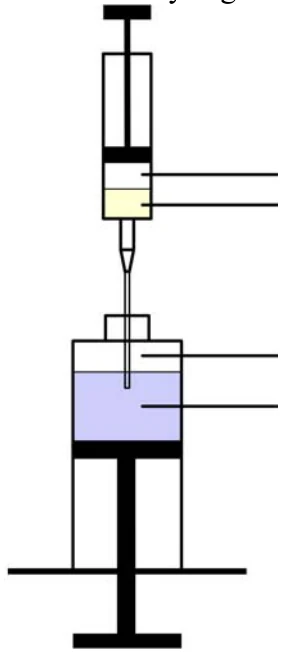
Air buffer
Removab solution
Air buffer
Sodium Chloride 9 mg/ml (0.9%)
50 ml Syringe
Method of administration
The catheter for intraperitoneal administration should be placed under ultrasound guidance by a healthcare professional experienced in intraperitoneal administration procedures. The catheter is used for ascites drainage and infusion of diluted Removab and sodium chloride 9 mg/mL (0.9%) solution for injection. It is recommended that the catheter remains in the abdominal cavity during the entire treatment period. It can be removed the day after the last infusion.
Prior to each Removab administration the ascites fluid must be drained until stop of spontaneous flow or symptom relief (see WARNINGS AND PRECAUTIONS). Subsequently, prior to each Removab administration 500 mL sodium chloride 9 mg/mL (0.9%) solution for injection shall be infused to support distribution of the antibody in the abdominal cavity.
Removab must be administered intraperitoneally over 6 hours via a constant infusion pump system as described below:
- The 50 mL syringe containing the diluted Removab solution for infusion is installed in the precision pump
- The connected perfusion tubing equipment of the precision pump is prefilled with the diluted Removab solution for infusion. A perfusion tubing of an inner diameter of 1 mm and a length of 150 cm must be used.
- The perfusion tubing is connected to the Y-connection.
Parallel to each Removab application 250 mL sodium chloride 9 mg/mL (0.9%) solution



for injection are infused via an infusion valve / Y connection in the perfusion lead of the catheter.
- The pump speed is adjusted according to the volume to be administered and the infusion time of 6 hours.
- When the 50 ml syringe containing the diluted Removab solution for infusion is empty it is replaced with a 50 ml syringe containing 20 mL sodium chloride 9 mg/mL (0.9%) solution for injection until the end of the scheduled infusion time to clear the dead volume in the perfusion lead (approximately 2 ml) under unchanged conditions. The remaining sodium chloride 9 mg/ml (0.9%) solution for injection can be discarded.
- The catheter is kept closed until the next infusion
- The day after the last infusion a drainage of ascites until stop of spontaneous flow is performed. Subsequently, the catheter can be removed.
Figure 2 Schematic illustration of the infusion system
1 250 ml Sodium Chloride 9 mg/ml (0.9%)
2 Removab solution for i.p. infusion
3 Perfusion Tubing (1 mm inner diameter, 150 cm length) 4 Infusion valve
5 Perfusion Lead
6 Catheter
OVERDOSAGE
Patients receiving a higher than recommended dose of catumaxomab in clinical studies experienced more severe (grade 3) adverse reactions.
ACTION AND CLINICAL PHARMACOLOGY
Mechanism of Action
Catumaxomab is a trifunctional rat-mouse hybrid monoclonal antibody that is specifically directed against the human epithelial cell adhesion molecule (EpCAM) and the human CD3 antigen.
The EpCAM antigen is overexpressed on most carcinomas. CD3 is expressed on mature T-cells as a component of the T-cell receptor. A third functional binding site in the Fc-region of catumaxomab enables interaction with accessory immune cells via Fcγ receptors. Due to catumaxomab’s binding properties, tumor cells, T-cells and accessory immune cells come
in close proximity. Thereby, a concerted immunoreaction against tumor cells is induced which includes different mechanisms of action such as T-cell activation, antibody-dependent cell-mediated cytotoxicity (ADCC), complement-dependent cytotoxicity (CDC) and phagocytosis. This results in destruction of tumor cells.
The anti-tumor activity of catumaxomab has been demonstrated in vitro and in vivo. Effective catumaxomab-mediated killing of tumor cells in vitro was observed for target cells with low and high expression of the EpCAM antigen, independent of the primary tumor type. The in vivo anti-tumor activity of catumaxomab was confirmed in an immunologically compromised mouse model of ovarian carcinoma, where tumor development was delayed by an intraperitoneal treatment with catumaxomab and human peripheral blood mononuclear cells.
Pharmacokinetics
Pharmacokinetics of catumaxomab during and after four intraperitoneal infusions of 10, 20, 50 and 150 microgram catumaxomab were investigated in 13 patients with symptomatic malignant ascites due to EpCAM-positive carcinomas.
The variability between subjects was high. The geometric mean plasma Cmax was approximately 0.5 ng/mL (range 0 to 2.3) and the geometric mean plasma AUC was approximately 1.7day*ng/mL (range <LLOQ (lower limit of quantification) to 13.5). The geometric mean apparent terminal plasma elimination half-life (t½) was approximately 2.5 days (range 0.7 to 17).
Catumaxomab was detectable in the ascites fluid and in plasma. The concentrations increased with the number of infusions and the doses applied in most patients. Plasma levels tended to decline after achieving a maximum after each dose.
The pharmacokinetics of Removab is mainly dependent on the amount of target cells which affect its binding and thereby affect its retention in the peritoneal cavity. Tumor load and immune effector cell numbers thus influence the pharmacokinetics and bioavailability in the plasma. A high variability of the peritoneal conditions in individual patients with malignant ascites has to be taken into account. Correspondingly, the pharmacokinetic parameters of Removab revealed a high inter-patient variability in plasma and ascites samples.
Figure 3 Individual catumaxomab ascites concentrations vs. time
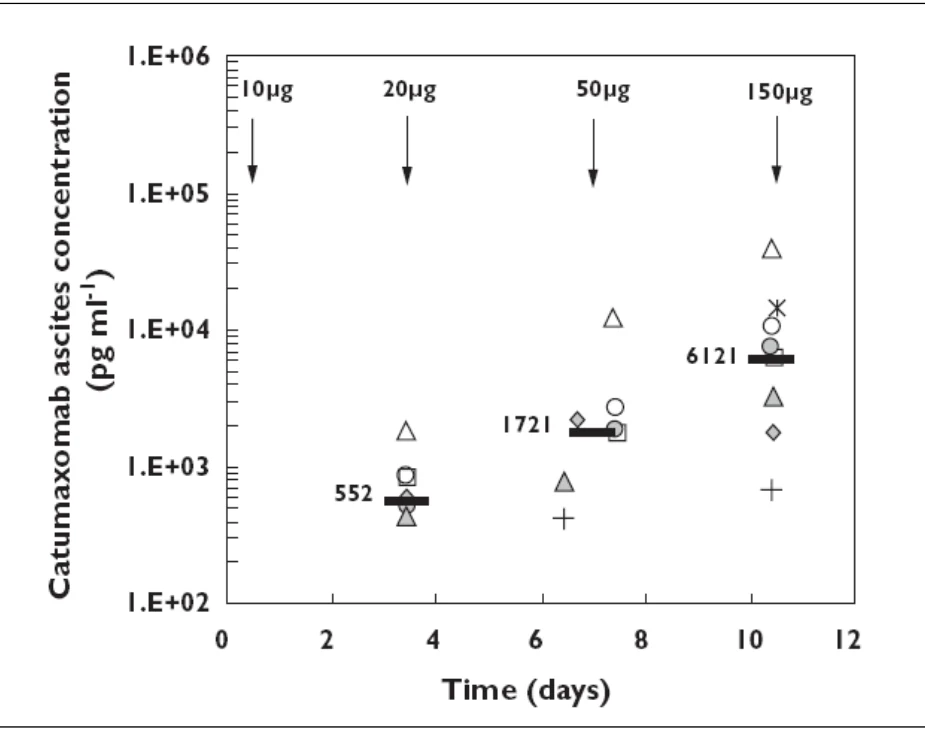
Data from Study IP-REM-PK-01-EU; 10 out of 13 patients were evaluable for PK analysis.
Individual Symbols: Individual catumaxomab ascites concentration
─ : Median catumaxomab ascites concentration
: Intraperitoneal catumaxomab infusions
Figure 4 Individual catumaxomab plasma concentrations vs. time
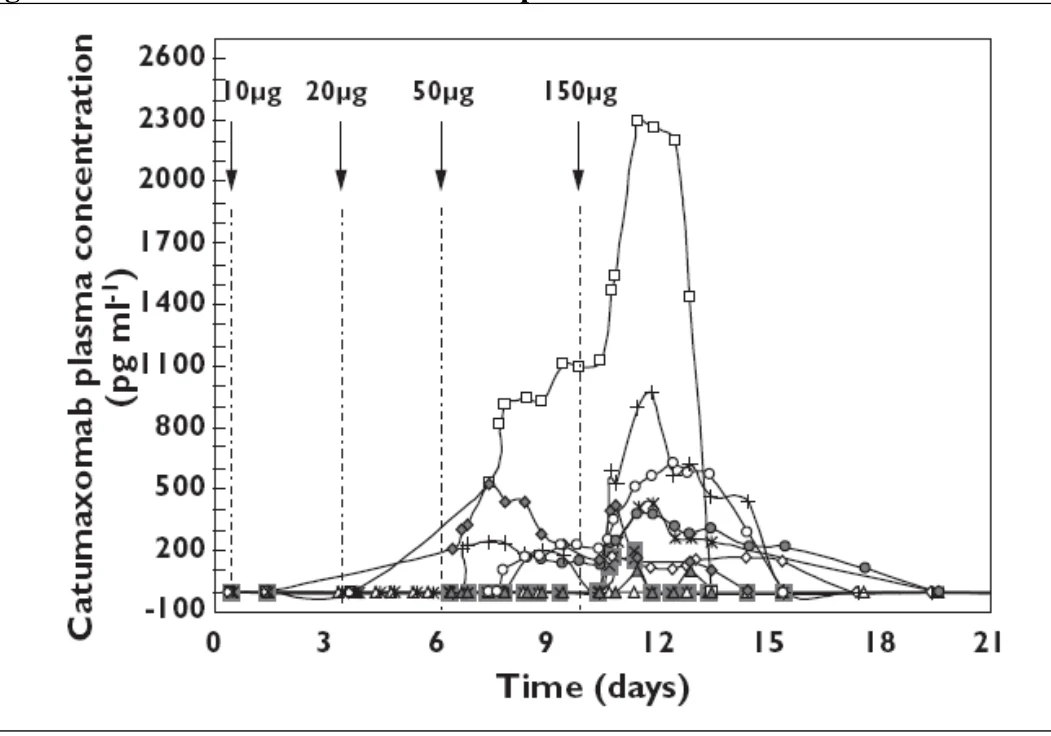
Data from Study IP-REM-PK-01-EU; plasma concentration vs. time profiles in 10 patients
Individual Symbols: Individual catumaxomab plasma concentrations
: Intraperitoneal catumaxomab infusions
Special Populations and Conditions
No studies have been conducted.
STORAGE AND STABILITY
Store in a refrigerator (2°-8°C). Do not freeze. Store in the original package in order to protect from light.
After dilution
The prepared solution for infusion should be used immediately. If not used immediately, the prepared solution for infusion should not be stored longer than 8 hours at ambient temperature (16°-26°C) or 24 hours at 2°- 8°C.
Incompatibilities
The medicinal product must not be mixed / come in contact with other medicinal products / diluents / materials except those mentioned in DOSAGE AND ADMINISTRATION. Only the following components can be used for the dilution and administration of Removab as Removab is only compatible with:
- 50 mL polypropylene syringes
- polyethylene perfusion tubing with an inner diameter of 1 mm and a length of 150 cm
- polycarbonate infusion valves / Y connections
- polyurethane, polyurethane silicon coated catheters
Adherence to the specified material and equipment listed is required to ensure accurate and consistent dose delivery.
SPECIAL HANDLING INSTRUCTIONS
No special requirements for disposal. See DOSAGE AND ADMINISTRATION.
DOSAGE FORMS, COMPOSITION AND PACKAGING
Removab (catumaxomab) is a sterile, preservative-free concentrate, clear colourless solution (0.1 mg/mL) of catumaxomab for intraperitoneal infusion provided in doses of 10 and 50 micrograms in single-use pre-filled syringes (type I glass, siliconized) with plunger stopper (bromobutyl rubber) and luer lock system (polypropylene siliconized and polycarbonate) with tip cap (styrene butadiene rubber) with a cannula; pack size of 1.
In addition to the active ingredient catumaxomab, each Removab pre-filled syringe contains the following non-medicinal ingredients: citric acid monohydrate, polysorbate 80, sodium citrate, water for injections.
PART II: SCIENTIFIC INFORMATION
PHARMACEUTICAL INFORMATION
Drug Substance
Proper name: catumaxomab
Chemical name: Not applicable
Molecular weight: Approximately 150 kDa
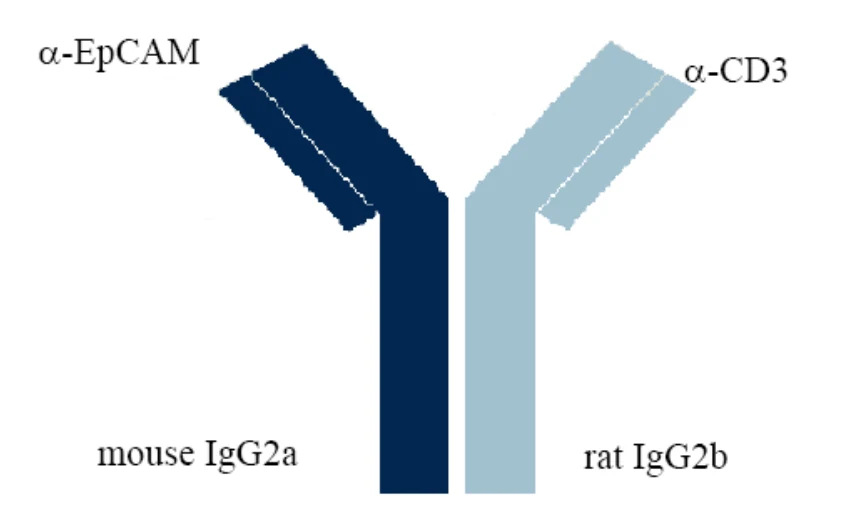
Structural formula:
Physicochemical properties:
Catumaxomab is a biologically engineered, intact, trifunctional bispecific monoclonal antibody consisting of a mouse immunoglobulin G (IgG)2a chain and a rat IgG2b chain. The antibody consists of 3 different binding sites:
- 1. the mouse Fab fragment binds to the human EpCAM,
- 2. the rat Fab fragment binds to human CD3 expressed as specific antigen on T lymphocytes and
- 3.
the hybrid Fc-region selectively binds to and activates Fcγ-receptor-type I
(CD64), -type IIa (CD32) and -type III (CD 16) positive accessory cells.
Product Characteristics
Removab is supplied as a sterile, clear, colourless concentrate for solution for intraperitoneal (i.p.) infusion. Catumaxomab is an intact hybrid-hybridoma-derived trifunctional bispecific monoclonal antibody. There are two presentations of the drug product, corresponding to 10 µg and 50 µg doses of catumaxomab. The 10µg and 50µg presentations are supplied in pre-filled 1 mL glass syringes containing a nominal volume of 100 µl and 500 µl, respectively. The pH of the solution is about 5.6.
CLINICAL TRIALS
Study demographics and trial design
The efficacy of catumaxomab was demonstrated in a two-arm, randomized, multicentre, open-label clinical trial (IP-REM-AC-01) in 258 patients with symptomatic malignant ascites due to EpCAM-positive carcinomas of whom 170 were randomized to catumaxomab treatment. This study compared paracentesis plus catumaxomab versus paracentesis alone (control). EpCAM positivity was determined in the ascites fluid via immunohistological staining. The threshold for positivity was set at 400 EpCAM positive cells in 106 total cells.
Of the 258 randomized patients, the median age was 59 years. 79% were female, 99% were Caucasian. The median Karnofsky Performance Status was 80. 50 % of patients had ovarian cancer and 50 % non-ovarian cancer as underlying disease. Among the non-ovarian cancer patients the majority had gastric carcinoma. Other non-ovarian carcinomas were e.g. pancreas, breast or colon cancer.
Catumaxomab was applied in patients where standard therapy was not available or no longer feasible and who had a Karnofsky performance status of at least 60. Catumaxomab was administered as four intraperitoneal infusions over 6 hours with increased doses of 10, 20, 50 and 150 micrograms on day 0, 3, 7 and 10, respectively (see DOSAGE AND ADMINISTRATION). 98.1% of patients were hospitalized for a median of 11 days.
In this study, the primary efficacy endpoint was puncture-free survival, which was a composite endpoint defined as the time to first need for therapeutic ascites puncture or death, whichever occurred first.
Study results
The results for puncture-free survival and time to first need for therapeutic ascites puncture in terms of medians and hazard ratios are presented in Table 4. Kaplan Meier estimates for time to first need for therapeutic ascites puncture are given in Figure 5.
Table 4 Efficacy results (puncture-free survival and time to first need for therapeutic ascites puncture) of the pivotal study
| Variable | Paracentesis + catumaxomab (N=170) | Paracentesis (control) (N=88) |
| Puncture free survival | ||
| Median puncture-free survival | 44 | 11 |
| 95% CI for median (days) | [31;49] | [9;16] |
p-value (log-rank test) | <0.0001 | |
| Hazard ratio (HR) | 0.310 | |
| 95% CI for HR | [0.228; 0.423] | |
| Time to first need for therapeutic ascites puncture | ||
| Median time to first need for therapeutic ascites puncture (days) | 77 | 13 |
| 95% CI for median (days) | [62;104] | [9;17] |
p-value (log-rank test) | <0.0001 | |
| Hazard ratio (HR) | 0.169 | |
| 95% CI for HR | [0.114; 0.251] | |
Figure 5 Kaplan-Meier estimates of time to first need for therapeutic ascites puncture of pivotal study
N= number of patients in a treatment group.
The efficacy of the treatment with paracentesis and catumaxomab in patients with malignant ascites due to EpCAM-positive carcinomas was statistically significantly superior to that with paracentesis alone in terms of puncture-free survival and time to first need for therapeutic ascites puncture.
Median puncture-free survival was 48 days in the catumaxomab group vs. 14 days in the control group in patients ≤ 65 years and 35 days in the catumaxomab group vs. 9 days in the control group in patients > 65 years. HR (95% CI) was 0.233 (0.158; 0.343) and 0.292 (0.165; 0.516), respectively, for non-geriatric and geriatric subgroups.
After completion of the study, patients were further observed until the end of their lifetime (post-study phase) in order to assess overall survival. Patients of the control group who received catumaxomab during the cross-over period were censored at the date of their first catumaxomab infusion. Hazard Ratio of 0.718 with corresponding 95% CI of 0.495 - 1.041 was observed from Removab treated patients compared to control group patients. Median overall survival was 72 days in the catumaxomab and 68 days in the control group.
Immunogenicity
The induction of human anti-murine (rat and / or mouse) antibodies (HAMAs/HARAs) is an intrinsic effect of murine monoclonal antibodies (see ADVERSE REACTIONS). A neutralizing effect of anti-murine (rat and/or mouse) antibodies (HAMA/HARA) on efficacy parameters such as puncture-free survival, time to next puncture and overall survival was not observed from the pivotal study.
DETAILED PHARMACOLOGY
Pharmacodynamics
Removab (catumaxomab) is a trifunctional bispecific antibody that binds specifically to the human epithelial cell adhesion molecule (EpCAM) antigen and the human CD3 antigen on T-lymphocytes. A third functional binding site in the Fc-region of catumaxomab enables interaction with accessory immune cells via Fcγ receptors. As a result of its specific binding properties, catumaxomab is postulated to mediate the formation of a complex consisting of EpCAM-positive tumor cells, T-cells and FcγR-positive immune cells. This is expected to bring tumor cells and immune effector cells (CD3-positive T-cells and FcγR-positive accessory cells) into close proximity and to trigger a concerted antitumor response, finally resulting in the elimination of tumor cells.
The anti-tumor activity of catumaxomab has been demonstrated in preclinical studies in vitro and in vivo. Effective catumaxomab-mediated killing of tumor cells in vitro was observed for target cells with low and high expression of the EpCAM antigen, independent of the primary tumor type. The in vivo anti-tumor activity of catumaxomab was confirmed in an immunologically compromised mouse model of ovarian carcinoma, where tumor development was delayed by an intraperitoneal treatment with catumaxomab and human peripheral blood mononuclear cells.
Pharmacokinetics
Pharmacokinetics of catumaxomab during and after four intraperitoneal infusions of 10, 20, 50 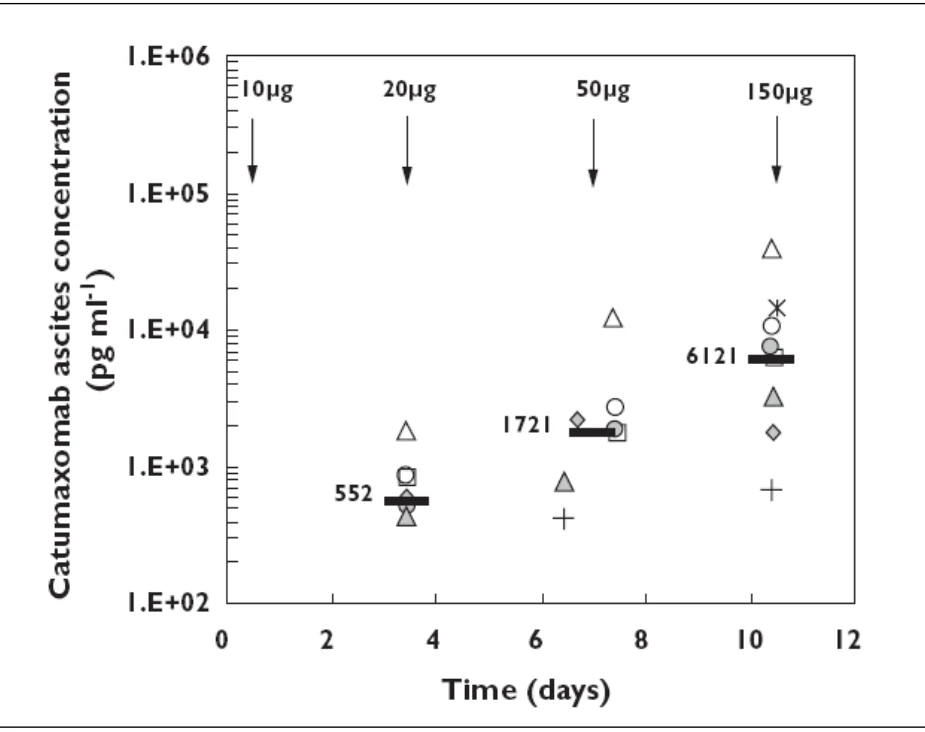
and 150 microgram catumaxomab were investigated in 13 patients with symptomatic malignant ascites due to EpCAM-positive carcinomas.
The variability between subjects was high. The geometric mean plasma Cmax was approximately 0.5 ng/mL (range 0 to 2.3) and the geometric mean plasma AUC was approximately 1.7day*ng/mL (range <LLOQ (lower limit of quantification) to 13.5). The geometric mean apparent terminal plasma elimination half-life (t½) was approximately 2.5 days (range 0.7 to 17).
Catumaxomab was detectable in the ascites fluid and in plasma. The concentrations increased with the number of infusions and the doses applied in most patients. Plasma levels tended to decline after achieving a maximum after each dose.
The pharmacokinetics of Removab is mainly dependent on the amount of target cells which affect its binding and thereby affect its retention in the peritoneal cavity. Tumor load and immune effector cell numbers thus influence the pharmacokinetics and bioavailability in the plasma. A high variability of the peritoneal conditions in individual patients with malignant ascites has to be taken into account. Correspondingly, the pharmacokinetic parameters of Removab revealed a high inter-patient variability in plasma and ascites samples.
Figure 6 Individual catumaxomab ascites concentrations vs. time
Data from Study IP-REM-PK-01-EU; 10 out of 13 patients were evaluable for PK analysis.
Individual Symbols: Individual catumaxomab ascites concentration
─ : Median catumaxomab ascites concentration
: Intraperitoneal catumaxomab infusions
Figure 7 Individual catumaxomab plasma concentrations vs. time
Data from Study IP-REM-PK-01-EU; plasma concentration vs. time profiles in 10 patients
Individual Symbols: Individual catumaxomab plasma concentrations
: Intraperitoneal catumaxomab infusions
TOXICOLOGY
Administration of catumaxomab in animal models did not result in any signs of abnormal or drug-related acute toxicity or signs of local intolerance at the injection/infusion site. However, these findings are of limited value due to the high species-specificity of catumaxomab for human target antigens. The nonclinical development of biologics requires testing in a species in which the therapeutic product is pharmacologically active]. This requires binding of the therapeutic product to the targeted receptor or epitope. The full pharmacological activity of catumaxomab will only be achieved if all of its binding partners are present. Since catumaxomab does not bind to EpCAM and CD3 of standard animal species including non-human primates (although catumaxomab is able to bind to monkey FcγR-positive blood cells) standard animal models such as rodents or even non-human primates are not appropriate for nonclinical testing. The species-specificity of catumaxomab for its human target antigens thus limits the ability to investigate functional effects on the major physiological systems and thus restricts the relevance of the nonclinical findings in non-relevant species for the human situation.
REFERENCES
[1] Heiss MM, Murawa P, Koralewski P, et al. The trifunctional antibody catumaxomab for the treatment of malignant ascites due to epithelial cancer: Results of a prospective randomized phase II/III trial. Int J Cancer. 2010 Nov 1;127(9):2209-21.
[2] Ruf P, Kluge M, Jäger M, Burges A, Volovat C, Heiss MM, Hess J, Wimberger P, Brandt B &
Lindhofer H. Pharmacokinetics, immunogenicity, and bioactivity of the therapeutic antibody catumaxomab intraperitoneally administered to cancer patients. Br J Clin Pharmacol 2010; 69(6): 617-25.
[3] Seimetz D, Lindhofer H, Bokemeyer C. Development and approval of the trifunctional antibody catumaxomab (anti-EpCAMxantiCD3) as a targeted immunotherapy. Cancer Treat Rev (2010), doi:10.1016/j.ctrv.2010.03.001.