


Product Monograph - Zynlonta
Recent Major Label Changes
| 4 Dosage and Administration, 4.2 Recommended Dose and Dose Adjustment | 2026-05 |
|---|---|
| 7 Warnings and Precautions, General | 2026-05 |
| 7 Warnings and Precautions, Hepatoxicity | 2026-05 |
Table of Contents
Certain sections or subsections that are not applicable at the time of the preparation of the most recent authorized product monograph are not listed.
Recent Major Label Changes ................................................................................................. 3
Table of Contents ................................................................................................................. 3
Part 1: Healthcare Professional Information.......................................................................... 6
- 1.
Indications..................................................................................................................... 6
1.1. Pediatrics .................................................................................................................... 6
1.2. Geriatrics .................................................................................................................... 6
- 2. Contraindications .......................................................................................................... 6
- 4.
Dosage and Administration ............................................................................................ 6
4.1. Dosing Considerations ............................................................................................... 6
4.2. Recommended Dose and Dosage Adjustment .......................................................... 6
4.3. Reconstitution ............................................................................................................ 8
4.4. Administration ........................................................................................................... 9
4.5. Missed Dose ............................................................................................................... 9
- 5. Overdose ....................................................................................................................... 9
- 6. Dosage Forms, Strengths, Composition, and Packaging ................................................ 10
- 7.
Warnings and Precautions ........................................................................................... 10
General ................................................................................................................................. 10
Driving and Operating Machinery ........................................................................................ 11
Hematologic ......................................................................................................................... 11
Immune ................................................................................................................................ 11
Hepatotoxicity ...................................................................................................................... 11
Reproductive Health ............................................................................................................. 11
Skin ....................................................................................................................................... 12
7.1. Special Populations .................................................................................................. 12
7.1.1. Pregnancy ......................................................................................................... 12
7.1.2. Breastfeeding ................................................................................................... 13
7.1.3. Pediatrics .......................................................................................................... 13
7.1.4. Geriatrics .......................................................................................................... 13
- 8.
Adverse Reactions ....................................................................................................... 13
8.1. Adverse Reaction Overview ..................................................................................... 13
8.2. Clinical Trial Adverse Reactions ............................................................................... 14
8.3. Less Common Clinical Trial Adverse Reactions ........................................................ 16
8.4. Abnormal Laboratory Findings: Hematologic, Clinical Chemistry, and Other Quantitative Data ................................................................................................................. 16
8.5. Post-Market Adverse Reactions ............................................................................... 17
- 9.
Drug Interactions ......................................................................................................... 17
9.2. Drug Interactions Overview ..................................................................................... 17
9.3. Drug-Behaviour Interactions .................................................................................... 18
9.4. Drug-Drug Interactions ............................................................................................ 18
9.5. Drug-Food Interactions ............................................................................................ 18
9.6. Drug-Herb Interactions ............................................................................................ 18
9.7. Drug-Laboratory Test Interactions........................................................................... 18
- 10.
Clinical Pharmacology .................................................................................................. 18
10.1. Mechanism of Action ............................................................................................... 18
10.2. Pharmacodynamics .................................................................................................. 18
10.3. Pharmacokinetics ..................................................................................................... 19
10.4. Immunogenicity ....................................................................................................... 20
- 11. Storage, Stability, and Disposal .................................................................................... 20
- 12. Special Handling Instructions ....................................................................................... 21
Part 2: Scientific Information .............................................................................................. 22
- 13. Pharmaceutical Information ........................................................................................ 22
- 14.
Clinical Trials ............................................................................................................... 23
14.1. Clinical Trials by Indication ...................................................................................... 23
Relapsed or Refractory Diffuse Large B-Cell Lymphoma (DLBCL) after Two or More Lines of
Systemic Therapy ......................................................................................................... 23
- 15. Microbiology ............................................................................................................... 25
- 16. Non-Clinical Toxicology ................................................................................................ 25
Patient Medication Information ......................................................................................... 26
Part 1: Healthcare Professional Information
1. Indications
ZYNLONTA® (loncastuximab tesirine for injection) as monotherapy is indicated for:
- the treatment of adult patients with relapsed or refractory diffuse large B-cell lymphoma (DLBCL) not otherwise specified, DLBCL arising from low grade lymphoma, or high-grade B-cell lymphoma, who have received two or more lines of systemic therapy and have previously received or are unable to receive CAR-T cell therapy.
1.1. Pediatrics
Pediatrics (< 18 years of age): No data are available to Health Canada; therefore, Health Canada has not authorized an indication for pediatric use.
1.2. Geriatrics
Geriatrics (≥ 65 years of age): No clinically meaningful differences in safety or efficacy were observed between geriatric patients and younger patients (see 4.2 Recommended Dose and Dosage Adjustment, 7.1.4 Geriatrics and 10.3 Pharmacokinetics, Special Populations and Conditions).
2. Contraindications
ZYNLONTA is contraindicated in patients who are hypersensitive to this drug or to any of the ingredients in the formulation, including any non-medicinal ingredient, or component of the container (see 6 Dosage Forms, Strengths, Composition, and Packaging).
4. Dosage and Administration
4.1. Dosing Considerations
ZYNLONTA should only be administered under the supervision of a healthcare professional experienced in the treatment of cancer patients.
Reconstitute and further dilute ZYNLONTA prior to intravenous infusion (see 4.3 Reconstitution).
Premedication with Dexamethasone
Unless contraindicated, administer dexamethasone 4 mg orally or intravenously twice daily for 3 days beginning the day before administering ZYNLONTA. If dexamethasone administration does not begin the day before ZYNLONTA, oral or intravenous dexamethasone should begin at least 2 hours prior to administration.
4.2. Recommended Dose and Dosage Adjustment
Recommended Dose
ZYNLONTA is an intravenous infusion administered over 30 minutes on Day 1 of each 21-day cycle (every 3 weeks). The recommended dose of ZYNLONTA is:
- 0.15 mg/kg every 3 weeks for 2 cycles, followed by
- 0.075 mg/kg every 3 weeks for subsequent cycles
For patients with a body mass index (BMI) ≥35 kg/m2, calculate the dose based on adjusted body weight (ABW) as follows: ABW in kg = 35 kg/m2 x (height in meters)2.
Dose Adjustment
Table 1 outlines the recommended dose modification for adverse reactions.
Table 1: ZYNLONTA Dose Modification for Hematologic and Non-hematologic Adverse Reactions
| Adverse Reactions | Severitya | Dose Modification |
|---|---|---|
| Hematologic Adverse Reactions | ||
| Neutropenia | Absolute neutrophil count less than 1 x 10⁹/L | Withhold ZYNLONTA until neutrophil count returns to 1 x 10⁹/L or higher. |
| Thrombocytopenia | Platelet count less than 50,000/µL | Withhold ZYNLONTA until platelet count returns to 50,000/µL or higher. |
| Non-hematologic Adverse Reactions | ||
| Edema or Effusion | Grade 2 or higher | Withhold ZYNLONTA until the toxicity resolves to Grade 1 or less. |
| Hepatotoxicity | Grade 3 or higher increase in AST or ALT or suspected drug-induced liver injury (DILI) | Withhold ZYNLONTA until the toxicity resolves to Grade 1 or less. Discontinue ZYNLONTA for confirmed DILI. |
| Other Adverse Reactions | Grade 3 or higher | Withhold ZYNLONTA until the toxicity resolves to Grade 1 or less. |
a National Cancer Institute Common Terminology Criteria for Adverse Events (CTCAE) version 4.0
Dose Delays / Reductions
If dosing is delayed by more than 3 weeks due to toxicity related to ZYNLONTA, reduce subsequent doses by 50%. If toxicity reoccurs following dose reduction, consider discontinuation. Note: If toxicity requires dose reduction following the second dose of 0.15 mg/kg (Cycle 2), the patient should receive the planned dose of 0.075 mg/kg for Cycle 3.
Special Populations
Pediatrics (<18 years of age):
No data are available to Health Canada; therefore, Health Canada has not authorized an indication for pediatric use (see 1.1 Pediatrics).
Geriatrics (≥65 years of age):
No dose adjustment is required in patients ≥65 years of age (see 7.1.4 Geriatrics).
Renal impairment:
No dose adjustment is required for patients with mild (creatinine clearance [CrCl] ≥60 using the Cockcroft-Gault equation) and to moderate (CrCl ≥30 and <60 mL/min) renal impairment (see 10.3 Pharmacokinetics, Special Populations and Conditions). ZYNLONTA has not been studied in patients with severe renal impairment (CrCl 15 to 29 mL/min) or end-stage renal disease with or without hemodialysis.
Hepatic impairment:
No dose adjustment is recommended for patients with mild hepatic impairment (total bilirubin ≤ upper limit of normal [ULN] and aspartate aminotransferase [AST] > ULN or total bilirubin >1 to 1.5 × ULN and any AST) (see 10.3 Pharmacokinetics, Special Populations and Conditions).
ZYNLONTA has not been studied in patients with moderate or severe hepatic impairment (total bilirubin >1.5 × ULN and any AST).
ZYNLONTA treatment should not be initiated in patients with severe hepatic impairment (see 7 Warnings and Precautions, Hepatoxicity).
In patients with hepatic impairment, monitoring for potentially increased incidence of adverse reactions and modifying the ZYNLONTA dosage in the event of adverse reactions are recommended.
4.3. Reconstitution
Parenteral Products:
Reconstitute and further dilute ZYNLONTA prior to intravenous infusion. Use appropriate aseptic technique.
ZYNLONTA is a cytotoxic drug. Follow applicable special handling and disposal procedures (see 11 Storage, Stability and Disposal and 12 Special Handling Instructions).
Dose calculation
Calculate the total dose (mg) required based on the patient’s weight and prescribed dose. See 4.2 Recommended Dose and Dosage Adjustment.
Reconstitution of Lyophilized ZYNLONTA
- Reconstitute each ZYNLONTA vial using 2.2 mL of Sterile Water for Injection with the stream directed toward the inside wall of the vial to obtain a final concentration of 5 mg/mL.
- Swirl the vial gently until the powder is completely dissolved. Do not shake. Do not expose to direct sunlight.
- Inspect the reconstituted solution for particulate matter and discoloration. The solution should appear clear to slightly opalescent, colourless to slightly yellow. Do not use if the reconstituted solution is discolored, is cloudy, or contains visible particulates.
Use reconstituted ZYNLONTA immediately. If not used immediately, store the
- reconstituted solution in the vial for up to 4 hours refrigerated at 2°C to 8°C or room temperature 20°C to 25°C. Do not freeze.
- The product does not contain a preservative. Discard unused vial after reconstitution if the recommended storage time is exceeded.
Dilution in Infusion Bag
- Withdraw the required volume of reconstituted solution from the ZYNLONTA vial using a sterile syringe. Discard any unused portion left in the vial.
- Add the calculated dose volume of ZYNLONTA solution into a 50 mL infusion bag of 5% Dextrose Injection.
- Gently mix the intravenous bag by slowly inverting the bag. Do not shake. Do not expose to direct sunlight.
- If not used immediately, store the diluted ZYNLONTA infusion solution refrigerated at 2°C to 8°C for up to 24 hours or at room temperature 20°C to 25°C for up to 8 hours. Do not freeze. Discard diluted infusion bag if storage time exceeds these limits.
- No incompatibilities have been observed between ZYNLONTA and intravenous infusion bags with product-contacting materials of polyvinylchloride (PVC), polyolefin (PO), and PAB® (copolymer of ethylene and propylene).
4.4. Administration
- Administer by intravenous infusion over 30 minutes using a dedicated infusion line equipped with a sterile, non-pyrogenic, low-protein binding in-line or add-on filter (0.2-or 0.22-micron pore size) and catheter.
- Extravasation of ZYNLONTA has been associated with irritation, swelling, pain, and/or tissue damage, which may be severe. The infusion site should be monitored for possible subcutaneous infiltration during drug administration.
- Do not mix ZYNLONTA with or administer as an infusion with other drugs.
4.5. Missed Dose
Delayed or Missed Doses
If a planned dose of ZYNLONTA is missed, it should be administered as soon as possible, and the schedule of administration should be adjusted to maintain a 3-week interval between doses
5. Overdose
There is limited information on overdosage with loncastuximab tesirine. In clinical studies, the highest dose administered was 0.2 mg/kg. The incidence of severe adverse events increased with increasing doses. In the event of overdosage, patients should be closely monitored, and symptomatic treatment and standard supportive care measures for the management of any observed toxicity should be applied. There is no antidote for loncastuximab tesirine.
For the most recent information in the management of a suspected drug overdose, contact your regional poison control centre or Health Canada’s toll-free number, 1-844 POISON-X (1-844-764-7669).
- 6. Dosage Forms, Strengths, Composition, and Packaging
To help ensure the traceability of biologic products, health professionals should record both the brand name and the non-proprietary (active ingredient) name as well as other product specific identifiers such as the Drug Identification Number (DIN) and the batch/lot number of the product supplied.
Table 2: Dosage Forms, Strengths, and Composition
ZYNLONTA for injection is supplied in single use vials as a sterile, white to off-white, preservative free, lyophilized powder, with a cake-like appearance, for intravenous infusion after reconstitution and dilution.
After reconstitution with 2.2 mL Sterile Water for Injection the final concentration is 5 mg/mL with a pH of approximately 6.0.
7. Warnings and Precautions
General
Effusion and Edema
Serious effusion and edema have been reported in patients treated with ZYNLONTA (see 8 Adverse Reactions).
Patients should be monitored for new or worsening edema or effusion. ZYNLONTA should be withheld for Grade 2 or greater edema or effusion until the toxicity resolves. Diagnostic imaging should be considered in patients who develop symptoms of pleural effusion or pericardial effusion, such as new or worsening dyspnea, chest pain, and/or ascites such as swelling in the abdomen and bloating. Appropriate medical management for edema or effusion should be instituted (see 4.2 Recommended Dose and Dosage Adjustment). In patients with worsening effusion or edema, who have signs and symptoms of weight gain, severe hypotension, hypoalbuminemia, and/or hemoconcentration (by elevated hemoglobin/hematocrit, etc.) consider the diagnosis of capillary leak syndrome and institute appropriate medical management.
| Route of Administration | Dosage Form/ Strength/Composition | Non-Medicinal Ingredients |
| Intravenous | Powder for concentrate for solution for infusion/ 10 mg/vial | histidine monohydrochloride, L-histidine, polysorbate 20, and sucrose |
Driving and Operating Machinery
Fatigue has been reported in some patients taking ZYNLONTA and this should be taken into account when driving or using machines.
Hematologic
Myelosuppression
Treatment with ZYNLONTA can cause serious or severe myelosuppression, including neutropenia, thrombocytopenia, and anemia (see 8 Adverse Reactions).
Complete blood cell counts should be monitored throughout treatment. Cytopenias may require interruption, dose reduction, or discontinuation of ZYNLONTA (see 4.2 Recommended Dose and Dosage Adjustment). Prophylactic granulocyte colony-stimulating factor administration should be considered, as applicable.
Immune
Infections
Fatal and serious infections, including opportunistic infections, have been reported in patients treated with ZYNLONTA. In clinical trials, the most frequent Grade ≥3 infections included sepsis and pneumonia (see 8 Adverse Reactions).
Patients should be monitored for any new or worsening signs or symptoms consistent with infection. For Grade 3 or 4 infection, ZYNLONTA should be withheld until infection has resolved (see 4.2 Recommended Dose and Dosage Adjustment).
Hepatotoxicity
Grade ≥3 increase in liver function tests have been reported in patients treated with ZYNLONTA (see 8 Adverse Reactions). Monitor liver function tests at baseline and throughout treatment. In the event of suspected DILI or a Grade ≥3 increase in alanine aminotransferase (ALT) or aspartate aminotransferase (AST), withhold ZYNLONTA until toxicity resolves to Grade 1 or lower. Upon confirmation of DILI, discontinue ZYNLONTA (see 4.2 Recommended Dose and Dosage Adjustment).
ZYNLONTA should be avoided in patients with severe hepatic impairment (see 10.3 Pharmacokinetics).
Reproductive Health
Females
ZYNLONTA may cause embryo-fetal harm when administered to a pregnant woman because it contains a genotoxic compound (SG3199), which affects actively dividing cells. Pregnant women should be advised of the potential risk to the fetus.
Advise women of reproductive potential to use effective contraception during treatment and for 10 months after the last dose (see 7.1.1. Pregnancy).
Males
Because of the potential for genotoxicity, advise male patients with female partners of reproductive potential to use effective contraception during treatment with ZYNLONTA and for 7 months after the last dose.
- Fertility
In non-clinical studies, ZYNLONTA was associated with irreversible testicular toxicity so may impair male reproductive function and fertility (see 16 Non-Clinical Toxicology).
Therefore, men being treated with this medicine should be advised to consider having sperm samples preserved and stored before initiating treatment.
Skin
Photosensitivity and Cutaneous Reactions
Serious cutaneous reactions have been reported in patients treated with ZYNLONTA (see 8 Adverse Reactions).
Patients should be monitored for new or worsening cutaneous reactions, including photosensitivity reactions. ZYNLONTA should be withheld for severe (Grade 3) cutaneous reactions until resolution (see 4.2 Recommended Dose and Dosage Adjustment). Patients should be advised to minimize or avoid exposure to direct natural or artificial sunlight including exposure through glass windows. Patients should be instructed to protect skin from exposure to sunlight by wearing sun-protective clothing and/or the use of sunscreen products. If a skin reaction or rash develops, dermatologic consultation should be considered (see 16 Non-Clinical Toxicology).
7.1. Special Populations
7.1.1. Pregnancy
- -fetal harm when administered to a pregnant woman, because it contains a genotoxic compound (SG3199) and affects actively dividing cells (see 10.1 Mechanism of Action and 16 Non-Clinical Toxicology). There are no data on the use of ZYNLONTA in pregnant women to evaluate for drug-associated risk. No animal reproduction studies were conducted with ZYNLONTA. ZYNLONTA is not recommended during pregnancy. ZYNLONTA is not recommended in women of childbearing potential not using contraception.
- Teratogenic Risk
The cytotoxic component of ZYNLONTA, SG3199, crosslinks DNA, is genotoxic, and is toxic to rapidly dividing cells, suggesting it has the potential to cause embryotoxicity and teratogenicity.
7.1.2. Breastfeeding
- child, or milk production. A risk for breastfed children cannot be excluded.
to breastfeed during treatment with ZYNLONTA and for at least 3 months after the last dose.
7.1.3. Pediatrics
Pediatrics (< 18 years of age): No data are available to Health Canada; therefore, Health Canada has not authorized an indication for pediatric use.
7.1.4. Geriatrics
Geriatrics (≥ 65 years of age): Of the 145 patients with large B-cell lymphoma who received ZYNLONTA in clinical trials, 55% were 65 years of age and older, while 14% were 75 years of age and older (see 14 Clinical Trials). No clinical differences in safety or efficacy were observed between these patients and younger patients.
8. Adverse Reactions
8.1. Adverse Reaction Overview
The safety of ZYNLONTA administered as a single agent at an initial starting dose of 0.15 mg/kg for the first two cycles, followed by 0.075 mg/kg for the subsequent cycles, was investigated in 145 patients with relapsed or refractory DLBCL in Study ADCT-402-201 (LOTIS-2). The median duration of treatment was 45 days (range: 1 to 569 days). The median number of cycles was 3 (range 1 to 26 cycles) with 34% of patients receiving five or more cycles.
The most frequently (≥ 20%) reported adverse reactions with ZYNLONTA were gamma-glutamyltransferase (GGT) increased (42.1%), neutropenia (40%), thrombocytopenia (33.1%), fatigue (27.6%), anemia (26.2%), nausea (23.4%), cough (22.8%), blood alkaline phosphatase increased (20%) and peripheral edema (20%).
The most frequent (≥ 2%) serious adverse reactions were febrile neutropenia (3.4%), pyrexia (2.8%), abdominal pain (2.1%), and pleural effusion (2.1%). Treatment-emergent events of fatal infections occurred in 2.1% of patients.
Dose interruption due to adverse reactions occurred in 51% of patients. The most frequent (≥ 5%) adverse reactions leading to dose delay were GGT increased (21.4%), neutropenia (12.4%) and thrombocytopenia (9%).
Dose reductions due to adverse reactions occurred in 6.9% of patients. The adverse reaction leading to dose reductions reported in two or more patients was GGT increased (3.4%).
Permanent treatment discontinuation due to adverse reactions occurred in 24.8% of patients. The most frequent (≥ 2%) adverse reactions leading to treatment withdrawal were GGT increased (12.4%), peripheral edema (2.8%), localized edema (2.1%), and pleural effusion (2.1%).
8.2. Clinical Trial Adverse Reactions
Clinical trials are conducted under very specific conditions. Therefore, the frequencies of adverse reactions observed in the clinical trials may not reflect the frequencies observed in clinical practice and should not be compared to frequencies reported in clinical trials of another drug.
Table 3 summarizes the adverse reactions that occurred in at least 5% of patients treated with ZYNLONTA in Study ADCT-402-201 (LOTIS-2).
Table 3: Adverse Reactions Reported in at Least 5% of Patients with Relapsed/Refractory DLBCL Treated with ZYNLONTA in LOTIS-2
System Organ Class Preferred Terma | ZYNLONTA (N=145) | |||||||||
System Organ Class Preferred Terma | ZYNLONTA (N=145) | |||||||||
All Grades N (%) | Grade 3 N (%) | Grade 4 N (%) | ||||||||
All Grades N (%) | Grade 3 N (%) | Grade 4 N (%) | ||||||||
| Blood and lymphatic system disorders | ||||||||||
| Neutropenia | 58 (40.0) | 14 (9.7) | 24 (16.6) | |||||||
| Thrombocytopenia | 48 (33.1) | 18 (12.4) | 8 (5.5) | |||||||
| Anemia | 38 (26.2) | 15 (10.3) | 0 | |||||||
| Gastrointestinal disorders | ||||||||||
| Nausea | 34 (23.4) | 0 | 0 | |||||||
| Diarrhea | 25 (17.2) | 3(2.1) | 0 | |||||||
| Abdominal painb | 21 (14.5) | 3 (2.1) | 1 (0.7) | |||||||
| Vomiting | 19 (13.1) | 0 | 0 | |||||||
| Constipation | 17 (11.7) | 0 | 0 | |||||||
| General disorders and administration site reactions | ||||||||||
| Fatigue | 40 (27.6) | 2 (1.4) | 0 | |||||||
| Edema peripheral | 29 (20.0) | 2 (1.4) | 0 | |||||||
| Pyrexia | 28 (19.3) | 2 (1.4) | 0 | |||||||
| Asthenia | 14 (9.7) | 0 | 0 | |||||||
| Investigations | ||||||||||
| Gamma-glutamyltransferase increased | 61 (42.1) | 33 (15.3) | 4 (1.9) | |||||||
| Blood alkaline phosphatase increased | 29 (20.0) | 1 (0.7) | 0 | |||||||
| Aspartate aminotransferase increased | 23 (15.9) | 1 (0.7) | 0 | |||||||
| Alanine aminotransferase increased | 22 (15.2) | 4 (2.8) | 0 | |||||||
| Metabolism and nutrition disorders | ||||||||||
| Decreased appetite | 22 (15.2) | 0 | 0 | |||||||
| Musculoskeletal and connective tissue disorders | ||||||||||
| Pain in extremity | 9 (6.2) | 0 | 0 | |||||||
| Back pain | 9 (6.2) | 0 | 0 | |||||||
| Respiratory, thoracic and mediastinal disorders | ||||||||||
| Cough | 33 (22.8) | 1 (0.7) | 0 | |||||||
| Dyspneac | 19 (13.1) | 2 (1.4) | 0 | |||||||
| Pleural effusion | 16 (11.0) | 3 (2.1) | 0 | |||||||
| Skin and subcutaneous tissue disorders | ||||||||||
| Rash | 19 (13.1) | 1 (0.7) | 0 | |||||||
| Pruritus | 19 (13.1) | 0 | 0 | |||||||
| Erythema | 15 (10.3) | 1 (0.7) | 0 | |||||||
| Photosensitivity reaction | 15 (10.3) | 3 (2.1) | 0 | |||||||
| Maculopapular rash | 8 (5.5) | 1 (0.7) | 0 | |||||||
a MedDRA Version 22.0, National Cancer Institute Common Terminology Criteria for Adverse Events (CTCAE) version 4.0.
b Includes abdominal pain, abdominal pain lower, abdominal pain upper, abdominal discomfort.
c Includes dyspnea, dyspnea exertional.
Description of Selected Adverse Reactions (LOTIS-2)
Effusion or Edema
Serious effusion and edema occurred in patients treated with ZYNLONTA. Grade ≥3 edema or effusion occurred in 4.8% of patients. Grade 3 or 4 pericardial effusion occurred in 2.1% of patients. Grade 3 pleural effusion, ascites, and peripheral edema occurred in 2.1%, 2.1%, and 1.4% of patients, respectively (see 7 Warnings and Precautions, Effusion and Edema).
Myelosuppression
Treatment with ZYNLONTA can cause severe myelosuppression. Grade 3 or 4 neutropenia occurred in 26.2%, Grade 3 or 4 thrombocytopenia in 17.9%, and Grade 3 or 4 anemia in 10.3% of patients. Febrile neutropenia occurred in 3.4% of patients (see 7 Warnings and Precautions, Myelosuppression). Thrombocytopenia and neutropenia led to discontinuation of treatment in 0.7% of patients, respectively.
Infections
Fatal and serious infections, including opportunistic infections, occurred in patients treated with ZYNLONTA. Grade 3 or higher infections occurred in 9.0% of patients, with fatal infections occurring in 2.1%. The most frequent Grade ≥3 infections included sepsis and pneumonia (see 7 Warnings and Precautions, Infections).
Cutaneous Reactions
Severe cutaneous reactions occurred in patients treated with ZYNLONTA. Grade 3 cutaneous reactions occurred in 4.1% and included photosensitivity reaction (2.1%), rash (0.7%), rash pustular (0.7%), rash maculo-papular (0.7%), and erythema (0.7%) (see 7 Warnings and Precautions, Photosensitivity and Cutaneous Reactions). Two (2) patients (1.4%) discontinued ZYNLONTA due to Grade 1-2 cutaneous reactions.
8.3. Less Common Clinical Trial Adverse Reactions
Less common adverse reactions reported in <5% of patients with relapsed/refractory DLBCL treated with ZYNLONTA are shown below.
Blood and lymphatic system disorders: febrile neutropenia
Cardiac disorders: pericardial effusion; pericarditis
Gastrointestinal disorders: ascites
General disorders and administration site reactions: face edema; non-cardiac chest pain; peripheral swelling; swelling; generalized edema; edema
Infections and infestations: upper respiratory tract infection; lower respiratory tract infection; pneumoniaa; pustular rash; sepsis
Injury, poisoning and procedural complications: infusion-related reactionsb
Metabolism and nutrition disorders: fluid retention; fluid overload
Musculoskeletal and connective tissue disorders: neck pain; musculoskeletal pain; myalgia; musculoskeletal chest pain; musculoskeletal discomfort; limb discomfort
Nervous system disorders: lethargy
Respiratory, thoracic and mediastinal disorders: pneumonitis; pleuritis
Skin and subcutaneous tissue disorders: skin hyperpigmentation; pruritic rash; swelling face; bullous dermatitis
a Includes pneumonia and lung infection.
b Symptoms of infusion-related reactions include nausea, drug hypersensitivity, swelling of face, pruritus and flushing.
8.4. Abnormal Laboratory Findings: Hematologic, Clinical Chemistry, and Other Quantitative Data
Clinical Trial Findings
The following table summarizes treatment-emergent shifts from baseline in laboratory abnormalities in LOTIS-2.
Table 4: Select Laboratory Abnormalities (≥10%) That Worsened from Baseline in LOTIS-2
| Laboratory Abnormality | ZYNLONTA | |||||
All Gradesa N (%)c | Grade 3 or Grade 4b N (%)c | |||||
| Hematologic | ||||||
| Platelets decreased | 84 (58.3) | 25 (17.4) | ||||
| Neutrophils decreased | 75 (52.1) | 43 (29.9) | ||||
| Hemoglobin decreased | 75 (51.7) | 16 (11.0) | ||||
| Chemistry | ||||||
| Gamma-glutamyltransferase increased | 82 (57.3) | 31 (21.7) | ||||
| Glucose increased | 69 (48.3) | 11 (7.7) | ||||
| Aspartate aminotransferase increased | 60 (41.7) | 1 (0.7) | ||||
| Albumin decreased | 53 (36.8) | 1 (0.7) | ||||
| Alanine aminotransferase increased | 49 (33.8) | 5 (3.4) | ||||
a Includes all patients where the maximum post-baseline Grade > baseline Grade.
b Includes all patients who had a baseline value ≤ Grade 2 and who worsened to ≥ Grade 3 post-baseline.
c Numerator varies between 143 and 145 patients, reflecting available baseline and post-baseline data. Percentages are based on the number of patients who have both a baseline and a post-baseline value.
8.5. Post-Market Adverse Reactions
Skin and Subcutaneous Tissue Disorders: telangiectasia; blister; rash vesicular, cutaneous collagenous vasculopathy.
9. Drug Interactions
9.2. Drug Interactions Overview
No drug interaction studies have been performed in humans for loncastuximab tesirine, free tesirine, SG3199 and related metabolites. No clinically important PK interactions are expected.
In Vitro Studies
Cytochrome P450 (CYP) Enzymes: SG3199 does not inhibit CYP1A2, CYP2A6, CYP2B6, CYP2C8, CYP2C9, CYP2C19, CYP2D6, CYP2E1, or CYP3A4/5 at clinically relevant unconjugated SG3199 concentrations.
Transporter Systems: SG3199 is a substrate of P-glycoprotein (P-gp), but not a substrate of breast cancer resistance protein (BCRP), organic anion-transporting polypeptide (OATP)1B1, or organic cation transporter (OCT)1.
At clinically relevant concentrations, unconjugated SG3199 does not inhibit P-gp, BCRP, OATP1B1, OATP1B3, organic anion transporter (OAT)1, OAT3, OCT2, OCT1, multi-antimicrobial extrusion protein (MATE)1, MATE2-K, or bile salt export pump (BSEP).
9.3. Drug-Behaviour Interactions
Not applicable.
9.4. Drug-Drug Interactions
Interactions with other drugs have not been established.
9.5. Drug-Food Interactions
Interactions with food have not been established.
9.6. Drug-Herb Interactions
Interactions with herbal products have not been established.
9.7. Drug-Laboratory Test Interactions
Interactions with laboratory tests have not been established.
10. Clinical Pharmacology
10.1. Mechanism of Action
Loncastuximab tesirine is an antibody-drug conjugate (ADC) targeting CD19 (see 13 Pharmaceutical Information). The monoclonal IgG1 kappa antibody component binds to human CD19, a transmembrane protein expressed on the surface of cells of B-lineage origin. The small molecule component is SG3199, a pyrrolobenzodiazepine (PBD) dimer and alkylating agent.
Upon binding to CD19, loncastuximab tesirine is internalized followed by release of SG3199 via proteolytic cleavage. The released SG3199 binds to the DNA minor groove and forms highly cytotoxic DNA interstrand crosslinks, subsequently inducing cell death.
10.2. Pharmacodynamics
Higher loncastuximab tesirine exposure in Cycle 1 was associated with higher efficacy over the dose range of 0.015-0.2 mg/kg (0.1 to 1.33 times the maximum recommended dose). Higher loncastuximab tesirine exposure in Cycle 1 was associated with higher incidence of some Grade ≥2 adverse reactions, including skin and nail reactions, and liver function test abnormalities including increased gamma-glutamyltransferase.
Cardiac electrophysiology
At the maximum recommended therapeutic dose of 0.15 mg/kg during Cycle 1 and Cycle 2, loncastuximab tesirine does not cause large mean increases (i.e., >20 msec) in the QTc interval.
10.3. Pharmacokinetics
Table 5: Summary of Pharmacokinetic Parameters for Conjugated Antibody during Cycles 1, 2 and 3 for Patients Treated with Loncastuximab Tesirine 0.15 mg/kg Q3Wx 2, Followed by 0.075 mg/kg Q3W in LOTIS-2
| Cycle | Cmax# (ng/mL) | AUClast (day*ng/mL) | AUC# (day*ng/mL) | Thalf (day) | CL# (L/day) | Vss (L) |
| 1 | 2436 (38.7) [143] | 16016 (105) [144] | 19819 (53.7) [32] | 8.85 (53.6) [32] | 0.458 (48.4) [32] | 4.24 (39.9) [32] |
| 2 | 2736 (35.6) [118] | 23113 (81.0) [117] | 26902 (33.4) [99] | 15.3 (31.7) [89] | 0.331 (32.0) [99] | 6.42 (36.7) [89] |
| 3 | 1694 (47.6) [83] | - | - | - | - | - |
Data were presented in geometric mean (CV %) [N]. Estimated with a non-compartmental analysis. Abbreviation: AUC#= area under the concentration-time curve from time 0 to infinity (AUCinf) for Cycle 1 and area under the concentration-time curve from time 0 to end of dosing interval (AUCtau) for Cycle 2; AUClast=area under the concentration-time curve from time 0 to last measurable timepoint in respective Cycle; Cmax#=maximum observed concentration for Cycles 1 and 2 or concentration at end-of-infusion for Cycle 3; CL#=apparent clearance for Cycle 1 and apparent clearance at steady state for Cycle 2; CV%=geometric percent coefficient of variation; N=number of patients; Q3W=every three weeks; Thalf=apparent terminal half-life; Vss =apparent volume of distribution at steady state; -= not available. | ||||||
Absorption
ZYNLONTA is administered as an intravenous infusion. There have been no studies performed with other routes of administration.
Distribution
The geometric mean (CV%) loncastuximab tesirine volume of distribution was 7.14 (22.9%) L.
Metabolism
The monoclonal antibody portion of loncastuximab tesirine is expected to be metabolized into small peptides by catabolic pathways. The small molecule cytotoxin, SG3199, is metabolized by CYP3A4/5 in vitro.
Elimination
The estimated clearance parameter of the conjugated antibody decreased from Cycle 1 to Cycle 2.
The major excretion pathways of the warhead SG3199 have not been studied in humans. Data collected in an animal model (rat) showed predominantly fecal elimination with only minimal renal excretion in the low % range.
Dose-proportionality
The AUCinf parameter of the conjugated antibody is dose-proportional from 0.015 to 0.200 mg/mL.
Special populations and conditions
A population PK covariate analysis could not detect any clinically significant differences in the pharmacokinetic parameters of loncastuximab tesirine based on the covariates of age (20-94 years), sex, race (White vs. Black), body weight (42.1 to 160.5 kg), ECOG status (0 to 2) or mild to moderate renal impairment (CLcr 30 to <90 mL/min using the Cockcroft-Gault equation).
- Hepatic Insufficiency In the final population PK model, estimates in the category of mild hepatic impairment, defined as total bilirubin ≤ ULN and AST > ULN, or total bilirubin >1 to 1.5 × ULN and any AST suggested an increase in the exposure PK parameters of unconjugated SG3199, however there was no clinically significant effect on loncastuximab tesirine pharmacokinetic parameters.
Renal Insufficiency In the final population PK model, the estimates of the clearance parameter of loncastuximab tesirine in patients with mild to moderate renal impairment (CLcr 30 to <90 mL/min using the Cockcroft-Gault equation) was not significantly different from patients with normal renal function.
For SG3199, data collected in an animal model (rat) show minimal renal excretion. No clinical data are available.
10.4. Immunogenicity
As with all therapeutic proteins, there is potential for immunogenicity. The detection of antibody formation is highly dependent on the sensitivity and specificity of the assay. Additionally, the observed incidence of antibody (including neutralizing antibody) positivity in an assay may be influenced by several factors including assay methodology, sample handling, timing of sample collection, concomitant medications, and underlying disease. For these reasons, comparison of the incidence of antibodies in the studies described below with the incidence of antibodies to ZYNLONTA in other studies or to other products may be misleading.
In LOTIS-2, 1 of 145 patients tested positive for antibodies against ZYNLONTA after treatment. The potential effect of anti-drug antibodies to ZYNLONTA on pharmacokinetics, efficacy, or safety is unknown.
- 11. Storage, Stability, and Disposal
Storage and Stability
Store refrigerated at 2°C to 8°C in original carton to protect from light. Do not freeze. Do not shake.
Reconstituted solution
From a microbiological point of view, the reconstituted solution should be used immediately. If not used immediately, in-use storage times and conditions prior to use are the responsibility of the user and should not be longer than 4 hours refrigerated (2°C - 8°C) or 4 hours at room temperature (20°C - 25°C). Chemical and physical in-use stability of the reconstituted solution has been demonstrated for up to 4 hours refrigerated (2°C - 8°C) or 4 hours at room temperature (20°C - 25°C).
Diluted solution
From a microbiological point of view, the prepared solution for infusion should be used immediately. If not used immediately, in-use storage times and conditions prior to use are the responsibility of the user and should not be longer than 24 hours refrigerated (2°C - 8°C) or 8 hours at room temperature (20°C - 25°C). Chemical and physical in-use stability of the prepared solution for infusion has been demonstrated for up to 24 hours at room temperature (20°C - 25°C).
Do not use the medicinal product if the storage conditions exceed the limits.
Disposal
See 12 Special Handling Instructions.
12. Special Handling Instructions
ZYNLONTA is a cytotoxic drug. Procedures for proper handling and disposal of antineoplastic and cytotoxic medicinal products should be used.
Any unused medicinal product or waste material should be disposed of in accordance with local requirements.
Part 2: Scientific Information
13. Pharmaceutical Information
Drug Substance
Non-proprietary name of the drug substance(s): loncastuximab tesirine
Chemical name: Immunoglobulin IG, (anti-[human CD19 antigen]) (humanized clone RB4v1.2 γl-chain), disulfide with humanized clone RB4v1.2 κ-chain, dimer, bis (thioether) with N-(31-[2, 5-dihydro-2, 5-dioxo-1H-pyrrol-1-yl]-1, 29-dioxo-4, 7, 10, 13, 16, 19, 22, 25-octaoxa-28 azahentriacont-1- yl)-L-valyl-N-[4-[[[[(11S, 11aS)-8-[[5-[[(l1aS)- 5,11a-dihydro-7-methoxy-2-methyl-5-oxo-1Hpyrrolo[2,1-c][1,4] benzodiazepin-8-yl]oxy]pentyl]oxy]-11, 11a-dihydro-11-hydroxy-7-methoxy-2-methyl-5-oxo-1H-pyrrolo[2,1-c][1,4]benzodiazepin-10 (5H)-yl]carbonyl]oxy]methyl]phenyl]-L-alaninamide
Molecular formula and molecular mass: C6544H10048N1718O2064S52
150 kiloDalton (kDa)
Structural formula:
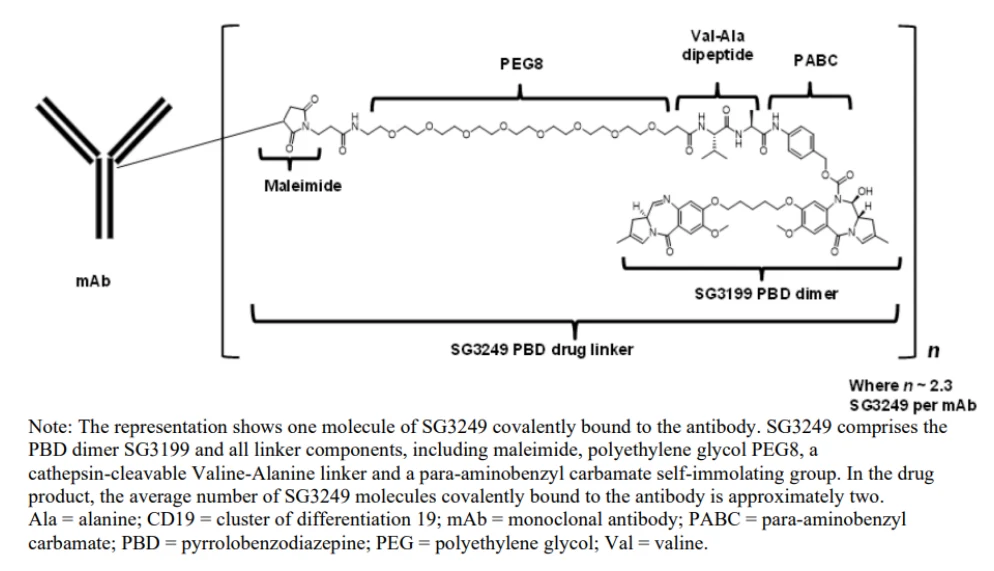
Physicochemical properties: Loncastuximab tesirine is a CD19-directed antibody and alkylating agent conjugate, consisting of a humanized IgG1 kappa monoclonal antibody conjugated to SG3199, a pyrrolobenzodiazepine (PBD) dimer cytotoxic alkylating agent, through a protease-cleavable valine-alanine linker. SG3199 attached to the linker is designated as SG3249, also known as tesirine. Loncastuximab tesirine has an approximate molecular weight of 151 kDa. An average of 2.3 molecules of SG3249 are attached to each antibody molecule. Loncastuximab tesirine is produced by chemical conjugation of the antibody and small molecule components. The antibody is produced by mammalian (Chinese hamster ovary) cells, and the small molecule components are produced by chemical synthesis.
14. Clinical Trials
14.1. Clinical Trials by Indication
Relapsed or Refractory Diffuse Large B-Cell Lymphoma (DLBCL) after Two or More Lines of Systemic Therapy
Table 6: Summary of Study Design and Patient Demographics in Clinical Trial of Relapsed or Refractory Large B-cell Lymphoma
| Study # | Study design | Dosage, route of administration and duration | Study subjects (n) | Mean age (range) | Sex n (%) |
| ADCT-402-201 | Phase 2, multi-centre, open-label, single-arm study | 0.15 mg/kg administered every 3 weeks for 2 cycles, then 0.075 mg/kg every 3 weeks for subsequent cycles Intravenous administration 30-minute infusion | n = 145 | 62.7 years (23 – 94) | Female: 60 (41%) Male: 85 (59%) |
The efficacy of ZYNLONTA was evaluated in ADCT-402-201 (LOTIS-2), an open-label, single-arm study in 145 adult patients with relapsed or refractory diffuse large B-cell lymphoma (DLBCL) after at least 2 prior lines of systemic therapy. Eligible patients had measurable disease as defined by the 2014 Lugano classification, adequate organ functions and ECOG performance status 0-2. The study excluded patients with bulky disease (defined as any tumour ≥10 cm in the longest dimension), active central nervous system lymphoma, Burkitt’s lymphoma, or clinically significant third space fluid accumulation. Patients received ZYNLONTA 0.15 mg/kg every 3 weeks for 2 cycles, then 0.075 mg/kg every 3 weeks for subsequent cycles. Patients received treatment for up to 1 year, or beyond if they were clinically benefitting, or until progressive disease or unacceptable toxicity.
Of the 145 patients enrolled, the median age was 66 years (range 23 to 94), with 14% of patients 75 years of age and older. Ninety-four percent (94%) of patients had an ECOG performance status of 0 to 1. The diagnosis was DLBCL NOS in 88% of patients (including 20% with DLBCL arising from low grade lymphoma) and high-grade B-cell lymphoma (with MYC and BCL2 and/or BCL6 rearrangements) in 7%. The median number of prior lines of systemic therapies was 3 (range 2 to 7); 43% of patients received 2 prior lines, 23% received 3 prior lines, and 33% received more than 3 prior lines. Twenty percent (20%) of patients had primary refractory disease, 17% received prior stem cell transplant, and 10% received prior chimeric antigen receptor (CAR) T-cell therapy.
The efficacy of ZYNLONTA was evaluated on the basis of overall response rate (ORR) defined as the proportion of patients who achieved either complete response (CR) or partial response (PR) as best overall response (BOR) as assessed by an Independent Review Committee (IRC) using Lugano 2014 criteria. The median follow-up time was 7.8 months (range 0.3 to 42.6).
Table 7: Efficacy Results in Patients with Relapsed or Refractory Diffuse Large B-cell Lymphoma in LOTIS-2
| Efficacy parameter | ZYNLONTA N = 145 | ||
|---|---|---|---|
| Primary Endpoint | |||
Overall response ratea, n (%) [95% CI] | 70 (48.3%) [39.9, 56.7] | ||
Complete response ratea, n (%) [95% CI] | 36 (24.8%) [18.0, 32.7] | ||
| Secondary Endpoints | |||
| Median time to first responsea, days (range) | 41.0 (35, 247) | ||
Median duration of responseb, months [95% CI] | N=70 13.4 [6.9, NE] | ||
| Median duration of complete responsea, months [95% CI] | N=36 NE (NE, NE) | ||
CI = confidence interval, NE = not estimable
a Assessed by independent review committee using Lugano 2014 criteria.
b DOR was defined for patients with CR or PR as the interval between the date of initial documentation of a response and the date of the first documented evidence of progressive disease (PD) based on independent radiographic assessment or death, whichever occurred first. If PD or death was not observed, the DOR was censored at the last valid disease assessment on or before the start of subsequent anticancer therapy.
Among patients achieving a complete response, the probability of continued response was 64.4% at 9 months.
Post CAR-T Subgroup
Among patients who had previously received CAR-T cell therapy, the ORR was 42.9% and the CRR was 21.4%.
15. Microbiology
No microbiological information is required for this drug product.
16. Non-Clinical Toxicology
General toxicology
Inflammatory-mediated toxicities associated with PBDs have been observed at low incidence in animals. In repeat-dose toxicity studies in cynomolgus monkeys, intravenous administration of loncastuximab tesirine was associated with potential inflammatory mediated-toxicities, including in the lungs and kidneys. Renal toxicity included increasing kidney weights and nephropathy with variable reversible inflammation and fibrosis.
Black skin spots potentially related to phototoxicity were observed in cynomolgus monkeys and were still present after a 12-week treatment-free period.
Genotoxicity
SG3199 was genotoxic in an in vitro micronucleus test and a chromosome aberration assay using human lymphocytes through a clastogenic mechanism. These results are consistent with the pharmacological effect of SG3199 as a covalent DNA crosslinking agent. Results of a bacterial reverse mutation assay (Ames test) were inconclusive due to cytotoxicity.
Carcinogenicity
Carcinogenicity studies have not been conducted with loncastuximab tesirine or SG3199.
Reproductive and developmental toxicology
Fertility studies have not been conducted with loncastuximab tesirine. Results from repeat-dose toxicity studies with intravenous administration of loncastuximab tesirine in cynomolgus monkeys indicate the potential for impaired male reproductive function and fertility. Administration of loncastuximab tesirine to cynomolgus monkeys every 3 weeks at 0.6 mg/kg for a total of 2 doses, or every 3 weeks at 0.3 mg/kg for 13 weeks for a total of 5 doses resulted in adverse findings that included decreased weight and/or size of the testes and epididymis, atrophy of the seminiferous tubules, germ cell degeneration, and/or reduced epididymal sperm content. The dose of 0.3 mg/kg in animals results in an exposure (AUC) that is approximately 3 times the exposure at the maximum recommended human dose [MRHD] of 0.15 mg/kg. Findings were not reversible at the end of the 12-week recovery period following 4 or 13 weeks of dosing.
No dedicated reproductive toxicity studies in animals have been conducted with loncastuximab tesirine. However, the cytotoxic component of loncastuximab tesirine, SG3199, crosslinks DNA, is genotoxic, and is toxic to rapidly dividing cells, suggesting it has the potential to cause embryo-fetal toxicity and teratogenicity.