


Product Monograph - Empliciti
SUMMARY PRODUCT INFORMATION
| Route of Administration | Dosage Form / Strength | Post-reconstitution concentration | Clinically Relevant Nonmedicinal Ingredients | ||||
| Intravenous | Nonpyrogenic lyophilized powder for infusion | Sucrose For a complete listing see DOSAGE FORMS, COMPOSITION AND PACKAGING. | |||||
| 340 mg | 25 mg/mL (300 mg after reconstitution) | ||||||
| 440 mg | 25 mg/mL (400 mg after reconstitution) | ||||||
DESCRIPTION
EMPLICITI (elotuzumab) is a humanized recombinant monoclonal antibody directed to SLAMF7, a cell surface glycoprotein. EMPLICITI consists of the complementary determining regions (CDR) of the mouse antibody MuLuc63 grafted onto human IgG1 heavy and kappa light chain frameworks. EMPLICITI is produced in NS0 cells by recombinant DNA technology. Purified elotuzumab IgG1 has been shown to have an affinity to SLAMF7 in the range of 30 to 45 nM.
EMPLICITI is a nonpyrogenic lyophilized powder that is a white to off-white, whole or fragmented cake that is provided in two strengths. EMPLICITI for Injection, 400 mg per vial and EMPLICITI for Injection, 300 mg per vial are single-use, sterile, nonpyrogenic lyophilized products. EMPLICITI for injection is reconstituted with sterile water for injection (SWFI) to obtain a solution with a protein concentration of 25 mg/mL. Prior to intravenous administration, the reconstituted solution is diluted with either 0.9% Sodium Chloride Injection, USP or 5% Dextrose Injection, USP to protein concentrations from 1 mg/mL to 6 mg/mL (see DOSAGE AND ADMINISTRATION).
INDICATIONS AND CLINICAL USE
EMPLICITI, in combination with lenalidomide and dexamethasone, is indicated for the treatment of patients with multiple myeloma who have received one to three prior therapies.
Geriatrics (> 65 years of age):
Of the 646 patients enrolled in the pivotal clinical study for EMPLICITI in combination with lenalidomide and dexamethasone, 57% were ≥65 years of age; the number of patients who were ≥65 years was similar between treatment groups. Second primary malignancies were more common among patients ≥65 years compared to younger patients. There were no other overall differences in safety or efficacy observed between patients ≥65 years and younger patients (<65 years) (see WARNINGS AND PRECAUTIONS and ADVERSE REACTIONS).
Pediatrics (< 18 years of age):
The safety and effectiveness of EMPLICITI in pediatric patients have not been established.
CONTRAINDICATIONS
EMPLICITI is contraindicated in patients who are hypersensitive to elotuzumab or to any ingredient in the formulation or component of the container (see DOSAGE FORMS, COMPOSITION AND PACKAGING)
EMPLICITI is used in combination with other medications; therefore, the contraindications applicable to those medications also apply to EMPLICITI combination therapy. The prescribing information for all medications used in combination with EMPLICITI must be consulted before starting therapy.
WARNINGS AND PRECAUTIONS
EMPLICITI (elotuzumab) should only be administered under the supervision of a physician who is experienced in the treatment of cancer patients.
General
EMPLICITI is used in combination with other medications; therefore, the warnings and precautions applicable for use with those medications also apply to EMPLICITI combination therapy including the potential risk of fetal harm, the presence and transmission in sperm and blood, and prohibitions against blood and/or sperm donation. The local prescribing information for all medications used in combination with EMPLICITI must be consulted before starting therapy. See Pregnant Women: and Nursing Women:.
Infusion reactions
EMPLICITI can cause infusion reactions that may require interruption of the administration of EMPLICITI. Infusion reactions occurred in approximately 10% of patients treated with
EMPLICITI in clinical trials. Infusion reactions are most common during the first infusion, but may occur after any infusion even when patients have received prophylactic medications. The most commonly observed symptoms of an infusion reaction include fever, chills, and hypertension.
Premedication consisting of dexamethasone, H1 blocker, H2 blocker, and acetaminophen should be administered prior to EMPLICITI infusion (see DOSAGE AND ADMINISTRATION)
In case of a ≥ Grade 2 infusion reaction, EMPLICITI infusion should be interrupted and appropriate medical and supportive measures instituted. Vital signs should be monitored every 30 minutes for 2 hours after the end of the EMPLICITI infusion. Once the reaction has resolved (≤Grade 1), EMPLICITI can be restarted at the initial infusion rate of 0.5 mL per minute. If symptoms do not recur, the infusion rate may be gradually escalated every 30 minutes to a maximum of 5 mL per minute (see DOSAGE AND ADMINISTRATION).
Very severe infusion reactions may require permanent discontinuation of EMPLICITI therapy and emergency treatment. Patients with mild infusion reactions may receive EMPLICITI with a reduced infusion rate and close monitoring.
Infection
Infections, including severe and life-threatening opportunistic infections, were observed more often among patients that were treated with elotuzumab, in combination with lenalidomide and dexamethasone than in patients that were treated with lenalidomide and dexamethasone alone in a clinical trial in patients with multiple myeloma that received at least 1 prior therapy. The most commonly encountered infections that occurred more often in patients treated with elotuzumab were nasopharyngitis, upper respiratory tract infection, pneumonia and herpes zoster. Patients should be monitored for signs of infection and treated promptly.
Carcinogenesis and Mutagenesis
Invasive second primary malignancies, including skin cancers and solid tumors, were observed more frequently among patients who received EMPLICITI, in combination with lenalidomide and dexamethasone, then among patients who received lenalidomide and dexamethasone only. There was no increase in the rate of second primary hematologic malignancies. Second primary malignancies are known to be associated with lenalidomide exposure, which was extended in patients treated with Empliciti combined with lenalidomide and dexamethasone vs. lenalidomide and dexamethasone. Patients should be monitored for the development of second primary malignancies. (see ADVERSE REACTIONS).
Cardiovascular
In a clinical trial of patients with multiple myeloma (ELOQUENT-2), deep vein thromboses were reported in 7.2% of patients treated with EMPLICITI combined with lenalidomide and dexamethasone (N = 318) and 3.8% of patients treated with lenalidomide and dexamethasone (N = 317). Pulmonary embolism was reported in 3.5% of patients treated with EMPLICITI combined with lenalidomide and dexamethasone and 2.5% of patients treated with lenalidomide and dexamethasone.
Hepatic
Elevations in liver enzymes (aspartate transaminase/alanine transaminase [AST/ALT] greater than 3 times the upper limit, total bilirubin greater than 2 times the upper limit, and alkaline phosphatase less than 2 times the upper limit) consistent with hepatotoxicity were reported in 2.5% and 0.6% of E-Ld- and Ld-treated patients in a clinical trial of patients with multiple myeloma (N=635). Two patients experiencing hepatotoxicity were not able to continue treatment; however, 6 out of 8 patients had resolution and were able to continue treatment. Monitor liver enzymes periodically. Stop EMPLICITI upon Grade 3 or higher elevation of liver enzymes. After return to baseline values, continuation of treatment may be considered.
Interference with Determination of Complete Response
EMPLICITI is a humanized IgG kappa monoclonal antibody that can be detected on both the serum protein electrophoresis (SPEP) and immunofixation (IFE) assays used for the clinical monitoring of endogenous M-protein (see DRUG INTERACTIONS). This interference can impact the determination of complete response and possibly relapse from complete response in patients with IgG kappa myeloma protein.
Special Populations
Pregnant Women:
EMPLICITI has not been tested in pregnant women in clinical trials and no animal reproductive studies have been conducted with EMPLCITI.
EMPLICITI is administered in combination with lenalidomide and dexamethasone. Lenalidomide can cause embryo-fetal harm and is contraindicated for use in pregnancy due to the potential for lenalidomide to cause fetal harm, including severe life-threatening human birth defects. Refer to the product monograph for requirements regarding contraception due to the presence and transmission of lenalidomide in sperm and for additional details.
Nursing Women:
There is no information on the presence of EMPLICITI in human milk, the effect on the breast-fed infant, or the effect on milk production. Because of the potential for serious adverse reactions in breast-fed infants from EMPLICITI administered with lenalidomide/dexamethasone, breastfeeding is not recommended. Refer to the lenalidomide and dexamethasone product monographs for additional information.
Pediatrics (< 18years of age):
The safety and effectiveness of EMPLICITI in pediatric patients have not been established.
Geriatrics (> 65 years of age):
Of the 646 patients enrolled in the pivotal clinical study for EMPLICITI in combination with lenalidomide and dexamethasone, 57% were ≥65 years of age; the number of patients who were ≥65 years was similar between treatment groups. Second primary malignancies were more common among patients ≥65 years compared to younger patients (see WARNINGS AND PRECAUTIONS and ADVERSE REACTIONS).
Renal Impairment
No dosage adjustment is needed in patients with varying degrees of renal impairment based on a limited study of the effect of renal impairment on the pharmacokinetics of elotuzumab administered in combination with lenalidomide and dexamethasone. A population PK analysis also did not identify baseline renal function as a covariate that affected the elotuzumab clearance parameter. (See ACTION AND CLINICAL PHARMACOLOGY)
ADVERSE REACTIONS
Adverse Drug Reaction Overview
The safety of EMPLICITI in combination with lenalidomide and dexamethasone for the treatment of patients with multiple myeloma that have received 1 – 3 prior therapies was investigated in one Phase III randomized, controlled, open-label study (n=318). Additional supportive safety information for the safety of EMPLICITI in combination with lenalidomide and dexamethasone was collected in a Phase Ib, dose-escalation study (n=101).
The safety data described in this section are based on a randomized, open-label clinical trial in patients with previously treated multiple myeloma. In this study, EMPLICITI 10 mg/kg was administered with lenalidomide and dexamethasone. For adverse reaction evaluation, EMPLICITI combined with lenalidomide and dexamethasone was compared with lenalidomide and dexamethasone alone.
These data reflect exposure of 318 patients to EMPLICITI and 317 to control with a median number of cycles of 19 for EMPLICITI and 14 for control. Serious adverse events were reported in 65.4% of patients treated on the EMPLICITI arm and 56.5% for patients treated on the control arm. The most frequent serious adverse reactions in the EMPLICITI arm compared to the control arm were: pneumonia (15.4% vs. 11%), respiratory tract infection (3.1% vs. 1.3%), pulmonary embolism (3.1% vs. 2.5%) and herpes zoster (0.9% vs. 0.6%).
The proportion of patients who discontinued any component of the treatment regimen due to adverse reactions as listed below was similar for both treatment arms; 6.0% for patients treated on the EMPLICITI arm and 6.3% for patients treated on the control.
Clinical Trial Adverse Drug Reactions
Because clinical trials are conducted under very specific conditions the adverse reaction rates observed in the clinical trials may not reflect the rates observed in practice and should not be compared to the rates in the clinical trials of another drug. Adverse drug reaction information from clinical trials is useful for identifying drug-related adverse events and for approximating rates.
The safety data described in this section are based on a randomized, open-label clinical trial (Eloquent-2) in patients with previously treated multiple myeloma who have received 1 – 3 prior therapies. In this study, 318 patients received EMPLICITI in combination with lenalidomide and dexamethasone (E-Ld). In the control arm, 317 patients received lenalidomide and dexamethasone alone (Ld). Overall, the percentage of patients with prior lenalidomide exposure was 6%. Patients that were previously refractory to lenalidomide were excluded. Ld was administered, once per week at a dose of 10 mg/kg for the first 2 cycles and once every 2 weeks in cycle 3 and beyond with each cycle lasting 4weeks.
The proportion of patients who discontinued treatment due to treatment-related adverse events was 12.9% for patients treated with EMPLICITI and14.8% for patients treated with control.
Adverse reactions occurring at a frequency of ≥5% or greater in the E-Ld group are presented in Table 1.
| Table 1: Adverse Reactions Reported in ≥ 5% of Eloquent-2 Patients Treated Subjects | |||||||||||||||||
|---|---|---|---|---|---|---|---|---|---|---|---|---|---|---|---|---|---|
| System Organ Class Preferred Term | EMPLICITI Arm (n=318) | Control Arm (n=317) | |||||||||||||||
| Any Grade | Grades 3-4 | Any Grade | Grades 3-4 | ||||||||||||||
| Number and Percentage (%) of Patients | |||||||||||||||||
| General Disorders and Administration Site Conditions | |||||||||||||||||
| Fatigue† | 118 (37.1) | 30 (9.4) | 84 (26.5) | 20 (6.3) | |||||||||||||
| Oedema peripheral | 46 (14.5) | 2 (0.6) | 29 (9.1) | 1 (0.3) | |||||||||||||
| Pyrexia | 40 (12.6) | 2 (0.6) | 18 (5.7) | 2 (0.6) | |||||||||||||
| Blood and Lymphatic System Disorders | |||||||||||||||||
| Neutropenia | 86 (27.0) | 66 (20.8) | 115 (36.3) | 96 (30.3) | |||||||||||||
| Thrombocytopenia | 56 (17.6) | 28 (8.8) | 52 (16.4) | 28 (8.8) | |||||||||||||
| Anemia | 48 (15.1) | 15 (4.7) | 57 (18.0) | 24 (7.6) | |||||||||||||
| Lymphopenia | 30 (9.4) | 22 (6.9) | 9 (2.8) | 7 (2.2) | |||||||||||||
| Leukopenia | 19 (6.0) | 9 (2.8) | 17 (5.4) | 10 (3.2) | |||||||||||||
| Gastrointestinal Disorders | |||||||||||||||||
| Diarrhoea | 59 (18.6) | 12 (3.8) | 44 (13.9) | 1 (0.3) | |||||||||||||
| Constipation | 46 (14.5) | 2 (0.6) | 43 (13.6) | 0 | |||||||||||||
| Nausea | 39 (12.3) | 2 (0.6) | 29 (9.1) | 2 (0.6) | |||||||||||||
| Injury, poisoning and procedural complications | |||||||||||||||||
| Infusion Reaction3 | 33 (10.4) | 4 (1.3) | 0 | 0 | |||||||||||||
| Nervous System Disorders | |||||||||||||||||
| Peripheral Neuropathy1¶ | 38 (11.9) | 10 (3.1) | 42 (13.2) | 7 (2.2) | |||||||||||||
| Dysgeusia | 21 (6.6) | 0 | 18 (5.7) | 0 | |||||||||||||
| Tremor | 16 (5.0) | 2 (0.6) | 21 (6.6) | 1 (0.3) | |||||||||||||
| Infections and Infestations | |||||||||||||||||
| Table 1: Adverse Reactions Reported in ≥ 5% of Eloquent-2 Patients Treated Subjects |
|---|
| System Organ Class Preferred Term | EMPLICITI Arm (n=318) | Control Arm (n=317) |
|---|
| Any Grade | Grades 3-4 | Any Grade | Grades 3-4 |
|---|
| Number and Percentage (%) of Patients | |||||
|---|---|---|---|---|---|
| Pneumonia2 | 27 (8.5) | 21 (6.6) | 12 (3.8) | 6 (1.9) | |
| Metabolism and Nutrition Disorders | |||||
| Hyperglycemia | 44 (13.8) | 20 (6.3) | 35 (11.0) | 12 (3.8) | |
| Decreased Appetite | 29 (9.1) | 3 (0.9) | 16 (5.0) | 3 (0.9) | |
| Musculoskeletal and Connective Tissue Disorders | |||||
| Muscle spams | 52 (16.4) | 0 | 53 (16.7) | 3 (0.9) | |
| Muscular weakness | 16 (5.0) | 4 (1.3) | 17 (5.4) | 4 (1.3) | |
| Skin and Subcutaneous Tissue Disorders | |||||
| Rash | 24 (7.5) | 1 (0.3) | 31 (9.8) | 4 (1.3) | |
| Psychiatric Disorders | |||||
| Insomnia | 51 (16.0) | 5 (1.6) | 57 (18.0) | 6 (1.9) | |
| Vascular Disorders | |||||
| Deep Vein Thrombosis | 19 (6.0) | 15 (4.7) | 10 (3.2) | 5 (1.6) | |
* Adverse reactions are those events that are considered treatment related by investigators
† The term fatigue is a grouping of the following terms: fatigue and asthenia.
- 1. Peripheral neuropathy, is a composite term which includes neuropathy peripheral, peripheral sensory neuropathy, peripheral motor neuropathy, polyneuropathy, axonal neuropathy.
2 Pneumonia is a composite term which includes pneumonia, atypical pneumonia, bronchopneumonia, lobar pneumonia, pneumonia bacterial, pneumonia fungal, pneumonia influenzal and pneumonia pneumococcal.
3 Infusion reaction is considered related to treatment based on the sponsor’s causality assessment.
Less Common Clinical Adverse Drug Reactions (<5%)
Listed below are adverse drug reactions that do not meet the criteria for inclusion in Table 1.
Blood and Lymphatic System Disorders: febrile neutropenia, eosinophilia, pancytopenia.
Cardiac Disorders: cardiac failure congestive, arrhythmia, atrioventricular block complete, cardiac arrest.
Ear and Labyrinth Disorders: vertigo, hearing impaired.
Endocrine Disorders: cushingoid, adrenal insufficiency.
Eye Disorders: cataract, vision blurred, visual impairment, cataract nuclear, macular edema.
Gastrointestinal Disorders: vomiting, upper abdominal pain, colitis, acute pancreatitis.
General Disorders and Administration Site Conditions: malaise, pain, chest pain, influenza-like illness, generalized edema, mucosal hemorrhage.
Immune System Disorders: hypersensitivity.
Hepatobiliary Disorders: hepatitis, hepatotoxicity.
Infections and Infestations: herpes zoster, nasopharyngitis bronchitis, respiratory tract infection, upper respiratory tract infection, lower respiratory tract infection, lung infection, cellulitis, infection, sepsis, bronchopulmonary aspergillosis, cerebral aspergillosis, infectious enteritis, gastroenteritis, neutropenic sepsis, pneumococcal sepsis, osteomyelitis, pneumocystis jirovecii pneumonia, pyelonephritis, respiratory syncytial virus, bacterial urinary tract infection, urosepsis, viral diarrhea.
Injury, Poisoning, and Procedural Complications: contusion.
Investigations: platelet count decreased, alanine aminotransferase increased, weight decreased, creatinine renal clearance decreased, hemoglobin decreased, white blood cell count decreased, neutrophil count decreased, C-reactive protein increased, gammaglutamyltransferase increased.
Metabolism and Nutrition Disorders: hypokalemia, hypophosphatemia, dehydration, diabetes mellitus, hyponatremia, hypouricemia.
Musculoskeletal and Connective Tissue Disorders: pain in extremities, myopathy, musculoskeletal pain, arthralgia, osteonecrosis.
Neoplasms Benign, Malignant and Unspecified: basal cell carcinoma, myelodysplastic syndrome, squamous cell carcinoma of skin, erythroleukemia, squamous cell carcinoma.
Nervous System Disorders: hypoesthesia, headache, somnolence, lethargy, cerebral infarction, cerebrovascular accident, optic neuritis, syncope, transient ischemic attack.
Psychiatric Disorders: mood altered, confusional state, affect lability, delirium.
Renal and Urinary Disorders: renal failure, neurogenic bladder.
Respiratory, Thoracic, and Mediastinal Disorders: cough, dyspnea, pulmonary embolism, lung disorder, pleural effusion, epistaxis, hypoxia, obliterative bronchiolitis, organising pneumonia, pulmonary alveolar hemorrhage, respiratory failure.
Skin and Subcutaneous Tissue Disorders: nights sweats, rash macropapular, rash pruritic, angioedema, pemphigus.
Vascular Disorders: hypertension, hypotension, thrombosis, venous thrombosis limb, pelvic venous thrombosis, peripheral artery thrombosis, subclavian vein thrombosis.
Description of selected adverse reactions
Infusion reactions
In a clinical trial of patients with multiple myeloma, infusion reactions were reported in approximately 10% of premedicated patients treated with EMPLICITI combined with lenalidomide and dexamethasone (N = 318). The rate of mild to moderate infusion reactions was > 50% in patients who were not premedicated. All reports of infusion reaction were ≤ Grade 3. Grade 3 infusion reactions occurred in 1% of patients. The most common symptoms of an infusion reaction included fever, chills, and hypertension. Five percent (5%) of patients required interruption of the administration of EMPLICITI for a median of 25 minutes due to infusion reaction, and 1% of patients discontinued due to infusion reactions. Of the patients who experienced an infusion reaction, 70% (23/33) had the reaction during the first dose.
Infections
The incidence of infections, including pneumonia, was higher with EMPLICITI treatment than with control. In a clinical trial of patients with multiple myeloma (ELOQUENT-2), infections were reported in 81.4% of patients in the EMPLICITI combined with lenalidomide and dexamethasone arm (N = 318) and 74.4% in lenalidomide and dexamethasone arm (N = 317). Grade 3-4 infections were noted in 28% and 24.3% of EMPLICITI combined with lenalidomide and dexamethasone and lenalidomide and dexamethasone treated patients, respectively. Fatal infections were reported in 2.5% of EMPLICITI combined with lenalidomide and dexamethasone and 2.2% of lenalidomide and dexamethasone treated patients. The incidence of pneumonia was higher in the EMPLICITI combined with lenalidomide and dexamethasone arm compared to lenalidomide and dexamethasone arm reported at 15.1% vs. 11.7% with a fatal outcome at 0.6% vs. 0%, respectively.
Second Primary Malignancies (SPM)
The incidence of SPMs was higher with EMPLICITI treatment than with control. In a clinical trial of patients with multiple myeloma (Eloquent-2), invasive SPMs were observed in 6.9% of patients treated with EMPLICITI combined with lenalidomide and dexamethasone (N = 318) and 4.1% of patients treated with lenalidomide and dexamethasone (N = 317). Second Primary Malignancies are known to be associated with lenalidomide exposure which was extended in patients treated with EMPLICITI combined with lenalidomide and dexamethasone vs. lenalidomide and dexamethasone. The rate of haematologic malignancies were the same between the two treatment arms (1.6%). Solid tumours were reported in 2.5% and 1.9% of EMPLICITI combined with lenalidomide and dexamethasone and lenalidomide and dexamethasone treated patients, respectively. Non-melanoma skin cancer was reported in 3.1% and 1.6% of patients treated with EMPLICITI combined with lenalidomide and dexamethasone and lenalidomide and dexamethasone, respectively.
Cardiovascular adverse events
In a clinical trial of patients with multiple myeloma (ELOQUENT-2), deep vein thromboses and pulmonary embolism were reported in 7.2% and 3.5% of patients treated with EMPLICITI combined with lenalidomide and dexamethasone (N = 318) and 3.8% and 2.5% of patients treated with lenalidomide and dexamethasone (N = 317), respectively. Rates of deep vein thromboses adjusted for differences in duration of therapy demonstrated higher rates in the EMPLICITI combined with lenalidomide and dexamethasone treatment group. Fewer patients were treated with continuous antithrombotic prophylaxis in the EMPLICITI combined with lenalidomide and dexamethasone treatment group than in the lenalidomide and dexamethasone treatment group (63% vs. 72%).
Hepatotoxicity
Elevations in liver enzymes (aspartate transaminase/alanine transaminase [AST/ALT] greater than 3 times the upper limit, total bilirubin greater than 2 times the upper limit, and alkaline phosphatase less than 2 times the upper limit) consistent with hepatotoxicity were reported in 2.5% and 0.6% of E-Ld- and Ld-treated patients in a clinical trial of patients with multiple myeloma (N=635). Two patients experiencing hepatotoxicity were not able to continue treatment; however, 6 out of 8 patients had resolution and were able to continue treatment. Monitor liver enzymes periodically. Stop EMPLICITI upon Grade 3 or higher elevation of liver enzymes. After return to baseline values, continuation of treatment may be considered
Immunogenicity
As with all therapeutic proteins, there is a potential for immunogenicity to EMPLICITI.
Of 390 patients across four clinical studies who were treated with EMPLICITI and evaluable for the presence of anti-product antibodies, 72 patients (18.5%) tested positive for treatment-emergent anti-product antibodies by an electrochemiluminescent (ECL) assay. Neutralizing antibodies were detected in 19 of 299 patients in Study CA204-004 (Eloquent-2).
Abnormal Hematologic and Clinical Chemistry Findings
| Table 2: Laboratory Abnormalities Worsening from Baseline and with a 10% or Higher Incidence for EMPLICITI-Treated Patients and a 5% Higher Incidence than Lenalidomide and Dexamethasone-Treated Patients [Criteria met for All Grades or Grade 3/4] | |||||||||||
|---|---|---|---|---|---|---|---|---|---|---|---|
| EMPLICITI + Lenalidomide and Dexamethasone N=318 | Lenalidomide and Dexamethasone N=317 | ||||||||||
| Laboratory Parameter | All Grades | Grade 3/4 | All Grades | Grade 3/4 | |||||||
| Hematology | |||||||||||
| Lymphopenia | 99.4 | 76.7 | 98.4 | 48.7 | |||||||
| Leukopenia | 90.6 | 32.4 | 88.3 | 25.6 | |||||||
| Thrombocytopenia | 83.6 | 19.2 | 77.8 | 20.3 | |||||||
| Liver and Renal Function Tests | |||||||||||
| Hypoalbuminemia | 73.3 | 3.9 | 65.6 | 2.3 | |||||||
| Elevated Alkaline Phosphatase | 38.7 | 1.3 | 29.8 | 0 | |||||||
| Chemistry | |||||||||||
| Hyperglycemia | 89.3 | 17.0 | 85.4 | 10.2 | |||||||
| Hypocalcemia | 78.0 | 11.3 | 76.7 | 4.7 | |||||||
| Low Bicarbonate | 62.9 | 0.4 | 45.1 | 0 | |||||||
| Hyperkalemia | 32.1 | 6.6 | 22.2 | 1.6 | |||||||
DRUG INTERACTIONS
No formal pharmacokinetic drug-drug interaction studies have been conducted with EMPLICITI. Elotuzumab is a humanized monoclonal antibody. As monoclonal antibodies are not metabolized by cytochrome P450 (CYP) enzymes or other drug metabolizing enzymes, inhibition or induction of these enzymes by co-administered medicinal products is not anticipated to affect the pharmacokinetics of elotuzumab. In addition, elotuzumab is not expected to have an effect on CYP or other drug metabolizing enzymes in terms of inhibition or induction. Therefore, elotuzumab is not expected to have pharmacokinetic-based interactions. However, EMPLICITI is used in combination with lenalidomide and dexamethasone. Refer to the prescribing information for those products for important drug-drug interactions.
Drug-Laboratory Test Interactions
EMPLICITI may be detected in the SPEP and serum immunofixation assays of myeloma patients and could interfere with correct response classification. A small peak in the early gamma region on SPEP that is IgGƙ on serum immunofixation may potentially be attributed to EMPLICITI, particularly in patients whose endogenous myeloma protein is IgA, IgM, IgD, or lambda light chain restricted. This interference can impact the determination of complete response and possibly relapse from complete response in patients with IgG kappa myeloma protein.
DOSAGE AND ADMINISTRATION
Dosing Considerations
EMPLICITI should be administered under the supervision of physicians experienced in the treatment of cancer.
Patients must be pre-medicated before each dose of EMPLICITI.
Dexamethasone
- When elotuzumab is used in combination with lenalidomide, dexamethasone should be divided into an oral and intravenous dose and administered as shown in Table 3.
Other Medications
In addition to dexamethasone, the following premedication must be administered 45-90 minutes prior to EMPLICITI infusion:
- H1 blocker: diphenhydramine (25 - 50 mg PO or IV) or equivalent H1 blocker.
- H2 blocker: ranitidine (50 mg IV or 150 mg PO) or equivalent H2 blocker.
- Acetaminophen (650 - 1000 mg PO).
Recommended Dose and Dosage Adjustment
The recommended dosage of EMPLICITI is 10 mg/kg administered intravenously every week for the first two cycles and every 2 weeks thereafter when administered with lenalidomide and low dose dexamethasone. Treatment should continue until disease progression or unacceptable toxicity.
Dexamethasone should be administered as follows:
- On days that EMPLICITI is administered, dexamethasone should be given as 28 mg PO between 3 and 24 hours before EMPLICITI plus 8 mg IV between 45 and 90 minutes before EMPLICITI.
- On days that EMPLICITI is not administered, but a dose of dexamethasone is scheduled, it should be given as 40 mg PO.
The dosing schedule is presented in Table 3.
Table 3: Recommended Dosing Schedule of EMPLICITI in Combination with Lenalidomide and Dexamethasone
| Cycle | 28-Day Cycles 1 & 2 | 28-Day Cycles 3+ | ||||||
| Day of Cycle | 1 | 8 | 15 | 22 | 1 | 8 | 15 | 22 |
| Premedication* | ✓ | ✓ | ✓ | ✓ | ✓ | ✓ | ||
| EMPLICITI (mg/kg) IV | 10 | 10 | 10 | 10 | 10 | 10 | ||
| Lenalidomide† (25mg) PO | Days 1-21 | Days 1-21 | ||||||
Dexamethasone‡ (mg) PO 3 to 24 hrs before EMPLICITI | 28 | 28 | 28 | 28 | 28 | 40 PO | 28 | 40 PO |
Dexamethasone‡+ (mg) IV 45 to 90 min before EMPLICITI | 8 | 8 | 8 | 8 | 8 | 8 | ||
| Day of Cycle | 1 | 8 | 15 | 22 | 1 | 8 | 15 | 22 |
* Premedicate with the following 45-90 minutes prior to EMPLICITI infusion: 8 mg intravenous dexamethasone, H1 blocker: diphenhydramine (25-50 mg PO or IV) or equivalent; H2 blocker: ranitidine (50 mg IV) or equivalent; acetaminophen (650-1000 mg PO).
† At least 2 hours after EMPLICITI infusion.
‡ Oral dexamethasone (28 mg) taken between 3 and 24 hours before EMPLICITI infusion.
+++ IV Dexamethasone between 45 and 90 minutes before EMPLICITI
Infusion Rate for EMPLICITI
EMPLICITI should be initiated at an infusion rate of 0.5 mL per minute. If well tolerated, the infusion rate may be increased in a stepwise fashion as described in Table 4. The maximum infusion rate should not exceed 5 mL per minute.
Table 4: Infusion Rate for EMPLICITI
| Cycle 1, Dose 1 | Cycle 1, Dose 2 | Cycle 1, Dose 3 and 4 And all subsequent Cycles | ||
| Time Interval | Rate | Time Interval | Rate | Rate |
| 0 - 30 min | 0.5 mL/min | 0 - 30 min | 3 mL/min | 5 mL/min* |
| 30 - 60 min | 1 mL/min | ≥30 min | 4 mL/min* | |
| ≥60 min | 2 mL/min* | - | - | |
* Continue this rate until infusion is completed, third and subsequent doses approximately 1 hour based on average patient weight.
For infusion rate following a ≥Grade 2 infusion reaction, see DOSAGE AND ADMINISTRATION, Dose delay, interruption, or discontinuation.
Dose delay, interruption, or discontinuation
If the dose of one drug in the regimen is delayed, interrupted, or discontinued, the treatment with the other drugs may continue as scheduled. However, if dexamethasone is delayed or discontinued, the administration of EMPLICITI should be based on clinical judgment (i.e, risk of hypersensitivity).
If a ≥Grade 2 infusion reaction occurs during EMPLICITI administration, the infusion must be interrupted. Upon resolution to ≤Grade 1, EMPLICITI should be restarted at 0.5 mL/min and may be gradually increased at a rate of 0.5 mL/min every 30 minutes as tolerated to the rate at which the infusion reaction occurred. If there is no recurrence of the infusion reaction, the escalation regimen can be resumed (see Table 4).
Patients who experience an infusion reaction require vital signs to be monitored every 30 minutes for 2 hours after the end of the EMPLICITI infusion. If the infusion reaction recurs, the EMPLICITI infusion must be stopped and not restarted on that day (see WARNINGS AND PRECAUTIONS, General). Very severe infusion reactions may require permanent discontinuation of EMPLICITI therapy and emergency treatment.
Dose delay and modification for dexamethasone and lenalidomide should be performed as clinically indicated.
Administration
The entire EMPLICITI infusion should be administered with an infusion set and a sterile, nonpyrogenic, low-protein-binding filter (with a pore size of 0.2-1.2 µm) using an automated infusion pump. EMPLICITI should be initiated at an infusion rate of 0.5 mL per minute. If well tolerated, the infusion rate may be increased in a stepwise fashion as described in Table 4. The maximum infusion rate should not exceed 5 mL per minute.
Do not mix EMPLICITI with, or administer as an infusion with, other medicinal products. No physical or biochemical compatibility studies have been conducted to evaluate the co-administration of EMPLICITI with other agents.
Reconstitution
Dose Preparation
Calculate the dose (mg) and determine the number of vials needed for the 10 mg/kg dosage based on patient weight.
Aseptically reconstitute each EMPLICITI vial with a syringe of adequate size and an 18 gauge or smaller needle as shown in Table 5. A slight back pressure may be experienced during administration of the SWFI, which is considered normal.
Table 5: Reconstitution Instructions for EMPLICITI
| Strength | Amount of Sterile Water for Injection (SWFI), USP required for reconstitution | Final volume of reconstituted EMPLICITI in the vial (including volume displaced by the solid cake) | Post-reconstitution concentration |
| 300 mg | 13.0 mL | 13.6 mL | 25 mg/mL |
| 400 mg | 17.0 mL | 17.6 mL | 25 mg/mL |
Hold the vial upright and swirl the solution by rotating the vial to dissolve the lyophilized cake. Invert the vial a few times in order to dissolve any powder that may be present on top of the vial or the stopper. Avoid vigorous agitation. DO NOT SHAKE. The lyophilized powder should dissolve in less than 10 minutes.
After the remaining solids are completely dissolved, allow the reconstituted solution to stand for 5 to 10 minutes. The reconstituted preparation results in a colorless to slightly yellow, clear to slightly opalescent solution. Parenteral drug products should be inspected visually for particulate matter and discoloration prior to administration whenever solution and container permit. Discard the solution if any particulate matter or discoloration is observed.
Dilution
Once the reconstitution is completed, withdraw 16 mL from 400 mg vial and 12 mL from 300 mg vial. Further dilute the remaining solution with 100-400 mL of either 0.9% Sodium Chloride Injection or Dextrose 5% Water, depending on patient weight and dose, into an infusion bag made of polyvinyl chloride or polyolefin. The volume of saline or D5W can be adjusted so as not to exceed 5 mL/kg of patient weight at any given dose of EMPLICITI. The resulting EMPLICITI concentration must be from 1.0 mg/mL to 6.0 mg/mL. Concentrations of EMPLICITI infusion solutions at the upper limit result in lower infusion fluid volumes and facilitate shorter infusion time.
The EMPLICITI infusion must be completed within 24 hours of reconstitution of the EMPLICITI lyophilized powder. If not used immediately, the infusion solution may be stored under refrigeration conditions: 2º to 8ºC (36º-46ºF) and protected from light for up to 24 hours (a maximum of 8 hours of the total 24 hours can be at room temperature: 20°-25°C [68°-77°F] and room light).
OVERDOSAGE
The maximum tolerated dose has not been determined. In clinical studies, approximately 78 patients were evaluated with elotuzumab at 20 mg/kg without dose-limiting toxicities.
In case of overdose, patients should be closely monitored for signs or symptoms of adverse reactions, and appropriate symptomatic treatment instituted.
For management of a suspected drug overdose, contact your regional Poison Control Centre |
ACTION AND CLINICAL PHARMACOLOGY
Mechanism of Action
Elotuzumab is an immunostimulatory humanized, IgG1 monoclonal antibody that specifically targets the SLAMF7 (Signaling Lymphocytic Activation Molecule Family member 7) protein. SLAMF7 is expressed on myeloma cells independent of cytogenetic abnormalities. SLAMF7 is also expressed on Natural Killer cells, plasma cells and at lower levels on specific immune cell subsets of differentiated cells within the hematopoietic lineage, but is not detected on normal solid tissues or hematopoietic stem cells. SLAMF7 is not expressed on gastrointestinal, musculoskeletal, nervous, respiratory, skin, vascular, renal, cardiac, endocrine tissues, hematopoietic stem cells and other normal tissue.
Elotuzumab directly activates Natural Killer cells through both the SLAMF7 pathway and Fc receptors. Elotuzumab also targets SLAMF7 on myeloma cells and facilitates the interaction with Natural Killer cells to mediate the killing of myeloma cells through antibody-dependent cellular cytotoxicity (ADCC). In preclinical models, the combination of elotuzumab and lenalidomide resulted in enhanced activation of Natural Killer cells that was greater than the effects of either agent alone and increased anti-tumor activity in vitro and in vivo. The combination of elotuzumab and lenalidomide resulted in enhanced activation of Natural Killer cells that was greater than the effects of either agent alone and increased anti-tumor activity in vitro and in vivo.
Pharmacodynamics
Cardiac Electrophysiology
Based on the Fridericia correction method, no clinically relevant changes in mean QT interval were detected when EMPLICITI was administered in combination with lenalidomide and dexamethasone at the recommended dose.
Pharmacokinetics
The pharmacokinetics of elotuzumab were studied in patients with multiple myeloma who received doses ranging from 0.5 to 20 mg/kg. In a population PK analysis elotuzumab exhibits nonlinear pharmacokinetics with the clearance parameter decreasing from 17.8 to 5.8 mL/day/kg with an increase in dose from 0.5 to 20 mg/kg, suggesting target-mediated clearance, resulting in greater than proportional increases in area under the concentration time curve (AUC). The volume of distribution parameter for elotuzumab appeared to be independent of dose.
Based on a population PK model, upon discontinuation of elotuzumab (10 mg/kg Q2W) in combination with lenalidomide/dexamethasone, time to washout (time between CmaxSS to CmaxSS/32) was estimated to be 93 ± 45 (344) days (mean ± SD (N)). When administered in combination with lenalidomide/dexamethasone, the AUC accumulation ratio was estimated to be 7.42.
Special populations and conditions
Based on a population PK analysis using data from 375 patients, the clearance parameter of elotuzumab increased with increasing body weight. The population PK analysis suggested that the following factors had no clinically important effect on the clearance parameter of elotuzumab: age (37 to 88 years), gender, race, baseline LDH, albumin, renal impairment, mild hepatic impairment or ECOG performance.
Hepatic impairment
EMPLICITI is an IgG1 monoclonal antibody, which is likely eliminated via several pathways similar to that of other antibodies. Hepatic excretion is not expected to play a dominant role in the excretion of EMPLICITI. Based on a population pharmacokinetic analysis, no dose adjustment of EMPLICITI is recommended for patients with mild hepatic impairment. EMPLICITI has not been studied in patients with moderate or severe hepatic impairment.
The effect of hepatic impairment on the clearance of EMPLICITI was evaluated by population PK analyses in patients with mild hepatic impairment (total bilirubin [TB] less than or equal to the upper limit of normal [ULN] and AST greater than ULN or TB less than 1 to 1.5 times ULN and any AST; n=33). No clinically important differences in the clearance of EMPLICITI were found between patients with mild hepatic impairment and patients with normal hepatic function. Elotuzumab has not been studied in patients with moderate (TB greater than 1.5 to 3 times ULN and any AST) or severe hepatic impairment (TB greater than 3 times ULN and any AST) (see WARNINGS AND PRECAUTIONS, Hepatic).
Renal impairment
A small open-label study evaluated the pharmacokinetics of elotuzumab in combination with lenalidomide and dexamethasone in patients with multiple myeloma with varying degrees of renal impairment (classified using the CrCl values). The effect of renal impairment on the pharmacokinetics of elotuzumab was evaluated in patients with normal renal function (CrCl >90 mL/min; n=8), severe renal impairment not requiring dialysis (CrCl <30 mL/min; n=9), or end-stage renal disease requiring dialysis (CrCl <30 mL/min; n=9).
The pharmacokinetic parameters Cmax, AUC(INF), and total body clearance (CLT) of elotuzumab (10 mg/kg, IV infusion, administered on Day 1 of Cycle 1) did not differ significantly in patients with normal renal function (NRF), severe renal impairment not requiring dialysis (SRI), or end-stage renal disease requiring dialysis (ESRD).
Based on a population PK approach, baseline renal function (eGFR, mL/min) was not identified as a covariate that had significant effect on the nonspecific (linear) elotuzumab clearance parameter, and this parameter in combination with lenalidomide and dexamethasone did not differ in patients with normal renal function, mild, moderate, severe renal impairment not requiring dialysis, or end-stage renal disease requiring dialysis (see WARNINGS AND PRECAUTIONS, Special Populations).
STORAGE AND STABILITY
Storage
Refrigerate at 2°C to 8°C.
Store in original package to protect from light. Do not freeze or shake.
For storage condition after reconstitution, see Stability.
Stability
Unopened vial: 36 months.
Solution: Chemical and physical in use stability of the reconstituted solution has been demonstrated for 24 hours, under refrigerated conditions, 2°C to 8°C.
From a microbiological point of view, the product should be used as soon as possible, but within 8 hours if stored at room temperature.
SPECIAL HANDLING INSTRUCTIONS
Any unused medicinal product or waste material should be disposed of in accordance with local requirements.
DOSAGE FORMS, COMPOSITION AND PACKAGING
Elotuzumab for injection is supplied as a sterile, white to off-white, preservative-free, lyophilized cake contained in 20-cc Type I glass vials, closed with 20-mm stoppers and sealed with aluminum flip off seals. Each vial of drug product contains 340 mg or 440 mg of elotuzumab and contains the following inactive ingredients: citric acid monohydrate, polysorbate 80, sodium citrate and sucrose. After reconstitution with sterile water for injection each vial of 340 mg delivers 300 mg of elotuzumab and each vial of 440 mg delivers 400 mg of elotuzumab. After reconstitution, each mL of concentrate contains 25 mg elotuzumab.
PART II: SCIENTIFIC INFORMATION
PHARMACEUTICAL INFORMATION
Drug Substance
Proper name: Elotuzumab
Structure: The elotuzumab molecule consists of two identical heavy chain subunits and two identical light chain subunits, which are covalently linked through disulfide bridges. Elotuzumab has a consensus site for N-linked glycosylation at asparagine residue 299 of the heavy chain. Elotuzumab glycans consist predominantly of complex, core-fucosylated, biantennary structures. Charge variant forms of the elotuzumab heavy chain exist with and without the C-terminal lysine residue. In heavy chain lacking a C-terminal lysine, glycine is the terminal residue.
Molecular formula and molecular mass: The predominant molecular isoform, heavy chain without C-terminal lysine and with the G0F/G0F glycoform, has an empirical formula of C6576H10142N1718O2092S42 with a calculated molecular mass of 148087 Daltons.
Physicochemical properties: After reconstitution Elotuzumab is a clear to very opalescent, colorless to slightly yellow liquid, pH 6.0, in an aqueous buffer. Based on the amino acid sequence defined by the nucleotide sequence, elotuzumab has an isoelectric point of 7.9 for the predominant charge variant, and a theoretical extinction coefficient of 1.61 mL mg-1 cm-1.
Product Characteristics
Elotuzumab for injection is a non-pyrogenic lyophilized powder that is white to off-white whole or fragmented cake that is provided in 2 strengths. Elotuzumab for Injection, 300 mg and Elotuzumab for Injection, 400 mg, are single-use, sterile lyophilized products. Each vial of drug product contains either 340 mg or 440 mg of elotuzumab. After reconstitution each vial of 340 mg delivers 300 mg of elotuzumab and each vial of 440 mg delivers 400 mg of elotuzumab. Elotuzumab for injection is reconstituted with sterile water for injection (SWFI) to obtain a solution with a protein concentration of 25 mg/mL. Prior to IV administration, the reconstituted solution is diluted with either 0.9% sodium chloride injection (sodium chloride 9 mg/mL (0.9%) solution for injection) or 5% dextrose injection (50 mg/mL (5%) glucose solution for injection) to protein concentrations from 1 mg/mL to 6 mg/mL. The drug product is packaged in a 20-cc Type I glass vial, stoppered with a 20-mm FluroTec® film-coated rubber stopper, and sealed with a 20-mm aluminum crimp seal with Flip-Off® button. The color of the Flip-Off® button is blue for the 400 mg/vial presentation and ivory for the 300 mg/vial presentation.
CLINICAL TRIALS
One randomized, open-label study was conducted to evaluate the efficacy and safety of EMPLICITI (elotuzumab), in combination with lenalidomide and dexamethasone, in patients with multiple myeloma who have received one to three prior therapies.
Study CA204-004 (Eloquent 2)
This randomized, open-label study was conducted to evaluate the efficacy and safety of EMPLICITI in combination with lenalidomide and dexamethasone in patients with multiple myeloma who have received one to three prior therapies. All patients had documented progression following their most recent therapy.
Patients who were refractory to prior treatment with lenalidomide or who experienced ≥Grade 3 adverse events while receiving prior lenalidomide were excluded. The enrollment of patients who relapsed after prior lenalidomide treatment, defined as progression occurring at least 9 months after the end of treatment, was limited to 10% of all randomized subjects. Actual enrollment of patients that had received prior lenalidomide was 16/321 (5.0%) and 21/325 (6.5%) in the elotuzumab in combination with lenalidomide and dexamethasone (E-Ld) and lenalidomide-dexamethasone (Ld) arms, respectively.
Eligible patients were randomized in a 1:1 ratio to receive either EMPLICITI in combination with lenalidomide and low dose dexamethasone or lenalidomide and low dose dexamethasone. Treatment was administered in 4-week cycles until disease progression or unacceptable toxicity. EMPLICITI 10 mg/kg was administered intravenously each week for the first 2 cycles and every 2 weeks thereafter. Prior to EMPLICITI infusion, dexamethasone was administered as a divided dose: an oral dose of 28 mg and an intravenous dose of 8 mg. In the control group and on weeks without EMPLICITI, dexamethasone 40 mg was administered as a single oral dose weekly. Lenalidomide 25 mg was taken orally once daily for the first 3 weeks of each cycle. Assessment of tumor response was conducted every 4 weeks.
A total of 646 patients were randomized to receive treatment: 321 to EMPLICITI in combination with lenalidomide and `dexamethasone and 325 to lenalidomide and low dose dexamethasone. Baseline characteristics were well balanced between treatment groups as shown in Table 6.
| Table 6: Study CA204-004 Demographics and Baseline Disease Characteristics | |||||||
|---|---|---|---|---|---|---|---|
| EMPLICITI + Lenalidomide/ Dexamethasone N = 321 | Lenalidomide/ Dexamethasone N = 325 | ||||||
| Patient Characteristics | |||||||
| Age | |||||||
| Median (years) | 67.0 | 66.0 | |||||
| ≥65 years N (%) | 187 (58.3) | 183 (56.3) | |||||
| Sex [N (%)] | |||||||
| Men | 192(59.8) | 193 (59.4) | |||||
| Women | 129 (40.2) | 132 (40.6) | |||||
| Table 6: Study CA204-004 Demographics and Baseline Disease Characteristics |
|---|
| EMPLICITI + Lenalidomide/ Dexamethasone N = 321 | Lenalidomide/ Dexamethasone N = 325 |
|---|
| Patient Characteristics | |||||||||
|---|---|---|---|---|---|---|---|---|---|
| Race [N (%)] | |||||||||
| White | 264 (82.2) | 280 (86.2) | |||||||
| 13 (4.0) | 10 (3.1) | ||||||||
| Other | 43 (13.4) | 35 (10.8) | |||||||
| ECOG Performance Status [N (%)] | |||||||||
| 0 | 159 (49.5) | 145 (44.6) | |||||||
| 1 | 138 (43.0) | 146 (44.9) | |||||||
| 2 | 24 (7.5) | 34 (10.5) | |||||||
| Disease Characteristics | |||||||||
| ISS Stage [N (%)] | |||||||||
| I | 141 (43.9) | 138 (42.5) | |||||||
| II | 102 (31.8) | 105 (32.3) | |||||||
| III | 66 (20.6) | 68 (20.9) | |||||||
| Not reported | 12 (3.7) | 14 (4.3) | |||||||
| Cytogenetic Classification [N (%)] | |||||||||
del 17p t (4;14) | 102 (31.8) 30 (9.3) | 104 (32.0) 31 (9.5) | |||||||
| Number of prior Therapies [N (%)] | |||||||||
| Median | 2 | 2 | |||||||
| 1 | 151 (47.0) | 159 (48.9) | |||||||
| ≥2 | 170 (53.0) | 166 (51.1) | |||||||
| Refractory/Relapse Status [N (%)] | |||||||||
| Refractory* | 113 (35.2) | 114 (35.1) | |||||||
| Relapse† | 207 (64.5) | 211 (64.9) | |||||||
| Prior Therapies [N (%)] | |||||||||
| Stem cell transplantation | 167 (52.0) | 185 (56.9) | |||||||
| IMID | 166 (51.7) | 174 (53.5) | |||||||
| Lenalidomide | 16 (5.0) | 21 (6.5) | |||||||
| Thalidomide | 153 (47.7) | 157 (48.3) | |||||||
| Bortezomib | 219 (68.2) | 231 (71.1) | |||||||
| Melphalan | 220 (68.5) | 197 (60.6) | |||||||
* Progression during or within 60 days of last therapy † Progression after 60 days of last therapy | |||||||||
The primary endpoints of this study, progression free survival (PFS) as assessed by hazard ratio, and overall response rate (ORR) were determined based on assessments made by a blinded Independent Review Committee using the European Group for Blood and Marrow Transplantation (EBMT) response criteria. Efficacy results are shown in Table 7 and Figure 1. The median number of treatment cycles was 19.4 for the EMPLICITI group and 14.9 for the comparator arm. The minimum follow up time was 2 years.
| Table 7: Summary of CA204-004 efficacy results – All randomized subjects# | ||||||||||||||
| EMPLICITI + Lenalidomide/ Dexamethasone N = 321 | Lenalidomide/ Dexamethasone N = 325 | |||||||||||||
| PFS** | ||||||||||||||
| Hazard Ratio [97.61% CI] | 0.70 [0.55, 0.88] | |||||||||||||
| Stratified log-rank test p-value* | 0.0004 | |||||||||||||
| Median PFS in months [95% CI] | 19.4 [16.6, 22.2] | 14.9 [12.1, 17.2] | ||||||||||||
| Response | ||||||||||||||
| Overall Response** (ORR)† n (%) | 252 (78.5) | 213 (65.5) | ||||||||||||
Risk Diff1 99.5% CI | 12.6% (3.3, 22.0) | |||||||||||||
| p-value | 0.0002 | |||||||||||||
| Complete Response (CR + sCR)§ n (%) | 14 (4.4)¶ | 24 (7.4) | ||||||||||||
| Very Good Partial Response (VGPR) n (%) | 91 (28.3) | 67 (20.6) | ||||||||||||
| Partial Response (RR/PR) n (%) | 147 (45.8) | 122 (37.5) | ||||||||||||
Duration of response^ (median in months) [95% CI] | 20.7 [17.5, 26.8] | 16.6 [14.8, 19.4] | ||||||||||||
* p-value based on the log-rank test stratified by ß2 microglobulins (<3.5mg/L vs. ≥3.5mg/L), number of prior lines of therapy (1 vs. 2 or 3), and prior immunomodulatory therapy (no vs. prior thalidomide only vs. other).
** PFS interim analysis and ORR final analysis occurred after at least 326 events and a minimum follow of 2 years from the last patient first visit date. The PFS interim analysis and ORR final analysis were based on an adjusted alpha level of 0.0239 and 0.005 respectively.
† European Group for Blood and Marrow Transplantation (EBMT) criteria.
1 Computed using the method of DerSimonian and Laird (weighted average over the strata)
§ Complete response (CR) + stringent complete response (sCR).
¶ EMPLICITI’s interference with the assessment of myeloma protein with immunofixation and serum protein electrophoresis assay may interfere with correct response classification.
^ Duration of response based on subjects with PR or better was an exploratory objective and was tested at the 95% confidence level
# All randomized subjects means any subjects assigned to a treatment group
Figure 1: Kaplan-Meier Plot of Progression Free Survival (IRC, Primary Definition)
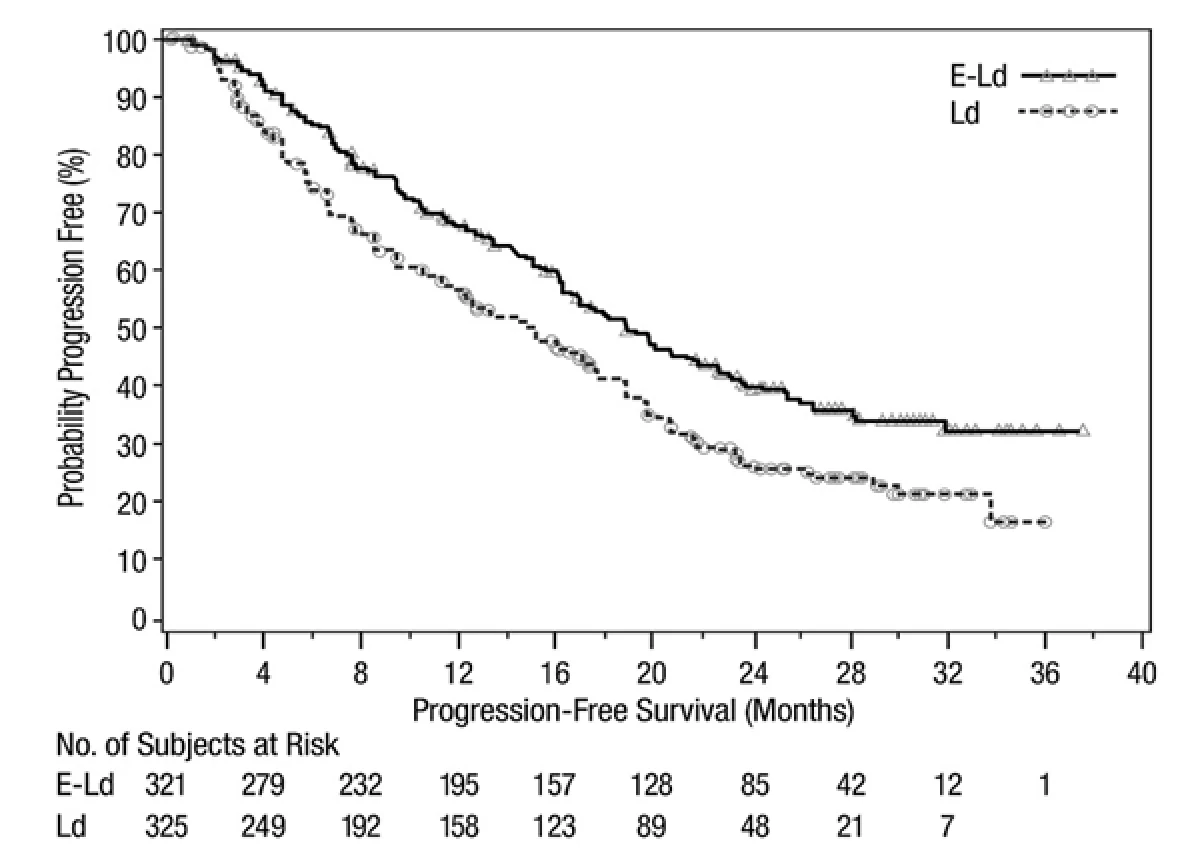
Note: E-Ld = Elotuzumab in combination with lenalidomide and dexamethasone; LD= lenalidomide and dexamethasone. HR (95% CI): 0.70 (0.57, 0.85); p-value: 0.0004
The robustness of PFS results as assessed by an Independent Review Committee (IRC), using the primary definition, was also demonstrated by the consistency of multiple supportive/sensitivity analyses. These analyses included evaluation of PFS results as assessed by IRC based on ITT definition, and evaluation of PFS results as assessed by investigators (using both the primary and ITT definition). In addition, assessments of PFS results were performed using a non-stratified Cox proportional hazards model, and also using a Cox proportional hazards model that adjusted for a number of demographic and baseline disease characteristic variables.
The 1- and 2-year rates of PFS for EMPLICITI in combination with lenalidomide and dexamethasone treatment were 68% and 39%, respectively, compared with 56% and 26%, respectively, for lenalidomide and dexamethasone treatment.
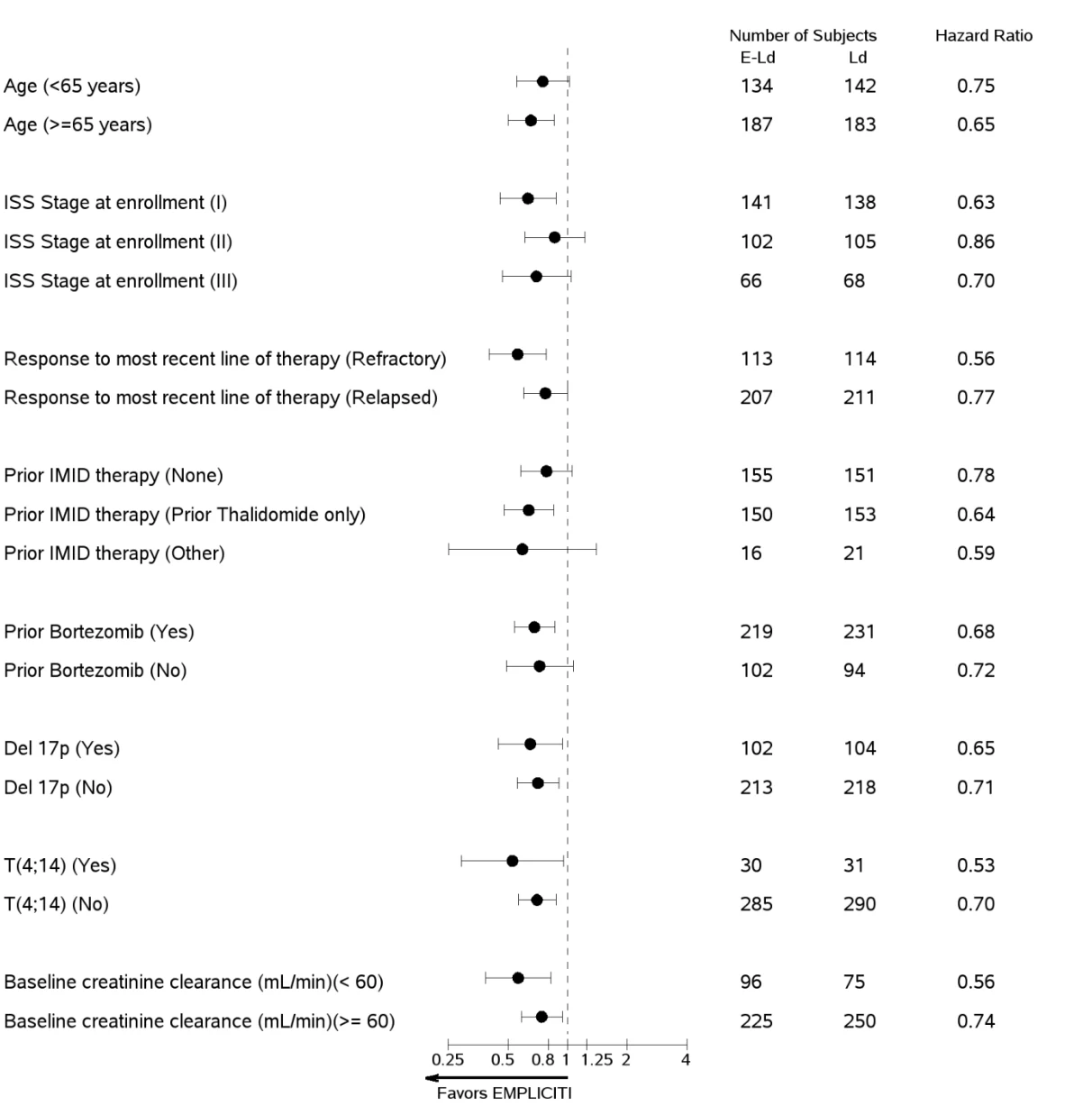
Improvements observed in PFS were consistent across subsets regardless of cytogenetic category (presence or absence of cytogenetic categories del17p or t(4;14)), age (<65 versus ≥65), ISS stage, prior immunomodulatory agent exposure, prior bortezomib exposure, relapsed or refractory status, or renal function as shown in Figure 2.
Figure 2: PFS (Primary Definition) Hazard Ratio and 95%CI in Subsets – All randomized subjects
There were fewer deaths in the EMPLICITI in combination with lenalidomide and dexamethasone study arm (94 [29%]) compared with the lenalidomide and dexamethasone study arm (116 [36%]).
DETAILED PHARMACOLOGY
Elotuzumab is a humanized IgG1 monoclonal antibody (mab) targeted against the cell surface glycoprotein Signaling Lymphocyte Activation Molecule (SLAMF7, also called CD2 subset 1 [CS1] and CD319). Elotuzumab consists of the complementarity determining regions (CDR) of the parent mouse antibody, MuLuc63, grafted onto human IgG1 heavy chain and kappa light chain framework regions.
SLAMF7 is expressed by MM cells and its expression is independent of cytogenetic abnormalities and is expressed throughout the course of disease. In bone marrow aspirates from patients with MM, elotuzumab binds SLAMF7 expressed by malignant myeloma cells. SLAMF7 expression is also restricted to subsets of leukocytes in human blood and infiltrating leukocyte populations in a number of tissues of healthy humans. Elotuzumab and MuLuc63 bind to natural killer (NK), natural killer-like T cells (NKT), and a subset of CD8+ T cells. No significant binding was detected on CD4+ T cells, resting monocytes, or on circulating CD20+HLA-DR+ B cells or granulocytes. Immunohistochemistry analysis of multiple human tissues using the parent MuLuc63 antibody showed that antibody binding is restricted to infiltrating leukocyte populations in a number of tissues. These are mainly Multiple Myeloma cells, while at a lesser extent NK cells, and with a minority of CD3 positive T cells and CD20 positive B cells. No staining was observed in the epithelia, smooth muscle cells, or vessels of any major organs and tissues. Further, elotuzumab only recognizes human SLAMF7 protein and does not bind to SLAMF7 from other species including the chimpanzee, cynomolgus or rhesus monkey, dog, mini-pig, mouse, rat, or rabbit.
Although the studies described in this section support antibody-dependent cell-mediated cytotoxicity (ADCC) of SLAMF7-expressing multiple myeloma cells as the mechanism of action of elotuzumab, it may also have a direct activating effect by engaging SLAMF7 expressed by NK cells.
Nonclinical studies reveal that elotuzumab mediates dose-dependent, ADCC of SLAMF7-expressing multiple myeloma cells. This has been demonstrated in vitro with myeloma cell lines, autologous primary myeloma cells, and myeloma cells from patients resistant or refractory to bortezomib, a small molecule proteasome inhibitor used as a standard treatment for MM. In vivo mouse studies demonstrate that elotuzumab, administered intraperitoneally (IP), inhibits tumor growth of human myeloma xenografts in mouse models in a dose-dependent fashion. The anti-tumor activity of elotuzumab in xenograft models can be enhanced by co-administration with the small molecules, bortezomib, lenalidomide, and pomalidomide, as well as with antibodies that enhance NK cell function either by antagonizing a negative regulatory molecule, KIR2DL3, or by agonizing the immune cell costimulatory molecule, CD137.
TOXICOLOGY
No carcinogenicity or mutagenicity data are available for elotuzumab in animals or humans. Fertility studies have not been performed for elotuzumab. Reproductive and developmental toxicity studies of elotuzumab were not conducted due to the lack of a relevant toxicology species.
REFERENCES
Lonial, S., et al. for the ELOQUENT-2 Investigators. Elotuzumab Therapy for Relapsed or Refractory Multiple Myeloma. NEJM., page 1-11, Published online June 2, 2015.