


Product Monograph - Vyloy
Recent Major Label Changes
| 4 Dosage and Administration, 4.3 Reconstitution | 2025-07 |
|---|---|
| 4 Dosage and Administration, 4.3 Reconstitution, 4.4 Administration | 2025-04 |
Table of Contents
Certain sections (as indicated in section 2.1. of the PM Guidance) or subsections that are not applicable at the time of the preparation of the most recent authorized product monograph are not listed.
Recent Major Label Changes .................................................................................................... 2
Table of Contents .................................................................................................................... 2
Part 1: Healthcare Professional Information ............................................................................ 4
1 Indications ........................................................................................................................ 4
1.1 Pediatrics ................................................................................................................... 4
1.2 Geriatrics ................................................................................................................... 4
2 Contraindications ............................................................................................................. 4
4 Dosage and Administration .............................................................................................. 4
4.1 Dosing Considerations ............................................................................................... 4
4.2 Recommended Dose and Dosage Adjustment .......................................................... 5
4.3 Reconstitution ........................................................................................................... 7
4.4 Administration ........................................................................................................... 8
4.5 Missed Dose .............................................................................................................. 9
5 Overdose .......................................................................................................................... 9
6 Dosage Forms, Strengths, Composition, and Packaging .................................................... 9
7 Warnings and Precautions .............................................................................................. 10
General ................................................................................................................................ 10
Gastrointestinal ................................................................................................................... 11
Reproductive Health ............................................................................................................ 12
7.1 Special Populations .................................................................................................. 12
7.1.1 Pregnancy ........................................................................................................ 12
7.1.2 Breastfeeding .................................................................................................. 12
7.1.3 Pediatrics ......................................................................................................... 12
7.1.4 Geriatrics ......................................................................................................... 12
8 Adverse Reactions .......................................................................................................... 13
8.1 Adverse Reaction Overview ..................................................................................... 13
8.2 Clinical Trial Adverse Reactions ............................................................................... 14
8.2.1 Clinical Trial Adverse Reactions - Pediatrics ..................................................... 15
8.3 Less Common Clinical Trial Adverse Reactions ........................................................ 15
8.4 Abnormal Laboratory Findings: Hematologic, Clinical Chemistry, and Other Quantitative Data ................................................................................................................ 16
9 Drug Interactions ............................................................................................................ 17
9.2 Drug Interactions Overview ..................................................................................... 17
9.4 Drug-Drug Interactions ............................................................................................ 17
9.5 Drug-Food Interactions ............................................................................................ 17
9.6 Drug-Herb Interactions ............................................................................................ 17
9.7 Drug-Laboratory Test Interactions ........................................................................... 17
10 Clinical Pharmacology..................................................................................................... 17
10.1 Mechanism of Action ............................................................................................... 17
10.2 Pharmacodynamics ................................................................................................. 17
10.3 Pharmacokinetics .................................................................................................... 18
10.4 Immunogenicity ....................................................................................................... 19
11 Storage, Stability, and Disposal ...................................................................................... 19
12 Special Handling Instructions .......................................................................................... 20
Part 2: Scientific Information ................................................................................................. 21
13 Pharmaceutical Information ........................................................................................... 21
14 Clinical Trials .................................................................................................................. 21
14.1 Clinical Trials by Indication ...................................................................................... 21
15 Microbiology .................................................................................................................. 27
16 Non-Clinical Toxicology .................................................................................................. 27
Patient Medication Information ............................................................................................ 28
Part 1: Healthcare Professional Information
1 Indications
Vyloy (zolbetuximab for injection), in combination with fluoropyrimidine- and platinum-containing chemotherapy, is indicated for the first-line treatment of adult patients with locally advanced unresectable or metastatic human epidermal growth factor receptor 2 (HER2)-negative gastric or gastroesophageal junction (GEJ) adenocarcinoma whose tumours are Claudin (CLDN) 18.2 positive as determined by a validated test (see 4.1 Dosing Considerations and 14 Clinical Trials).
1.1 Pediatrics
Pediatrics (< 18 years of age): No data are available to Health Canada; therefore, Health Canada has not authorised an indication for pediatric use (see 7.1 Special Populations).
1.2 Geriatrics
Geriatrics (≥ 65 years of age): No overall differences in safety or efficacy were observed in patients 65 years or older compared to younger patients in clinical trials (see 7.1 Special Populations).
2 Contraindications
Vyloy is contraindicated in patients who are hypersensitive to this drug or to any ingredient in the formulation, including any non-medicinal ingredient, or component of the container. For a complete listing, see 6 Dosage Forms, Strengths, Composition, and Packaging.
4 Dosage and Administration
4.1 Dosing Considerations
Patient selection
Select patients with locally advanced unresectable or metastatic HER2-negative gastric or GEJ adenocarcinoma whose tumours are CLDN18.2 positive (defined as ≥75% of tumour cells demonstrating moderate to strong membranous CLDN18 immunohistochemical staining) as determined by a validated test, for treatment with Vyloy in combination with fluoropyrimidine- and platinum-containing chemotherapy (see 14 Clinical Trials).
Prior to administration
If a patient is experiencing nausea and/or vomiting prior to administration of Vyloy, the symptoms should be resolved to Grade ≤1 before administering the first infusion.
Pretreatment
Prior to each infusion of Vyloy, premedicate patients with antiemetics (e.g., NK-1 receptor blockers and/or 5-HT3 receptor blockers or other medicinal products as indicated) for the prevention of nausea and vomiting (see 7 Warnings and Precautions).
Pre-medication with a combination of antiemetics is important for the management of nausea and vomiting to prevent early treatment discontinuation of zolbetuximab (see 7 Warnings and Precautions).
4.2 Recommended Dose and Dosage Adjustment
Recommended dose
The recommended dosage of Vyloy is presented in Table 1.
Table 1 – Recommended Vyloy dosage based on body surface area
| Single Loading Dose | Maintenance Doses | Duration of Therapy |
|---|---|---|
800 mg/m2 intravenously, Cycle 1, Day 1a Administer Vyloy in combination with fluoropyrimidine- and platinum-containing chemotherapy (see 14 Clinical Trials)b | 600 mg/m2 intravenously every 3 weeks or 400 mg/m2 intravenously every 2 weeksc Administer Vyloy in combination with fluoropyrimidine- and platinum-containing chemotherapy (see 14 Clinical Trials)b | Until disease progression or unacceptable toxicity. |
| ||
Dosage adjustment
No dose reduction for Vyloy is recommended. Adverse reactions for Vyloy are managed by infusion rate reduction, interruption of the infusion, withholding the dose and/or permanent discontinuation as presented in Table 2 (see 8 Adverse Reactions).
Table 2 – Dose modifications for Vyloy
| Adverse reaction | Severitya | Dose modification |
|---|---|---|
Hypersensitivity reactions (see 7 Warnings and Precautions and 8 Adverse Reactions) | Grade 2 | Interrupt the infusion until Grade ≤1, then resume at a reduced infusion rateb for the remaining infusion. For the next infusion, premedicate with antihistamines and administer per the infusion rates in Table 4. |
| Anaphylactic reactions, suspected anaphylaxis, Grade 3 or 4 | Immediately stop the infusion and permanently discontinue. | |
Infusion related reactions (see 7 Warnings and Precautions and 8 Adverse Reactions) | Grade 2 | Interrupt the infusion until Grade ≤1, then resume at a reduced infusion rateb for the remaining infusion. For the next infusion, premedicate with antihistamines and administer per the infusion rates in Table 4. |
| Grade 3 or 4 | Immediately stop the infusion and permanently discontinue. | |
Nausea (see 7 Warnings and Precautions and 8 Adverse Reactions) | Grade 2 or 3 | Interrupt the infusion until Grade ≤1, then resume at a reduced infusion rateb for the remaining infusion. For the next infusion, administer per the infusion rates in Table 4. |
Vomiting (see 7 Warnings and Precautions and 8 Adverse Reactions) | Grade 2 or 3 | Interrupt the infusion until Grade ≤1, then resume at a reduced infusion rateb for the remaining infusion. For the next infusion, administer per the infusion rates in Table 4. |
| Grade 4 | Permanently discontinue. |
- a. Toxicity was graded per National Cancer Institute Common Terminology Criteria for Adverse Events Version 5.0 (NCI-CTCAE v5.0) where Grade 1 is mild, Grade 2 is moderate, Grade 3 is severe, Grade 4 is life-threatening.
- b. Reduced infusion rate should be determined per physician’s clinical judgement based on patient tolerability, severity of toxicity and previously tolerated infusion rate.
When administering Vyloy in combination with fluoropyrimidine- or platinum-containing chemotherapy refer to the Product Monographs of these agents for their individual dosage modification recommendations.
Health Canada has not authorised an indication for pediatric use (see 7.1 Special Populations).
No dose adjustment is required in geriatric patients (≥ 65 years of age) (see 10.3 Pharmacokinetics).
No dose adjustment is required in patients with mild or moderate renal impairment (see 10.3 Pharmacokinetics). Vyloy has only been evaluated in a limited number of patients with severe renal impairment.
No dose adjustment is required in patients with mild hepatic impairment (see 10.3 Pharmacokinetics). Vyloy has only been evaluated in a limited number of patients with moderate hepatic impairment and has not been evaluated in patients with severe hepatic impairment.
4.3 Reconstitution
Reconstitution in single-dose vial
- 1. Follow procedures for proper handling and disposal of anticancer drugs.
- 2. Use appropriate aseptic technique for reconstitution and preparation of dosing solutions.
- 3. Calculate the recommended dose based on the patient’s body surface area to determine the number of vials needed.
- 4. Reconstitute each vial according to Table 3. Slowly add the Sterile Water For Injection (SWFI), directing the stream of SWFI along the walls of the vial and not directly onto the lyophilised powder.
Table 3 – Reconstitution
| Vial Size | Volume of diluent to be added to vial | Approximate available volume | Concentration per millilitre |
|---|---|---|---|
| 100 mg | 5.0 mL | 5.0 mL of reconstituted solution | 20 mg/mL zolbetuximab |
| 300 mg | 15.0 mL | 15.0 mL of reconstituted solution | 20 mg/mL zolbetuximab |
- 5. Slowly swirl each vial until the contents are completely dissolved. Allow the reconstituted vial(s) to settle. Visually inspect the solution until the bubbles are gone. Do not shake the vial.
- 6. Visually inspect the solution for particulate matter and discolouration. The reconstituted solution should be clear to slightly opalescent, colourless to slight yellow and free of visible particles. Discard any vial with visible particles or discolouration.
- 7. Based upon the calculated dose amount, the reconstituted solution from the vial(s) should be added to the infusion bag immediately. This product does not contain a preservative. If not used immediately, reconstituted vials may be stored at room temperature for up to 6 hours. Do not freeze. Do not expose to direct sunlight. Discard unused vials with reconstituted solution beyond the recommended storage time.
Dilution in infusion bag
- 8. Withdraw the calculated dose amount of reconstituted solution from the vial(s) and transfer into an infusion bag.
- 9. Dilute Vyloy with 0.9% Sodium Chloride Injection. The infusion bag size should allow enough diluent to achieve a final concentration of 2 mg/mL Vyloy.
The diluted dosing solution of Vyloy is compatible with intravenous infusion bags composed of polyethylene (PE), polypropylene (PP), polyvinyl chloride (PVC) with either plasticiser [Di-(2-ethylhexyl) phthalate (DEHP) or Trioctyl trimellitate (TOTM)], ethylene propylene copolymer, ethylene-vinyl acetate (EVA) copolymer, PP and styrene-ethylene-butylene-styrene copolymer, or glass (bottle for administration use), and infusion tubing composed of PE, polyurethane (PU), PVC with either plasticiser [DEHP, TOTM or Di(2-ethylhexyl) terephthalate], polybutadiene (PB), or elastomer modified PP with in-line filter membranes (pore size 0.2 μm) composed of polyethersulfone or polysulfone.
- 10. Mix diluted solution by gentle inversion. Do not shake the bag.
- 11. Visually inspect the infusion bag for any particulate matter prior to use. The diluted solution should be free of visible particles. Do not use the infusion bag if particulate matter is observed.
- 12. Discard any unused portion left in the single-dose vials.
4.4 Administration
Administer Vyloy as an intravenous infusion only. Immediately administer the infusion over a minimum of 2 hours. Do NOT administer as an IV push or bolus.
Do not co-administer other drugs through the same infusion line.
- If Vyloy and fluoropyrimidine- and platinum-containing chemotherapy are administered on the same day, Vyloy must be administered first.
No incompatibilities have been observed with closed system transfer device composed of PP, PE, stainless steel, silicone (rubber/oil/resin), polyisoprene, PVC or with plasticiser [TOTM], acrylonitrile-butadiene-styrene (ABS) copolymer, methyl methacrylate-ABS copolymer, thermoplastic elastomer, polytetrafluoroethylene, polycarbonate, polyethersulfone, acrylic copolymer, polybutylene terephthalate, PB, or EVA copolymer.
No incompatibilities have been observed with central port composed of silicone rubber, titanium alloy or PVC with plasticiser [TOTM]. In-line filters (pore size of 0.2 µm with materials listed above) are recommended to be used during administration.
If not administered immediately, the prepared infusion bag should be stored:
- under refrigeration at 2°C to 8°C for no longer than 24 hours including infusion time from the end of the preparation of the infusion bag.
- at room temperature for no longer than 12 hours including infusion time from when the prepared infusion bag is removed from the refrigerator.
Do not freeze. Do not expose to direct sunlight. Discard unused prepared infusion bags beyond the recommended storage time.
To help minimise potential adverse reactions, it is recommended that each infusion should be started at a slower rate than the initially calculated rate for the entire infusion, and gradually increased as tolerated during the course of the infusion (see Table 4).
If the infusion time exceeds the recommended storage time at room temperature (12 hours from end of preparation of infusion solution), the infusion bag must be discarded and a new infusion bag prepared to continue the infusion.
Table 4 – Infusion Rates Recommended for Each Vyloy Infusion
| Vyloy Dose | Infusion Ratec | ||
|---|---|---|---|
| First 30-60 minutesb,c | Remaining infusion timeb,c | ||
Single Loading Dose (Cycle 1, Day 1)a | 800 mg/m2 | 75 mg/m2/hr | 150-300 mg/m2/hr |
| Subsequent Doses | 600 mg/m2 every 3 weeks | 75 mg/m2/hr | 150-300 mg/m2/hr |
| or | or | or | |
| 400 mg/m2 every 2 weeks | 50 mg/m2/hr | 100-200 mg/m2/hr | |
| |||
For instructions on reconstitution and dilution of the medicinal product before administration, see 4.3 Reconstitution.
4.5 Missed Dose
If a planned dose of Vyloy is missed, it should be administered as soon as possible. The schedule of administration should be adjusted to maintain the prescribed dosing interval.
5 Overdose
In case of overdose, the patient should be closely monitored for adverse reactions, and supportive treatment should be administered, as appropriate.
For the most recent information in the management of a suspected drug overdose, contact your regional poison control centre or Health Canada’s toll-free number, 1-844 POISON-X (1-844-764-7669).
6 Dosage Forms, Strengths, Composition, and Packaging
To help ensure the traceability of biologic products, health professionals should record both the brand name and the non-proprietary (active ingredient) name as well as other product-specific identifiers such as the Drug Identification Number (DIN) and the batch/lot number of the product supplied.
Table 5 – Dosage forms, strengths, composition and packaging
| Route of Administration | Dosage Form / Strength/Composition | Non-medicinal Ingredients |
|---|---|---|
| Intravenous infusion | Powder for concentrate for solution for infusion / 20 mg per mL | Arginine, Phosphoric acid, polysorbate 80, sucrose |
Vyloy is supplied as single-dose vials containing sterile, preservative-free, white to off-white lyophilised powder for reconstitution for intravenous infusion.
7 Warnings and Precautions
General
Treatment with Vyloy should be initiated and supervised by a physician experienced in the use of anti cancer therapies.
The pooled safety population described in the WARNINGS AND PRECAUTIONS reflect exposure to Vyloy in 533 patients at an 800 mg/m2 initial dose followed by subsequent doses of 600 mg/m2 every 3 weeks in combination with fluoropyrimidine- and platinum-containing chemotherapy in the SPOTLIGHT (279 patients) and GLOW (254 patients) studies.
Driving and operating machinery
Zolbetuximab has no or negligible influence on the ability to drive and use machines.
Immune
Hypersensitivity reactions
Hypersensitivity reactions, including serious anaphylactic reactions, have been reported in patients treated with Vyloy in combination with mFOLFOX6/CAPOX during clinical studies (see 8 Adverse Reactions).
Any grade hypersensitivity reactions, including anaphylactic reactions, occurring with Vyloy in combination with mFOLFOX6 or CAPOX was 35.8%. Severe (Grade 3 or 4) hypersensitivity reactions, including anaphylactic reactions, occurred in 4.5% of patients. Ten patients (1.9%) permanently discontinued Vyloy for hypersensitivity reactions, including two patients (0.4%) who permanently discontinued Vyloy due to anaphylactic reactions. Twenty-five (4.7%) patients required dose interruption, and three patients (0.6%) required infusion rate reduction due to hypersensitivity reactions.
Monitor patients during infusion with Vyloy and for at least 2 hours after infusion or longer if clinically indicated for hypersensitivity reactions and for symptoms and signs that are highly suggestive of anaphylaxis (urticaria, repetitive cough, wheeze and throat tightness/change in voice).
If an anaphylactic reaction occurs, administration of Vyloy should be immediately and permanently discontinued and appropriate medical therapy administered.
For any Grade 3 or 4 hypersensitivity reaction or hypersensitivity reaction with features of anaphylaxis, administration of Vyloy should be immediately and permanently discontinued and appropriate medical therapy instituted based on the type of reaction.
For any Grade 2 hypersensitivity reaction, interrupt the Vyloy infusion until Grade ≤1, then resume the infusion at a reduced infusion rate for the remaining infusion. Pre-medicate the patient with antihistamines for subsequent infusions, administer per the infusion rates in Table 4, and closely monitor the patient for symptoms and signs of a hypersensitivity reaction. The infusion rate may be gradually increased as tolerated (see 4.2 Recommended Dose and Dosage Adjustment).
Infusion-related reactions
Infusion-related reactions (IRRs), including serious infusion-related reactions, have occurred during clinical studies with Vyloy in combination with mFOLFOX6/CAPOX (see 8 Adverse Reactions).
All grade IRRs occurred in 3.2% in patients administered Vyloy in combination with mFOLFOX6 or CAPOX. Severe (Grade 3) IRRs occurred in 2 (0.4%) patients who received Vyloy. An IRR led to permanent discontinuation of Vyloy in 2 (0.4%) patients and dose interruption in 7 (1.3%) patients. The infusion rate was reduced for Vyloy for 2 (0.4%) patients due to an IRR.
Monitor patients for signs and symptoms of infusion-related reactions including nausea, vomiting, abdominal pain, salivary hypersecretion, pyrexia, chest discomfort, chills, back pain, cough and hypertension.
For Grade 3 or 4 IRRs, administration of Vyloy should be immediately and permanently discontinued and appropriate medical therapy instituted. For Grade 2 IRRs, interrupt the Vyloy infusion until Grade ≤1, then resume the infusion at a reduced infusion rate for the remaining infusion. Pre-medicate the patient with antihistamines for subsequent infusions, administer per the infusion rates in Table 4, and closely monitor the patient for symptoms and signs of an IRR. The infusion rate may be gradually increased as tolerated (see 4.2 Recommended Dose and Dosage Adjustment).
Gastrointestinal
Nausea and Vomiting
Vyloy is emetogenic. Prior to treatment with zolbetuximab in combination with fluoropyrimidine- and platinum-containing chemotherapy, prescribers should evaluate the individual patient’s risk of gastrointestinal toxicities. It is important to proactively manage nausea and vomiting to mitigate the potential risk of reduced exposure to zolbetuximab and/or chemotherapy (see 4.1 Dosing Considerations and 8 Adverse Reactions).
Nausea and vomiting occurred more often during the first cycle of treatment but decreased in incidence with subsequent cycles of treatment.
All grade nausea and vomiting occurred in 75.8% and 66.8% respectively of patients treated with Vyloy in combination with mFOLFOX6 or CAPOX, respectively. Severe (Grade 3) nausea and vomiting occurred in 12.6% and 14.3% of patients treated with Vyloy in combination with mFOLFOX6 or CAPOX, respectively.
Nausea led to permanent discontinuation of Vyloy in combination with mFOLFOX6 or CAPOX in 18 (3.4%) patients and dose interruption in 147 (27.6%) patients. Vomiting led to permanent discontinuation of Vyloy in combination with mFOLFOX6 or CAPOX in 20 (3.8%) patients and dose interruption in 150 (28.1%) patients.
The infusion rate was reduced for Vyloy for 56 (10.5%) patients due to nausea and for 47 (8.8%) due to vomiting.
To prevent nausea and vomiting, pretreatment with antiemetics is recommended prior to each infusion of Vyloy (see 4.2 Recommended Dose and Dosage Adjustment).
During and after infusion, patients should be monitored and managed using standard of care, including antiemetics or fluid replacement, as clinically indicated.
For Grade 4 vomiting, permanently discontinue treatment with Vyloy. For Grade 2 or 3 nausea or vomiting, interrupt the Vyloy infusion until Grade ≤1, then resume at a reduced infusion rate for the remaining infusion. For the next infusion, administer per the infusion rates in Table 4, and closely monitor the patient for symptoms and signs of nausea or vomiting. The infusion rate may be gradually increased as tolerated (see 4.2 Recommended Dose and Dosage Adjustment).
Reproductive Health
There are no data on the use of Vyloy in pregnant women (see 7.1.1 Pregnancy).
Fertility
There are no data on the effect of Vyloy on human fertility. Effects of zolbetuximab on male and female fertility have not been evaluated in animal studies.
7.1 Special Populations
7.1.1 Pregnancy
There are no data on the use of Vyloy in pregnant women. Vyloy should not be given to a pregnant woman, unless the benefit outweighs the potential risk. No adverse effects were observed in an animal reproductive and developmental study with intravenous administration of zolbetuximab to pregnant mice during organogenesis. Based on AUC, the doses administered in this study were approximately 1.8 times higher than human exposure at the recommended therapeutic dose of 600 mg/m2 (see 16 Non-Clinical Toxicology).
7.1.2 Breastfeeding
There are no data on the presence of zolbetuximab in human milk, the effects on the breastfed child, or the effects on milk production. Because many drugs, including antibodies, are excreted in human milk and because of the potential for serious adverse reactions in a breastfed child, breastfeeding is not recommended during treatment with Vyloy and for 8 months after the last dose.
7.1.3 Pediatrics
Pediatrics (<18 years of age): No data are available to Health Canada; therefore, Health Canada has not authorized an indication for pediatric use.
7.1.4 Geriatrics
Geriatrics (≥65 years of age): Of the 1072 patients randomised in the Phase 3 clinical trials, 387 were aged 65 years or older. No overall differences in safety or efficacy were observed between these patients and younger patients (see 8 Adverse Reactions). Data for patients aged 75 years and older who received Vyloy are limited.
8 Adverse Reactions
8.1 Adverse Reaction Overview
The following adverse reactions observed with Vyloy when used in combination with fluoropyrimidine- and platinum-containing chemotherapy (mFOLFOX6 or CAPOX) are discussed in the WARNINGS AND PRECAUTIONS section (7 Warnings and Precautions):
- Hypersensitivity Reactions (7 Warnings and Precautions, Immune)
- Infusion-Related Reactions (7 Warnings and Precautions, Immune)
- Nausea and Vomiting (7 Warnings and Precautions, Gastrointestinal)
The safety of Vyloy was evaluated in 533 patients who received at least one dose of zolbetuximab 800 mg/m2 as a loading dose followed by 600 mg/m2 subsequent doses every 3 weeks in combination with fluoropyrimidine and platinum-containing chemotherapy (mFOLFOX6 or CAPOX) in the phase 3 studies SPOTLIGHT (N = 279) and GLOW (N = 254). The median duration of exposure to zolbetuximab in the pooled safety population was 171 days (range: 1 to 1246 days).
In this pooled safety population (N = 533), the most common (>20%) adverse events were nausea, vomiting, decreased appetite, anemia, diarrhea, neutrophil count decreased, peripheral sensory neuropathy, neutropenia, constipation, aspartate aminotransferase increased, fatigue, abdominal pain and asthenia. The most common grade 3-4 laboratory abnormalities (≥2%) in the pooled safety population were hemoglobin decreased, leukocytes decreased, lymphocytes decreased, neutrophils decreased, platelets decreased, alanine aminotransferase increased, alkaline phosphatase increased, aspartate aminotransferase increased, bilirubin increased, glucose increased, phosphate decreased, potassium decreased, potassium increased, sodium decreased and albumin decreased.
Serious adverse reactions in the pooled safety population occurred in 46% of patients treated with Vyloy. The most common serious adverse reactions (≥2%) were vomiting (7.1%), nausea (5.6%), malignant neoplasm progression (3.6%), diarrhea (2.8%), pyrexia (2.3%), pneumonia (2.3%), decreased appetite (2.1%), and hypokalemia (2.1%).
In the pooled safety population, fatal adverse events occurred in 9.2% of patients who received Vyloy in combination with mFOLFOX6 or CAPOX. Events that occurred in more than one patient are malignant neoplasm progression (3.0%), respiratory failure (includes acute respiratory failure and acute respiratory distress syndrome) (0.8%), upper gastrointestinal hemorrhage (0.6%), death (0.6%), septic shock (0.6%), pneumonia (0.6%), sepsis (0.4%), disseminated intravascular coagulation (0.4%) and cerebral hemorrhage (0.4%).
Twenty percent of patients who received Vyloy in combination with mFOLFOX6 or CAPOX permanently discontinued Vyloy for adverse reactions. The most common adverse reactions (≥2%) leading to dose discontinuation were vomiting (3.8%) and nausea (3.4%).
In the SPOTLIGHT study, 74.6% of patients experienced dose interruption of Vyloy for adverse reactions. The most common adverse reactions (≥2%) leading to dose interruption of Vyloy were nausea (36.9%), vomiting (31.5%), neutropenia (15.1%), neutrophil count decreased (8.6%), hypertension (5.7%), abdominal pain (5.4%), abdominal pain upper (5.0%), asthenia (3.6%), fatigue (3.2%), chills (2.9%), anemia (2.5%), headache (2.5%), diarrhea (2.2%), dyspepsia (2.2%) and pyrexia (2.2%). In the GLOW study, 55.1% of patients experienced dose interruption of Vyloy for adverse reactions. The most common adverse reactions (≥2%) leading to dose interruption of Vyloy were vomiting (24.4%), nausea
(17.3%), neutropenia (7.1%), neutrophil count decreased (3.5%), platelet count decreased (3.5%), abdominal pain (3.1%), thrombocytopenia (2.8%), anemia (2.4%), chills (2.0%), infusion related reaction (2.0%) and pyrexia (2.0%).
Adverse reactions leading to infusion rate reduction of Vyloy occurred in 16.9% of patients. The most common adverse reactions (≥2%) leading to infusion rate reduction of Vyloy or mFOLFOX6/CAPOX infusion were nausea (10.7%) and vomiting (8.8%).
8.2 Clinical Trial Adverse Reactions
Clinical trials are conducted under very specific conditions. The adverse reaction rates observed in the clinical trials; therefore, may not reflect the rates observed in practice and should not be compared to the rates in the clinical trials of another drug. Adverse reaction information from clinical trials may be useful for identifying and approximating rates of adverse drug reactions in real-world use.
Tables 6 and 7 summarise the most common (≥10% and a difference of ≥2% compared to the placebo arm) adverse events observed in patients treated with Vyloy in the SPOTLIGHT and GLOW trials.
Table 6 – Treatment emergent adverse events reported in ≥10% of patients treated with Vyloy in SPOTLIGHT and a difference of ≥2% compared to the placebo arm
| System Organ Class | Preferred Term | Vyloy with mFOLFOX6a n=279 | Placebo with mFOLFOX6a n=278 | ||||||||||||||
|---|---|---|---|---|---|---|---|---|---|---|---|---|---|---|---|---|---|
| Any Grade | Grade ≥3 | Any Grade | Grade ≥3 | ||||||||||||||
| n (%) | n (%) | n (%) | n (%) | ||||||||||||||
| Gastrointestinal disorders | Nausea | 230 (82) | 45 (16) | 169 (61) | 18 (7) | ||||||||||||
| Vomiting | 188 (67) | 45 (16) | 99 (36) | 16 (6) | |||||||||||||
| General disorders and administration site conditions | Asthenia | 74 (27) | 20 (7) | 64 (23) | 7 (3) | ||||||||||||
| Pyrexia | 54 (19) | 1 (0.4) | 48 (17) | 1 (0.4) | |||||||||||||
| Edema peripheralb | 53 (19) | 2 (0.7) | 28 (10) | 0 | |||||||||||||
| Metabolism and nutrition disorders | Decreased appetite | 131 (47) | 16 (6) | 93 (33) | 9 (3) | ||||||||||||
| Hypokalemia | 50 (18) | 16 (6) | 41 (15) | 10 (4) | |||||||||||||
| Hypoalbuminemia | 43 (15) | 11 (4) | 17 (6) | 2 (1) | |||||||||||||
| Hypocalcemia | 30 (11) | 6 (2) | 9 (3) | 0 | |||||||||||||
| Nervous system disorders | Dizziness | 36 (13) | 0 | 27 (10) | 1 (0.4) | ||||||||||||
| Vascular disorders | Hypertension | 31 (11) | 15 (5) | 22 (8) | 10 (4) | ||||||||||||
- a. mFOLFOX6 administered on Days 1, 15 and 29 of a 42-day cycle: oxaliplatin 85 mg/m2, folinic acid (leucovorin or local equivalent) 400 mg/m2, fluorouracil 400 mg/m2 given as a bolus and fluorouracil 2400 mg/m2 given as a continuous infusion.
- b. Combined terms: Edema peripheral; Peripheral swelling
Table 7 – Treatment emergent adverse events reported in ≥10% of patients treated with Vyloy in GLOW and a difference of ≥2% compared to the placebo arm
| System Organ Class | Preferred Term | Vyloy with CAPOXa n=254 | Placebo with CAPOXa n=249 | ||||||||||||||
|---|---|---|---|---|---|---|---|---|---|---|---|---|---|---|---|---|---|
| Any Grade | Grade ≥3 | Any Grade | Grade ≥3 | ||||||||||||||
| n (%) | n (%) | n (%) | n (%) | ||||||||||||||
| Blood and lymphatic system disorders | Neutropeniab | 118 (47) | 44 (17) | 92 (37) | 31 (12) | ||||||||||||
| Gastrointestinal disorders | Nausea | 174 (69) | 22 (9) | 125 (50) | 6 (2) | ||||||||||||
| Vomiting | 168 (66) | 31 (12) | 77 (31) | 9 (4) | |||||||||||||
| General disorders and administration site conditions | Pyrexia | 34 (13) | 1 (0.4) | 23 (9) | 0 | ||||||||||||
| Malaise | 31 (12) | 1 (0.4) | 22 (9) | 0 | |||||||||||||
| Edema peripheralc | 27 (11) | 2 (0.8) | 6 (2) | 0 | |||||||||||||
| Investigations | White blood cell count decreased | 51 (20) | 5 (2) | 39 (16) | 9 (4) | ||||||||||||
| Weight decreased | 50 (20) | 1 (0.4) | 25 (10) | 1 (0.4) | |||||||||||||
| Metabolism and nutrition disorders | Decreased appetite | 105 (41) | 17 (7) | 84 (34) | 4 (2) | ||||||||||||
| Hypoalbuminemia | 57 (22) | 8 (3) | 35 (14) | 4 (2) | |||||||||||||
| Psychiatric disorders | Insomnia | 27 (11) | 0 | 16 (6) | 0 | ||||||||||||
- a. CAPOX administered on Day 1 (oxaliplatin 130 mg/m2) and on Days 1 to 14 (capecitabine 1000 mg/m2) of a 21-day cycle.
- b. Combined terms: Neutropenia; Neutrophil count decreased
- c. Combined terms: Edema peripheral; Peripheral swelling
8.2.1 Clinical Trial Adverse Reactions - Pediatrics
Pediatrics (<18 years of age): No data are available to Health Canada; therefore, Health Canada has not authorized an indication for pediatric use.
8.3 Less Common Clinical Trial Adverse Reactions
Less common adverse reactions that occurred in <10% of patients by preferred term in the SPOTLIGHT study:
Blood and lymphatic system disorders: Febrile neutropenia
Cardiac disorders: Tachycardia
Gastrointestinal disorders: Salivary hypersecretion, dyspepsia
General disorders and administration site conditions: Malaise, chills
Immune system disorders: Drug hypersensitivity Infections and infestations: Urinary tract infection
Injury, poisoning and procedural complications: Infusion related reaction
Metabolism and nutrition disorders: Hyperkalemia
Respiratory, thoracic and mediastinal disorders Productive cough
Less common adverse reactions that occurred in <10% of patients by preferred term in the GLOW study:
Blood and lymphatic system disorders: Leukopenia
Gastrointestinal disorders: Abdominal pain upper, salivary hypersecretion
General disorders and administrative site conditions: Chills
Immune system disorders: Anaphylactic reaction, drug hypersensitivity
Injury, poisoning and procedural complications: Infusion related reaction
Nervous system disorders: Dysgeusia
Vascular disorders: Hypertension, hypotension, deep vein thrombosis, non-cardiac chest pain
8.4 Abnormal Laboratory Findings: Hematologic, Clinical Chemistry, and Other Quantitative Data
Table 8 – New or Worsening Laboratory Abnormalities (≥10% in Vyloy Arm and a difference of ≥2% compared to the placebo arm) in the SPOTLIGHT Study
| Laboratory Abnormality | Vyloy with mFOLFOX6 N=279 | Placebo with mFOLFOX6 N=278 | ||||||||||||
|---|---|---|---|---|---|---|---|---|---|---|---|---|---|---|
Any Grade n (%) | Grade 3/4 n (%) | Any Grade n (%) | Grade 3/4 n (%) | |||||||||||
| Albumin decreased | 210 (78) | 12 (4) | 128 (47) | 3 (1) | ||||||||||
| Lymphocytes decreased | 162 (60) | 42 (16) | 157 (58) | 36 (13) | ||||||||||
| Glucose decreased | 123 (45) | 1 (0.4) | 95 (35) | 1 (0.4) | ||||||||||
| Sodium decreased | 79 (29) | 14 (5) | 58 (21) | 8 (3) | ||||||||||
| Potassium decreased | 76 (28) | 31 (11) | 58 (21) | 17 (6) | ||||||||||
| Magnesium decreased | 62 (23) | 0 | 51 (19) | 0 | ||||||||||
| Magnesium increased | 27 (10) | 1 (0.4) | 15 (6) | 3 (1) | ||||||||||
Table 9 – New or Worsening Laboratory Abnormalities (≥10% in Vyloy Arm and a difference of ≥2% compared to the placebo arm) in the GLOW Study
| Laboratory Abnormality | Vyloy with CAPOX N=254 | Placebo with CAPOX N=249 | ||||||||||||||
|---|---|---|---|---|---|---|---|---|---|---|---|---|---|---|---|---|
Any Grade n (%) | Grade 3/4 n (%) | Any Grade n (%) | Grade 3/4 n (%) | |||||||||||||
| Neutrophils decreased | 180 (76) | 49 (21) | 166 (70) | 33 (14) | ||||||||||||
| Leukocytes decreased | 156 (66) | 14 (6) | 141 (60) | 18 (8) | ||||||||||||
| Albumin decreased | 156 (66) | 9 (4) | 112 (47) | 4 (2) | ||||||||||||
| Aspartate aminotransferase increased | 143 (60) | 9 (4) | 138 (58) | 11 (5) | ||||||||||||
| Glucose decreased | 57 (24) | 0 | 43 (18) | 0 | ||||||||||||
| Sodium increased | 17 (7) | 1 (0.4%) | 12 (5) | 2 (1) | ||||||||||||
9 Drug Interactions
9.2 Drug Interactions Overview
Zolbetuximab is not a cytokine modulator and there are no known effects of its mechanism of action on cytochrome P450 or drug transporters; therefore, no in vitro or in vivo drug-drug interaction studies or transporter studies have been conducted.
9.4 Drug-Drug Interactions
Based on a phase 2 study, coadministration of zolbetuximab with mFOLFOX6 did not show a clinically meaningful change in drug exposure of zolbetuximab, oxaliplatin, or 5-fluorouracil (5-FU). Therefore, no dose adjustment is required for zolbetuximab and mFOLFOX6 when used in combination. This finding is also expected to be applicable to CAPOX, which contains oxaliplatin and capecitabine (a prodrug of 5-FU), therefore no dose adjustment is required for zolbetuximab and CAPOX when used in combination.
9.5 Drug-Food Interactions
Not applicable as Vyloy is administered by IV infusion.
9.6 Drug-Herb Interactions
Interactions with herbal products have not been established.
9.7 Drug-Laboratory Test Interactions
Interactions with laboratory tests have not been established.
10 Clinical Pharmacology
10.1 Mechanism of Action
Zolbetuximab is a chimeric (mouse/human IgG1) monoclonal antibody directed against the tight junction molecule CLDN18.2. Nonclinical data suggest zolbetuximab binds selectively to cell lines transfected with CLDN18.2 or those that endogenously express CLDN18.2. Zolbetuximab depletes CLDN18.2-positive cells via antibody-dependent cellular cytotoxicity (ADCC) and complement-dependent cytotoxicity (CDC). Cytotoxic drugs were shown to increase CLDN18.2 expression on human cancer cells and to improve zolbetuximab-induced ADCC and CDC activities. A combination of zolbetuximab with chemotherapy showed a more potent antitumour effect in CLDN18.2-expressing mouse tumour models compared to zolbetuximab or chemotherapy alone.
10.2 Pharmacodynamics
Exposure-Response Analyses
The exposure-response relationships for efficacy and safety at the recommended dosages of zolbetuximab in patients with locally advanced unresectable or metastatic HER2-negative gastric or gastroesophageal junction adenocarcinoma whose tumours are CLDN18.2 positive have not been fully characterized.
10.3 Pharmacokinetics
A population analysis that included 714 patients described zolbetuximab pharmacokinetics with a two-compartment disposition model with linear and time dependent clearance components. Following intravenous administration, zolbetuximab exhibited dose-proportional pharmacokinetics at doses ranging from 33 mg/m2 to 1000 mg/m2. When administered at 800/600 mg/m2 every 3 weeks, steady state was achieved by 24 weeks and at 800/400 mg/m2 every 2 weeks, steady state is expected to be achieved by 22 weeks. The pharmacokinetics of zolbetuximab in Gastric or GEJ adenocarcinoma patients for the recommended dosages is described below.
Table 10 – Summary of Zolbetuximab Pharmacokinetic Parameters at Steady State a
| Parametersb | Cavg (µg/mL) | Cmax (µg/mL) | Ctrough (µg/mL) | AUCtau (µg·day/ mL) | Clearan ce (L/day) | Volume of distribution (L) | T1/2 (day) | ||
|---|---|---|---|---|---|---|---|---|---|
| Steady state 800/600 mg /m2 every 3 weeks | 152 (29.9%) | 446 (17.9%) | 104 (45.1%) | 3974 (27.7%) | 0.00995 (30.9%) | 5.48 (17.4%) | 17.3 (9.0 – 45.4) | ||
| Steady state 800/400 mg /m2 every 2 weeks | 154 (29.9%) | 353 (18.7%) | 124 (39.8%) | 2658 (27.6%) | |||||
- a. Except for the average concentration (Cavg), which is from time zero to 30 weeks.
- b. Parameters are reported as geometric mean (CV%) based on population pharmacokinetic analysis. Terminal elimination half-life (T1/2) is reported as median (min, max).
AUCtau: area under the concentration time curve from the last dose to the next dose; Cavg: average concentration; Cmax: maximum concentration; Ctrough: trough concentration; T1/2: terminal elimination half-life.
Absorption
Vyloy is administered as an IV infusion and is therefore immediately and completely bioavailable. Tmax is considered the same as infusion time.
Distribution
The estimated geometric mean (CV%) of the steady state volume of distribution of zolbetuximab was 5.48 L (17.4%).
Metabolism
Zolbetuximab is expected to be catabolised into small peptides and amino acids.
Elimination
The estimated geometric mean (CV%) of steady state clearance (CL) of zolbetuximab was 0.00995 L/day (30.9%) and median t1/2 (min, max) was 17.3 days (9.0 – 45.4).
Special populations and conditions
- Pediatrics: Pharmacokinetics of zolbetuximab have not been evaluated in children and adolescents <18 years of age. Health Canada has not authorized an indication for pediatric use.
- Geriatrics: Population pharmacokinetic analysis indicates that age [range: 22 to 83 years; 32.2% (230/714) were >65 years, 5.0% (36/714) were >75 years] did not have a clinically meaningful effect on the pharmacokinetics of zolbetuximab.
- Sex: Based on the population pharmacokinetic analysis, no clinically significant differences in the pharmacokinetics of zolbetuximab were identified based on gender (62.3% male, 37.7% female).
- Ethnic Origin: Based on the population pharmacokinetic analysis, no clinically significant differences in the pharmacokinetics of zolbetuximab were identified based on race (50.1% White, 42.2% Asian, 4.2% Missing, 2.7% Others, and 0.8% Black).
- Hepatic Insufficiency: Based on the population pharmacokinetic analysis using data from clinical studies in patients with gastric or GEJ adenocarcinomas, no clinically significant differences in the pharmacokinetics of zolbetuximab were identified in patients with mild hepatic impairment as measured by total bilirubin (TB) and aspartate aminotransferase (AST) (TB ≤ upper limit of normal (ULN) and AST > ULN, or TB > 1 to 1.5 x ULN and any AST; n=108). Zolbetuximab has only been evaluated in a limited number of patients with moderate hepatic impairment (TB > 1.5 to 3 x ULN and any AST; n=4) and has not been evaluated in patients with severe hepatic impairment (TB > 3 to 10 x ULN and any AST). The effect of moderate or severe hepatic impairment on the pharmacokinetics of zolbetuximab is unknown.
- Renal Insufficiency: Based on the population pharmacokinetic analysis using data from clinical studies in patients with gastric or GEJ adenocarcinomas, no clinically significant differences in the pharmacokinetics of zolbetuximab were identified in patients with mild [creatinine clearance (CrCL) ≥60 to <90 mL/min; n=298] to moderate (CrCL ≥30 to <60 mL/min; n=109) renal impairment based on CrCL estimated by the Cockcroft-Gault (C-G) formula. Zolbetuximab has only been evaluated in a limited number of patients with severe renal impairment (CrCL ≥15 to <30 mL/min; n=1). The effect of severe renal impairment on the pharmacokinetics of zolbetuximab is unknown.
10.4 Immunogenicity
There is insufficient information to characterize the anti-drug antibody response to zolbetuximab and the effects of anti-drug antibodies on pharmacokinetics, pharmacodynamics, safety or efficacy of zolbetuximab products.
11 Storage, Stability, and Disposal
Store under refrigeration (2°C to 8°C).
Do not freeze.
Store in the original package in order to protect from light.
12 Special Handling Instructions
Vyloy is an antineoplastic product. Follow local handling and disposal procedures.
Part 2: Scientific Information
13 Pharmaceutical Information
Drug substance
Common name: Zolbetuximab
Chemical name: Mouse/human Immunoglobulin IgG1, constant regions of human allelotypes G1m(3) and Km(3), κ-chain antibody
Molecular formula: C6522H10036N1720O2054S44
Molecular mass: 146,815 Da
Physicochemical characteristics: Zolbetuximab is a chimeric (mouse/human) antibody composed of variable regions derived from mouse anti-human claudin-18 isoform 2 monoclonal antibody and constant regions derived from human IgG1.
14 Clinical Trials
14.1 Clinical Trials by Indication
Gastric or GEJ adenocarcinoma
SPOTLIGHT (8951-CL-0301)
The efficacy of Vyloy in combination with mFOLFOX6 was evaluated in the SPOTLIGHT trial, a double-blind, randomised, multicenter study that enrolled 565 patients whose tumours were CLDN18.2 positive, HER2-negative, with locally advanced unresectable or metastatic gastric or GEJ adenocarcinoma. CLDN18.2 positivity (defined as ≥75% of tumour cells demonstrating moderate to strong membranous CLDN18 staining) was determined by immunohistochemistry on gastric or GEJ tumour tissue specimens from all patients with the VENTANA CLDN18 (43-14A) RxDx Assay performed in a central laboratory.
Patients were excluded from the study if they had a complete or partial gastric outlet syndrome, positive test for human immunodeficiency virus (HIV) infection or known active hepatitis B or C infection, significant cardiovascular disease (e.g., Congestive heart failure per New York Heart Association Class III or IV, history of significant ventricular arrhythmias, QTc interval >450 msec for males; >470 msec for females) or history of central nervous system metastases.
Patients were randomised 1:1 to receive Vyloy in combination with mFOLFOX6 (n=283) or placebo in combination with mFOLFOX6 (n=282). Vyloy was administered intravenously at a loading dose of 800 mg/m2 (Day 1 of cycle 1) followed by a subsequent dose of 600 mg/m2 every 3 weeks in combination with up to 12 treatments (4 cycles) of mFOLFOX6 (oxaliplatin 85 mg/m2, folinic acid (leucovorin or local equivalent) 400 mg/m2, fluorouracil 400 mg/m2 given as a bolus and fluorouracil 2400 mg/m2 given as a continuous infusion) administered on Days 1, 15 and 29 of a 42-day cycle. After 12 treatments, patients were allowed to continue treatment with Vyloy, 5-fluorouracil and folinic acid (leucovorin or local equivalent) at the discretion of the investigator, until progression of disease or unacceptable toxicity.
Treatment with Vyloy continued until RECIST v1.1-defined progression of disease as determined by an independent review committee (IRC) or a subsequent anticancer treatment was initiated. Tumour assessments were performed every 9 weeks up to and including week 54, then every 12 weeks thereafter.
The primary efficacy outcome was Progression Free Survival (PFS) as assessed per RECIST v1.1 by IRC. The key secondary efficacy outcome was Overall Survival (OS). Other secondary efficacy outcomes were Objective Response Rate (ORR) and Duration of Response (DOR) as assessed per RECIST v1.1 by IRC.
The median age was 61 years (range: 20 to 86); 62% were male; 53% were Caucasian, 38% were Asian. Patients had a baseline Eastern Cooperative Oncology Group (ECOG) performance status of 0 (43%) or 1 (57%). The median time from diagnosis was 56 days (range: 2 to 5366); 36% of tumour types were diffuse, 24% were intestinal; 76% had gastric adenocarcinoma, 24% had GEJ adenocarcinoma; 16% had locally advanced disease, 84% had metastatic disease and 30% had prior gastrectomy. Subsequent anticancer therapy was received by 48% of patients in the Vyloy in combination with mFOLFOX6 arm and 53% in the placebo in combination with mFOLFOX6 arm.
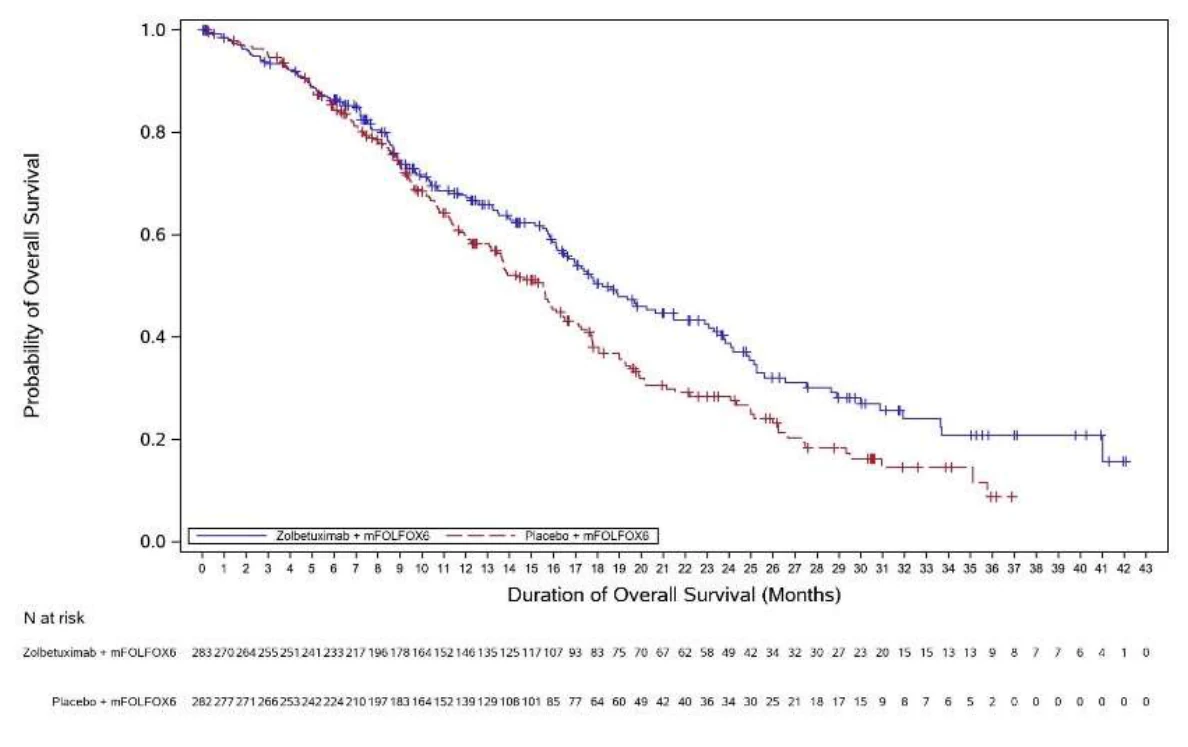
Vyloy in combination with mFOLFOX6 demonstrated a statistically significant improvement in PFS and OS compared with placebo in combination with mFOLFOX6.
Table 11, Figures 1 and 2 summarise the efficacy results for the SPOTLIGHT study.
Table 11 – Efficacy Results in SPOTLIGHT
| Endpoint | Vyloy with mFOLFOX6 n=283 | Placebo with mFOLFOX6 n=282 | |||||
|---|---|---|---|---|---|---|---|
| Progression Free Survival | |||||||
| Number (%) of patients with events | 146 (51.6) | 167 (59.2) | |||||
| Median in months (95% CI)1 | 10.6 (8.9, 12.5) | 8.7 (8.2, 10.3) | |||||
| Hazard ratio (95% CI) 2,3 | 0.751 (0.598, 0.942) | ||||||
| p-value2,4 | 0.0066 | ||||||
| Overall survival | |||||||
| Number (%) of patients with events | 149 (52.7) | 177 (62.8) | |||||
| Median in months (95% CI)1 | 18.2 (16.4, 22.9) | 15.5 (13.5, 16.5) | |||||
| Hazard ratio (95% CI)2,3 | 0.750 (0.601, 0.936) | ||||||
| p-value2,5 | 0.0053 | ||||||
- 1. Based on Kaplan-Meier estimate.
- 2. Stratification factors were region, number of metastatic sites and prior gastrectomy from IRT.
- 3. Based on Cox proportional hazards model with treatment, region, number of organs with metastatic sites and prior gastrectomy as the explanatory variables.
- 4. Based on one-sided log-rank test at final analysis.
- 5. Based on one-sided log-rank test at interim analysis.
Figure 1. Kaplan Meier plot of progression-free survival at the first interim (final) analysis, SPOTLIGHT
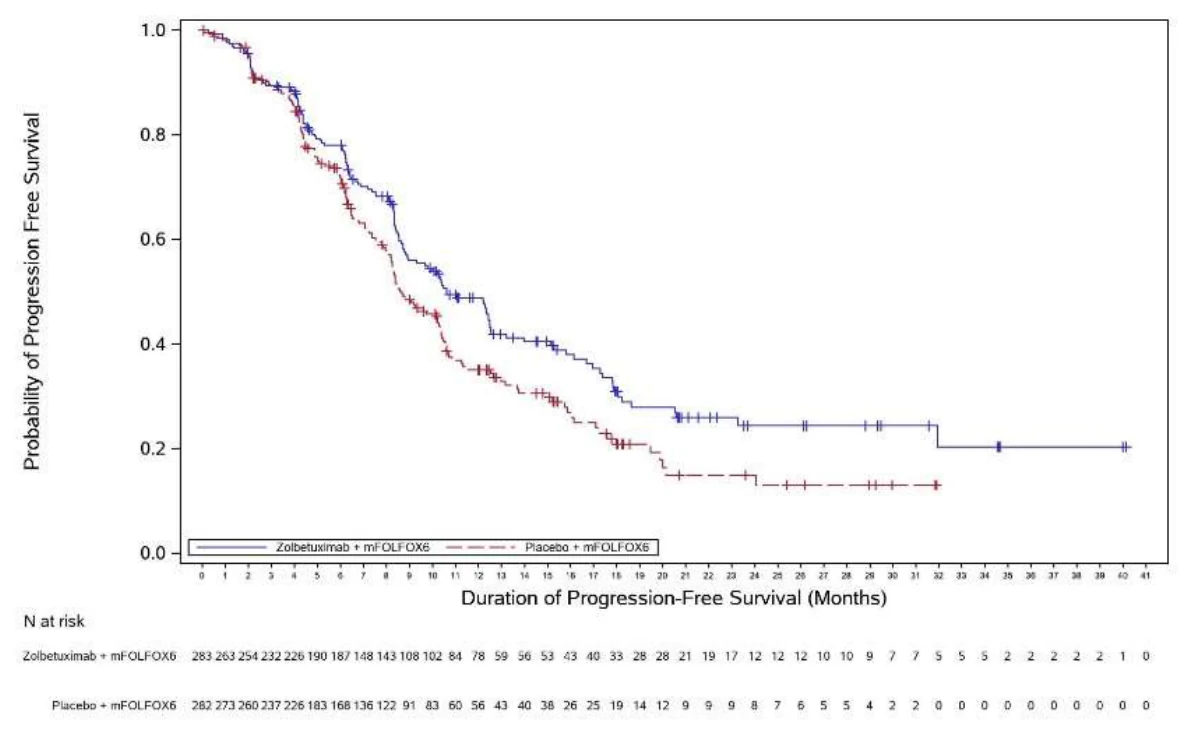
Figure 2. Kaplan Meier plot of overall survival at the first interim analysis, SPOTLIGHT
Among the 283 patients randomised to receive Vyloy in combination with mFOLFOX6, the ORR was 40.3% (114/283) (95% CI: 34.5, 46.3) compared with placebo in combination with mFOLFOX6 with an ORR of 39.7% (112/282) (95% CI: 34.0, 45.7). The median duration of response (DOR) for Vyloy in combination with mFOLFOX6 and placebo in combination with mFOLFOX6 was 10.3 months (95% CI: 8.3, 10.9) and 10.5 months (95% CI: 7.7, 13.3), respectively.
The following were observed in an exploratory subgroup analysis of efficacy by race for SPOTLIGHT: For zolbetuximab in combination with mFOLFOX6 (n = 236 including 140 Caucasian and 96 Asian patients) versus placebo with mFOLFOX6 (n=231 including 134 Caucasian and 97 Asian patients), the PFS HR was 0.930 in the Caucasian population compared to 0.527 in the Asian population, and the OS HR was 0.948 in the Caucasian population compared to 0.572 in the Asian population.
GLOW (8951-CL-0302)
The efficacy of Vyloy in combination with CAPOX was evaluated in the GLOW trial, a phase 3, double-blind, randomised, multicenter study that enrolled 507 patients whose tumours were CLDN18.2 positive, HER2-negative, with locally advanced unresectable or metastatic gastric or GEJ adenocarcinoma. CLDN18.2 positivity (defined as ≥75% of tumour cells demonstrating moderate to strong membranous CLDN18 staining) was determined by immunohistochemistry on gastric or GEJ tumour tissue specimens from all patients with the VENTANA CLDN18 (43-14A) RxDx Assay performed in a central laboratory.
Patients were excluded from the study if they had a complete or partial gastric outlet syndrome, positive test for HIV infection or known active hepatitis B or C infection, significant cardiovascular disease (e.g., Congestive heart failure per New York Heart Association Class III or IV, history of significant ventricular arrhythmias, QTc interval >450 msec for males; >470 msec for females) or history of central nervous system metastases.
Patients were randomised 1:1 to receive Vyloy in combination with CAPOX (n=254) or placebo in combination with CAPOX (n=253). Vyloy was administered intravenously at a loading dose of 800 mg/m2 (Day 1 of cycle 1) followed by a subsequent dose of 600 mg/m2 every 3 weeks in combination with up to 8 treatments (8 cycles) of CAPOX administered on Day 1 (oxaliplatin 130 mg/m2) and on Days 1 to 14 (capecitabine 1000 mg/m2) of a 21-day cycle. After 8 treatments of oxaliplatin, patients were allowed to continue treatment of Vyloy and capecitabine at the discretion of the investigator, until progression of disease or unacceptable toxicity.
Treatment with Vyloy continued until RECIST v1.1-defined progression of disease as determined by IRC or subsequent anticancer treatment was initiated. Tumour assessments were performed every 9 weeks up to and including week 54, then every 12 weeks thereafter.
The primary efficacy outcome was PFS as assessed per RECIST v1.1 by IRC. The key secondary efficacy outcome was OS. Other secondary efficacy outcomes were ORR and DOR as assessed per RECIST v1.1 by IRC.
The median age was 60 years (range: 21 to 83); 62% were male; 63% were Asian and 37% were Caucasian. Patients had a baseline ECOG performance status of 0 (43%) or 1 (57%). The median time from diagnosis was 44 days (range: 2 to 6010); 37% of tumour types were diffuse, 15% were intestinal; 84% had gastric adenocarcinoma, 16% had GEJ adenocarcinoma; 12% had locally advanced disease, 88% had metastatic disease and 30% had prior gastrectomy. Subsequent anticancer therapy was received by 47% of patients in the Vyloy in combination with CAPOX arm and 55% in the placebo in combination with CAPOX arm.
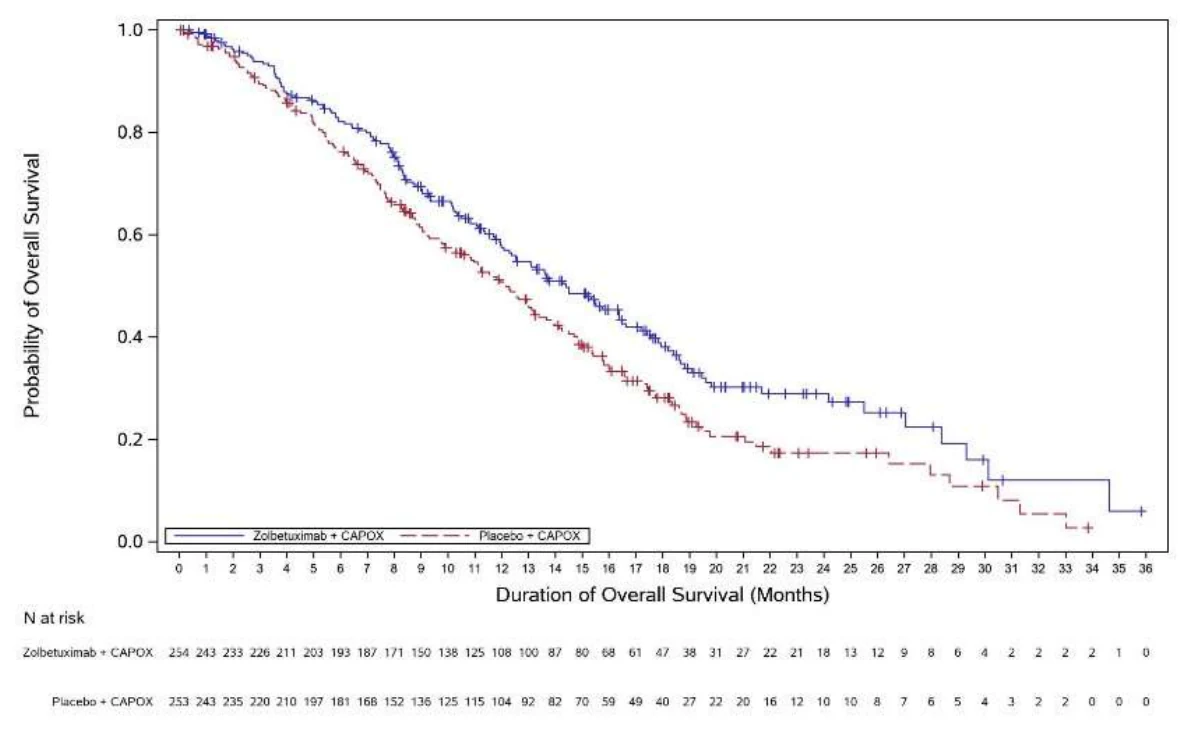
Vyloy in combination with CAPOX demonstrated a statistically significant improvement in PFS and OS compared with placebo in combination with CAPOX. Table 12, Figures 3 and 4 summarise the efficacy results for the GLOW study.
Table 12 – Efficacy Results in GLOW
| Endpoint | Vyloy with CAPOX n=254 | Placebo with CAPOX n=253 | ||||||
|---|---|---|---|---|---|---|---|---|
| Progression Free Survival | ||||||||
| Number (%) of patients with events | 137 (53.9) | 172 (68.0) | ||||||
| Median in months (95% CI)1 | 8.2 (7.5, 8.8) | 6.8 (6.1, 8.1) | ||||||
| Hazard ratio (95% CI)2,3 | 0.687 (0.544, 0.866) | |||||||
| p-value2,4 | 0.0007 | |||||||
| Overall survival | ||||||||
| Number (%) of patients with events | 144 (56.7) | 174 (68.8) | ||||||
| Median in months (95% CI)1 | 14.4 (12.3, 16.5) | 12.2 (10.3, 13.7) | ||||||
| Hazard ratio (95% CI)2,3 | 0.771 (0.615, 0.965) | |||||||
| p-value2,5 | 0.0118 | |||||||
- 1. Based on Kaplan-Meier estimate.
- 2. Stratification factors were region, number of metastatic sites and prior gastrectomy from IRT.
- 3. Based on Cox proportional hazards model with treatment, region, number of organs with metastatic sites and prior gastrectomy as the explanatory variables.
- 4. Based on one-sided log-rank test at the final analysis.
- 5. Based on one-sided log-rank test at the interim analysis.
Figure 3. Kaplan Meier plot of progression-free survival at the first interim (final) analysis, GLOW
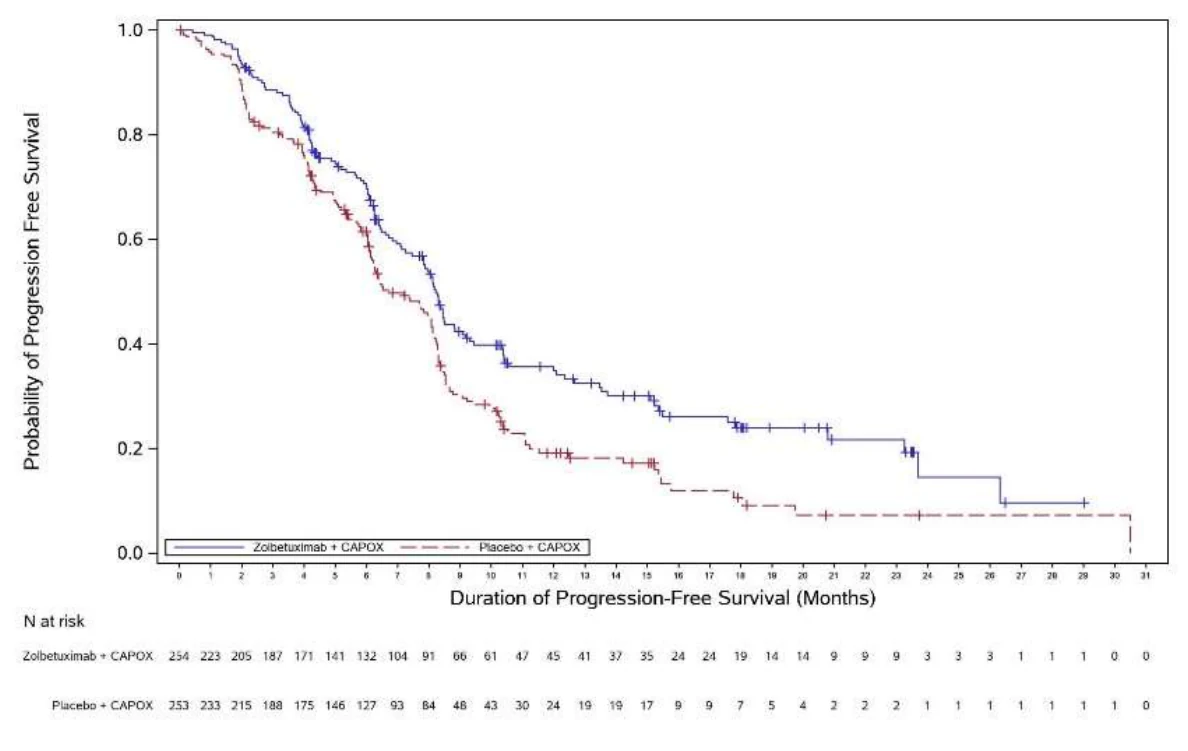
Figure 4. Kaplan Meier plot of overall survival at the first interim analysis, GLOW
Among the 254 patients randomised to receive Vyloy in combination with CAPOX, the ORR was 32.3% (82/254) (95% CI: 26.6, 38.4) compared with placebo in combination with CAPOX with an ORR of 31.2% (79/253) (95% CI: 25.6, 37.3). The median DOR for Vyloy in combination with CAPOX and placebo in combination with CAPOX was 8.3 months (95% CI: 6.3, 11.4) and 6.2 months (95% CI: 6.0, 7.6), respectively.
The following were observed in an exploratory subgroup analysis of efficacy by race for GLOW: For zolbetuximab in combination with CAPOX (n=252 including 94 Caucasian and 158 Asian patients) versus placebo with CAPOX (n=248 including 90 Caucasian and 158 Asian patients), the PFS HR was 0.918 in the Caucasian population compared to 0.587 in the Asian population, and the OS HR was 0.891 in the Caucasian population compared to 0.678 in the Asian population.
15 Microbiology
No microbiological information is required for this drug product.
16 Non-Clinical Toxicology
General toxicology: The toxicity of zolbetuximab was assessed in mice and cynomolgus monkeys. In the evaluation of the central nervous system, zolbetuximab was administered to mice at doses of 0, 100, 200 and 300 mg/kg/week (up to 8.6-fold the recommended human dose of 600 mg/m2 based on AUC) for 13 weeks. In the evaluation of the cardiovascular and respiratory systems, zolbetuximab was administered to cynomolgus monkeys at doses of 0, 10, 30 and 100 mg/kg/week (up to 7.5-fold the recommended human dose of 600 mg/m2 based on AUC) for 4 weeks. No toxicity or other zolbetuximab-related adverse effects on the cardiovascular, respiratory or central nervous systems were observed.
Carcinogenicity: No studies in animals have been performed to evaluate carcinogenicity or mutagenicity.
Reproductive and developmental toxicology: In an embryo-fetal development toxicity study, where zolbetuximab was administered to pregnant mice during the period of organogenesis at doses up to 300 mg/kg (approximately 1.8 times the recommended human dose of 600 mg/m2 based on AUC), zolbetuximab crossed the placental barrier and did not result in embryo-fetal toxicity. The resulting concentration of zolbetuximab in fetal serum at Day 18 of gestation was higher than that in the maternal serum at Day 16 of gestation.
Fertility studies have not been performed with zolbetuximab.