


Product Monograph - Minjuvi
RECENT MAJOR LABEL CHANGES
| 1 Indications | 2026-04 |
|---|---|
| 4 Dosage and Administration, 4.2 Recommended Dose and Dosage Adjustment | 2026-04 |
Certain sections or subsections that are not applicable at the time of the preparation of the most recent authorized product monograph are not listed.
RECENT MAJOR LABEL CHANGES ............................................................................................ 2
Part 1: Healthcare Professional Information ........................................................................... 4
- 1.
Indications ....................................................................................................................... 4
1.1. Pediatrics .................................................................................................................. 4
1.2. Geriatrics .................................................................................................................. 4
- 2. Contraindications ............................................................................................................ 4
- 3. Serious Warnings and Precautions Box ............................................................................ 5
- 4.
Dosage and Administration ............................................................................................. 5
4.1. Dosing Considerations .............................................................................................. 5
4.2. Recommended Dose and Dosage Adjustment ......................................................... 6
4.3. Reconstitution ........................................................................................................ 10
4.4. Administration ........................................................................................................ 11
- 5. Overdose ....................................................................................................................... 12
- 6. Dosage Forms, Strengths, Composition, and Packaging ................................................. 12
- 7.
Warnings and Precautions ............................................................................................. 13
7.1. Special Populations ................................................................................................ 15
7.1.1. Pregnancy ...................................................................................................... 15
7.1.2. Breastfeeding ................................................................................................ 15
7.1.3. Pediatrics ....................................................................................................... 15
7.1.4. Geriatrics ....................................................................................................... 15
- 8.
Adverse Reactions ......................................................................................................... 16
8.1. Adverse Reaction Overview .................................................................................... 16
8.2. Clinical Trial Adverse Reactions .............................................................................. 16
8.3. Less Common Clinical Trial Adverse Reactions ....................................................... 20
8.4. Abnormal Laboratory Findings: Hematologic, Clinical Chemistry, and Other Quantitative Data ............................................................................................................... 21
- 9.
Drug Interactions ........................................................................................................... 22
9.2. Drug Interactions Overview .................................................................................... 22
9.3. Drug-Behaviour Interactions .................................................................................. 22
9.4. Drug-Drug Interactions ........................................................................................... 22
9.5. Drug-Food Interactions........................................................................................... 22
- 10.
Clinical Pharmacology ................................................................................................... 22
10.1. Mechanism of Action .............................................................................................. 22
10.2. Pharmacodynamics ................................................................................................ 23
10.3. Pharmacokinetics ................................................................................................... 23
10.4. Immunogenicity ...................................................................................................... 24
- 11. Storage, Stability and Disposal....................................................................................... 24
Part 2: Scientific Information ................................................................................................ 25
- 13. Pharmaceutical Information .......................................................................................... 25
- 14.
Clinical Trials .................................................................................................................. 25
14.1. Clinical Trials by Indication ..................................................................................... 25
- 16. Non-Clinical Toxicology .................................................................................................. 29
- 17. Supporting Product Monographs ................................................................................... 30
Patient Medication Information ........................................................................................... 31
Part 1: Healthcare Professional Information
1. Indications
Diffuse Large B-cell Lymphoma
Minjuvi (tafasitamab for injection) is indicated in combination with lenalidomide for the treatment of adult patients with relapsed or refractory diffuse large B-cell lymphoma (DLBCL) not otherwise specified, including DLBCL arising from low grade lymphoma, who are not eligible for autologous stem cell transplant (ASCT).
Authorization was based on overall response rate, complete response rate and durability of response from a single-arm clinical study. An improvement in progression-free survival or overall survival has not been established.
Follicular Lymphoma
Minjuvi is indicated in combination with rituximab and lenalidomide for the treatment of adult patients with Grade 1, 2, or 3a relapsed or refractory follicular lymphoma (FL).
1.1. Pediatrics
Pediatrics (< 18 years of age): No data are available to Health Canada; therefore, Health Canada has not authorized an indication for pediatric use.
1.2. Geriatrics
Diffuse Large B-cell Lymphoma
Geriatrics (≥ 65 years of age): Among 81 patients treated in the L-MIND study (MOR208C203/ NCT02399085), 72% were 65 years and older. Patients 65 years of age and older had more serious treatment emergent adverse events (TEAEs) (57%) than younger patients (39%) (see 4.2. Dosage and Administration, Recommended Dose and Dosage Adjustment, Dose Modifications for Special Populations, and 10.3. Clinical Pharmacology, Pharmacokinetics).
Evidence from clinical studies does not suggest that use in the geriatric population is associated with differences in effectiveness.
Follicular Lymphoma
Geriatrics (≥ 65 years of age): Among the 274 patients with FL who received Minjuvi in combination with rituximab and lenalidomide in the inMIND study (INCMOR 0208-301/NCT04680052), 50% were 65 years and older and 20% were 75 years and older.
No clinically meaningful differences in safety or efficacy were observed between these patients and younger patients, but greater sensitivity of some older individuals cannot be ruled out.
2. Contraindications
Minjuvi is contraindicated in patients who are hypersensitive to this drug or to any ingredient in the formulation, including any non-medicinal ingredient, or component of the container. For a complete listing, (see 6. Dosage Forms, Strengths, Composition and Packaging).
3. Serious Warnings and Precautions Box
- Infection - Clinically significant and/or life-threatening adverse events including fatal, life threatening, or serious infections, including opportunistic infections have been reported in patients treated with Minjuvi (see 7. Warnings and Precautions).
- Myelosuppression - Serious and severe myelosuppression, including neutropenia, febrile neutropenia, thrombocytopenia and anemia have been reported in patients treated with Minjuvi (see 7. Warnings and Precautions).
- Progressive Multifocal Leukoencephalopathy - PML can occur in patients receiving Minjuvi. Treatment should be interrupted in case of PML suspicion, until the diagnosis can be clearly excluded. Discontinue Minjuvi, lenalidomide and/or rituximab therapy in patients who develop PML (see 7. Warnings and Precautions).
- Hepatitis B Virus (HBV) Reactivation – HBV reactivation has been observed in studies of Minjuvi. Patients should be screened for HBV infection before treatment initiation, and should be monitored during and after treatment with Minjuvi. In the event of HBV reactivation, Minjuvi should be discontinued (see 7. Warnings and Precautions).
4. Dosage and Administration
4.1. Dosing Considerations
Minjuvi must be administered by a healthcare professional experienced in the treatment of cancer patients who has immediate access to emergency equipment and appropriate medical support to manage infusion-related reactions (IRRs) (see 7. Warnings and Precautions).
Minjuvi is administered by intravenous infusion only. DO NOT administer as an IV push or bolus dose.
Recommended Premedication
Administer premedication 30 minutes to 2 hours prior to Minjuvi infusion to reduce the risk of infusion related reactions (see 7. Warnings and Precautions). Premedication may include antipyretics, histamine H1 receptor antagonists, histamine H2 receptor antagonists, and/or glucocorticosteroids. For patients who do not experience an infusion-related reaction during the first 3 infusions, premedication is optional for subsequent infusions.
Treatment of infusion-related reactions
If an infusion-related reaction occurs (grade 2 or higher), interrupt the infusion of Minjuvi. In addition, initiate appropriate medical treatment of symptoms (see Table 2: Dose modifications due to adverse reactions). See Table 2 for guidance on when to resume Minjuvi infusion.
If a patient has a Grade 1 to 3 infusion-related reaction, premedication should be administered before every subsequent Minjuvi infusion. See Table 2 for guidance on when to permanently discontinue Minjuvi.
Lack of Efficacy in Marginal Zone Lymphoma (MZL) Patients
Patients with MZL are often treated with therapies used to treat patients with follicular lymphoma. Minjuvi in combination with lenalidomide and rituximab did not show any benefit over placebo plus lenalidomide and rituximab in patients with relapsed or refractory (r/r) MZL enrolled in the inMIND study, and there were numerically more deaths in patients who received Minjuvi. Minjuvi is therefore not indicated and is not recommended for the treatment of patients with r/r MZL outside of controlled clinical trials.
4.2. Recommended Dose and Dosage Adjustment
Pediatrics
Health Canada has not authorized an indication for pediatric use.
Diffuse Large B-cell Lymphoma
The recommended dose is 12 mg Minjuvi per kilogram body weight administered as an intravenous infusion in combination with lenalidomide according to the following schedule:
- Cycle 1: Administer the infusion on day 1, 4, 8, 15, and 22 of the cycle.
- Cycles 2 and 3: Administer the infusion on day 1, 8, 15, and 22 of each cycle.
- Cycle 4 until disease progression: Administer the infusion on day 1 and 15 of each cycle.
Each treatment cycle is 28 days long.
Minjuvi is to be administered with lenalidomide for up to 12 cycles, and then as a monotherapy on days 1 and 15 of each 28-day cycle thereafter, until disease progression or unacceptable toxicity.
Patients should self-administer lenalidomide capsules at a recommended starting dose of 25 mg daily on days 1 to 21 of each 28-day cycle for up to 12 cycles (when creatinine clearance [CrCL] ≥ 60 mL/min). Refer to Table 3 below for lenalidomide starting dose adjustments according to renal function. Additional dose reductions of lenalidomide (i.e. for adverse reactions) should be followed according to the instructions in the lenalidomide product monograph as they apply to the recommendations for multiple myeloma patients.
Follicular Lymphoma
The recommended Minjuvi dose is 12 mg per kilogram body weight administered as an intravenous infusion based on a 28-day cycle in combination with rituximab (375 mg/m2) and lenalidomide (20 mg), until disease progression, unacceptable toxicity or for a maximum of 12 cycles according to the following schedule (Table 1):
Table 1: Dosing Schedule of Minjuvi, Lenalidomide and Rituximab in FL Over 12 Cycles
| aCycle 1 | Cycles 2 -3 | Cycles 4-5 | Cycles 6-12 | |
|---|---|---|---|---|
| b Minjuvi (12 mg/kg) | Days 1, 8, 15, and 22 | Days 1, 8, 15, and 22 | Days 1 and 15 | Days 1 and 15 |
| b,c Lenalidomide (20 mg) | Days 1 to 21 | Days 1 to 21 | Days 1 to 21 | Days 1 to 21 |
| b Rituximab (375 mg/m2) | Days 1, 8, 15 and 22 | Day 1 only | Day 1 only | Not administered |
a Each cycle is 28 days
b Administer according to the schedule shown here.
c Lenalidomide 20 mg starting dose is for patients with adequate renal function. Adjust the starting dose according to Table 3 for patients with renal impairment.
Refer to the rituximab product monograph for further details, including premedications and warnings and precautions, and dose modifications and discontinuations due to adverse events.
Refer to the lenalidomide product monograph for further details, including premedications and warnings and precautions. Refer to Table 2 below, for lenalidomide dose modifications for adverse reactions specific for follicular lymphoma patients who receive a starting dose of 20 mg, or a reduced starting dose due to renal impairment.
Dose Modifications
Temporary interruption or definitive discontinuation of Minjuvi treatment may be required for infusion related reactions (IRRs) or myelosuppression (see Table 2 for guidance).
Table 2: Minjuvi Dose Modifications Due to Adverse Reactions
| Adverse Reaction | Severity | Minjuvi & Lenalidomide Dose Modification |
|---|---|---|
| Adverse Reaction | Severity | Minjuvi & Lenalidomide Dose Modification |
| Adverse Reaction | Severity | Minjuvi & Lenalidomide Dose Modification |
| Infusion-related reactions | Grade 2 (moderate) |
|
| Grade 3 (severe) |
| |
| Grade 4 (life-threatening) |
| |
| Myelosuppression | Thrombocytopenia: Platelet count of less than 50,000/mcL |
|
Neutropenia: Neutrophil count of less than 1,000/mcL for at least 7 days OR Neutrophil count of 1,000/mcL or less with an increase of body temperature to 38°C or higher OR Neutrophil count less than 500/mcL |
| |
| Renal impairment (chronic kidney disease) | Grade 3: Creatinine clearance 29-15 mL/min |
|
Grade 4: Creatinine clearance <15 mL/min |
| |
Abbreviations: mcL – microliters, CBC – complete blood count
Dose Modifications for Special Populations
Pediatric use: The safety and effectiveness of Minjuvi have not been established in pediatric patients under 18 years of age. Health Canada has not authorized an indication for pediatric use (see 1.1. Indications, Pediatrics).
Geriatric patients: No dose adjustment is needed for elderly patients ≥ 65 years (see 10.3. Clinical Pharmacology, Pharmacokinetics).
Renal impairment: No dose adjustment of Minjuvi is required in patients with mild or severe renal impairment. The effect of renal impairment was not formally tested in dedicated clinical trials; however, no clinically meaningful differences in the pharmacokinetics of tafasitamab were observed for mild to severe renal impairment (CrCL ≥ 15 and < 90 mL/min estimated by the Cockcroft-Gault equation). The effect of renal disease (CrCL < 15 mL/min) is unknown (see 10.3. Clinical Pharmacology, Pharmacokinetics).
Since lenalidomide is primarily excreted unchanged by the kidney, starting dose adjustment is recommended in patients with renal insufficiency in order to maintain an effective and safe level of lenalidomide. No dose adjustments are required for patients with CrCL ≥ 60 mL/min. A lenalidomide starting dose adjustment should be considered for patients with CrCL < 60 mL/min (see Table 3 for guidance).
Table 3: Lenalidomide Starting Dose Adjustments for Patients with Renal Impairment
| Renal Function (Cockcroft-Gault) | Dose of lenalidomide in combination therapy with MINJUVI for DLBCL | Dose of lenalidomide in combination therapy with MINJUVI for FL |
|---|---|---|
Mild Renal Impairment (90 > CrCL ≥ 60 mL/min | 25 mg once daily | 20 mg once daily |
Moderate Renal Impairment (30 ≤ CrCL < 60 mL/min | 10 mg once daily 1 | 10 mg once daily |
Severe Renal Impairment CrcL < 30 mL/min (not requiring dialysis) | 15 mg every 48 hours | 5 mg once daily |
End Stage Renal Disease CrCL < 30 mL/min (requiring dialysis) | 5 mg once daily. On dialysis days, administer the dose following dialysis. | 5 mg once daily. On dialysis days, administer the dose following dialysis. |
1 The dose may be escalated to 15 mg every 24 hours after 2 cycles if patient is not responding to treatment and is tolerating the drug.
Hepatic impairment: No dose adjustment of Minjuvi is required in patients with mild to moderate hepatic impairment. The effect of hepatic impairment was not formally tested in dedicated clinical trials; however, no clinically meaningful differences in the pharmacokinetics of tafasitamab were observed for mild to moderate hepatic impairment (total bilirubin ≤ ULN and AST > ULN, or total bilirubin 1 to 3.0 times ULN and any AST). The effect of severe hepatic impairment (total bilirubin > 3.0 times ULN and any AST) is unknown (see 10.3. Clinical Pharmacology, Pharmacokinetics).
4.3. Reconstitution
Table 4: Reconstitution
| Vial Size (mg/vial) | Volume of Diluent to be Added to Vial | Approximate Available Volume | Concentration per mL |
| 200 mg | 5 mL sterile water for injection | 5 mL | 40 mg/mL |
Minjuvi is provided in sterile, preservative free single-use vials. Minjuvi should be reconstituted and diluted prior to intravenous infusion. Use appropriate aseptic technique for reconstitution and dilution.
- 1. Determine the dose of Minjuvi based on patient weight (measured prior to each cycle) by multiplying 12 mg/kg by the patient weight (kg).
- 2. Calculate the number of Minjuvi vials needed (each vial contains 200 mg tafasitamab).
- 3. Using a sterile syringe, gently add 5 mL sterile water for injection into each tafasitamab vial. Direct the stream toward the walls of each vial and not directly on the lyophilized powder. The resulting solution contains Minjuvi at a concentration of 40 mg/mL.
- 4. Gently swirl the reconstituted vial(s) to aid the dissolution of the lyophilized powder. Do not shake or swirl vigorously. Do not remove the contents until all of the solids have been completely dissolved. The lyophilized powder should completely dissolve within 5 minutes.
- 5. The reconstituted Minjuvi solution should appear as a colourless to slightly yellow solution. Before proceeding, ensure there is no particulate matter or discolouration by visually inspecting the vials. If the solution is cloudy, discoloured or contains visible particles, discard the vial(s) and prepare freshly reconstituted Minjuvi.
- 6. The reconstituted Minjuvi solution contains no preservative and should be used as soon as possible after reconstitution. If not used immediately, the reconstituted product may be stored prior to dilution for up to 30 days at 2°C – 8°C or up to 24 hours at 25°C. Do not freeze or shake. Protect from light during storage.
Dilution
- 1. Obtain an infusion bag containing 250 mL sodium chloride 9 mg/mL (0.9%) solution for injection.
- 2.
Calculate the total volume of the 40 mg/mL reconstituted Minjuvi solution needed based on the patient’s weight prior to each cycle.
Volume = Minjuvi dose (12mg kg⁄ ) × patient′s weigℎt (kg) Reconstituted vial concentration (40 mg/mL)
- 3. Withdraw saline solution equal to the calculated volume from the infusion bag and discard the withdrawn volume.
- 4. Withdraw the total calculated volume (mL) of reconstituted Minjuvi solution from the vial(s) and slowly add to the sodium chloride 9 mg/mL (0.9%) infusion bag. Discard any unused portion of Minjuvi remaining in the vial.
- 5. The final concentration of the diluted solution should be between 2 mg/mL to 8 mg/mL of tafasitamab. Gently mix the intravenous bag by inverting the bag slowly. Do not shake.
- 6. Once diluted, the product should be used immediately. If not used immediately, the infusion solution may be stored for a maximum of 14 days at 2°C - 8°C followed by up to 24 hours at up to 25°C. Do not freeze or shake. Protect from light during storage.
Any unused medicinal product or waste material should be disposed of in accordance with local requirements (see 11. Storage, Stability and Disposal).
Incompatibilities
No incompatibilities have been observed between Minjuvi infusion solutions with standard infusion materials.
4.4. Administration
Do not administer Minjuvi as an intravenous push or bolus.
- Recommended supplies: 250 mL 0.9% NaCl infusion bag or bottle; standard IV infusion administration set, and 0.2 µm in-line filter. No incompatibilities have been observed between Minjuvi with infusion containers made of polypropylene (PP), polyvinylchloride (PVC), polyethylene (PE), polyethylenterephthalate (PET), or glass and infusion sets made of polyurethane (PUR) or PVC. No incompatibilities were observed with terminal in-line filters with neutral or positively charged polyethersulfone (PES) membrane, 0.2 µm.
- Administer Minjuvi as an intravenous infusion after reconstitution and dilution.
- For the first infusion of cycle 1, the intravenous infusion rate should be 70 mL/h for the first 30 minutes. Afterwards, increase the rate so that the first infusion is complete within a 2.5-hour period.
- Monitor patients during the entire infusion for infusion-related reactions. Most infusion-related reactions occur in the first 15 minutes of the first dose. Follow standard care measures for monitoring after the infusion is complete. Advise patients to contact their healthcare professional if they experience signs and symptoms of infusion-related reactions including fever, chills, rash or breathing problems within 24 hours of infusion.
- In the absence of any prior infusion-related reaction, subsequent infusions may be administered within a 1.5 - 2-hour period.
- Do not co-administer other medicines through the same infusion line.
- After the infusion is complete, flush the tubing with 0.9% NaCl injection to ensure the entire dose is administered.
5. Overdose
There is no information on overdose with Minjuvi. The recommended dose of Minjuvi is 12 mg/kg, which is the highest dose that has been tested in clinical studies. In the case of an overdose, patients should be carefully observed for signs or symptoms of adverse reactions and supportive care should be administered, as appropriate.
For the most recent information in the management of a suspected drug overdose, contact your regional poison control centre or Health Canada’s toll-free number, 1-844 POISON-X (1-844-764-7669).
- 6. Dosage Forms, Strengths, Composition, and Packaging
To help ensure the traceability of biologic products, healthcare professionals should record both the brand name and the non-proprietary (active ingredient) name as well as other product-specific identifiers such as the Drug Identification Number (DIN) and the batch/lot number of the product supplied.
Table 5: Dosage Forms, Strengths, Composition and Packaging
| Route of Administration | Dosage Form / Strength/Composition | Non-medicinal Ingredients |
| Intravenous Infusion | lyophilized powder, 200 mg | citric acid monohydrate, polysorbate 20, sodium citrate dihydrate, and trehalose dihydrate |
Minjuvi for injection: 200 mg of tafasitamab as white to slightly yellowish lyophilized powder in single-dose vial for reconstitution and further dilution.
Packaging: Minjuvi (tafasitamab for injection) is supplied as a vial containing 200 mg per vial with an outer carton.
7. Warnings and Precautions
General
Infusion-related reactions
Infusion-related reactions have occurred in patients treated with Minjuvi. Infusion-related reactions may occur more frequently during the first infusion, but can occur during or after any infusion. Patients should be monitored closely throughout the infusion. Advise patients to contact their healthcare professionals if they experience signs and symptoms of infusion-related reactions including fever, chills, rash or breathing problems within 24 hours of infusion.
Premedicate patients prior to starting the Minjuvi infusion. Monitor patients frequently during infusion. If infusion reaction occurs or is suspected, immediately interrupt or discontinue Minjuvi based on the severity of the infusion-related reaction. Institute appropriate medical management (see 4.1. Dosage and Administration, Dosing Considerations).
Endocrine and Metabolism
Tumour Lysis Syndrome
Patients with high tumour burden and rapidly proliferative tumour may be at increased risk of tumour lysis syndrome (TLS). In patients who received Minjuvi in clinical studies, tumour lysis syndrome have been reported. Measures/prophylaxis appropriate for TLS should be instituted in accordance with local guidelines prior to treatment with Minjuvi. Patients should be monitored closely for tumour lysis syndrome during treatment with Minjuvi.
Hematology
Myelosuppression
Treatment with Minjuvi can cause serious and/or severe myelosuppression including neutropenia, thrombocytopenia, and anemia. Monitor complete blood counts throughout treatment and prior to administration of each treatment cycle. Withhold Minjuvi based on the severity of the adverse reaction (see 4.2. Dosage and Administration, Recommended Dose and Dosage Adjustment, and 8.2. Adverse Reactions, Clinical Trial Adverse Reactions). Minjuvi is given in combination with lenalidomide, which may also cause myelosuppression, refer to the lenalidomide product monograph for guidance on lenalidomide related toxicity management.
Neutropenia
Neutropenia, including febrile neutropenia, has been reported during treatment with Minjuvi. Administration of granulocyte colony-stimulating factors (G-CSF) may be considered. Anticipate, evaluate and treat any symptoms or signs of developing infection.
Thrombocytopenia
Thrombocytopenia has been reported during treatment with Minjuvi. Consider withholding concomitant medications that may increase bleeding risk (e.g. platelet inhibitors, anticoagulants). Advise patients to report signs or symptoms of bruising or bleeding immediately.
Immune
Immunizations
The safety of immunization with live vaccines following Minjuvi therapy has not been investigated, and vaccination with live vaccines is not recommended concurrently with Minjuvi therapy.
Infections
Serious and/or fatal bacterial, fungal and new or reactivated viral infections (including COVID-19), or opportunistic infections, have occurred in patients treated with Minjuvi (see 8.2. Adverse Reactions, Clinical Trials Adverse Reactions).
Patients with a history of recurring or chronic infections may be at increased risk of infection and should be monitored appropriately (see 8.2. Adverse Reactions, Clinical Trial Adverse Reactions).
Advise patients to contact their healthcare professionals if fever or other evidence of potential infection such as chills, cough or pain on urination develops.
Hepatitis B Virus (HBV) Reactivation
Hepatitis B virus (HBV) reactivation, in some cases resulting in fulminant hepatitis, hepatic failure and death, can occur in patients treated with monoclonal antibodies that target B-lymphocytes. Reactivation of HBV replication is often followed by hepatitis, i.e., increase in transaminase levels and, in severe cases, increase in bilirubin levels, liver failure, and death. Screen all patients for HBV infection by measuring HBsAg and anti-HBc before initiating treatment with Minjuvi.
Patients with active hepatitis B disease should not be treated with Minjuvi. Patients with positive hepatitis B serology (HBsAg positive [regardless of antibody status] or HBsAg negative but anti-HBc positive), should consult physicians with expertise in managing hepatitis B regarding monitoring and consideration for HBV antiviral therapy.
Monitor patients with evidence of current or prior HBV infection for clinical and laboratory signs of hepatitis or HBV reactivation during and for several months following treatment with Minjuvi. HBV reactivation has been reported for other B-cell cytolytic antibodies following completion of therapy. In patients who develop reactivation of HBV while receiving Minjuvi, immediately discontinue Minjuvi and any concomitant anti-neoplastic therapy, and institute appropriate treatment. Resumption of Minjuvi in patients whose HBV reactivation resolves should be discussed with physicians with expertise in managing hepatitis B.
Progressive Multifocal Leukoencephalopathy (PML)
PML has been observed in clinical studies of Minjuvi. The diagnosis of PML should be considered in any patient presenting with new-onset or changes to pre-existing neurologic manifestations. The symptoms of PML are non-specific and can vary. Common symptoms include muscular weakness, paralysis, sensory abnormalities, cerebellar symptoms, and visual field defects. Evaluation of PML includes consultation with a neurologist, brain magnetic resonance imaging (MRI), and lumbar puncture (CSF testing for JC viral DNA). Therapy with Minjuvi should be withheld during the investigation of potential PML. Discontinue Minjuvi therapy and consider discontinuation or reduction of any concomitant anti-neoplastic treatment or immunosuppressive therapy in patients who develop PML.
Reproductive Health: Female and Male Potential
Treatment with Minjuvi in combination with lenalidomide or lenalidomide plus rituximab should not be initiated in female patients unless pregnancy has been excluded. Please refer to the product monograph for lenalidomide for additional details.
Fertility
No specific studies have been conducted to evaluate the potential effects of Minjuvi on fertility.
Teratogenicity
Based on its mechanism of action, Minjuvi may cause fetal B-cell depletion when administered during pregnancy. Minjuvi in combination with lenalidomide should not be initiated in female patients unless pregnancy has been excluded (see 7.1.1. Warnings and Precautions, Special Populations, Pregnancy).
Minjuvi may cause fetal harm. Advise females of reproductive potential to use effective contraception during Minjuvi treatment and for at least 3 months after the end of treatment.
Lenalidomide has been found to be teratogenic. Please refer to the lenalidomide product monograph.
7.1. Special Populations
7.1.1. Pregnancy
There are no data on the use of Minjuvi during pregnancy. However, IgG is known to cross the placenta and Minjuvi may cause fetal B-cell depletion based on the mechanism of action (see 10.1. Clinical Pharmacology, Mechanism of Action).
Minjuvi is not recommended during pregnancy and in females of childbearing potential not using contraception. Advise patients to notify their doctor if they become pregnant or intend to become pregnant during Minjuvi therapy, as it may cause harm to the unborn baby.
Minjuvi is administered in combination with lenalidomide for up to 12 cycles. Lenalidomide can cause embryo-fetal harm and is contraindicated for use in pregnancy and in women of childbearing potential unless all of the conditions of the lenalidomide pregnancy prevention program are met.
7.1.2. Breastfeeding
It is not known whether tafasitamab is excreted in human milk. However, maternal IgG is known to be excreted in human milk. Because of the potential for adverse reactions in nursing infants from tafasitamab, advise women not to breast-feed during treatment with Minjuvi until at least 3 months after the last dose.
7.1.3. Pediatrics
No data are available to Health Canada; therefore, Health Canada has not authorized an indication for pediatric use.
7.1.4. Geriatrics
Among 81 patients with R/R DLBCL treated in the L-MIND study with Minjuvi plus lenalidomide, 72% were 65 years and older. Among 274 patients with R/R FL treated in the inMIND study treated with Minjuvi plus lenalidomide and rituximab, 50% were 65 years and older and 20% were 75 years and older. No overall differences in safety or efficacy were observed in patients above 70 years of age or younger (see 1.2. Indications, Geriatrics), although a greater sensitivity of some older individuals cannot be ruled out.
8. Adverse Reactions
8.1. Adverse Reaction Overview
In the clinical development program of Minjuvi, 693 patients have received Minjuvi in combination with other treatments. Patients who received Minjuvi combination therapy include 274 participants with R/R FL, 53 participants with R/R MZL, 300 participants with R/R DLBCL, and 66 participants with previously untreated DLBCL.
8.2. Clinical Trial Adverse Reactions
Clinical trials are conducted under very specific conditions. Therefore, the frequencies of adverse reactions observed in the clinical trials may not reflect frequencies observed in clinical practice and should not be compared to frequencies reported in clinical trials of another drug.
Relapsed or Refractory Diffuse Large B-cell Lymphoma
The safety of Minjuvi has been evaluated in 81 patients with non-transplant eligible relapsed or refractory DLBCL in the MOR208C203 (L-MIND) study in which Minjuvi was used in combination with lenalidomide. One patient received Minjuvi, but not lenalidomide. The remaining 80 patients received at least one dose of Minjuvi and lenalidomide.
Serious adverse events occurred in 52% of patients who received Minjuvi. Serious adverse events in ≥6% of patients included infections (26%) including pneumonia (7%), and febrile neutropenia (6%). Fatal adverse events occurred in 5% of patients who received Minjvui, including cerebrovascular accident (1.2%), respiratory failure (1.2%), progressive multifocal leukoencephalopathy (1.2%) and sudden death (1.2%).
Permanent discontinuation of Minjuvi or lenalidomide due to an adverse event occurred in 25% of patients and permanent discontinuation of Minjuvi due to an adverse event occurred in 15%. The most frequent adverse event which resulted in permanent discontinuation of Minjuvi were infections (5%), nervous system disorders (2.5%), respiratory, thoracic and mediastinal disorders (2.5%).
The adverse reactions from L-MIND are presented in Table 6.
Table 6: Adverse Reactions (≥10%) in Patients with Relapsed or Refractory Diffuse Large B-Cell Lymphoma Who Received Minjuvi in L-MIND
| Adverse Reaction | Minjuvi (N=81) | |
|---|---|---|
| Adverse Reaction | Minjuvi (N=81) | |
| All Grades n (%) | Grade 3 or 4 n (%) | |
| All Grades n (%) | Grade 3 or 4 n (%) | |
| Blood and lymphatic system disorders | ||
| Neutropenia | 41 (51) | 40 (49) |
| Anemia | 29 (36) | 6 (7) |
| Thrombocytopenia | 25 (31) | 14 (17) |
| Leukopenia | 12 (15) | 9 (11) |
| Febrile neutropenia | 10 (12) | 10 (12) |
| General disorders and administration site conditions | ||
| Asthenia1 | 32 (39.5) | 3 (3.7) |
| Pyrexia | (19) 24 | (1) 1.2 |
| Peripheral edema | 19 (24) | 0 |
| Gastrointestinal disorders | ||
| Diarrhea | 29 (36) | 1 (1.2) |
| Constipation | 14 (17) | 0 |
| Nausea | 12 (15) | 0 |
| Vomiting | 12 (15) | 0 |
| Respiratory, thoracic and mediastinal disorders | ||
| Cough | 21 (26) | 1 (1.2) |
| Dyspnea | 10 (12) | 1 (1.2) |
| Infections | ||
| Respiratory tract infection2 | 43 (53.1) | 11 (13.6) |
| Urinary tract infection3 | 14 (17) | 4 (4.9) |
| Metabolism and nutrition disorders | ||
| Decreased appetite | 18 (22) | 0 |
| Hypokalemia | 15 (19) | 5 (6) |
| Musculoskeletal and connective tissue disorders | ||
| Back pain | 15 (19) | 2 (2.5) |
| Muscle spasms | 12 (15) | 0 |
| Skin and subcutaneous tissue disorders | ||
| Rash4 | 13 (16) | 2 (2.5) |
1 Includes fatigue and malaise
2 Respiratory tract infection includes bronchitis, bronchopulmonary aspergillosis, influenza, lower respiratory tract infection, nasopharyngitis, parainfluenzae virus infection, pharyngitis, pharyngitis streptococcal, pneumonia, respiratory syncytial virus infection, respiratory tract infection, rhinitis, sinusitis, tonsillitis, upper respiratory tract infection, upper respiratory tract infection bacterial, viral pharyngitis
3 Urinary tract infection includes: urinary tract infection, Escherichia urinary tract infection, urinary tract infection bacterial, and urinary tract infection enterococcal
4 Rash includes rash, rash maculopapular, rash pruritus, rash erythematous
Relapsed or Refractory Follicular Lymphoma
The safety of Minjuvi in patients with FL was evaluated in 546 patients in the INCMOR (inMIND) trial. Patients received Minjuvi 12 mg/kg (N = 274) or placebo (N = 272) intravenously for a maximum of 12 cycles in combination with rituximab 375 mg/m2 (Cycles 1 to 5) and lenalidomide 20 mg (Cycles 1 to 12), as follows:
- Cycle 1 to 3: Days 1, 8, 15, and 22 of each 28-day cycle;
- Cycles 4 to 12: Days 1 and 15 of each 28-day cycle.
Among patients who received Minjuvi in combination with rituximab and lenalidomide, the median number of treatment cycles was 12 (range, 1 - 12).
Serious adverse reactions occurred in 19% of patients who received Minjuvi in combination with rituximab and lenalidomide. Serious adverse reactions in ≥ 2% of patients included viral infections (including COVID-19) (12%), bacterial infections (3%), and febrile neutropenia (3%). Fatal adverse reactions occurred in 3 patients who received Minjuvi in combination with rituximab and lenalidomide, including COVID-19 (2 patients) and sepsis (1 patient).
Permanent discontinuation of Minjuvi due to an adverse reaction occurred in 8% of patients who received Minjuvi in combination with rituximab and lenalidomide. The most frequent adverse reactions which resulted in permanent discontinuation of Minjuvi were viral infections (3%) including COVID-19 (2%) and COVID-19 pneumonia (1%) and pyrexia (1%).
Dosage interruptions of Minjuvi due to an adverse reaction occurred in 67% of patients who received Minjuvi in combination with rituximab and lenalidomide. The most frequent adverse reactions which required a dosage interruption were neutropenia (37%), viral infections (24%) including COVID-19 (20%) and COVID-19 pneumonia (3%), and bacterial infections (5%).
The most common adverse reactions (≥ 20%) were viral infections, diarrhea, rash, fatigue, constipation, and bacterial infections.
Table 7 summarizes the most common adverse reactions in the inMIND trial.
Table 7: Adverse Reactions (≥ 10%) in Patients with Relapsed or Refractory Follicular Lymphoma Who Received Minjuvi in inMIND
| Adverse Reaction | MINJUVI in Combination with Rituximab and Lenalidomide (N = 274) | Placebo in Combination with Rituximab and Lenalidomide (N = 272) | ||
|---|---|---|---|---|
All Grades n (%) | Grade 3 or 4 n (%) | All Grades (%) n (%) | Grade 3 or 4 n (%) | |
| Infections | ||||
| Viral infectionsa | 112 (41) | 30 (11) | 88 (32) | 12 (4) |
| COVID-19b | 86 (31) | 16 (6) | 64 (24) | 6 (2) |
| COVID-19 pneumonia | 16 (6) | 13 (5) | 6 (2) | 3 (1) |
| Bacterial infectionsc | 67 (25) | 15 (6) | 65 (24) | 18 (7) |
| Gastrointestinal disorders | ||||
| Diarrhea | 103 (38) | 2 (1) | 77 (28) | 5 (2) |
| Constipation | 80 (29) | 2 (1) | 67 (25) | 0 (0) |
| Abdominal paind | 32 (12) | 0 (0) | 47 (17) | 6 (2) |
| Skin and subcutaneous tissue disorders | ||||
| Rashe | 100 (37) | 8 (30) | 86 (32) | 4 (2) |
| Pruritus | 44 (16) | 1 (0.4) | 28 (10) | 0 (0) |
| General disorders and administration site conditions | ||||
| Fatiguef | 96 (35) | 8 (3) | 70 (26) | 2 (1) |
| Pyrexia | 52 (19) | 4 (2) | 44 (16) | 6 (2) |
| Injury, poisoning and procedural complications | ||||
| Infusion-related reaction | 43 (16) | 2 (1) | 41 (15) | 1 (0.4) |
| Nervous system disorders | ||||
| Headache | 27 (10) | 1 (0.4) | 18 (7) | 0 (0) |
a Viral infections include the following events with greater frequency or with greater clinical significance: COVID-19, COVID-19 pneumonia, cytomegalovirus infection reactivation, herpes simplex, herpes virus infection, herpes zoster, influenza, laryngitis viral, oral herpes, respiratory syncytial virus infection, rhinovirus infection, and viral upper respiratory tract infection and related terms.
b COVID-19 includes COVID-19 and corona virus test positive.
c Bacterial infections include the following events with greater frequency or with greater clinical significance: bacteraemi, bacterial colitis, bacterial sepsis, bronchitis bacterial, campylobacter infection, catheter site infection, cellulitis, chlostridial infection, device related infection, eye infection, haemophilus infection, lower respiratory tract infection, pneumocystis jirovecii pneumonia, pneumonia bacterial, respiratory tract infection bacterial, sinusitis, urinary tract infection, wound infection and related terms.
d Abdominal pain includes abdominal pain, abdominal tenderness, abdominal discomfort, gastrointestinal pain, abdominal pain lower and abdominal pain upper.
e Rash includes rash, rash erythematous, rash macular, rash maculo-papular, rash papular, rash pruritic, rash pustular, dermatitis, dermatitis allergic, rash maculovesicular, exfoliative rash, rash vesicular, urticaria, urticarial dermatitis, vasculitic rash, and erythema.
f Fatigue includes asthenia, malaise and fatigue.
Description of selected adverse reactions
Myelosuppression
Treatment with Minjuvi can cause serious or severe myelosuppression including neutropenia, thrombocytopenia and anaemia (see 4.2. Dosage and Administration, Recommended Dose and Dosage Adjustment, and 7. Warnings and Precautions).
In patients with R/R DLBCL treated with Minjuvi and lenalidomide, Grade 3 or higher hematological adverse reactions (in 59% of patients) included neutropenia (49%), thrombocytopenia (17%), febrile neutropenia (12%), leukopenia and anemia (7%). Grade 4 hematological adverse reactions (in 31% of patients) included neutropenia (including agranulocytosis), thrombocytopenia, febrile neutropenia, and leukopenia.
When patients in MOR208C203 (L-MIND) were switched from Minjuvi and lenalidomide in the combination therapy phase to Minjuvi alone in the extended monotherapy phase, the incidences of hematological events decreased by at least 20% for neutropenia, anaemia and thrombocytopenia; no incidences of febrile neutropenia were reported with Minjuvi monotherapy.
In inMIND, Grade 3 neutropenia occurred in 28% of the 274 patients with FL who received Minjuvi in combination with rituximab and lenalidomide, Grade 3 thrombocytopenia in 4%, and Grade 3 anemia in 4%. Grade 4 neutropenia occurred in 18% and Grade 4 thrombocytopenia in 2%. Neutropenia and thrombocytopenia led to treatment discontinuation in 2 patients each.
Infections
Bacterial, fungal, and new or reactivation of viral infections can occur during and following Minjuvi therapy (see 7. Warnings and Precautions).
Grade 3 or higher infections occurred in 30% of patients with DLBCL treated with Minjuvi and lenalidomide. The most frequently reported Grade 3 or higher infections were pneumonia (7%), respiratory tract infections (4.9%), urinary tract infection (4.9%) and sepsis (4.9%). Infection-related death was reported in 1% of patients (pneumonia) within 30 days of last treatment.
In inMIND, 68% of the 274 patients with FL who received Minjuvi in combination with rituximab and lenalidomide, developed an infection. The most frequent infections were COVID-19 (31%), pneumonia (12%), upper respiratory tract infection (9%), urinary tract infection (7%), respiratory tract infection (7%), and nasopharyngitis (6%). Grade 3 or 4 infections occurred in 24% of the 274 patients. The most frequent Grade 3 or 4 infection was pneumonia (8%) and COVID-19 (6%). Infection-related deaths were reported in 3 of the 274 patients.
Infusion-related reactions
In the MOR208C203 (L-MIND) study, 6% of patients with DLBCL experienced an infusion-related reaction; Eighty percent of these reactions occurred during cycle 1 or 2; all were Grade 1 and resolved on the day of occurrence. Symptoms included chills, flushing, dyspnea and hypertension.
In inMIND, infusion-related reactions occurred in 16% of the 274 patients with FL who received Minjuvi in combination with rituximab and lenalidomide.
8.3. Less Common Clinical Trial Adverse Reactions
Relapsed or Refractory Diffuse Large B-cell Lymphoma
Blood and lymphatic system disorders: lymphopenia (6.2%)
General disorders and administration site conditions: infusion-related reaction (6.2%)
Infections: sepsis, including Klebsiella sepsis, neutropenic sepsis and streptococcal sepsis (4.9%)
Investigations: weight decreased (4.9%)
Musculoskeletal and connective tissue disorders: arthralgia (8.6%), pain in extremity (8.6%), musculoskeletal pain (1.2%)
Neoplasms benign, malignant, and unspecified: basal cell carcinoma (1.2%)
Nervous system disorders: headache (9%), paresthesia (7%), dysgeusia (6%)
Respiratory, thoracic and mediastinal disorders: nasal congestion (4.9%), exacerbation of chronic obstructive pulmonary disease (1.2%)
Skin and subcutaneous tissue disorders: pruritus (9.9%), erythema (3.7%), alopecia (2.5%), hyperhidrosis (2.5%)
Relapsed or Refractory Follicular Lymphoma
Blood and lymphatic system disorders: febrile neutropenia (4.4%)
General disorders and administration site conditions: chills (4.7%)
Metabolism and nutrition disorders: tumour lysis syndrome (0.7%)
Neoplasms benign, malignant, and unspecified: squamous cell carcinoma (1.4%)
8.4. Abnormal Laboratory Findings: Hematologic, Clinical Chemistry, and Other Quantitative Data
Table 8: Select Laboratory Abnormalities (>20%) Worsening from Baseline in Patients with Relapsed or Refractory Diffuse Large B-Cell Lymphoma Who Received Minjuvi in L-MIND
| Laboratory Abnormality | Minjuvi1 | |
|---|---|---|
| All Grades n (%) | Grade 3 or 4 n (%) | |
| Chemistry | ||
| Glucose increased | 36 (49) | 4 (5) |
| Calcium decreased | 35 (47) | 1 (1.4) |
| Gamma glutamyl transferase increased | 25 (34) | 4 (5) |
| Albumin decreased | 19 (26) | 0 |
| Magnesium decreased | 16 (22) | 0 |
| Urate increased | 15 (20) | 5 (7) |
| Phosphate decreased | 15 (20) | 4 (5) |
| Creatinine increased | 15 (20) | 1 (1.4) |
| Aspartate aminotransferase increased | 15 (20) | 0 |
| Coagulation | ||
| Activated partial thromboplastin time increased | 34 (46) | 3 (4.1) |
1 The denominator used to calculate the rate was 74 based on the number of patients with a baseline value and at least one post-treatment value.
Table 9: Select Laboratory Abnormalities (> 20%) Worsening from Baseline in Patients with Relapsed or Refractory Follicular Lymphoma Who Received Minjuvi in inMIND
| Laboratory Abnormality | MINJUVI in Combination with Rituximab and Lenalidomide | Placebo in Combination with Rituximab and Lenalidomide | ||
|---|---|---|---|---|
| Laboratory Abnormality | MINJUVI in Combination with Rituximab and Lenalidomide | Placebo in Combination with Rituximab and Lenalidomide | ||
| All Grades (%)a | Grade 3 or 4 (%)a | All Grades (%)a | Grade 3 or 4 (%)a | |
| All Grades (%)a | Grade 3 or 4 (%)a | All Grades (%)a | Grade 3 or 4 (%)a | |
| Hematology | ||||
| Decreased neutrophils | 75 | 48 | 71 | 44 |
| Decreased leukocytes | 71 | 21 | 68 | 15 |
| Decreased hemoglobin | 60 | 9 | 54 | 7 |
| Decreased lymphocytes | 57 | 22 | 50 | 19 |
| Decreased platelets | 40 | 8 | 43 | 9 |
| Increased leukocytes | 22 | 0 | 21 | 0 |
| Chemistry | ||||
| Alanine aminotransferase increased | 47 | 1.5 | 42 | 1.5 |
| Alkaline phosphatase increased | 33 | 0 | 27 | 0 |
| Creatinine increased | 29 | 1.5 | 30 | 0.7 |
| Aspartate aminotransferase increased | 29 | 0 | 32 | 0.4 |
| Glucose increased | 27 | 0.4 | 28 | 1.1 |
| Lactate dehydrogenase increased | 26 | 0 | 29 | 0 |
| Potassium decreased | 24 | 3.3 | 24 | 2.9 |
| Sodium decreased | 24 | 1.5 | 22 | 0.7 |
a The denominator used to calculate the rate was 272 - 274 based on the number of patients with a baseline value and at least one post-treatment value.
9. Drug Interactions
9.2. Drug Interactions Overview
No formal drug-drug interaction studies have been performed. In a population-pharmacokinetic analysis, concomitant administration of lenalidomide had no clinically meaningful effect on Minjuvi pharmacokinetics.
9.3. Drug-Behaviour Interactions
Women of child-bearing potential should use contraception while undergoing treatment with Minjuvi and for at least 3 months after end of treatment (see 7.1. Warnings and Precautions, Special Populations).
9.4. Drug-Drug Interactions
Interactions with other drugs have not been established.
9.5. Drug-Food Interactions
Minjuvi can be administered with or without food (see 10.3. Clinical Pharmacology, Pharmacokinetics).
10. Clinical Pharmacology
10.1. Mechanism of Action
Tafasitamab is an Fc-enhanced monoclonal antibody that targets the CD19 antigen expressed on the surface of pre-B and mature B lymphocytes and on several B-cell malignancies, including diffuse large B-cell lymphoma (DLBCL) and follicular lymphoma (FL).
Upon binding to CD19, tafasitamab mediates B-cell lysis through apoptosis and immune effector mechanisms including antibody-dependent cellular cytotoxicity (ADCC) and antibody-dependent cellular phagocytosis (ADCP). In in vitro laboratory studies conducted in DLBCL tumour cell lines, tafasitamab, in combination with lenalidomide, was associated with greater cytotoxicity than observed when cells were treated with either agent alone. In a preclinical study, the combination of tafasitamab and rituximab improved efficacy compared to single agent treatments in models of aggressive B-cell lymphoma in vitro and in vivo.
10.2. Pharmacodynamics
In patients with relapsed or refractory DLBCL, tafasitamab led to a reduction in peripheral blood B-cell counts. The reduction relative to baseline B-cell count reached 97% after eight days of treatment in the MOR208C203 (L-MIND) study. The maximum B-cell reduction at approximately 100% (median) was reached within 16 weeks of treatment.
Circulating B-cells decreased to undetectable levels (< 1 cell/microliter) by Cycle 1 Day 15 after administration of the recommended dosage of Minjuvi in patients with FL who had detectable B-cells at treatment initiation and the depletion was sustained while patients remained on treatment.
Although the depletion of B-cells in the peripheral blood is a measurable pharmacodynamic effect, it is not directly correlated with the depletion of B-cells in solid organs or in malignant deposits.
10.3. Pharmacokinetics
Absorption: Based on a population pharmacokinetic analysis of Minjuvi in combination with lenalidomide, tafasitamab average serum trough concentrations (± standard deviation) were 178 (± 66) μg/mL during weekly intravenous administrations of 12 mg/kg from cycle 1 to 3. During administration every 14 days in cycles 4 to cycle 6, average trough serum concentrations were 163 (± 74) μg/mL. Mean maximum Minjuvi serum concentrations was 488 (± 127) μg/mL.
Distribution: The total volume of distribution at steady state for tafasitamab was 7.1 L (95% CI 3.0, 11.2 L).
Metabolism: The exact pathway through which tafasitamab is metabolized has not been characterized. As a human IgG monoclonal antibody, tafasitamab is expected to be degraded into small peptides and amino acids via catabolic pathways in the same manner as endogenous IgG.
Elimination: The clearance of tafasitamab was 0.44 L/day and terminal elimination half-life was 13.4 days (95% CI 5.1, 21.8 days). Following long-term observations, tafasitamab clearance was found to decrease over time to 0.29 L/day after two years.
Special Populations and Conditions
- Pediatrics (< 18 years of age): The pharmacokinetics of Minjuvi has not been studied in pediatric patients.
- Geriatrics (≥ 65 years of age): Age had no relevant effect on the pharmacokinetics of Minjuvi.
- Sex: Sex had no relevant effect on the pharmacokinetics of Minjuvi.
- Pregnancy and Breast-feeding: The pharmacokinetics of Minjuvi in patients who are pregnant or breast-feeding has not been studied.
- Ethnic Origin: Ethnic Origin (Asian versus non-Asian) had no effect on the pharmacokinetics of Minjuvi.
- Hepatic Insufficiency: The effect of hepatic impairment was not formally tested in dedicated clinical trials; however, no clinically meaningful differences in the pharmacokinetics of tafasitamab were observed for mild to moderate hepatic impairment (total bilirubin ≤ ULN and AST > ULN, or total bilirubin 1 to 3.0 times ULN and any AST). The effect of severe hepatic impairment (total bilirubin > 3.0 times ULN and any AST) on the pharmacokinetics of Minjuvi is unknown.
- Renal Insufficiency: The effect of renal impairment was not formally tested in dedicated clinical trials; however, no clinically meaningful differences in the pharmacokinetics of tafasitamab were observed for mild to severe renal impairment (CrCL ≥ 15 and < 90 mL/min estimated by the Cockcroft-Gault equation). The effect of end-stage renal disease (CrCL < 15 mL/min) is unknown.
- Body weight: Weight had a statistically significant effect on the pharmacokinetics of tafasitamab in a population pharmacokinetic model (38 to 163 kg), with higher clearance and volume of distribution expected with higher body weight.
10.4. Immunogenicity
All therapeutic proteins have the potential for immunogenicity.
The detection of antibody formation is highly dependent on the sensitivity and specificity of the assay. Additionally, the observed incidence of antibody (including neutralizing antibody) positivity in an assay may be influenced by several factors including assay methodology, sample handling, timing of sample collection, concomitant medications, and underlying disease. For these reasons, comparison of incidence of antibodies in the studies described below with the incidences of antibodies in other studies or to other products may be misleading.
Seventeen of 245 evaluable subjects (6.9%) in four clinical studies in patients with lymphomas tested ADA-positive before start of Minjuvi treatment suggesting the presence of pre-existing antibodies. Six subjects who had pre-existing ADAs were ADA-positive on an intermittent basis also after start of Minjuvi treatment. The remaining 11 of baseline ADA-positive subjects did not test positive for ADA during treatment. No baseline ADA-negative subjects tested positive for ADA during treatment. Thus, no treatment-emergent or treatment-boosted ADAs were detected. The ADA titers were low and there was no apparent clinical impact of ADAs on PK, safety or efficacy.
In follicular lymphoma, anti-tafasitamab antibodies were evaluated in 327 patients who received Minjuvi plus lenalidomide plus rituximab in the inMIND study. The incidence of tafasitamab treatment-emergent ADAs was 0.9% (3/327) using a bridging enzyme linked immunosorbent assay. There was no apparent clinically meaningful effect of these antibodies on the pharmacokinetics, pharmacodynamics, safety, or efficacy of Minjuvi over the treatment duration of 322.5 days. No neutralizing antibodies were detected.
11. Storage, Stability and Disposal
Store in a refrigerator (2°C – 8°C).
Keep the vial in the outer carton in order to protect from light.
Reconstituted solution (prior to dilution)
From a microbiological point of view, the reconstituted Minjuvi solution should be used as soon as possible after reconstitution. If not used immediately, the reconstituted product may be stored prior to dilution for up to 30 days at 2°C - 8°C or up to 24 hours at 25°C. Do not freeze or shake. Protect from light during storage.
Diluted solution (solution for infusion)
From a microbiological point of view, once diluted, the product should be used immediately. If not used immediately, the infusion solution may be stored for a maximum of 14 days at 2°C - 8°C followed by up to 24 hours at up to 25°C. Do not freeze or shake. Protect from light during storage.
Part 2: Scientific Information
13. Pharmaceutical Information
Drug Substance
Proper name: tafasitamab for injection
Molecular mass: Tafasitamab has a molecular weight of approximately 150 kDa.
Molecular formula: C6538H10068N1720O2046S52
Structure: Tafasitamab is a fragment crystallizable (Fc)-engineered humanized monoclonal antibody. It is derived from the murine monoclonal antibody (mAb) 4G7 by humanization of the variable domain.
Drug Product Characteristics
Tafasitamab is expressed in Chinese hamster ovary (CHO) cells. Tafasitamab drug product (DP) is a lyophilized powder for reconstitution and intravenous infusion. Tafasitamab DP is a white to slightly yellowish lyophilizate for reconstitution. After reconstitution, tafasitamab is presented at a concentration of 40 mg/mL in a 25 mM citrate buffered, isotonic solution at pH 6.0 supplied in single-use 20 R glass vials.
14. Clinical Trials
14.1. Clinical Trials by Indication
Diffuse Large B-cell Lymphoma
Minjuvi plus lenalidomide followed by Minjuvi monotherapy was studied in the MOR208C203 (L-MIND) study (NCT02399085), an open-label multicentre single-arm study. Adult patients were eligible for the study if they had relapsed or refractory DLBCL, had received 1 to 3 prior systemic DLBCL therapies, and, who at the time of the trial, were not candidates for high dose chemotherapy followed by ASCT. At least one of the prior systemic therapies had to include a CD20 targeted therapy. Patients were not eligible if they had other types of lymphoma including primary mediastinal B-cell lymphoma (PMBCL) or Burkitt lymphoma or if they had a history of double/triple hit genetics (i.e., detection of MYC with BCL2 and/or BCL6 translocations). Patients with a history of CNS lymphoma involvement were also excluded.
For the first three cycles, patients received 12 mg/kg Minjuvi via infusion on day 1, 8, 15 and 22 of each 28-day cycle, plus a loading dose on day 4 of cycle 1. Thereafter, Minjuvi was administered on days 1 and 15 of each cycle until disease progression. Pre-medication, including antipyretics, histamine H1 and H2 receptor blockers and glucocorticosteroids, was given 30 to 120 minutes prior to the first three Minjuvi infusions.
Patients self-administered 25 mg lenalidomide daily on days 1 to 21 of each 28-day cycle, for up to 12 cycles.
A total of 81 patients were enrolled in the study. Seventy-one of the enrolled patients had DLBCL confirmed by a central laboratory, and received combination treatment on study. The median age was 71 years (range 41 to 86 years), 87% were white and 55% were male. The median number of prior therapies was two and all patients had received a prior CD20-containing therapy. Fourteen patients (19.7%) had a primary refractory disease, 32 (45.1%) were refractory to their last prior therapy and 30 (42.3%) were refractory to rituximab. Nine patients (12.7%) had received prior ASCT. The primary reasons for patients (full analysis set) not being candidates for ASCT included age (46.5%), refractory to salvage chemotherapy (26.8%), comorbidities (12.7%) and refusal of high dose chemotherapy/ASCT (12.7%).
The median duration of exposure to Minjuvi and lenalidomide was 6.7 months. Twenty-six (36.6%) patients completed 12 cycles of Minjuvi. Twenty-three (32.4%) patients completed 12 cycles of lenalidomide.
The primary efficacy outcome in the L-MIND study was the best Overall Response Rate (ORR), defined as the sum of the proportions of patients who were complete or partial responders as assessed by an independent review committee who applied the International Working Group Response Criteria (Cheson 2007). Study Results are summarized in Table 10.
Table 10: Efficacy Results in L-MIND
| (N = 71) | |
| Best objective response rate1 | |
Overall response rate, n (%) (95% CI) | 38 (53.5) (41.3,65.5) |
Complete response rate, n (%) (95% CI) | 25 (35.2) (24.2,47.5) |
Partial response rate, n (%) (95% CI) | 13 (18.3) (10.1,29.3) |
| Overall duration of response (complete + partial response) | |
Median, months2 (95% CI) (range, months) | 34.6 (21.7, not reached) 0, 34.6 |
| Duration of response in patients with complete response as best response | |
Median, months2 (95% CI) (range, months) | NR (26.1, NR) 0+, 34.1+ |
| Duration of response in patients with partial response as best response | |
Median, months2 (95% CI) (range, months) | 5.7 (1.8, NR) 0+, 34.6 |
1 Confidence interval based on the Clopper-Pearson method.
2 Kaplan-Meier estimates. Confidence interval based on the Brookmeyer and Crowley method.
+ Denotes a censored observation.
Follicular Lymphoma
The efficacy of Minjuvi in combination with rituximab and lenalidomide in patients with relapsed or refractory FL was evaluated in inMIND, a randomized, double-blind, placebo-controlled trial. A total of 548 patients at least 18 years of age with histologically confirmed Grade 1, 2, or 3a relapsed or refractory FL were enrolled in the study. Eligible patients had received at least 1 prior systemic therapy, including an anti-CD20 antibody, had at least one measurable nodal or extranodal lesion by CT or MRI scan, had adequate bone marrow, liver, and renal function, and had Eastern Cooperative Oncology Group (ECOG) performance status of 0 – 2.
Patients were excluded from study if they were pregnant or breastfeeding, had congestive heart failure, positive for hepatitis C virus (HCV), positive for a chronic hepatitis B virus (HBV) infection, seropositive for human immunodeficieny virus (HIV), had an active systemic infection, had known CNS lymphoma involvement, started a new investigational therapy, and had a live vaccine within 28 days prior to start of treatment.
Patients were randomized in a 1:1 ratio to receive Minjuvi or placebo in combination with rituximab and lenalidomide. Randomization was stratified by progression of disease within 24 months after initial diagnosis (POD24) (yes versus no), refractoriness to prior CD20-directed antibody therapy (yes versus no), and the number of prior lines of therapy (< 2 versus ≥ 2).
The baseline demographic characteristics in the inMIND trial are summarized in Table 11.
Table 11: Summary of Patient Demographics for the Clinical Trial in r/r Follicular Lymphoma
| Study # | Study design | Dosage, route of administration and duration* | Study subjects (n) | Mean Age (range) | Sex |
inMIND (INCMOR 0208-301/ NCT04680052) | Phase III, randomized, double-blind, placebo controlled trial | Minjuvi 12 mg/kg iv (Days 1, 8, 15 and 22 of Cycles 1 to 3 and on Days 1 and 15 of Cycles 4 to 12) Rituximab 375 mg/m2 iv (Days 1, 8, 15, and 22 of Cycle 1 and on Day 1 of Cycles 2 to 5) Lenalidomide 20 mg orally once daily (Days 1 to 21 of Cycles 1 to 12) Lenalidomide 20 mg orally | 548 | 64 (31-88) | M=55% F=45% |
*Patients were treated in 28-day cycles until disease progression for a maximum of 12 cycles. Patients on the control arm received the same regimen, but with placebo in lieu of Minjuvi.
The baseline demographics and disease characteristics were generally well balanced between the two treatment groups. The median time since initial diagnosis was 5.3 years (range 0 to 34 years). Most participants (53.6%) had Grade 2 FL at study entry and 56.8% had Ann Arbor Stage IV disease. Approximately half of participants had high risk disease as per FLIPI score, and most participants met at least one GELF criterion for high tumour burden. Most patients did not have presence of B symptoms at study entry. Most participants had ECOG performance status of 0 (66.4%) and 37.8% of participants had a bulky disease (> 7cm). The majority (54.7%) of participants had received 1 prior systemic anticancer line of therapy; the median number of prior therapies was 1 (range: 1 to 10), 209 patients (38.1%) were refractory to their last prior therapy. All participants in the FL Population had received prior anti-CD20 therapy; most participants had received 1 (61.3%) or 2 (24.8%) prior anti–CD20 therapies. One third (34.3%) of participants were anti-CD20 refractory, and 31.6% had progression of disease within 24 months of initial diagnosis (POD24) See Table 12.
A total of 546 participants (99.6%) with R/R FL were treated, including 273 participants (100.0%) in the tafasitamab+R2 group and 273 participants (99.3%) in the placebo+R2 group.
Table 12: Baseline Disease Characteristics for the inMIND Clinical Trial in r/r Follicular Lymphoma
| Parameter | Minjuvi in Combination with Rituximab and Lenalidomide (N = 273) | Placebo in Combination with Rituximab and Lenalidomide (N = 275) |
|---|---|---|
Relapsed or refractory status to the most recent prior therapya, n (%) Relapsed/Refractory/Indeterminateb | 148 (54)/112 (41)/13 (5) | 164 (60)/97 (35)/14 (5) |
FLIPI score at baseline, n (%) Low (0 – 1)/Intermediate (2)/ High (≥ 3)/Missing | 57 (21)/79 (29)/ 137 (50)/0 (0.0) | 57 (21)/67 (25)/ 150 (55)/1 (0.4) |
ECOG score at baseline, n (%) 0/1/2 | 181 (66)/85 (31)/7 (3) | 192 (70)/75 (27)/8 (3) |
POD24 status at trial entry, n (%) Yes/No | 109 (40)/164 (60) | 110 (40)/165 (60) |
| Refractoriness to prior anti-CD20 therapy, n (%); Yes/No | 94 (34)/179 (66) | 94 (34)/181 (66) |
Number of prior lines of therapy, n (%) < 2/≥ 2 | 141 (52)/132 (48) | 143 (52)/132 (48) |
FLIPI = follicular lymphoma international prognostic index; ECOG = Eastern Cooperative Oncology Group; POD24 = progression of disease within 24 months after initial diagnosis
- a Relapsed lymphoma is defined as relapsed after initial response of Complete Response (CR) or Partial Response (PR) ≥ 6 months after prior therapy. Refractory lymphoma is defined as achieved less than PR to the last treatment or achieved a CR or PR that lasted < 6 months.
- b Indeterminate includes patients whose best overall response to prior line of therapy was not evaluated or unknown, and the date of prior progression of disease could not be derived.
The major efficacy outcome measure of the inMIND trial was investigator-assessed progression-free survival (PFS), defined as the time from randomization to first documented disease progression, or death from any cause, whichever occurs first. The median duration of PFS follow-up was 14.3 months (95% CI: 11.8, 15) in the Minjuvi group and 14.1 months (95% CI: 11.5, 15) in the placebo group. Efficacy results are summarized in Table 13 and Figure 1.
Table 13: Efficacy Results in inMIND
Minjuvi in Combination with Rituximab and Lenalidomide (N = 273) | Placebo in Combination with Rituximab and Lenalidomide (N = 275) | ||||||||||
|---|---|---|---|---|---|---|---|---|---|---|---|
Minjuvi in Combination with Rituximab and Lenalidomide (N = 273) | Placebo in Combination with Rituximab and Lenalidomide (N = 275) | ||||||||||
| Primary Endpoint | |||||||||||
| Progression-free survivala,b | |||||||||||
| Patients with event, n (%) | 75 (27.5) | 131 (47.6) | |||||||||
| Disease progression | 67 (24.5) | 124 (45.1) | |||||||||
| Death | 8 (2.9) | 7 (2.5) | |||||||||
| Median PFS (months) (95% CI)c | 22.4 (19.2, NE) | 13.9 (11.5, 16.4) | |||||||||
| Hazard ratiod (95% CI) | 0.43 (0.32, 0.58) | ||||||||||
| p-value | < 0.0001 | ||||||||||
PFS = progression-free survival; CI = confidence interval; NE = not evaluable.
a Investigator-assessed
b Per Cheson 2014 Response Criteria
- c Two-sided 95% CIs based on Brookmeyer and Crowley method.
- d Hazard ratio based on a stratified Cox proportional hazards model.
Figure 1: Kaplan-Meier Curve for PFS by Investigator Assessment in inMIND
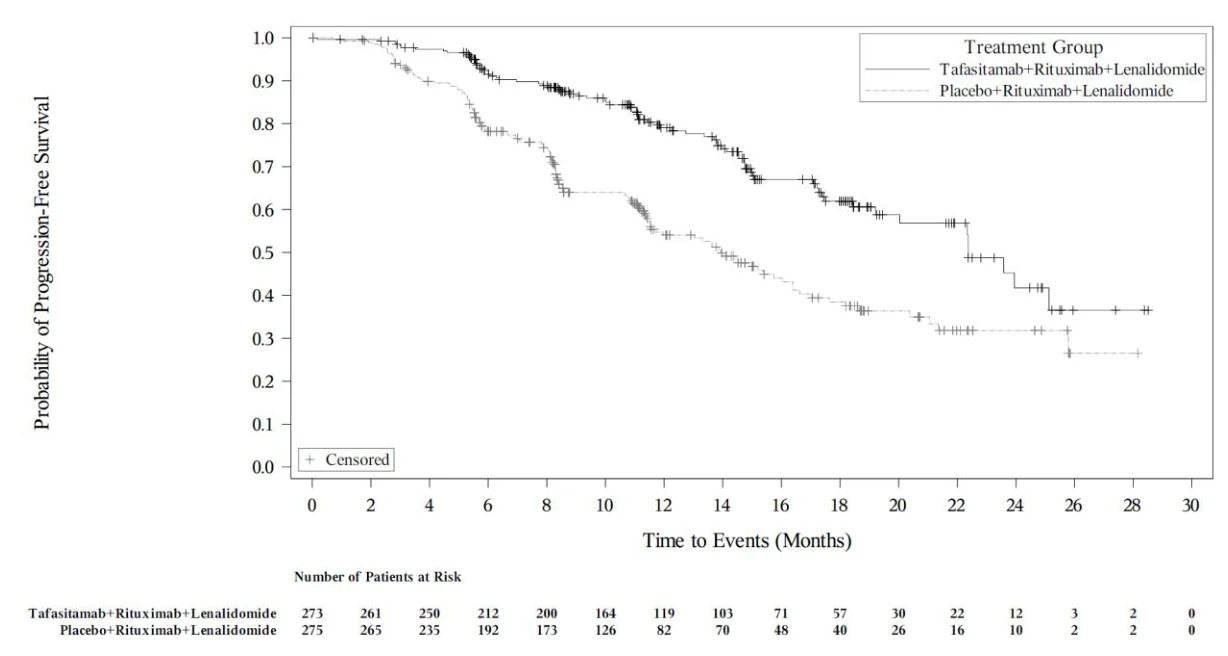
PFS by Independent Review Committee (IRC) assessment was consistent with PFS by investigator assessment, with an estimated hazard ratio of 0.41 (95% CI: 0.29, 0.56). The median PFS by IRC assessment was not reached (95% CI: 19.3, not evaluable) in the Minjuvi group and 16 months (95% CI: 13.9, 21.1) in the placebo group. At the time of the PFS analysis, the key secondary endpoint of overall survival (OS) had not been reached in either arm, median follow-up time of at least 14 months.
Other secondary efficacy endpoints included overall response rate (ORR) and duration of response (DoR), which were 83.5% (95% CI: 78.6%, 87.7%) and 21.2 months (95% CI: 19, NR), respectively, in the Minjuvi group and 72.4% (95% CI: 66.7%, 77.6%) and 13.6 months (95% CI: 12.4, 18.6), respectively, in the placebo group.
16. Non-Clinical Toxicology
General Toxicology: Tafasitamab has shown to be highly specific to the CD19 antigen on B cells. Toxicity studies following intravenous administration to cynomolgus monkeys have shown no other effect than the expected pharmacological depletion of B-cells in peripheral blood and in lymphoid tissues. These changes reversed after cessation of treatment.
Carcinogenicity: Carcinogenicity studies have not been conducted with tafasitamab; consistent with health authority guidelines for therapeutics intended for the treatment of cancer, carcinogenicity studies are generally not warranted.
Genotoxicity: Genotoxicity studies have not been conducted with tafasitamab; consistent with health authority guidelines for biotechnology products, genotoxicity studies are generally not needed.
Reproductive and Developmental Toxicology: No specific studies of fertility or reproductive and developmental toxicity were conducted with tafasitamab. In the 13-week repeat-dose general toxicity study in cynomolgus monkeys, no adverse effects on male and female reproductive organs were observed up to the highest dose tested, 100 mg/kg/week (approximately 9 times the human exposure based on AUC at the clinical dose of 12 mg/kg/week).
Immunogenicity: In the 13-week repeat-dose general toxicity study in cynomolgus monkeys, there was evidence for anti-drug antibody formation but no evidence for cytokine release. There was a reversible reduction in a primary antibody response to antigens in a T-cell dependent antibody response assessment.
17. Supporting Product Monographs
- 1. PrREVLIMID® (capsules, 2.5 mg, 5 mg, 10 mg, 20 mg, 25 mg), control number 282493, product monograph, Celgene Inc. (2024-02-09)
- 2. PrRITUXAN® (intravenous Infusion, 10 mg/ml), control number 271112, product monograph, Hoffmann-La Roche Limited. (2023-06-02)