


Product Monograph - Lunsumio
Recent Major Label Changes
| 7 Warnings and Precautions, Immune | 2026-07 |
|---|
Table of Contents
Certain sections or subsections that are not applicable at the time of the preparation of the most recent authorized product monograph are not listed.
Recent Major Label Changes ................................................................................................. 3
Table of Contents ................................................................................................................. 3
Part 1: Healthcare Professional Information.......................................................................... 6
- 1.
Indications..................................................................................................................... 6
1.1. Pediatrics .................................................................................................................... 6
1.2. Geriatrics .................................................................................................................... 6
- 2. Contraindications .......................................................................................................... 6
- 3. Serious Warnings and Precautions ................................................................................. 6
- 4.
Dosage and Administration ............................................................................................ 6
4.1. Dosing Considerations ............................................................................................... 6
4.2. Recommended Dose and Dosage Adjustment .......................................................... 8
4.3. Reconstitution .......................................................................................................... 14
4.4. Administration ......................................................................................................... 15
4.5. Missed Dose ............................................................................................................. 16
- 5. Overdose ..................................................................................................................... 17
- 6. Dosage Forms, Strengths, Composition, and Packaging ................................................ 18
- 7.
Warnings and Precautions ........................................................................................... 18
Dependence, Tolerance and/or Abuse Liability ................................................................... 18
Driving and Operating Machinery ........................................................................................ 18
Endocrine and Metabolism .................................................................................................. 18
Hepatic/Biliary/Pancreatic ................................................................................................... 19
Immune ................................................................................................................................ 19
Neurologic ............................................................................................................................ 20
Renal ..................................................................................................................................... 20
Reproductive Health ............................................................................................................. 21
7.1. Special Populations .................................................................................................. 21
7.1.1. Pregnancy ......................................................................................................... 21
7.1.2. Breastfeeding ................................................................................................... 21
7.1.3. Pediatrics .......................................................................................................... 21
7.1.4. Geriatrics .......................................................................................................... 21
- 8.
Adverse Reactions ....................................................................................................... 22
8.1. Adverse Reaction Overview ..................................................................................... 22
8.2. Clinical Trial Adverse Reactions ............................................................................... 22
Cytokine release syndrome .............................................................................................. 24
Neutropenia ..................................................................................................................... 25
Serious Infections ............................................................................................................. 25
Tumour Flare .................................................................................................................... 25
Tumour Lysis Syndrome (TLS) ........................................................................................... 25
Immune Effector Cell-Associated Neurotoxicity Syndrome (ICANS) ................................ 26
8.3. Less Common Clinical Trial Adverse Reactions ........................................................ 29
8.4. Abnormal Laboratory Findings: Hematologic, Clinical Chemistry, and Other Quantitative Data ................................................................................................................. 30
- 9.
Drug Interactions ......................................................................................................... 31
9.2. Drug Interactions Overview ..................................................................................... 31
9.3. Drug-Behaviour Interactions .................................................................................... 32
9.4. Drug-Drug Interactions ............................................................................................ 32
9.5. Drug-Food Interactions ............................................................................................ 32
9.6. Drug-Herb Interactions ............................................................................................ 32
9.7. Drug-Laboratory Test Interactions........................................................................... 32
- 10.
Clinical Pharmacology .................................................................................................. 32
10.1. Mechanism of Action ............................................................................................... 32
10.2. Pharmacodynamics .................................................................................................. 32
10.3. Pharmacokinetics ..................................................................................................... 32
10.4. Immunogenicity ....................................................................................................... 37
- 11. Storage, Stability, and Disposal .................................................................................... 37
- 12. Special Handling Instructions ....................................................................................... 38
Part 2: Scientific Information .............................................................................................. 39
- 13. Pharmaceutical Information ........................................................................................ 39
- 14.
Clinical Trials ............................................................................................................... 39
14.1. Clinical Trials by Indication ...................................................................................... 39
- 15. Microbiology ............................................................................................................... 44
- 16. Non-Clinical Toxicology ................................................................................................ 45
Patient Medication Information (Intravenous Infusion)....................................................... 46
Patient Medication Information (Subcutaneous Injection) .................................................. 53
Part 1: Healthcare Professional Information
1. Indications
LUNSUMIO (mosunetuzumab for injection) / LUNSUMIO SC (mosunetuzumab injection) is indicated:
- As monotherapy for the treatment of adult patients with relapsed or refractory follicular lymphoma (Grades 1 – 3a) who have received at least two prior lines of systemic therapy.
1.1. Pediatrics
Pediatrics (<18 years of age): Based on the data submitted and reviewed by Health Canada, the safety and efficacy of LUNSUMIO/LUNSUMIO SC in pediatric patients has not been established; therefore, Health Canada has not authorized an indication for pediatric use (see 14 Clinical Trials; and 7.1.3 Pediatrics).
1.2. Geriatrics
Geriatrics (≥ 65 years of age): No differences in the safety or efficacy of LUNSUMIO/LUNSUMIO SC were observed between patients ≥ 65 years of age and those under 65 years (see 14 Clinical Trials, 7.1.4 Geriatrics).
2. Contraindications
LUNSUMIO/LUNSUMIO SC is contraindicated in patients who are hypersensitive to this drug or to any ingredient in the formulation, including any non-medicinal ingredient, or component of the container. For a complete listing, see 6 Dosage Forms, Strengths, Composition, and Packaging.
3. Serious Warnings and Precautions
|
|---|
4. Dosage and Administration
4.1. Dosing Considerations
- Counsel patients on the risks associated with LUNSUMIO/LUNSUMIO SC and distribute the patient card prior to administration.
- It is important to check the product labels to ensure that the correct formulation (LUNSUMIO or LUNSUMIO SC) is being administered to the patient as prescribed.
- LUNSUMIO/LUNSUMIO SC must only be administered under the supervision of a qualified healthcare professional with appropriate medical support to manage severe reactions such as cytokine release syndrome (CRS).
- LUNSUMIO (for IV administration) must only be administered as an intravenous infusion through a dedicated infusion line. Do not use an in-line filter to administer LUNSUMIO. Drip chamber filters can be used to administer LUNSUMIO.
- LUNSUMIO/LUNSUMIO SC should not be administered in the presence of active infections.
Prophylaxis and Premedication
Table 1 provides details on recommended premedication for prophylaxis of cytokine release syndrome and infusion related reactions for LUNSUMIO.
Table 1: Premedication to be administered to patients prior to LUNSUMIO Intravenous Infusion
| Patients requiring premedication | Premedication | Dosage | Administration |
|---|---|---|---|
Cycles 1 and 2: all patients Cycles 3+: patients who experienced any grade CRS with the immediate previous dose (optional if no CRS) | Corticosteroid | Dexamethasone 20 mg (preferred) IV or methylprednisolone 80 mg IV | Complete at least 1 hour prior to infusion |
| Anti-histamine | Diphenhydramine hydrochloride 50-100 mg or equivalent oral or IV anti-histamine | At least 30 minutes prior to infusion | |
| Anti-pyretic | Oral acetaminophen (500-1000 mg) | At least 30 minutes prior to infusion |
Table 2 provides details on recommended premedication for prophylaxis of cytokine release syndrome and infusion related reactions for LUNSUMIO SC.
Table 2: Premedication to be administered to patients prior to LUNSUMIO SC Subcutaneous Administration
| Patients requiring premedication | Premedication | Dosage | Administration | |
|---|---|---|---|---|
Cycles 1: all patients Cycles 2+: patients who experienced any grade CRS with the immediate previous dose (optional if no CRS) | Corticosteroid | Dexamethasone 20 mg (preferred) oral / IV or methylprednisolone 80 mg oral / IV | Prior to injection | |
| Anti-histaminea | Diphenhydramine hydrochloride 50-100 mg or equivalent oral or IV anti-histamine | Prior to injection | ||
| Anti-pyretica | Oral acetaminophen (500-1000 mg) | Prior to injection | ||
| a Antihistamine and antipyretic premedications are optional in all cycles | ||||
4.2. Recommended Dose and Dosage Adjustment
The recommended dose of LUNSUMIO intravenous infusion for each 21-day cycle is detailed in Table 3 and Figure 1.
Table 3: Dose of LUNSUMIO for Intravenous Infusion
| Day of Treatment | Dose of LUNSUMIO | Rate of infusion | |
|---|---|---|---|
| Cycle 1 | Day 1 | 1 mg | Infusions of LUNSUMIO in Cycle 1 should be administered over a minimum of 4 hours. |
| Day 8 | 2 mg | ||
| Day 15 | 60 mg | ||
| Cycle 2 | Day 1 | 60 mg | If the most recent infusion was well-tolerated, LUNSUMIO may be administered over 2 hours. |
| Cycles 3+ | Day 1 | 30 mg | |
Figure 1: LUNSUMIO Dosing Schedule for Intravenous Infusion

EOT = End of Treatment; CR = Complete Response; PR = Partial Response; SD = Stable Disease
The recommended dose of LUNSUMIO SC subcutaneous injection for each 21-day cycle is detailed in Table 4 and Figure 2.
Table 4: Dose of LUNSUMIO SC for Subcutaneous Injection
| Day of Treatment | Dose of LUNSUMIO SC | |
|---|---|---|
| Cycle 1* | Day 1 | 5 mg |
| Day 8 | 45 mg | |
| Day 15 | 45 mg | |
| Cycles 2+ | Day 1 | 45 mg |
*The step-up dosing schedule in Cycle 1 is intended to minimize the risk of cytokine release syndrome.
Figure 2: LUNSUMIO SC Dosing Schedule for Subcutaneous Injection

EOT = End of Treatment; CR = Complete Response; PR = Partial Response; SD = Stable Disease
Monitoring
All patients must be monitored for signs and symptoms of CRS and/or neurologic toxicity, including immune effector cell-associated neurotoxicity syndrome (ICANS), following LUNSUMIO/LUNSUMIO SC administration. Counsel patients on the risk, signs, and symptoms associated with CRS and/or neurologic toxicity, including ICANS, and on seeking immediate medical attention should signs and symptoms of CRS and/or neurologic toxicity, including ICANS, occur at any time. Hospitalization is not mandatory, and patients can be monitored in an outpatient setting.
Duration of Treatment
LUNSUMIO/LUNSUMIO SC should be administered for a fixed duration of 8 or 17 cycles based on tumour response, unless the patient experiences unacceptable toxicity or disease progression.
For patients who achieve a complete response, no further treatment beyond 8 cycles is required. For patients who achieve a partial response or have stable disease in response to treatment with LUNSUMIO/LUNSUMIO SC after 8 cycles, an additional 9 cycles of treatment (17 cycles total) should be administered, unless a patient experiences unacceptable toxicity or disease progression.
Dosage Modifications for Adverse Reactions
Cytokine Release Syndrome (CRS)
Identify Cytokine Release Syndrome (CRS) based on clinical presentation (see 7 Warnings and Precautions). Evaluate for and treat other causes of fever, hypoxia, and hypotension, such as infections/sepsis. Infusion related reactions (IRR) may be clinically indistinguishable from manifestations of CRS. If CRS or IRR is suspected, manage according to the recommendations in Table 5.
Table 5: LUNSUMIO Intravenous Infusion CRS Grading and Management10
| CRS Grade1 | CRS Management2 | Next Scheduled Infusion of LUNSUMIO |
|---|---|---|
| CRS Grade1 | CRS Management2 | Next Scheduled Infusion of LUNSUMIO |
| CRS Grade1 | CRS Management2 | Next Scheduled Infusion of LUNSUMIO |
Grade 1 Fever ≥38ºC | If CRS occurs during infusion:
If CRS occurs post-infusion:
If CRS lasts >48 hours after symptomatic management:
| Ensure symptoms are resolved for at least 72 hours prior to next infusion Monitor patient more frequently |
Grade 2 Fever ≥38ºC and/or hypotension not requiring Vasopressors and/or hypoxia requiring low-flow oxygen6 by nasal cannula or blow-by | If CRS occurs during infusion:
If CRS occurs post-infusion:
If no improvement occurs after symptomatic management:
| Ensure symptoms are resolved for at least 72 hours prior to next infusion Maximize premedication as appropriate7 Consider infusing the next dose at 50% rate, with more frequent monitoring of the patient8 |
Grade 3 Fever ≥38ºC and/or hypotension requiring a vasopressor (with or without vasopressin) and/or hypoxia requiring high flow oxygen8 by nasal cannula, face mask, non-rebreather mask, or Venturi mask | If CRS occurs during infusion:
If CRS occurs post-infusion:
If CRS is refractory to dexamethasone and tocilizumab4,5: Consider alternative immunosuppressants9 and methylprednisolone 1000 mg/day IV until clinical improvement | Ensure symptoms are resolved for at least 72 hours prior to next infusion. Hospitalize for the next infusion. Maximize premedication as appropriate.7 Administer the next infusion at 50% rate. |
Grade 4 Fever ≥38ºC and/or hypotension requiring multiple vasopressors (excluding vasopressin) and/or hypoxia requiring oxygen by positive pressure (e.g., CPAP, BiPAP, intubation and mechanical ventilation) | If CRS occurs during or post-infusion:
If CRS is refractory to dexamethasone and tocilizumab: Consider alternative immunosuppressants9 and methylprednisolone 1000 mg/day IV | |
1 ASTCT = American Society for Transplantation and Cellular Therapy. Premedication may mask fever, therefore if clinical presentation is consistent with CRS, please follow these management guidelines 2 If CRS is refractory to management, consider other causes including hemophagocytic lymphohistiocytosis 3 Dexamethasone should be administered at 10 mg IV every 6 hours (or equivalent) until clinical improvement 4 In study GO29781, tocilizumab was administered intravenously at a dose of 8 mg/kg (not to exceed 800 mg per infusion), as needed for CRS management. 5 If no clinical improvement in the signs and symptoms of CRS occurs after the first dose, a second dose of intravenous tocilizumab 8 mg/kg may be administered at least 8 hours apart (maximum 2 doses per CRS event). Within each time period of 6 weeks of LUNSUMIO treatment, the total amount of tocilizumab doses should not exceed 3 doses 6 Low-flow oxygen is defined as oxygen delivered at <6 L/minute 7 Refer to Table 1 for additional information 8 High-flow oxygen is defined as oxygen delivered at ≥6 L/minute 9 Crombie et al. Blood (2024) 10 The recommendations describe the CRS management in Study GO29781. Treat CRS per institutional guidelines. | ||
Table 6: LUNSUMIO SC Subcutaneous Injection CRS Grading and Management10
| CRS Grade1 | CRS Management2 | Next Scheduled Injection of LUNSUMIO SC | |
|---|---|---|---|
| CRS Grade1 | CRS Management2 | Next Scheduled Injection of LUNSUMIO SC | |
Grade 1 Fever ≥38ºC | Treat symptoms If CRS lasts >48 hours after symptomatic management:
| Ensure symptoms are resolved prior to next dose Consider administration of premedication with antihistamines, anti-pyretic medications, and/or analgesics and monitor closely for CRS. | |
Grade 2 Fever ≥38ºC with hypotension not requiring vasopressors and/or hypoxia requiring low-flow oxygen6 by nasal cannula or blow-by | Treat symptoms If no improvement occurs after symptomatic management:
| Ensure symptoms are resolved for at least 72 hours prior to next dose. Maximize premedication as appropriate7 and monitor patient more frequently. | |
Grade 3 Fever ≥38ºC with hypotension requiring a vasopressor (with or without vasopressin) | CRS:
If CRS is refractory to dexamethasone and tocilizumab5:
| Ensure symptoms are resolved for at least 72 hours prior to next dose. Monitor more frequently and hospitalize for the next dose. Maximize premedication as appropriate.7 | |
| and/or hypoxia requiring high flow oxygen8 by nasal cannula, face mask, non-rebreather mask, or Venturi mask |
| If CRS occurred after 5 or 45 mg, the next dose should be 5 mg. Resume treatment schedule after recovery If CRS Grade 3 with the next dose, permanently discontinue. | |
Grade 4 Fever ≥38ºC with hypotension requiring multiple vasopressors (excluding vasopressin) and/or hypoxia requiring oxygen by positive pressure (e.g., CPAP, BiPAP, intubation and mechanical ventilation) | CRS:
If CRS is refractory to dexamethasone and tocilizumab:
| ||
1 ASTCT = American Society for Transplantation and Cellular Therapy. Premedication may mask fever, therefore if clinical presentation is consistent with CRS, please follow these management guidelines 2 If CRS is refractory to management, consider other causes including hemophagocytic lymphohistiocytosis 3 Dexamethasone should be administered at 10 mg IV every 6 hours (or equivalent) until clinical improvement 4 In study GO29781, tocilizumab was administered intravenously at a dose of 8 mg/kg (not to exceed 800 mg per infusion), as needed for CRS management. 5 If no clinical improvement in the signs and symptoms of CRS occurs after the first dose, a second dose of intravenous tocilizumab 8 mg/kg may be administered at least 8 hours apart (maximum 2 doses per CRS event). Within each time period of 6 weeks of LUNSUMIO SC treatment, the total amount of tocilizumab doses should not exceed 3 doses 6 Low-flow oxygen is defined as oxygen delivered at <6 L/minute 7 Refer to Table 1 for additional information 8 High-flow oxygen is defined as oxygen delivered at ≥6 L/minute 9 Crombie et al. Blood (2024) 10 The recommendations describe the CRS management in Study GO29781. Treat CRS per institutional guidelines. | |||
Neurologic Toxicity Including Immune Effector Cell-Associated Neurotoxicity Syndrome (ICANS)
Neurologic toxicity including ICANS should be identified based on the clinical presentation (see 7 Warnings and Precautions). At the first sign of neurologic toxicity, including ICANS, based on the type and severity of neurologic toxicity consider supportive therapy, neurology evaluation, and withholding LUNSUMIO/LUNSUMIO SC per Table 7. Rule out other causes of neurologic symptoms. If ICANS is suspected, it should be managed according to the recommendations in
Table 7
Table 7: Neurological Toxicity, including Immune Effector Cell-Associated Neurotoxicity Syndrome (ICANS)f
| Grade a,b | Actions |
|---|---|
| Grade 1 |
|
| Grade 2 |
|
| Grade 3 |
|
| Grade 4 |
|
a Neurologic toxicity grading per National Cancer Institute Common Terminology Criteria for Adverse Events (NCI CTCAE), version 4.03.
b American Society for Transplantation and Cellular Therapy (ASTCT) consensus grading criteria.
c Consider the type of neurologic toxicity before deciding to withhold LUNSUMIO/LUNSUMIO SC.
d See Table 9 for guidance on restarting LUNSUMIO after dose delay.
d See Table 10 for guidance on restarting LUNSUMIO SC after dose delay.
e Evaluate benefit/risk before restarting LUNSUMIO/LUNSUMIO SC.
f The recommendations describe the neurologic toxicity management in study GO29781. Treat ICANS per institutional guidelines.
Dose modifications for other clinically significant adverse reactions
Patients who experience grade 3 or 4 reactions should have treatment temporarily withheld until symptoms are resolved.
4.3. Reconstitution
INTRAVENOUS INFUSION
Determine the required dose, the total volume of LUNSUMIO solution required, and the number of LUNSUMIO vials needed.
Inspect the vial(s) visually for any particulate matter, prior to dilution. Do not use if the solution is discolored, or cloudy, or if foreign particles are present.
LUNSUMIO must be diluted into an infusion bag containing 0.9% or 0.45% sodium chloride solution by a healthcare professional using aseptic technique prior to administration.
Use a sterile needle and syringe to prepare LUNSUMIO. The product contains no preservative and is intended for single-dose use only. Discard any unused portion.
- 1. Withdraw a volume of 0.9% or 0.45% sodium chloride solution, equal to the volume of LUNSUMIO required for the patient’s dose, from the infusion bag and discard (see Table 8).
- 2. Withdraw the required volume of LUNSUMIO from the vial using a sterile syringe and needle and dilute into the infusion bag. Discard any unused portion left in the vial.
Table 8: Dilution of LUNSUMIO Intravenous Infusion
| Day of Treatment | Dose of LUNSUMIO | Volume of LUNSUMIO in 0.9% or 0.45% sodium chloride solution | Size of infusion bag | |
|---|---|---|---|---|
| Cycle 1 | Day 1 | 1 mg | 1 mL | 50 mL or 100 mL |
| Day 8 | 2 mg | 2 mL | 50 mL or 100 mL | |
| Day 15 | 60 mg | 60 mL | 250 mL | |
| Cycle 2 | Day 1 | 60 mg | 60 mL | 250 mL |
| Cycle 3+ | Day 1 | 30 mg | 30 mL | 100 mL or 250 mL |
- 3. Gently mix the infusion bag by slowly inverting the bag. Do not shake.
- 4. Inspect the infusion bag for particulates and discard if present.
- 5. Apply the peel-off label from the package insert to the infusion bag.
- 6. Administer diluted LUNSUMIO immediately as per 4.4 Administration and 11 Storage, Stability, and Disposal.
Incompatibilities
- Do not mix LUNSUMIO with, or administer through the same infusion line, as other medicinal products.
- Do not use diluents other than 0.9% or 0.45% sodium chloride solution to dilute LUNSUMIO.
- No incompatibilities have been observed between LUNSUMIO and IV infusion bags with product contacting materials of polyvinyl chloride (PVC), or polyolefins (PO) such as polyethylene (PE) and polypropylene (PP). In addition, no incompatibilities have been observed with infusion sets or infusion aids with product contacting materials of PVC, PE, polyurethane (PUR), polybutadiene (PBD), silicone, acrylonitrile butadiene styrene (ABS), polycarbonate (PC), polyetherurethane (PEU), fluorinated ethylene propylene (FEP), or polytetrafluorethylene (PTFE), or with drip chamber filter membrane composed of polyamide (PA).
SUBCUTANEOUS INJECTION
LUNSUMIO SC does not require reconstitution or dilution. See section 4.4 Administration.
4.4. Administration
INTRAVENOUS INFUSION
- LUNSUMIO must only be administered as an intravenous infusion under the supervision of a qualified healthcare professional with appropriate medical support to manage severe reactions such as cytokine release syndrome (see 4.2 Recommended Dose and Dosage Adjustment).
- Do not administer as an IV push or bolus.
- LUNSUMIO should be administered to well-hydrated patients.
- Do not use an in-line filter to administer LUNSUMIO.
SUBCUTANEOUS INJECTION
- LUNSUMIO SC should be administered to well-hydrated patients.
- LUNSUMIO SC must only be administered as a subcutaneous injection under the supervision of a qualified healthcare professional with appropriate medical support to manage severe reactions such as cytokine release syndrome (see 7 Warnings and Precautions).
- Inject the required volume of LUNSUMIO SC into the subcutaneous tissue of the abdomen or thigh, changing the site of injection with each dose. Do not inject into tattoos, moles or scars or areas where the skin is red, bruised, tender, hard, or not intact.
- LUNSUMIO SC contains no preservative and is intended for single-dose only. Proper aseptic technique throughout the handling of this medicinal product should be followed.
Preparation of the syringe
- Determine the dose required based on the dosing schedule and select the appropriate vial size.
- Inspect the vial visually for any particulate matter, do not use if the solution is discoloured, or cloudy, or if foreign particles are present.
- Using aseptic technique, withdraw LUNSUMIO SC solution from the vial using an appropriately sized transfer needle. The smallest syringe that can accurately deliver the injection volume should be used.
- Remove the transfer needle and attach an appropriately sized injection needle.
- Apply the peel-off label from package insert to the prepared drug product.
Storage of the Syringe
- Once transferred from the vial to the syringe, LUNSUMIO SC solution for injection should be injected immediately because LUNSUMIO SC solution for injection does not contain any antimicrobial-preservative.
- If immediate use is not possible, the capped syringe can be stored in the refrigerator at 2°C to 8°C (36°F to 46°F) for up to 48 hours protected from light and/or at 9°C to 25°C for up to 12 hours at ambient light.
4.5. Missed Dose
Table 9: Recommendations for Restarting Therapy with LUNSUMIO (Intravenous Infusion) After Dose Delay
| Last Dose Administered | Time Since the Last Dose Administered | Action for Next Dose(s) |
| Last Dose Administered | Time Since the Last Dose Administered | Action for Next Dose(s) |
1 mg Cycle 1 Day 1 | 1 to 2 weeks | Administer 2 mg (Cycle 1 Day 8), then resume the planned treatment schedule. |
| > 2 weeks | Repeat 1 mg (Cycle 1 Day 1), then administer 2 mg (Cycle 1 Day 8) and resume the planned treatment schedule. | |
2 mg Cycle 1 Day 8 | 1 to 2 weeks | Administer 60 mg (Cycle 1 Day 15), then resume the planned treatment schedule. |
| > 2 weeks to < 6 weeks | Repeat 2 mg (Cycle 1 Day 8), then administer 60 mg (Cycle 1 Day 15) and resume the planned treatment schedule. | |
| ≥ 6 weeks | Repeat 1 mg (Cycle 1 Day 1) and 2 mg (Cycle 1 Day 8), then administer 60 mg (Cycle 1 Day 15) and resume the planned treatment schedule. | |
60 mg Cycle 1 Day 15 | 1 week to < 6 weeks | Administer 60 mg (Cycle 2 Day 1), then resume the planned treatment schedule. |
| ≥ 6 weeks | Repeat 1 mg (Cycle 2 Day 1) and 2 mg (Cycle 2 Day 8), then administer 60 mg (Cycle 2 Day 15), followed by 30 mg (Cycle 3 Day 1) and then resume the planned treatment schedule. | |
60 mg Cycle 2 Day 1 | 3 weeks to < 6 weeks | Administer 30 mg (Cycle 3 Day 1), then resume the planned treatment schedule. |
| ≥ 6 weeks | Repeat 1 mg (Cycle 3 Day 1) and 2 mg (Cycle 3 Day 8), then administer 30 mg (Cycle 3 Day 15)*, followed by 30 mg (Cycle 4 Day 1) and then resume the planned treatment schedule. | |
30 mg Cycle 3 onwards | 3 weeks to < 6 weeks | Administer 30 mg, then resume the planned treatment schedule. |
| ≥ 6 weeks | Repeat 1 mg on Day 1 and 2 mg on Day 8 during the next cycle, then administer 30 mg on Day 15*, followed by 30 mg on Day 1 of subsequent cycles. | |
| * For the Day 1, Day 8, and Day 15 doses in the next cycle, administer premedication as per Table 1 for all patients | ||
Table 10: Recommendations for Restarting Therapy with LUNSUMIO SC (Subcutaneous Injection) After Dose Delay
| Last Dose Administered | Time Since the Last Dose Administered | Action for Next Dose(s) |
|---|---|---|
5 mg Cycle 1 Day 1 | 1 to 2 weeks | Administer 45 mg (Cycle 1 Day 8)*, then resume the planned treatment schedule |
| > 2 weeks | Repeat 5 mg (Cycle 1 Day 1)*, then administer 45 mg (Cycle 1 Day 8)* and resume the planned treatment schedule | |
45 mg Cycle 1 Day 8 | 1 week to < 6 weeks | Administer 45 mg (Cycle 1 Day 15)*, then resume the planned treatment schedule |
| ≥ 6 weeks | Repeat 5 mg*, then administer 45 mg (Cycle 1 Day 15)* 7 days later and resume the planned treatment schedule | |
45 mg Cycle 1 Day 15 | 1 week to < 6 weeks | Administer 45 mg (Cycle 2 Day 1), then resume the planned treatment schedule |
| ≥ 6 weeks | Repeat 5 mg (Cycle 2 Day 1)*, then administer 45 mg (Cycle 2 Day 8)* followed by 45 mg on Day 1 of subsequent cycles | |
45 mg Cycle 2 onwards | 3 weeks to < 6 weeks | Administer 45 mg, then resume the planned treatment schedule |
| ≥ 6 weeks | Repeat 5 mg* on Day 1 during the next cycle, then administer 45 mg* on Day 8, followed by 45 mg on Day 1 of subsequent cycles | |
*Administer premedication as per Cycle 1. See Table 2 Note that all references to Cycle and Day are to the nominal Cycle and Day. | ||
5. Overdose
There is no experience with overdosage of LUNSUMIO/LUNSUMIO SC in clinical trials.
| For the most recent information in the management of a suspected drug overdose, contact your regional poison control centre or Health Canada’s toll-free number, 1-844 POISON-X (1-844-764-7669). |
|---|
- 6. Dosage Forms, Strengths, Composition, and Packaging
To help ensure the traceability of biologic products, healthcare professionals should record the brand name and the non-proprietary (active ingredient) name as well as other product-specific identifiers such as the Drug Identification Number (DIN) and the batch/lot number of the product supplied.
Table 11: Dosage Forms, Strengths, and Composition
LUNSUMIO solution for intravenous (IV) infusion is provided as a sterile, colourless, preservative-free concentrate in single-use vials.
- 1 mg dose in a 2 mL vial containing 1 mL of liquid concentrate (1 mg/mL)
- 30 mg dose in a 50 mL vial containing 30 mL of liquid concentrate (1 mg/mL)
LUNSUMIO SC for subcutaneous injection is provided as a sterile, colorless to slightly brownish-yellow, preservative-free solution for subcutaneous injection in single-use vials:
- 5 mg dose in a 2 mL vial containing 0.5 mL of solution (10 mg/mL)
- 45 mg dose in a 2 mL vial containing 1 mL of solution (45 mg/mL)
7. Warnings and Precautions
Dependence, Tolerance and/or Abuse Liability
LUNSUMIO/LUNSUMIO SC does not have the potential for abuse and dependence.
Driving and Operating Machinery
LUNSUMIO/LUNSUMIO SC may have an influence on the ability to drive and use machines. Patients experiencing symptoms that might affect their ability to drive or use machines (e.g., symptoms of CRS, such as pyrexia, tachycardia, hypotension, chills, hypoxia and/or symptoms of neurologic toxicity including ICANS, such as somnolence, cognitive disorder, confusional state, delirium, disorientation) should be advised to refrain from driving and/or operating machinery until symptoms resolve.
Endocrine and Metabolism
Tumour Lysis Syndrome (TLS)
TLS has been reported in patients receiving LUNSUMIO/LUNSUMIO SC. Ensure adequate hydration prior to the administration of LUNSUMIO/LUNSUMIO SC. Administer prophylactic anti-hyperuricemic therapy (e.g. allopurinol, rasburicase), as appropriate. Monitor patients for signs or symptoms of TLS, especially patients with high tumour burden or rapidly proliferative tumours, and patients with reduced renal function. Monitor blood chemistry and manage abnormalities promptly.
| Route of Administration | Dosage Form / Strength/Composition | Non-medicinal Ingredients |
| Intravenous infusion | Concentrate for solution for infusion, 1 mg/mL | acetic acid, histidine, methionine, polysorbate 20, sucrose, and water for Injection |
| Subcutaneous injection | Solution for subcutaneous injection, 10 mg/mL and 45 mg/mL | acetic acid, histidine, methionine, polysorbate 20, sucrose, and water for injection |
Hepatic/Biliary/Pancreatic
The safety and efficacy of LUNSUMIO/LUNSUMIO SC in patients with hepatic impairment has not been formally studied (see 10.3 Pharmacokinetics, Special Populations, Hepatic Insufficiency).
Immune
Cytokine Release Syndrome (CRS)
CRS, including life-threatening reactions, have occurred in patients receiving LUNSUMIO/LUNSUMIO SC. Signs and symptoms included pyrexia, chills, hypotension, tachycardia, hypoxia, and headache. Infusion related reactions may be clinically indistinguishable from manifestations of CRS. For LUNSUMIO, CRS events occurred predominantly in cycle 1 and were most common with Day 1 (1 mg) and Day 15 (60 mg) dose administrations. For LUNSUMIO SC, CRS events occurred predominantly in cycle 1 and were most common with Day 1 (5 mg) and Day 8 (45 mg) dose administrations.
Premedicate patients with corticosteroids, antipyretics and antihistamines as per Table 1 for LUNSUMIO and Table 2 for LUNSUMIO SC. Ensure adequate hydration prior to the administration of LUNSUMIO/LUNSUMIO SC. Monitor patients for signs or symptoms of CRS. Counsel patient to seek immediate medical attention should signs or symptoms of CRS occur at any time. Institute treatment with supportive care, tocilizumab and/or corticosteroids as indicated (see 4 Dosage and Administration).
Serious Infections
Serious infections, including opportunistic infections, pneumonia, bacteraemia, and sepsis or septic shock have occurred in patients receiving LUNSUMIO/LUNSUMIO SC. Some of these cases were life-threatening or fatal. Febrile neutropenia was observed in patients after receiving LUNSUMIO/LUNSUMIO SC.
LUNSUMIO/LUNSUMIO SC should not be administered to a patient with an active infection. Caution should be exercised when considering the use of LUNSUMIO/LUNSUMIO SC in patients with a history of recurring or chronic infections (e.g. chronic, active Epstein-Barr Virus), with underlying conditions that may predispose to infections or who have had significant prior immunosuppressive treatment. Administer prophylactic antibacterial, antiviral and/or antifungal medications, as appropriate. Monitor patients for signs and symptoms of infection before and after LUNSUMIO/LUNSUMIO SC administration and treat appropriately. In the event of febrile neutropenia, evaluate for infection and manage with antibiotics, fluids and other supportive care.
Cases of progressive multifocal leukoencephalopathy (PML) have been reported in patients treated with CD20-directed monoclonal antibodies, including CD3-CD20 bispecific antibodies. If neurological symptoms suggestive of PML occur during LUNSUMIO/LUNSUMIO SC therapy, treatment with LUNSUMIO/LUNSUMIO SC should be withheld and appropriate diagnostic measures initiated. Discontinue LUNSUMIO/LUNSUMIO SC if PML is confirmed.
Tumour Flare
Tumour flare has been reported in patients treated with LUNSUMIO/LUNSUMIO SC. Manifestations included new or worsening pleural effusions, localized pain and swelling at the sites of lymphoma lesions and tumour inflammation. Consistent with the mechanism of action of LUNSUMIO, tumour flare is likely due to the influx of T-cells into tumour sites following LUNSUMIO/LUNSUMIO SC administration.
There are no specific risk factors for tumour flare that have been identified, however, there is a heightened risk of compromise and morbidity due to mass effect secondary to tumour flare in patients with bulky tumours located in close proximity to airways and/or a vital organ. Monitoring and evaluation for tumour flare at critical anatomical sites is recommended in patients treated with LUNSUMIO/LUNSUMIO SC.
Hemophagocytic Lymphohistiocytosis
Hemophagocytic lymphohistiocytosis (HLH), including fatal cases, has occurred in patients receiving LUNSUMIO/LUNSUMIO SC in clinical trials. HLH is a hyper inflammatory syndrome with potentially life-threatening complications, characterized by fever, hepatomegaly and cytopenias. HLH, including Immune Effector Cell Associated HLH-like Syndrome (IEC-HS), should be considered when the presentation of CRS is atypical or prolonged. Patients should be monitored for clinical signs and symptoms of HLH. For suspected HLH, LUNSUMIO/LUNSUMIO SC must be interrupted and treatment for HLH initiated per current practice guidelines.
Immunisation
Live and/or live-attenuated vaccines should not be given concurrently with LUNSUMIO/LUNSUMIO SC. Studies have not been conducted in patients who recently received live vaccines.
Neurologic
Neurologic Toxicity Including Immune Effector Cell-Associated Neurotoxicity Syndrome (ICANS)
Neurologic toxicity including ICANS have occurred in patients receiving LUNSUMIO, including severe and life-threatening reactions. Manifestations of ICANS reported in the clinical trial included confusional state, cognitive disorder, delirium, disturbance in attention, and ICANS. The majority of cases occurred during Cycle 1.
Patients should be monitored for signs and symptoms of neurologic toxicity including
ICANS. Counsel patients to seek immediate medical attention should signs or symptoms of neurologic toxicity including ICANS occur at any time. Institute treatment with supportive care, corticosteroids and anti-seizure medication as indicated (see 4.2 Recommended Dose and Dosage Adjustment, Table 4). LUNSUMIO/LUNSUMIO SC should be withheld or discontinued as recommended (see 4.2 Recommended Dose and Dosage Adjustment).
Renal
The safety and efficacy of LUNSUMIO/LUNSUMIO SC in patients with renal impairment has not been formally studied. (see 10.3 Pharmacokinetics, Special Populations, Renal Insufficiency).
Reproductive Health
Contraception
Women of childbearing potential should use contraception while receiving LUNSUMIO/LUNSUMIO SC and for at least 3 months after the last administration of LUNSUMIO/LUNSUMIO SC (see section 10.3 Pharmacokinetics, Elimination).
Fertility
Male and female fertility was investigated in cynomolgus monkeys. No mosunetuzumab-related findings were observed in male and female reproductive endpoints up to the highest dose tested (0.5 mg/kg), at exposures similar to exposure in patients receiving the recommended dose (see 16 Non-Clinical Toxicology, Reproductive and Developmental Toxicology).
7.1. Special Populations
7.1.1. Pregnancy
LUNSUMIO/LUNSUMIO SC should be avoided during pregnancy unless the potential benefit to the mother outweighs the potential risk to the fetus. There are no adequate and well-controlled data from studies in pregnant women; however, transient peripheral B-cell depletion and lymphocytopenia have been reported in infants born to mothers exposed to other anti-CD20 antibodies during pregnancy (see section 16 Non-Clinical Toxicology, Reproductive and Developmental Toxicology).
The safe use of LUNSUMIO/LUNSUMIO SC during labor and delivery has not been studied.
7.1.2. Breastfeeding
It is unknown whether LUNSUMIO/LUNSUMIO SC is excreted in human breast milk or if it has any effect on milk production. Human IgG is known to be present in human milk. The potential for absorption of LUNSUMIO/LUNSUMIO SC and the potential for adverse reactions in the nursing infant is unknown. Patients should be advised to discontinue breastfeeding during treatment with LUNSUMIO/LUNSUMIO SC and for 3 months after the last dose of LUNSUMIO/LUNSUMIO SC.
7.1.3. Pediatrics
The safety and efficacy of LUNSUMIO/LUNSUMIO SC in children younger than 18 years of age have not been established.
7.1.4. Geriatrics
Among 218 non-Hodgkin lymphoma patients treated with LUNSUMIO (intravenous infusion) and 139 patients treated with LUNSUMIO SC (subcutaneous injection), 94 (43%) and 68 (49%) respectively, were older than 65 years. No clinically important differences in safety or effectiveness of LUNSUMIO/LUNSUMIO SC were observed between these patients and younger patients.
8. Adverse Reactions
8.1. Adverse Reaction Overview
Study GO29781 – relapsed/refractory Follicular Lymphoma after at least 2 prior lines of systemic therapy
INTRAVENOUS INFUSION
The adverse drug reactions (ADRs) described in this section were identified from one dose-escalation and expansion study (GO29781) in relapsed/refractory follicular lymphoma patients who were treated at the recommended IV dose (n=90). The median number of cycles at the recommended IV dose was 8 cycles (range: 1-17), 59% of patients received 8 cycles, and 18% of patients received more than 8 cycles up to 17 cycles.
Serious adverse reactions occurred in 47% of patients. Serious adverse reactions occurring in greater than 2% of patients were cytokine release syndrome, acute kidney injury, urinary tract infection, pyrexia, pneumonia, tumour flare, COVID-19, and Epstein-Barr viraemia.
Dose interruption due to adverse reactions occurred in 38% of patients. The most common (≥3 patients) adverse reactions leading to interruption were neutropenia/neutrophil count decreased (n=15 [17%]) and CRS (n = 8 [8.9%]).
SUBCUTANEOUS INJECTION
The adverse drug reactions (ADRs) described in this section were evaluated in an open-label, multicenter study, which included a cohort of 94 patients with relapsed or refractory follicular lymphoma (FL) after at least two lines of systemic therapy. The median number of cycles was 8 (range:1 to 17), with 78% of patient exposed for at least 8 cycles and 6% exposed for 17 cycles.
Serious adverse reactions occurred in 39.4% of patients. Serious adverse reactions occurring in greater than 2% of patients were cytokine release syndrome, infections (including pneumonia, upper respiratory tract infections, and sepsis), pyrexia, and febrile neutropenia.
Permanent discontinuation of LUNSUMIO SC due to an adverse reaction occurred in 7% of patients, including from COVID-19.
Dosage interruptions of LUNSUMIO SC due to an adverse reaction occurred in 40% of patients. Adverse reactions that required dosage interruption in ≥ 5% of patients included COVID-19 and neutropenia.
8.2. Clinical Trial Adverse Reactions
Clinical trials are conducted under very specific conditions. Therefore, the frequencies of adverse reactions observed in the clinical trials may not reflect frequencies observed in clinical practice and should not be compared to frequencies reported in clinical trials of another drug.
INTRAVENOUS INFUSION
Table 12 summarizes the adverse reactions in patients with relapsed or refractory FL treated with LUNSUMIO in GO29781.
Table 12: Adverse Reactions occurring in ≥10% of Relapsed/Refractory FL Patients Treated with LUNSUMIO in GO29781 (n=90)
| Adverse Reaction | LUNSUMIO (N=90) | |||||||
|---|---|---|---|---|---|---|---|---|
| Adverse Reaction | LUNSUMIO (N=90) | |||||||
All Grades n (%) | Grade 3 or 4 n (%) | |||||||
All Grades n (%) | Grade 3 or 4 n (%) | |||||||
| Blood and lymphatic system disorders | ||||||||
| Neutropenia1 | 26 (28.9) | 24 (26.7) | ||||||
| Anemia2 | 12 (13.3) | 7 (7.8) | ||||||
| Thrombocytopenia3 | 9 (10.0) | 4 (4.4) | ||||||
| Gastrointestinal disorders | ||||||||
| Diarrhea | 15(16.7) | 0 | ||||||
Nausea Abdominal pain4 | 15 (16.7) 11 (12.2) | 0 1 (1.1) | ||||||
| Constipation | 16 (17.8) | 0 | ||||||
| General disorders and administration site conditions | ||||||||
| Fatigue5 | 38 (42.2) | 0 | ||||||
| Pyrexia | 26 (28.9) | 1 (1.1) | ||||||
| Edema6 | 14 (15.6) | 1 (1.1) | ||||||
| Chills | 12 (13.3) | 1 (1.1) | ||||||
| Infections and Infestations | ||||||||
| Upper respiratory tract infection7 | 15 (16.7) | 4 (4.4) | ||||||
| Urinary tract infection8 | 9 (10.0) | 1 (1.1) | ||||||
| Investigations | ||||||||
| Alanine aminotransferase increased | 11 (12.2) | 5 (5.6) | ||||||
| Aspartate aminotransferase increased | 5 (5.6) | 3 (3.3) | ||||||
| Immune system disorders | ||||||||
| Cytokine release syndrome9 | 40 (44.4) | 2 (2.2) | ||||||
| Metabolic and nutritional disorders | ||||||||
| Hypokalemia10 | 17 (18.9) | 2 (2.2) | ||||||
| Hypomagnesemia11 | 11 (12.2) | 0 | ||||||
| Hypophosphatemia12 | 24 (26.7) | 16 (17.8) | ||||||
| Musculoskeletal and connective tissue disorders | ||||||||
| Musculoskeletal pain13 | 25 (27.8) | 1 (1.1) | ||||||
| Arthralgia | 10 (11.1) | 0 | ||||||
| Nervous system disorder | ||||||||
| Headache14 | 30 (33.3) | 1 (1.1) | ||||||
| Peripheral neuropathy15 | 18 (20.0) | 0 | ||||||
| Dizziness16 | 11 (12.2) | 0 | ||||||
| Psychiatric disorder | ||||||||
| Insomnia | 11 (12.2) | 0 | ||||||
| Respiratory, thoracic and mediastinal disorders | ||||||||
| Cough17 | 20 (22.2) | 0 | ||||||
| Dyspnea18 | 10 (11.1) | 1 (1.1) | ||||||
| Skin and subcutaneous tissue disorders | ||||||||
| Rash19 | 34 (37.8) | 3 (3.3) | ||||||
| Pruritus | 19 (21.1) | 0 | ||||||
| Dry skin | 14 (15.6) | 0 | ||||||
| Skin exfoliation | 9 (10.0) | 0 | ||||||
1 Neutropenia includes neutropenia and neutrophil count decreased 2 Anemia includes anaemia and haemoglobin decreased 3 Thrombocytopenia includes thrombocytopenia and platelet count decreased 4 Abdominal pain includes abdominal pain, abdominal pain lower, and abdominal discomfort 5 Fatigue includes fatigue, asthenia, and lethargy 6 Edema includes oedema, oedema peripheral, peripheral swelling, face oedema, swelling face, pulmonary oedema, fluid overload, and fluid retention 7 Upper respiratory tract infection includes upper respiratory tract infection, viral upper respiratory tract infection, nasopharyngitis, sinusitis, sinusitis bacterial, viral sinusitis, respiratory tract infection, COVID-19, and respiratory tract infection viral 8 Urinary tract infection includes urinary tract infection, pyelonephritis acute, Escherichia urinary tract infection 9 American Society for Transplant and Cellular Therapy 10 Hypokalemia includes hypokalaemia and blood potassium decreased 11 Hypomagnesemia includes hypomagnesaemia and blood magnesium decreased 12 Hypophosphatemia includes hypophosphataemia and blood phosphorus decreased 13 Musculoskeletal pain includes musculoskeletal pain, back pain, myalgia, musculoskeletal chest pain, and neck pain 14 Headache includes headache, migraine, and head discomfort 15 Peripheral neuropathy includes neuropathy peripheral, peripheral sensory neuropathy, paraesthesia, dysaesthesia, hypoesthesia, burning sensation, neuralgia, and peripheral motor neuropathy 16 Dizziness includes dizziness and vertigo 17 Cough includes cough, productive cough, and upper-airway cough syndrome 18 Dyspnea includes dyspnoea and dyspnoea exertional 19 Rash includes rash, rash erythematous, exfoliative rash, rash macular, rash maculo-papular, rash pruritic, rash pustular, erythema, palmar erythema, dermatitis, dermatitis acneiform, dermatitis contact, palmar-plantar erythrodysaesthesia syndrome, rash morbilliform | ||||||||
Description of selected adverse drug reactions from clinical trials
Cytokine release syndrome
Cytokine release syndrome (ASTCT grading system) of any grade occurred in 44.4% (40/90) of patients with follicular lymphoma (FL) receiving LUNSUMIO intravenous infusion, with grade 2 occurring in 17%, grade 3 occurring in 1.1%, and grade 4 occurring in 1.1% of patients treated with LUNSUMIO. Among 40 patients who experienced CRS, CRS recurred in 47.5% of patients. The one patient with the grade 4 event was a patient with FL in the leukemic phase and also experienced concurrent TLS. No patients had a fatal CRS event.
In patients with FL, CRS of any grade occurred in 24.4% of patients after the Cycle 1, Day 1 dose; 6% after the Cycle 1, Day 8 dose; 37.5% after the Cycle 1, Day 15 dose, 13% occurring in patients after the Cycle 2 and 4% in Cycles 3 and beyond. The median time to CRS onset from the start of administration in Cycle 1 Day 1 was 5 hours (range: 0.7-23.7 hours), Cycle 1 Day 8 was 19.5 hours (range: 6.8-34.3 hours), Cycle 1 Day 15 was 26.6 hours (range: 0.1-390hours), and Cycle 2 Day 1 was 37.6 hours (range: 3.0-82.2hours). CRS resolved in all patients, and the median duration of CRS events was 3 days (range 1-29 days).
Of the 40 patients that experienced CRS, the most common signs and symptoms of CRS included pyrexia (97.5%), chills (35%), hypotension (37.5%), tachycardia (27.5%), headache (27.5) and hypoxia (20%).
Fourteen percent (13/90) of patients received tocilizumab and/or a corticosteroid, 7.7% (7/90) received tocilizumab, 11.1% (10/90) received corticosteroids, including 4.4% (4/90) who received both tocilizumab and corticosteroids.
In patients experiencing grade 2 CRS, 50% (8/16) of patients were treated with symptomatic management without corticosteroids or tocilizumab, 31.2% (5/16) received corticosteroids, 18.7% (3/16) received tocilizumab, and 12.5% (2/16) received both corticosteroids and tocilizumab. Patients with grade 3 (n=1) or grade 4 (n=1) CRS received tocilizumab, corticosteroids, vasopressors and/or oxygen supplementation.
Hospitalizations due to CRS occurred in 23.3% (21/90) of patients and the median duration of hospitalization was 6 days (range 2-30 days).
Neutropenia
Neutropenia of any grade occurred in 28.9% (26/90), including 26.6% grade 3-4 events. The median time to onset of first neutropenia/neutrophil count decreased events was 85 days (range: 1-334days), with median duration of 8 days (range: 1-314days). Of the 26 patients who had neutropenia/neutrophil count decreased events, 69.2% (18/26) received G-CSF treatment to treat the events.
Serious Infections
Serious infections of any grade occurred in 20% (18/90) of patients. One (1.1%) patient experienced serious infections concurrently with grade 3-4 neutropenia. The median time to onset of first serious infection was 78 days (range: 1-561 days), with median duration of 16 days (range: 4-174days).
Tumour Flare
Tumour flare (including pleural effusion and tumour inflammation) occurred in 3.3% (3/90) of patients, which included 1.1% grade 2 and 2.2% grade 3 events. The median time to onset was 17 days (range: 11-43 days), and median duration was 5 days (range: 1-6 days).
Tumour Lysis Syndrome (TLS)
TLS occurred in 1.1% (1/90) of patient, concurrent with CRS. One patient with follicular lymphoma was in the leukemic phase who experienced grade 4 TLS. TLS onset was on day 24, and resolved 6 days.
Immune Effector Cell-Associated Neurotoxicity Syndrome (ICANS)
Immune Effector Cell Associated Neurotoxicity Syndrome (ICANS) occurred in 4.4% (4/90) and included confusional state and cognitive disorder. All patients had Grade 1-2 events. The majority of events occurred during the first cycle of treatment. All of the patients resolved. The median time to onset from initial dose was 4 days (range: 1-23 days). The median duration of events was 3 days (range: 2-20 days).
Across a broader clinical trial population, ICANS occurred in 2.1% (20/949) of patients, and included confusional state, lethargy and ICANS. 19 patients had Grade 1-2 events and 1 patient had Grade 3 event. The majority of events occurred during the first cycle of treatment. The majority of cases resolved. The median time to onset from initial dose was 17 days (range: 1 to 48 days). The median duration was 3 days (range: 1-20 days).
SUBCUTANEOUS INJECTION
Table 13 summarizes the adverse reactions in patients with relapsed or refractory FL treated with LUNSUMIO SC in GO29781.
Table 13: Adverse Reactions (≥ 10%) in Patients Treated with LUNSUMIO SC in GO29781
| Adverse Reaction1 | LUMSUMIO SC (N = 94) | |||||
|---|---|---|---|---|---|---|
| Adverse Reaction1 | LUMSUMIO SC (N = 94) | |||||
All Grades (%) | Grade 3 or 4 (%) | |||||
All Grades (%) | Grade 3 or 4 (%) | |||||
| Blood and lymphatic disorders | ||||||
| Neutropenia2 | 20 (21.3) | 17 (18) | ||||
| Anemia3 | 12 (12.8) | 6 (6.4) | ||||
| Thrombocytopenia4 | 11 (11.7) | 4 (4.3) | ||||
| Gastrointestinal disorders | ||||||
| Diarrhea | 19 (20.2) | 0 | ||||
| Constipation | 13 (13.8) | 0 | ||||
| Nausea | 13 (13.8) | 0 | ||||
| Abdominal pain | 12 (12.8) | 0 | ||||
| General disorders and administration site conditions | ||||||
| Injection site5 reactions | 65 (69.1) | 0 | ||||
| Fatigue | 37 (39.4) | 0 | ||||
| Edema6 | 12 (12.8) | 0 | ||||
| Chills | 10 (10.6) | 0 | ||||
| Pyrexia | 10 (10.6) | 1 (1.1) | ||||
| Immune system disorders | ||||||
| Cytokine release syndrome | 28 (29.8) | 2 (2.1) | ||||
| Infections and infestations | ||||||
| Covid-19 | 25 (26.6) | 4 (4.3) | ||||
| Upper respiratory tract infection7 | 14 (14.9) | 2 (2.1%) | ||||
| Pneumonia8 | 12 (12.8) | 4 (4.3) | ||||
| Musculoskeletal and connective tissue disorders | ||||||
| Musculoskeletal pain | 19 (20.2) | 0 | ||||
| Arthralgia | 12 (12.8) | 0 | ||||
| Nervous system disorder | ||||||
| Headache9 | 16 (17.0) | 0 | ||||
| Peripheral neuropathy | 10 (10.6) | 0 | ||||
| Psychiatric disorder | ||||||
| Insomnia | 14 (14.9) | 0 | ||||
| Respiratory, thoracic and mediastinal disorders | ||||||
| Cough | 12 (12.8) | 0 | ||||
| Dyspnea | 10 (10.6) | 0 | ||||
| Skin and subcutaneous tissue disorders | ||||||
| Rash10 | 33 (35.1) | 3 (3.2) | ||||
| Dry skin | 10 (10.6) | 0 | ||||
The grouped term include observed PTs as follows 2 Neutropenia includes neutropenia and neutrophil count decreased 3 Anemia includes anaemia and haemoglobin decreased 4 Thrombocytopenia includes thrombocytopenia and platelet count decreased 5 Injection site reactions includes HLT injection site reactions 6 Edema includes oedema, oedema peripheral, Face oedema, and pulmonary oedema 7 Upper respiratory tract infection includes upper respiratory tract infection, viral upper respiratory tract infection, nasopharyngitis, sinusitis, Sinusitis bacterial, viral sinusitis, respiratory tract infection, COVID-19, respiratory tract infection viral 8 Pneumonia includes pneumonia, COVID-19 pneumonia 9 Headache includes headache, migraine, head discomfort 10 Rash includes rash, rash erythematous, exfoliative rash, rash macular, rash maculo-papular, rash pruritic, rash pustular, erythema, palmar erythema, dermatitis, dermatitis acneiform, dermatitis contact, palmar-plantar erythrodysaesthesia syndrome, rash morbilliform Grade 4 AEs only occurred for ADR terms, Pneumonia, Upper respiratory tract infection. Grade 5 AEs only occurred for ADR terms Pneumonia, and Upper respiratory tract infection. | ||||||
Description of selected adverse drug reactions from clinical trials
Cytokine Release Syndrome
Cytokine release syndrome (ASTCT grading system) of any grade occurred in 30% (28/94) of patients who received LUNSUMIO SC at the recommended dosage in the clinical trial (N=94), with grade 1 CRS occurring in 20%, grade 2 occurring in 7.4%, grade 3 occurring in 2.1% of patients. Among 28 patients who experienced CRS, recurrent CRS occurred in 14.2% of patients.
In patients with FL, CRS of any grade occurred in 19% (18/94) of patients after the Cycle 1, Day 1 dose; 12.8% (12/94) after the Cycle 1, Day 8 dose; 2.1% (2/94) after the Cycle 1, Day 15 dose, and 0% in Cycles 2 and beyond. The median time to CRS onset from the start of administration in Cycle 1 Day 1 was 16.5 hours (range: 7.2-33.4 hours), Cycle 1 Day 8 was 62 hours (range: 30.3-112.5 hours), Cycle 1 Day 15 was 35.8 hours (range: 23.2-48.3 hours). CRS resolved in all patients, and the median duration of CRS events was 2 days (range 1-15 days).
Of the 28 patients that experienced CRS, the most common signs and symptoms of CRS included pyrexia (96.4%), hypotension (21.4%), hypoxia (21.4%).
Fifteen percent (14/94) of patients received tocilizumab and/or a corticosteroid, 8.5% (8/94) received tocilizumab, 6.4% (6/94) received corticosteroids, including 2.1% (2/94) who received both tocilizumab and corticosteroids.
In patients experiencing grade 2 CRS, 1.1% received corticosteroids, 4.3% received tocilizumab, and 1.1% received both corticosteroids and tocilizumab. In patients with grade 3 (n=2) CRS, 2.1% received tocilizumab, and vasopressors and 1.1% received oxygen supplementation.
Hospitalizations due to CRS occurred in 15% (14/94) of patients and the median duration of hospitalization was 4 days (range 1-34 days).
Neutropenia
Neutropenia of any grade occurred in 21.3% (20/94), including 18% grade 3-4 events. The median time to onset of first neutropenia/neutrophil count decreased events was 79 days (range: 2-261 days), with median duration of 10 days (range: 1-487 days). Of the 20 patients who had neutropenia/neutrophil count decreased events, 65% (13/20) received G-CSF treatment to treat the events.
Serious Infections
Serious infections of any grade occurred in 17% (16/94) of patients. Two (2.1%) patients experienced serious infections concurrently with grade 3-4 neutropenia. The median time to onset of first serious infection was 96 days (range: 1-408 days), with median duration of 20 days (range: 2-374 days).
Tumour Flare
Tumour flare (including pleural effusion and tumour inflammation) occurred in one patient (1.1%), which was a grade 1 event. The median time to onset was 43 days.
Tumour Lysis Syndrome (TLS)
No patients treated with LUNSUMIO SC experienced TLS.
Immune Effector Cell-Associated Neurotoxicity Syndrome
Immune Effector Cell Associated Neurotoxicity Syndrome (ICANS) occurred in 3.2% (3/94) and included lethargy and memory impairment. All patients had Grade 1 events. All of the events resolved. The median time to onset from initial dose was 5 days (range: 3-17 days). The median duration of events was 3 days (range: 1-3 days).
Hemophagocytic Lymphohistiocytosis
HLH occurred in 1.1% (1/94) of patients.
Across a broader clinical trial population, HLH occurred in 0.2% (2/949) of patients treated with LUNSUMIO or LUNSUMIO SC. One patient experienced a Grade 4 event in the setting of disease progression with onset on day 8, and the patient died on day 17 due to disease progression without recovering from HLH. One patient experienced a Grade 5 event in the setting of disease transformation and concurrent EBV and CMV with onset on day 20.
8.3. Less Common Clinical Trial Adverse Reactions
INTRAVENOUS INFUSION
The ADRs which occurred in Study GO29781 (n=90) with a frequency of <10% were:
Infections and infestations: Pneumonia (5.6%), Lower respiratory tract infection (3.3%), Sepsis (3.3%), Pneumocystis jirovecii pneumonia (1.1%)
Respiratory, thoracic and mediastinal disorders: Pneumonitis (1.1%)
SUBCUTANEOUS INJECTION
The ADRs which occurred in Study GO29781 (n=94) with a frequency of <10% were:
Blood and lymphatic disorders: Febrile neutropenia (2.1%)
Immune system disorders: Haemophagocytic lymphohistiocytosis (1.1%)
Infections and infestations: Herpes zoster infection (4.3%), Cytomegalovirus infection (3.2%), Sepsis (3.2%), Herpes viral infections (2.1%), lower respiratory tract infection (2.1%), urinary tract infection (2.1%), Pneumocystis jirovecii pneumonia (1.1%), Epstein-Barr virus infection (1.1%)
Neoplasms benign, malignant and unspecified (including cysts and polyps): Tumor flare (1.1%)
Nervous system disorders: Tremor (4.3%), Immune effector cell-associated neurotoxicity syndrome (ICANS) (3.2%)
Skin and subcutaneous tissue disorders: Pruritus (7.4%), Skin exfoliation (7.4%)
Vascular disorders: Capillary leak syndrome (1.1%)
8.4. Abnormal Laboratory Findings: Hematologic, Clinical Chemistry, and Other Quantitative Data
Table 14: Select Laboratory Abnormalities (≥ 10%) That Worsened from Baseline in Patients Treated with LUNSUMIO (Intravenous Infusion) in GO29781
| Laboratory Abnormality | LUNSUMIO B11 RP2D Cohort N=90 | ||||||||||
|---|---|---|---|---|---|---|---|---|---|---|---|
| Na | All Grades n (%) | Grade ≥3b n (%) | |||||||||
| Worsening NCI CTCAE grade from baseline to: | |||||||||||
| Hematology | |||||||||||
| Hemoglobin decreased | 90 | 61 (67.8) | 11 (12.2) | ||||||||
| Lymphocyte count decreased | 83 | 83 (100) | 81(97.6) | ||||||||
| Neutrophils decreased | 72 | 42 (58.3) | 29(40.3) | ||||||||
| Platelets decreased | 90 | 41 (45.6) | 9(10) | ||||||||
| White blood cells decreased | 90 | 54 (60) | 12(13.3) | ||||||||
| Chemistry | |||||||||||
| Alanine aminotransferase increased | 90 | 29 (32.2) | 6(6.7) | ||||||||
| Aspartate aminotransferase increased | 90 | 35 (38.9) | 4(4.4) | ||||||||
| Gamma-glutamyl transferase increased | 90 | 31 (34.4) | 8(8.9) | ||||||||
| Glucose increased | 90 | 38 (42.2) | 38(42.2) | ||||||||
| Magnesium decreased | 90 | 31 (34.4) | 0 | ||||||||
| Phosphate decreased | 90 | 70 (77.8) | 41 (45.6) | ||||||||
| Potassium decreased | 90 | 30 (33.3) | 5 (5.6) | ||||||||
| Uric acid increased | 90 | 20 (22.2) | 20 (22.2) | ||||||||
RP2D=recommended Phase II dose a Number of patients with a baseline and at least one post-baseline assessment for lab parameter. b Includes shifts from NCI CTCAE Grade <3 to Grade ≥3 and shifts from Grade 3 to Grade 4. | |||||||||||
Table 15: Select Laboratory Abnormalities (≥ 10%) That Worsened from Baseline in Patients Treated with LUNSUMIO SC (Subcutaneous Injection) in GO29781
| Laboratory Abnormality | LUNSUMIO SC F2 (R2PD) N=94 | |||||||
|---|---|---|---|---|---|---|---|---|
| Na | All Grades n (%) | Grade ≥ 3b n (%) | ||||||
| Hematology | ||||||||
| Lymphocyte count decreased | 87 | 9 (10.3) | 2 (2.3) | |||||
| Hemoglobin decreased | 94 | 56 (59.6) | 9 (9.6) | |||||
| White blood cells decreased | 94 | 46 (48.9) | 15 (16) | |||||
| Neutrophils decreased | 70 | 35 (50) | 18 (25.7) | |||||
| Platelets decreased | 94 | 31 (33) | 6 (6.4) | |||||
| Chemistry | ||||||||
| Phosphate decreased | 94 | 45 (47.9) | 10 (10.6) | |||||
| Glucose increased | 94 | 17 (18.1) | 0 | |||||
| Aspartate aminotransferase increased | 94 | 26 (27.7) | 2 (2.1) | |||||
| Gamma-glutamyl transferase increased | 93 | 29 (31.2) | 1 (1.1) | |||||
| Magnesium decreased | 94 | 7 (7.4) | 2 (2.1) | |||||
| Potassium decreased | 94 | 18 (19.1) | 3 (3.2) | |||||
| Alanine aminotransferase increased | 94 | 32 (34) | 1 (1.1) | |||||
| Uric acid increased | 94 | 26 (27.7) | 26 (27.7) | |||||
RP2D=recommended Phase II dose a Number of patients with a baseline and at least one post-baseline assessment for lab parameter. b Includes shifts from NCI CTCAE Grade <3 to Grade ≥3 and shifts from Grade 3 to Grade 4. | ||||||||
9. Drug Interactions
9.2. Drug Interactions Overview
No clinical drug–drug interaction studies have been performed with LUNSUMIO/LUNSUMIO SC.
9.3. Drug-Behaviour Interactions
Women of childbearing potential should use contraception while receiving LUNSUMIO/LUNSUMIO SC and for at least 3 months after the last administration of LUNSUMIO/LUNSUMIO SC (see section 10.3 Pharmacokinetics, Elimination).
9.4. Drug-Drug Interactions
No clinical pharmacokinetic drug-drug interaction studies have been conducted with LUNSUMIO/LUNSUMIO SC.
Upon initiation of LUNSUMIO/LUNSUMIO SC in patients who are receiving concomitant drugs that are sensitive CYP3A substrates with a narrow therapeutic index, monitor for effect or drug concentration or dose adjust the CYP3A substrate accordingly, if warranted.
9.5. Drug-Food Interactions
No drug-food interaction studies have been performed with LUNSUMIO/LUNSUMIO SC.
9.6. Drug-Herb Interactions
No drug-herb interaction studies have been performed with LUNSUMIO/LUNSUMIO SC.
9.7. Drug-Laboratory Test Interactions
No drug-laboratory test interaction studies have been performed with LUNSUMIO/LUNSUMIO SC.
10. Clinical Pharmacology
10.1. Mechanism of Action
Mosunetuzumab is an anti-CD20/CD3 bispecific antibody targeting CD20-expressing B-cells. It is a conditional agonist; targeted B-cell killing is observed only upon simultaneous binding to CD20 on B-cells and CD3 on T-cells. Engagement of both arms of mosunetuzumab results in the formation of an immunologic synapse between a target B-cell and a cytotoxic T-cell leading to T-cell activation. Subsequent directed release of perforin and granzymes from the activated T-cell induces B-cell lysis leading to cell death.
10.2. Pharmacodynamics
LUNSUMIO caused B-cell depletion (defined as CD19 B-cell counts < 5 cells/uL) after the initial cycle of administration (by Cycle 2 Day 1) by intravenous administration route in a majority of patients (95.2%) and depletion was maintained throughout the duration of treatment. Evidence of B-cell recovery was observed after fixed-duration treatment was completed.
10.3. Pharmacokinetics
INTRAVENOUS INFUSION
LUNSUMIO exposure increased in a dose-proportional manner over the dose range studied. Serum concentrations reach the maximal level at the end of the IV infusion and decline in a bi-exponential fashion with half-life from 3 to 10 days in the first cycle, as estimated by non-compartmental analysis
(NCA). Steady-state kinetics (i.e. Cycle 4 and beyond) were not assessed by NCA. The concentration profile of two cycles of a step-up dose of 1/2/60/30 mg by IV infusion demonstrated accumulation with similar elimination rates for the first three doses, suggesting a constant clearance process.
The mosunetuzumab serum concentration-time profile after IV infusion could be described by a population pharmacokinetic model with two compartments and and a mathematical function for an empirical time-dependent clearance parameter. The time-dependent function fitted the clearance parameter with an initial baseline value (CLbase ~1.1 L/day) corresponding to a terminal half-life of 9.64 days, which then transitioned with a half life (HLtrans) of ~16.3 days to a steady-state value (CLss ~0.58 L/day) by cycle 4. At steady-state, the CLss parameter predicted a terminal half-life of mosunetuzumab of 16.1 days.
Table 16 Summary of Arithmetic Mean (CV%) Serum Mosunetuzumab Pharmacokinetic Parameters in Patients with NHL Calculated by Non-Compartmental Analysis Following Single Dose of 2.8 mg Mosunetuzumab (N=8)
| Cmax (ug/mL) | Tmax (day) | Half-life (day) | AUCinf (day·mg/L) | CL (L/day) | Vss (L) | |
|---|---|---|---|---|---|---|
| Single Dose (2.8 mg) | 0.402 (52.4%) | 0.258 (40.4%) | 9.69 (27.3%) | 2.53 (45.7%) | 1.16 (28.0%) | 14.4 (39.7%) |
AUCinf = area under the curve from time 0 to infinity
Table 17: Summary of Arithmetic Mean (CV%) Serum Mosunetuzumab Pharmacokinetic Parameters in Patients with NHL Calculated by Non-Compartmental Analysis Following Step-up Dose of 1/2/60/30 mg Mosunetuzumab (N=155)
| Cmax (ug/mL) | Tmax (day) | Half-life (day) | AUC(0-42) (day·mg/L) | |
|---|---|---|---|---|
| Step-up Dose (1/2/60/30 mg) | 17.9 (49.6%) | 22.3 (41.0%) | 8.58 (43.8%) | 246 (46.9%) |
AUC(0-42) = area under the curve over the first two cycles, i.e. nominal times day 0 to 42
Absorption:
LUNSUMIO is administered as an intravenous infusion. LUNSUMIO exposure [AUC(0-42), Dose 1 Cmax, Dose 3 Cmax (for patients receiving step-dose), and steady-state AUC] increased in a dose-proportional manner over the dose range studied.
NCA of pharmacokinetics data from patients with relapsed or refractory B-cell NHL receiving the step-up dose of 1/2/60/30 mg showed a mean Cmax of 17.9 μg/mL and AUC(0-42) of 246 day·mg/L.
Distribution:
Following a single intravenous dose of 2.8 mg, the arithmetic mean volume of distribution at steady state (Vss) was estimated to be 14.4 L.
Metabolism:
The metabolism of mosunetuzumab has not been directly studied. Antibodies are cleared principally by catabolism.
Elimination
NCA indicate that mosunetuzumab serum concentration reaches the maximal level at the end of the IV infusion and declines in a bi-exponential fashion with an estimated half-life of from 3 to 10 days in the first cycle. The population PK model estimated the initial terminal half-life as 9.64 days. At steady-state, i.e. after 4 cycles, the population PK model estimated a terminal half-life of 16.1 days.
Special Populations and Conditions
No clinically meaningful baseline covariates were found for mosunetuzumab PK requiring dose adjustments for LUNSUMIO.
- Pediatrics: No studies have been conducted to investigate the pharmacokinetics of LUNSUMIO in pediatric patients (<18 years old).
- Geriatrics: Age did not have a detectable effect on the pharmacokinetics of LUNSUMIO based on a population PK analysis with patients aged 19-96 years (n= 439). No clinically important difference could be detected in the covariate analysis of LUNSUMIO for patients in this age group.
- Ethnic Origin (Asian patients): The population pharmacokinetics analysis showed no clinically significant differences in mosunetuzumab pharmacokinetic parameters for Asian vs non-Asian patients.
- Hepatic Insufficiency: With the mosunetuzumab regimen of 1/2/60/30 mg, the observed area under the concentration-time curve (AUC) by NCA over the first two cycles in patients with mild hepatic impairment (total bilirubin >ULN to 1.5 x ULN or AST > ULN, n=16, AUC=221.6 day·mg/L) were similar to those in patients with normal hepatic function (n=137, AUC=249.1 day·mg/L). The number of patients with moderate hepatic impairment is limited (total bilirubin >1.5–3 x ULN, any AST, n=2) and no patients with severe hepatic impairment have been studied.
- Renal Insufficiency: With the mosunetuzumab regimen of 1/2/60/30 mg, the observed area under the concentration-time curve (AUC) by NCA over the first two cycles in patients with mild (CrCl 60 to 89 mL/min, n=58, AUC=237.8 day·mg/L) or moderate (CrCl 30 to 59 mL/min, n= 22, AUC=308.6 day·mg/L) renal impairment were similar to and 31% higher than, respectively, in patients with normal renal function (CrCl ≥ 90 mL/min, n=74, AUC=235.0 day·mg/L). Similar pharmacokinetic metric data in patients with severe renal impairment (CrCl 15 to 29 mL/min) is unknown.
SUBCUTANEOUS INJECTION
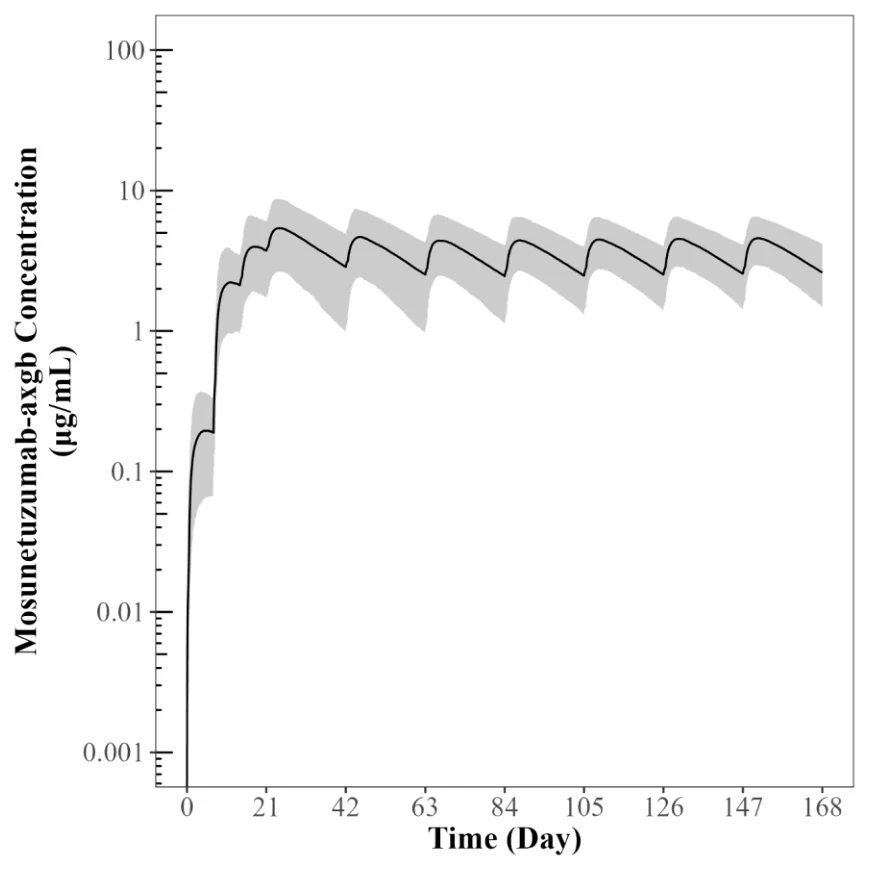
Similar to LUNSUMIO IV, LUNSUMIO SC PK exposure increased in an approximately dose-proportional manner over the dose ranges studied. As compared to the IV route, the SC route had a slower absorption rate resulting in a lower Cmax, and variable Tmax.
The mosunetuzumab serum concentration-time profile after SC injection could be described by a population pharmacokinetic model with two compartments and a mathematical function for an empirical time-dependent clearance parameter. The time-dependent function fitted the clearance parameter with an initial baseline value (CLbase ~1.1 L/day) corresponding to a terminal half-life of 9.64 days, which then transitioned with a half life (HLtrans) of ~16.3 days to a steady-state value (CLss ~0.58 L/day) by cycle 4. At steady-state, the CLss parameter predicted a terminal half-life of mosunetuzumab of 16.1 days.
Table 18: Summary of Arithmetic Mean (CV%) Serum Mosunetuzumab Pharmacokinetic Parameters in Patients with NHL Calculated by Non-Compartmental Analysis Following Single Dose of 20 mg SC Mosunetuzumab (N=21)
| Cmax (ug/mL) | Tmax (day) | Half-life (day) | AUCinf (day·mg/L) | CL/F (L/day) | Vz/F (L) | |
|---|---|---|---|---|---|---|
| Single SC Dose (20 mg) | 0.967 (38.4%) | 6.82 (79.3%) | 11.7 (41.7%) | 22.8 (41.3%) | 1.17 (76.5%) | 15.8 (30.9%) |
AUCinf = area under the curve from time 0 to infinity
Only 14/21 patients had available half-life, AUCinf, CL/F, and Vz/F
Table 19: Summary of Arithmetic Mean (CV%) Serum Mosunetuzumab Pharmacokinetic Parameters in Patients with NHL Calculated by Non-Compartmental Analysis Following Cycle 1 and Cycle 2 Step-up Dose of SC 5/45/45 mg Mosunetuzumab (N=130)
| Cmax (ug/mL) | Tmax (day) | Half-life (day) | AUC(0-42) (day·mg/L) | |
|---|---|---|---|---|
| Step-up SC Dose (5/45/45 mg) | 4.64 (45.6%) | 20.6 (32.7%) | NA | 113 (41.1%) |
AUC(0-42) = area under the curve over the first two cycles, i.e. nominal times day 0 to 42; NA=Not estimated.
Half-life not estimated due the insufficient PK samples after Tmax
Figure 3: Model predicted LUNSUMIO SC (5/45/45 mg) Concentration-Time Profile
Absorption
Following SC dosing, Tmax was reached around 4 to 7 days. Relative bioavailability (F) for the SC regimen relative to IV at steady-state was 0.898 (95% CI 0.828-0.975).
Distribution:
The NCA estimate of the apparent volume of distribution (Vz/F) for LUNSUMIO SC was 15.8 L with subcutaneous injection.
Metabolism:
The metabolic pathway of LUNSUMIO SC has not been directly studied. Like other protein therapeutics, LUNSUMIO SC is expected to be degraded into small peptides and amino acids via catabolic pathways.
Elimination
NCA indicates that mosunetuzumab serum concentration reaches the maximal level by 6.82 days and declines in an exponential fashion with an estimated half-life of 11.7 days in the first cycle following a single dose of 20 mg SC Mosunetuzumab. The population PK model estimated the initial terminal half-life as 9.64 days. At steady-state, i.e. after 4 cycles, the population PK model estimated a terminal half-life of 16.1 days.
Special Populations and Conditions
No clinically meaningful baseline covariates were found for mosunetuzumab PK requiring dose adjustments for LUNSUMIO SC.
- Pediatrics: No studies have been conducted to investigate the pharmacokinetics of LUNSUMIO SC in pediatric patients (<18 years old).
- Geriatrics: Age did not have a detectable effect on the pharmacokinetics of LUNSUMIO based on a population PK analysis with patients aged 18-88 years (n= 228). No clinically important difference could be detected in the covariate analysis of LUNSUMIO for patients in this age group.
- Ethnic Origin (Asian patients): The population pharmacokinetics analysis showed no clinically significant differences in mosunetuzumab pharmacokinetic parameters for Asian vs non-Asian patients.
- Hepatic Insufficiency: With the mosunetuzumab regimen of 5/45/45 mg, the observed area under the concentration-time curve (AUC) by NCA over the first two cycles in patients with mild hepatic impairment (total bilirubin >ULN to 1.5 x ULN or AST > ULN, n=15, AUC=88.6 day·µg/L) were similar to those in patients with normal hepatic function (n=98, AUC=116 day·µg/L). The number of patients with moderate hepatic impairment is limited (total bilirubin >1.5–3 x ULN, any AST, n=1) and no patients with severe hepatic impairment have been studied.
- Renal Insufficiency: With the mosunetuzumab regimen of 5/45/45 mg, the observed area under the concentration-time curve (AUC) by NCA over the first two cycles in patients with mild (CrCl 60 to 89 mL/min, n=47, AUC=114 day·µg/L) or moderate (CrCl 30 to 59 mL/min, n= 17, AUC=133 day·µg/L) renal impairment were similar to and 32% higher than, respectively, in patients with normal renal function (CrCl ≥ 90 mL/min, n=47, AUC=101 day·µg/L). Similar pharmacokinetic metric data in patients with severe renal impairment (CrCl 15 to 29 mL/min) is unknown.
10.4. Immunogenicity
As with all therapeutic proteins, there is a potential for immunogenicity. The detection of antibody formation is highly dependent on the sensitivity and specificity of the assay. Additionally, the observed incidence of antibody positivity in an assay may be influenced by several factors, including assay methodology, sample handling, timing of sample collection, concomitant medications, and underlying disease. For these reasons, comparison of the incidence of anti-LUNSUMIO antibodies in the study described below with the incidence of antibodies to other products may be misleading.
The immunogenicity of LUNSUMIO/LUNSUMIO SC was evaluated using an enzyme-linked immunosorbent assay (ELISA). No patients tested positive for anti-LUNSUMIO antibodies in 418 ADA-evaluable patients who received LUNSUMIO single-agent IV treatments in Study GO29781. Based on the available information, the clinical relevance of anti-LUNSUMIO antibodies could not be assessed.
- 11. Storage, Stability, and Disposal
INTRAVENOUS INFUSION
Store at 2°C-8°C. Keep vial in the outer carton in order to protect from light.
Shelf-life of the solution for infusion containing the product
The prepared infusion solution should be used immediately. If not used immediately, the infusion solution may be stored refrigerated at 2-8°C for up to 24 hours and 24 hours at ambient temperature (9°C-25°C) prior to administration.
SUBCUTANEOUS INJECTION
Store at 2°C-8°C. Keep vial in the outer carton in order to protect from light.
If LUNSUMIO SC solution for injection is transferred from the vial to the syringe under controlled and validated aseptic conditions in the healthcare environment, the medicine in the capped syringe can be stored in the refrigerator at 2°C to 8°C for up to 48 hours protected from light and/or at 9°C to 25°C for up to 12 hours at ambient light.
Disposal of unused/expired medicines
The release of pharmaceuticals in the environment should be minimized. Medicines should not be disposed of via wastewater and disposal through household waste should be avoided.
The following points should be strictly adhered to regarding the use and disposal of syringes and other medicinal sharps:
- Needles and syringes should never be reused.
- Place all used needles and syringes into a sharps container (puncture-proof disposable container).
Any unused medicinal product or waste material should be disposed of in accordance with local requirements.
12. Special Handling Instructions
Do not freeze. Do not shake.
Part 2: Scientific Information
13. Pharmaceutical Information
Drug Substance
Non-proprietary name of the drug substance(s): mosunetuzumab
Chemical name: anti-CD20/CD3 T-cell-engaging bispecific antibody
Molecular formula and molecular mass: The calculated molecular mass of intact mosunetuzumab is 146,045 Da (peptide chains only, without heavy–chain C–terminal lysine residue)
Structure:
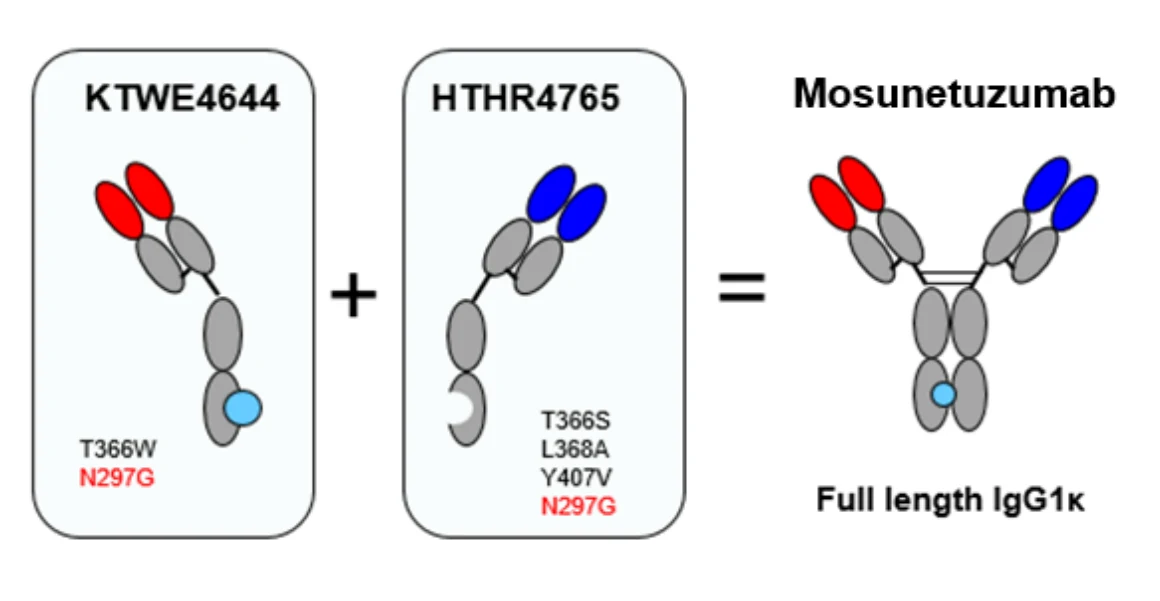
Physicochemical properties: LUNSUMIO is a sterile, preservative-free, concentrate for solution for intravenous infusion. LUNSUMIO SC is a sterile, preservative-free, solution for subcutaneous injection.
Product characteristics: mosunetuzumab is a heterogeneous protein having the intended primary structure, post-translational modifications, and other characteristics of a recombinant IgG1 derived from CHO cells.
14. Clinical Trials
14.1. Clinical Trials by Indication
Relapsed or Refractory Follicular Lymphoma
Trial Design and Study Demographics
Table 20: Summary of patient demographics and clinical trials in relapsed or refractory follicular lymphoma
| Study # | Study Design | Dosage, route of administration and duration | Study Subjects (n) | Median Age (Range) | Sex n (%) |
|---|---|---|---|---|---|
| GO29781 (B11 FL RP2D IV cohort) | Phase I/II multicenter , open-label dose escalation and expansion | mosunetuzumab, IV infusion 1 mg on C1D1, 2 mg on C1D8, 60 mg on C1D15 and C2D1, 30 mg for C3D1 and subsequent q3w cycles. Treatment duration: 8 cycles for patients with a complete response and 17 cycles for patients with a partial response or stable disease at the end of Cycle 8. | n=90 relapsed or refractory follicular lymphoma after ≥2 prior lines of therapies | 60 years (29-90) | Male: 55 (61.1%) Female: 35 (38.9%) |
| GO29781 (F2 FL RP2D SC cohort) | Phase I/II multicenter , open-label dose escalation and expansion | mosunetuzumab, subcutaneous injection 5 mg C1D1, 45 mg on C1D8, C1D15 and subsequent q3w cycles. Treatment duration: 8 cycles for patients with a complete response and 17 cycles for patients with a partial response or stable disease at the end of Cycle 8. | n=94 relapsed or refractory follicular lymphoma after ≥2 prior lines of therapies | 65 years (35-84) | Male: 53 (56.4%) Female: 41 (43.6%) |
INTRAVENOUS INFUSION
GO29781
Study GO29781 was an open-label, Phase I/II, multicenter, multi-cohort trial conducted to evaluate the efficacy, safety, tolerability and pharmacokinetics of LUNSUMIO in adult patients with relapsed or refractory B-cell non-Hodgkin lymphoma including relapsed/refractory follicular lymphoma. The safety and efficacy population included 90 patients with relapsed/refractory follicular lymphoma who had received at least two prior lines of systemic therapy.
Relapsed or refractory follicular lymphoma (grade 1 – 3a) patients, who received the recommended dosage via intravenous infusion, were eligible for enrollment into the study if they had received at least two prior systemic therapies, including an anti-CD20 monoclonal antibody and an alkylating agent. Patients must have had an ECOG score of 0 or 1 and must have had measurable disease at baseline.
The study excluded patients with active autoimmune disease, active infections (i.e. chronic active EBV, acute or chronic hepatitis C, hepatitis B, HIV), progressive multifocal leukoencephalopathy, a history of CNS lymphoma, a history of macrophage activation syndrome/hemophagocytic lymphohistiocytosis, prior allogeneic stem cell transplant, or prior organ transplantation. Patients with AST and ALT greater than 3 times the upper limit of normal and patients with total bilirubin greater than 1.5 times the upper limit of normal were ineligible.
Patients were to receive LUNSUMIO via intravenous infusion per the following schedule (note: each cycles is 21 days):
- Cycle 1 Day 1 – 1 mg
- Cycle 1 Day 8 – 2 mg
- Cycle 1 Day 15 – 60 mg
- Cycle 2 Day 1 – 60 mg
- Cycle 3+ Day 1 – 30 mg
Patients were administered 8 cycles unless they experienced unacceptable toxicity or disease progression. If a patient achieved complete response (CR) by cycle 8, no further treatment with LUNSUMIO was administered. If a patient achieved partial response or had stable disease after 8 cycles, up to 9 additional cycles (up to 17 cycles total) were to be administered unless unacceptable toxicity or disease progression occurred. The median number of cycles was 8, 59% of patients received 8 cycles, and 18% received more than 8 cycles up to a maximum of 17 cycles.
The median age was 60 years (range: 29-90 years) with 31% being > age 65, 61% were male, 82% were White, 9% were Asian, 4% were Black, 100% had an Eastern Cooperative Oncology Group (ECOG) performance status of 0 or 1. Seventy-seven percent had stage III – IV disease, 34% of patients had bulky disease (at least one lesion > 6 cm). The median number of prior therapies was 3 (range: 2-10), with 38% receiving 2 prior therapies, 31% receiving 3 prior therapies and 31% receiving more than 3 prior therapies.
All patients received prior anti-CD20 and alkylator therapies, 21% received autologous stem cell transplant, 19% received PI3K inhibitors, 9% received prior rituximab plus lenalidomide therapy, and 3% received CAR-T therapies. Seventy-nine percent of patients were refractory to prior anti-CD20 monoclonal antibody therapy and 53% were refractory to both anti-CD20 monoclonal antibody and alkylator therapy. Sixty-nine percent of patients were refractory to the last prior therapy and 52% had progression of disease within 24 months of first systemic therapy.
The primary efficacy endpoint was complete response as assessed by an independent review facility according to standard criteria for NHL (Cheson 2007). The efficacy results are summarized in Table 21.
Table 21: Summary of efficacy in patients with relapsed or refractory FL treated with LUNSUMIO intravenous infusion
Efficacy Parameter | LUNSUMIO N=90 |
| Median observation time 18.3 months | |
| Complete Response (CR), n (%) (95% CI) | 54 (60.0) (49.1, 70.2) |
| Objective Response Rate (ORR), n (%) | 72 (80.0) (70.3, 87.7) |
Partial Response (PR), n (%) (95% CI) | 18 (20.0) (12.3, 29.8) |
| Duration of Response (DOR)1 | |
| Patients with event, n (%) | 29 (40.3) |
| Median, months (95% CI) | 22.8 (9.7, NR) |
| K-M event-free proportion | |
12 months (95% CI) | 61.8 (50.0, 73.7) |
18 months (95% CI) | 56.9 (44.1, 69.6) |
| Duration of Complete Response | |
| Patients with event, n (%) | 16 (29.6) |
| Median, months (95% CI) | NR (14.6, NE) |
| K-M event-free proportion | |
12 months (95% CI) | 71.4 (57.9, 84.9) |
18 months (95% CI) | 63.7 (48.0, 79.4) |
CI = confidence interval; K-M = Kaplan-Meier; NR = not reached; NE = Not estimable
1 DOR is defined as the time from the initial occurrence of a documented PR or CR until documented disease progression or death due to any cause, whichever occurs first
In a follow-up analysis of GO29781 (investigator assessed), the best objective response rate was 78% (70/90) with a median follow-up time of 49.4 months (range: 2-60 months). Fifty-four patients (60%) achieved a CR and 16 patients (18%) achieved a PR as best response. The median DOR was 46.4 months (95% CI: 18.7, NE). The median DOCR per investigator assessment was 51.8 months (95% CI: 46.4, NE). The 36- and 42-month DOR event-free rates were both 50.1% (95% CI: 37.5, 62.6). The 36- and 42-month DOCR event-free rates were both 64.0% (95% CI: 50.1, 78.0).
SUBCUTANEOUS INJECTION
GO29781
Study GO29781 was an open-label, Phase I/II, multicenter, multi-cohort study conducted to evaluate the safety, efficacy and pharmacokinetics of LUNSUMIO SC in adult patients with relapsed or refractory B-cell non-Hodgkin lymphoma including relapsed/refractory follicular lymphoma (FL) . The safety and efficacy population included 94 patients with relapsed or refractory FL who had received at least two prior lines of systemic therapy.
Relapsed or refractory follicular lymphoma (grade 1 – 3a) patients, who received the recommended dosage via subcutaneous injection, were eligible for enrollment into the study if they had received at least two prior systemic therapies, including an anti-CD20 monoclonal antibody and an alkylating agent. Patients must have had an ECOG score of 0 or 1 and must have had measurable disease at baseline.
The study excluded patients with active autoimmune disease, active infections (i.e. chronic active EBV, acute or chronic hepatitis C, hepatitis B, HIV), progressive multifocal leukoencephalopathy, a history of CNS lymphoma, a history of macrophage activation syndrome/hemophagocytic lymphohistiocytosis, prior allogeneic stem cell transplant, or prior organ transplantation. Patients with AST and ALT greater than 3 times the upper limit of normal and patients with total bilirubin greater than 1.5 times the upper limit of normal were ineligible.
Patients were to receive LUNSUMIO SC via subcutaneous injection per the following schedule (note: each cycle is 21 days):
- Cycle 1 Day 1 – 5 mg
- Cycle 1 Day 8 – 45 mg
- Cycle 1 Day 15 – 45 mg
- Cycle 2+ Day 1– 45 mg
Patients were administered 8 cycles unless they experienced unacceptable toxicity or disease progression. If a patient achieved complete response (CR) by cycle 8, no further treatment with LUNSUMIO SC was administered. If a patient achieved partial response or had stable disease after 8 cycles, up to 9 additional cycles (up to 17 cycles total) were to be administered unless unacceptable toxicity or disease progression occurred. The median number of cycles was 8, 63% of patients received 8 cycles, and 15% received more than 8 cycles up to a maximum of 17 cycles.
The median age was 65 years (range: 35-84 years) with 49% being > age 65, 56% were male, 85% were White, 11% were Asian, 2% were Black, 100% had an Eastern Cooperative Oncology Group (ECOG) performance status of 0 or 1 and 25% of patients had bulky disease (at least one lesion > 6 cm). At study entry, 87% of the patients had Ann Arbor Stage III/IV disease. The median number of prior therapies was 3 (range: 2-9), with 47% receiving 2 prior therapies, 19.1% receiving 3 prior therapies and 34% receiving more than 3 prior therapies.
All patients received prior anti CD20 and alkylator therapies, 20% received autologous stem cell transplant, 12% received PI3K inhibitors, 16% received prior rituximab plus lenalidomide therapy, and 4% received CAR T therapies. Sixty-seven percent of patients were refractory to prior anti CD20 monoclonal antibody therapy and 46% were refractory to both anti CD20 monoclonal antibody and alkylator therapy. Sixty-three percent of patients were refractory to the last prior therapy and 44% had progression of disease within 24 months of first systemic therapy.
Efficacy was established based on response rates and duration of response as assessed by an independent review facility according to standard criteria for NHL (Cheson 2007). The efficacy results are summarized in Table 22.
Table 22: Summary of efficacy in patients with relapsed or refractory FL treated with LUNSUMIO Subcutaneous Injection
| Efficacy Parameter | LUNSUMIO SC N=94 | |||||
| Median observation time 20.7 months (range 1 – 34 months) | ||||||
| Complete Response (CR), n (%), (95% CI) | 55 (58.5) (47.9 68.6) | |||||
Objective Response Rate (ORR), n (%) (95% CI) | 70 (74.5) (64.4, 82.9) | |||||
| Partial Response (PR) n (%) | 15 (16.0) | |||||
| (95% CI) | (9.2, 25.0) | |||||
| Duration of Response (DOR)1 | N=70 | |||||
| Patients with event, n (%) | 26 (37.1) | |||||
| Median, months (95% CI) | 22.4 (16.8, 22.8) | |||||
| K-M event-free proportion, | ||||||
12 months (95% CI) | 69.9 (58.5, 81.4) | |||||
18 months (95% CI) | 59.6 (45.84, 73.30) | |||||
| Duration of Complete Response (DOCR) | N=55 | |||||
| Patients with event, n (%) | 19 (34.5) | |||||
| Median, months (95% CI) | 20.8 (18.8, NR) | |||||
| K-M event-free proportion, | ||||||
12 months (95% CI) | 72.4 (59.9, 84.8) | |||||
18 months (95% CI) | 65.58 (51.01, 80.15) | |||||
CI=confidence interval; K-M=Kaplan-Meier; NR=not reached. Clinical Cut-off: 01 February 2024 1 DOR is defined as the time from the initial occurrence of a documented PR or CR until the patient experiences an event (documented disease progression or death due to any cause, whichever occurs first). | ||||||
15. Microbiology
No microbiological information is required for this drug product.
16. Non-Clinical Toxicology
General Toxicity: Key nonclinical findings with mosunetuzumab identified in single- and repeat-dose toxicity studies up to 26-weeks in duration included transient post-dose CRS primarily limited to the first dose, vascular/perivascular inflammatory cell infiltrates that were primarily in the CNS and infrequently in other organs that were likely secondary to cytokine release and immune cell activation, and increased susceptibility to infection following chronic dosing due to sustained B-cell depletion.
All of the findings were considered pharmacologically-mediated effects and reversible. Across studies there was a single incident of convulsion in one animal at Cmax and AUC exposures (time-averaged over 7 days) of 3.3- and 1.8- fold higher, respectively, compared to the Cmax or AUC predicted for the typical patient receiving LUNSUMIO at the recommended clinical dosage. No other neurological abnormalities were observed in any toxicity studies.
Carcinogenicity: No carcinogenicity studies have been conducted with mosunetuzumab.
Genotoxicity: No genotoxicity studies have been conducted with mosunetuzumab. As an antibody, mosunetuzumab is not expected to interact directly with DNA.
Reproductive and Developmental Toxicology: Male and female fertility was investigated as part of the 26-week GLP study in sexually mature cynomolgus monkeys in which mosunetuzumab was administered by intravenous infusion. No mosunetuzumab-related findings were observed in male and female reproductive endpoints up to the highest dose tested (0.5 mg/kg), at exposures (AUC) similar to exposure (AUC) in patients receiving the recommended dose.
No developmental toxicity studies in animals have been conducted with mosunetuzumab. Based on low placental transfer of antibodies during the first trimester, the mechanism of action and available data of mosunetuzumab and the data on the anti-CD20 antibody class, the risk for teratogenicity is low. Studies with mosunetuzumab in non-pregnant animals have demonstrated that prolonged B-cell depletion can lead to increased risk of opportunistic infection, which may cause fetal loss. Transient CRS associated with mosunetuzumab administration may also be harmful to pregnancy.