


Product Monograph - Ravicti
RECENT MAJOR LABEL CHANGES
| 1 INDICATIONS, 1.1 Pediatrics | 11/2022 |
| 2 CONTRAINDICATIONS | 11/2022 |
| 4 DOSAGE AND ADMINISTRATION, 4.2 Recommended Dose and Dosage Adjustment | 11/2022 |
| 4 DOSAGE AND ADMINISTRATION, 4.4 Administration | 11/2022 |
| 7 WARNINGS AND PRECAUTIONS, 7.1.3 Pediatrics | 11/2022 |
TABLE OF CONTENTS
Sections or subsections that are not applicable at the time of authorization are not listed.
RECENT MAJOR LABEL CHANGES..............................................................................................2
TABLE OF CONTENTS ................................................................................................................2
PART I: HEALTH PROFESSIONAL INFORMATION .......................................................................4
1 INDICATIONS ................................................................................................................4
1.1 Pediatrics ............................................................................................................4
1.2 Geriatrics.............................................................................................................4
2 CONTRAINDICATIONS ...................................................................................................4
4 DOSAGE AND ADMINISTRATION...................................................................................4
4.1 Dosing Considerations .........................................................................................4
4.2 Recommended Dose and Dosage Adjustment.......................................................5
4.4 Administration.....................................................................................................6
4.5 Missed Dose ........................................................................................................6
5 OVERDOSAGE ...............................................................................................................7
6 DOSAGE FORMS, STRENGTHS, COMPOSITION AND PACKAGING ...................................7
7 WARNINGS AND PRECAUTIONS ....................................................................................7
7.1 Special Populations ..............................................................................................8
7.1.1 Pregnant Women .......................................................................................... 8
7.1.2 Breast-feeding............................................................................................... 8
7.1.3 Pediatrics ...................................................................................................... 8
7.1.4 Geriatrics ...................................................................................................... 9
8 ADVERSE REACTIONS ....................................................................................................9
8.1 Adverse Reaction Overview..................................................................................9
8.2 Clinical Trial Adverse Reactions ............................................................................9
8.2.1 Clinical Trials Adverse Reactions – Pediatrics .................................................10
8.3 Less Common Clinical Trial Adverse Reactions .................................................... 11
8.3.1 Less Common Clinical Trial Adverse Reactions – Pediatrics ............................11
8.4 Abnormal Laboratory Findings: Hematologic, Clinical Chemistry and Other Quantitative Data ........................................................................................................ 12
8.5 Post-Market Adverse Reactions.......................................................................... 13
9 DRUG INTERACTIONS.................................................................................................. 13
9.2 Drug Interactions Overview................................................................................ 13
9.3 Drug-Behavioural Interactions............................................................................ 13
9.4 Drug-Drug Interactions ...................................................................................... 14
9.5 Drug-Food Interactions ...................................................................................... 14
9.6 Drug-Herb Interactions ...................................................................................... 14
9.7 Drug-Laboratory Test Interactions ...................................................................... 14
10 CLINICAL PHARMACOLOGY ......................................................................................... 14
10.1 Mechanism of Action.................................................................................... 14
10.2 Pharmacodynamics ...................................................................................... 15
10.3 Pharmacokinetics ......................................................................................... 15
11 STORAGE, STABILITY AND DISPOSAL ........................................................................... 18
12 SPECIAL HANDLING INSTRUCTIONS............................................................................. 18
PART II: SCIENTIFIC INFORMATION ........................................................................................ 19
13 PHARMACEUTICAL INFORMATION.............................................................................. 19
14 CLINICAL TRIALS.......................................................................................................... 19
14.1 Trial Design and Study Demographics ........................................................... 19
14.2 Study Results ............................................................................................... 22
14.2.1 Clinical Studies in Adult Patients with UCDs ..................................................22
14.2.2 Clinical Studies in Pediatric Patients 2 Years to 17 Years of Age with UCDs .....24
14.2.3 Clinical Studies in Pediatric Patients Less Than 2 Years of Age with UCDs .......26
15 MICROBIOLOGY .......................................................................................................... 29
16 NON-CLINICAL TOXICOLOGY ....................................................................................... 29
PATIENT MEDICATION INFORMATION ................................................................................... 32
PART I: HEALTH PROFESSIONAL INFORMATION
1 INDICATIONS
RAVICTI (glycerol phenylbutyrate) is indicated for:
Use as a nitrogen-binding agent for chronic management of patients with urea cycle disorders (UCDs) who cannot be managed by dietary protein restriction and/or amino acid supplementation alone. RAVICTI should be used with dietary protein restriction and, in some cases, dietary supplements (e.g., essential amino acids, arginine, citrulline, and protein-free calorie supplements).
Limitations of Use:
RAVICTI is not indicated for treatment of acute hyperammonemia in patients with UCDs because more rapidly acting interventions are essential to reduce plasma ammonia levels.
Safety and efficacy for treatment of patients with N-acetylglutamate synthase (NAGS) deficiency have not been established.
1.1 Pediatrics
Pediatrics (<18 years of age): Based on the data submitted and reviewed by Health Canada, the safety and efficacy of RAVICTI in pediatric patients has been established. Therefore, Health Canada has authorized an indication for pediatric use (see 1 INDICATIONS).
1.2 Geriatrics
Geriatrics (>65 years of age): Clinical studies of RAVICTI did not include sufficient numbers of subjects ≥65 years of age to determine whether they respond differently than younger subjects (see 7 WARNINGS AND PRECAUTIONS, Special Populations).
2 CONTRAINDICATIONS
RAVICTI is contraindicated in patients who are:
- hypersensitive to RAVICTI or its metabolites (phenylbutyric acid [PBA], phenylacetic acid [PAA], and phenylacetylglutamine [PAGN]) or to any ingredient in the formulation, or component of the container. For a complete listing, see 6 DOSAGE FORMS, STRENGTHS, COMPOSITION AND PACKAGING).
- breastfeeding.
4 DOSAGE AND ADMINISTRATION
4.1 Dosing Considerations
RAVICTI should be prescribed by a physician experienced in the management of UCDs.
RAVICTI must be combined with dietary protein restriction and, in some cases, dietary supplements (essential amino acids, carnitine supplementation, arginine, citrulline, and protein free calorie supplements).
The daily dose should be individually adjusted according to the patient’s estimated urea synthetic capacity, if any, protein tolerance, and the daily dietary protein intake needed to promote growth and development. An initial estimated RAVICTI dose for a 24-hour period is 0.6 mL RAVICTI per gram of dietary protein ingested per 24-hour period assuming all the waste nitrogen is covered by RAVICTI and excreted as PAGN.
4.2 Recommended Dose and Dosage Adjustment
Recommended Dose
The recommended total daily dose range of RAVICTI, based upon body surface area, is 4.5 mL/m2/day to 11.2 mL/m2/day (5.0 g/m2/day to 12.4 g/m2/day) and should take into account the following:
- Patients 2 years of age and older: The total daily dose should be divided into 3 equally divided dosages and given with each meal or feeding, each rounded up to the nearest 0.5 mL.
- Patients less than 2 years: The total daily dose should be divided into 3 or more equally divided dosages, each rounded up to the nearest 0.1 mL.
For patients with some residual enzyme activity who are not adequately controlled with protein restriction, the recommended starting dosage is 4.5 mL/m2/day.
The recommended starting dosages for patients switching from sodium phenylbutyrate to RAVICTI and patients naïve to PBA may be different. The total daily dosage should not exceed 17.5 mL.
Patients switching from sodium phenylbutyrate to RAVICTI should receive the dosage of RAVICTI that contains the same amount of PBA. The conversion is as follows:
Total daily dosage of RAVICTI (mL) = total daily dosage of sodium phenylbutyrate Tablets (g) x 0.86
Total daily dosage of RAVICTI (mL) = total daily dosage of sodium phenylbutyrate Powder (g) x 0.81
Dosage Adjustment
Adjustment Based on Plasma Ammonia: Adjust the RAVICTI dosage to produce a fasting plasma ammonia level that is less than half the upper limit of normal (ULN) in patients 6 years and older. In infants and young children (generally below 6 years of age) where obtaining fasting ammonia is problematic due to frequent feedings, the first ammonia of the morning should be used. If available, the ratio of PAA to PAGN in the same plasma sample may provide additional information to assist in dosage adjustment decisions.
Adjustment Based on Urinary Phenylacetylglutamine (U-PAGN): U-PAGN measurements may be used to help guide RAVICTI dose adjustment. Each gram of U-PAGN excreted over 24 hours covers waste nitrogen generated from 1.4 grams of dietary protein. If U-PAGN excretion is insufficient to cover daily dietary protein intake and the fasting ammonia is greater than half the recommended ULN, the RAVICTI dose should be adjusted upward. The amount of dose adjustment should factor in the amount of dietary protein that has not been covered, as indicated by the 24-hour U-PAGN level and the estimated RAVICTI dose needed per gram of dietary protein ingested.
Consider a patient’s use of concomitant medications, such as probenecid, when making dosage adjustment decisions based on U-PAGN. Probenecid may result in a decrease of the urinary excretion of PAGN (see 9 DRUG INTERACTIONS).
Adjustment Based on Plasma PAA and PAGN: If symptoms of vomiting, nausea, headache, somnolence, confusion, or sleepiness are present in the absence of high ammonia or intercurrent illness, measurement of plasma PAA levels may be useful to guide dosing (see 7 WARNINGS AND PRECAUTIONS). The ratio of PAA to PAGN in plasma, both measured in µg/mL, may provide additional information to assist in dose adjustment decisions. The PAA to PAGN ratio has been observed to be generally less than 1 in patients without PAA accumulation. In patients with a PAA to PAGN ratio exceeding 2.5, a further increase in RAVICTI dose may not increase PAGN formation, even if plasma PAA concentrations are increased, due to saturation of the conjugation reaction. In such cases, dose reduction or increasing the dosing frequency may result in a lower plasma PAA level and PAA to PAGN ratio. Ammonia levels must be monitored closely when changing the dose of glycerol phenylbutyrate.
Dosage Modifications in Patients with Hepatic Impairment
For patients with moderate to severe hepatic impairment, the recommended starting dosage is at the lower end of the dosing range (4.5 mL/m2/day) and the dosage should be kept at the lowest necessary to control the patient’s plasma ammonia.
4.4 Administration
For oral administration.
RAVICTI should be taken with food or formula and administered directly into the mouth via oral syringe.
RAVICTI should be administered just prior to breastfeeding in infants who are breastfeeding.
Preparation for Nasogastric Tube or Gastrostomy Tube Administration
In vitro studies evaluating the percent recovery of total dose delivered with nasogastric or gastrostomy tubes demonstrated the percent of dose recovered was >99% for doses >1 mL and 70% for a 0.5 mL dose.
It is recommended that all patients who can swallow take RAVICTI orally, even those with nasogastric and/or gastric tubes. However, for patients who cannot swallow, a nasogastric tube or gastrostomy tube may be used to administer RAVICTI as follows:
- Utilize a new dry oral syringe to withdraw the prescribed dosage of RAVICTI from the bottle. Discard the oral syringe after each dose.
- Place the tip of the syringe into the tip of the gastrostomy/nasogastric tube.
- Utilizing the plunger of the syringe, administer RAVICTI into the tube.
- Use a separate syringe to flush the nasogastric/gastrostomy tube. Flush with at least 10 mL of water or formula and allow the flush to drain.
- If needed, flush a second time with an additional 10 mL of water or formula to clear the tube.
For patients who require a volume of less than 1 mL per dose via nasogastric or gastrostomy tube, the delivered dosage may be less than anticipated due to adherence of RAVICTI to the plastic tubing. Therefore, these patients should be closely monitored using ammonia levels following initiation of RAVICTI dosing or dosage adjustments.
See 12 SPECIAL HANDLING INSTRUCTIONS.
4.5 Missed Dose
In the event a dose is missed, the dose should be taken as soon as the patient remembers. If it is close to the patient’s next dose, skip the missed dose and continue with the next scheduled dose. The dose should not be doubled to make up for the missed dose.
5 OVERDOSAGE
While there is no experience with overdosage in human clinical trials, PAA, a toxic metabolite of RAVICTI, can accumulate in patients who receive an overdose (see 7 WARNINGS AND PRECAUTIONS).
6 DOSAGE FORMS, STRENGTHS, COMPOSITION AND PACKAGING
Table 1: Dosage Forms, Strengths, Composition and Packaging
RAVICTI is a colourless to pale yellow oral liquid.
RAVICTI is supplied in multi-use, 25-mL glass bottles. The bottles are supplied in the following configuration:
- Single 25-mL bottle per carton
7 WARNINGS AND PRECAUTIONS
General
Acute hyperammonemic encephalopathy may occur in a number of patients even when they are on therapy.
RAVICTI is not recommended for the management of acute hyperammonemia, which is a medical emergency.
Cardiovascular
RAVICTI is associated with an increase in heart rate (see 10.2 Pharmacodynamics). Caution should be observed in patients who have conditions that could be worsened by an increase in heart rate such as tachyarrhythmias or ischemic heart disease.
Hepatic/Biliary/Pancreatic
Since the metabolism and excretion of RAVICTI involves the liver, RAVICTI should be used with caution in patients with hepatic insufficiency (see 10.3 Pharmacokinetics).
Pancreatic lipases may be necessary for intestinal hydrolysis of RAVICTI, allowing release of PBA and subsequent formation of PAA, the active moiety. It is not known whether pancreatic and extrapancreatic lipases are sufficient for hydrolysis of RAVICTI. If there is inadequate intestinal hydrolysis of RAVICTI, impaired absorption of PBA and hyperammonemia could occur.
Monitoring and Laboratory Tests
| For management of a suspected drug overdose, contact your regional poison control centre. |
| Route of Administration | Dosage Form / Strength / Composition | Non-medicinal Ingredients |
| Oral | 1.1 g/mL glycerol phenylbutyrate (delivers 1.02 g/mL of PBA) | There are no nonmedicinal ingredients |
Adjustment may be based on monitoring of plasma ammonia, glutamine, U-PAGN, and/or plasma PAA and PAGN as well as the ratio of plasma PAA to PAGN (see 4.2 Recommended Dose and Dosage Adjustment).
Neurologic
The major metabolite of RAVICTI, PAA, is associated with signs and symptoms of neurotoxicity, including somnolence, fatigue, lightheadedness, headache, dysgeusia, hypoacusis, disorientation, impaired memory, and exacerbation of preexisting neuropathy were observed at plasma PAA concentrations ≥500 μg/mL in a study of cancer patients who were administered intravenous (IV) PAA. In this study, adverse events were reversible.
In controlled clinical trials in UCD patients who had been on sodium phenylbutyrate prior to administration of RAVICTI, mean (standard deviation or SD) maximum PAA concentrations after dosing with RAVICTI were 38.5 (102.6) μg/mL in adult patients and 87.3 (11.5) μg/mL in pediatric patients (N=26). No correlation between PAA levels and neurotoxicity symptoms was identified in UCD patients.
If symptoms of vomiting, nausea, headache, somnolence, confusion, or sleepiness are present in the absence of high ammonia or other intercurrent illnesses, measure plasma PAA and plasma PAA to PAGN and consider reduction of RAVICTI dosage if the PAA level exceeds 500 µg/mL or the PAA:PAGN ratio exceeds 2.5.
Renal
RAVICTI has not been studied in patients with impaired renal function. As RAVICTI excretion involves the kidneys, it should be used with caution in patients with renal insufficiency, including those with end-stage renal disease (ESRD) or those on hemodialysis.
7.1 Special Populations
7.1.1 Pregnant Women
Pregnant Women: There are no adequate and well controlled studies of RAVICTI in pregnant women. Studies in rats have shown reproductive toxicity (see 16 NON-CLINICAL TOXICOLOGY). RAVICTI should be used during pregnancy only if the potential benefit justifies the potential risk to the fetus.
7.1.2 Breast-feeding
It is unknown if RAVICTI is excreted in human milk. It has not been determined if RAVICTI or its metabolites are secreted in human milk and therefore the use of RAVICTI is contraindicated during breastfeeding (see 2 CONTRAINDICATIONS).
7.1.3 Pediatrics
Clinical trials in pediatrics demonstrated that the PAA concentration is high in pediatrics compared to adults and inversely proportional to the age. The highest concentration was noted in pediatrics less than 2 months of age (see Table 5 ). The PAA to PAGN ratio less than 1 indicates that the PAA is not accumulated. If the ratio of PAA to PAGN ratio exceeds 2.5, a further increase in RAVICTI dose may not increase PAGN formation due to saturation of the conjugation reaction (see 4.2 Recommended Dose and Dosage Adjustment).
If symptoms of vomiting, nausea, headache, somnolence, confusion, or sleepiness are present in the absence of high ammonia or intercurrent illness, measurement of plasma PAA levels and PAA to PAGN ratio may be useful to guide dosing (see 7 WARNINGS AND PRECAUTIONS, Monitoring and Laboratory Tests, Neurologic). In such cases, a dose reduction or increasing the dosing frequency may result in a lower plasma PAA level and PAA to PAGN ratio. Ammonia levels must be monitored closely when changing the dose of glycerol phenylbutyrate.
7.1.4 Geriatrics
Geriatrics (>65 years of age): Clinical studies of RAVICTI did not include sufficient numbers of subjects ≥65 years of age to determine whether they respond differently than younger subjects. In general, dose selection for a newly diagnosed elderly patient should be cautious, usually starting at the low end of the dosing range, reflecting the greater frequency of concomitant disease, including decreased hepatic, renal, or cardiac function, or concomitant drug therapy.
8 ADVERSE REACTIONS
8.1 Adverse Reaction Overview
The incidence of serious adverse events in long term clinical trials with RAVICTI was 26% and consisted primarily of hyperammonemia (18%).
The most common adverse drug reactions among all patients taking RAVICTI in clinical trials include diarrhea, flatulence, headache, decreased appetite, vomiting, nausea, fatigue, and skin odor.
Adverse drug reactions that resulted in clinical intervention in UCD patients who participated in clinical trials were mostly gastrointestinal reactions (flatulence, nausea, vomiting, abdominal distention) or neurological reactions (dysgeusia, lethargy, speech disorder, paresthesia, tremor).
8.2 Clinical Trial Adverse Reactions
Clinical trials are conducted under very specific conditions. The adverse reaction rates observed in the clinical trials, therefore, may not reflect the rates observed in practice and should not be compared to the rates in the clinical trials of another drug. Adverse drug reaction information from clinical trials may be useful in identifying and approximating rates of adverse drug reactions in real-world use.
Assessment of adverse drug reactions was based on exposure in 114 UCD patients (65 adults and 49 children between the ages of 2 months and 17 years) across four short term active control studies and three long term (12 month) uncontrolled clinical studies. Table 2 shows the adverse reactions reported in ≥2% of patients receiving RAVICTI.
Table 2: Adverse Reactions Reported in ≥2% of UCD Patients in Clinical Trials
| System Organ Class Preferred Term | Number (%) of Patients in Pooled Studies | |||||
|---|---|---|---|---|---|---|
Short-Term Controlled Studies (N=80) | Long-Term Open-Label Studies (N=100) | |||||
| Gastrointestinal disorders | ||||||
| Abdominal distension | 2 (2.5) | 2 (2.0) | ||||
| Abdominal pain | 3 (3.8) | 2 (2.0) | ||||
| Abdominal pain upper | 2 (2.5) | 4 (4.0) | ||||
| Constipation | 1 (1.3) | 2 (2.0) | ||||
| System Organ Class Preferred Term | Number (%) of Patients in Pooled Studies |
|---|
Short-Term Controlled Studies (N=80) | Long-Term Open-Label Studies (N=100) | |
|---|---|---|
| Diarrhoea | 7 (8.8) | 4 (4.0) |
| Dyspepsia | 2 (2.5) | 3 (3.0) |
| Flatulence | 7 (8.8) | 3 (3.0) |
| Nausea | 1 (1.3) | 5 (5.0) |
| Oral discomfort | 0 | 2 (2.0) |
| Retching | 0 | 2 (2.0) |
| Vomiting | 1 (1.3) | 7 (7.0) |
| General disorders and administration site conditions | ||
| Fatigue | 3 (3.8) | 4 (4.0) |
| Investigations | ||
| Anion gap increased | 0 | 2 (2.0) |
| Vitamin D decreased | 0 | 2 (2.0) |
| Metabolism and nutrition disorders | ||
| Decreased appetite | 1 (1.3) | 7 (7.0) |
| Increased appetite | 3 (3.8) | 2 (2.0) |
| Nervous system disorders | ||
| Dizziness | 0 | 3 (3.0) |
| Headache | 7 (8.8) | 3 (3.0) |
| Tremor | 0 | 2 (2.0) |
| Psychiatric disorders | ||
| Food aversion | 0 | 2 (2.0) |
| Reproductive system and breast disorders | ||
| Metrorrhagia | 0 | 2 (2.0) |
| Skin and subcutaneous tissue disorders | ||
| Acne | 0 | 2 (2.0) |
| Skin odour abnormal | 0 | 6 (6.0) |
8.2.1 Clinical Trials Adverse Reactions – Pediatrics
Adverse reactions reported in at least 10% of pediatric patients ages 2 years to 17 years were upper abdominal pain, rash, nausea, vomiting, diarrhea, decreased appetite, and headache.
RAVICTI has been evaluated in 17 patients with UCDs ages 2 months to less than 2 years in 3 open-label studies. The median exposure was 6 months (range 0.2 to 20 months). Adverse reactions reported in at least 10% of pediatric patients aged 2 months to less than 2 years were neutropenia, vomiting, constipation, diarrhea, pyrexia, upper respiratory tract infection, gastroenteritis, otitis media, urinary tract infection, viral infection, hyperammonemia, hypophagia, cough, nasal congestion, rhinorrhea, rash, and papule.
RAVICTI has been evaluated in 16 patients with UCDs less than 2 months of age (age range 0.1 to 2 months, median age 0.5 months) in a single, open-label study. The median exposure was 10 months (range 2 to 20 months). Adverse reactions reported in at least 10% of pediatric patients aged less than 2 months were vomiting, dermatitis diaper, rash, gastroesophageal reflux, increased hepatic enzymes, feeding disorder (decreased appetite, hypophagia), anemia, cough, hyperammonemia, dehydration, metabolic acidosis, thrombocytosis, thrombocytopenia, neutropenia, lymphocytosis, diarrhea, flatulence, constipation, pyrexia, lethargy, irritability/agitation, upper respiratory infection, urinary tract infection, ear infection, nasopharyngitis, oral candidiasis, oropharyngeal pain, nasal congestion and respiratory syncytial virus infection.
8.3 Less Common Clinical Trial Adverse Reactions
The adverse reactions that occurred in <2% of UCD patients (65 adults and 49 children between the ages of 2 months and 17 years) across four short term active control studies and three long term (12 month) uncontrolled clinical studies include:
Gastrointestinal disorders: abdominal discomfort, abnormal faeces, defaecation urgency, dry mouth, eructation, gastrointestinal pain, painful defaecation, steatorrhoea, stomatitis
Musculoskeletal and connective tissue disorders: muscle spasms
Nervous system disorders: dysgeusia, lethargy, paraesthesia, somnolence
Psychiatric disorders: confusional state
Reproductive system and breast disorders: amenorrhoea, menstruation irregular
Respiratory, thoracic and mediastinal disorders: dysphonia, oropharyngeal pain, throat irritation
Vascular disorders: hot flush
8.3.1 Less Common Clinical Trial Adverse Reactions – Pediatrics
Less common (<10% of patients) clinical trial adverse reactions in pediatric patients ages 2 months to less than 2 years of age (n = 17) with UCD include:
Blood and lymphatic system disorders: anaemia
Gastrointestinal disorders: cheilitis, flatulence, gastroesophageal reflux disease, teething
General disorders and administration site conditions: decreased activity, infusion site extravasation, pneumatosis
Infections and infestations: conjunctivitis, croup infection, ear infection, gastroenteritis viral, hand-food-and-mouth disease, nasopharyngitis, oral candidiasis, periorbital cellulitis, pneumonia, rhinovirus infection
Injury, poisoning and procedural complications: chemical burn of skin, stoma site reaction, thermal burn, tibia fracture
Investigations: aspartate aminotransferase increased, blood bicarbonate decreased, breath sounds abnormal, international normalised ratio increased, prothrombin time prolonged
Metabolism and nutrition disorders: decreased appetite, feeding disorder, hypokalemia, metabolic acidosis
Nervous system disorders: ataxia, brain oedema, gross motor delay, hyporeflexia, hypotonia, lethargy, seizure, somnolence
Renal and urinary disorders: vesicoureteric reflux
Respiratory, thoracic and mediastinal disorders: rhinorrhea, apnoeic attack, dyspnoea, pharyngeal erythema, wheezing
Skin and subcutaneous disorders: dermatitis, nail ridging, rash papular
Vascular disorders: deep vein thrombosis
Less common (<10% of patients) clinical trial adverse reactions in pediatric patients less than 2 months of age (n = 16) with UCD include:
Blood and lymphatic system disorders: leukocytosis, lymphocytosis, microcytic anaemia
Cardiac disorders: tachycardia
Gastrointestinal disorders: dysphagia, post-tussive vomiting
General disorders and administration site conditions: catheter site rash, device occlusion, drug withdrawal syndrome, medical device site haemorrhage
Hepatobiliary disorders: hepatic calcification
Infections and infestations: angular cheilitis, bacteraemia, candida infection, cellulitis, croup infection, device related infection, gastroenteritis, gastrointestinal viral infection, lower respiratory tract infection, medical device site infection, meningitis bacterial, otitis media, otitis media acute, rhinovirus infection, sinusitis, tracheitis, viral infection
Injury, poisoning and procedural complications: arthropod bite, stoma site reaction
Investigations: alanine aminotransferase increased, amino acid level decreased, amino acid level increased, ammonia increased, anion gap increased, aspartate aminotransferase increased, blood bicarbonate decreased, blood urea decreased, body heigh below normal, carbon dioxide decreased, gamma-glutamyltransferase increased, platelet count increased transaminases increased, weight decreased
Metabolism and nutrition disorders: protein deficiency
Musculoskeletal and connective tissue disorders: torticollis
Nervous system disorders: tremor
Renal and urinary disorders: nephrolithiasis
Respiratory, thoracic, and mediastinal disorders: atelectasis, pneumothorax, tachypnoea, use of accessory respiratory muscles
Skin and subcutaneous tissue disorders: eczema, red man syndrome, seborrheic dermatitis
8.4 Abnormal Laboratory Findings: Hematologic, Clinical Chemistry and Other Quantitative Data
Clinical Trial Findings
Table 3: Abnormal Hematologic and Clinical Chemistry Findings
| Lab Test (Unit) | Patients with clinically significant abnormalities N (%) | Total Number of Clinically Significant Abnormalities | Mean (SD) of lab value | Mean Change (SD) from Lower Normal Limit | Mean Change (SD) from Upper Normal Limit |
|---|---|---|---|---|---|
| Alanine aminotransferase (IU/L) | 4 (4.0) | 16 | 170.8 (50.92) | 111.7 (48.15) | |
| Aspartate aminotransferase (IU/L) | 4 (4.0) | 15 | 98.5 (40.51) | 56.9 (38.57) | |
| Bicarbonate (mmol/L) | 3 (3.0) | 3 | 12.7 (1.53) | -9.3 (1.53) | |
| Glucose (mmol/L) | 2 (2.6) | 5 | 8.1 (2.13) | 2.6 (2.13) | |
| Potassium (mmol/L) | 2 (2.0) | 4 | 4.3 (1.48) | -0.7 (0.21) | 0.3 (0.00) |
| Albumin (g/L) | 2 (2.0) | 2 | 32.4 (8.98) | -8.0 (NA) | |
| Lymphocytes (10^9/L) | 2 (2.0) | 2 | 1.3 (0.21) | -0.3 (0.21) |
SD = standard deviation
8.5 Post-Market Adverse Reactions
The serious adverse reactions that have been reported include metabolic acidosis and pulmonary edema. Other adverse reactions that have been reported include abnormal body odor including from breath, skin, hair, and urine, retching and gagging, and dysgeusia or burning sensation in mouth.
9 DRUG INTERACTIONS
9.2 Drug Interactions Overview
In vitro, PBA inhibited CYP2C9, CYP2D6, and CYP3A4/5. However, CYP3A4/5 showed differential inhibition by PBA, where metabolism of testosterone was inhibited, but metabolism of midazolam was not. PAA inhibited all of the tested CYPs, which included CYP1A2, CYP2C8, CYP2C9, CYP2C19, CYP2D6 and both of CYP3A4/5 activities.
RAVICTI and/or its metabolites, PAA and PBA, have been shown to be weak inducers of CYP3A4 enzyme in vivo.
9.3 Drug-Behavioural Interactions
Interactions with behavioural risks have not been established.
9.4 Drug-Drug Interactions
Table 4: Established or Potential Drug-Drug Interactions
| Proper name | Ref | Effect | Clinical comment |
| Midazolam | CT | Increased rate of metabolism, ~32% decrease in midazolam AUC | RAVICTI is a weak inducer of CYP3A4. |
| Probenecid | T | May increase plasma PAA and PAGN | May inhibit the renal excretion of metabolites of RAVICTI including PAGN. |
| Corticosteroids | T | Use of corticosteroids may cause the breakdown of body protein and increase plasma ammonia levels | Monitor ammonia levels closely when corticosteroids and RAVICTI are used concomitantly |
| Valproic acid | T | Hyperammonemia may be induced | Monitor ammonia levels closely when use of valproic acid is necessary in UCD patients. |
| Haloperidol | T | Hyperammonemia may be induced | Monitor ammonia levels closely when use of haloperidol is necessary in UCD patients. |
Legend: AUC=area under the curve; CT=clinical trial; PAA=phenylacetate/phenylaceic acid; PAGN= phenylacetylglutamine; T=theoretical; UCD=urea cycle disorder
9.5 Drug-Food Interactions
Interactions with food have not been established.
9.6 Drug-Herb Interactions
Interactions with herbal products have not been established.
9.7 Drug-Laboratory Test Interactions
Interactions with laboratory tests have not been established.
10 CLINICAL PHARMACOLOGY
10.1 Mechanism of Action
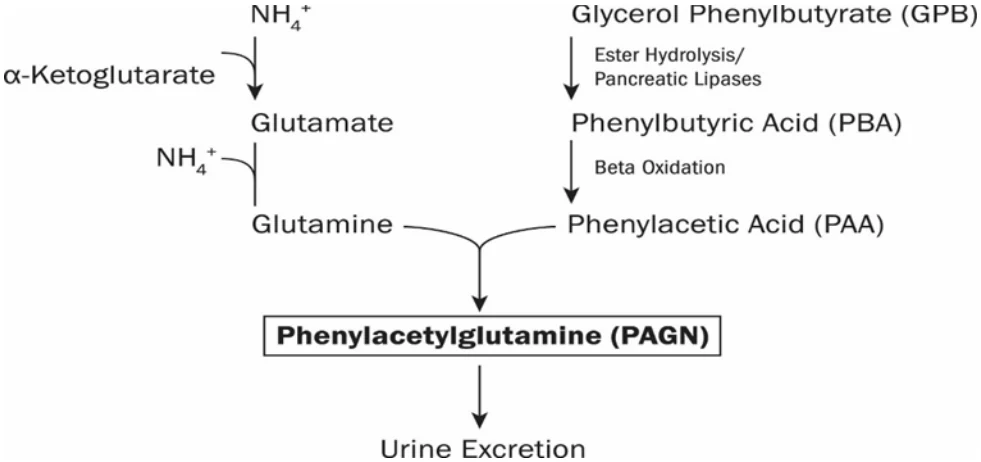
UCDs are inherited deficiencies of enzymes or transporters necessary for the synthesis of urea from ammonia (NH3, NH4+). Absence of these enzymes or transporters results in the accumulation of toxic levels of ammonia in the blood and brain of affected patients. RAVICTI is a triglyceride containing 3 molecules of PBA. PAA, the major metabolite of PBA, is the active moiety of RAVICTI. PAA conjugates with glutamine (which contains 2 molecules of nitrogen) via acetylation in the liver and kidneys to form PAGN, which is excreted by the kidneys (Figure 1). On a molar basis, PAGN, like urea, contains 2 moles of nitrogen and provides an alternate vehicle for waste nitrogen excretion.
Figure 1: RAVICTI Mechanism of Action
10.2 Pharmacodynamics
Pharmacological Effects: Blood ammonia was the pharmacodynamics efficacy surrogate in each of the short-term studies. In the combined pooled analysis of these short-term studies, daily average ammonia was 31 µmol/L in 80 adult and pediatric UCD patients during treatment with RAVICTI.
Cardiac Electrophysiology: A double-blind, randomized, placebo- and active-controlled, 4-arm crossover electrocardiogram (ECG) assessment study was performed in healthy subjects (N=57). Each subject received 4 treatments in a randomly assigned sequence: RAVICTI 4.4 g three times daily (TID), RAVICTI 6.6 g TID, placebo, and a positive control, each for 3 days. The 4.4 g TID and 6.6 g TID doses corresponded to average doses of 6.55 g/m2/day and 9.62 g/m2/day, respectively, which are within the therapeutic dose range. Serial ECG data were collected on day 3 of treatment between 0.5 and 23 hours after administration of the first of the TID doses.
RAVICTI resulted in a dose- and concentration-dependent increase in heart rate. At the 4.4 g TID dose, statistically significant (p<0.05) positive mean differences from placebo were observed at 4 of 12 time points on day 3, with a maximum mean difference from placebo of 4.6 bpm (90% confidence interval [CI] 3.0, 6.3) at the 12 h time point. At the 6.6 g TID dose, statistically significant positive mean differences from placebo were observed at 9 of 12 time points on day 3, with a maximum mean difference from placebo of 10.6 bpm (90% CI 8.3, 12.8) at the 16 h time point.
RAVICTI was also associated with QTcF (QTcF=QT/RR0.33) shortening. At the 4.4 g TID dose, statistically significant negative mean differences from placebo were observed at 9 of 12 time points on day 3, with a maximum mean difference from placebo of -7.2 ms (90% CI -10.1, -4.3) at the 16 h time point. At the 6.6 g TID dose, statistically significant negative mean differences from placebo were observed at 11 of 12 time points on day 3, with a maximum mean difference from placebo of -6.9 ms (90% CI -9.4, -4.4) at the 16 h time point.
10.3 Pharmacokinetics
Clinical Pharmacology:
In human studies, PBA, PAA, and PAGN were the major plasma metabolites and PAGN was the major urinary metabolite. An average of 60-70% of the PBA delivered as glycerol phenylbutyrate was excreted in urine as PAGN, consistent with 60-70% bioavailability. Population pharmacokinetic modeling further indicated that PBA enters the circulation slowly when delivered orally as glycerol phenylbutyrate and that the rate of PAA to PAGN conversion varies directly with body surface area, resulting in a higher PAA exposure among young children as compared with adults for equivalent dosing.
Absorption
RAVICTI is a pro-drug of PBA. Upon oral ingestion, PBA is released from the glycerol backbone in the gastrointestinal tract by lipases. PBA derived from RAVICTI is further converted by β-oxidation to PAA.
In adult UCD patients receiving multiple doses of RAVICTI, the time to achieve the maximum plasma concentrations at steady state (Tmax-ss) of PBA, PAA, and PAGN occurred at 8 h, 12 h, and 10 h, respectively, after the first dose in the day. In pediatric UCD patients receiving multiple doses of RAVICTI, the time to achieve the Tmax-ss occurred at 8 h for all metabolites after the first dose in the day. The AUC0-24 for PBA in adult UCD patients was 433 μg∙h/mL and for pediatric patients was 420 μg∙h/mL. The AUC0-24 for PAA in adult UCD patients was 447 μg∙h/mL and for pediatric patients was 1038 μg∙h/mL. The AUC0-24 for PAGN in adult UCD patients was 1127 μg∙h/mL and for pediatric patients was 1239 μg∙h/mL. In adult UCD patients receiving multiple doses of RAVICTI mean maximum concentration (Cmax) for PBA, PAA, and PAGN was 51.9 µg/mL, 38.5 µg/mL, and 78.6 µg/mL, respectively. In pediatric UCD patients receiving multiple doses of RAVICTI mean Cmax for PBA, PAA, and PAGN was 62.7 µg/mL, 87.3 µg/mL, and 93.9 µg/mL, respectively. Total 24-hour urinary PAGN excretion in adult and pediatric UCD patients were 12.9 g and 12.5 g, respectively. The peak PAA concentrations in patients with UCDs in adults and in pediatric age groups (less than 2 months, 2 months to less than 2 years, 2 years to 17 years) are summarized in Table 5.
Table 5: Peak PAA Concentrations in Patients with UCDs Treated with RAVICTI in Clinical Trials
| Age Range | RAVICTI Dose | Mean (SD) Peak PAA Concentration (µg/mL) | Median (Range) Peak PAA Concentration (µg/mL) |
|---|---|---|---|
Less than 2 months (n=16) | 3.1 to 12.7 mL/m2/day (3.4 to 14 g/m2/day) | 257 (162) | 205 (96 to 707) |
2 months to less than 2 years (n=17) | 3.3 to 12.3 mL/m2/day (3.7 to 13.5 g/m2/day) | 142 (299) | 35 (1 to 1215) |
2 years to 17 years (n=53) | 1.4 to 13.7 mL/m2/day (1.5 to 15.1 g/m2/day) | 70 (79) | 50 (1 to 410) |
Adults (n=43) | 0.6 to 14 mL/m2/day (0.7 to 15.4 g/m2/day) | 39 (40) | 25 (1.6 to 178) |
PAA = phenylacetic acid; SD = standard deviation; UCD = urea cycle disorder
Distribution
In vitro, the extent of plasma protein binding for 14C-labeled metabolites was 80.6% to 98.0% for PBA (over 1-250 μg/mL), and 37.1% to 65.6% for PAA (over 5-500 μg/mL). The protein binding for PAGN was 7% to 12% and no concentration effects were noted.
Metabolism
Upon oral administration, pancreatic lipases hydrolyze RAVICTI (i.e., glycerol phenylbutyrate), and release PBA. PBA undergoes β-oxidation to PAA, which is conjugated with glutamine in the liver and in the kidney through the enzyme phenylacetyl-CoA: L-glutamine-N-acetyltransferase to form PAGN. PAGN is subsequently eliminated in the urine.
Saturation of conjugation of PAA and glutamine to form PAGN was suggested by increases in the ratio of plasma PAA to PAGN with increasing dose and with increasing severity of hepatic impairment.
In in vitro studies, the specific activity of lipases for glycerol phenylbutyrate was in the following decreasing order: pancreatic triglyceride lipase, carboxyl ester lipase, and pancreatic lipase–related protein 2. Further, glycerol phenylbutyrate was hydrolyzed in vitro by esterases in human plasma. In these in vitro studies, a complete disappearance of glycerol phenylbutyrate did not produce molar equivalent PBA, suggesting the formation of mono- or bis-ester metabolites. However, the formation of mono- or bis-esters was not studied in humans.
Elimination
The mean (SD) percentage of administered PBA excreted as PAGN ranged from approximately 60-70% and averaged 68.9% (17.2) in adults and 66.4% (23.9) in pediatric UCD patients at steady state. PAA and PBA represented minor urinary metabolites, each accounting for <1% of the administered dose of PBA.
Special Populations and Conditions
Pediatrics: Population pharmacokinetic modeling and dosing simulations suggest body surface area to be the most significant covariate explaining the variability of PAA clearance. PAA clearance was 10.9 L/h, 16.4 L/h, and 24.4 L/h, respectively, for UCD patients ages 3 to 5, 6 to 11, and 12 to 17 years.
In pediatric patients with UCDs (n=14) ages 2 months to less than 2 years, PAA clearance was 6.8 L/h.
In pediatric patients with UCDs (n=16) aged birth to less than 2 months, PAA clearance was 3.8 L/h. The mean peak ratio of PAA to PAGN in UCD patients aged birth to less than 2 months was higher (mean: 1.6; range 0.1 to 7.1) than that of UCD patients aged 2 months to less than 2 years (mean 0.5; range 0.1 to 1.2).
- Sex: In healthy adult volunteers, a gender effect was found for all metabolites, with women generally having higher plasma concentrations of all metabolites than men at any given dose level. In healthy female volunteers, mean Cmax for PAA was 51% and 120% higher than in male volunteers after administration of 4 mL and 6 mL 3 times daily for 3 days, respectively. The dose normalized mean AUC0-23h for PAA was 108% higher in females than in males.
- Hepatic Insufficiency: No studies were conducted in UCD patients with hepatic impairment, although glycerol phenylbutyrate has been administered to over 100 patients with cirrhosis. Because conversion of PAA to PAGN occurs in the liver, patients with severe hepatic impairment may have reduced conversion capability and higher plasma PAA and plasma PAA to PAGN ratio. Therefore, dosage for patients with moderate to severe hepatic impairment should be started at the lower end of the recommended dosing range and should be kept on the lowest dose necessary to control their ammonia levels. A plasma PAA to PAGN ratio exceeding 2.5 may indicate saturation of PAA to PAGN conversion capacity and the need for reduced dosing.
Renal Insufficiency: The pharmacokinetics of RAVICTI in patients with impaired renal function,
- including those with end-stage renal disease (ESRD) or those on hemodialysis have not been studied.
11 STORAGE, STABILITY AND DISPOSAL
Store at 15-30°C.
Keep in original packaging to protect from light.
Use the contents of the bottle within 90 days after opening.
12 SPECIAL HANDLING INSTRUCTIONS
RAVICTI should be prescribed by a physician experienced in the management of urea cycle disorders.
Instruct patients to use the RAVICTI bottle and oral syringe as follows:
- Use a new reclosable bottle cap adapter with each new bottle that is opened.
- Open the RAVICTI bottle and twist on the new reclosable bottle cap adapter.
- Use a new and dry oral syringe to withdraw each prescribed dose of RAVICTI.
- Discard the oral syringe after each dose.
- Tightly close the tethered tab on the reclosable bottle cap adapter after each use.
- Do not rinse the reclosable bottle cap adapter.
- If water or moisture enters the RAVICTI bottle, the contents will become cloudy in appearance. If the contents of the bottle appear cloudy at any time, do not use the remaining RAVICTI in the bottle and return it to the pharmacy or patient program to be discarded.
PART II: SCIENTIFIC INFORMATION
13 PHARMACEUTICAL INFORMATION
Drug Substance
Proper name: glycerol phenylbutyrate
Chemical name: benzenebutanoic acid, 1’,1’’–(1,2,3-propanetriyl) ester
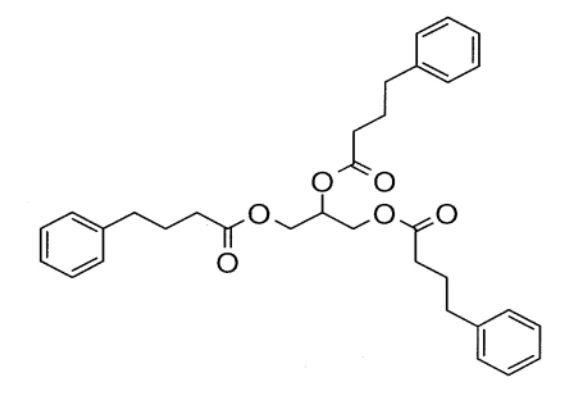
Molecular formula and molecular mass: C33H38O6, 530.67
Structural formula:
Physicochemical properties: RAVICTI (glycerol phenylbutyrate) is a clear, colorless to pale yellow oral liquid. It is insoluble in water and most organic solvents, and it is soluble in dimethylsulfoxide (DMSO) and >65% acetonitrile.
Glycerol phenylbutyrate is a nitrogen-binding agent. It is a triglyceride containing 3 molecules of PBA linked to a glycerol backbone. The pH cannot be accurately determined due to the absence of any ionizable functional groups in the molecular structure.
14 CLINICAL TRIALS
14.1 Trial Design and Study Demographics
Table 6: Summary of Patient Demographics for Clinical Trials in Urea Cycle Disorders
| Study # | Study design | Dosage (Range), route of administration and duration | Study subjects, UCD subtype (n = number | Mean age (Range) Years | Sex |
|---|---|---|---|---|---|
| N/A | Pooled long- term population | 11 (1-34) g/day | n=100 ARG: 2 ASL: 13 ASS: 12 CPS: 1 HHH: 3 OTC: 69 | 29 (0.2-60) | 67% F |
| Study # | Study design | Dosage (Range), route of administration and duration | Study subjects, UCD subtype (n = number | Mean age (Range) Years | Sex |
|---|---|---|---|---|---|
| 003 | Open label, fixed sequence, switch over | 13 (7-19) g/day oral 1 week | n=14 ASS: 1 HHH: 1 OTC: 8 | 36 (21-73) | 60% F |
| 006 | Randomized, double blind, crossover | 13 (2-34) g/day oral 2 weeks | n=45 ASS: 3 CPS: 2 OTC: 40 | 33 (18-75) | 69% F |
| 005 | Open label, fixed sequence, switch over with 12-month safety extension | SO: 12 (8-19) g/day oral 1 week SE: 11 (2-19) g/day oral 12 months | SO: n=11 ASL: 1 ASS: 1 OTC: 9 SE: n=17 ASL: 1 ASS: 2 OTC: 14 | SO: 10 (6-11) SE: 10 (6-11) | SO: 91% F SE: 82% F |
| 007 | Open label | 13 (2-34) g/day oral 12 months | N=60 ARG: 1 ASL: 2 ASS: 4 CPS: 1 HHH: 3 OTC: 49 | 29 (6-60) | 68% F |
| 012 | Open label, fixed sequence, switch over with 12- month safety extension | SO: 5 (1-9) g/day oral, 1 week SE: 5 (1-9) g/day oral 12 months | SO: 15 ARG: 1 ASL: 8 ASS: 3 OTC: 3 SE: 23 ARG: 1 ASL: 10 ASS: 6 OTC: 6 | SO: 3 (0.2-5) SE: 3 (0.2-5) | SO: 53% F SE: 52% F |
| Study # | Study design | Dosage (Range), route of administration and duration | Study subjects, UCD subtype (n = number | Mean age (Range) Years | Sex | ||
|---|---|---|---|---|---|---|---|
| 011 | Open label safety extension | Adult: 11 (2-23) g/day oral, 643 days Pediatric: 7 (2-18) g/day oral, 467 days | Adult: 43 ARG: 1 ASL: 2 ASS: 2 HHH: 3 OTC: 35 Pediatric: 45 ARG: 1 ASL: 11 ASS: 7 OTC: 26 | Adult: 33 (19-61) Pediatric: 7 (1-17) | Adult: 61% F Pediatric: 71% F | ||
| 009 | Open label | Age 2 months to <2 years: 4 (2-6) g/day oral, 9 months Age birth to <2 months: 2 (1-4) g/day oral, 10 months | 2 months to <2 years: 10 ARG: 1 ASL: 3 ASS: 2 CPS: 2 OTC: 2 Birth to <2 months: 16 ASL: 1 ASS: 7 OTC: 8 | 2 months to <2 years: 9.87 (4.3-20.8) months Birth to <2 months: 0.83 (0.1-2) months | 2 months to <2 years: 50% F Birth to <2 months: 44% F | ||
| Legend: ARG=arginase; ASL=argininosuccinate lyase; ASS=argininosuccinate synthetase; CPS=carbamyl phosphate synthetase; f =female; HHH=ornithine translocase deficiency; N/A=not applicable; OTC=ornithine transcarbamylase; SO =switch over; SE=safety extension. | |||||||
The effectiveness of RAVICTI in controlling ammonia in patients with UCDs was evaluated in 114 UCD patients across four short-term switch over (SO) controlled studies (1 to 2 week) and three long term studies (12 month). The short-term studies enrolled 85 UCD patients (59 adult and 26 pediatric) and the long-term studies enrolled 126 UCD patients (51 adults and 75 pediatric). Most patients in the short-term studies also participated in the long-term studies. Demographic characteristics of the patient population are shown in Table 6.
HPN-100-003 (Study 003) was an open label, fixed-sequence, switch over study to compare control of blood ammonia on RAVICTI to sodium phenylbutyrate in 10 adult UCD patients (see Table 6) who were being treated with sodium phenylbutyrate for control of their UCD. Patients were enrolled and received sodium phenylbutyrate for 1 week and then switched to RAVICTI for 1 week. Each patient received sodium phenylbutyrate or RAVICTI TID with meals. The dose of RAVICTI was calculated to deliver the same amount of PBA as the dose of sodium phenylbutyrate. After 1 week of dosing with each treatment, all patients underwent 24 hours of ammonia measurements as well as blood and urine pharmacokinetics. Dietary protein was controlled throughout the study.
HPN-100-006 (Study 006) was a randomized, double-blind, double dummy, active-controlled, cross-over study to assess the non-inferiority of RAVICTI to sodium phenylbutyrate by evaluating blood ammonia in 45 adult UCD patients (see Table 6) who were being treated with sodium phenylbutyrate for control of their UCD. Each patient was randomized 1:1 to one of two treatment arms to receive either sodium phenylbutyrate/RAVICTI placebo → sodium phenylbutyrate placebo/RAVICTI or RAVICTI/sodium phenylbutyrate placebo → RAVICTI placebo/sodium phenylbutyrate for 4 weeks (2 weeks each on active sodium phenylbutyrate or RAVICTI). Each patient received sodium phenylbutyrate or RAVICTI TID with meals. The dose of RAVICTI was calculated to deliver the same amount of PBA as the sodium phenylbutyrate dose. After 2 weeks of dosing, by which time patients had reached steady state on each treatment, all patients underwent 24 hours of ammonia measurements. Dietary protein was controlled throughout the study. Upon completion of Study 006, patients were allowed to enroll into a separate long-term (12-month) open label study HPN-100-007 (Study 007).
Studies HPN-100-005 (Study 005) and HPN-100-012 (Study 012) were open label, fixed-sequence, switch over studies to compare control of blood ammonia on RAVICTI to sodium phenylbutyrate in 11 and 15 pediatric UCD patients, respectively (see Table 6). In each study, patients who were being treated with sodium phenylbutyrate for control of their UCD were enrolled and received sodium phenylbutyrate for 1 week and then switched to RAVICTI for 1 week. Each patient received sodium phenylbutyrate or RAVICTI TID with meals. The dose of RAVICTI was calculated to deliver the same amount of PBA as the dose of sodium phenylbutyrate. Three times or four times daily feeding and administration of RAVICTI was recommended; however, flexibility was allowed based on the subject’s prior sodium phenylbutyrate dosing regimen and/or feeding habits. After 1 week of dosing with each treatment, all patients underwent 24 hours of ammonia measurements as well as blood and urine pharmacokinetics. Dietary protein was controlled throughout the study. Upon completion of the switch over part of each study, patients were allowed to continue receiving RAVICTI and new additional patients were allowed to enrol to receive RAVICTI for 12 months in an open label safety extension.
Study HPN-100-011 (Study 011) was an open-label, long-term study conducted to assess ammonia control in adult and pediatric patients with UCDs. The study enrolled patients with UCDs who had completed Studies 007, 005, and 012. Venous ammonia levels were monitored at a minimum of every 6 months.
Study HPN-100-009 (Study 009) was an uncontrolled, open label study in pediatric patients less than 2 years of age. The primary efficacy endpoint was successful transition to RAVICTI within a period of 4 days followed by 3 days of observation for a total of 7 days, where successful transition was defined as no signs and symptoms of hyperammonemia and a venous ammonia level less than 100 micromol/L. Ammonia levels were monitored for up to 4 days during transition and on day 7.
14.2 Study Results
14.2.1 Clinical Studies in Adult Patients with UCDs
Short Term Efficacy in Adult UCD Patients
In the pooled analysis of the short-term studies in adults (Figure 2), mean daily ammonia level was 34 µmol/L versus 40 µmol/L on sodium phenylbutyrate (p=0.136 paired t-test) and glutamine level was 760 µmol/L versus 807 µmol/L on sodium phenylbutyrate during treatment with RAVICTI (n=54). The maximum PAA and PAGN concentrations achieved during treatment with RAVICTI were 38.5 µg/mL and 78.6 µg/mL, respectively versus 91.5 µg/mL and 86.3 µg/mL on sodium phenylbutyrate, respectively.
Figure 2: Venous Ammonia Response in Adult UCD Patients in Short-Term Treatment
Long Term Efficacy in Adult UCD Patients
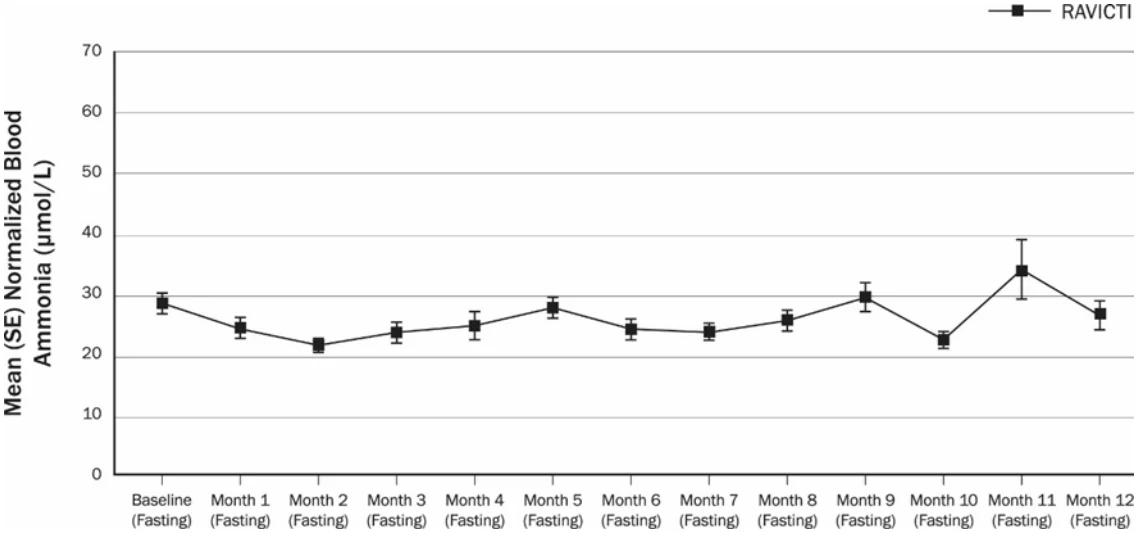
A long-term (12-month), uncontrolled, open-label study (Study 007) was conducted to assess monthly ammonia control and hyperammonemic crisis over a 12-month period. A total of 51 adults were in the study and all but 6 had been converted from sodium phenylbutyrate to RAVICTI. Venous ammonia levels were monitored monthly. Mean fasting venous ammonia values in adults were within normal limits during long-term treatment with RAVICTI (range: 6-30 μmol/L).
In long term studies, the median (25-75 percentiles) levels of PBA, PAA, and PAGN obtained from 195 samples in 51 adult patients were 0.5 (0.5-2.78) µg/mL, 1.12 (0.5-4.17) µg/mL, and 14.28 (4.64-28.15) µg/mL, respectively. Of 51 adult patients participating in the 12-month, open-label treatment with RAVICTI, 7 patients (14%) reported a total of 10 hyperammonemic crises versus 15 crises in 9 (18%) patients in the preceding 12 months prior to study entry, in patients receiving sodium phenylbutyrate. The fasting venous ammonia measured during Study 007 is displayed in Figure 3. Ammonia values across different laboratories were normalized to a common normal range of 9 to 35 µmol/L.
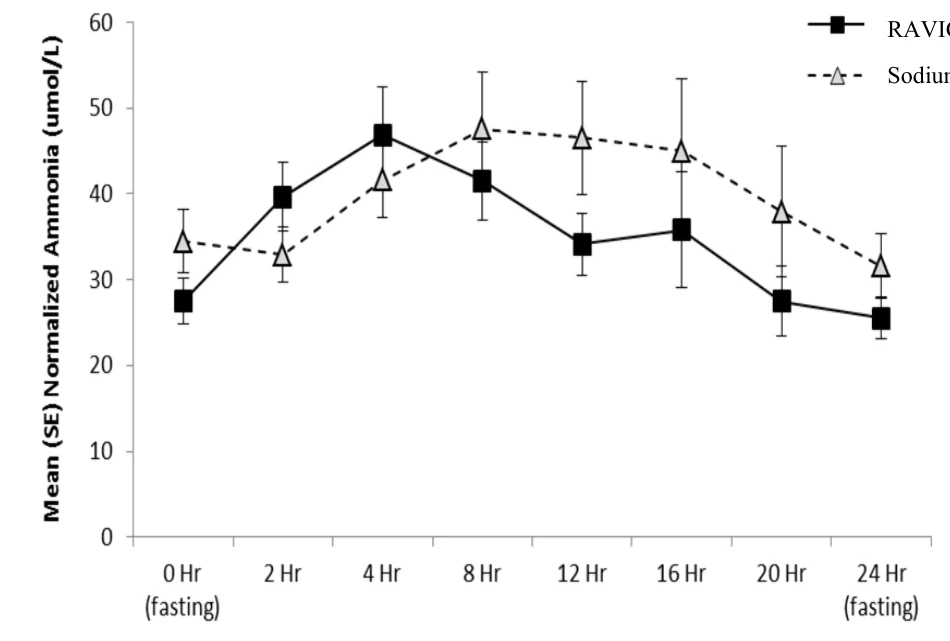
Figure 3: Venous Ammonia Response in Adult UCD Patients in Long-Term Treatment
14.2.2 Clinical Studies in Pediatric Patients 2 Years to 17 Years of Age with UCDs
Short Term Efficacy in Pediatric Patients (2 years to 17 years of age) with UCDs
In the pooled analysis (Figure 4) of the short-term studies in children (005 and 012), mean daily ammonia level was 24 µmol/L versus 35 µmol/L on sodium phenylbutyrate (p=0.007; paired t-test) and glutamine level was 661 µmol/L versus 710 µmol/L on sodium phenylbutyrate during treatment with RAVICTI (N=26). Four patients <2 years of age are excluded for this analysis due to insufficient data. The maximum PAA and PAGN concentration achieved during treatment with RAVICTI were 87.3 µg/mL and 93.9 µg/mL, versus 50.2 µg/mL and 74.6 µg/mL on sodium phenylbutyrate, respectively.
Neuropsychological function was assessed as an exploratory endpoint at baseline and at the end of long-term treatment using BRIEF (Behavior Rating Inventory of Executive Function), CBCL (Child Behavior Checklist) and WASI (Wechsler Abbreviated Scale of Intelligence). CBCL and WASI scores remained stable while mean (SD) of T score in global executive composite of BRIEF improved significantly from 66.2 (14.02) at baseline to 56.5 (9.71) at the end of study.
Figure 4: Venous Ammonia Response in Pediatric Patients (2 years to 17 years of age) with UCDs in Short-Term Treatment
Long Term Efficacy in Pediatric Patients (2 years to 17 years of age) with UCDs
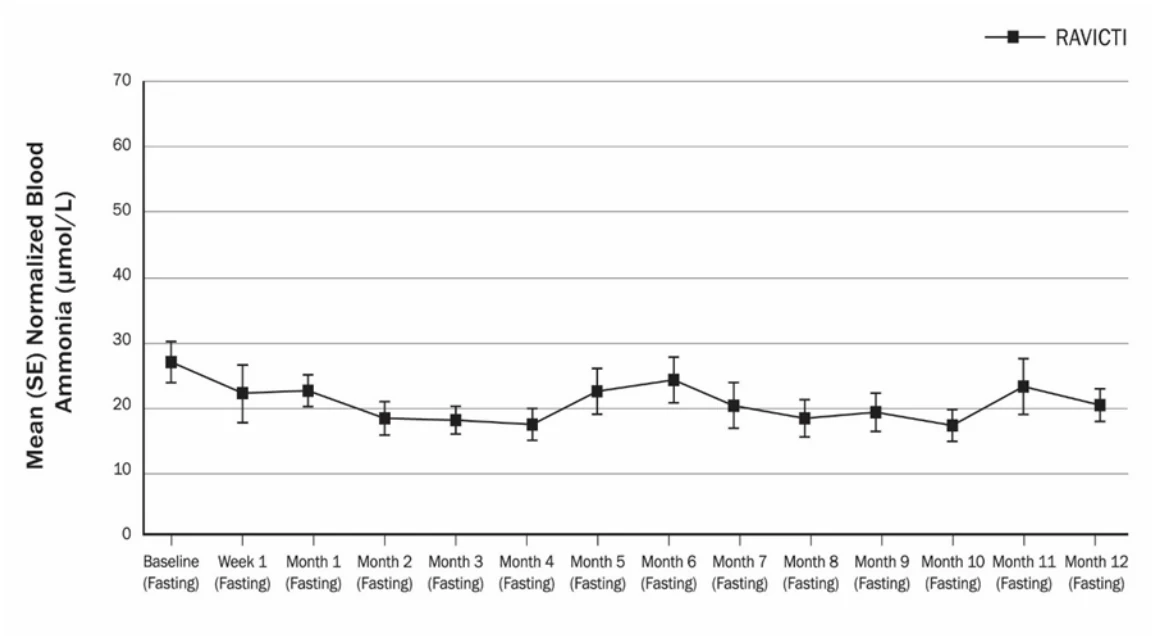
Long-term (12-month), uncontrolled, open-label studies were conducted to assess monthly ammonia control and hyperammonemic crisis over a 12-month period in three studies (Study 007, which also enrolled adults, extension of Study 005, and extension study 012). A total of 49 children ages 2 month to 17 years were enrolled, and all but 1 had been converted from sodium phenylbutyrate to RAVICTI. The fasting venous ammonia measured during these long-term studies in patients 2 years to 17 years is displayed in Figure 5 (range:17-25 μmol/L). Ammonia values across different laboratories were normalized to a common normal range of 9 to 35 µmol/L.
In long-term studies, the median (25-75 percentiles) levels of PBA, PAA, and PAGN obtained from 250 samples in 49 pediatric patients were 2.07 (0.5-8.7) µg/mL, 2.95 (0.5-31.19) µg/mL, and 21.18 (7.14-52.56) µg/mL, respectively. Of the 49 pediatric patients treated with RAVICTI for up to 12 months, 12 patients (24.5%) reported a total of 17 hyperammonemic crises versus 38 crises in 21 (42.9%) patients in the preceding 12 months prior to study entry, in patients receiving sodium phenylbutyrate.
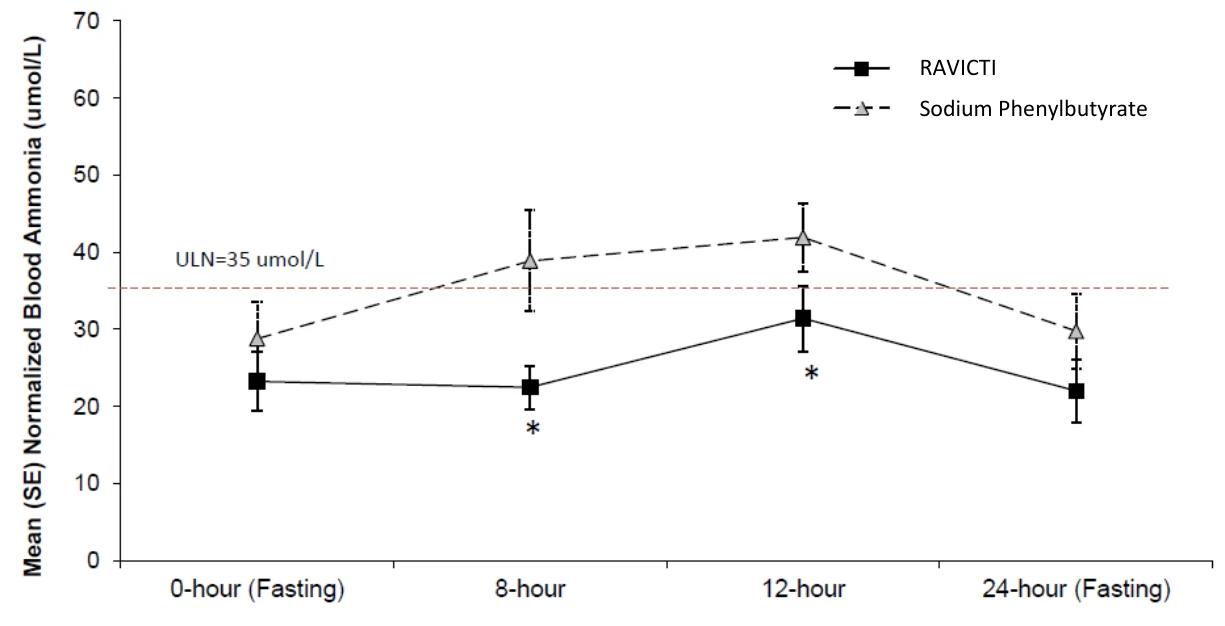
Figure 5: Venous Ammonia Response in Pediatric Patients (2 years to 17 years of age) with UCDs in Long-Term Treatment
14.2.3 Clinical Studies in Pediatric Patients Less Than 2 Years of Age with UCDs
The efficacy of RAVICTI in pediatric patients less than 2 years of age with UCDs was evaluated in uncontrolled, open label studies (Studies 009, 011, and 012). A total of 17 pediatric patients with UCDs aged 2 months to less than 2 years participated in Studies 009, 011, and 012. Study 009 enrolled 16 pediatric patients less than 2 months of age.
Pediatric Patients Less than 2 Months of Age
A total of 16 pediatric patients less than 2 months of age participated in Study 009. Ten of the 16 patients transitioned from sodium phenylbutyrate to RAVICTI within 3 days of treatment and their initial dosage of RAVICTI was calculated to deliver the same amount of phenylbutyrate as the sodium phenylbutyrate dosage administered prior to RAVICTI dosing. Three of the 16 patients were treatment-naïve and started RAVICTI at dosages of 9.0, 9.4, and 9.6 mL/m2/day. The remaining 3 of the 16 patients transitioned from intravenous sodium benzoate and sodium phenylacetate to RAVICTI within 3 days of treatment and their initial dosages of RAVICTI were 10.4, 10.9, and 10.9 mL/m2/day.
Of the 16 patients, 16, 14, 12, 6, and 3 patients were treated for 1, 3, 6, 12, and 18 months, respectively.
After the initial 7-day transition period, patients received a mean RAVICTI dosage of 8 mL/m2/day (8.8 g/m2/day), with doses ranging from 3.1 to 12.7 mL/m2/day (3.4 to 14 g/m2/day). The frequency of dosing varied throughout the study. The majority of patients (n = 12) were dosed three times per day with feeding. No patients discontinued during the 7-day transition phase. Ammonia values across different laboratories were normalized (transformed) to a common normal pediatric range of 28 to 57 micromol/L for comparability.
During the safety extension phase (months 1-24), venous ammonia levels were monitored monthly for the first 6 months of treatment and every 3 months thereafter until the patients terminated or completed the study. During the safety extension phase, 1 patient discontinued from the study due to an adverse event (increased hepatic enzymes), 2 patients were withdrawn from the study by their parent/guardian, and 4 patients discontinued from the study early to undergo a liver transplant (protocol-defined discontinuation criterion). The normalized ammonia levels in pediatric patients less than 2 months of age, with available values (which varied by month of treatment) in Study 009 are shown in Table 7. Five patients (all less than 1 month of age) experienced a total of 7 hyperammonemic crises defined as in Studies 011 and 012. Hyperammonemic crises were precipitated by upper respiratory tract infection (2 events), change in diet (1 event), or had no identified precipitating event (4 events).
Table 7: Ammoniaa Levels in Pediatric Patients Less than 2 Months of Age with Urea Cycle Disorders during the Safety Extension of in Study 009
| Month | N (patients with available ammonia level) | Normalized Ammonia (micromol/L)b | ||||||
| Mean (SD) | Median (Min, Max) | |||||||
| 1 | 15 | 71 (52) | 60 (18, 227) | |||||
| 2 | 11 | 58 (40) | 50 (16, 168) | |||||
| 3 | 14 | 53 (34) | 46 (11, 122) | |||||
| 4 | 11 | 94 (106) | 64 (35, 407) | |||||
| 5 | 10 | 52 (18) | 57 (27, 86) | |||||
| 6 | 9 | 49 (24) | 42 (22, 91) | |||||
| 9 | 8 | 56 (34) | 45 (22, 122) | |||||
| 12 | 6 | 35 (17) | 36 (11, 60) | |||||
| 15 | 4 | 52 (12) | 52 (39, 67) | |||||
| 18 | 3 | 64 (14) | 63 (50, 78) | |||||
| 24 | 9 | 63 (29) | 72 (23, 106) | |||||
SD = standard deviation; ULN = upper limit of normal
a Normalized ammonia (micromol/L) = ammonia readout in micromol/L x (35/ULN of a laboratory reference range specified for each assay)
b Normal range: 28 to 57 micromol/L.
Pediatric Patients 2 months to Less than 2 Years of Age
The integrated analyses for patients with UCDs 2 months to ˂ 2 years of age included 17 patients from Study 009, Study 011 and Study 012. 7 patients were enrolled in Study 012 [4 patients who continued from the switch-over (SO) phase into the safety extension phase (SE) of Study 012 and an additional 3 patients new enrolled in the safety extension phase]. A total of 6 patients completed this study (one subject discontinued due to a serious adverse reaction) and enrolled in Study 011. These patients were then integrated with a total of 10 patients enrolled in Study 009.
The primary efficacy endpoint for Study 009 was the successful transition to RAVICTI with controlled ammonia (no clinical symptoms and ammonia < 100 μmol/L). Eligible paediatric patients with UCDs entered Study 009 either as a newly diagnosed patient presenting with or without hyperammonemic crisis (HAC) or as a previously diagnosed patient stabilized on sodium phenylbutyrate (NaPBA). One of 10 patients aged 2 months to < 2 years entered the study in HAC while the remaining 9 patients were previously stabilized on NaPBA and successfully transitioned to RAVICTI. Transition to RAVICTI was to be complete within 7 days of enrollment. Seven patients aged 2 months to < 2 years entered Study Study 012 (SO or SE) on a stable dose of NaPBA and were switched (transitioned) to an equivalent PBA dose of RAVICTI.
The median RAVICTI dose was 3.5 mL/day and ranged from 1.50 to 7.15 mL/day. The median RAVICTI dose corrected for body surface area (BSA) was 7.86 mL/m2/day (8.64 g/m2/day) and ranged from 3.34 to 12.30 mL/m2/day (3.68 to 13.53 g/m2/day). Dosages were similar in the long-term extension of the Study 009 (median RAVICTI dose was 3.95 mL and ranged from 2.7 to 5.7 mL; the median RAVICTI dose corrected for BSA was 9.57 mL/m2/day [10.53 g/m2/day] and ranged from 6.3 to 11.3 mL/m2/day [6.9 to 12.4 g/m2/day]). The duration of RAVICTI therapy in the integrated analysis of the 2 months to < 2 years age group averaged 8.85 months with a range of 6 days to 18.4 months. The median duration of treatment was 6 months. In the long-term extension of Study 009, the median duration on treatment for the 10 patients in this age cohort was 9.33 months.
All 17 patients (100.0%) achieved successful transition to study drug (RAVICTI) by the end of the transition period with controlled ammonia (i.e., no clinical symptoms and ammonia < 100 µmol/L). On Day 1, mean normalized plasma ammonia was 58.29 µmol/L, with a mean change from Baseline of -43.34 µmol/L. By the end of the transition period, normalized plasma ammonia was 60.80 µmol/L, with a mean change from Baseline of -28.36 µmol/L.
The normalized ammonia levels in pediatric patients 2 months to less than 2 years of age, with available values (which varied by month of treatment) in are shown in Table 8. The average maximum ammonia level excluding HAC among all patients 2 months to < 2 years of age receiving RAVICTI was 141.7 µmol/L (range of 46.7 to 513.0 µmol/L).
Table 8: Ammoniaa Levels in Pediatric Patients 2 months to Less than 2 Years of Age with Urea Cycle Disorders (Study 009, Study 011 and Study 012)
| Month | N (patients with available ammonia level) | Normalized Ammonia (micromol/L)b | |||||
|---|---|---|---|---|---|---|---|
| Mean (SD) | Min, Max | ||||||
| Baselinec | 17 | 89 (63) | 26, 287 | ||||
| 1 | 16 | 63 (49) | 14, 208 | ||||
| 2 | 11 | 44 (24) | 15, 78 | ||||
| 3 | 13 | 62 (70) | 11, 259 | ||||
| 4 | 6 | 99 (42) | 59, 163 | ||||
| 5 | 3 | 56 (36) | 18,89 | ||||
| 6 | 8 | 40 (23) | 14, 80 | ||||
| 9 | 6 | 65 (56) | 19, 170 | ||||
| Month | N (patients with available ammonia level) | Normalized Ammonia (micromol/L)b |
|---|
| Mean (SD) | Min, Max | ||
|---|---|---|---|
| 12 | 6 | 31 (24) | 10, 66 |
| End of Study | 6 | 36 (16) | 15, 61 |
SD = standard deviation; ULN = upper limit of normal
a Normalized ammonia (micromol/L) = ammonia readout in micromol/L x (35/ULN of a laboratory reference range specified for each assay)
b Normal range: 28 to 57 micromol/L.
c Baseline ammonia is defined as the mean of ammonia values within seven days prior to Day 1 dosing. If multiple ammonia values exist within a day, the mean ammonia value is used.
15 MICROBIOLOGY
No microbiological information is required for this drug product.
16 NON-CLINICAL TOXICOLOGY
General Toxicology
Acute toxicity: Following a single oral administration, the minimum lethal dose of glycerol phenylbutyrate was 1200 mg/kg in rats and greater than 6500 mg/kg in monkeys.
Repeated dose toxicity: Repeat-dose oral toxicity studies were conducted in mice, rats, and monkeys for up to 13, 26, and 52 weeks, respectively. Clinical signs of central nervous system effects (e.g., hypoactivity, impaired equilibrium, or impaired muscle coordination) were observed in all species studied. In a 13-week repeat-dose study in juvenile monkeys, clinical observations of inappetence, tremors, hypoactivity, impaired equilibrium, twitching, body pallor, and labored respiration were observed at doses of ≥1250 mg/kg/day (≥2 times the clinical dose of 8.195 g/m2/day in pediatric patients, based on combined AUCs for PBA and PAA). Histopathological changes in the liver (centrilobular hepatocellular hypertrophy) and spleen (hemosiderosis and lymphoid depletion) were observed in rats and monkeys following chronic dosing with glycerol phenylbutyrate. The no-observed-adverse-effect levels (NOAELs) in the 26-week rat and 52-week monkey studies were below 650 mg/kg/day and 750 mg/kg/day (<3.2 times and <2 times the dose of 7.557 g/m2/day in adult patients, based on the combined AUCs for PBA and PAA), respectively. The NOAEL in the 13-week study in juvenile monkeys was below 750 mg/kg/day (<1.2 times the dose of 8.195 g/m2/day in pediatric patients, based on combined AUCs for PBA and PAA, respectively).
Carcinogenicity
In a 2-year carcinogenicity study in rats, glycerol phenylbutyrate caused a statistically significant increase in the incidence of pancreatic acinar cell adenoma, carcinoma, and combined adenoma or carcinoma at a dose of 650 mg/kg/day in males (3.4 times the dose of 7.557 g/m2/day in adult patients, based on combined AUCs for PBA and PAA) and 900 mg/kg/day in females (8.4 times the dose of 7.557 g/m2/day in adult patients, based on combined AUCs for PBA and PAA). The incidence of the following tumors was also increased in female rats at a dose of 900 mg/kg/day: thyroid follicular cell adenoma, carcinoma and combined adenoma or carcinoma, adrenal cortical combined adenoma or carcinoma, uterine endometrial stromal polyp, and combined polyp or sarcoma. The dose of 650 mg/kg/day in male rats is 2.1 times the dose of 8.195 g/m2/day in pediatric patients, based on combined AUCs for PBA and PAA. The dose of 900 mg/kg/day in female rats is 5.1 times the dose of 8.195 g/m2/day in pediatric patients, based on combined AUCs for PBA and PAA. In a 26-week study in transgenic (Tg.rasH2) mice, glycerol phenylbutyrate was not tumorigenic at doses up to 1000 mg/kg/day.
Genotoxicity
Glycerol phenylbutyrate was not genotoxic in the Ames test, the in vitro chromosomal aberration test in human peripheral blood lymphocytes, or the in vivo rat micronucleus test. The metabolites PBA, PAA, PAGN, and phenylacetylglycine were not genotoxic in the Ames test or in vitro chromosome aberration test.
Reproductive and Developmental Toxicology
Glycerol phenylbutyrate administered orally before cohabitation and through mating and implantation had no effect on fertility or reproductive function in male and female rats at oral doses up to 900 mg/kg/day (approximately 5.9 times the dose of 7.557 g/m2/day in adult patients, based on combined AUCs for PBA and PAA). A higher dose of 1200 mg/kg/day to males was associated with lower fetal viability in both treated and untreated females. A significant reduction in sperm count in the caudal epididymis of male rats also occurred at 1200 mg/kg/day (approximately 6.4 times the dose of 7.557 g/m2/day in adult patients, based on combined AUCs for PBA and PAA).
In embryo-fetal development studies, glycerol phenylbutyrate was administered orally to pregnant rats and rabbits during the period of organogenesis. In rats, decreased fetal body weight, increased incidence of malformations (absent, short, or thread-like tail) and skeletal variations (supernumerary ribs and thickened ribs), and ossification delay were observed at doses of ≥650 mg/kg/day (≥5.7 times the dose of 7.557 g/m2/day in adult patients, based on combined AUCs for PBA and PAA) in the presence of maternal toxicity. Neither maternal nor developmental toxicities were observed in rabbits up to the highest dose of 350 mg/kg/day. The developmental NOAELs were 300 and 350 mg/kg/day for rats and rabbits, or approximately 1.9 and 2.7 times the dose of 7.557 g/m2/day in adult patients (based on combined AUCs for PBA and PAA), respectively.
In a pre- and postnatal development study, pregnant rats received oral doses of 300, 600, and 900 mg/kg/day glycerol phenylbutyrate from gestation day 7 through lactation day 20 (weaning). Maternal toxicity (reduced body weights and food consumption) was evident at 600 and 900 mg/kg/day. A slight increase in the duration of gestation was noted in dams receiving 900 mg/kg/day (approximately 7.4 times the dose of 7.557 g/m2/day in adult patients, based on combined AUCs for PBA and PAA). Other than reduced pup body weights throughout the preweaning period in the 900 mg/kg/day group, there were no adverse effects on sexual maturation, learning and memory, and reproductive capacity of the F1 generation. The NOAEL for reproduction in the dams and for growth of F1 pups was 600 mg/kg/day (approximately 5.7 times the dose of 8.195 g/m2/day in adult patients, based on combined AUCs for PBA and PAA).
Juvenile Toxicity
In a juvenile toxicity study, glycerol phenylbutyrate was administered to male and female rats from postpartum day 2 through mating and gestation at oral doses of 650, 900, and 1200 mg/kg/day. Terminal body weights were significantly reduced by more than 10% in both males and females at 900 and 1200 mg/kg/day. Learning, memory, and motor activity endpoints were not affected.
However, fertility (number of pregnant rats) was decreased by up to 27% at ≥650 mg/kg/day. Embryo-fetal toxicity (increased post-implantation loss and decreased fetal body weight) occurred at doses of ≥650 mg/kg/day and teratogenicity (absent or thread-like tail and umbilical hernia) was observed at doses of ≥900 mg/day (≥3 times the dose of 7.557 g/m2/day in adult patients, based on combined AUCs for PBA and PAA). The NOAEL for general toxicity in the neonatal/juvenile rats was 650 mg/kg/day (approximately 1.6 times the dose of 8.195 g/m2/day in pediatric patients, based on combined AUCs for PBA and PAA). The NOAELs for fertility and embryo-fetal development were below 650 mg/kg/day (<2.6 times the dose of 7.557 g/m2/day in adult patients, based on combined AUCs for PBA and PAA).