


Product Monograph - Trurapi
RECENT MAJOR LABEL CHANGES
| 1 INDICATIONS | 04/2022 |
| 3 SERIOUS WARNINGS AND PRECAUTIONS BOX | 04/2022 |
| 4 DOSAGE AND ADMINISTRATION, 4.1 Dosing Considerations, 4.4 Administration | 04/2022 |
| 6 DOSAGE FORMS, STRENGTHS, COMPOSITION AND PACKAGING | 04/2022 |
| 7 WARNING AND PRECAUTIONS | 05/2021 |
TABLE OF CONTENTS
Sections or subsections that are not applicable at the time of authorization are not listed.
PART I: HEALTH PROFESSIONAL INFORMATION .............................................................................4
1 INDICATIONS ..................................................................................................................4
1.1 Pediatrics..............................................................................................................4
1.2 Geriatrics ..............................................................................................................4
2 CONTRAINDICATIONS......................................................................................................4
3 SERIOUS WARNINGS AND PRECAUTIONS BOX ....................................................................4
4 DOSAGE AND ADMINISTRATION .......................................................................................4
4.1 Dosing Considerations ............................................................................................5
4.2 Recommended Dose and Dosage Adjustment ............................................................5
4.4 Administration.......................................................................................................6
5 OVERDOSAGE .................................................................................................................7
6 DOSAGE FORMS, STRENGTHS, COMPOSITION AND PACKAGING ...........................................7
7 WARNINGS AND PRECAUTIONS ........................................................................................8
7.1 Special Populations .............................................................................................. 12
7.1.1 Pregnant Women ...........................................................................................12
7.1.2 Breast-feeding ...............................................................................................13
7.1.3 Pediatrics ......................................................................................................13
7.1.4 Geriatrics ......................................................................................................13
8 ADVERSE REACTIONS..................................................................................................... 14
8.1 Adverse Reaction Overview ................................................................................... 14
8.2 Clinical Trial Adverse Reactions .............................................................................. 14
8.3 Less Common Clinical Trial Adverse Reactions .......................................................... 16
9 DRUG INTERACTIONS .................................................................................................... 16
9.2 Drug Interactions Overview ................................................................................... 16
9.3 Drug-Behavioural Interactions ............................................................................... 17
9.4 Drug-Drug Interactions ......................................................................................... 17
9.5 Drug-Food Interactions ......................................................................................... 17
9.6 Drug-Herb Interactions ......................................................................................... 17
9.7 Drug-Laboratory Test Interactions .......................................................................... 17
10 CLINICAL PHARMACOLOGY ............................................................................................ 18
10.1 Mechanism of Action ...................................................................................... 18
10.2 Pharmacodynamics......................................................................................... 18
10.3 Pharmacokinetics ........................................................................................... 19
11 STORAGE, STABILITY AND DISPOSAL ............................................................................... 22
12 SPECIAL HANDLING INSTRUCTIONS ................................................................................. 23
PART II: SCIENTIFIC INFORMATION ............................................................................................. 24
13 PHARMACEUTICAL INFORMATION .................................................................................. 24
14 CLINICAL TRIALS............................................................................................................ 25
14.1 Trial Design and Study Demographics ................................................................ 25
14.2 Study Results ................................................................................................. 27
14.3 Comparative Bioavailability Studies ................................................................... 27
14.4 Immunogenicity ............................................................................................. 29
14.5 Clinical Trials - Reference Biologic Drug.............................................................. 29
15 MICROBIOLOGY ............................................................................................................ 34
16 NON-CLINICAL TOXICOLOGY........................................................................................... 34
16.1 Comparative Non-Clinical Pharmacology and Toxicology ...................................... 34
16.1.1 Comparative Non-Clinical Pharmacodynamics ....................................................34
16.1.2 Comparative Toxicology ..................................................................................34
17 SUPPORTING PRODUCT MONOGRAPHS........................................................................... 37
PATIENT MEDICATION INFORMATION ........................................................................................ 38
PATIENT MEDICATION INFORMATION ........................................................................................ 47
PATIENT MEDICATION INFORMATION ........................................................................................ 57
TRURAPI® SoloSTAR® - INSTRUCTIONS FOR USE ........................................................................... 65
Trurapi® (insulin aspart injection) is a biosimilar biologic drug (biosimilar) to NovoRapid®.
PART I: HEALTH PROFESSIONAL INFORMATION
1 INDICATIONS
Indications have been granted on the basis of similarity between Trurapi and the reference biologic drug NovoRapid.
Trurapi (insulin aspart injection) is indicated for:
- the treatment of patients with diabetes mellitus who require insulin for the control of hyperglycemia.
- Trurapi should normally be used in regimens together with an intermediate or long-acting insulin.
Trurapi (10 mL vials) may also be used for continuous subcutaneous insulin infusion (CSII) in pump systems which are licensed in Canada for Trurapi insulin infusion.
1.1 Pediatrics
Evidence from clinical studies and experience suggests that use in the pediatric population is not associated with any differences in safety or effectiveness. Please see 10 CLINICAL PHARMACOLOGY.
1.2 Geriatrics
There was no clinically relevant difference in the pharmacokinetics and pharmacodynamics of insulin aspart between elderly and younger subjects. Please see 7 WARNINGS AND PRECAUTIONS and 10 CLINICAL PHARMACOLOGY.
2 CONTRAINDICATIONS
Trurapi is contraindicated:
- In patients who are hypersensitive to this drug or to any ingredient in the formulation, including any non-medicinal ingredient, or component of the container. For a complete listing, see 6 DOSAGE FORMS, STRENGTHS, COMPOSITION AND PACKAGING.
- During episodes of hypoglycemia.
3 SERIOUS WARNINGS AND PRECAUTIONS BOX
| Serious Warnings and Precautions |
|---|
|
|
|
|
|---|
|
|
|
4 DOSAGE AND ADMINISTRATION
The Trurapi cartridges should only be used with the following pens:
- JuniorSTAR which delivers Trurapi in 0.5 unit dose increments
- AllStar PRO which delivers Trurapi in 1 unit dose increments
These cartridges should not be used with any other reusable pen as the dosing accuracy has only been established with the listed pens.
4.1 Dosing Considerations
Substances added to Trurapi may cause degradation of insulin aspart.
This medicinal product must not be diluted or mixed with other medicinal products, except with intravenous infusion fluids.
- Patients being initiated on insulin can be started on Trurapi in the same manner as they would be on animal-source or human insulin.
- Changes for patients being transferred from other insulin to Trurapi should be made as directed by a physician.
- Trurapi vial can be used for continuous subcutaneous insulin infusion (CSII) in pump systems.
- Trurapi vial can also be used for intravenous administration of insulin aspart, by physicians or other healthcare professionals, as applicable.
Transition from reference product to Trurapi
- Transferring a patient from NovoRapid® to Trurapi can be done unit-to-unit based on the previous fast-acting insulin dose.
4.2 Recommended Dose and Dosage Adjustment
Due to its faster onset of action, Trurapi should be given immediately before the meal. The injection should not be more than 5-10 minutes before the start of a meal. When necessary, Trurapi may be given immediately after the meal.
Dosage of Trurapi is individual and determined, based on the physician’s advice, in accordance with the needs of the patient. The individual insulin requirement is usually between 0.5-1.0 units/kg/day. In a meal-related treatment, 50-70% of this requirement may be provided by Trurapi and the remainder provided by an intermediate-acting or long-acting insulin.
The dosing of Trurapi should be regularly adjusted according to blood glucose measurements. Adjustment dosage may also be necessary if patients undertake increased physical activity or change their usual diet. Exercise taken immediately after a meal may increase the risk of hypoglycemia.
Transferring Patients from Other Insulins
When patients are transferred between different types of insulin products, including animal insulins, the early warning symptoms of hypoglycemia may have changed or become less pronounced than those experienced with their previous insulin. Transferring a patient to a new type or brand of insulin should be done only under strict medical supervision. Changes in insulin strength, timing of administration, manufacturer, type (e.g. regular, NPH or insulin analogs), or method of manufacture (recombinant DNA versus animal source insulin) may result in the need for a change in dosage. Concomitant oral anti-diabetic treatment may also need to be adjusted. If an adjustment is needed, it may be done with the first doses or during the first weeks or months and under medical supervision.
4.4 Administration
Trurapi (insulin aspart injection) is administered subcutaneously by injection in the abdominal wall, the thigh, the upper arm, the deltoid region or the gluteal region. Injection sites must be rotated within the same region from one injection to the next so that the same site is not used more than approximately once a month to reduce the risk of lipodystrophy and localized cutaneous amyloidosis. Do not inject into areas of lipodystrophy or localized cutaneous amyloidosis (see PRECAUTIONS and ADVERSE REACTIONS). Trurapi retains its more rapid onset and shorter duration of action irrespective of the injection site used (abdomen, thigh, upper arm). As with all insulins, the duration of action will vary according to the dose, injection site, blood flow, temperature and level of physical activity.
Parenteral drug products should be inspected visually for particulate matter and discolouration prior to administration, whenever solution and container permit. Never use Trurapi if it has become viscous (thickened) or cloudy; use it only if it is water-clear and colourless. Trurapi should not be used after its expiration date.
In patients with diabetes mellitus, optimized metabolic control effectively delays the onset and slows the progression of late diabetic complications. Optimized metabolic control, including glucose monitoring is therefore recommended.
Before travelling between different time zones the patient should seek the doctors’ advice since this means that the patient has to take the insulin and meals at different times.
As a precautionary measure, patients should carry an extra pen, insulin and needles in case they get lost or damaged.
Continuous Subcutaneous Insulin Infusion (CSII)
Trurapi may be used for CSII in pump systems suitable for insulin infusion. CSII should be administered in the abdominal wall. Infusion sites should be rotated.
When used with an insulin infusion pump, Trurapi should not be mixed with any other insulin medicinal products.
Patients using CSII should be comprehensively instructed in the use of the pump system and use the correct reservoir and tubing for the pump (see 12 SPECIAL HANDLING INSTRUCTIONS). The infusion set (tubing and cannula) should be changed in accordance with the instructions in the product information supplied with the infusion set.
Patients administering Trurapi by CSII must have an alternative insulin delivery method available in case of pump system failure.
Intravenous use
If necessary, Trurapi can be administered intravenously by physicians or other healthcare staff. Monitoring of blood glucose is necessary during insulin infusion. For intravenous use, infusion systems with Trurapi 100 units/mL in the infusion fluids 0.9% sodium chloride, 5% dextrose with 40mEq potassium chloride and 0,45% sodium chloride or 10% dextrose using polyvinyl chloride infusion bags, are stable at room temperature for 24 hours.
Although stable over time, a certain amount of insulin will be initially adsorbed to the material of the infusion bag.
Administration with a syringe
Trurapi vials are for use with insulin syringes with the corresponding unit scale (see 4.1 Dosing Considerations).
5 OVERDOSAGE
Excess insulin administration may cause hypoglycemia and, particularly when given intravenously, hypokalemia. Hypoglycemia may occur as a result of an excessive dose of insulin relative to food intake, energy expenditure, or both. Omission of a meal or unplanned strenuous physical exercise may lead to hypoglycemia. Symptoms of hypoglycemia may occur suddenly. They may include cold sweat, cool pale skin, fatigue, nervousness or tremor, anxiousness, unusual tiredness or weakness, confusion, difficulty in concentration, drowsiness, excessive hunger, vision changes, headache, nausea and palpitation. Severe hypoglycemia may lead to unconsciousness and/or convulsions and may be fatal.
Mild episodes of hypoglycemia can be treated by oral administration of glucose or sugary products. It is therefore recommended that patients with diabetes always carry some sugar candy.
Severe hypoglycemic episodes, where the patient has become unconscious, can be treated with glucagon (0.5-1 mg) given intramuscularly or subcutaneously by a trained person or glucose given intravenously by a medical professional. Glucose must also be given intravenously if the patient d does not respond to glucagon within 10-15 minutes. Upon regaining consciousness, administration of an oral carbohydrate is recommended for the patient in order to prevent relapse. Hypokalemia must be corrected appropriately.
| For management of a suspected drug overdose, contact your regional poison control centre. |
6 DOSAGE FORMS, STRENGTHS, COMPOSITION AND PACKAGING
To help ensure the traceability of biologic products, including biosimilars, health professionals should recognise the importance of recording both the brand name and the non-proprietary (active ingredient) name as well as other product-specific identifiers such as the Drug Identification Number (DIN) and the batch/lot number of the product supplied.
| Table 1 – Dosage Forms, Strengths, Composition and Packaging | |||
| Route of Administration | Dosage Form / Strength/Composition | Non-medicinal Ingredients | |
| Subcutaneous Injection | Solution for injection, 100 Units/mL | Hydrochloric acid, metacresol, phenol, polysorbate 20, sodium chloride, sodium hydroxide, water for injection, zinc chloride |
Trurapi is available in:
- 3 mL cartridges – pack of 5 or 10 cartridges
- 10 mL vials - pack of 1 vial
- Trurapi SoloSTAR disposable pens - pack of 5 pre-filled pens
The Trurapi cartridges should only be used with the following pens:
- JuniorSTAR which delivers Trurapi in 0.5 unit dose increments
- AllStar PRO which delivers Trurapi in 1 unit dose increments.
These cartridges should not be used with any other reusable pen as the dosing accuracy has only been established with the listed pens.
Description
Trurapi (insulin aspart injection) is a unique human recombinant insulin analogue of rDNA origin that rapidly lowers blood glucose. Trurapi is homologous with regular human insulin with the exception of a substitution of the amino acid proline for aspartic acid in position B28. The substitution of the amino acid proline with aspartic acid at position B28 in Trurapi reduces the tendency to form hexamers as observed with regular human insulin. Trurapi is therefore more rapidly absorbed from the subcutaneous layer compared to regular human insulin. Insulin aspart is produced by recombinant DNA technology utilising Escherichia coli (E. coli) as the production organism. The fermentation, isolation, conversion and purification of insulin aspart are equivalent to the procedures used for production of genetically engineered human insulin.
7 WARNINGS AND PRECAUTIONS
Please see the Serious Warnings and Precautions Box at the beginning of Part I: Health Professional Information.
General
Avoidance of accidental mix-ups/medication errors
Patients must be instructed to always check the insulin label before each injection to avoid accidental mix-ups between Trurapi and other insulin products.
As with all insulins, the duration of action of Trurapi may vary in different individuals or in the same individual according to dose, injection site, blood flow, temperature and level of physical activity.
Trurapi differs from regular human insulin by its rapid onset and shorter duration of action. As a result of the fast onset of action, the injection of Trurapi should immediately be followed by a meal. As a result of the short duration of action of Trurapi, patients with diabetes may also require a longer-acting insulin to maintain adequate glucose control.
Thiazolidinediones (TZDs), alone or in combination with other anti-diabetic agents (including insulin), can cause heart failure and edema. The combination of insulin with a TZD is not indicated for the treatment of type 2 diabetes mellitus. Please refer to the respective TZD product monograph, information when the use of these drugs in combination with any insulin, including Trurapi, is contemplated.
Never Share a Trurapi SoloSTAR pen or a Sanofi Insulin Delivery Device between patients.
Trurapi SoloSTAR pen, cartridges or a Sanofi Insulin Delivery Device should never be shared between patients, even if the needle is changed. Sharing poses a risk for transmission of bloodborne pathogens.
Carcinogenesis and Mutagenesis
See PART II: SCIENTIFIC INFORMATION – 10 NON-CLINICAL TOXICOLOGY.
Driving and Operating Machinery
Due caution should be exercised when driving or operating a vehicle or potentially dangerous machinery.
Endocrine and Metabolism
Hypoglycemia
As with other insulins, hypoglycemia is the most common adverse effect of insulin therapy, including Trurapi. Such reactions following treatment with insulin aspart are mostly mild and easily managed. While the frequency of hypoglycemia observed in insulin aspart clinical trials is similar to that observed with regular human insulin, clinical trials in patients with type 1 diabetes have demonstrated a reduced risk of nocturnal hypoglycemia with insulin aspart compared with soluble human insulin. The risk of daytime hypoglycemia was not significantly increased.
As with all insulin preparations, hypoglycemic reactions may be associated with the administration of Trurapi. Early warning symptoms of hypoglycemia may be different or less pronounced under certain conditions, such as long duration of diabetes, diabetic nerve disease, use of medications such as beta-blockers, or intensified diabetes control.
Patients, whose blood glucose control is greatly improved, e.g. by intensified insulin therapy, may experience a change in their usual warning symptoms of hypoglycemia, and should be advised accordingly. Usual warning symptoms may disappear in patients with long-standing diabetes. Hypoglycemia may occur if the insulin dose is too high in relation to the insulin requirement (see 8 ADVERSE REACTIONS, Hypoglycemia and 5 OVERDOSAGE).
Omission of a meal or unplanned strenuous physical exercise may lead to hypoglycemia. Care should be taken, especially in children, to match insulin doses (especially in basal-bolus regimens) with food intake, physical activities and current blood glucose level in order to minimise the risk of hypoglycemia.
Stress or concomitant illness, especially infectious and febrile conditions may change insulin requirements. In these instances, patients should contact their physician and carefully control their blood glucose. Concomitant diseases in the kidney, liver or affecting the adrenal, pituitary or thyroid gland can require changes in the insulin dose.
Hypoglycemia can occur regardless of what type of insulin you take and can cause fatigue, sweating, heart palpitations, disturbed behaviour, hunger, convulsions, loss of consciousness temporary or permanent impairment of brain function, or, in extreme circumstances, even death which can occur without recognizable symptoms.
Some people may not recognize when their blood sugar drops low.
The patient’s ability to concentrate and react may be impaired as a result of hypoglycemia. This may constitute a risk in situations where these abilities are of special importance (e.g. driving a car or operating machinery).
Patients should be advised to take precautions to avoid hypoglycemia while driving. This is particularly important in those who have reduced or absent awareness of the warning signs of hypoglycemia or have frequent episodes of hypoglycemia. The advisability of driving should be considered in these circumstances.
Glucose monitoring is recommended for all patients with diabetes.
Hyperglycemia
Inadequate dosing or discontinuation of insulin treatment, especially in type 1 diabetes, may lead to hyperglycemia and diabetic ketoacidosis. Usually the first symptoms of hyperglycemia develop gradually over a period of hours or days. They include thirst, increased frequency of urination, nausea, vomiting, drowsiness, flushed dry skin, dry mouth, loss of appetite as well as acetone odour of breath. In type 1 diabetes, untreated hyperglycemic events eventually lead to diabetic ketoacidosis, which is potentially lethal.
Hypokalemia
All insulin products, including Trurapi, cause a shift in potassium from the extracellular to intracellular space, possibly leading to hypokalemia that, if left untreated, may cause respiratory paralysis, ventricular arrhythmia, and death. Use caution in patients who may be at risk for hypokalemia [e.g., patients using potassium-lowering medications, patients taking medications sensitive to serum potassium concentrations, patients receiving intravenously administered insulin, or patients losing potassium through other means (e.g., diarrhea)] (see 8 ADVERSE REACTIONS).
Hepatic/Biliary/Pancreatic
The pharmacokinetics of insulin aspart did not change in patients with mild (Mean Child Pugh Score: 5.7), moderate (Mean Child Pugh Score: 7.3) or severe (Mean Child Pugh Score: 10.2) hepatic impairment as compared to subjects with normal hepatic function (Mean Child Pugh Score: 0). As with other insulins, Trurapi requirement may need to be adjusted in patients with hepatic impairment.
A single dose pharmacokinetic study of insulin aspart was performed in 24 non-diabetic subjects with hepatic function ranging from normal to severely impaired. In patients with hepatic impairment absorption rate was decreased and more variable, resulting in delayed tmax from about 50 minutes in subjects with normal hepatic function to about 85 minutes in patients with moderate and severe hepatic impairment. AUC, Cmax and CL/F were similar in patients with reduced hepatic function compared with subjects with normal hepatic function.
Immune
Injection Site and Local allergic reactions:
As with any insulin therapy, injection site reactions may occur and include pain, redness, itching, hives, swelling, bruising and inflammation. Continuous rotation of the injection site within a given area reduces the risk of developing these reactions. Reactions usually resolve in a few days to a few weeks. On rare occasions, injection site reactions may require discontinuation of Trurapi. Localized reactions and generalized myalgias have been reported with injected metacresol, which is an excipient in Trurapi.
Lipodystrophy and Cutaneous Amyloidosis
Subcutaneous administration of insulin products, including Trurapi, can result in lipoatrophy (depression in the skin) or lipohypertrophy (enlargement or thickening of tissue) or localized cutaneous amyloidosis (skin lumps).
Patients must be instructed to perform continuous rotation of the injection site to reduce the risk of developing lipodystrophy and localized cutaneous amyloidosis. Patients should be advised to consult their health professional if they notice any of these conditions and before changing the injection site.
There is a potential risk of delayed insulin absorption and worsened glycemic control following insulin injections at sites with these reactions. A sudden change in the injection site to an unaffected area has been reported to result in hypoglycemia. Blood glucose monitoring is recommended after the change in the injection site, and dose adjustment of antidiabetic medications may be considered (see 8 ADVERSE REACTIONS).
Systemic Allergic Reaction
Systemic allergic reactions have not been reported during the clinical development of insulin aspart. Systemic allergic reactions have rarely occurred with insulin aspart as with other insulin treatment. These reactions may be characterized by a generalized rash (with pruritus), shortness of breath, wheezing and drop in blood pressure. Severe cases of generalized allergy including anaphylactic reaction may be life threatening.
Antibody production
Insulin administration may cause insulin antibodies to form. In rare cases, the presence of such insulin antibodies may necessitate adjustment of the insulin dose in order to correct a tendency to hyper or hypoglycemia.
In the clinical development program, insulin aspart-specific, regular human insulin-specific and cross reactive antibodies were analyzed. Antibody production was monitored in 665 patients for 12 months. After a transient statistically significant increase in cross-reacting antibodies from baseline to 3 months for insulin aspart compared to human insulin, cross-reacting antibody levels returned to baseline levels in the insulin aspart group and were not different from the human insulin group. No adverse effects could be attributed to patients producing cross-reactive antibodies as compared to those who did not. There was no correlation between the extent of antibody formation and the insulin dose needed, level of glycemic control attained or adverse event reporting after 12 months treatment. No systemic allergic reactions were observed.
In a clinical study on the use of insulin aspart (n=157) during pregnancy in patients with type 1 diabetes, mean levels of antibodies specific to insulin aspart were low (<3%). Variability between patients was up to 14% for insulin aspart. The majority of antibodies were cross-reacting. There was no observable increase in antibodies with insulin aspart treatment from baseline to the end of the third trimester.
Similar observations were found in cord blood. Mean levels of antibodies specific to insulin aspart were low (<1%). The majority of insulin antibodies were cross-reacting, and variability between patients was up to 17% for insulin aspart specific antibodies. Levels of antibodies in cord blood seemed to correlate with maternal antibodies which are consistent with a transfer of maternal cross-reacting insulin antibodies across the placenta. The same pattern was observed for insulin aspart specific antibodies.
In a clinical trial including 14 women with gestational diabetes assigned to treatment with insulin aspart mean levels of antibodies specific to insulin aspart remained relatively low (less than 0.5% binding).
See also 7 WARNINGS AND PRECAUTIONS, Sexual Function/Reproduction and Special Populations, Pregnant Women, 8 ADVERSE REACTIONS, Clinical Trial Adverse Drug Reactions, Pregnancy clinical trials; and Part II, SCIENTIFIC INFORMATION, 14 CLINICAL TRIALS, type 1 diabetes.
Monitoring and Laboratory Tests
As with all insulin therapy, the need for regular blood glucose self-monitoring should be considered when using Trurapi to obtain optimal glycemic control. Periodic measurement of glycated hemoglobin is recommended for the monitoring of long-term glycemic control. If a patient is pregnant, careful monitoring of the patient is required throughout pregnancy. During the perinatal period, careful monitoring of infants born to mothers with diabetes is warranted.
Renal
The pharmacokinetics of insulin aspart did not change in patients with mild (mean Clcr 60.0 mL min-1), moderate (mean Clcr: 35.7 mL min-1) and severe (mean Clcr: 23.5 mL min-1) renal impairment as compared to patients with normal renal function Clcr:> 99.8 mL min-1). The degree of renal impairment does not affect the pharmacokinetics variable of insulin aspart. As with other insulins, Trurapi requirement may be reduced in patients with renal impairment. Trurapi requirement may need to be adjusted in patients with severe renal impairment.
A single dose pharmacokinetic study of insulin aspart in 18 subjects with type 1 diabetes and with renal function ranging from normal to severely impaired was performed. No apparent effect of creatinine clearance values on AUC, Cmax, CL/F and tmax of insulin aspart was found. Data were limited in patients with moderate and severe renal impairment. Patients with renal failure necessitating dialysis treatment were not investigated.
Reproductive Health: Female and Male Potential
Reproduction
There is no information on teratogenicity of insulin aspart in humans. In rabbit trials, insulin aspart did not exert any direct adverse effect on fertility, mating performance, reproductive capacity or embryo-fetal development and did not differ from human insulin.
7.1 Special Populations
7.1.1 Pregnant Women
Congenital anomalies are 3-4 times more prevalent in diabetic pregnancy than in non-diabetic pregnancies and with a two-fold higher mortality from major cardiovascular anomalies.
In a clinical trial of 157 pregnant women with type 1 diabetes treated with insulin aspart 10 congenital malformations were reported in 9 (5.7%) patients treated with insulin aspart. Cardiac anomalies were reported (n=7), mainly septal defects (n=4). Additional reports in offspring of patients treated with insulin aspart were one each of central nervous system anomaly, ankyloglossia and fetal disorders.
Of the women who received insulin aspart, fetal exposure throughout the entire pregnancy occurred in 44 women. One child exposed to insulin aspart had an anomaly neck edema resulting in fetal loss.
In a clinical trial of 14 women with gestational diabetes who received treatment with insulin aspart, two infants had abnormal findings and all findings were felt to be unrelated to the treatment.
See also 7 WARNINGS AND PRECAUTIONS, Immune; 8 ADVERSE REACTIONS, Clinical Trial Adverse Drug Reactions, Pregnancy clinical trials; and Part II, SCIENTIFIC INFORMATION, 14 CLINICAL TRIALS, type 1 diabetes.
Trurapi can be used in pregnant women with type 1 diabetes if clinically indicated. It is essential for patients with type 1 diabetes to maintain good metabolic control before conception and throughout pregnancy. Insulin requirements usually decrease during the first trimester and increase during the second and third trimesters. Patients should be advised to inform their health care professional if they are pregnant or are contemplating pregnancy. Careful monitoring of glucose control is essential in these patients.
A study was conducted in 157 pregnant women with type 1 diabetes treated with insulin aspart. Two-thirds (n=113) of the enrolled patients were already pregnant when they entered the study. Because only one third (n=44) of the patients were enrolled before conception, the sample size was not large enough to evaluate the risk of congenital malformations. A1C was evaluated during the study as well as the incidence of hypoglycemia (see also, 8.2 Clinical Trial Adverse Reactions, Pregnancy clinical trials and Part II, SCIENTIFIC INFORMATION, 14 CLINICAL TRIALS, type 1 diabetes).
Reproduction studies have been performed in rats and rabbits at doses up to 16-32 times the human dose and have revealed no evidence of impaired fertility or harm to the fetus due to insulin aspart.
7.1.2 Breast-feeding
It is unknown whether Trurapi is excreted in significant amounts in human milk. For this reason, caution should be exercised when Trurapi is administered to a nursing mother. Patients with diabetes who are lactating may require adjustments in insulin dose, meal plan or both.
7.1.3 Pediatrics
The pharmacokinetic properties of insulin aspart injection and regular human insulin were investigated in 18 children (6-12 years, n=9) and adolescents 13-17 years, n=9) with type 1 diabetes. The relative difference in pharmacokinetics and pharmacodynamics in type 1 diabetic children and adolescents between insulin aspart and regular human insulin correlated well with those in healthy adult subjects and type 1 diabetic adults.
The efficacy and safety of insulin aspart were compared to regular human insulin, both supplemented with NPH insulin, in a 24-week crossover (two 12-week treatments), randomized trial in children (age 2-6, n=25) with type 1 diabetes. Insulin aspart, injected either shortly before meal or immediately after a meal, produced the same effects with respect to postprandial blood glucose control (p=0.5180) and to overall glycemic control (as measured by A1C levels, 7.7 ± 0.23% vs 7.56 ± 0.25%, 0.111 (95% CI -0.113:0.336) as regular human insulin, injected 30 minutes before a meal. The safety profile was comparable to that of regular human insulin and did not appear to differ from that of insulin aspart in adults with type 1 diabetes. In addition, as compared to regular human insulin, insulin aspart did not increase the frequency and risk of hypoglycemia [RR 1.06 (95% CI: 0.96-1.17; p=0.225)].
In another trial, the efficacy and safety of insulin aspart were compared to insulin lispro and regular human insulin in a 24-week, randomized, open label study in 378 children (6-18 years of age) with type 1 diabetes. NPH insulin was administered as basal insulin. Baseline means A1C values for insulin aspart, lispro and regular human insulin were 8.3 ± 1.2%, 8.4% ± 1.2% and 8.3 ± 1.2%, respectively. At the end of the study, patients had mean A1C values of 8.4 ± 1.4%, 8.2 ± 1.2% and 8.3 ± 1.4%, respectively. The changes from baseline were not significantly different among the groups. Insulin aspart demonstrated similar, postprandial, blood glucose levels as lispro. The blood glucose levels after lunch and dinner decreased significantly with insulin aspart than with regular human insulin (lunch: 10.2 ± 4.5 mmol/L vs. 11.2 ± 4.7 mmol/L, respectively; p=0.009; dinner: 10.5 ± 4.4 mmol/L vs.11.6 ± 4.8 mmol/L, respectively; p=0.003. Furthermore, insulin aspart did not increase the risk of hypoglycemia and had a safety profile comparable to both regular human insulin and lispro.
7.1.4 Geriatrics
PK/PD study comparing insulin aspart with soluble human insulin was performed in 19 elderly patients with type 2 diabetes. The relative differences in the pharmacodynamic properties between insulin apart and human insulin in elderly were consistent with those seen in healthy subjects and in younger patients with diabetes. However, careful glucose monitoring and individual dose adjustments of insulin, including insulin aspart, may be necessary in elderly patients (see 10 CLINICAL PHARMACOLOGY).
In the clinical development program, 226 patients aged 50 years and older (including 35 patients above the age of 65) were treated with insulin aspart for up to 6 months. No differences in dose, efficacy or adverse events were observed between these patients and younger population.
Others
The presence of diseases such as Acromegaly, Cushing’s syndrome, Hyperthyroidism and Pheochromocytoma can complicate the control of diabetes mellitus.
Gender
There was no significant difference in pharmacokinetics in a trial in type 2 diabetic patients. No significant difference in efficacy, as assessed by A1C, was found between genders in a trial in type 1 diabetic patients.
Obesity
The influence of obesity and/or subcutaneous fat thickness on the pharmacokinetics and glucodynamics of insulin aspart has not been studied. Patients with a body mass index (BMI) up to 40 kg/m2 were treated with insulin aspart. No difference was observed in efficacy and safety compared to leaner patients.
Ethnic origin
There was no difference in efficacy in terms of blood glucose control as measured by A1C or safety in terms of adverse events between African Americans, Hispanics and Caucasian patients.
Smoking
The effect of smoking on the pharmacokinetics and pharmacodynamics of Trurapi has not been studied. However, metabolic control was similar in smokers and non-smokers after 6 months treatment with insulin aspart in the clinical development program.
8 ADVERSE REACTIONS
The adverse drug reaction profiles reported in clinical studies that compared Trurapi to the reference biologic drug were comparable. The description of adverse reactions in this section is based on clinical experience with the reference biologic drug.
8.1 Adverse Reaction Overview
Adverse reactions observed in patients using insulin aspart are mainly due to the pharmacologic effect of insulin. The most frequently seen undesirable effect in insulin-treated patients is change in blood glucose levels. From clinical investigations, it is known that major hypoglycemia, defined as need for assistance in treatment, is common (>1/10) in well-controlled patients. Based on post-marketing experience adverse events including hypoglycemia are rare (>1/10,000 and <1/1000) during use of insulin products.
8.2 Clinical Trial Adverse Reactions
Clinical trials are conducted under very specific conditions. The adverse reaction rates observed in the clinical trials; therefore, may not reflect the rates observed in practice and should not be compared to the rates in the clinical trials of another drug. Adverse reaction information from clinical trials may be useful in identifying and approximating rates of adverse drug reactions in real-world use.
Frequencies of adverse drug reactions from clinical trials, which by an overall judgement are considered related to insulin aspart are listed below. The frequencies are defined as: Uncommon (>1/1000, <1/100) and rare (>1/10,000, <1/1000). Isolated spontaneous cases are presented as very rare defined as (<1/10,000).
Immune system disorders
Uncommon (>1/1000, <1/100): Urticaria, rash, eruptions
Very Rare (<1/10,000): Anaphylactic Reactions:
Symptoms of generalised hypersensitivity may include generalised skin rash, itching, sweating, gastrointestinal upset, angioneurotic edema, difficulties in breathing, palpitation and reduction in blood pressure. Generalised hypersensitivity reactions are potentially life threatening.
Nervous system disorders
Rare (>1/10,000, <1/1000): Peripheral neuropathy
Fast improvement in blood glucose control may be associated with a condition termed acute painful neuropathy, which is usually reversible.
Eye disorders
Uncommon (>1/1000, <1/100): Refraction disorder
Refraction anomalies may occur upon initiation of insulin therapy. These symptoms are usually of transitory nature.
Uncommon (>1/1000, <1/100): Diabetic retinopathy
Long-term improved glycemic control decreases the risk of progression of diabetic retinopathy. However, intensification of insulin therapy with abrupt improvement in glycaemic control may be associated with worsening of diabetic retinopathy.
Skin and subcutaneous tissue disorders:
Uncommon (>1/1000, <1/100): Lipodystrophy
Lipodystrophy (including lipohypertrophy, lipoatrophy) may occur at the injection site as a consequence of failure to rotate injection sites within an area. Continuous rotation of the injection site within the particular injection area reduces the risk of developing these reactions.
Uncommon (>1/1000, <1/100): Local hypersensitivity
Local hypersensitivity reactions (redness, swelling and itching at the injection site) may occur during treatment with insulin. These reactions are usually transitory and normally they disappear during continued treatment.
General disorders and administration site conditions
Uncommon (>1/1000, <1/100): edema
Edema may occur upon initiation of insulin therapy. These symptoms are usually of transitory nature.
Pregnancy Clinical Trials
In a clinical trial comparing safety and efficacy of insulin aspart to insulin human in the treatment of pregnant women with type 1 diabetes (322 exposed pregnancies 157 to insulin aspart 165 to human insulin) the adverse event profiles were similar in patients receiving insulin aspart and those receiving regular human insulin with respect to incidence and severity. Most adverse events were mild or moderate in severity. With the exception of obstetric complications, the adverse event profile was similar in patients during pregnancy and outside pregnancy. There were no differences in the incidence of obstetric complications between treatment groups.
Maternal Serious Adverse Events with possible or probable relationship to trial drug
Serious adverse events with possible or probable relation to trial drug were reported with insulin aspart or regular human insulin in >1% of subjects: hypoglycemia, inadequate control of diabetes, hypoglycemic coma.
The following maternal serious adverse events with possible or probable relationship to trial drug were reported at an incidence of <1% for insulin aspart: spontaneous abortion, missed abortion and cæsarean section (see also 7 WARNINGS AND PRECAUTIONS, Immune, and Sexual Functions/reproduction and Special populations; Pregnant Women; and Part II, SCIENTIFIC INFORMATION, 14 CLINICAL TRIALS, type 1 diabetes).
8.3 Less Common Clinical Trial Adverse Reactions
In addition, the following adverse events were reported at an incidence of <1% for insulin aspart regardless of drug relationship. Breech presentation, complication of delivery, hyperemesis gravidarum, HELLP syndrome, premature labour, ketoacidosis, ketonuria, acute bronchitis, hepatitis C, tonsillitis, tracheitis, uterine atony, asthenia, generalized edema, contusion, obstetric procedure complication.
No clinically relevant differences were observed for any of the laboratory assessments, vital signs, ECG, or urine albumin/creatinine.
In each treatment group (insulin aspart and insulin human), 3 malformations resulted in fetal loss or death of the child. Serious adverse events were reported in 36% of children in the insulin aspart group and 29% of children in the regular human insulin group, the child adverse events profile was similar to that normally seen in children of diabetic mothers 33.6% of children in the insulin aspart group and 39.7% in the regular human insulin group experienced hypoglycemia leading to treatment (oral or intravenous glucose/dextrose or early feeding).
The most frequently reported adverse event with a frequency of over 1% in the clinical trial of 27 women with gestational diabetes the most commonly reported reaction was upper respiratory tract infection, as well as hypoglycemic reactions.
In the gestational pregnancy study 71% of women in the insulin aspart group and 69% of women in the regular human insulin group experienced a symptomatic hypoglycemic episode. No major hypoglycemic episodes were reported in this study.
Two infants in each group had abnormal findings; all findings were felt to be unrelated to the treatment. In the insulin aspart group, one fetal death occurred in utero due to umbilical cord strangulation at week 40, and one small pneumothorax and tachypnea which resolved the following day.
9 DRUG INTERACTIONS
9.2 Drug Interactions Overview
As with insulin in general, concomitant use of other drugs may influence insulin requirements.
9.3 Drug-Behavioural Interactions
The effect of smoking on the pharmacokinetics and pharmacodynamics of insulin aspart has not been studied. However, metabolic control was similar in smokers and non-smokers after 6 months treatment with insulin aspart in the clinical development program.
The influence of obesity and/or subcutaneous fat thickness on the pharmacokinetics and glucodynamics of insulin aspart has not been studied. Patients with a body mass index (BMI) up to 40 kg/m2 were treated with insulin aspart. No difference was observed in efficacy and safety compared to leaner patients.
Patients should be informed about potential advantages and disadvantages of Trurapi (insulin aspart injection) therapy including the possible side effects. Patients should also be offered continued education and advice on insulin therapies, life-style management, self-monitoring, complications of insulin therapy, timing of dosage, instruction for use of injection devices and storage of insulin.
The need for regular blood glucose self-monitoring should be considered when using Trurapi to obtain optimal glycemic control.
Alcohol may intensify or reduce the hypoglycemic effect of insulin.
9.4 Drug-Drug Interactions
The drugs listed below are based on either drug interaction case reports or studies, or potential interactions due to the expected magnitude and seriousness of the interaction (i.e., those identified as contraindicated).
The following substances may reduce the insulin requirements: Oral anti-diabetic drugs, monoamine oxidase inhibitors (MAOI), beta-blockers, angiotensin converting enzyme (ACE) inhibitors, salicylates, anabolic steroids, sulfonamides and alcohol.
The following substances may increase insulin requirements: Oral contraceptives, thiazides, glucocorticosteroids, thyroid hormones, sympathomimetics growth hormone and danazol.
Beta-blocking agents may mask the symptoms of hypoglycemia and delay recovery from hypoglycemia.
Octreotide/lanreotide may either increase or decrease insulin requirements.
To avoid the risk of developing new or worsening heart failure, the use of TZDs in combination therapy with Trurapi is not indicated (see 7 WARNINGS AND PRECAUTIONS).
9.5 Drug-Food Interactions
Please refer to 10 CLINICAL PHARMACOLOGY, Mechanism of Action and 4
Serious Warnings and Precautions
|
|---|
|
|
|
|---|
|
|
|
DOSAGE AND ADMINISTRATION for interactions with food and timing of food consumption, respectively.
9.6 Drug-Herb Interactions
Interactions with herbal products have not been established.
9.7 Drug-Laboratory Test Interactions
Interactions with laboratory tests have not been established.
10 CLINICAL PHARMACOLOGY
10.1 Mechanism of Action
The primary activity of Trurapi is the regulation of glucose metabolism. Insulins, including Trurapi, bind to the insulin receptors on muscle and fat cells and lower blood glucose by facilitating the cellular uptake of glucose - and simultaneously inhibit the output of glucose from the liver.
Insulin aspart is an analogue of human insulin, in which the amino acid, proline, in position 28, has been replaced by aspartic acid. This modification was designed to target the part of the molecule responsible for self-association. Due to charge repulsion, insulin aspart has a reduced tendency to self-associate. This causes insulin aspart to be absorbed more rapidly, resulting in faster action. Insulin aspart is designed to be similar to human insulin in all other aspects Trurapi is equipotent to regular human insulin on a molar basis.
Trurapi produces a more rapid and more pronounced blood glucose lowering effect than regular human insulin, due to a faster absorption from the injection site.
When administered immediately before a meal, the effect of Trurapi more closely mimics normal physiological postprandial insulin release than regular human insulin used as replacement therapy. This effect leads to reduced postprandial variability in blood glucose concentration.
In patients with diabetes mellitus, postprandial blood glucose levels are identified as a predictor of A1C levels. Furthermore, postprandial glucose control is an independent risk factor for morbidity and mortality in diabetics. This has been demonstrated with regard to overall mortality and cardiovascular disease and death. Since cardiovascular disease is the most frequent cause of death in a diabetic population, control of postprandial glucose levels is now recognized as an important clinical endpoint of successful diabetic therapy.
Optimized metabolic control in diabetic patients effectively delays the onset and slows the progression of late diabetic complications. Optimized metabolic control, including glucose monitoring is therefore recommended.
10.2 Pharmacodynamics
Insulin aspart produces a more rapid and pronounced blood glucose regulating effect than regular human insulin, due to the fast onset of action.
When insulin aspart is injected subcutaneously, the onset of action occurs within 10-20 minutes of injection. The maximum effect is exerted between 1 and 3 hours after injection. The duration of action is 3-5 hours.
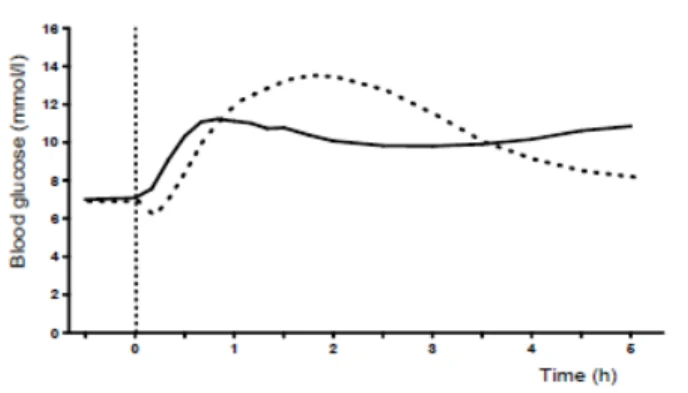
Figure 1: Mean blood glucose levels following a single pre-meal subcutaneous dose (0.15U/kg) of insulin aspart injected immediately before a meal (solid line) or regular human insulin administered 30 minutes before a meal (hatched line) in 22 patients with type 1 diabetes.
The mean serum glucose profiles in the figure above show the superior postprandial glucose control obtained with insulin aspart compared to human insulin during the first 4 hours post dosing. This was confirmed by the significantly lower postprandial glucose excursion (EXC) for insulin aspart than for regular human insulin (p = 0.015).
Geriatrics (> 65 years of age):
A randomised, double-blind crossover PK/PD trial compared the pharmacodynamics and pharmacokinetics of a single 0.3 U/kg s.c. dose of insulin aspart (IAsp) and a single 0.3 U/kg s.c. dose of with soluble human insulin (HI) was performed in elderly patients with type 2 diabetes (19 patients aged 65-83 years, (mean age 70 years). The relative differences in the pharmacodynamic properties between insulin aspart and human insulin in elderly were consistent with those seen in healthy subjects and in younger patients with diabetes. However, no safety issues were raised, but careful glucose monitoring and individual dose adjustments of insulin, including insulin aspart, may be necessary in elderly patients.
Children and adolescents (2-17 years):
When given to children insulin aspart showed similar long-term glucose control compared to soluble human insulin.
10.3 Pharmacokinetics
In insulin aspart substitution of the amino acid proline with aspartic acid at position B28 reduces the tendency to form hexamers as observed with soluble human insulin.
Insulin aspart is therefore more rapidly absorbed from the subcutaneous layer compared to soluble human insulin.
The time to maximum concentration is on average, half of that for soluble human insulin. A mean maximum plasma concentration of 492 ± 256 pmol/l was reached 40 (interquartile range: 30-40) minutes after a subcutaneous dose of 0.15 U/kg bodyweight in type 1 diabetic patients. The insulin concentrations returned to baseline about 4 to 6 hours after dose. The absorption rate was somewhat slower in type 2 diabetic patients, resulting in a lower Cmax (352 ± 240 pmol/l) and later tmax [60 (interquartile range: 50-90) minutes]. The intra-individual variability in time to maximum concentration is significantly less for insulin aspart than for soluble human insulin, where the intra-individual variability in Cmax for insulin aspart is larger.
Reduced renal or hepatic function does not alter the pharmacokinetics of insulin aspart.
Absorption
insulin aspart has a faster absorption, a faster onset and a shorter duration of action than regular human insulin (see Figure 1 and Figure 2). The relative bioavailability of insulin aspart to regular human insulin indicates that the two insulins are absorbed to a similar extent.
In clinical trials in healthy volunteers and type 1 diabetic patients, insulin aspart consistently reached maximum serum concentration at least twice as fast as regular human insulin. The average median time to maximum serum concentration was 40-50 minutes for insulin aspart versus 80-120 minutes for regular human insulin. The intra-individual variability in time to maximum concentration was significantly less for insulin aspart than for regular human insulin.
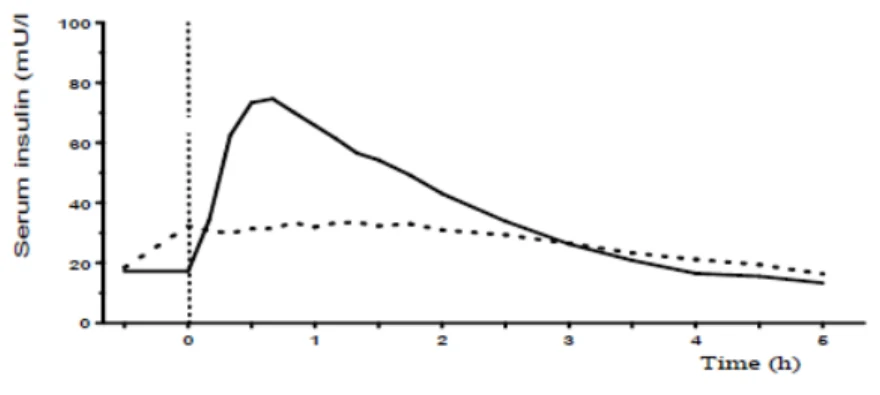
Figure 2: Mean serum insulin concentration following a single pre-meal subcutaneous dose (0.15 U/kg body weight) of insulin aspart injected immediately before a meal (solid line) or regular human insulin administered subcutaneously 30 minutes before a meal (hatched line) in 22 patients with type 1 diabetes.
The pharmacokinetics following a single 0.15 U/kg dose of insulin aspart just before a standard meal or of regular human insulin 30 minutes before a standard meal were compared in type 1 diabetic patients (Figure 2 above). insulin aspart was rapidly absorbed after s.c. administration. There was a significant difference between Cmax for insulin aspart and regular human insulin (mean maximum concentrations 82.1 mU/l and 35.9 mU/l respectively).
The absorption rate was somewhat slower in type 2 diabetic patients, resulting in a lower Cmax, 352 ± 240 pmol/l, and later tmax, 60 minutes.
In healthy subjects, the pharmacokinetic differences between insulin aspart and regular human insulin, were maintained independent of the injection site (abdomen, thigh or deltoid).
When compared to regular human insulin on an equimolar basis, insulin aspart produces significantly superior control of blood glucose following a meal as assessed by excursion of blood glucose during the first 4 hours after a meal (Figure 1). When injected subcutaneously into the abdomen, the onset of action will occur from 10 minutes after injection. The maximum effect is exerted between 1-3 hours after subcutaneous injection. The duration of action for insulin aspart is 3-5 hours compared to 5-8 hours for regular human insulin. In this trial, patients were clamped from the evening before the trial product administration in order to obtain a blood glucose concentration of 5-8 mmol/l.
The effect of insulin aspart given in a meal related regimen on 23-hour glucose control was studied in 104 type 1 diabetic patients. After 4 weeks of treatment, the instances of blood glucose levels outside the normal range (4-7 mmol/l or 72-126 mg/dl) were significantly lower with insulin aspart than with regular human insulin.
The extent of absorption (AUC) and tmax(ins) for insulin aspart were found to be independent of injection site when insulin aspart was administered subcutaneously in the abdomen, deltoid, or thigh. However, Cmax(ins) was statistically significantly higher following injection into the abdomen relative to the thigh.
Distribution:
Insulin aspart has a low binding to plasma proteins, 0-9%. A competitive ligand binding analysis using confluent HepG2 cells explored the relative binding affinities of insulin aspart and human insulin for the insulin receptor. There was no difference in their affinity. The affinity of insulin aspart for the insulin receptor was determined to be 92.2% (95% confidence limits 82.0-103.7%) of that of human insulin using HepG2 cells and to 92% of that of human insulin using solubilised receptors.
A very low affinity for the human IGF-1 receptor on HepG2 cells was also demonstrated; 68.8% compared to human insulin and about 1/1000th of the binding affinity of IGF-1 itself.
These studies show that insulin aspart has almost identical biological properties to human insulin including affinity for the specific insulin receptor, and similar on and off-rates at that receptor.
Metabolism:
Long-term metabolic control, assessed by A1C was studied in 882 type 1 diabetic patients in one trial and 1065 type 1 diabetic patients in another trial, on a meal-related insulin regimen. With insulin aspart, significantly improved long-term metabolic control was obtained compared to regular human insulin after 6 months treatment, the values being 7.78 ± 0.03% for insulin aspart and 7.93 ± 0.05% (p <0.01) for regular human insulin in one trial and correspondingly 7.88 ± 0.03% and 8.00 ± 0.04% (p<0.02) in the other trial. Furthermore, this improvement in glycemic control was achieved without increasing the risk of hypoglycemic events.
In 182 type 2 diabetic patients treated with insulin aspart in a meal-related regimen for 6 months, the pharmacodynamic properties of insulin aspart were shown to be not different than regular human insulin with respect to metabolic control as assessed by insulin dose (meal related and NPH).
The degradation products (metabolites) of insulin aspart are assumed to be natural amino acids and peptides, which are subsequently incorporated into host proteins or metabolised, as is the case with human insulin. A number of cleavage (hydrolysis) sites on the human insulin molecule have been proposed; none of the insulin metabolites formed following cleavage are active.
Elimination
After subcutaneous administration insulin aspart was more rapidly eliminated than regular human insulin with an average apparent half-life of 81 minutes compared to 141 minutes for regular human insulin. The rapid elimination of insulin aspart is reflected in the return of insulin aspart concentrations to pre-dosing levels within 4 hours after dosing.
Special Populations and Conditions
Pediatrics
The pharmacokinetic properties of insulin aspart and regular human insulin were investigated in 18 children (6-12 years, n=9) and adolescents (13-17 years, n=9) with type 1 diabetes. The relative difference in pharmacokinetics and pharmacodynamics in type 1 diabetic children and adolescents between insulin aspart and regular human insulin correlated well with those in healthy adult subjects and type 1 diabetic adults.
Insulin aspart was rapidly absorbed in both age groups, with similar tmax as in adults. However, Cmax differed between the age groups, stressing the importance of the individual titration of insulin aspart.
Geriatrics
The relative differences in pharmacokinetic properties between insulin aspart and soluble human insulin in elderly patients (65-83 years, mean age 70 years) with type 2 diabetes were similar to those observed in healthy subjects and in younger patients with diabetes; i.e. the significantly earlier and higher Cmax is maintained with insulin aspart. As in younger patients with type 2 diabetes, tmax of insulin aspart may be slightly delayed in elderly patients with type 2 diabetes, though still significantly earlier than for human insulin.
Sex
There was no significant difference in pharmacokinetics in a trial in type 2 diabetic patients. No significant difference in efficacy, as assessed by A1C was found between genders in a trial in type 1 diabetic patients.
Ethnic Origin
There was no difference in efficacy in terms of blood glucose control as measured by A1C or safety in terms of adverse events between African Americans, Hispanics and Caucasian patients.
Hepatic Insufficiency
Some studies with human insulin have shown increased circulating levels of insulin in patients with liver failure. In an open-label, single-dose study of 24 patients with Child-Pugh Scores ranging from 0 (healthy volunteers) to 12 (severe hepatic impairment), no correlation was found between the degree of hepatic failure and any insulin aspart pharmacokinetic parameter. Careful glucose monitoring and dose adjustments of insulin, including Trurapi, may be necessary in patients with hepatic dysfunction (see 7 WARNINGS AND PRECAUTIONS, Hepatic).
Renal Insufficiency
Some studies with human insulin have shown increased circulating levels of insulin in patients with renal failure. A single subcutaneous dose of insulin aspart was administered in a study of 18 patients with creatinine clearance values ranging from normal to <30 mL/min and not requiring hemodialysis. No apparent effect of creatinine clearance values on AUC and Cmax of insulin aspart was found. However, only 2 patients with severe renal impairment were studied (<30 mL/min). Careful glucose monitoring and dose adjustments of insulin, including Trurapi, may be necessary in patients with renal dysfunction (see 7 WARNINGS AND PRECAUTIONS, Renal).
11 STORAGE, STABILITY AND DISPOSAL
Do not use after the expiration date.
Not in-use (unopened): Trurapi cartridges, Trurapi SoloSTAR and Trurapi vial should be stored in a refrigerator (2°C to 8°C) but not in the freezer. Do not use Trurapi if it has been frozen.
In-use (opened): Trurapi cartridges, Trurapi SoloSTAR and Trurapi vial should be stored at room temperature (15-30°C) and must be used within 4 weeks or be discarded, even if they still contain Trurapi. Protect from direct heat and light.
12 SPECIAL HANDLING INSTRUCTIONS
Inspect Trurapi before use. Trurapi must only be used if the solution is clear, colourless, with no solid particles visible, and if it is of water-like consistency.
Inspect TRURAPI before use. TRURAPI must only be used if the solution is clear, colourless, with no solid particles visible, and if it is of water-like consistency.
Trurapi which has been frozen must not be used.
Do NOT dilute or mix Trurapi when administering by continuous subcutaneous infusion.
Trurapi 100 units/mL solution for injection in vial
To prevent the possible transmission of disease, each vial must be used by one patient only, even if the needle is changed.
Trurapi vial may be used in an infusion pump system (CSII) subcutaneously as described in section 4.4 Administration. Tubings in which the inner surface materials are made of polyethylene have been evaluated and found compatible with pump use.
Trurapi vial may be used intravenously as described in section 4.4 Administration.
A new needle should always be used for each injection.
Syringes and needles are not included in the pack.
Patients must be instructed to carefully read the “SoloSTAR pre-filled pen Instructions for Use” and to use the pen as described in these Instructions for Use. If they do not follow all of these instructions, they may get too much or too little insulin.
The Trurapi cartridges should only be used with the following pens:
- JuniorSTAR which delivers Trurapi in 0.5 unit dose increments
- AllStar PRO which delivers Trurapi in 1 unit dose increments.
These cartridges should not be used with any other reusable pen as the dosing accuracy has only been established with the listed pens. Patients should refer to the JuniorSTAR and AllStar PRO pen instructions for use leaflet supplied with the pens.
PART II: SCIENTIFIC INFORMATION
13 PHARMACEUTICAL INFORMATION
Drug Substance
Proper name: Insulin Aspart
Chemical name: 28B-L-Aspartic acid insulin (human). Recombinant human insulin analogue
Molecular formula and molecular mass: C256H381N65O79S6 and 5825.8 g/mole
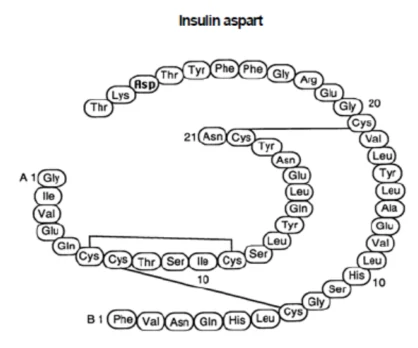
Insulin aspart is an analogue of human insulin, in which the amino acid proline in position B28 has been replaced by aspartic acid
Structural formula:
Physicochemical properties:
Description: white, or almost white, amorphous powder
Solubilities:
- in organic solvents like ethanol and methanol: practically insoluble,
- in aqueous solutions with a pH around the isoelectric point of 5.1: practically insoluble
- in aqueous solutions with a pH below 3.5 or above 6.5: solubility is ≥25 mg/mL
Absorption:
- hygroscopic; will rapidly absorb significant quantities of moisture in humid environment
1 U (6 nmol = 1 unit) of insulin aspart is equimolar to 1 IU (international unit) of Human Insulin Standard.
Product Characteristics:
Insulin aspart is produced by recombinant DNA technology utilising Escherichia coli as the production organism. The manufacture of the drug substance consists of the following three major steps: fermentation, recovery, and purification. In the recovery phase, the fermentation broth containing inactivated cells with inclusion bodies is harvested by continuous centrifugation.
14 CLINICAL TRIALS
14.1 Trial Design and Study Demographics
Clinical studies conducted to support similarity between Trurapi and the reference biologic drug included:
- PDY12695, a randomized study performed in Type 1 Diabetes Mellitus (T1DM) patients to demonstrate similarity in pharmacokinetic (PK) exposure and pharmacodynamic (PD) activity between Trurapi and NovoLog/NovoRapid.
- EFC15081 (GEMELLI-1), a randomized study performed in T1DM and Type 2 Diabetes Mellitus (T2DM) patients comparing the safety and efficacy of Trurapi and NovoRapid/NovoLog.
An overview of the study design(s) and demographic characteristics of patients enrolled in each clinical study are presented in Table 2.
| Table 2 - Summary of trial design and patient demographics | |||||||||
|---|---|---|---|---|---|---|---|---|---|
| Study # | Trial design | Dosage, route of administration and duration | Study subjects (n) | Mean age ± SD (Range) | Sex (M/F) | ||||
| PDY12695 | Phase 1, randomized, double-blind, controlled, 3-treatment, 3-period, 6-sequence crossover; active control To compare exposure and activity of Trurapi to NovoRapid/NovoLog | Trurapi solution for injection: or NovoRapid/NovoLog:
Duration: 1 day in each period | 30 | 44.0 ± 10.7 (22-59) | 30/0 | ||||
| Table 2 - Summary of trial design and patient demographics |
|---|
| Study # | Trial design | Dosage, route of administration and duration | Study subjects (n) | Mean age ± SD (Range) | Sex (M/F) |
|---|---|---|---|---|---|
| EFC15081 | Phase 3, noninferiority, open-label, randomized (1:1), active-controlled, 2-arm, parallel-group study comparing:
with
in terms of change in HbA1c from baseline to Week 26 in patients with T1DM or T2DM | Trurapi solution for injection or NovoRapid/NovoLog
Duration: 26 weeks | 301 296 NovoLog (US) 165 NovoRapid (EU) 131 | 48.1 ± 15.1 (19-86) | 356/241 |
| PDY15083 | Randomized, open-label, 2-treatment, 2-period, 2-sequence crossover Active control | Trurapi solution for injection or NovoLog:
Duration : 4 weeks in each period | 45 | 43.1 ± 13.6 (20-68) | 17/28 |
14.2 Study Results
14.3 Comparative Bioavailability Studies
Pharmacokinetics
| Table 3 - Comparative PK data for Trurapi versus reference product in patients with T1DM after single dose administration | ||||||||||||
|---|---|---|---|---|---|---|---|---|---|---|---|---|
Insulin aspart (0.3 U/kg) From measured data Geometric Mean Arithmetic Mean (CV%) | ||||||||||||
| Parameter | Test Trurapi | Reference NovoRapid* | % Ratio of Geometric Means | 90% Confidence interval (%) | ||||||||
| AUCT (h.pg/mL) | 13200 14000 (36.8) | 14100 14800 (33.5) | 92.7 | 88.4 to 97.3 | ||||||||
| AUCI (h.pg/mL) | 13100 13900 (36.3) | 14300 15000 (33.4) | 91.7 | 87.6 to 96.0 | ||||||||
| Cmax (pg/mL) | 5140 5320 (28.4) | 5300 5490 (26.6) | 97.2 | 90.0 to 104.9 | ||||||||
| tmax (h)a | 1.17 (0.50 to 1.83) | 1.17 (0.67 to 2.00) | - | - | ||||||||
| t1/2 (h)b | 1.15 (126) | 0.972 (35.2) | - | - | ||||||||
*NovoRapid: Manufacturer: NovoNordisk, country of origin: EU a Median (Min to Max) b Arithmetic Mean (CV%) Evaluable profiles: N=29 for Test Trurapi, N=30 for Reference NovoRapid. Log-transformed AUClast, AUC, and Cmax were analysed with a linear mixed effects model, followed by anti-log-transformation of point estimates and confidence intervals. | ||||||||||||
Pharmacodynamics
| Table 4 - Comparative PD data for Trurapi versus reference product in patient with T1DM after single dose administration | ||||||||
|---|---|---|---|---|---|---|---|---|
| PARAMETER | Test Trurapi | Reference NovoRapid* | ||||||
| GIR-AUC0-12h (mg/kg) | ||||||||
| Mean (SD) | 1916.37 (524.28) | 1966.71 (403.18) | ||||||
Point estimate of treatment ratio (%) for Trurapi vs NovoRapid 95% confidence interval | 96.2 (87.8 to 105.5) | |||||||
| GIRmax (mg/kg/min) | ||||||||
| Mean (SD) | 9.34 (2.01) | 9.23 (1.98) | ||||||
Point estimate of treatment ratio (%) for Trurapi vs NovoRapid 95% confidence interval | 101.8 (93.9 to 110.4) | |||||||
| GIR-tmax (h) | ||||||||
| Mean (SD) | 2.41 (0.85) | 2.70 (0.92) | ||||||
| Table 4 - Comparative PD data for Trurapi versus reference product in patient with T1DM after single dose administration |
|---|
| PARAMETER | Test Trurapi | Reference NovoRapid* |
|---|---|---|
Point estimate of treatment difference for Trurapi vs NovoRapid 95% confidence interval | -0.29 (-0.68 to 0.02) | |
| *NovoRapid: Manufacturer: NovoNordisk, country of origin: EU Evaluable profiles: N=29 for Test Trurapi, N=30 for Reference NovoRapid Log-transformed GIR-AUC0-12h and GIRmax were analysed with a linear mixed effects model, followed by anti-log-transformation of point estimates and confidence intervals. GIR-tmax was analysed by Hodges-Lehmann method with Moses confidence interval. GIRmax and GIR-tmax are based on smoothed GIR profiles (LOESS smoothing technique with factor 0.06). | ||
Comparative Safety and Efficacy
Efficacy
The efficacy and safety of Trurapi was compared to that of the reference product in a 26-week, open-label, randomized, active-controlled, 2-arm parallel-group study including 597 patients with type 1 diabetes mellitus (T1DM) or type 2 diabetes mellitus (T2DM).
The primary efficacy endpoint was the change in HbA1c from baseline to week 26 using a non-inferiority margin of 0.3%. The safety assessment included analysis of the immunogenicity of Trurapi and NovoLog/NovoRapid.
Patients with HbA1c in the range of 7% to 10% participated in this study comparing the glucose lowering effect of Trurapi to that of administration of the reference product, both in combination with insulin glargine 100 units/mL. Prior to randomization, 41.7%, 55.5% and 2.9% of the patients were taking the insulin lispro 100 units/mL, the reference product and both respectively. The patients were switched to Trurapi or reference product with a unit to unit conversion from the insulin lispro or reference product dose used prior to the trial or was a dose at the discretion of the investigator, taking into account the glucose control at the time of randomization. Trurapi or reference product was administered by subcutaneous injection immediately (within 5 to 10 minutes) prior to the start of a meal.
Among the 597 randomized patients, 497 had T1DM (83.2%) and 100 had T2DM (16.8%, US only). Mean age was 48 years, mean duration of diabetes was 19.5 years, 59.6% of patients were male, 82.6% were Caucasian, 3.2% were Black or African American, and 12.5% were Asian. The mean BMI was 27.45 kg/m2 and 45.9% of patients had GFR≥90 mL/min/1.73 m2.
At week 26, treatment with Trurapi provided a mean reduction in HbA1c that was non-inferior to that achieved with the reference product. Fasting plasma glucose decreased from baseline to week 26 in both treatment groups and no differences were observed in the percentage of patients achieving a target HbA1c <7%. The total daily doses of Trurapi and reference product, as well as the incidence of severe hypoglycemia were similar in the two treatment groups.
| Table 5 - T1DM and T2DM adults (Trurapi plus insulin glargine 100 units/mL versus reference product plus insulin glargine 100 units/mL) | ||||||
|---|---|---|---|---|---|---|
Trurapi (n= 301) | Reference Product (n= 296) | |||||
| Treatment duration | 26 weeks | |||||
HbA1c Baseline mean Adjusted Mean change from Baseline Adjusted mean difference [95% confidence interval] | 8.00 -0.38 | 7.94 -0.30 | ||||
-0.08 [-0.192 to 0.039] | ||||||
| Proportion of patients achieving HbA1c<7% | 16.6% | 14.5% | ||||
Elderly
In a controlled clinical trial in adults (n=597, safety population), a total of 99 patients (16.5% of the safety population) with type 1 and type 2 diabetes patients were ≥65 years of age and 14 (2.3%) were ≥75 years of age. No difference in efficacy and safety was observed between these patients and younger patients.
Obesity
In a controlled clinical trial in adults (n=597, safety population), a total of 416 patients (69.7% of the safety population) with type 1 and type 2 diabetes patients had BMI <30 kg/m2 and 181 (30.3%) had BMI ≥30 kg/m2. Subgroup analysis based on BMI showed no differences in efficacy and safety between Trurapi and reference product.
Continuous Subcutaneous Insulin Infusion (CSII)
In a randomized, open-label crossover study in patients with type 1 diabetes (n=45) treated over two 4-week treatment periods, the incidence of infusion set occlusions in Trurapi treated patients and Novolog-treated patients was evaluated.
The results of the study do not suggest a clinically significant difference in the number of patients who had at least one infusion set occlusion with Trurapi (n = 14/43; 32.6%) and Novolog (n = 12/43; 27.9%) when used in CSII.
Safety
The types, frequency and severity of adverse events were comparable between the biosimilar and the reference biologic drug. The incidence of documented symptomatic hypoglycemia was similar [≤ 3.9 mmol/L: 87.7% Trurapi vs 84.8% reference; < 3.0 mmol/L: 68.4 Trurapi vs. 65.2% reference] in the two treatment groups. The incidence of severe hypoglycemia were similar [4% Trurapi vs 3.4% reference] in the two treatment groups. There was no episodes of diabetic ketoacidosis reported as SAEs in the reference product and 2 episodes in the Trurapi group.
14.4 Immunogenicity
Results from studies comparing Trurapi and reference product showed similarity in term of development of insulin aspart antibodies.
14.5 Clinical Trials - Reference Biologic Drug
Postprandial and overall glycemic control: In diabetic patients, NovoRapid® reduced postprandial blood glucose levels and improved the overall glycemic control by significantly reducing A1C as shown in two 6-month multicentre, randomized, parallel, open-label trials. Metabolic control, assessed by A1C was studied in 882 type 1 diabetic patients in one trial and 1065 type 1 diabetic patients in another trial, on a meal-related insulin regimen. With NovoRapid®, significantly improved metabolic control was obtained compared to regular human insulin after 6 months treatment, the values being 7.78±0.03% for NovoRapid® and 7.93±0.05% (p <0.01) for regular human insulin in one trial and correspondingly 7.88±0.03% and 8.00±0.04% (p<0.02) in the other trial. This improvement in glycemic control with NovoRapid® was accompanied by a significant decrease of postprandial blood glucose levels after each meal, when compared to regular human insulin, without increasing the risk of hypoglycemic events.
Furthermore, NovoRapid® demonstrated a significant decrease in prandial blood glucose increments (defined as the mean difference between the blood glucose value 90 minutes after the meal and the blood glucose value just before the meal, over the 3 meals) when compared to regular human insulin; with values being -1.46mmol/L in one trial and -1.15 mmol/L in the other; p<0.0001).
Data from an extension to one of these trials (n=598) showed that the effect of NovoRapid® on A1C was maintained for 3 years [value being 7.97 ± 0.11%] without increasing the risk of hypoglycemic events.
Type 1 Diabetes:
Continuous subcutaneous insulin infusion (CSII) – Pump:
To evaluate the use of NovoRapid® by continuous subcutaneous insulin infusion (CSII) with an external pump, one open-label, randomized, parallel design study for 16 weeks [n=118] compared NovoRapid® versus Humalog® (insulin lispro) in patients with type 1 diabetes. Glycemic control (as measured by A1C) and rates of hypoglycemia were comparable. Patients with type 2 diabetes were also studied in an open label, randomized, parallel design trial (24 weeks [n=127]. NovoRapid® by CSII was compared to a basal/bolus regimen of pre-prandial NovoRapid® and basal Novolin® ge NPH injections. Reductions in A1C and rates of hypoglycemia were comparable. In the study (NovoRapid® versus Humalog®), the rate of clogging or blockage events was similar between NovoRapid® and Humalog®.
Pregnancy
The safety and efficacy of an intensified insulin regimen with NovoRapid® was studied in an open-label study in 157 pregnant women with type 1 diabetes. 72% (113) were pregnant prior to entering the study (PBS) and 28% (44) entered the study before conception (PAS). The entry criteria for A1C were different between PBS and PAS (<8% vs. < 12%). PAS patients were withdrawn if A1C was > 8% at conception, so in this subgroup only women who conceived and had A1C < 8% had efficacy and safety parameters evaluated. The proportions of patients reaching different A1C targets with NovoRapid® are presented in the following table.
| Table 6 - Summary of A1C (%) by Pregnancy status at Screening - ITT Pregnant | |||||||||||||||||||||
|---|---|---|---|---|---|---|---|---|---|---|---|---|---|---|---|---|---|---|---|---|---|
| Number of patients | Pregnant at Screening 113 | Pregnant after Screening 44 | ITT Pregnant 157 | ||||||||||||||||||
| P | N | % | P | N | % | P | N | % | |||||||||||||
| Visit P2 (week 12) | |||||||||||||||||||||
| A1c ≤6.0% | 108 | 36 | 33.3 | 31 | 9 | 29.0 | * | * | * | ||||||||||||
| A1c ≤6.5% | 108 | 70 | 64.8 | 31 | 21 | 67.7 | * | * | * | ||||||||||||
| A1c ≤7.0% | 108 | 98 | 90.7 | 31 | 26 | 83.9 | * | * | * | ||||||||||||
| Visit P3 (week 24) | |||||||||||||||||||||
| A1c ≤6.0% | 102 | 66 | 64.7 | 31 | 13 | 41.9 | 133 | 79 | 59.4 | ||||||||||||
| A1c ≤6.5% | 102 | 83 | 81.4 | 31 | 27 | 87.1 | 133 | 110 | 82.7 | ||||||||||||
| A1c ≤7.0% | 102 | 96 | 94.1 | 31 | 30 | 96.8 | 133 | 126 | 94.7 | ||||||||||||
| Visit P4 (week 36) | |||||||||||||||||||||
| A1c ≤6.0% | 96 | 53 | 55.2 | 26 7 | 26.9 | 122 | 60 | 49.2 | |||||||||||||
| A1c ≤6.5% | 96 | 77 | 80.2 | 26 | 18 | 69.2 | 122 | 95 | 77.9 | ||||||||||||
| A1c ≤7.0% | 96 | 90 | 93.8 | 26 | 26 | 100.0 | 122 | 116 | 95.1 | ||||||||||||
| Follow-up Visit (6 weeks postpartum) | |||||||||||||||||||||
| A1c ≤6.0% | 104 | 35 | 33.7 | 36 | 8 | 22.2 | 140 | 43 | 30.7 | ||||||||||||
| A1c ≤6.5% | 104 | 58 | 55.8 | 36 | 20 | 55.6 | 140 | 78 | 55.7 | ||||||||||||
| A1c ≤7.0% | 104 | 80 | 76.9 | 36 | 26 | 72.2 | 140 | 106 | 75.7 | ||||||||||||
P: Number of patients with a A1c measurement at the actual visit N: Number of patients with a A1c measurement having the given value at the actual visit %: Proportion of patients with a A1c measurement having the given value at the actual visit | |||||||||||||||||||||
Major and minor hypoglycemia rates for PBS and PAS by trimester are presented in the following table.
| Table 7 - All Treatment Emergent Hypoglycemic Episodes During Pregnancy by Treatment, pregnancy status at Screening and trimester - ITT Pregnant | ||||||||||
|---|---|---|---|---|---|---|---|---|---|---|
| IAsp + NPH | ||||||||||
| P | N | % | E | Rate | ||||||
| Major | Pregnant at Screening | |||||||||
| 113 | 19 | (16.80) | 34 | 5.2 | |||||
| 113 | 22 | (19.50) | 44 | 1.3 | |||||
| 113 | 9 | (8.00) | 20 | 1 | |||||
| Pregnant after Screening | ||||||||||
| 44 | 5 | (11.40) | 7 | 0.8 | |||||
| 44 | 5 | (11.40) | 7 | 0.7 | |||||
| 44 | 1 | (2.30) | 1 | 0.2 | |||||
| All | ||||||||||
| 157 | 24 | (15.30) | 41 | 2.7 | |||||
| Table 7 - All Treatment Emergent Hypoglycemic Episodes During Pregnancy by Treatment, pregnancy status at Screening and trimester - ITT Pregnant |
|---|
| IAsp + NPH |
|---|
| P | N | % | E | Rate | ||
|---|---|---|---|---|---|---|
| 157 | 27 | (17.20) | 51 | 1.2 | |
| 157 | 10 | (6.40) | 21 | 0.8 | |
| Minor | Pregnant at Screening | |||||
| 113 | 97 | (85.80) | 907 | 139.4 | |
| 113 | 98 | (86.70) | 2992 | 90.9 | |
| 113 | 85 | (75.20) | 1639 | 83.7 | |
| Pregnant after Screening | ||||||
| 44 | 40 | (90.90) | 607 | 69.3 | |
| 44 | 33 | (75.00) | 672 | 68.1 | |
| 44 | 27 | (61.40) | 380 | 67.4 | |
| All | ||||||
| 157 | 137 | (87.30) | 1514 | 98.9 | |
| 157 | 131 | (83.40) | 3664 | 85.7 | |
| 157 | 112 | (71.30) | 2019 | 80.1 | |
| Symptoms Only | Pregnant at Screening | |||||
| 113 | 32 | (28.30) | 154 | 23.5 | |
| 113 | 40 | (35.40) | 407 | 12.4 | |
| 113 | 34 | (30.10) | 256 | 13.1 | |
| Pregnant after Screening | ||||||
| 44 | 24 | (54.50) | 85 | 9.7 | |
| 44 | 15 | (34.10) | 118 | 12 | |
| 44 | 11 | (25.00) | 35 | 6.2 | |
| All | ||||||
| 157 | 56 | (35.70) | 39 | 15.6 | |
| 157 | 55 | (35.00) | 525 | 12.3 | |
| 157 | 45 | (28.70) | 291 | 11.5 | |
| Unclassifiable | Pregnant at Screening | |||||
| 113 | 4 | (3.50) | 11 | 1.7 | |
| 113 | 9 | (8.00) | 58 | 1.8 | |
| 113 | 6 | (5.30) | 34 | 1.7 | |
| Pregnant after Screening | ||||||
| 44 | 4 | (9.10) | 6 | 0.7 | |
| 44 | 4 | (9.10) | 6 | 0.6 | |
| 44 | 3 | (6.80) | 27 | 4.8 |
| Table 7 - All Treatment Emergent Hypoglycemic Episodes During Pregnancy by Treatment, pregnancy status at Screening and trimester - ITT Pregnant |
|---|
| IAsp + NPH |
|---|
| P | N | % | E | Rate | ||
|---|---|---|---|---|---|---|
P: Number of patients in the Population N: Number of patients having Hypoglycemic Episodes %: Proportion of patients in the Population having Hypoglycemic Episodes E: Number of Hypoglycemic Episodes Rate: Number of Hypoglycemic Episodes divided by years of exposure of patients in the Population in the given trimester | ||||||
The outcome data observed in the human insulin control arm in the NovoRapid® clinical trial are consistent with published trials of human insulin in type 1 diabetes in similar clinical settings.
Type 2 Diabetes:
In patients with type 2 diabetes, a randomized, double-blind, multicentre, 2- period, cross-over study showed that 4-hour postprandial glucose excursion in 37 patients (BMI 27.054.02, waist circumference 97.1±11.7 cm) was 20% lower following a single injection of NovoRapid® (injected immediately before a meal test) than regular human insulin (injected 30 minutes before a meal test; p=0.034), independent of BMI. The insulin maximum concentration (Cmax) was significantly higher in patients receiving NovoRapid® (p=0.023) and was reached 27 minutes earlier (p=0.039), despite the fact that NovoRapid® was injected 30 minutes after human insulin.
In 182 type 2 diabetic patients treated with NovoRapid® in a meal-related regimen for 6 months, the pharmacodynamic properties of NovoRapid® were shown to be not different than regular human insulin with respect to metabolic control as assessed by insulin dose (meal related and NPH).
Geriatrics: A randomised, double-blind, crossover trial compared the pharmacodynamics and pharmacokinetics of a single 0.3 U/kg s.c. dose of insulin apart (IAsp) and single 0.3 U/kg s.c. dose of soluble human insulin (HI) in 19 patients aged 65-83 years (mean age 70 years). IAsp was rapidly absorbed and the tmax for IAsp occurred 90 minutes earlier than for HI (p=0.0089). Cmax was on average 132% higher with IAsp than with HI (p<0.0001). Also the extent of exposure with IAsp was greater than with HI up to approximately 300 minutes after administration but tended to be lower with IAsp than with HI from 300-600 minutes post dosing. The pharmacodynamic response to a single 0.3 U/kg dose of IAsp and a single 0.3 IU/kg was evaluated during euglycemic clamp procedures in a cross-over design. Consistent with the pharmacokinetic results, the peak pharmacodynamic activity as determined by maximum value on the glucose infusion rate (GIR) profile was significantly higher (p=0.0039) and occurred approximately 83 minutes earlier with IAsp than with HI (p<0.0001). The area under the GIR profiles in the interval from 0-120 minutes was on average more than twice as large with IAsp than with HI and this difference was statistically significant (p<0.0001). Overall, the pharmacokinetic and pharmacodynamic properties of IAsp are preserved in geriatric patients with type 2 diabetes although a minor delay in peak insulin concentration has been observed when compared with younger patients with type 2 diabetes.
Combination with long-acting basal insulin analog: In an open-label, parallel, randomized trial involving 595 patients with type 1diabetes, NovoRapid® in combination with insulin detemir significantly improved glycemic control when compared to regular human insulin with NPH insulin treatment. After 18 weeks of treatment, the mean A1C values were 7.88±0.05% vs 8.11±0.05% (95% CI; -0.34 to -0.10, p<0.001), respectively. In addition, the overall mean postprandial plasma glucose was significantly lower with the combination NovoRapid®/detemir when compared to regular human insulin/ NPH (7.81 mmol/L vs 7.87 mmol/L, respectively; p<0.001) with significant less intra-individual variability in plasma glucose (p<0.001). This improvement of glycemic control was accompanied with a significant decrease in the risk of nocturnal hypoglycemic events (relative risk decreased by 55%; 95% CI 0.35 - 0.58; p<0.001) and a significant decrease in body weight (p<0.001).
Hypoglycemia: In a 16-week double-blind, randomized, multinational, crossover study with type 1 diabetes patients (n=156, A1C ≤ 9.0%) the rate of major nocturnal hypoglycemic episodes was 72% lower with NovoRapid® than with regular human insulin {0.067 vs. 0.225 events/month, relative risk 0.28 (95% CI:0.13-0.59); p=0.001)}. NPH insulin was given as basal insulin once or twice daily as needed. Furthermore, NovoRapid® significantly reduced the rate of minor hypoglycemic events when with the rate of minor events was significantly reduced by 7% with NovoRapid® compared to regular human insulin {2.98 vs 3.186 events/months, relative risk 0.93 (95% CI:0.87-1.00), p=0.048}. While the total rate of major hypoglycemia did not differ significantly between treatments. Reductions in rate of hypoglycemia were achieved with NovoRapid® while maintaining overall glycemic control. The mean A1C remained constant, with values being 7.69% for NovoRapid® and 7.65% for regular human insulin (NS). Significant lower blood glucose values 90 minutes after breakfast (p=0.0001) and 90 minutes after dinner (p=0.023) were seen with NovoRapid® compared to regular human insulin.
In another study (n=1065), significantly fewer patients (62% less) experienced major nocturnal hypoglycemia with NovoRapid® than with regular human insulin (1.3 vs 3.4% of patients, respectively; p<0.005).
15 MICROBIOLOGY
No microbiological information is required for this drug product.
16 NON-CLINICAL TOXICOLOGY
16.1 Comparative Non-Clinical Pharmacology and Toxicology
The pharmacodynamic and toxicological responses to Trurapi (insulin aspart, also referred to as SAR341402) and reference insulin aspart (EU-NovoRapid and US-NovoLog) were compared in in vitro and in vivo studies.
16.1.1 Comparative Non-Clinical Pharmacodynamics
In vitro Studies
In in vitro pharmacodynamic studies, SAR341402 and reference insulin aspart demonstrated comparable binding affinities and binding kinetics with insulin receptors (IR-A and IR-B) and the IGF-1 receptor (IGF-1R). The biological activity (e.g. receptor activation of IR-A, IR-B, and IGF-1R), metabolic activity (e.g. inhibition of lipolysis, stimulation of glucose uptake, and gene regulation of glucose 6-phosphatase), and mitogenic potency of SAR341402 and insulin aspart were also comparable. No in vivo pharmacodynamic studies were conducted with SAR341402.
16.1.2 Comparative Toxicology
SAR341402 was tested in two, 1-month repeat-dose rat toxicity studies in comparison with insulin aspart NovoRapid or NovoLog at dose levels of 0, 5, 25, or 100 U/kg, administered by subcutaneous injection twice daily (corresponding to 10, 50, and 200 U/kg/day).
Administration of the SAR341402 versus insulin aspart resulted in a similar reduction in blood glucose levels within 1 to 4 hours of dosing, increase in body weight, and increase in food consumption. A total of 2 treatment-related premature deaths out of 168 treated animals occurred in one of the studies; the deaths were considered due to hypoglycemia. One animal was dosed with 50 U/kg/day insulin aspart, the other with 200 U/kg/day SAR341402. Hypoglycemia, increased body weight, and increased food consumption were considered indirect pharmacological reactions to the administration of insulin.
Anti-drug antibodies developed in a higher percentage of animals administered SAR341402 than those receiving the corresponding dose of insulin aspart. Overall, no toxicity or tolerability concerns were reported for SAR341402 that differed from those for reference insulin aspart.
A single-dose local tolerance study in New Zealand white male rabbits demonstrated similarity between SAR341402 and insulin aspart at a dose of 10 U by subcutaneous injection.
The macroscopic and microscopic findings were attributed only to the administration procedure, without significant differences between insulin aspart solutions and 0.9% NaCl control. Consequently, SAR341402 was considered well-tolerated following subcutaneous administrations, without local irritation.
Overall, the non-clinical studies in rats and rabbits demonstrated similarity between SAR341402 and reference insulin aspart regarding pharmacological activity, toxicity profile and local tolerability.
Toxicology – reference biologic drug
Acute Toxicity
The results of the acute toxicity testing in rodents are dominated by reports of non-fatal convulsions and instances of ptosis, both attributed to hypoglycemia. The pattern of effects was that expected for insulin given in high doses.
| Table 8 - Results of Acute Toxicity Studies with Insulin Aspart | |||||||||
|---|---|---|---|---|---|---|---|---|---|
| Species, Strain, Route | (M+F) Animals per group | Doses (U/kg) | Results | ||||||
Mouse NMRI, SC | 5 + 5 | 0, 62.5, 250, 1000, 4000 | Highest non-lethal dose: 4000U/kg in males and 250U/kg in females | ||||||
Mouse, CD1, SC | 5 + 5 | 0, 62.5, 250, 1000, 4000 | Highest non-lethal dose: 4000U/kg | ||||||
Mouse, NMRI, IV | 5 + 5 | 0, 62.5, 250, 1000, 4000 | Highest non-lethal dose: 4000U/kg in males and 1000 u/kg in females | ||||||
Rat, S.D. SC | 5 + 5 | 0, 62.5, 250, 1000, 4000 | Highest non-lethal dose: 4000U/kg | ||||||
Rat, S.D. SC | 5 + 5 | 0, 62.5, 250, 1000, 2000. | Highest non-lethal dose: 2000Ukg | ||||||
Rat, S.D. SC | 5 + 5 | 0, 62.5, 250, 1000, 4000 | Highest non-lethal dose: 4000U/kg | ||||||
Rat, S.D. IV | 5 + 5 | 0, 62.5, 250, 1000, 4000 | Highest non-lethal dose: 4000 U/kg | ||||||
| Table 8 - Results of Acute Toxicity Studies with Insulin Aspart |
|---|
| Species, Strain, Route | (M+F) Animals per group | Doses (U/kg) | Results |
|---|---|---|---|
Dog, Beagle, SC. | 1 + 1 | 4, 8, 16, 32, 64 64 Old process | Highest non-lethal dose: 64U/kg Apart from hypoglycemia no treatment-related signs or changes |
Long-term Toxicity:
| Table 9 - Results of long-term toxicity studies with insulin aspart. | |||||||||||
|---|---|---|---|---|---|---|---|---|---|---|---|
| Species | Strain | Number of groups and size | Dosing Method | Duration (Weeks) | Dose level (U/kg/day) | Results | |||||
| Rat | Sprague- Dawley | 5 Groups 10M, 10F/group, main 9M, 9F/group, satellites 5M, 5F in groups 1, 4 & 5 reversibility assessment | SC | 4 weeks + 4 week recovery in groups 1, 4 & 5 | 0, 5, 25, 100 + 100 | Hypoglycemia, increased food consumption and weight gain. No unexpected observations. | |||||
| Rat | Sprague- Dawley | 4 Groups 10M, 10F | SC | 4 weeks | 0, 12.5, 50, 200 | Hypoglycemia. No unexpected observations. | |||||
| Rat | Mol: WIST | 4 Groups 15M, 15F | SC | 13 weeks | 0, 12.5, 50, 200 | Hypoglycemia, increased weight gain. No unexpected observations. | |||||
| Rat | Sprague- Dawley | 4 Groups 32M, 32F Satellites included | SC | 52 weeks | Top dose levels 100 bid for 24 weeks, 50 bid weeks 25-26, 100 od weeks 27-37, 75 od from week 38-52. Lower dose levels 5 and 25U/kg/bid for 26 weeks 10 and 50 od for 27-52 weeks. Controls. | Hypoglycemia, increased food and water consumption and weight gain. Excess of mammary tumours in high dose females. | |||||
| Table 9 - Results of long-term toxicity studies with insulin aspart. |
|---|
| Species | Strain | Number of groups and size | Dosing Method | Duration (Weeks) | Dose level (U/kg/day) | Results |
|---|---|---|---|---|---|---|
| Rat | Sprague- Dawley | 4 Groups 20F | SC | 52 weeks | 200 per drug substance. Insulin aspart, human insulin, control. | Mammary tumour- incidence higher in insulin aspart group equal to human insulin both being higher than controls. |
| Dog | Beagle | 4 groups 3M, 3F/group, main 1M, 1F in groups 1 & 4 reversibility assessment | SC | 4weeks (+4 week recovery in groups 1 & 4) | 0, 0.25, 0.5, 1.0 bid | Hypoglycemia. No unexpected observations. |
| Dog | Beagle | 3 Groups 4M, 4F | SC | 13 weeks | 0, 1, 4 | Hypoglycemia. No unexpected observations. |
| Dog | Beagle | 4 Groups 4M, 4F | SC | 52 weeks | 0, 0.25, 0.5, 1.0 bid for 28 weeks same daily dose od from week 29-52. HI- 1.0 bid 28 weeks 2.0 od from 29-52 | Hypoglycemia. No unexpected observations. |
Carcinogenicity:
Carcinogenicity trials have not been performed with NovoRapid® (insulin aspart). A series of repeated dose trials in animals (including 52 weeks dosing in rats and dogs) showed that none of the effects observed with NovoRapid® differed from those observed with regular human insulin. In vitro trials showed that the mitogenicity of NovoRapid® does not differ from that observed with regular human insulin. Animal trials on the mutagenic potential of NovoRapid® and regular human insulin did not show any difference between the two products.
Mutagenicity:
A comprehensive range of experiments have been completed and, insulin aspart gave negative results. Human insulin also gave negative results. It is concluded that insulin aspart is not a genotoxicant.
17 SUPPORTING PRODUCT MONOGRAPHS
- 1. NovoRapid® Solution for Injection 100 Units/mL, submission control 211441, Product Monograph, Novo Nordisk Canada Inc. April 6, 2018.