


Product Monograph - Uplizna
Recent Major Label Changes
| 2025-06 202X-XX |
|---|---|
| 2025-06 202X-XX |
| 2025-06 202X-XX |
Table of Contents
Certain sections or subsections that are not applicable at the time of the preparation of the most recent authorized product monograph are not listed.
Recent Major Label Changes .................................................................................... 2
Table of Contents ....................................................................................................... 2
Part 1: Healthcare Professional Information ........................................................... 4
- 1.
Indications ......................................................................................................... 4
1.1. Pediatrics ................................................................................................... 4
1.2. Geriatrics .................................................................................................... 4
- 2. Contraindications .............................................................................................. 5
- 4.
Dosage and Administration .............................................................................. 5
4.1. Dosing Considerations ............................................................................... 5
4.2. Recommended Dose and Dosage Adjustment .......................................... 6
4.3. Reconstitution ............................................................................................ 7
4.4. Administration ............................................................................................ 7
4.5. Missed Dose .............................................................................................. 8
- 5. Overdose ............................................................................................................ 8
- 6. Dosage Forms, Strengths, Composition, and Packaging ............................. 8
- 7.
Warnings and Precautions ............................................................................... 9
General ................................................................................................................. 9
Carcinogenesis and Genotoxicity .......................................................................... 9
Hematologic .......................................................................................................... 9
Immune ................................................................................................................. 9
Reproductive Health ............................................................................................ 11
7.1. Special Populations ................................................................................. 11
7.1.1. Pregnancy ........................................................................................... 11
7.1.2. Breastfeeding ...................................................................................... 12
7.1.3. Pediatrics ............................................................................................ 12
7.1.4. Geriatrics ............................................................................................. 12
- 8.
Adverse Reactions .......................................................................................... 13
8.1. Adverse Reaction Overview ..................................................................... 13
8.2. Clinical Trial Adverse Reactions .............................................................. 13
8.3. Less Common Clinical Trial Adverse Reactions ...................................... 16
8.4. Abnormal Laboratory Findings: Hematologic, Clinical Chemistry, and Other Quantitative Data .................................................. 17
8.5. Post-Market Adverse Reactions .............................................................. 18
- 9.
Drug Interactions ............................................................................................. 18
9.2. Drug Interactions Overview ...................................................................... 18
9.3. Drug-Behaviour Interactions .................................................................... 18
9.4. Drug-Drug Interactions ............................................................................. 18
9.5. Drug-Food Interactions ............................................................................ 19
9.6. Drug-Herb Interactions ............................................................................. 19
9.7. Drug-Laboratory Test Interactions ........................................................... 19
- 10.
Clinical Pharmacology .................................................................................... 19
10.1. Mechanism of Action ................................................................................ 19
10.2. Pharmacodynamics ................................................................................. 19
10.3. Pharmacokinetics ..................................................................................... 19
10.4. Immunogenicity ........................................................................................ 20
- 11. Storage, Stability, and Disposal ..................................................................... 21
- 12. Special Handling Instructions ........................................................................ 21
Part 2: Scientific Information .................................................................................. 22
- 13. Pharmaceutical Information ........................................................................... 22
- 14.
Clinical Trials ................................................................................................... 22
14.1. Clinical Trials by Indication ...................................................................... 22
Neuromyelitis Optica Spectrum Disorder (NMOSD) ..................................... 22
Immunoglobulin G4-Related Disease (IgG4-RD) .......................................... 25
Generalized Myasthenia Gravis (gMG) ......................................................... 28
- 16. Non-Clinical Toxicology ................................................................................. 31
Patient Medication Information ............................................................................... 33
Part 1: Healthcare Professional Information
1. Indications
Neuromyelitis Optica Spectrum Disorder (NMOSD)
UPLIZNA (inebilizumab for injection) is indicated as monotherapy for the treatment of adult patients with neuromyelitis optica spectrum disorders (NMOSD) who are anti-aquaporin-4 immunoglobulin G (AQP4-IgG) seropositive.
Immunoglobulin G4-Related Disease (IgG4-RD)
UPLIZNA (inebilizumab for injection) is indicated for the treatment of Immunoglobulin G4-related disease (IgG4-RD) in adult patients to reduce the frequency of flares.
Generalized Myasthenia Gravis (gMG)
UPLIZNA (inebilizumab for injection) is indicated as an add-on to standard therapy for the treatment of generalized myasthenia gravis (gMG) in adult patients who are anti-acetylcholine receptor (AChR) or anti-muscle specific tyrosine kinase (MuSK) antibody positive.
Treatment should be administered under the supervision of a qualified healthcare professional.
1.1. Pediatrics
Pediatrics (˂ 18 years of age): No data are available to Health Canada; therefore, Health Canada has not authorized an indication for pediatric use.
1.2. Geriatrics
Geriatrics (≥ 65 years of age):
NMOSD
The safety and efficacy of UPLIZNA have been studied in a limited number of geriatric patients up to 74 years of age (n = 6; aged 65 – 74). Clinical studies of UPLIZNA did not include sufficient numbers of geriatric patients to determine whether they respond differently from younger patients. See 4.2 Recommended Dose and Dosage Adjustment and 7.1.4 Geriatrics.
IgG4-RD
Thirty-one percent (21 out of 68) of IgG4-RD patients treated with UPLIZNA were 65 years of age or older. See 14.1 Clinical Trials by Indication, IgG4-RD. There were no overall age-related differences in safety or efficacy observed in the clinical study, compared to younger patients. However, greater sensitivity of some older patients cannot be ruled out.
gMG
Limited safety and efficacy data are available in patients ≥ 65 years of age treated with UPLIZNA at the recommended dose in the gMG placebo-controlled study (29/203 – 14%). Although no apparent age-related differences were observed in efficacy and safety, the number of patients aged 65 and over is insufficient to determine whether they respond differently from younger adult patients.
2. Contraindications
UPLIZNA is contraindicated in patients who:
- Are hypersensitive to this drug or to any ingredient in the formulation, including any nonmedicinal ingredient, or component of the container. For a complete listing, see 6. Dosage Forms, Strengths, Composition and Packaging.
- Have a history of a life-threatening infusion reaction to UPLIZNA. See 7. Warnings and Precautions.
- Have severe active infection including active chronic infection such as hepatitis B infection. See 7. Warnings and Precautions.
- Have active or untreated latent tuberculosis. See 7. Warnings and Precautions.
- Have a history of progressive multifocal leukoencephalopathy (PML). See 7. Warnings and Precautions.
- Are in a severely immunocompromised state. See 7. Warnings and Precautions.
- Have active malignancy. See 7. Warnings and Precautions.
4. Dosage and Administration
4.1. Dosing Considerations
Treatment should be administered under the supervision of a qualified healthcare professional and with access to appropriate medical support to manage potential severe reactions such as serious infusion-related reactions. See 7. Warnings and Precautions.
Assessments Prior to First Dose of UPLIZNA
Prior to initiating UPLIZNA, perform testing for quantitative serum immunoglobulins, B-cell count, and complete blood count (CBC), including differentials. For patients with low serum immunoglobulins, consult immunology experts before initiating treatment with UPLIZNA. See 7. Warnings and Precautions.
Hepatitis B Virus Screening
Prior to initiating UPLIZNA, perform Hepatitis B virus (HBV) screening. UPLIZNA is contraindicated in patients with active HBV confirmed by positive results for surface antigen [HBsAg] and anti-HBV tests. For patients who are negative for HBsAg and positive for HB core antibody [HBcAb+] or are carriers of HBV [HBsAg+], consult liver disease experts before starting and during treatment with UPLIZNA. See 2. Contraindications and 7. Warnings and Precautions.
Hepatitis C Virus Screening
Patients positive for Hepatitis C virus (HCV) were excluded from clinical trials with UPLIZNA. Baseline screening for HCV is required to detect and start treatment prior to initiating UPLIZNA treatment.
Tuberculosis Screening
Prior to initiating UPLIZNA, evaluate for active tuberculosis and test for latent infection. For patients with active tuberculosis or positive tuberculosis screening without a history of appropriate treatment, consult infectious disease experts before initiating treatment with UPLIZNA. See 2. Contraindications and 7. Warnings and Precautions.
Vaccinations
Because vaccination with live-attenuated or live vaccines is not recommended during treatment and after discontinuation until B-cell repletion, administer all immunizations according to immunization guidelines at least 4 weeks prior to initiation of UPLIZNA for live or live-attenuated vaccines. See 7. Warnings and Precautions and 10. Clinical Pharmacology.
Oral Corticosteroids
A 2-week course of oral corticosteroids (plus a 1-week taper) was administered at the start of UPLIZNA treatment (prior to the first infusion only) in the pivotal NMOSD study.
In the pivotal IgG4-RD study, during the randomized control period, subjects were at a uniform dose of glucocorticoids (GCs) at the time of initiation of UPLIZNA and then began a prespecified taper to discontinuation at the end of 8 weeks.
Assessment and Premedication Before Every Infusion
Infection Assessment
Prior to every infusion of UPLIZNA, determine whether there is a clinically significant infection. In case of infection, delay infusion of UPLIZNA until the infection resolves. See 7. Warnings and Precautions.
Premedication
Specific pre-medication should be administered prior to each infusion of UPLIZNA.
Table 1 shows premedication to administer prior to each infusion of UPLIZNA to reduce the frequency and severity of infusion reactions.
Table 1 - Premedication Prior to Each UPLIZNA Infusion
| Type of Premedication | Route of Administration | Examples (or Equivalent) | Administration Time Prior to UPLIZNA Infusion |
|---|---|---|---|
| corticosteroid | Intravenous | methylprednisolone 80 mg to 125 mg | 30 minutes |
| antihistamine | Oral | diphenhydramine 25 mg to 50 mg | 30 to 60 minutes |
| antipyretic | Oral | acetaminophen 500 mg to 650 mg | 30 to 60 minutes |
4.2. Recommended Dose and Dosage Adjustment
NMOSD, IgG4-RD, and gMG
UPLIZNA is administered as an intravenous infusion (see Table 3) to adults. Health Canada has not authorized an indication for pediatric use.
The recommended dosage is:
- Initial dose: 300 mg intravenous infusion followed 2 weeks later by a second 300 mg intravenous infusion.
- Subsequent doses (starting 6 months from the first infusion): single 300 mg intravenous infusion every 6 months.
Glucocorticoids may be given concomitantly with UPLIZNA, if needed, to treat IgG4-RD flares.
Disease activity and treatment response should be considered when treating IgG4-RD with UPLIZNA beyond 52 weeks.
4.3. Reconstitution
Visually inspect UPLIZNA solution for particulate matter and discolouration. See 6. Dosage Forms, Strengths, Composition, and Packaging.
If the solution is cloudy, discoloured, or it contains discrete particulate matter, do not use and contact the manufacturer. Do not shake the vial.
- Obtain an intravenous bag containing 250 mL of 0.9% Sodium Chloride Injection, USP. Do not use other diluents to dilute UPLIZNA.
- Withdraw 10 mL of UPLIZNA from each of the 3 vials contained in the carton and transfer a total of 30 mL into the 250 mL intravenous bag. Mix diluted solution by gentle inversion. Do not shake the solution.
- Discard the unused portion remaining in the vials. See 12. Special Handling Instructions.
UPLIZNA does not contain a preservative. Administer the prepared infusion solution immediately. If not administered immediately, store the infusion solution for a maximum of 24 hours in the refrigerator between 2°C to 8°C or 4 hours at room temperature between 20°C to 25°C prior to the start of the infusion. See 11. Storage, Stability, and Disposal.
Table 2 - Reconstitution
| Approximate Volume of Intravenous Bag | Volume of UPLIZNA to be Added to Intravenous Bag | Approximate Available Volume | Approximate Concentration per mL |
| 250 mL of 0.9% Sodium Chloride Injection USP | 30 mL [10 mL from each of the three (3) 10 mg/mL vials contained in the carton] | 280 mL | |
- mg/mL
4.4. Administration
UPLIZNA must be diluted prior to administration. See 4.3 Reconstitution.
Prior to the start of the intravenous infusion, the prepared infusion solution should be at room temperature. Administer UPLIZNA under the close supervision of an experienced healthcare professional with access to appropriate medical support to manage potential severe reactions such as serious infusion reactions. See 7. Warnings and Precautions.
Administer the prepared solution intravenously via an infusion pump at an increasing rate to completion, approximately 90 minutes, according to the schedule in Table 3. Administer through an intravenous line containing a sterile, low-protein binding 0.2 or 0.22 micron in-line filter.
Table 3 - Recommended Infusion Rate for UPLIZNA Administration When Diluted in a 250 mL Intravenous Bag
| Elapsed Time (minutes) | Infusion Rate (mL/hour) |
|---|---|
| 0 - 30 | 42 |
| 31 - 60 | 125 |
| 61 to completion | 333 |
Monitor the patient closely for infusion reactions during and for at least one hour after the completion of the infusion.
4.5. Missed Dose
If a dose of UPLIZNA is missed, it should be administered as soon as possible and not delayed until the next planned dose.
5. Overdose
There is no specific antidote in the event of an overdose; the infusion should be interrupted immediately and the patient should be observed for infusion-related reactions. See 7. Warnings and Precautions.
For the most recent information in the management of a suspected drug overdose, contact your regional poison control centre or Health Canada’s toll-free number, 1-844-POISON-X (1-844-764-7669).
- 6. Dosage Forms, Strengths, Composition, and Packaging
To help ensure the traceability of biologic products, healthcare professionals should record both the brand name and the non-proprietary (active ingredient) name as well as other product-specific identifiers such as the Drug Identification Number (DIN) and the batch/lot number of the product supplied.
Table 4 - Dosage Forms, Strengths, and Composition
Description
UPLIZNA is a sterile, preservative-free, clear to slightly opalescent, colourless to slightly yellow solution for intravenous infusion supplied in single-use vials containing 100 mg inebilizumab in 10 mL solution. Each carton contains three single-use vials.
| Route of Administration | Dosage Form / Strength/Composition | Non-medicinal Ingredients |
| Intravenous infusion | 10 mg/mL inebilizumab solution | L-Histidine, L-Histidine hydrochloride monohydrate, Polysorbate 80, Sodium chloride, Trehalose dihydrate, Water for Injection |
7. Warnings and Precautions
General
Infusion Reactions
UPLIZNA can cause infusion reactions, which can include headache, nausea, somnolence, dyspnea, fever, myalgia, rash, palpitations, or other signs or symptoms. Infusion reactions were most common with the first infusion but were also observed during subsequent infusions. Although rare, serious infusion reactions can occur, including anaphylaxis. See 8. Adverse Reactions.
To reduce the risk of infusion reactions, administer pre-medication with a corticosteroid, an antihistamine, and an anti-pyretic. See 4.1 Dosing Considerations. Patients should be monitored for infusion reactions for at least one hour after the completion of infusion. Management recommendations for infusion reactions depend on the type and severity of the reaction.
For life-threatening infusion reactions, immediately and permanently stop UPLIZNA and administer appropriate supportive treatment.
For less severe infusion reactions, management may involve temporarily stopping the infusion, reducing the infusion rate, and/or administering symptomatic treatment.
Carcinogenesis and Genotoxicity
Immunomodulatory medicinal products may increase the risk of malignancy. On the basis of limited experience with inebilizumab in NMOSD and IgG4-RD, the current data do not suggest any increased risk of malignancy. However, the possible risk for the development of solid tumours cannot be excluded at this time. See 2. Contraindications.
Hematologic
Late neutropenia
Cases of late onset of neutropenia have been reported. Although some cases were Grade 3, the majority of cases were Grade 1 or 2. Cases of late onset of neutropenia have been reported at least 4 weeks after the latest infusion of inebilizumab. In patients with signs and symptoms of infection, measurement of blood neutrophils is recommended. See 8.4 Abnormal Laboratory Findings: Hematologic, Clinical Chemistry, and Other Quantitative Data.
Immune
Infections
Inebilizumab causes reduction in peripheral blood lymphocyte count and immunoglobulin (Ig) levels consistent with the mechanism of action of B-cell depletion. Reduction of neutrophil counts were also reported. Therefore, inebilizumab may increase the susceptibility to infections. A recent (i.e. within 6 months) complete blood cell count including differentials and immunoglobulins should be obtained before initiation of UPLIZNA. Assessments of CBC including differentials and immunoglobulins are also recommended periodically during treatment and after discontinuation of treatment until B-cell repletion. See 8.2 Clinical Trial Adverse Reactions for clinical trial monitoring frequency. Prior to every infusion of inebilizumab, it should be determined whether there is a clinically significant infection. Delay UPLIZNA administration in patients with clinically significant infection until the infection is resolved. Patients should be instructed to promptly report symptoms of infection to their healthcare professional. Treatment discontinuation should be considered if a patient develops a serious opportunistic infection or recurrent infections if Ig levels indicate immune compromise. See 4.1 Dosing Considerations and 8. Adverse Reactions.
Treatment of severely immunocompromised patients
Patients in severely immunocompromised state must not be treated until the condition resolves. Patients with a known congenital or acquired immunodeficiency, including HIV infection or splenectomy, have not been studied. See 2. Contraindications.
If combining UPLIZNA with another immunosuppressive therapy, consider the potential for increased immunosuppressive effects.
Hepatitis B Virus (HBV) Reactivation
Risk of HBV reactivation has been observed with other B-cell-depleting antibodies. One case of HBV reactivation was observed in a patient treated with UPLIZNA during the gMG clinical trial. Patients with chronic HBV infection were excluded from clinical trials. Perform HBV screening in all patients before initiation of treatment with UPLIZNA. Do not administer UPLIZNA to patients with active hepatitis. For patients who are chronic carriers of HBV [HBsAg+], consult liver disease experts before starting and during treatment. See 2. Contraindications.
Progressive Multifocal Leukoencephalopathy (PML)
PML is an opportunistic viral infection of the brain caused by the John Cunningham (JC) virus that typically occurs in patients who are immunocompromised, and that may lead to death or severe disability. Although no confirmed cases of PML were identified in UPLIZNA clinical trials, JC virus infection resulting in PML has been observed in patients treated with other B-cell-depleting antibodies.
No confirmed cases of PML were identified in inebilizumab clinical trials. In UPLIZNA clinical trials one subject (NMOSD trial) died following the development of new brain lesions for which a definitive diagnosis could not be established. However, the differential diagnosis included an atypical NMOSD relapse, PML, or acute disseminated encephalomyelitis. At the first sign or symptom suggestive of PML, withhold UPLIZNA and perform an appropriate diagnostic evaluation. Magnetic resonance imaging (MRI) findings may be apparent before clinical signs or symptoms. Typical symptoms associated with PML are diverse, progress over days to weeks, and include progressive weakness on one side of the body or clumsiness of limbs, disturbance of vision, and changes in thinking, memory, and orientation leading to confusion and personality changes. See 2. Contraindications.
Tuberculosis
Patients should be evaluated for tuberculosis risk factors and tested for latent infection prior to initiating UPLIZNA. Consider anti-tuberculosis therapy prior to initiation of UPLIZNA in patients with a history of latent tuberculosis in whom an adequate course of treatment cannot be confirmed, and for patients with a negative test for latent tuberculosis but having risk factors for tuberculosis infection. Consult infectious disease experts regarding whether initiating anti-tuberculosis therapy is appropriate before starting treatment. See 2. Contraindications.
Vaccinations
Administer all immunizations according to immunization guidelines at least 4 weeks prior to initiation of UPLIZNA. The safety of immunization with live or live-attenuated vaccines following UPLIZNA therapy has not been studied, and vaccination with live-attenuated or live vaccines is not recommended during treatment and until B-cell repletion.
Vaccination of Infants Born to Mothers Treated with UPLIZNA During Pregnancy
In infants of mothers exposed to UPLIZNA during pregnancy, do not administer live or live-attenuated vaccines before confirming recovery of B-cell counts in the infant. Depletion of B-cells in these exposed infants may increase the risks from live or live-attenuated vaccines. Non-live vaccines, as indicated, may be administered prior to recovery from B-cell and immunoglobulin level depletion, but consultation with a qualified specialist should be considered to assess whether a protective immune response was mounted. See Section 7.1.1 Pregnancy.
B-cell repletion time
The time to B-cell repletion following administration of inebilizumab is not known. In the NMOSD study, B-cell depletion below the lower limit of normal was maintained in 94% of patients for at least 6 months following treatment. In the IgG4-RD study, B-cell depletion below the lower limit of normal was maintained in 82% and 79% of patients at week 26 and 52, respectively, with 6-month treatment interval.
Reduction in Immunoglobulins
There may be a progressive and prolonged hypogammaglobulinemia or decline in the levels of total and individual immunoglobulins such as immunoglobulins G and M (IgG and IgM) with continued UPLIZNA treatment. See 8.4 Abnormal Laboratory Findings: Hematologic, Clinical Chemistry, and Other Quantitative Data.
Monitor the levels of quantitative serum immunoglobulins during treatment with UPLIZNA, especially in patients with opportunistic or recurrent infections, and until B-cell repletion after discontinuation of therapy. Consider discontinuing UPLIZNA therapy if a patient with low immunoglobulin G or M develops a serious opportunistic infection or recurrent infections, or if prolonged hypogammaglobulinemia requires treatment with intravenous immunoglobulins.
Reproductive Health
Women of childbearing potential should use effective contraception while receiving UPLIZNA and for 6 months after the last infusion of UPLIZNA. See 7.1.1 Pregnancy.
Fertility
There are limited data on the effect of inebilizumab on human fertility; however, a study in animals has shown reduced fertility. The clinical significance of these nonclinical findings is not known. See 16. Non-Clinical Toxicology.
7.1. Special Populations
7.1.1. Pregnancy
UPLIZNA is a humanized IgG1 monoclonal antibody and immunoglobulins are known to cross the placental barrier. Animal data has shown the presence of inebilizumab in fetal and offspring serum following maternal exposure, indicating that inebilizumab crosses the placental barrier and/or is excreted in milk. See 16. Non-Clinical Toxicology.
There are no adequate data on the developmental risk associated with the use of UPLIZNA in pregnant women. However, transient peripheral B-cell depletion and lymphocytopenia have been reported in infants born to mothers exposed to other B-cell depleting antibodies during pregnancy. B-cell levels in infants following maternal exposure to UPLIZNA have not been studied in clinical trials. The potential duration of B-cell depletion in such infants, and the impact of B-cell depletion on vaccine safety and effectiveness, is unknown. See 7. Warnings and Precautions, Immune, Vaccination.
Based on animal data, UPLIZNA may cause fetal harm due to B-cell lymphocytopenia and reduce antibody response in offspring exposed to UPLIZNA even after B-cell depletion. See 16. Non-Clinical Toxicology.
Advise women of reproductive potential to use effective contraception while receiving UPLIZNA and for at least 6 months after the last dose.
There is a pregnancy exposure registry that monitors pregnancy outcomes in women exposed to UPLIZNA during pregnancy or shortly before conception. Healthcare professionals are encouraged to advise their patients to register by contacting the UPLIZNA Pregnancy Registry by calling the coordinating centre at 1 (303) 724-4644.
7.1.2. Breastfeeding
The use of inebilizumab in women during lactation has not been studied. It is unknown if UPLIZNA is excreted in human milk. Human IgG is excreted in human milk, and the potential for absorption of UPLIZNA leading to B-cell depletion in the breastfed infant cannot be excluded. The developmental and health benefits of breastfeeding should be considered along with the mother’s clinical need for UPLIZNA and the potential adverse effects on the breastfed infant from UPLIZNA.
7.1.3. Pediatrics
Pediatrics (˂ 18 years of age): No data are available to Health Canada; therefore, Health Canada has not authorized an indication for pediatric use.
7.1.4. Geriatrics
Geriatrics (≥ 65 years of age):
NMOSD
The safety and efficacy of UPLIZNA have been studied in a limited number of geriatric patients up to 74 years of age (n=6; aged 65-74). Clinical studies of UPLIZNA did not include sufficient numbers of geriatric patients to determine whether they respond differently from younger patients.
IgG4-RD
Thirty-one percent (21 out of 68) of IgG4-RD patients treated with UPLIZNA were 65 years of age or older. See 14.1 Clinical Trials by Indication, IgG4-RD. There were no overall age-related differences in safety or efficacy observed in the clinical study, compared to younger patients. However, greater sensitivity of some older patients cannot be ruled out.
gMG
Limited safety and efficacy data are available in patients ≥65 years of age treated with UPLIZNA at the recommended dose in the gMG placebo-controlled study (29/203 – 14%). Although no apparent age-related differences were observed in efficacy and safety, the number of patients aged 65 and over is insufficient to determine whether they respond differently from younger adult patients.
8. Adverse Reactions
8.1. Adverse Reaction Overview
Across both the randomized and open-label treatment in Study 1155, the most common adverse reactions (≥ 10%) seen in patients with NMOSD anti-aquaporin-4 immunoglobulin G (AQP4-IgG) seropositive were urinary tract infection (27%), nasopharyngitis (21%), arthralgia (17%), upper respiratory tract infection (17%), headache (16%), back pain (13%), and infusion related reaction (13%).
Across both the randomized and open-label treatment in Study 1155, the most common serious adverse reactions (≥ 2%) seen in patients with NMOSD anti-aquaporin-4 immunoglobulin G (AQP4-IgG) seropositive were infections (11%) (including urinary tract infections (4%), pneumonia (2%)).
Across both the randomized and open-label treatment in Study 1155, 6 patients with NMOSD anti-aquaporin-4 immunoglobulin G (AQP4-IgG) seropositive had adverse events leading to permanent discontinuation. The adverse events leading to permanent discontinuation were neutropenia, steroid withdrawal syndrome, hepatic steatosis, atypical pneumonia, pneumonia, liver function test increased, and myasthenia gravis.
Across both the randomized and open-label treatment in the MITIGATE Study, the most common adverse reactions (≥ 10%) seen in patients with IgG4-RD were: COVID-19 (28.6%), lymphopenia (10.7%), and upper respiratory tract infection (10.7%).
During the randomized control period in the MINT Study, the most common adverse reactions in patients with generalized Myasthenia Gravis (incidence of at least 10% in patients treated with UPLIZNA and at a greater incidence than placebo) were headache (15%) and infusion-related reaction (10%).
8.2. Clinical Trial Adverse Reactions
Clinical trials are conducted under very specific conditions. Therefore, the frequencies of adverse reactions observed in the clinical trials may not reflect frequencies observed in clinical practice and should not be compared to frequencies reported in clinical trials of another drug.
Neuromyelitis Optica Spectrum Disorder (NMOSD)
The safety of UPLIZNA was evaluated in Study 1155, a randomized, double-blind, placebo-controlled study with an open-label treatment period.
In Study 1155, 161 patients with AQP4-IgG seropositive NMOSD were exposed to UPLIZNA at the recommended dosage regimen during the randomized, controlled treatment period; during which 52 patients received placebo. Overall, across both the randomized and open-label treatment in Study 1155, 208 anti-aquaporin-4 immunoglobulin G (AQP4-IgG) seropositive NMOSD patients received one or more doses of UPLIZNA. Among these, 197 patients were exposed to UPLIZNA for at least 6 months and 189 patients were exposed to UPLIZNA for at least 1 year. See 4. Dosage and Administration and 14. Clinical Trials.
During Study 1155, participants were monitored every 2-6 weeks by clinical laboratory tests including serum chemistry and hematology.
The treatment-emergent adverse events reported in ≥ 5% UPLIZNA-treated patients and at a higher frequency than in placebo-treated patients with NMOSD AQP4-IgG seropositive in the randomized, controlled treatment period of Study 1155 are presented in Table 5.
Table 5 - Treatment-emergent adverse events reported in ≥ 5% of UPLIZNA-treated patients and at a higher frequency than placebo of patients with anti-aquaporin-4 immunoglobulin G (AQP4-IgG) seropositive NMOSD in the Randomized, Controlled Treatment Period of Study 1155
| System organ class/preferred term | UPLIZNA N = 161 (%) | Placebo N = 52 (%) | ||
| Infections and Infestations | ||||
| Urinary Tract Infection | 11% | 10% | ||
| Musculoskeletal and Connective Tissue Disorders | ||||
| Arthralgia | 11% | 6% | ||
| Back Pain | 7% | 4% | ||
| Nervous System Disorders | ||||
| Headache | 9% | 8% | ||
Immunoglobulin G4 - Related Disease (IgG4-RD)
The safety of UPLIZNA was evaluated in the MITIGATE Study, in which 68 patients were exposed to UPLIZNA at the recommended dosage regimen during the randomized, controlled treatment period; during which 67 patients received placebo.
During the MITIGATE Study, participants were evaluated every 2-6 weeks by clinical laboratory tests including serum chemistry and hematology.
Table 6 lists adverse reactions that occurred in at least 5% of patients treated with UPLIZNA and at a greater incidence than in patients who received placebo in the MITIGATE Study. The most common adverse reactions (incidence of at least 10% in patients treated with UPLIZNA and at a greater incidence than placebo) were urinary tract infection and lymphopenia.
Table 6 – Adverse Reactions in Patients with IgG4 with an Incidence of at Least 5% with UPLIZNA and a Greater Incidence than Placebo in the MITIGATE Study
| System organ class/preferred term | UPLIZNA N = 68 (%) | Placebo N = 67 (%) | ||
|---|---|---|---|---|
| System organ class/preferred term | UPLIZNA N = 68 (%) | Placebo N = 67 (%) | ||
| Blood and Lymphatic System Disorders | ||||
| Lymphopeniaa | 19 | 9 | ||
| Neutropenia | 6 | 5 | ||
| General Disorders and Administration Site Conditions | ||||
| Pyrexia | 9 | 5 | ||
| Infections and Infestations | ||||
| Urinary Tract Infection | 12 | 6 | ||
| Musculoskeletal and Connective Tissue Disorders | ||||
| Myalgia | 6 | 0 | ||
a Lymphopenia includes lymphocyte count decreased
Additional adverse reaction during the randomized controlled period in the MITIGATE Study (≥ 5% of UPLIZNA-treated patients) was infusion related reactions (7.4%).
Generalized Myasthenia Gravis (gMG)
The safety of UPLIZNA was evaluated in the MINT Study, in which 119 patients were exposed to UPLIZNA at the recommended dosage regimen during the randomized, controlled treatment period; during which 119 patients received placebo. Across both the randomized and open-label treatment in MINT Study, 203 patients received at least one dose of UPLIZNA. Among these, 182 patients were exposed to UPLIZNA for at least 6 months and 128 patients were exposed to UPLIZNA for at least 1 year.
Error! Reference source not found. lists adverse reactions that occurred in at least 5% of p atients treated with UPLIZNA and at a greater incidence than in patients who received placebo in the MINT Study. The safety profile was similar between the anti-AChR-Ab+ and anti-MuSK-Ab+ population.
Table 7 - Adverse Reactions in Patients with gMG with an Incidence of at Least 5% with UPLIZNA and a Greater Incidence than Placebo in the MINT Study
UPLIZNA N = 119 n (%) | Placebo N = 119 n (%) | |||
| Infections and infestations | ||||
| Nasopharyngitis | 8 (7%) | 3 (3%) | ||
| Urinary tract infection | 8 (7%) | 3 (3%) | ||
| Injury, poisoning and procedural complications | ||||
| Infusion-related reaction | 12 (10%) | 7 (6%) | ||
| Nervous system disorders | ||||
| Headache | 18 (15%) | 8 (7%) | ||
| Respiratory, thoracic and mediastinal disorders | ||||
| Cough | 8 (7%) | 4 (3%) | ||
Description of Selected Adverse Reactions
Infusion-related reactions
UPLIZNA can cause infusion-related reactions, which can include headache, nausea, somnolence, dyspnea, fever, myalgia, rash, palpitations, or other symptoms. All patients were given premedication. Infusion reactions were observed in 9.3% of NMOSD AQP4-IgG seropositive patients during the first course of UPLIZNA compared to 9.6% of placebo-treated patients.
Infusion-related reactions to UPLIZNA were observed in 7.4% of IgG4-RD patients during the randomized controlled period. Infusion-related reactions were most common with the first infusion but were observed during subsequent infusions. Infusion reactions to UPLIZNA were observed in 10.1% of gMG patients during the randomized controlled period. The majority of infusion-related reactions reported in UPLIZNA-treated patients were either mild or moderate in severity. See 4. Dosage and Administration and 7. Warnings and Precautions.
Infections
Across both the randomized and open-label treatment in Study 1155, an infection was reported in 158/208 (76%) of NMOSD anti-aquaporin-4 immunoglobulin G (AQP4-IgG) seropositive patients treated with UPLIZNA. The most common infections included urinary tract infection (27%), nasopharyngitis (21%), and upper respiratory tract infection (17%), and influenza (10%).
In the IgG4-RD study randomized controlled period, the most common infections reported by UPLIZNA-treated patients were urinary tract infection (12%), influenza (4%) and pneumonia (3%). In the gMG randomized controlled period, the most common infections reported by UPLIZNA-treated patients were urinary tract infection (7%) and nasopharyngitis (7%). See 7. Warnings and Precautions.
8.3. Less Common Clinical Trial Adverse Reactions
Blood and Lymphatic System Disorders: neutropenia
Infections and Infestations: cystitis, influenza, and pneumonia
Injury, poisoning and procedural complications: fall
Nervous System Disorders: paraesthesia
Skin and Subcutaneous Tissue Disorders: rash
8.4. Abnormal Laboratory Findings: Hematologic, Clinical Chemistry, and Other Quantitative Data
Clinical Trial Findings
Decreased Immunoglobulins
NMOSD
At the end of the 6.5-month randomized control period, the proportion of patients with levels below the lower limit of normal was as follows: immunoglobulin A (IgA) 8.1% inebilizumab and 0% placebo, immunoglobulin G (IgG) 2.5% inebilizumab and 3.8% placebo, and immunoglobulin M (IgM) 24.8% inebilizumab and 9.6% placebo. The proportion of inebilizumab-treated patients with IgG levels below the lower limit of normal at year 1 was 6.3% and at year 2 was 9.6%. The proportion of patients treated with UPLIZNA who had IgM levels below the lower limit of normal at year 1 was 30.5% and at year 2 was 40.1%. With a median exposure of 3.2 years, the frequency of moderate IgG reduction (300 to <500 mg/dL) was 13.0% and the frequency of severe IgG reduction (<300 mg/dL) was 3.4%. See 7. Warnings and Precautions.
IgG4-RD
At the end of the 12-month randomized, controlled period, relative to baseline, the total immunoglobulin level was reduced approximately 12% from baseline for patients treated with UPLIZNA as compared to an increase of 21% in patients treated with placebo. The mean decreases from baseline in immunoglobulin G (IgG) and immunoglobulin M (IgM) were approximately 9% and 32%, respectively, in patients treated with UPLIZNA, whereas IgG was increased by 26% and IgM was increased by approximately 3% in placebo-treated patients.
gMG
At the end of the 6-month randomized, controlled period, relative to baseline, the total immunoglobulin level was reduced approximately 13% from baseline for patients treated with UPLIZNA as compared to an increase of 15% in patients treated with placebo. The mean decreases from baseline in immunoglobulin G (IgG) and immunoglobulin M (IgM) were approximately 8% and 30%, respectively, in patients treated with UPLIZNA, whereas IgG was increased by 18% and IgM was increased by approximately 5% in placebo treated patients. The proportion of patients treated with UPLIZNA who had IgG and IgM levels below the lower limit of normal at the end of the 6 month randomized, controlled period was 28.7% and 15.8%, respectively.
Decreased Neutrophil Counts
NMOSD
After 6.5 months of treatment, neutrophil counts between 1.0-1.5 x10⁹/L (Grade 2) were observed in 7.5% of inebilizumab-treated patients versus 1.9% of placebo-treated patients. Neutrophil counts between 0.5-1.0 x10⁹/L (Grade 3) were observed in 1.9% of inebilizumab-treated patients versus 0% of placebo-treated patients.
IgG4-RD
During the 12-month randomized, controlled period, neutrophil counts between 1.0-1.5 × 10⁹/L were observed in 7.5% of UPLIZNA-treated patients versus 3% of patients who received placebo. Neutrophil counts between 0.5 - 1.0 × 10⁹/L were observed in 1.5% of patients treated with placebo compared to no patients who received UPLIZNA.
gMG
During the 6-month randomized, controlled period, neutrophil counts between 1.0-1.5 × 10⁹/L were observed in 3% of patients who received placebo compared to no patients who received UPLIZNA. Neutrophil counts between 0.5-1.0 × 10⁹/L were observed in 1% of patients treated with UPLIZNA compared to no patients who received placebo.
Decreased Lymphocyte Counts
NMOSD
After 6.5 months of treatment, a reduction in lymphocyte counts was observed more commonly in patients treated with inebilizumab than placebo: lymphocyte counts between 500 ≤ 800/mm3 (Grade 2) were observed in 22.5% of inebilizumab-treated patients versus 13.5% of placebo-treated patients. Lymphocyte counts between 200 ≤ 500/mm3 (Grade 3) were observed in 3.1% of inebilizumab-treated patients versus 1.9% of placebo-treated patients.
IgG4-RD
A reduction in lymphocyte counts was observed more frequently in patients treated with UPLIZNA compared to those who received placebo. During the 12-month randomized, controlled period, lymphocyte counts between 200 to ≤ 500/mm3 (Grade 3) were observed in 10.4% of inebilizumab-treated patients versus 3.0% of placebo-treated patients.
gMG
A reduction in lymphocyte counts was observed more frequently in patients treated with UPLIZNA compared to those who received placebo. During the 6-month randomized, controlled period, the proportion of patients with a lymphocyte count below the limit of normal was 35% for patients treated with UPLIZNA compared to 31% for patients who received placebo.
8.5. Post-Market Adverse Reactions
Not applicable.
9. Drug Interactions
9.2. Drug Interactions Overview
Formal drug interaction studies have not been conducted with UPLIZNA. Concomitant usage of UPLIZNA with immunosuppressant drugs, including systemic corticosteroids, may increase the risk of infection. Consider the risk of additive immune system effects when co-administering immunosuppressive therapies with UPLIZNA.
9.3. Drug-Behaviour Interactions
The interaction of UPLIZNA with individual behavioural risks (e.g., cigarette smoking, cannabis use, and/or alcohol consumption) has not been studied.
9.4. Drug-Drug Interactions
The primary elimination pathway for therapeutic antibodies is clearance by the reticuloendothelial system. Cytochrome P450 enzymes and transporters are not involved in the clearance of inebilizumab; therefore, the potential risk of interactions between UPLIZNA and concomitant medications that are substrates, inducers, or inhibitors of cytochrome P450 enzymes and transporters is low.
Inebilizumab has been tested, and is intended to be used, as monotherapy for the NMOSD and IgG4-RD indications.
9.5. Drug-Food Interactions
Interactions with food have not been established.
9.6. Drug-Herb Interactions
Interactions with herbal products have not been established.
9.7. Drug-Laboratory Test Interactions
Interactions with laboratory tests have not been established.
10. Clinical Pharmacology
10.1. Mechanism of Action
The precise mechanism by which UPLIZNA exerts its therapeutic effects in NMOSD, IgG4-RD, and gMG is presumed to involve binding to CD19, a cell surface antigen present on pre-B and mature B lymphocytes. Following cell surface binding to B lymphocytes, inebilizumab results in antibody-dependent cellular cytotoxicity.
10.2. Pharmacodynamics
Pharmacodynamics of UPLIZNA were assessed with an assay for CD20+ B cells, since UPLIZNA can interfere with the CD19+ B cell assay. Treatment with UPLIZNA reduces CD20+ B cell counts in blood by 8 days after infusion. In Study 1155, CD20+ B-cell counts were reduced below the lower limit of normal by 4 weeks in 100% of patients treated with UPLIZNA and remained below the lower limit of normal in 94% of patients for 28 weeks after initiation of treatment.
In the MITIGATE Study, CD20+ B-cell counts were reduced below the lower limit of normal by week 2 in 100% of patients treated with UPLIZNA and remained below the lower limit of normal in 82% and 79% of patients at week 26 and 52, respectively, after the initiation of treatment. See 14. Clinical Trials.
In the MINT Study, CD20+ B-cell counts were reduced below the lower limit of normal by week 4 in ≥ 99% of patients in the overall population (anti-AChR-Ab+ and anti-MuSK-Ab+) treated with UPLIZNA. B cell counts remained below the lower limit of normal in ≥ 96% of patients in the overall population at the end of the 6-month randomized controlled period and in 92% of patients with anti-AChR-Ab+ gMG treated with UPLIZNA for 52 weeks.
10.3. Pharmacokinetics
The pharmacokinetics of inebilizumab in patients with NMOSD, IgG4-RD, or gMG patients was similar. Following intravenous administration of inebilizumab, the pharmacokinetics were biphasic with a mean terminal half-life of 18 days.
Following intravenous administration of 300 mg inebilizumab in NMOSD patients on Day 1 and Day 15, the mean maximum concentration was 104 mcg/mL and 116 mcg/mL, respectively, and the cumulative AUC by week 26 was 3130 mcg·d/mL.
In IgG4-RD patients following intravenous administration of inebilizumab, the mean maximum concentration was 127 mcg/mL (300 mg, second dose on Day 15), and the cumulative AUC of the 52-week treatment period in which IgG4-RD patients received two intravenous administrations 2 weeks apart, followed by a third dose at week 26 was 4290 mcg·d/mL.
In gMG patients, following intravenous administration of inebilizumab, the mean maximum concentration (300 mg, second dose on Day 15) was126 mcg/mL for the overall population. The cumulative AUC of the 52-week treatment period in which AChR patients (n = 84) received two intravenous administrations 2 weeks apart, followed by a third dose at week 26 was 4240 mcg·d/mL. The cumulative AUC of the 26-week treatment period in which MuSK patients (n = 17) received two intravenous administrations 2 weeks apart was 3740 mcg·d/mL.
Distribution
Based on population pharmacokinetic analysis, the estimated typical central and peripheral volume of distribution of inebilizumab was 2.95 L and 2.57 L, respectively.
Metabolism
Inebilizumab is a humanized IgG1 monoclonal antibody that is degraded by proteolytic enzymes widely distributed in the body.
Elimination
From population pharmacokinetic analysis, the estimated inebilizumab systemic clearance of the first-order elimination pathway was 0.19 L/day. At low pharmacokinetic exposure levels, inebilizumab was likely subject to the receptor (CD19)-mediated clearance, which decreased with time presumably due to the depletion of B cells by inebilizumab treatment.
Special populations and conditions
- Geriatrics, Gender, Race: A population pharmacokinetic analysis indicated that there was no significant effect of age, gender, and race on inebilizumab clearance.
- Hepatic/Renal Impairment: No formal clinical studies have been conducted to investigate the effect of hepatic or renal impairment on inebilizumab pharmacokinetic parameters.
10.4. Immunogenicity
All therapeutic proteins have the potential for immunogenicity.
The detection of antibody formation is highly dependent on the sensitivity and specificity of the assay. Additionally, the observed incidence of antibody (including neutralizing antibody) positivity in an assay may be influenced by several factors including assay methodology, sample handling, timing of sample collection, concomitant medications, and underlying disease. For these reasons, comparison of incidence of antibodies in the studies described below with the incidences of antibodies in other studies or to other products may be misleading.
In Study 1155, treatment-emergent antibodies (those that appeared or significantly increased from baseline after administration of UPLIZNA), were detected in 7.1% patients receiving UPLIZNA. Although these data do not demonstrate an impact of anti-inebilizumab antibody development on the efficacy or safety of UPLIZNA in these patients, the available data are too limited to make definitive conclusions.
In MITIGATE Study, the incidence of treatment-emergent anti-inebilizumab antibodies was 8.8% (6/68) of patients receiving UPLIZNA during the 52-week randomized control period. Neutralizing antibodies were not directly assessed.
In the MINT Study, treatment-emergent anti-inebilizumab antibodies were detected in 0.8% (1/119) of patients receiving UPLIZNA during the randomized controlled period. Neutralizing antibodies were not directly assessed.
During the treatment periods for Study 1155, MITIGATE Study and MINT Study, there were no identified clinically significant effect of anti-inebilizumab antibodies on pharmacokinetics, pharmacodynamics, safety or effectiveness of UPLIZNA.
- 11. Storage, Stability, and Disposal
Store UPLIZNA vials in a refrigerator at 2°C to 8°C in original carton. Protect from light. Do not freeze. Do not shake. Store vials upright.
12. Special Handling Instructions
Discard the vial containing unused portion of UPLIZNA in accordance with local requirements.
Part 2: Scientific Information
13. Pharmaceutical Information
Drug Substance
Non-proprietary name of the drug substance: Inebilizumab
Molecular formula and molecular mass: The average size of the oligosaccharide moiety is approximately 1,300 Da per heavy chain, with overall mass of approximmately149 kDa. The oligosaccharides are predominantly neutral complex type N glycans.
Structure: Inebilizumab is a humanized IgG1κ monoclonal antibody of approximately 149 kDa that is composed of two identical heavy chains of 49,362 Da each, and two identical light chains of 23,836 Da each. It is engineered to be an afucosylated monoclonal antibody and is expected to have increased antibody-dependent cellular cytotoxicity (ADCC) and antibody-dependent cellular phagocytosis (ADCP) activities. Inebilizumab has an N-linked oligosaccharide attachment site in the Fc region at residue Asn-301.
Physicochemical properties: Inebilizumab has an experimentally-determined Extinction Coefficient of 1.35 (mg/mL)-1cm-1, a pI between 7.9 – 8.5 and density of 1.022 g/mL.
14. Clinical Trials
14.1. Clinical Trials by Indication
Neuromyelitis Optica Spectrum Disorder (NMOSD)
Table 8 - Summary of patient demographics for clinical trials in anti-aquaporin-4 immunoglobulin G (AQP4-IgG) seropositive patients in Study 1155
| Study # | Study design | Dosage, route of administration and duration | Study subjects (n) | Mean age (Range) | Sex |
| CD-IA-MEDI-551-1155 (Study 1155) | A multicentre, multinational, randomized, double-blind, placebo-controlled-study with an open label extension | RCP: 300 mg IV inebilizumab or placebo on Day 1 and Day 15 (3:1 ratio) OLP: 300 mg IV inebilizumab on OLP Day 1, blinded 300 mg IV inebilizumab (or placebo) on OLP Day 15, then 300 mg IV inebilizumab Q26W thereafter | Total:213 Inebilizumab: n = 161 Placebo: n = 52 | 43 years (18, 74) | 200 females / 13 males |
RCP = randomized-controlled period; IV = intravenous; OLP = open-label period; Q26W = once every 26 weeks; AQP4-IgG+ = anti-aquaporin-4 immunoglobulin G seropositive (AQP4-IgG seropositive)
The efficacy of UPLIZNA for the treatment of NMOSD was established in Study 1155, a randomized (3:1), double-blind, placebo-controlled trial that enrolled 213 anti-aquaporin-4 immunoglobulin G (AQP4-IgG) seropositive patients with NMOSD.
Patients met the following eligibility criteria:
- 1. A history of one or more relapses that required rescue therapy within the year prior to screening, or 2 or more relapses that required rescue therapy in 2 years prior to screening.
- 2. Expanded Disability Status Scale (EDSS) score of 7.5 or less. Patients with an EDSS score of 8.0 were eligible if they were deemed capable of participating.
- 3. Patients were excluded if previously treated with immunosuppressant therapies within an interval specified for each such therapy.
The use of immunosuppressants during the blinded phase of the trial was prohibited. The use of oral or intravenous corticosteroids during the blinded phase of the trial was prohibited, with the exception of premedication for investigational treatment and treatment for a relapse.
Of the 213 enrolled patients, a total of 161 were randomized to receive treatment with UPLIZNA, and 52 were randomized to receive placebo.
The baseline demographic and disease characteristics were balanced between the treatment groups. Females accounted for 94% of the study population. 52% of patients were White, 21% Asian, and 9% Black or African American. The mean age was 43 years (range 18 to 74 years). The overall mean EDSS score was 3.94. The overall number of relapses in the two years prior to randomization was 2 or more in 83% of the patients.
UPLIZNA was administered according to the recommended dosage regimen. See 4.2 Recommended Dose and Dosage Adjustment.
All potential relapses were evaluated by a blinded, independent, adjudication committee, who determined whether the relapse met protocol-defined criteria. Patients who experienced an adjudicated relapse in the randomized-controlled period, or who completed the Day 197 visit without a relapse, exited the randomized-controlled period.
The primary efficacy endpoint was the time to the onset of the first adjudicated relapse on or before Day 197.
The time to the first adjudicated relapse was significantly longer in patients treated with UPLIZNA compared to patients who received placebo with a relative risk reduction of 77% (p < 0.0001) in the anti-aquaporin-4 immunoglobulin G (AQP4-IgG) seropositive population. Results are shown in Table 9 and Figure 1.
Table 9 – Efficacy results in Study 1155 in patients with NMOSD who are anti-aquaporin-4 immunoglobulin G (AQP4-IgG) seropositive
| Primary Endpoint | UPLIZNA (N = 161) | Placebo (N = 52) |
| Time to Adjudication Committee-Determined Relapse | ||
| Number (%) of patients with relapse | 18 (11.2%) | 22 (42.3%) |
| Hazard ratio a (95% CI) | 0.227 (0.121, 0.423) | |
| p-valuea | ˂0.0001 | |
CI = Confidence Interval
a Cox regression method, with placebo as the reference group
Figure 1 - Kaplan-Meier Plot for Time to First Adjudication Committee-Determined NMOSD Relapse in the Randomized-Controlled Period of Study 1155 in anti-aquaporin-4 immunoglobulin G (AQP4-IgG) seropositive Patients
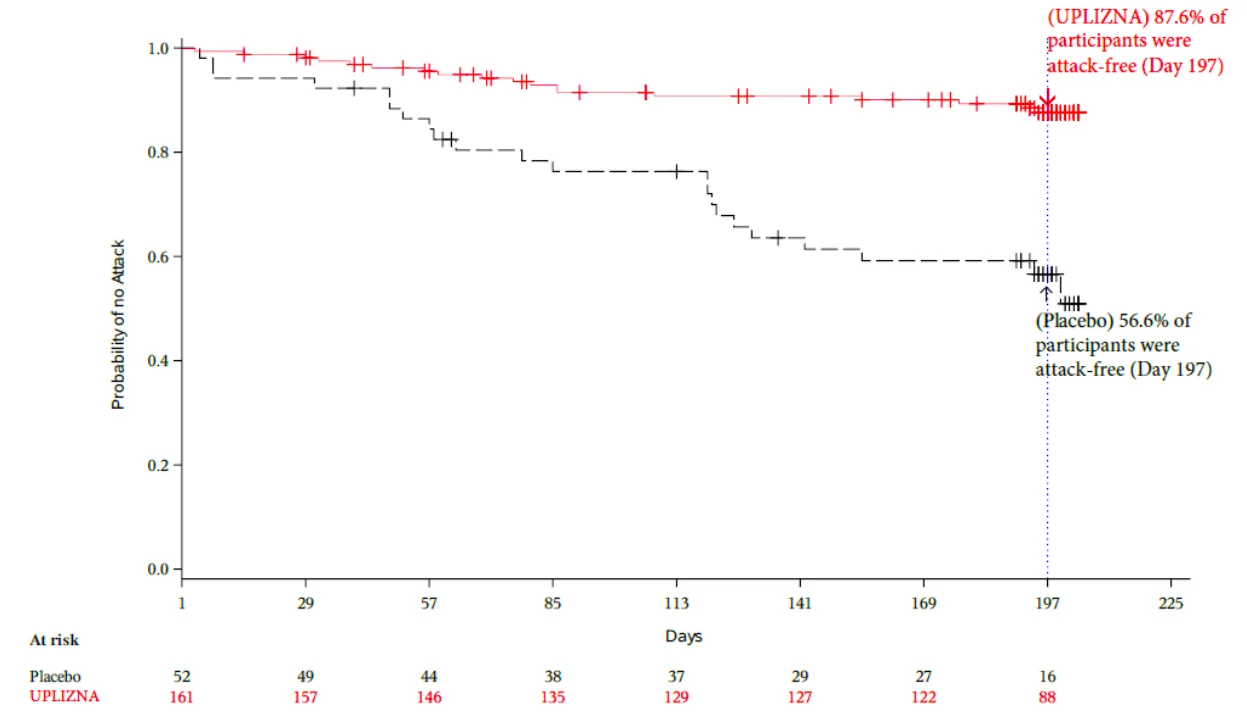
Note: Numbers of patients at risk are shown at each time point. AQP4 = aquaporin-4; CI = confidence interval; N = number of subjects; NA = not applicable.
Compared to placebo-treated patients, patients treated with UPLIZNA who were anti-AQP4 antibody positive had reduced incidence of EDSS worsening (15% for UPLIZNA vs. 35% for placebo), and annualized NMOSD-related hospitalization rates (0.12 for UPLIZNA vs. 0.50 for placebo).
Immunoglobulin G4-Related Disease (IgG4-RD)
Table 10 - Summary of patient demographics in MITIGATE Study
| Study # | Study design | Dosage, route of administration and duration | Study subjects (n) | Mean age (Range) | Sex |
| VIB0551.P3. S2 (MITIGATE Study) | A multicenter, randomized, double-blind, placebo-controlled-study with an open label extension | RCP: 300 mg IV inebilizumab or placebo on day 1, day 15 and week 26 (1:1 ratio) 52 weeks OLP: 300 mg IV inebilizumab on OLP Day 1, blinded 300 mg IV inebilizumab (or placebo) on OLP Day 15, then 300 mg IV inebilizumab Q26W thereafter 3 years | Total: 135 Inebilizumab n =68 Placebo n=67 | 58 years (24 - 80) | Female: 35% (47) Male: 65% (88) |
IgG4-RD = immunoglobulin G4-related disease, IV = intravenous, OLP = open-label period, Q26W = every 26 weeks, RCP = randomized control period.
The efficacy of UPLIZNA for the treatment of IgG4-RD was established in MITIGATE Study, a randomized, double-blind, multicentre, 52-week placebo-controlled trial that enrolled 135 adult patients who met the following eligibility criteria:
- Clinical diagnosis of IgG4-RD.
- New or recurrent IgG4-RD flare(s) that required glucocorticoid (GC) treatment at screening.
- Confirmed history of involvement of at least 2 organs at any time in the course of disease.
The concomitant use of biologic and non-biologic immunosuppressive agents was prohibited during the blinded phase of the trial. Of the 135 enrolled IgG4-RD patients, 68 patients were randomized to receive UPLIZNA and 67 were randomized to receive placebo. The baseline demographic and disease characteristics were generally balanced between the treatment groups. Females accounted for 35% of the study population. Thirty-nine percent of patients were White, 47% Asian, and 1% Black or African American. The mean age was 58 years (range 24 to 80 years). The median disease duration was 0.9 years. Forty-six percent of patients were newly diagnosed with IgG4-RD and 54% had recurrent disease. Most patients (73%) had between 2 to 5 organs previously affected. The most common organs affected were pancreas (51.9%), lymph nodes (49.6%), submandibular glands (48.9%), lacrimal glands (38.5%), and kidney (34.1%).
All patients were receiving the same dose of glucocorticoids at the time of randomization (equivalent to 20 mg prednisone) and then began a prespecified taper of 5 mg every two weeks until discontinuation at the end of 8 weeks. The use of glucocorticoids during the trial was permitted for premedication for investigational treatment, treatment for a relapse and in certain situations other than an IgG4-RD flare.
Disease flare was defined as new/worsening signs or symptoms that were positively adjudicated and warranted treatment by the investigator. All potential flares were assessed by the investigator and subsequently reviewed by a blinded, independent, adjudication committee (AC), who determined whether the flare met one or more of the protocol-defined, organ-specific flare diagnostic criteria.
The primary efficacy endpoint was the time to first treated and AC-determined IgG4-RD flare within the 52-week randomized control period.
The time to the first treated and AC-determined IgG4-RD flare was significantly longer in the UPLIZNA group, compared with the placebo group (Figure 2). UPLIZNA reduced the risk of treated and AC-determined IgG4-RD flare by 87%, compared with placebo (hazard ratio: 0.13; p < 0.0001) (Table 11)
Figure 2 - Kaplan-Meier Plot of Time to First Treated and Adjudication Committee Determined IgG4-RD Flare During the Randomized-Controlled Period
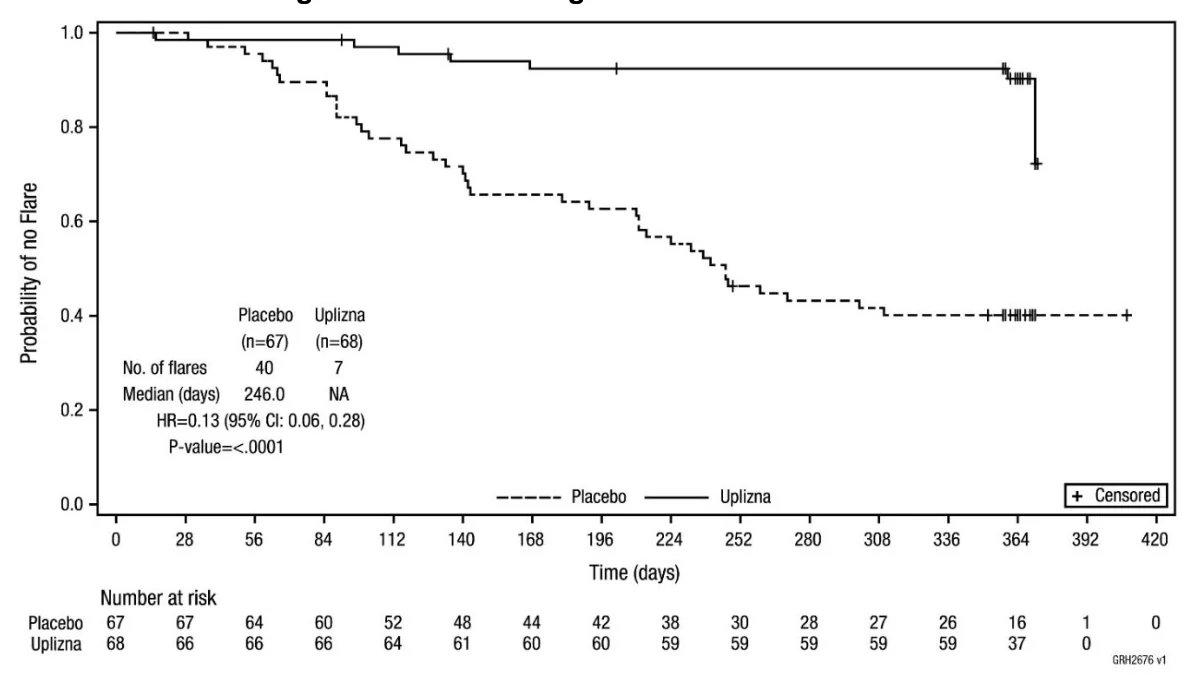
CI = confidence interval, NA = not applicable
Subjects who did not complete the randomized control period and who had not had a treated and AC-determined flare during the randomized control period were censored at the time of discontinuation.
Table 11 - Efficacy Results in MITIGATE Study in IgG4-RD Patients
| Treatment Group | |||||||||
|---|---|---|---|---|---|---|---|---|---|
| UPLIZNA N = 68 | Placebo N = 67 | ||||||||
| Time to the First Treated and AC-Determined IgG4-RD Flare (Primary Efficacy Endpoint) | |||||||||
| Number of subjects with a IgG4-RD flare | 7 (10.3%) | 40 (59.7%) | |||||||
| Hazard ratio (95% CI)a | 0.13 (0.06, 0.28) | ||||||||
| p-valuea | <0.0001 | ||||||||
| Annualized Flare Rate for Treated and AC-Determined IgG4-RD Flares | 0.10 | 0.71 | |||||||
| Rate ratio (95% CI)b | 0.14 (0.06, 0.31) | ||||||||
| p-valueb | <0.0001 | ||||||||
| Proportion of Subjects Achieving Treatment-free, Flare-Free Complete Remission at Week 52 c | 39 (57.4%) | 15 (22.4%) | |||||||
| Difference (95% CI) | 35.1% (19.6%, 50.6%) | ||||||||
| Odds ratio (95%CI)d | 4.68 (2.21, 9.91) | ||||||||
| p-valued | <0.0001 | ||||||||
| Proportion of Subjects Achieving Corticosteroid-free, Flare-Free and Complete Remission at Week 52 e | 40 (58.8%) | 15 (22.4%) | |||||||
| Difference (95% CI) | 36.5% (21.1%, 51.9%) | ||||||||
| Odds ratio (95% CI)d | 4.96 (2.34, 10.52) | ||||||||
| p-valued | <0.0001 | ||||||||
a Based on Cox regression method, with placebo as the reference group. Subjects who did not complete the randomized control period and who had not had a treated and AC-determined flare during the randomized control period were censored at the time of discontinuation.
b Estimated from the negative binomial regression, with placebo as the reference group.
c Defined as the lack of evident disease activity (IgG4-RD RI =0 or investigator’s decision) at Week 52, no AC-determined flare during the randomized control period, and no treatment for flare or disease control except the required 8-week GC taper.
d The p-values pertain to the Odds ratio based on logistic regression model, with placebo as the reference group.
e Defined as the lack of evident disease activity (IgG4-RD RI =0 or investigator’s decision) at Week 52, no AC-determined flare during the randomized control period, and no corticosteroid treatment for flare or disease control except the required 8-week GC taper.
Type I error was controlled across primary and key secondary endpoints using the fallback method.
AC = adjudication committee, CI = confidence interval, IgG4-RD = immunoglobulin G4-related disease
For all patients in the trial, the mean (SD) total GC use for IgG4-RD control per patient other than the planned GC taper was lower in the UPLIZNA-treated group compared with the placebo-treated group, with a mean (SD) of 118.25 (438.97) mg prednisone equivalent versus 1384.53 (1723.26) mg prednisone equivalent, respectively during the randomized control period. This is reflective of the lower incidence of flares in the UPLIZNA treatment arm.
Generalized Myasthenia Gravis (gMG)
Table 12 – Summary of patient demographics in MINT Study
| Study # | Study design | Dosage, route of administration and duration | Study subjects (n) | Mean age (Range) | Sex |
| VIB0551 .P3.S1 (MINT Study) | A multicentre, randomized, double-blind, placebo-controlled study with an open-label period | RCP: 300 mg IV inebilizumab or placebo Anti-AChR-Ab+ gMG subjects received inebilizumab or placebo day 1, day 15, and day 183 of the 52-week RCP. Anti-MuSK-Ab+ gMG subjects received inebilizumab or placebo on day 1 and day 15 of the 26-week RCP. OLP: Subjects assigned to placebo during RCP received IV inebilizumab on OLP days 1, 15, 183, 365, 547, 729, and 911 Subjects assigned to inebilizumab during RCP received IV inebilizumab on OLP day 1, placebo on OLP day 15, and inebilizumab infusion on OLP days 183, 365, 547, 729, and 911 | Total: 236 Inebilizumab: n = 119 Placebo: n = 117 | 47.5 (18 – 82) | Female: 61% (144) Male: 39% (38) |
Anti-AChR-AB+ = anti-acetylcholine receptor antibody positive; anti-MuSK-AB+ = anti-muscle-specific kinase antibody positive; gMG = generalized myasthenia gravis; IV = intravenous; OLP = open-label period; RCP = randomized control period
The efficacy of UPLIZNA for the treatment of gMG was established in the MINT Study, a randomized, double-blind, multicentre, placebo-controlled trial. The randomized, controlled treatment period was 52 weeks for the anti-AChR-Ab+ population and 26 weeks for the anti-MuSK-Ab+ population. The primary analysis was conducted after week 26 in both populations. Patients received 300 mg IV of UPLIZNA or placebo at Day 1 and 15.
Patients met the following eligibility criteria at screening:
- Presence of autoantibodies against AChR or MuSK
- Myasthenia Gravis Foundation of America (MGFA) Clinical Classification Class II to IV
- Myasthenia Gravis-Activities of Daily Living (MG-ADL) score between 6 and 10 with > 50% of this score attributed to non-ocular items or an MG-ADL score ≥ 11
- Quantitative Myasthenia Gravis (QMG) score of ≥ 11
- On a stable dose of a corticosteroid or a specified non-steroidal immunosuppressive therapy (NSIST), or a combination of both prior to randomization.
The stable dose of corticosteroid (> 5 mg/day prednisone or equivalent) was tapered to 5 mg/day (prednisone or equivalent) from week 4 to week 24. Rescue therapy included IVIg and plasma exchange.
Patients were randomized 1:1 to receive either UPLIZNA or placebo. Of the 238 enrolled gMG patients, 95 anti-AChR-Ab+ patients and 24 anti-MuSK-Ab+ patients were randomized to receive UPLIZNA, and 95 anti-AChR-Ab+ patients and 24 anti-MuSK-Ab+ patients were randomized to receive placebo. In the overall study population, 61% of the patients were female. Fifty-three percent of patients were White, 42% were Asian, and 2% were Black or African American. The mean age was 47.5 years (range 18 to 82 years). The majority of patients were MGFA Disease Class ≥ III (44% were Class II, 51% were Class III, and 5% were Class IV).
Mean MG-ADL score at baseline was 9.1 (9.2 for AChR and 8.5 for MuSK). Mean QMG score at baseline was 17.0 (17.1 for AChR and 16.7 for MuSK). At baseline, 79.2% received acetylcholinesterase inhibitors, 63.6% received corticosteroid only, 7.2% received non-steroid IST only, and 28.8% received corticosteroid and 1 non-steroid IST.
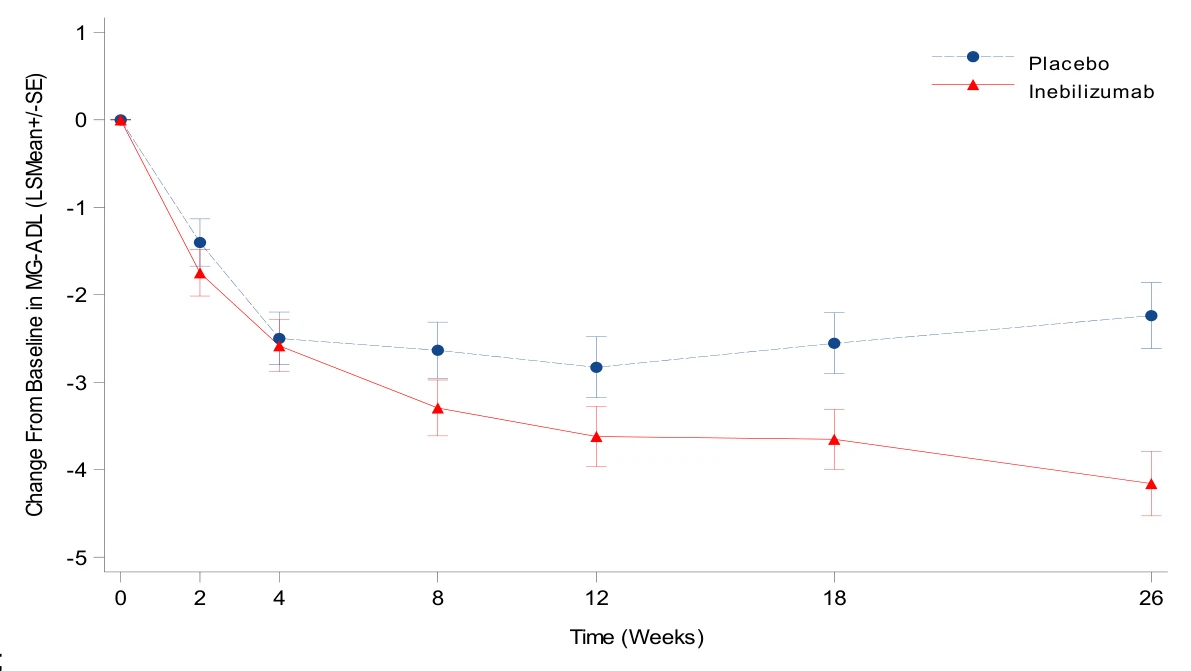
The efficacy of UPLIZNA was measured using the MG-ADL scale, an 8-item questionnaire that evaluates the impact of gMG on symptoms and daily functioning. Each item is scored from 0 (normal function) to 3 (severe impairment), resulting in a total score ranging from 0 to 24, with higher scores indicating greater disease severity. Accordingly, the primary efficacy endpoint was the change from baseline in the MG-ADL score at week 26 in the overall population.
The key secondary endpoint was the change from baseline in the QMG score at week 26 in the overall population. The QMG score is a 13-item categorical grading system that quantitively measures disease severity by mainly assessing muscle weakness. Each item is assessed on a 4-point scale from 0 (no impairment) to 3 (severe impairment), with a total score ranging from 0 to 39; higher scores indicate greater disease severity.
Study Results
The key efficacy results evaluating UPLIZNA at Week 26 in adult patients with generalized myasthenia gravis are presented in Table 13.
Table 13. Change from Baseline in MG-ADL and QMG Score at Week 26 in adult gMG Patients (MINT Study)
| Overall Population | Anti-AChR-Ab+ Population* | Anti-MuSK-Ab+ Population* | |||||||||||||||||
|---|---|---|---|---|---|---|---|---|---|---|---|---|---|---|---|---|---|---|---|
| Overall Population | Anti-AChR-Ab+ Population* | Anti-MuSK-Ab+ Population* | |||||||||||||||||
| UPLIZNA N = 119 | Placebo N = 117 | UPLIZNA N = 95 | Placebo N = 93 | UPLIZNA N = 24 | Placebo N = 24 | ||||||||||||||
| UPLIZNA N = 119 | Placebo N = 117 | UPLIZNA N = 95 | Placebo N = 93 | UPLIZNA N = 24 | Placebo N = 24 | ||||||||||||||
| Primary endpoint: MG-ADL Score | |||||||||||||||||||
| LS Mean (SE) | −4.2 (0.4) | −2.2(0.4) | −4.2 (0.4) | −2.4 (0.4) | −3.9 (0.7) | −1.7 (0.7) | |||||||||||||
| Difference vs. placebo | −1.9 | −1.8 | -2.2 | ||||||||||||||||
| 95% CI | (−2.9, −1.0) | (−2.9, −0.7) | (−4.2, −0.2) | ||||||||||||||||
| p-value | < 0.0001 | 0.0015 | 0.0297 | ||||||||||||||||
| Key secondary endpoint: QMG Score | |||||||||||||||||||
| LS Mean (SE) | −4.8 (0.5) | −2.3 (0.5) | −4.4 (0.5) | −2.0 (0.6) | −5.2 (1.1) | −3.0 (1.1) | |||||||||||||
| Difference vs. placebo | −2.5 | −2.5 | −2.3 | ||||||||||||||||
| 95% CI | (−3.8, −1.2) | (−3.9, −1.0) | (−5.3, 0.7) | ||||||||||||||||
| p-value | 0.0002 | 0.0011 | 0.1326 | ||||||||||||||||
CI = confidence interval; LS = least square; SE=standard error
* Randomization was done separately for the two populations.
The changes from baseline were analyzed using a mixed-effects model for repeated measures analysis. A hierarchical approach was used to control for multiplicity.
Figure 3. Mean Change from Baseline in MG-ADL Score by Week 26 for Overall Population.
;
Change from baseline in MG-ADL score by week 26 was analyzed using a mixed-effects model for repeated measures with covariates of treatment group, baseline antibody status, baseline corticosteroid use (daily prednisone dose <=5 mg vs >5mg), baseline QMG score (<=15 vs >= 16), baseline MG-ADL score, visits, and the interaction between visits and treatment group.
Patients who were gMG anti-AChR-Ab+ continued in the randomized control period until week 52. At week 52, in the anti-AChR-Ab+ population, the change from baseline in the MG-ADL score was −4.8 vs −1.8 for inebilizumab and placebo, respectively.
16. Non-Clinical Toxicology
General toxicology
Intravenous administration of inebilizumab to human CD19 transgenic (huCD19 Tg) mice for 13 weeks (0, 0.5, 3, or 30 mg/kg/week) or 6 months (0, 3, or 30 mg/kg/week) resulted in findings consistent with the pharmacological action of the drug. In the peripheral blood, spleen, lymph nodes, and bone marrow, B cell depletion was observed at all dose levels tested. These effects fully reversed during the 9-month treatment-free period. The NOAELs for both the 13-week and 6-month studies were 30.0 mg/kg/week, the highest dose tested. On an AUC basis, exposure at the NOAEL in the 6-month study was 13-fold the exposure in NMOSD patients following the recommended initial doses (300 mg on Days 1 and 15).
A subcutaneous, 13-week repeat dose study of inebilizumab in huCD19 Tg mice was conducted to compare findings observed after subcutaneous administration to those observed after intravenous administration. Subcutaneous administration of 0, 3, or 30 mg/kg/week inebilizumab also resulted in B cell depletion in the peripheral blood, spleen, lymph nodes, and bone marrow at both dose levels tested. Additional findings observed in both the subcutaneous and intravenous dose groups included alopecia (females only), as well as ulceration and bacterial infection of the skin, which were likely the result of immunosuppression. Increased red cell mass and other hematological changes in both the subcutaneous and intravenous dose groups were also observed. Due to the skin ulceration and infection, a NOAEL was not determined for the subcutaneous route of administration. On an AUC basis, exposure at the lowest dose tested (3 mg/kg/week) after subcutaneous administration was 6-fold the exposure in NMOSD patients following the recommended initial doses (300 mg on Days 1 and 15).
Carcinogenicity
No studies have been conducted to assess the carcinogenic potential of inebilizumab. During the 13-week subcutaneous repeat dose study of inebilizumab, an increase in bronchio-alveolar adenomas at 30 mg/kg/week was observed in males only at the end of the 6-month treatment-free period. However, similar increases were not observed in the 13-week or 6-month intravenous repeat-dose studies; therefore, the overall relationship of this finding to inebilizumab is uncertain.
Genotoxicity
No studies have been conducted to assess the genotoxic potential of inebilizumab.
Reproductive and developmental toxicology
Intravenous administration of inebilizumab (0, 3, or 30 mg/kg/week) to huCD19 Tg male and female mice prior to and during mating and continuing in females through gestation day 15 resulted in no adverse effects on embryofetal development; however, there was a marked reduction in B cells in fetal blood and liver at both doses tested. Inebilizumab was also detected in fetal serum at both maternal doses. These results demonstrate that inebilizumab crosses the placenta and depletes B cells in the fetus. Reduced fertility was also seen at both doses tested. A NOAEL for adverse effects on fertility was not identified. At the lowest dose of 3 mg/kg/week, exposure after the last dose (averaged for males and females) was lower than the exposure in NMOSD patients following the recommended initial doses (0.67-fold), based on mean maximum serum concentration.
Intravenous administration of inebilizumab in a pre and postnatal development study (0, 3, or 30 mg/kg) to pregnant huCD19 Tg mice every three days throughout organogenesis and lactation resulted in depletion of B cells in peripheral blood, spleen, and bone marrow and persistent reductions in immune function (even following repletion of B cells and lasting into adulthood) in offspring at both doses tested. At the end of the lactation period, serum inebilizumab levels in offspring were only slightly lower than those in maternal serum. A NOAEL for immunotoxicity in the offspring was not identified. At the lowest dose of 3 mg/kg, exposure in dams at the end of the lactation period was lower than the exposure in NMOSD patients following the recommended initial doses (0.40-fold), based on mean serum concentration.